Support Staff Strike, Unhinged Pringle Rant Top NEA Convention Highlights
The annual far-left love fest also known as the National Education Association (NEA) Representative Assembly (RA), was marred from the start this year by a strike involving the union’s “staff organization.” Known as the NEASO, its approximately 350 staff members have been at odds with NEA management since April, according to the left-leaning nonprofit news organization Truthout.
Citing unfair labor practices, staff workers set up a picket line on July 5 outside the Pennsylvania Convention Center in Philadelphia, where the 2024 NEA RA was taking place. According to Education Week, striking staff workers are being locked out of their jobs and won’t be paid “until the union and NEA management reach an agreement.”

Truthout reported that striking staff members “found themselves stranded when the NEA made the decision to cancel their hotel rooms and return flights home from the convention, and cut off access to their work emails and phones mid-trip,” and that further retaliation would be forthcoming. The news outlet likened the NEA’s action to “union busting.”
Besides a shortened convention, the NEASO strike prompted President Joe Biden to bow out of addressing the assembly, citing his desire to avoid crossing the picket line. About 6,000 delegates reportedly attended this year’s RA, down from the union’s heyday attendance numbers of the 1990s, but up considerably from the pandemic years.
In addition to hearing speeches by radical Democrats and others espousing the union’s far-left agenda, delegates typically vote on New Business Items (NBIs) and adopt new “resolutions,” but this year’s conference ended without the usual debate on most submissions.
According to Education Week, NEA President Becky Pringle asked that delegates vote to “suspend the rules,” meaning that these matters “will be decided by mail-in ballot.” Just 10 of the 115 items submitted for debate were voted on before proceedings were shuttered by the strike.

Issues that reportedly were discussed include Artificial Intelligence (AI), about which the union seeks to offer guidance, with a view to ensuring that the issues of “equity, data protection, and environmental impact” are addressed. The union objects to AI being used “to replace jobs of educators….”
The NEA also passed measures concerning “LGBTQ+ rights,” which has been a huge priority for years. (See Education Reporter, July 2023 and July 2022.) One approved NBI directs the union to update the “What to Know about State Anti-Trans Laws” resource on its website, and maintain the link monthly at a cost of about $31,000. Conservative observers say this would track any laws seeking to protect children from radical medical interventions promoted by trans activists, groomers, and complicit providers.
Delegates further approved adding a section to the NEA’s website “listing all NEA supports available to LGBTQ+ members, including a list of the states where LGBTQ+ curriculum is required, and where it is banned. It also directs the NEA to include mental health resources, and resources for districts and allies to support LGBTQ+ educators on the website.” Cost for this upgrade: $99,000.
Becky Pringle goes off the rails

Before the abbreviated convention ended, its president, Becky Pringle, gave an off-the-rails speech, the last several minutes of which critics compared to a comedy sketch that appeared on the popular 2005-2013 television show, “The Office.”
Fox News reported on the speech, noting that Pringle “banged on the podium, flailed her hands in the air and screamed repeatedly about winning ‘all the things’….”Fox described her as ‘screechy,’ as she called for “transformative social justice change in the education system,” a demand the NEA has made often in recent years.
Pringle, who has visited the Biden White House some two dozen times, ranted against the Trump Administration, claiming that “We worked hard to rid ourselves of a tyrannical, deceitful, and corrupt White House, but the reality is that the seeds that were sown during that horrible season continue to germinate.” She failed to explain why this should be so after nearly four years of the presumably accommodating Biden Administration, unless she was referring to parents who actually agreed with Trump’s education policies.
Popular school choice proponent and senior fellow at the American Federation for Children, Corey DeAngelis, said of the NEA president’s rant:
- These power-hungry control freaks think they own your kids. They’re in a cult that worships government and detests parents. It’s time to defund teachers’ unions and allow the money to follow the child … Becky Pringle pulled a Dwight Schrute (in reference to The Office episode). She is off-the-rails and desperate to maintain control over the minds of other people’s children.
Charging that Pringle is out of touch, Heritage Foundation research fellow Jason Bedrick told Fox News Digital that her “overwrought, hyper-partisan tirade amounted to an advertisement for school choice. Apparently, she hasn’t seen the polls showing record-low public trust in public schools.”
And National Review’s Jack Crowe noted: “Pringle believes she’s a revolutionary…. Channeling Dwight Schrute, [she] urges her colleagues, not to raise the nation’s embarrassing reading and math scores, no, but to ‘fight for freedom.’”
Becky Pringle Delivers Keynote Speech at the 2024 NEA Representative Assembly in Philadelphia (youtube.com) (Start at 27-minute mark for referenced clip—Ed.)
Interfaith Statewide Coalition Gives California Parents a Voice
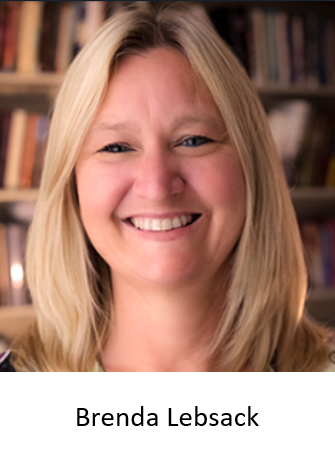
Headed by 25-year veteran schoolteacher Brenda Lebsack, California’s Interfaith Statewide Coalition is another shining example of a pro-parent organization fighting for traditional education in the nation’s public schools. The Coalition promotes education “free from indoctrination and ideologies that attack religious faith, and family and religious values,” and encompasses people of all faiths. Its purpose is “to unite as concerned parents, clergy, and community leaders of many faiths, races, and language groups in order to increase parents’ rights in our state.”
Readers of Education Reporter met Lebsack last month when her work was mentioned in an article about sexualized ‘suicide prevention’ programs that may actually endanger rather than help troubled youth. Recently, we spoke with her directly to learn more about her group’s success in removing one of these programs, The Trevor Project Crisis Hotlines, from all K-12 schools, as well as from counselors’ business cards, in the Santa Ana, CA Unified School District (SAUSD).
Lebsack described how she discovered the Trevor Project, which targets LGBTQ youth and those who may be “questioning” (hence the ‘Q’) through “metallic posters bolted onto the tiled walls in the bathrooms” at the schools where she teaches.” She is a physical education (PE) teacher for children with disabilities at seven different elementary schools in the SAUSD.
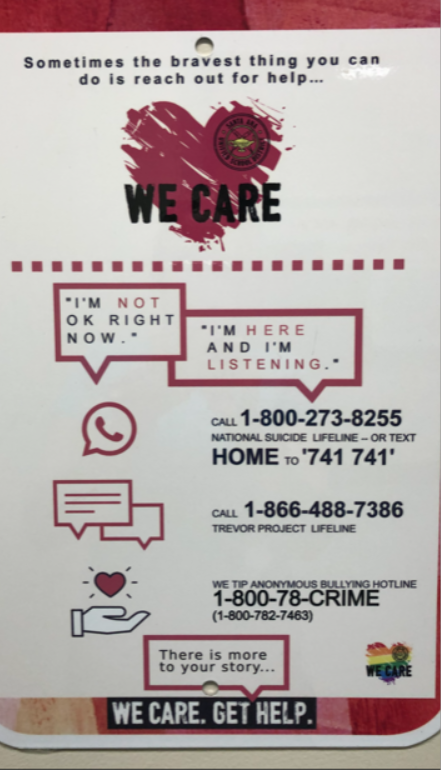
The posters advertised The Trevor Project, telling schoolchildren “We care” accompanied by a rainbow heart. Lebsack was taken aback by the overt promotion of the hotline and began researching it. She texted the number appearing on the posters, pretending to be a child uncertain of her gender and fearful of going through puberty.
Her inquiry resulted in a referral to the “gender affirming” online platform TrevorSpace. “They asked for my age but didn’t push when I did not give it,” she said. “I wanted to find out if they would at least attempt to verify my age, but they did not. The site is supposed to be for 13-24-year-olds, but they failed to rule out that I was a mature adult seeking to access chat rooms supposedly intended for kids. It’s obvious that adults and younger children can access their chat clubs and interact with other online users, putting kids of all ages in harm’s way.”
Lebsack chronicles in detail on her website the disturbing interaction she had with TrevorSpace after submitting that she was 13-years of age, noting that children that young are now classified as “young adults.” She explained that “It was super easy to do, no questions asked. I got in and took screen shots of the online clubs and noticed many conversations that said, ‘I’m lonely and need a friend!’ and a random stranger would reply, ‘I’ll be your friend!’ You don’t have to be a detective to see the red flags….”
She continues: “Worst of all, when I checked out the Crisis Text Hotline by texting HEARME to 839863, the counselor said I could share my phone number with people in Trevor Chat Space after I ‘build trust’ …. The text counselor even gave me the green light to lie about my age if I was not 13 yet and assured me that everything is confidential and that my parents don’t have to know about my chats.”
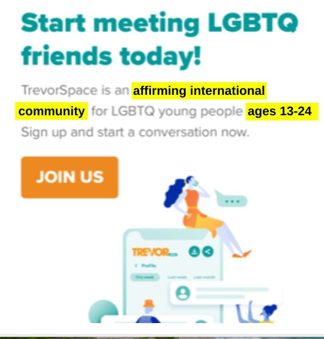
The site advertises itself as a place to meet LGBTQ friends and that it is an affirming international community for LGBTQ young people. [Emphasis added.] “And so you have predators potentially accessing the site from around the world, not just the U.S.,” Lebsack points out. “The danger could come literally from anywhere.”
The chat clubs themselves are disturbing. As Lebsack describes: “There was a Witchcraft Club, A Furries Club, A Gay Men’s Club with the tagline ‘let’s talk about boys!,’ a Guilt and Secrets Club, a Polyamory Club, Nonbinary Pals, Roommates Squad, Chosen Family Club, and others.”
Lebsack also gained access to what she called “Regressor’s Space,” where visitors can pretend to be a younger age or identify with a younger age. She reports that the organization Gays Against Groomers “checked out TrevorSpace and called it a ‘pedophile’s paradise.’”
She further discovered that disgraced Biden Administration deputy assistant secretary in the Office of Nuclear Energy, Sam Brinton, is listed by The Trevor Project as a sex expert for kids. “Can you imagine?” she asks. “Sam Brinton is considered an ‘expert’ in LGBTQ issues and advises students in TrevorSpace, all while identifying as gender fluid and known to advocate for every sexual kink imaginable. He was fired in December 2022 for stealing women’s luggage in airports. Yet, this person mentors students through our schools’ online mental health resources.”
Almost every intrusive or sexualized program involves surveys, and Lebsack references The Trevor Project’s 2019 mental health survey on the Coalition’s website. The survey claimed the existence of over 100 sexualities. “When I asked in an email that they provide me a list of the 100+ sexualities, they refused. I can only assume that the kink identities promoted by Sam Brinton were included.”
The Trevor Project removed from SAUSD
When asked to describe how the Coalition got The Trevor Project removed from the SAUSD, Lebsack recounted: “In early 2023, we showed the district superintendent and school board members screen shots from TrevorSpace, proving how easily the site can be accessed by adults, including online predators seeking to exploit naïve young people in crisis situations.”
She applauds her school district officials for removing the promotional posters out of fear of liability, once the obvious pitfalls were pointed out to them. “They used their common sense,” she said, adding that her group “is grateful that our district leaders trust their instincts rather than blindly trusting government officials’ recommendations of The Trevor Project.” Even so, she concedes that although the SAUSD removed the phone numbers, the program “is still promoted by the 988 hotline and the Orange County LGBT Center,” so the information remains available.
Nonetheless, the removal of the hotline from the SAUSD is a victory for the Coalition, of which Lebsack should be justifiably proud. It emphasizes the power of persuasion when parents present facts that reveal the reality behind the left’s flowery façade of propaganda, laying bare the true agenda and its dangers.
Another key to the group’s success was its presentation of the screen shots and information to the Pacific Justice Institute. After reviewing the documentation, the conservative law firm “wrote a letter to the [SAUSD] District Superintendent and board members stating that TrevorSpace could be a serious liability issue for the school district.”
The Trevor Project is billed as “a suicide prevention hotline for LGBTQ+ students,” which the federally funded “988 Suicide & Crisis Lifeline” recommends, and which is supported by a variety of corporations that Trevor calls “partners.” These include the retail giants Macy’s, lululemon, and Abercrombie & Fitch, as well as AT&T and Google, among many others. At Macy’s department stores, for example, customers are asked to “round up” the amount of their sale to the next dollar to support The Trevor Project. No doubt countless shoppers who have no idea of the potential threat posed by the project do exactly that.
Other Interfaith Statewide Coalition projects
Working with leaders of various faiths and other groups, the Coalition gets involved in many issues impacting California parents and students. One of these is exposing the content of so-called “banned books,” which have come under fire from parents due to their pornographic content.
Lebsack described one such book, called This Book is Gay, which she found in her elementary schools and which “teaches kids about dating apps such as Grindr, that provide instructions about having sex.” The app tells users it’s for adults, yet “the California Teachers Association (CTA) recommends it for minors.”
This is in lockstep with the willingness of the CTA as well as California lawmakers to codify the prevention of school employees from informing parents about a child’s gender identity, unless the child gives consent, which has increased the concerns of parents and community leaders about the treatment of gender in schools overall.
Lebsack’s group further worries that changes in curriculum and policy, particularly with regard to gender, will be lost on non-English speaking parents who as a result may be unable to make informed decisions about their children’s education. “Santa Ana is one of the highest non-English speaking cities in California,” Lebsack explains. “With translation services limited, parents may not understand the gravity of the danger these policy changes pose for their children.”
After discovering This Book is Gay in middle and high school libraries as well as the bookmobile, Lebsack attempted to find out why a book that tells that tells readers “to upload a picture of yourself to sex apps like Grindr” so that the app can access the youth’s location and find others to “chat and meet up,” is placed in K-12 school libraries. She says the city library director told her “they are pressured to do so.”
The book mentions that Grindr has an age minimum of 18 years, but that again, savvy kids can lie about their ages. As Lebsack asks rhetorically: “If this information is meant for ages 18 and up, why is it in our publicly funded K-12 schools?”
She notes that “even National Public Radio (NPR) published a piece against Grindr in 2021.” NPR found that “the dating app is supposed to be for men seeking men. But many underage boys are using it to hook up with adults, and that can put them at risk of exploitation and trafficking … Grindr is one of many online sites where minors can be stalked. Boys and girls are victimized. But researchers say the number of male victims is vastly underreported, in part because boys are less likely to disclose their abuse.”
So far, Lebsack’s group has had no luck removing This Book is Gay from their school libraries, “because in September 2023,” she notes, “Governor Gavin Newsom signed AB 1078 saying schools cannot censor books due to concerns related to racial or LGBTQ+ themes because it stifles inclusivity and ‘academic freedom.’”
She adds that “more and more racist and sexually explicit books, and books about witchcraft and spells, are appearing on library shelves.” Yet the Coalition soldiers on. Lebsack urges readers to visit their website for a wealth of articles and education-related information, and then to get involved in their own school districts. “As a public-school teacher who is also a protective mom and grandmother,” she says, “here is my warning to parents: Don’t be fooled by the political rhetoric, there’s a razor blade in the shiny school apple.”
Are Attacks on Homeschooling Ramping Up?
A recent observation by a casual observer that homeschooling may be coming under increasing attacks by opponents could turn out to have some basis in fact. With the number of homeschooled students now approaching 4 million, it is no surprise that losing control of this many children has the education establishment worried.
Homeschooled students have outperformed their brick-and-mortar peers for decades, and Education Reporter has long chronicled the phenomenon. But because it’s so hard to argue with proven academic success, particularly when the National Assessment for Education Progress (NAEP) scores have sunk to ever more discouraging lows, opponents of homeschooling continue to raise the specter of “abuse and neglect” as reasons to exert more state control over homeschooling.
While studies show “there is little evidence” that homeschooled students are more or less likely to be abused, neglected, or otherwise maltreated than public or private school students—albeit studies also show that those who attend public schools are 2.57 times more likely to be sexually abused than homeschooled students—the enemies of homeschooling are using a terrible incidence of abuse in West Virginia as an opportunity to campaign for more restrictions.
Last month, the Home School Legal Defense Association (HSLDA) reported that an increase in homeschool regulation is possible in the state in response to the starvation death of 14-year-old Kyneddi Miller. According to HSLDA, public officials, including West Virginia Governor Jim Justice, are attempting to shift blame for the tragedy from the failure of government agencies to homeschooling assessment laws.
HSLDA wrote:
- Many state officials and media outlets are using Kyneddi’s death to further a false narrative about homeschooling, claiming that homeschooling puts children at risk by distancing them from individuals who are required by law to report suspected abuse and neglect, such as public-school officials, medical professionals, and law enforcement officers. Yet the facts demonstrate that Kyneddi’s situation was already known to child protective agencies, a familiar pattern in such cases.
HSLDA further contends there is no evidence that homeschooled students “are at a greater risk for abuse or neglect than any other demographic or that they are generally isolated from people who could help them. This false narrative, however, casts all homeschooling parents under suspicion based on the heinous acts of a few.”
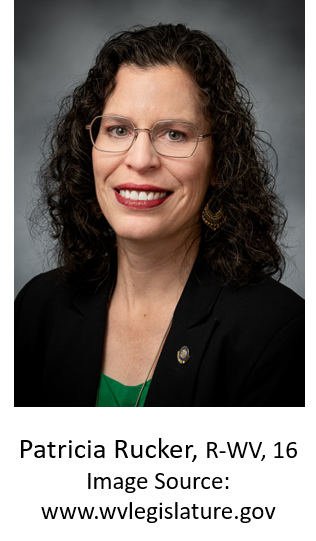
At least one state senator, Patricia Rucker, agrees with HSLDA. Rucker notes: “It is wholly inappropriate and unacceptable to attribute this tragic death to homeschooling, which unfairly maligns the thousands of West Virginia families who are responsibly and effectively educating their children.” She questioned why Child Protective Services (CPS) and local police failed to intervene despite “multiple contacts” with Kyneddi’s family.
West Virginia already regulates homeschooling at what HSLDA labels a “moderate” level by requiring families to file “Notice of Intent” forms to the superintendent of their child’s public-school district. The state allows for religious exemptions, as well as homeschooling with a “certified tutor” or under what is called “the private school option,” whereby the private schooling takes place at home.
While “deeply troubled by the death of Kyneddi,” HSLDA vows to monitor developments in West Virginia and any other state where the freedom of families to direct the education of their children appears threatened. Currently pending in New Hampshire, for example, is Senate Bill 459, which the organization believes would significantly expand the definitions of child abuse and neglect in a way that could harm families. HSLDA writes:
- New Hampshire currently has robust and effective laws to protect children from abuse and neglect. HSLDA supports these laws…. S.B 459, however, makes changes to New Hampshire law, all of which threaten children and families with unnecessary government intrusion by broadening the criteria for launching investigations.
The bill also opens the door to the concept of “risk to a child’s psychological or emotional well-being … or mental health,” which is unexplained. As HSLDA points out: “This ambiguity leaves the interpretation of what constitutes psychological care to individual investigators, each of whom may have their own subjective biases.”
Other ‘concerns’

Homeschool proponents often make the case that homeschooled students are less likely to attend college than their traditionally schooled peers. However, homeschooled students have been shown to be more academically prepared for college than their peers. A simple online search reveals that on both the SAT and ACT tests, homeschooled students score higher; with homeschoolers achieving 22.8 points out of 36 on the ACT while the average score is 21. On the SAT, homeschoolers score an average of 72 points higher than their public-school peers.
Another gripe is that homeschooled students are often lacking in advanced math classes, which is ironic coming from public-school proponents when Algebra I is being pushed back until high school and when the NAEP results show that just slightly more than a third of all students score proficient or higher in math.
But although a lack of academic ability may not be the issue for homeschoolers in higher education, the shock of finding that their moral beliefs are severely challenged at the university level may well be. For example, a study of seven homeschooled graduates in Pennsylvania found that they struggled to “to maintain their existing moral beliefs related to drinking, drug use, and sexual norms, with the majority admitting they changed some beliefs and practices.”
Parents who have struggled for years to properly educate their children sans the woke propaganda, bullying, and indoctrination at public and many private schools, might discourage their children from attending a typical four-year institution of higher education for the same reasons. These parents often find that a community college, trade school, or online university are viable alternatives for their kids.
Homeschooling outside the U.S.
Homeschooling has not only become more popular in the U.S., but is trending upward in other countries as well. Sources in the United Kingdom, for example, report that homeschooling figures jumped from approximately 57,800 children in 2018 to 86,000 in 2023.
Interestingly, parents in the U.K. give similar reasons as American parents for educating their children at home, such as “dissatisfaction with the school system, bullying, freedom from school timetables and dates, and the special education or health needs of their children.”
Homeschooling has also increased in popularity in India, again, for similar reasons. In India, however, the lack of central authority means parents must take on significant responsibility for their children’s education, which doesn’t mean that anything goes. According to an article on Edexlive: “The legality of homeschooling in India is still a grey area. Parents should be aware of the legal requirements before they decide to homeschool their children…. They must also be able to access resources and support networks, which can be difficult in India.”
For U.S. parents, homeschooling has offered a lifeline for decades; a means of overseeing the upbringing and education of their children in a comprehensive and overarching way, in accordance with their religious beliefs and educational preferences. More children than ever are now learning at home, so parents must remain vigilant in order to safeguard this priceless educational option.
What Books Should Kids be Reading?
(Sixth in our series of recommended reading lists for children of all ages. We will continue this feature in Education Reporter until all our lists have been republished. — Ed.)
Classic children’s books are scarcely to be found in school classrooms and libraries today, so parents must ensure that their kids are reading books that educate, absorb, and entertain in a manner that stimulates curiosity and increases the child’s eagerness to learn about the world.
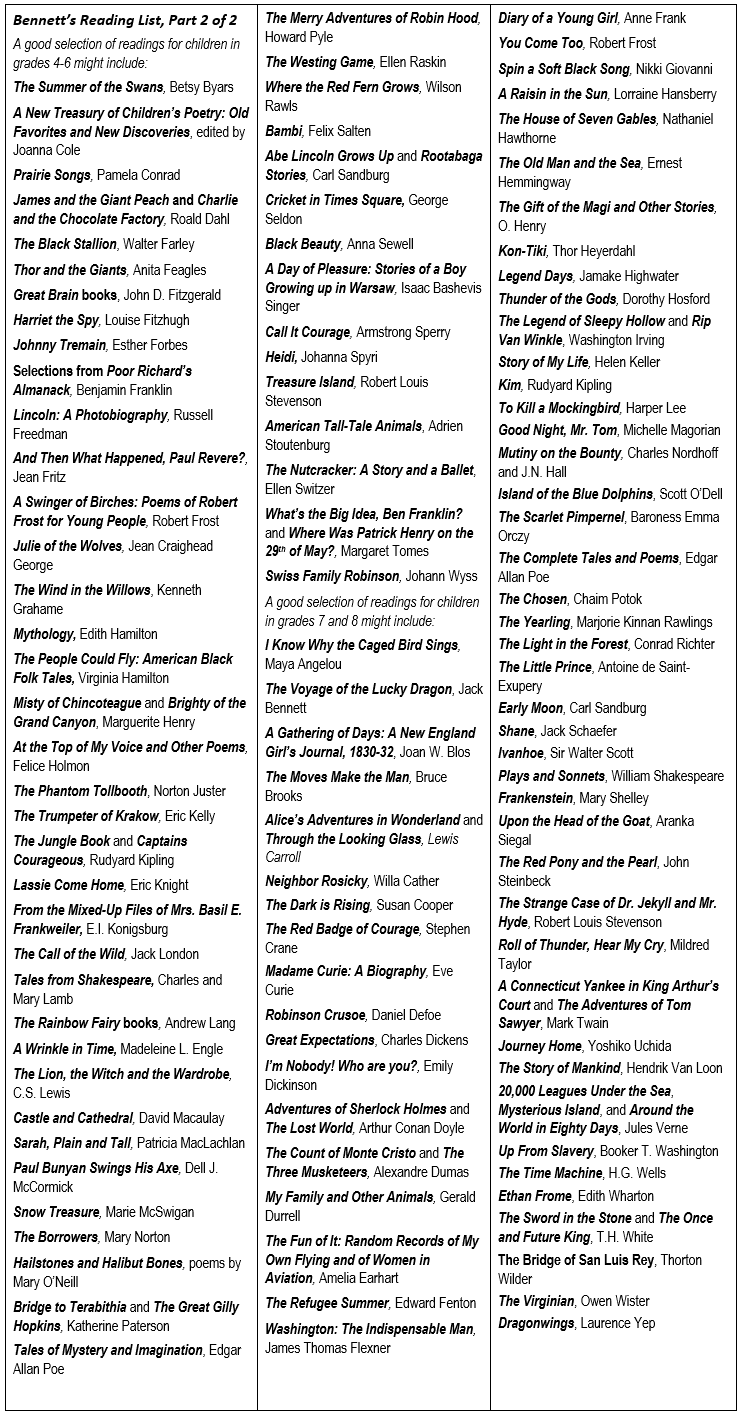
Bennett’s Reading List was included in a booklet titled James Madison Elementary School: A Curriculum for American Students, published by then-Secretary of Education, William J. Bennett, U.S. Department of Education, September 1988. It was included in the September 1988 issue of Education Reporter. This list will appear in two parts.
Additional Education Reporter suggested reading lists:
- A Child’s Reading List (February 2024)
- The Ultimate Reading List — Classics that Endure (Part 1) (March 2024)
- The Ultimate Reading List — Classics that Endure (Part 2) (April 2024)
- Children Will Love Discovering Lost Classics (May 2024)
- Bennett’s Reading List (Part 1) (June 2024)
- Bennett’s Reading List (Part 2) (July 2024)
- The Best Children’s Classics (Part 1) (August 2024)
- The Best Children’s Classics (Part 2) (September 2024)
- Recommended High School Reading List (October 2024)
NOTE: Most books on this list can be ordered online through booksellers including:
- ThriftBooks
- Amazon.com : vintage books classics
- Project Gutenberg (Free Archive, eBooks only) Choose (EPUB3 (E-readers incl. Send-to-Kindle))
> > > > Send to Kindle to upload ebooks to your Kindle device downloaded from Project Gutenberg.
Bennett’s Reading List
Click the image below to open as a (printable) PDF document
Mallard
Lies My Liberal Teacher Told Me: Debunking the False Narratives Defining America’s School Curricula
by Wilfred Reilly, Broadside Books, 2024
Professor Wilfred Reilly has written a masterful exposé of the massive propaganda masquerading as education in the U.S. schools of today, starting with lie #1, that slavery only existed in America and the West, and that even if it did exist elsewhere and in earlier ages, it was much worse in the Americas.
It’s impressive that Reilly, himself of African descent, takes on this issue, not because he doesn’t despise everything about slavery, but because he wants students to know how horrifically pervasive it was throughout history, practiced by virtually every race in every part of the world. Conquerors enslaved the conquered, and those in power exploited their less fortunate fellow human beings.
The author accedes that Americans today “tend to project our positive values back into the past while thinking that our sins are uniquely bad.” What we fail to understand, he writes, is that “contemporary beliefs about human dignity, inalienable rights, a right to freedom, etc., are the exception, not the norm.” This is because America has remade much of the world in its unparalleled image.
Through meticulous research, Reilly shows that American slavery “was not unprecedented, it was not uniquely brutal, and it did not invent any new oppressive systems.” 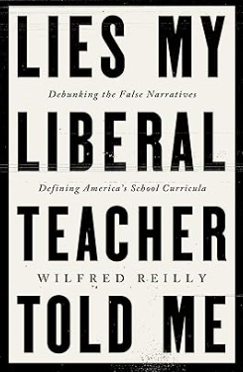 He writes that, quite literally, “the oldest human legal codes consist in large part of rules governing the care, feeding, and beating of slaves and other ‘human property.’” He argues that the Arab slave trade “was by all accounts as brutal or more so than its Western counterpart,” and that “at least 17 million Africans were sold into Arab slavery….”
We know from the Bible that slavery existed in ancient times, and Reilly reveals how widespread the practice was during the period between 2,500 B.C. “when the earliest legal documents concerning slavery were found, and the conquest of much of the Middle East by Alexander the Great took place in the fourth century B.C.” Reilly notes that one of the very first written human words was “slave.”
The author makes clear that slavery has continued throughout history even to modern times, and that the perception created by academia that “the historical enslavement of non-blacks as somehow mild or ‘not really’ slavery, is contrary to reality. Chattel slavery in the ancient world was brutal for people of all races,” he states … and later, even native American tribes got in on the act, enslaving members of conquered tribes.
While Lies My Liberal Teacher Told Me covers in depth the topic of slavery, Reilly’s revelations about other “liberal lies” are no less fascinating. For example, he exposes the lies about Senator Joseph McCarthy, who attempted to root out Communist operatives in the U.S. at the start of the Cold War. McCarthy and those who agreed with him are positioned as “pathological liars, constructing whole careers out of ‘endless falsehoods’ while pandering to ‘the most ignorant, superstitious, meanest segment’ of heartland America.”
The accepted wisdom is that domestic communism was not a threat to the U.S. in the 1950s. But not so fast, cautions Reilly. He shows that McCarthy’s charges were to a large extent true, and that “data recently obtained from no-longer-Soviet Russia demonstrates that specific individuals long thought to be martyrs of a kind were in fact ‘Communists, Soviet agents, or assets of the KGB’—just as McCarthy had suggested.”
Proof exists today in the form of cable messages released after the dissolution of the Soviet Union and prior to the start of the Ukraine war in 2021, “that a very large number of the prominent Yanks and Brits accused of Soviet espionage during the Cold War were in fact Russian spies.” These cables confirm that at various times Soviet spies worked for the atomic Manhattan Project, in the U.S. Office of Strategic Services (OSS), for the State and Treasury Departments, and in the White House.”
Indeed, Reilly writes, “It is no exaggeration to say that Russian espionage during the 1950s and 1960s, far from being some kind of paranoid fairy tale, was a real problem that reached the very highest levels of U.S. and Allied governments. On more than a few occasions, (i.e., Alger Hiss at Yalta), Russian agents sat by the American president’s side and gave him advice.” Yet these sobering revelations are kept from our youth in today’s education system.
Related to the lies about McCarthyism is the lie that “the Vietnam War was unpopular and pointless.” The author weaves into this chapter the related lies of the era, that “hippies were the good guys” and that “the sexual revolution was great for women,” but the section on Vietnam highlights the ongoing lie that the spread of Communism was no threat.
The mainstream take on the Vietnam War, he states, “seems to be that it was an epic tragedy, unpopular at the time and now known to have been fought for amoral and illogical reasons.” But a single paragraph on History.com’s respected “Communism Timeline” provides a sobering perspective:
- Between 1940 and 1979, Communism was established by force or otherwise in Estonia, Latvia, Luthuania, Yugoslavia, Poland, North Korea, Albania, Bulgaria, Romania, Czechoslovakia, East Germany, Hungary, China, Tibet, North Vietnam, Laos, Guinea, Cuba, Yemen, Kenya, Sudan, Congo, Burma, Angola, Benin, Cape Verde, Kampuchea, Madagascar, Mozambique, South Vietnam, Somalia, Seychelles, Afghanistan, Grenada, Nicaragua, and others.
Reilly’s chapters exposing the lies that native Americans were “peaceful people who spent all day dancing,” and that “European colonialism was —empirically—a no-good, terrible, very bad thing” are equally eye-opening and absorbing. He refutes the lie taught to “almost every American schoolchild at least since the late 1960s that ‘Native Americans were peaceful Gaia worshipping people, killed via intentional genocide by ruthless and land-hungry white settlers,’” noting that “again, reality proves to be considerably more complex.”
Particularly shocking to this reviewer is the revelation that an argument exists claiming “the idea for the U.S. government was ‘adopted’ or stolen directly from Native Americans.” This theory alleges that “Benjamin Franklin said the idea of the federal government, in which certain powers are given to a central government and all other are reserved for the states, was borrowed from the system … used by the Iroquoian League of Nations.”
The author writes that this “historical myth, which has snowballed in a game of historical ‘telephone’ from one scholar to another—and was officially promoted by the U.S. Senate in 1988—originates in a rather backhanded compliment by Franklin for the league. There’s little evidence that Franklin turned that onetime admiration into inspiration for a grander plan.”
While revisionists teach that Native American tribes were such skilled cultivators that cultural exchanges with them “were at least as important” for the European arrivals as for the tribes themselves, the reality is that large domestic animals, metal tools, and the wheel essentially did not exist in North or South America before 1492, which makes these claims debatable; yet, as the author points out, they are not debated.
But as the author writes, “the realities of history have a way of being brutally insensitive to flowery narratives from any side of the modern political aisle, and most of the Spaniards and others who originally encountered the mighty Native nations saw their lands as far closer to hell than heaven. Instead of being paradisical utopias free of the sins of European civilization, Native societies were just as likely as their Old World equivalents to be plagued by oppression, unjust hierarchies, environmental abuse and waste, and political dissension.”
The author acknowledges that Native Americans introduced Europeans to crops like corn, squash, beans, tomatoes, and potatoes, and that Europeans brought diseases with them against which the native peoples had no immunity, causing many to perish. The Europeans, in turn, were shocked by the level of brutality practiced by the natives. The Aztecs in particular demonstrated an unequaled blood lust for human sacrifice, building “skull towers” that held as many as “130,000 human crania.”
Cannibalism was also practiced by Mesoamerican tribes, and Reilly writes that it “appears to have existed above the Rio Grande as well as below it.” Christian missionaries also documented that cannibalism existed among the tribes they sought to convert, including the Iroquois, who have been described as “sophisticated” and “often quite humane.”
Reilly’s research further sheds light on the truth about the origins and movement of Native American tribes, including the mysterious disappearance of some ancient tribes and the resettlement of others as a result of environmental abuse and civil war. The perception that Native Americans were expelled from their homelands and herded like cattle across the country by ruthless American soldiers disappears in the face of the author’s compelling evidence.
Lies My Liberal Teacher Told Me contains so much important and startling information that it should be required reading at the high school and college levels. The effort to distort and rewrite American history in order to further a Marxist worldview has rendered a terrible disservice to generations of Americans. Kudos to this brave professor for his excellent exposé.
To read the entire book, go to Amazon.com OR ThriftBooks.com to order!
Education Briefs

From kindergarten to college age, students are behind in reading, and experts are blaming everything from cell phones to Covid-19 rather than the lack of phonics instruction. An article on YourTango.com reports that younger generations across the board are struggling with literacy. Experts contend that not only are elementary school students struggling, but also those of college age. “We are not complaining about our students,” humanities professor Adam Kotsko said about their struggles with reading. “We are complaining about what has been taken from them.” While the article gives a partial nod to “Common Core standard shifts” as a reason for poor reading skills, professors like Kotsko point to the introduction of the iPhone. “It is no coincidence that the iPhone itself, originally released in 2007, is approaching college age, meaning that professors are increasingly dealing with students who would have become addicted to the dopamine hit of the omnipresent screen long before they were introduced to the pleasures of the page,” Kotsko wrote. And while there’s doubtless some truth to his observation, there is also failure to acknowledge the elephant in the room: that kids are not being taught to read using the phonics method. Other excuses given for the prevalence of illiteracy include classroom time lost during the pandemic, the fact that teachers are forced to teach to state assessment tests, and the charge that low-income students face economic disadvantages that leave them behind. Last year, the media made much of what it called a new concept, “the science of reading,” but which was actually the tried and true concept of phonics instruction. (See Education Reporter, December 2023.) But the media splash appears to have been too little too late, at least for the current crop of college-age students, who apparently never learned to read using phonics.

Arts & Ideas Sudbury Schools promote an education model that eschews compulsory lesson plans and lets students pursue their individual academic interests. There is “no curriculum, no required academics, no testing, and a daily schedule left up to each student to decide for themselves.” An article on MSN.com reported on a student who attended an A&I Sudbury school starting in 2010 when he was in kindergarten until his graduation from 12th grade in 2023. His mother described her struggle in deciding where to send him, wishing to avoid public schools and finding private schools too expensive. “I first heard about a local K-12 school called the Arts and Ideas Sudbury School from another mom I was talking to at the park when Jasper was little,” she told MSN. “I didn’t think much of it until I happened to hear the founder talking about the school on the radio. The principle of giving kids the freedom to learn about what they’re interested in, without the added stress of grades and tests, really resonated with me.” She arranged for her son to visit the school for a week, after which she said he was telling her “about fractions and holding doors open” for her. Sudbury students must attend school for five consecutive hours each day, “including the ‘core hours’ of 11:00 a.m. — 3:00 p.m.” There are required activities, including “school chores and school-wide meetings.” Jasper’s mother says the school gave him “a happy childhood and helped him grow into a secure adult.” While observers may view the model as another fad that won’t teach kids anything of substance, the concept of letting kids decide what they want to learn has been around for 50 years. Many parents give A&I Sudbury five stars out of five, and can’t say enough about the education their children receive. Many of the recently founded microschools follow this concept and are enthusiastically embraced by parents. The jury is out as to their effectiveness, but given the current public-school environment, they may ultimately prove a viable alternative.
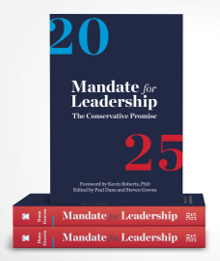
The Heritage Foundation’s Project 2025 proposes to eliminate the U.S. Department of Education. The project is a policy agenda for the next presidential Administration laid out in a book called Mandate for Leadership: The Conservative Promise, which is “the product of more than 400 scholars and policy experts from across the conservative movement and around the country. While the Heritage Foundation is facilitating the work, the organization credits “dozens of partners and hundreds of authors” and “the entire conservative movement” with putting the agenda together. Project 2025 contends that federal education policy should be limited, and that therefore the Department of Education should be dissolved. Chapter 11 of the book states: “Elementary and secondary education policy should follow the path outlined by Milton Friedman in 1955, wherein education is publicly funded but education decisions are made by families. Ultimately, every parent should have the option to direct his or her child’s share of education funding through an education savings account (ESA), funded overwhelmingly by state and local taxpayers, which would empower parents to choose a set of education options that meet their child’s unique needs.” The project contends that states “are eager to lead in K-12 education,” and have for decades acted independently of the federal government to put in place, for example, school choice programs. Project 2025 recommends that the following core principles guide the next Administration: Advance education freedom; provide education choice for ‘federal’ children, including military families, etc.; restore state and local control over education funding; treat taxpayers like investors in federal student aid; protect the federal student loan portfolio from predatory politicians; safeguard civil rights; and, stop executive overreach by having Congress set policy rather than presidents through executive orders, and agencies through regulation and guidance. How much attention is paid to Project 2025 remains to be seen, but its education policy recommendations are consistent with those made by conservatives for years.
One prof suspended for ‘don’t miss’ assassination post, another claims shooting ‘staged’
Originally published July 16, 2024. Reprinted by permission.
Several professors have reacted with extreme comments regarding the assassination attempt on former President Donald Trump, drawing criticism and, in some cases, consequences for their remarks.
Within 24 hours of the Saturday incident, one professor from USC had his column deleted by Forbes after he suggested Trump will use his “surviving gunfire” story to appeal to black voters, and another from the University of British Columbia deactivated her profile on X after getting backlash for posting “Damn, so close. Too bad.”
On Monday, more headlines surfaced regarding another pair of professors in hot water.
Bellarmine University suspended instructor John James, who teaches English, after he posted on Instagram: “If you’re gonna shoot, man, don’t miss,” and included a screenshot of an article on the assassination attempt, the Courier Journal reported.
“The post went viral after being screenshotted and posted by Libs of TikTok on X, formerly known as Twitter,” the Journal reported.
In a statement to the newspaper, a university spokesperson said:
Words and actions that condone violence are unacceptable and contrary to our values, which call for respecting the intrinsic value and dignity of every individual. We strive to create an inclusive community that welcomes all and models a spirit of goodwill. We are aware of an offensive and unacceptable social media post made by an employee over the weekend. That individual has been placed on immediate unpaid leave.
Over at the University of Virginia, one professor there argued the shooting was staged.
Emma Arns reported for Campus Reform that University of Virginia Assistant Professor Sethunya Mokoko posted on X the incident was “theatrics” and an attempt to gain voters’ sympathy.
According to a screenshot of the X post, Mokoko stated: “ignored him because trump & secrete [sic] service staged theatrics to win idiots’ vote.”
He was referring to a widely viewed interview with an eye witness who said attendees warned officers about a man on the roof a few minutes before the shots were fired.
Trump on Saturday [July 13] was shot in the ear by a would-be assassin at a campaign stop as he runs for reelection. The shooter was shot and killed by officers after he got several rounds off, killing one rally attendee and wounding two others in addition to Trump.
Jennifer Kabbany is editor of The College Fix — a publication of the Student Free Press Association. She was a visiting fellow with the Independent Women’s Forum in 2021, and has served as Associate Editor of FrontPage Magazine, as well as held editorial positions at The Weekly Standard and The Washington Times. Jennifer graduated from San Diego State University, where she served as Editor in Chief of The Daily Aztec.