High Court Rules Against Schools Pushing Transgender Secrecy
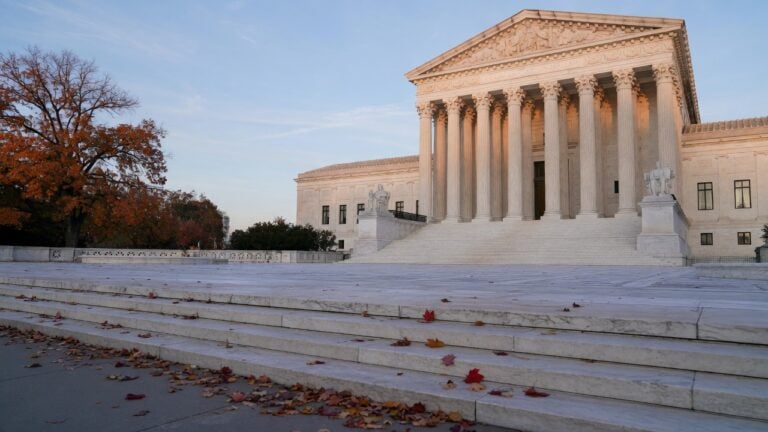
On March 2nd, the U.S. Supreme Court ruled 6-3 in Mirabelli v. Bonta that California public schools cannot hide the gender transitioning of children from their parents. The justices overturned the stay of the permanent injunction by the Ninth U.S. Circuit Court of Appeals, allowing the lower court action to proceed. In a press release celebrating the victory, the Thomas More Society called the decision “groundbreaking,” holding that “secret gender transition policies in schools violate the religious liberty and due process rights of parents.”
The Supreme Court left standing a decision by U.S. District Court Judge Roger Benitez, who ruled in favor of teacher and parent plaintiffs objecting to the state’s disregard for the rights of parents. At issue was the California Department of Education’s “guidance” that forces teachers to treat children in accordance with their preferred gender, “even lying to the parents if necessary.”
WorldNetDaily reported that the original lawsuit was brought by “teachers who expected to be punished if they refused to lie about a student’s gender identity.” Parents in the Escondido Union School District joined the action in opposition to the education department’s agenda.
Benitez said the California Attorney General, speaking on behalf of the state, claimed the plaintiffs’ lawsuit was “properly understood as seeking a federal constitutional exemption from the California constitutional right to privacy, as applied to gender identity in the school context.” But the judge pointed out that the attorney general got it “upside down,” that the plaintiffs were not asking the state “to magnanimously permit a sort of federal constitutional exemption. What plaintiffs seek is to force the state to respect their enduring federal constitutional rights as citizens of the United States.”
According to WorldNetDaily, the trigger for the case “was a young girl indoctrinated by school teachings into transgenderism. Her parents only found out about the agenda when she tried to commit suicide.” The notoriously liberal Ninth U.S. put Judge Benitez’s sensible ruling on hold. But that ruling is now reversed at least for now by the highest court in the land.

Accomplished lawyer and President of Eagle Forum Education and Legal, Molly McCann Sanders, shared her thoughts on social media immediately following the ruling. “The U.S. Supreme Court made a wonderful decision with respect to parental rights,” she said. “While the California case is being litigated through the lower courts, the Supreme Court has ruled that parents must be informed if their children are attempting to transition at school.”
Sanders continued: “The reason this ruling is so great is that it’s a question of who decides. It’s very clear that California schools believe the government, the schools, and the teachers should decide what’s best for children, and the Supreme Court says ‘no, parents are closest to their children. They are the ones who have the ability to keep their children safe and to help their children navigate these very important issues.’”
She further explained that when a court imposes or lifts an injunction, it considers the likelihood of success on merits. In other words, the parent plaintiffs are likely to succeed when the case is considered on its merits as it makes its way up through the appellate process. “Whenever the court reiterates that parents have a fundamental right to direct their child’s education, religious upbringing, or whatever the case may be,” Sanders said, “it strengthens parental rights across the board, and that’s a major victory for all of us.”
Although the Supreme Court’s ruling stems from a case in California, it has broad implications for all 50 states. Thomas More Society special counsel, Paul Jonna, said: “The court’s landmark reaffirmation of substantive due process, its vindication of religious liberty, and its approval of class-wide relief together set a historic precedent that will dismantle secret gender transition policies across the country.”
Collapsing ideology?
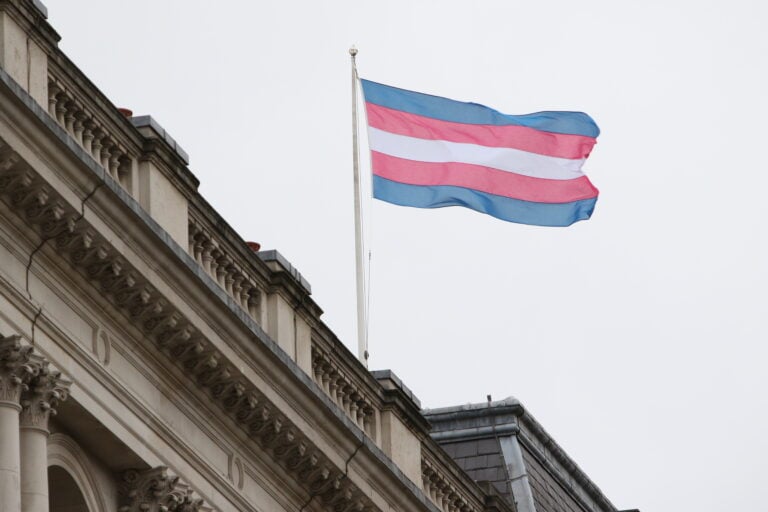
This ruling by the high court is the latest blow to the bizarre and scientifically flawed cult of transgenderism, which of late has been showing signs it may soon go on life support. While it may be too late for many surgically and chemically mutilated young victims, thousands more will be spared if this ideological scourge fades away.

On March 3, an article by The Dispatch described what it called “the first-of-its-kind payout to a detransitioner, Fox Varian, who was awarded $2 million in damages earlier this year by a New York jury.” A detransitioner is a person who underwent a gender transition while still underage and later, typically as a young adult, realizes the mistake and attempts to restore his or her biological sex. Varian underwent “a double mastectomy as a 16-year-old—despite a complex psychiatric profile, troubling family history, and indicators of broader identity instability.”
According to media accounts, Varian’s psychological issues likely contributed to her gender dysphoria, but for years the questionable pediatric gender “medicine” guidelines of the World Professional Association for Transgender Health (WPATH) have prevailed, causing untold harm. (See Education Reporter, December 2024 and November 2022.)
The Dispatch reported that while WPATH claimed the Varian case was about medical malpractice “not a referendum on gender-affirming care,” the organization’s standards of care “are shot through with contested, and at times, irreconcilable assumptions about the immutability of trans identities, and the relationship between these identities and mental health issues.” The article adds that WPATH’s focus on “honoring patient identities and ‘goals’ essentially ensures that the clinical decision-making tree always ends in affirmation.” In other words, WPATH typically recommends affirming the wishes of the child, who may be suffering from a variety of emotional and/or psychological ills.
As The Dispatch article makes clear:
- The affirmative model’s commitment to uncritically affirming all identity claims helps explain how you end up with high-profile detransitioner malpractice suits—Fox Varian, Soren Aldaco, Chloe Cole, Prisha Mosley, Luka Hein and Isabelle Ayala, among others. Many of these complaints fit a common pattern, often involving highly complex clinical cases that feature multiple psychiatric and developmental issues taking place within challenging family contexts—exactly the kind of cases which would signal to any experienced clinician the need for caution and delayed decision making….
ASPS issues statement
Almost in tandem with the Varian verdict, the American Society of Plastic Surgeons (ASPS) announced in a February 3 Position Statement its recommendation “that surgeons delay gender-related breast/chest, genital, and facial surgery until a patient is at least 19 years old.” (See Education Reporter, February 2026.)
While the ASPS is the first and only major medical association to so far issue such a statement, it is nonetheless significant, and many observers hope others will follow. Meanwhile, the Society for Evidence based Gender Medicine (SEGM), founded in 2020, states on its website that it was formed “in response to a proliferation of treatment guidelines that promote medicalized youth gender transition without the benefit of systematic reviews of evidence.”
SEGM laments that “prevailing guidelines rely on a limited selection of studies that suffer from a high risk of bias, and have low applicability to the current population of gender-dysphoric youth. Such non-evidence-based guidelines risk promoting suboptimal and harmful care.” This organization appears to inject a dose of sanity into the mad world of transgender ideology posing as “medicine.”
Last September, an opinion piece by Alleigh Marré, executive director of the American Parents Coalition, appeared in the liberal mainstream USA Today. Marré contended that media attention focusing on biological males using girls’ bathrooms and invading girls’ sports was obscuring the fact that parents are not being told the truth by their public-school teachers and administrators. She wrote in part:
- Missing in the loudest narratives are the voices of parents kept in the dark when school officials secretly transitioned their children, depriving these kids of counsel from those who love them most…. Missing are the testimonies of anguished young adults who say they were rushed into life-altering decisions they now regret…. Across the country, schools have adopted policies allowing children to “socially transition,” often with new names and pronouns, without informing their parents.
Marré continued: “Activist administrators and educators use these policies to insert themselves between parent and child, positioning themselves as the authority on a major issue affecting the child’s mental and physical health.” She emphasized the oft-repeated mantra that schools merely want to keep kids “safe” from parents who may not agree with the child’s whim, which schools then use as a license “to transition children in secret.”
But many parents and concerned citizens are hoping that recent developments, most pivotal of which is the pro-parent decision the U.S. Supreme Court just handed down, will put an end to the transgender madness that has gripped the country for too many years.
States Attempt to Force J6 Propaganda in Public Schools
With the election Donald J. Trump to a second term, the lies, exaggerations, and general hysteria over the events of Jan. 6, 2021 at the U.S. Capitol appeared to lose steam. Immediately following his inauguration, the president pardoned hundreds of J6 defendants in an acknowledgement that they had remained imprisoned for political rather than criminal reasons, most without due process.
But lest the uproar over J6 be allowed to ebb, as liberals and mainstream media outlets have done with the “mostly peaceful” BLM and Antifa riots, at least two blue states are pushing the J6 propaganda where they believe it will have the greatest impact, the public schools.
In a first-of-its-kind measure, Virginia lawmakers passed HB333, which prohibits schools from teaching that the Jan. 6 protest “was a peaceful demonstration or that there was massive fraud in the 2020 presidential election. According to Reader Supported News (rsn.org), Virginia is the first Democratic state to try to shape how such events are taught.”
The new law requires all teachers and instructional materials “to describe the January 6, 2021, insurrection at the United States Capitol as an unprecedented, violent attack on U.S. democratic institutions, infrastructure, and representatives for the purpose of overturning the results of the 2020 presidential election.”
The rsn article correctly states that politically motivated instruction has been the rule in schools for years. It cites a Washington Post analysis indicating that between 2017 and 2024, “dozens of states passed more than 120 laws and policies that reshaped instruction on race, racism, sexual orientation and gender identity — restricting or expanding what children are taught largely along political lines.”
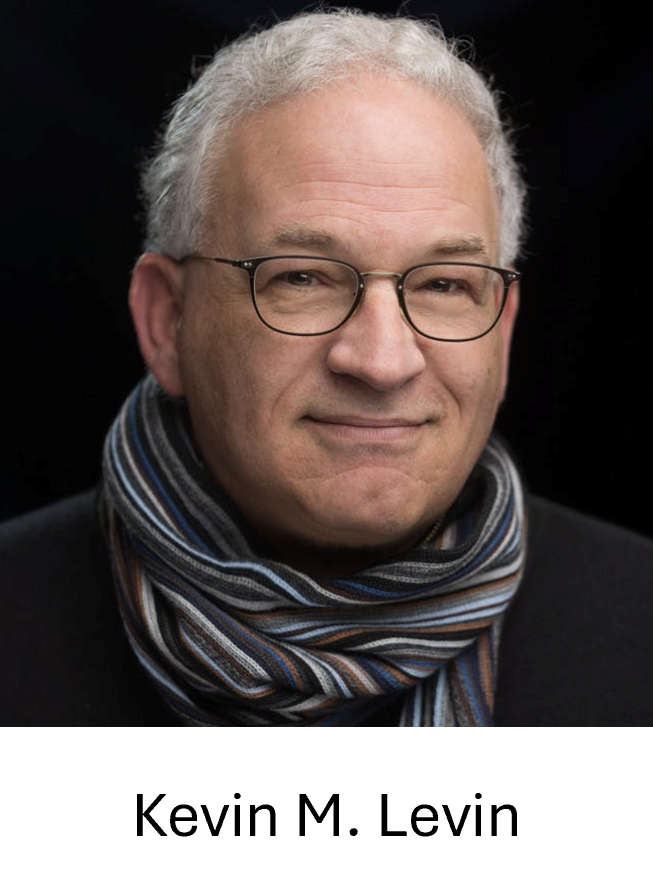
In an opinion piece on Substack, author, historian, and former teacher, Kevin M. Levin, wrote that the Virginia measure “should worry everyone.” Calling the law “a horrible idea,” he pointed out that not only does it “set a precedent for government control over historical narratives, it also bypasses the state’s curriculum standards.” He adds that when the interpretation of a statute is mandated by law, “the state begins to determine not only what is taught, but how it must be understood.”
In other words, rather than having a debate about what actually happened on January 6, such as that most of the demonstrators actually were peaceful and never entered the Capitol building at all, schoolchildren will be taught what the state requires them to believe about the event.
Levin further wrote that if one political party establishes the precedent of legislating curriculum, “future legislatures controlled by different parties will feel justified in rewriting history standards to fit their own political narratives. Over time, history education will become even more of a political pendulum that shifts with every election cycle.”
As a historian, Levin believes good education, especially history, “involves examining multiple sources, evaluating competing interpretations, and encouraging students to think critically about complex events.” He asserts that the state legislation he’s seen focuses broadly on subjects rather than specific events, which he says “is bad enough, but the Virginia bill constitutes another dangerous step.”
New York legislation
Similarly, the proposed New York legislation S6123/A3966 will require schools “to teach lessons on the violent Jan. 6, 2021, insurrection at the U.S. Capitol building,” according to the news outlet amNY. A quick read through published reports by amNY shows the radical left slant the instruction will likely take if this legislation passes.
The amNY article is all too familiar in its description of January 6 as “an angry mob of President Trump’s supporters, militia members, and white supremacists [who] set upon the U.S. Capitol building in an attempt to stop Congress from certifying the results of the 2020 presidential election that Joe Biden won, and Trump lost despite his false assertions that the election was stolen from him.”
This account charges that “more than 100 Capitol police officers were injured in the violence,” that Ashli Babbitt was shot and killed “when the mob, of which she was part, attempted to breach the office of then-House Speaker Nancy Pelosi.”
The article does not mention that Babbitt was unarmed, and as Judicial Watch told Fox News in October 2021 after receiving documents obtained through a FOIA lawsuit: “These previously secret records show there was no good reason to shoot and kill Ashli Babbitt. The Biden-Garland Justice Department and the Pelosi Congress have much to answer for over the mishandling and cover-up of this scandalous killing of an American citizen by the U.S. Capitol Police.”
It’s unlikely that these facts or any others about the J6 events will be accurately taught through curricula developed as a result of the Virginia law or the proposed legislation in New York.
Voice for truth
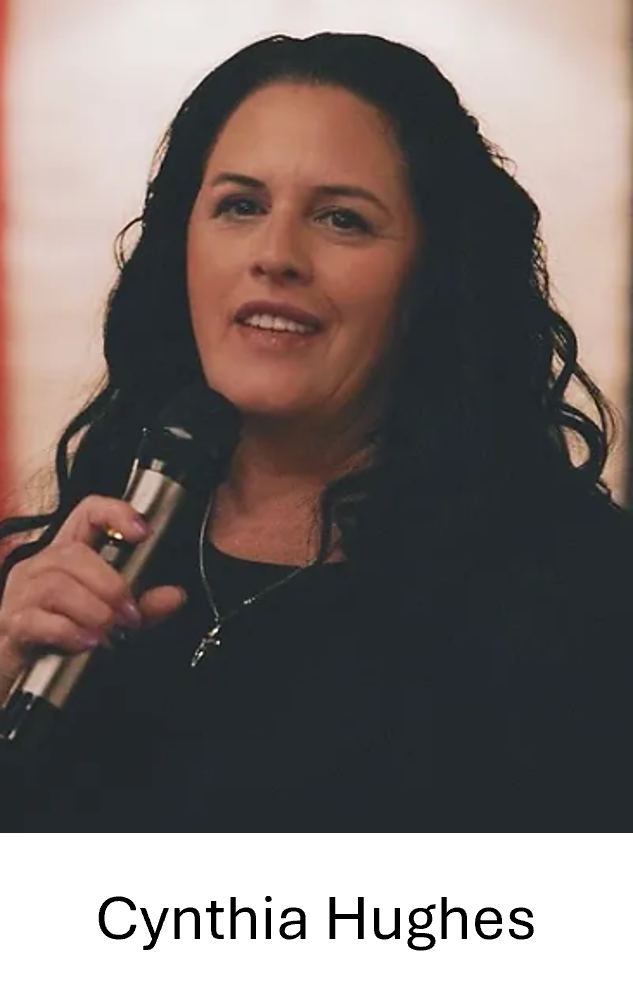
A few brave voices for truth emerged in the aftermath of January 6. One of the most effective was that of Cynthia Hughes, who started the Patriot Freedom Project to help those arrested in the wake of the protest, starting with her nephew. Along with many of these defendants, Hughes’ nephew was placed in solitary confinement in a Washington, DC prison without due process.
On her Patriot Freedom Project website, Hughes explains that most of the attendees at President Trump’s speech “were peaceful, hopeful, and determined to defend the integrity of America’s electoral system. Mothers, veterans, retirees, small-business owners, and everyday citizens gathered with no expectation that the day would spiral into chaos.”
The majority never entered the capitol or committed any act of violence, yet many were arrested and imprisoned anyway. A few of the defendants were not even present that day. As Hughes describes:
In the days after January 6, the Biden DOJ launched the largest criminal investigation in American history, but its focus went far beyond violent actors. Nonviolent Americans—many of whom never entered the Capitol—faced:
- Militarized predawn raids
- Denial of bond despite no criminal history
- Labels of “domestic terrorists”
- Months or years in solitary confinement
- Punishing plea pressures and extreme sentencing threats
Families were ripped apart, careers destroyed, and reputations shattered.
Hughes’ organization has assisted hundreds of J6 defendants and their families financially and emotionally. She also wrote a book, Due Process Denied, published in 2023, which provides a firsthand look at what life has been like for those impacted by what she calls “political imprisonment in America.” It details the broken families, lost lives, and traumatized children that resulted from excessive prison sentences for nonviolent conduct, pretrial detention used as punishment, and the resulting loss of income from breadwinners unable to work.
While Hughes concedes a small number of J6 protesters “made poor decisions,” she points out the double standard that was applied to them compared to BLM rioters and other perpetrators of far-left unrest. The minority of J6 attendees who rioted “became the pretext for the federal government to cast the entire crowd as extremists.”
What comes next?
In view of the Virginia law and the proposed bill in New York, it’s reasonable to postulate that at least some other blue states will introduce similar legislation. As Kevin Levin points out in his opinion piece:
- Another thing to keep in mind that is often overlooked is that the events of January 6 remain relatively recent and continue to be analyzed by historians, political scientists, and legal scholars. While many facts about the event are well established, its long-term significance in American history is still being debated and will continue to be debated for the foreseeable future.
He adds that when interpretations of contemporary events are codified into law, “they risk stifling historical conclusions before scholars have fully examined them. History is often reassessed as new evidence emerges or as scholars gain greater historical distance from events.”
Cynthia Hughes says January 6 is not simply an event, but “is a chapter in American history that revealed profound dangers within our justice system. The [presidential] pardons marked a turning point, but not the end.” Hughes plans to continue her organization’s mission “until every political victim receives justice.”
Particularly in blue states, conservatives should be vigilant that Virginia’s bad law and the proposed measure in New York could be replicated nationwide.
More on the Rebirth of Phonics & the ‘Mississippi Miracle’
“Balanced Literacy” is a topic that has grabbed headlines in recent years. On March 11, pundit, TV host, and writer, John Stossel, bemoaned it in a Reason Magazine Roundup article. As Education Reporter has pointed out, Balanced Literacy, or “Critical Literacy,” is simply another label for whole language, cueing, and sight reading. Some kids manage to learn despite these fads, but most never become proficient readers.
Stossel writes that failure to teach structured phonics “is popular because its ‘drill and kill’ technique is tedious.” But phonics has always gotten a bad rap because of its effectiveness. When the hidden goal of public education is to mold social justice activists, churning out good readers might potentially thwart that effort as children learn to think for themselves when they accumulate knowledge through the written word.
Stossel referenced a 2022 TIME article about teachers in Oakland, California who in 2015 complained that a phonics reading curriculum called “Open Court,” although effective, made them feel like “curriculum robots.” The Oakland School District “was the fastest gaining urban district in California for reading,” but the teachers didn’t seem to care and pushed back.
One teacher said the curriculum was “dehumanizing, this is colonizing, this is the man telling us what to do.” The successful phonics program that had performed a critical function by teaching students to read, including the district’s many disadvantaged students, was replaced with “a curriculum that emphasized rich literary experiences.” The same teacher noted: “Those who wanted to fight for social justice, they figured that this new progressive way of teaching reading was the way.”
Doubtless it was a tragic loss for the students. But the same teacher later reneged on his assessment and in 2019 began a campaign to reinstate the proven phonics program.
Science of reading prevails

As of November 2024, 40 states have passed laws championing the “science of reading” or, in simple terms, phonics instruction. In June 2025, the Albert Shanker Institute noted in a blog post that “a total of 118 laws in 23 states and the District of Columbia use the expression ‘science of reading’ in at least one piece of legislation passed between 2019 and 2024.”
After analyzing “over 400 literacy laws enacted between 2019 and 2024,” Shanker’s researchers arrived at “one clear takeaway: these laws are not just about phonics. In fact, most bills that mention phonics also reference phonemic awareness, fluency, vocabulary, and comprehension—that is, the five pillars identified by the National Reading Panel.”
The researchers observed, however, that many of these reading laws “overlook crucial elements like oral language and writing — only 23 states enacted legislation that references the five pillars plus oral language and writing. Even more striking, the vast majority say little or nothing about the role of content and background knowledge in supporting reading comprehension. These are real gaps that deserve critique.”
But essentially, the goal of these laws is to reinstate the only proven method for teaching reading, which is memorization of the alphabet and the sounds each letter of the alphabet makes, and then learning to blend the sounds together.
‘Mississippi Miracle’ continues
One state that stands out as a testament to the efficacy of systematic phonics instruction is Mississippi, which once ranked last among the states in student test scores but has risen to near the top thanks to revamped instruction programs in both reading and math. Last May, Education Reporter described the strides made by Mississippi and other southern states in reading achievement.
In January 2026, The New York Times reported in its online offshoot, The Week, that “Mississippi has risen from 49th in the country on national tests in 2013 to a top 10 state for fourth-grade reading levels, even as test scores have fallen almost everywhere else.” The article quoted Michael Petrilli, president of the Fordham Institute as saying that in terms of the states that are “helping kids coming from difficult circumstances learn as much as they can, Mississippi is doing much better than many other states, including wealthier states in affluent progressive areas.”
In a related article under its own banner, The New York Times reported that according to the Urban Institute, when adjusted for poverty and other student demographics, “Mississippi is No. 1 for fourth grade reading and math, and at or near the top in eighth grade.”
Struggling to make sense of Mississippi’s education achievements, the Times asked rhetorically: “How could Mississippi, with its low education spending and high child poverty, pull it off?” A few paragraphs later, the article cuts to the chase: “[The] state pushed through a vast list of other changes from the top down, including changing the way reading is taught, in an approach known as the science of reading, but also embracing contentious school accountability policies other states have backed away from.”
Besides making the switch to phonics, the state “raised academic standards and started giving each school a letter grade, A to F.” And schools get credit if their students show improvement, especially those in the lowest achievement percentile. Additionally, the state vets and approves the curriculum used by most of its school districts, and holds back third graders who cannot read at grade level.
Education progressives, starting with the teachers’ unions, typically frown on these types of strong measures and fight them tooth and nail. But fortunately for Mississippi, its teachers’ unions are weaker than in many other states, and opposition to boosting student achievement and academic success has to date been of negligible consequence.
Reading, math, and science connection
In late 2025, The 74 published a report showing that, in general, schools that are successful in teaching reading are also successful in teaching math and science. Researcher Chad Aldeman found 140 school districts that “were producing outstanding results across subjects and grade levels.”
When looking at school-level results, Aldeman reported that he “pulled up the 2025 test scores in the state of Mississippi.” He credited the state with having “some of the best schools in the country,” so he determined “it would be a good test to see whether they specialized or were consistently strong.”
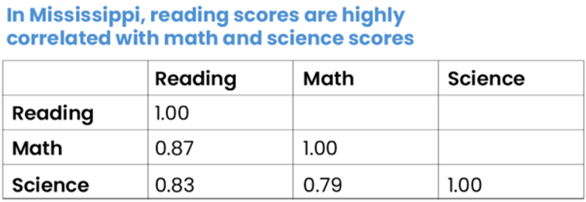
He found that, in Mississippi, “reading scores are highly correlated with math and science scores,” which suggests “schools with high test scores in one content area are very likely to also have high test scores in another subject.”
In order to compensate for the possibility that a school could just happen to enroll more higher— or lower-performing students, he also reviewed growth rates. “In Mississippi, the state measures growth using a model called a value table. Essentially, the state created eight performance levels, and schools receive points if they help students advance to higher tiers from one year to the next.”
Aldeman found that in Mississippi, “schools with high student growth rates tend to see improvement across multiple subject areas.” In other words, schools with high growth in reading scores are also likely to have high growth in math scores. He observed that “it’s fortunately rare to find a school that’s doing a great job in one subject area and letting kids down in another.”
His research further showed that Florida has “a similar accountability system as Mississippi,” and he found similar correlations across subject areas in Florida schools.
In his Reason article, John Stossel wrote that some educators insist on blaming “social things like poverty,” for poor student achievement. They point to “race, class, culture, and identity” as the real culprits, and believe “reading instruction should be left up to teachers.”
But the amazing success of states like Mississippi, one of the poorest states in the country, proves the fallacy of this argument. Citing new teaching aids such as the app, Mentava Reading, which use phonics, Stossel opined that parents in any state can teach their children to read “regardless of the progressive idiocy they may get in school.”
And any child can learn to read quickly and easily using Phyllis Schlafly’s proven phonics programs, Turbo Reader and First Reader, available to parents from Eagle Forum Education & Legal.
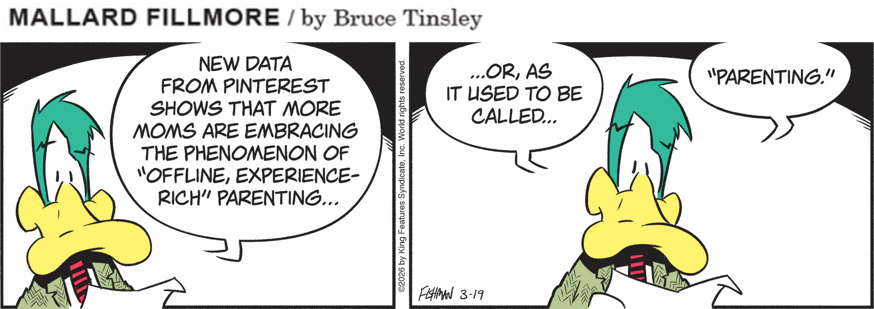
Mallard
Reader Books Flyer 2025

by Jay Payleitner, Regnery Press, 2025Happy Semiquincentennial, America! 250 Reasons Why America is Still Worth Celebrating
by Jay Payleitner, Regnery Press, 2025
Readers looking for a feel-good, fun book that will put a smile on their faces and pride for their country in their hearts will find it in Jay Payleitner’s new book. Happy Semiquincentennial can be a part of every celebration of our nation’s 250-year anniversary, and will then make a nice addition to every American coffee table.
The book is a pleasing collection of 250 names, places, and things that are truly “American” — accompanied by lively descriptions.
Without giving away all 250 Americanisms, below are the 17 categories Payleitner lists in his book, with examples from each category. These examples will likely resonate with most Americans, although every citizen will no doubt have his or her own favorites. Categories include:
- Exploring America—Example is Route 66.
- Landmark destinations—Example is the Grand Canyon.
- Routine American Life—Example is Friday Night Football.
- American Stuff—Example is the Teddy Bear, invented in 1902-1903 during the first Theodore (Teddy) Roosevelt Administration. At the same time, German citizen Richard Steiff invented a jointed, stuffed toy bear, which was exhibited in the 1903 Leipzig Toy Fair.
- American Tastebuds—While others might claim credit for some of Americans’ favorite foods, examples include Jerky (Native Americans), Pizza (Italy), Hot Dogs (Germany), Black Coffee. Yes, Americans love black coffee, but coffee from other countries is often so strong that Americans have to add water, in what is referred to as an Americano.
- Americanisms—Many have come from America’s pastime, baseball. Americans are hardly able to speak without using baseball catchphrases, such as “let’s touch base tomorrow”; “those numbers are in the ballpark”; “I dropped the ball on that one”; “they’re bringing in a heavy hitter”; “we need to cover all the bases”; “keep your eye on the ball”; “it’s a whole new ballgame”; etc.
- Very American Places—Example is Corn Mazes.
- American Oratories—Example is Lou Gehrig, “Luckiest Man.”
- The American Way—Example is Participation Trophies.
- Flora and Fauna—Example is the American Bald Eagle.
- America’s Sports GOATS (Greatest of All Time)—Example is Babe Ruth.
- America’s Musical Soundtrack—Example is John Philip Sousa.
- Heroes Among Us—Example is Johnny Appleseed.
- American Ingenuity—Example is Popsicles, which are full of food dye banned in Europe. (And we’re still alive?)
- Land of Opportunity—Example is the Grassroots.
- It’s a Festival—Example is Groundhog Day.
- Emerging Patriotism—Example is the lyrics of the Star-Spangled Banner.

The preceding is a sampling of the America-specific gems the author provides in Happy Semiquincentennial, which readers should find entertainingly familiar. Those wishing to put a smile on their faces and fill their hearts with love for their country should avail themselves of this enjoyable read.
To read the entire book, go to Amazon.com to order!
Education Briefs
In a unanimous ruling in early March, the U.S. Court of Appeals for the 5th Circuit affirmed that teachers have a “right to pray” on school grounds. The American Center for Law and Justice (ACLJ) represented teacher Staci Barber, who was forbidden by her principal at Cardiff Junior High in the Katy Independent School District in Texas to pray where students might see her. The case, Barber v. Rounds, began when principal Bryan Scott Rounds told Barber that the school district “prohibits employees from praying with or in the presence of students.” He added that even if no students were present, teacher prayer was off limits. As reported by WorldNetDaily, after praying at the school flagpole the previous three years without incident, Barber and a few fellow teachers prayed despite Rounds’ order, and were physically stopped when he interrupted them and pulled them into a conference room where he repeated his directive: “Teachers may not pray where students ‘might see’ or ‘be influenced by’ their conduct.” The ACLJ called the 5th circuit’s ruling “sweeping,” noting that it reiterated a 2022 Supreme Court ruling in Kennedy v. Bremerton School District, which established that someone engaging in “personal prayer outside of official duties is doubly protected by both the Free Speech Clause and the Free Exercise Clause of the First Amendment.”
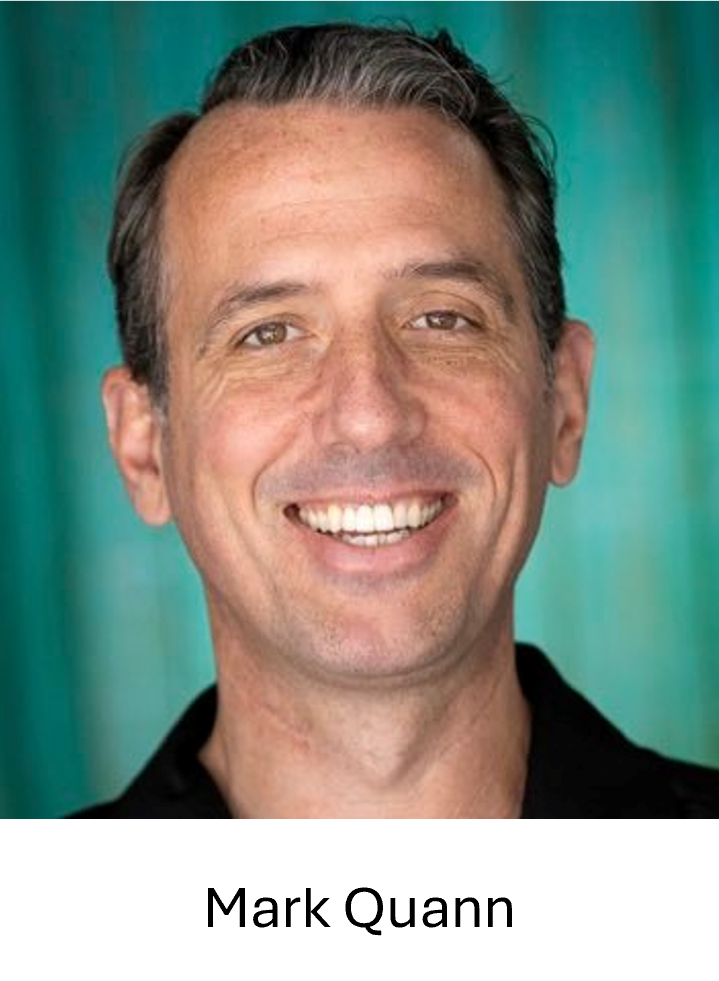
New research from the National Home Education Research Institute (NHERI) shows that 62% of peer-reviewed and/or representative-sample studies over a period of 30 years “have revealed a positive effect for the homeschooled students compared to institutionally schooled students.” While NHERI acknowledges that “neither scholars nor advocates claim homeschoolers always excel or that research proves causation—focus is on consistent positive trends”—its research debunks the false claims of opponents that studies showing homeschooled students generally perform better are flawed. Mark Quann, financial expert, author, and Founder and CEO of The Perfect Portfolio, a division of REMii Group Inc., recently posted on X that NHERI’s research further shows “homeschool students typically score 15-25 percentile points higher on standardized tests, and about 78% of peer-reviewed studies show homeschool students outperforming traditional school students academically.” But what really surprised Quann were the first-person encounters he had with students when he was teaching homeschoolers “a financial literacy course through Classical Learner.” He met a 14-year-old running a business with 9 employees, and a 9-year-old whom he taught the Buy, Borrow, Die strategy allegedly used by “the ultra-wealthy.” Quann observed that the homeschooled students, rather than memorizing facts for tests, “were thinking, building, and solving real problems.” He added: “The great news for America is that roughly 7.8% of American children are now being homeschooled, and that number continues to rise as families look for education that prioritizes curiosity, entrepreneurship, and independent thinking.”

Under Governor Gavin Newsom’s watch, the state of California’s gender definition ultimately resulted in the Supreme Court’s review and ruling in Mirabelli v. Bonta. (See High Court Rules Against Schools Pushing Transgender Secrecy in this issue of Education Reporter). On March 8, the New York Post published an op ed by Thomas More Society Special Counsel, Paul Jonna, who explained that three years ago, Governor Newsom labeled policies that provided for parental notification of a child wishing to change his or her gender identity “an assault on the trans community.” Now, in the wake of the Supreme Court’s decision to require such notification, the governor is claiming “teachers will be ‘forced to be gender cops.’” Jonna described California’s definition of gender identity as “the most absurd, circular definition imaginable”; meaning “an individual’s stated gender identity without regard to any contrary statement by any other person, including a family member.” Thus, “the policies and legal directives enforced by the State of California” under Newsom, required teachers to “unhesitatingly accept” a student’s assertion of his or her gender identity and only inform the parents if the student consented. In other words, teachers throughout the state were required to hide a child’s gender identity at school. Newsom called parental involvement in this area “policing,” which Jonna noted most people would call “parenting.” After the ruling, Newsom whined that it “undermines student privacy,” but, as Jonna observed, “thankfully, the U.S. Supreme Court rejected that premise entirely. The court found that California had ‘cut out the primary protectors of children’s best interests: their parents.’”
Climate Cult Grows More Subversive

By Jason Isaac, Daily Caller News Foundation
Originally posted by Daily Caller News Foundation, March 4, 2026. Reprinted by permission.
The professional climate alarmists aren’t fading away. They’re practically mutating. Louder, angrier, and more desperate than ever, they’ve learned that if outright activism draws too much scrutiny, the next best move is infiltration and subversion. Now they’re embedding themselves deeper inside trusted institutions and laundering their message through official channels.

Some in the media want Americans to believe Democrats are quietly retreating from aggressive climate messaging. The opposite is true. The most zealous voices in academia and government are amplifying the panic, using their credentials not as evidence of expertise but as weapons of intimidation. Their “science” isn’t about discovery. It’s about control.
Michael Mann is the perfect example. He turned a routine Olympic broadcast into a climate sermon, claiming snow conditions were proof of global collapse. That wasn’t scientific analysis—it was fearmongering presented as commentary.
Mann has compared President Trump to Hitler and smeared conservatives as fascists.
Texas A&M professor Andrew Dessler follows the same script. In one moment, Dessler argued that economic models used by plaintiffs to calculate damages for the so-called social cost of carbon are “made up.” Then, in the next, he is engaged in emotional outbursts. In academia today, volume and anger aren’t liabilities; they’re virtues. The showmanship draws attention. In any other field, emotion like that would be disqualifying. That’s not science; it’s performance.
This culture of performative panic has moved into a new and more dangerous phase: subverting institutions through the bureaucratic backdoor. Look at the Federal Judicial Center (FJC), which recently and quietly pulled the climate chapter from the online version of its official Reference Manual on Scientific Evidence. They did so because the chapter, written by activist scientists pushing extreme climate narratives, triggered a backlash that threatened the FJC’s credibility and funding.
But here’s the trick: the chapter didn’t disappear. It’s still live on the National Academies of Sciences (NASEM) website, where the organization has explicitly stood by it in the pages of The New York Times. The Academies, which hold the copyright, may even continue printing versions that include it. While the FJC shields itself from scrutiny, it quietly directs readers to NASEM, outsourcing climate indoctrination to a proxy. This is by no means a retreat. It is reinvention — a deliberate laundering of the same activism through new institutions to preserve the illusion of legitimacy.
The same academics who once claimed to be neutral arbiters of truth are now weaponizing institutions to hide their activism behind bureaucratic credibility. They’re embedding their ideology deeper into the machinery of government, courts, and policy schools—places the public rarely looks. This is the next phase of their radical climate crusade. When their narrative collapses under scrutiny, they simply shift it to another institution and continue the mission.
Meanwhile, ordinary Americans pay the price. Soaring energy costs, unreliable grids, and overregulation are the fruit of policies born in ivory towers and rubber-stamped by agencies too afraid to challenge the climate orthodoxy. Families choosing between groceries and heating bills don’t need another federal manual telling judges that skepticism is heresy—they need affordable, dependable energy. Climate extremism punishes the people who keep this country running.
Those who believe the climate radicals are retreating are fooling themselves. They’re not backing down—they’re burrowing in. Every time they’re exposed, they shift venues or change labels, but the mission stays the same: centralize control in the name of “saving the planet.” When power over how we heat our homes, drive to work, or grow food moves from citizens to bureaucrats, liberty vanishes with it.
The veneer of science gives this movement authority it doesn’t deserve. Scratch that surface, and it’s politics all the way down. Real science welcomes debate. Climate extremism silences it. The FJC’s quiet erasure and NASEM’s defiance show just how far this has gone—the climate cult doesn’t compromise; it adapts.
Americans need to see this clearly: the radicals aren’t losing ground. They’re evolving into something even more strategic. It’s time for those who believe in freedom, affordability, and reason to speak up before bureaucracy and ideology complete the takeover.
Jason Isaac, a former member of the Texas House of Representatives, is founder and CEO of the American Energy Institute. Prior to starting the Institute, Mr. Isaac was elected four times as the state representative for Hays and Blanco counties in the Texas Hill Country.
Education Related Links