Prevail or Fail: Transgender Cult Under Fire
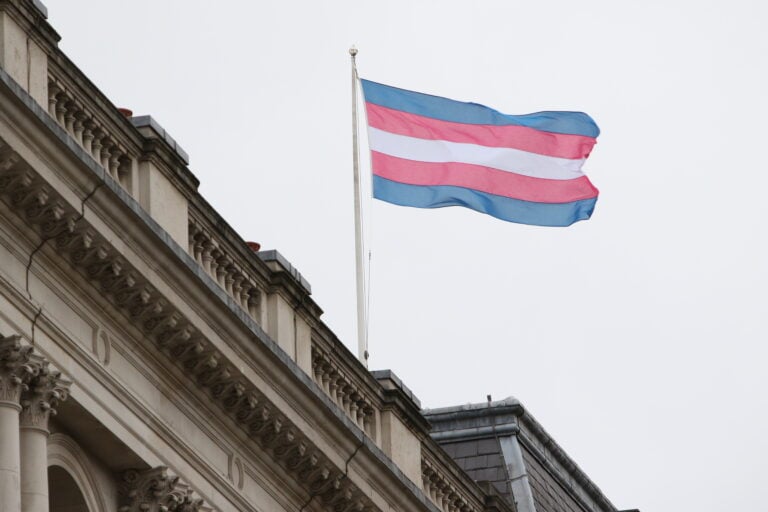
Since 2015, the cult of transgenderism has exploded, with more than 100 so-called “pediatric gender clinics” now in operation that have been chemically and surgically “transitioning” children with impunity. More recently, however, the facade of “gender affirming care” has begun to crack under the burden of its ugly reality.
Many are likely aware of the recent publicity surrounding whistleblower Jamie Reed, and her January 26 article in The Free Press describing the atrocities taking place at one of these gender clinics, the Washington University Transgender Center at St. Louis Children’s Hospital. Reed describes herself as “a 42-year-old St. Louis native, a queer woman, and politically to the left of Bernie Sanders.” But during her four years as a case manager at the center, she witnessed ever-increasing numbers of youth, mostly girls, “many with no previous history of gender distress,” declaring out of the blue that they were transgender and demanding “immediate treatment with testosterone.”
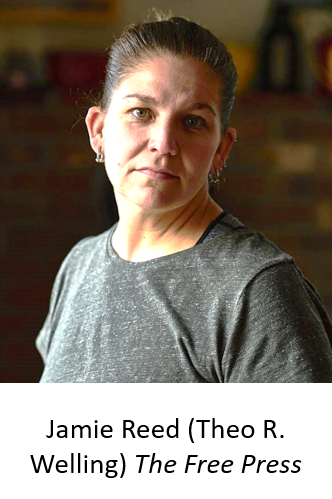
Despite the fact that these children often suffered from physical maladies such as obesity, and psychological problems including depression, eating disorders, anxiety, and autism, Reed noticed that the doctors were quick to assert that their gender identities “reflected something innate,” and were therefore put ahead of their other serious issues in importance. Reed disclosed that these girls “only had to see a therapist once or twice before getting the green light” for testosterone prescriptions.
Reed’s testimony revealed the serious side effects many young patients experienced as a result of the drugs used to “treat” them. “Our patients were told about some side effects, including sterility,” she wrote. “But after working at the center, I came to believe that teenagers are simply not capable of fully grasping what it means to make the decision to become infertile while still a minor.”
She described a 15-year-old male patient who was given bicalutamide, a medication used to treat metastatic prostate cancer. One of its side effects is that “it feminizes the bodies of men who take it, including the appearance of breasts.” Reed explained: “The center prescribed this cancer drug as a puberty blocker and feminizing agent for boys. As with most cancer drugs, bicalutamide has a long list of side effects, and this patient experienced one of them: liver toxicity. He was sent to another unit of the hospital for evaluation and immediately taken off the drug. Afterward, his mother sent an electronic message to the Transgender Center saying that we were lucky her family was not the type to sue.”
Some patients treated at the center had endured severe trauma and were suffering from serious psychoses including schizophrenia, bipolar disorder, PTSD, and more, and were already taking, as Reed described it, “a fistful of pharmaceuticals.” But this did not stop the center’s medical personnel from pursuing gender transitions for these very troubled children.
Disregard for parents’ rights
While some parents were either themselves too distressed or merely went along with their children’s whims and the forceful recommendations of the center’s doctors, others were left in the dark or their wishes trampled. As Reed described: “In Missouri, only one parent’s consent is required for treatment of their child. But when there was a dispute between the parents, it seemed the center always took the side of the affirming parent.
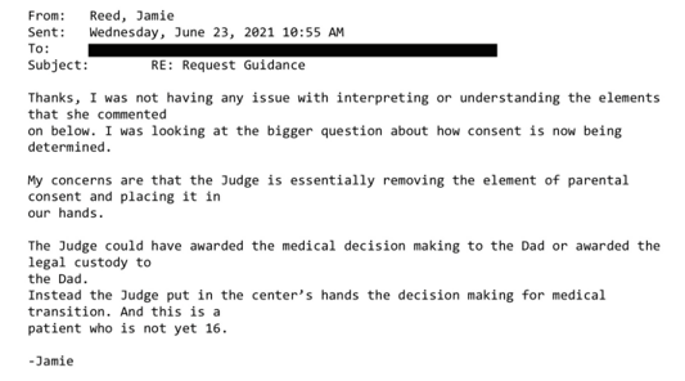
“My concerns about this approach to dissenting parents grew in 2019 when one of our doctors actually testified in a custody hearing against a father who opposed a mother’s wish to start their 11-year-old daughter on puberty blockers. Reed found the mother “quite disturbing” and felt that the child “didn’t meet the criteria” for gender transitioning. Nonetheless, “after the hearing where our doctor testified in favor of transition, the judge sided with the mother.”
Reed described another girl who later regretted having had a mastectomy, and a young male who was linked to a “gender-affirming” therapist without his parents’ knowledge. Predictably, when Reed objected to these outrages, her performance reviews began to suffer and she eventually transferred to another part of the Washington University School of Medicine. Thus far, she has not been fired.
Attorney General gets involved
On January 26, Reed sent a letter to Missouri Attorney General Andrew Bailey asking that he “please accept this correspondence as a formal complaint concerning questionable medical practices and treatment of minors” by the Pediatric Transgender Center at Washington University School of Medicine at St Louis Children’s Hospital.
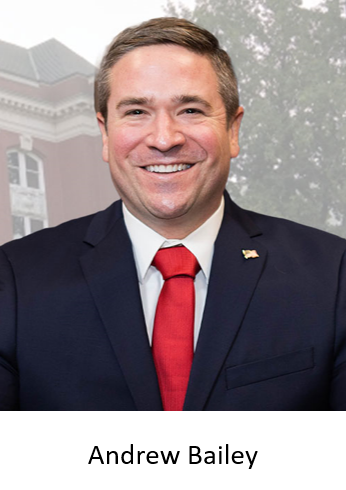
Her letter recounted the “lack of informed consent” among parents who are not told of the adverse reactions to drugs, the “intentional abuse and intimidation of parents who do not fully support medicalization and/or gender altering treatment of their children,” and the fact that minor patients are seen at the center “without the knowledge of all legal guardians” that the visits are occurring.
Reed further wrote that directors and administrators “created a culture of ‘get on board or get out’ and regularly intimidated Center staff in an attempt to silence ethical and medical concerns being raised by staff.”
As a result of the information and “sworn affidavit” she provided, Attorney General Bailey’s office opened an investigation of the center. Several mainstream media outlets reported this news, including the New York Post, Fox 4 News Kansas City.com, and others.
The attorney general released the following statement:
- As Attorney General, I want Missouri to be the safest state in the nation for children. We have received disturbing allegations that individuals at the Transgender Center at St. Louis Children’s Hospital have been harming hundreds of children each year, including by using experimental drugs on them. We take this evidence seriously and are thoroughly investigating to make sure children are not harmed by individuals who may be more concerned with a radical social agenda than the health of children.
Sen. Josh Hawley opens investigation
On February 9, Missouri’s Senior Senator, Josh Hawley, announced that his office would also investigate the center. In a letter to the university’s chancellor and hospital leadership, Hawley demanded that “the medical records of minors referred to the center be handed over.”
Hawley’s letter cited Reed’s testimony in The Free Press. His letter reads in part:
- The whistleblower reported that the Center’s “working assumption” was to pursue aggressive and early intervention, despite research indicating that the vast majority of children with cross-gender identification desist by puberty… This report builds on recent revelations that the Center counseled educational authorities to conceal information from parents regarding their children’s cross-gender identification. On January 17, 2023, news reports indicated that Parkway School District in St. Louis County has been concealing students’ “chest-binding” from their parents—and that the Center encouraged such concealment. Encouraging teachers to lie to children’s parents is unconscionable. If even a fraction of the whistleblower’s new allegations is corroborated, the Center should be immediately shut down.
Hawley’s office is demanding an immediate response to an in-depth list of questions, keeping the responses “consistent with federal privacy protections for patients.” The questions call for information on the number of minors referred to the center who have been prescribed puberty blockers, cross-sex hormones, and any complications resulting from these treatments, as well as how many children eventually desist and return to their birth gender.
The Senator also wants an “exhaustive accounting” of guidance provided by the center or its personnel to “third-party stakeholders in response to inquiries regarding youth gender transition in contexts where parents or guardians are deemed insufficiently supportive of transition.”
The senator’s office will further delve into the “sources of funding, federal and non-federal, that it receives for gender-related treatments,” including insurance payments, grants, and institutional or individual donations.
Many observers hope these investigations shed sufficient negative light on Washington University’s Pediatric Gender Center to force its permanent closing.
Pro-Child Advocates Speak Out
Author, political commentator, podcaster, and documentary filmmaker, Matt Walsh, recently testified before a Tennessee House of Representatives’ Health Committee about whether or not 16-year-old kids are capable of making adult decisions with respect to life-changing surgeries. Walsh was accused by his Democrat questioners of saying that 16-year-olds should marry and that 16-year-old girls should get pregnant. Walsh acknowledged the attack and calmly explained that the remark was an observation he had made many years ago on his radio show about how, historically, people married at young ages.
After correcting his questioner [Rep. Caleb Hemmer, D-Nashville] and not about to be bullied, Walsh continued: “People are considered adults at 18, but their brains are not fully developed until they’re 25, so we should be considering whether we should be doing these surgeries to people at 18. But certainly before 18 it shouldn’t be considered.” He then pointedly asked: “Do you think that 16-year-olds could meaningfully consent to having their body parts removed?” An awkward silence followed his question, then Hemmer haltingly informed Walsh that “We ask the questions.”
A video clip of Walsh’s testimony was posted on Twitter with the descriptor: “Watch @MattWalshBlog paralyze a house full of Democrats into 12 seconds of absolute stunned silence with this simple question.” The clip prompted a flurry of comments. One user responded: “Awkward silence to a very simple question that any rational person would answer NO to, followed by [the] stuttering response of ‘We ask the questions’ tells you everything you need to know. Dems have been hijacked by extremists & are afraid to speak honestly about important topics.”
Another user said Walsh deserves “a medal,” while still another mimicked: “We ask the questions. In other words, ‘shut up, you’re revealing our evil agenda.’”
Common-sense research
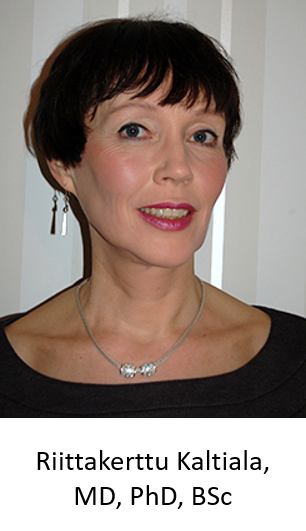
On February 8, The Epoch Times reported that “a leading Finnish pediatric gender expert” is speaking out against transgender therapies being pushed on children. The expert, Dr. Riittakerttu Kaltiala, chief psychiatrist at Finland’s Tampere University’s department of adolescent psychiatry, explained that “some children will strongly identify with the opposite gender at some point in their lives,” but that “four out of five will feel differently about the matter once they hit adolescence.”
Kaltiala cited the fact that “there has been a tenfold increase in the number of children with ‘gender identity’ issues since 2015, most of whom are teenage girls.” This sounds familiar because it mimics the same type of herd mentality that whistleblower Jamie Reed observed (see Prevail or Fail in this issue).
Dr. Kaltiala dismisses claims by the pro-transition crowd that children who express gender confusion are more likely to commit suicide and therefore must be given treatment. Such claims are “purposeful disinformation,” she asserts, “and shouldn’t be spread.”
In fact, new studies conducted in both Finland and Sweden show that “the mental health among minors who received hormone treatments deteriorated following intervention” and that “suicide mortality” increased among adults who had subjected themselves to sex-change procedures.” [Emphasis added.]
Leor Sapir, a fellow at the Manhattan Institute, used Kaltiala’s interview and the related European studies to highlight “how out of step the U.S. medical establishment is with its European counterparts on pediatric gender medicine. Doctors and medical groups in Finland have been willing and able to stand up to activists, including within their own ranks,” he said.
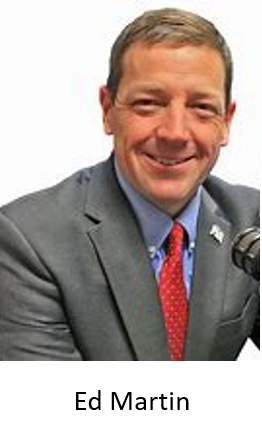
Pointing to these same studies, Phyllis Schlafly Eagles President Ed Martin stated the obvious in a press release: “Even a quick look at new research offers a scathing indictment of the American medical community,” Martin wrote. “They certainly aren’t ‘following science,’ but instead are making up political and cultural answers for manufactured problems. It goes against the very core of our national values and the thousands-of-years-old Hippocratic traditions in medicine.
“Many of Dr. Kaltiala’s conclusions are scathing indictments of the rampant gender ideology cult in America,” Martin continued. “She found that legal or social ‘interventions’ in the child’s life to reinforce a supposed gender change cause an incredible amount of harm. Basically, she says, it becomes a case of the adults telling children ‘this is the right path for you.’ This resulted in major mental health problems for young people, far more than any problems that stemmed from the original gender dysphoric condition.”
Martin urges that America “Pump the brakes. We have to stop the stealing of our children by a radical gender ideology… The quacks pushing this on our nation are revolutionaries, bent on destroying our future generations. There are still honest researchers trying to catch up with the trail of devastation being forced on our kids, and they need all of us to help spread the word.”
UPDATE: On February 23, Matt Walsh tweeted that the Tennessee legislature “has now passed the bill banning child mutilation in the state. We’re fighting. We’re winning. And we aren’t even close to done.”
Epidemic of Illiteracy, and a Response
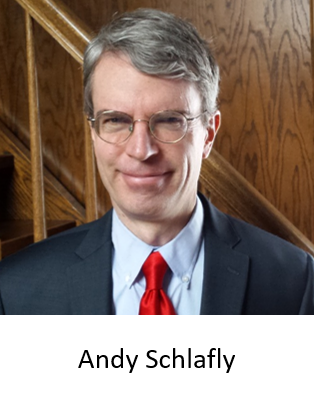
The following is an original article written exclusively for Education Reporter by Andy Schlafly, a conservative attorney who practices before the U.S. Supreme Court and many lower courts. Andy is also a teacher, having instructed more than 400 teen students and written textbook-length course materials on American history and other advanced high school level subjects. He holds a Bachelor of Science (B.S.E.) degree in engineering from Princeton University and a Juris Doctor (J.D.) law degree from Harvard University.
An epidemic of illiteracy in the U.S. has been building for decades. Estimates are that more than 40 million American adults are illiterate, while third-grade reading proficiency has been declining year-to-year. Performance on annual tests by public school students has sharply declined since 2020, which some attribute to the Covid pandemic or the response to it.
As The Hechinger Report, a website which focuses on education, explained in November 2021 after interviewing a public-school teacher named Andrea Yon: “Before the pandemic, some of her struggling seventh and eighth graders read at a fifth or sixth grade level. ‘They’re now reading at a third and fourth grade level.’”
The Hechinger Report is named after the longtime education editor of The New York Times until 1990, Fred M. Hechinger. This Report has published multiple articles about the continuing failure of schools to properly teach youngsters how to read. “Kids struggle to read when schools leave phonics out,” The Hechinger Report explained. “Schools too often leave out a key piece of the reading puzzle because teachers aren’t trained to teach phonics. … But without explicit and systematic phonics instruction, many children won’t ever learn to read very well.”
Edutopia, another publication devoted to education, reinforced this pro-phonics theme in an interview with University of Chicago professor emeritus Timothy Shanahan, which was published in late January. “Right now, there’s a huge push to improve phonics instruction, and I’m obviously a big supporter,” Shanahan said.
During the pandemic, many parents realized for the first time that schools are failing to teach their children how to read. Some noticed when they watched Zoom broadcasts from the classroom that neither their children nor other students in the class could properly read.
For decades it has been “settled science” that phonics is the superior method for teaching reading, and even The New York Times admitted this fact in a 2018 opinion piece on the topic. Yet to this day phonics is not taught in the average public-school classroom, and Johnny still can’t read, to paraphrase the 1955 classic Why Johnny Can’t Read that pinpointed the lack of phonics instruction as the cause of illiteracy. Austrian-born educator Rudolf Flesch startled American parents with his bestselling book, and now he is nearly universally recognized as having been right.
Sight reading, “look-say” or “whole language” methods of teaching reading are inferior but continue to be commonly used. Teaching children how to sound out words phonetically should be the standard method of instruction, and sight words (such as pronouncing the word “one” by sight rather than phonetically) should be taught as the rare exception.
Success with Phonics in Bethlehem
Back in 2017, assistant superintendent for the school district in Bethlehem, Pennsylvania, Jack Silva, realized that his students were not correctly learning how to read, and he converted the method of instruction to a phonics-based approach. As the chief academic officer, Silva discovered that his district had been using a balanced literacy method for teaching reading, and it was not succeeding.
In balanced literacy “students are encouraged to use word analogies and pictures or context to identify words,” as the Iowa Reading Research Center explains. This includes a teacher reading aloud to students and then asking students about what was just read. It also includes setting aside time for students to find books to supposedly “read on their own,” which defies logic because students who can’t read are unlikely to seek out books to read on their own.
The balanced literacy approach was not working in the Bethlehem School District, nor is it working in most places where it is still being used. Testing in Bethlehem revealed that only 56 percent of students were proficient at reading in the third grade.
Assistant Superintendent Silva then did what others have merely talked about: he switched his school district to phonics instruction, and as a result the improvement in reading skills among the students has been dramatic.
All public schools nationwide are required to assess the performance of their students in reading and math, and these scores are made public as required by law. U.S. News & World Report now ranks even high schools by how well they are performing academically, in an expansion of its famous ranking of colleges and higher education.
By 2020, the results were in on Bethlehem second-graders who were the first group of students taught with the phonics method beginning in kindergarten. The school district had traditionally struggled, but a record 78 percent of second-grade students district-wide satisfactorily reached a key benchmark, which resulted in the best performance ever achieved by the district.
By 2022, more data became available with additional good news. New test results showed that 84 percent of the kindergartners in the Bethlehem school district were performing at or better than the benchmark level, while three of the district’s schools achieved 100 percent success.
Impact of the Response to Covid
Schools in Pennsylvania and much of the country were shut down during Covid, and the long-term harmful impact of these closures is now being realized as well as reflected in test results. The scores reported in spring 2022 were significantly lower throughout all of Pennsylvania, where its governor had shuttered the doors of public schools for an extended period.
Overall, public school test scores in reading and math have not returned to pre-pandemic levels. “You can’t deny the influence of the pandemic, it did set us back,” commented Silva.
But in most places, literacy was already in decline well before the pandemic, and unfortunately there are political incentives for perpetuating illiteracy despite the availability of the superior phonics instruction method that is proven to work.
Political Incentives for Illiteracy
After all, an illiterate population is a dependent one, more reliant on the media and the government for information and services. A higher level of literacy means a higher level of independence and less willingness, for example, of voters to allow their ballots to be filled in and cast by a ballot harvester, which is a Covid-era development that is now swaying many close elections.
Two states that have among the highest rates of illiteracy in the United States are Georgia and Arizona, where elections are decided by razor-thin margins dependent on ballots that are mailed in or collected from drop boxes. Some of these ballots are filled out for illiterate voters, and the higher the rates of illiteracy, the more likely it is that one political side can engage in voter manipulation.
This issue is analogous to that of illegal immigration, which is allowed and even encouraged today by Democrats while opposed by some Republicans. Democrat politicians see future Democrat voters in illegal aliens, and they may feel the same way about illiterate children who are never properly taught how to read.
In sum, there is no longer any debate about which is the best method for teaching children to read. It is phonics, as promoted by Phyllis Schlafly beginning in 1955. Parents and thoughtful school administrators like Jack Silva need to buck the system and overcome the political obstacles that are preventing today’s children from reaping the benefits of phonics and becoming successful readers.
Deceitful School Administrators Subverting Parents, State Laws
The pro-family organization, Accuracy in Media (AIM), has been busy exposing the intentional undermining of parents’ wishes and state legislatures using investigative journalism reminiscent of Project Veritas. Most recently, AIM posted an undercover video on Twitter of Utah public school administrators and union officials bragging about the presence of CRT and social-emotional learning (SEL) in every school. “We just don’t tell the parents,” one official admitted.
In the video, teacher specialist Letitia Vigil explains how her team coaches teachers to “frontload some of those conversations that, you know, might be considered CRT or white privilege.” We teach them how to “name things and how to talk about things.”
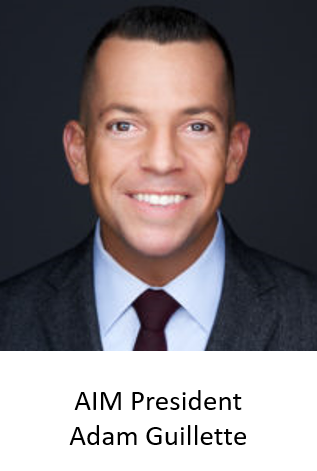
Michelle Love-Day, director of culture and diversity, told the AIM journalist what educators would do in the event that, as the interviewer put it, “a stupid CRT law” is passed. Love-Day explained that “it just goes back to the local education association. There are loopholes.” For example, she disclosed that they “don’t do an opt-out” prior to the visits; “[we] just go out, meet the kids, work with them. We operate like a math department, and then we give [the parents] a letter saying, ‘we were in your school and this is what we talked about.’”
In other words, parents are told that their children were exposed to CRT and other propaganda after the fact, and how much the letters actually reveal is unclear. But one question parents might logically ask is what right do these people have to come out and “work with” their children on non-academic and controversial topics without their prior knowledge or consent.
A third administrator then appears in the video, laughingly beaming as she boasts: “We have a teacher at the high school and his name is Isaac. When all of this stuff happened (presumably the BLM riots), he had a Black Lives Matter flag, great big one. And he was just loud and proud. And even after the board said, you know, you can’t have a flag bigger than the American flag. I mean, it was huge.” Giggling joyfully, she explains that when the school board told “Isaac” to take the flag down, “he was like, ‘no.’ I’m not going to. Whereas other teachers were fearful, right? He was like, ‘write me up. Fire me. What are you going to do?’” The clear implication here is that the school board backed down in the face of Isaac’s defiance, due at least partly to the fact that he “had tenure.”
Finally, the video reveals that at least one high school — West Jordan — has an “elective” course on social justice for seniors that the students don’t tell their parents about. “It was a required class, English 12,” an administrator explains in the video. Executive Director Sarah Roberts of the Ogden (Utah) school district bragged that she came up with an alternative to the “woke curriculum” for students whose parents object. She slyly confides to the AIM journalist that “It is still an SEL curriculum,” and that she told the unsuspecting parents: “So how about your child do this and this and this during that time, that sounds fantastic.” While she concedes that the alternative curriculum is not exactly the same as the CRT curriculum, “it meets the same objectives.”
In the last few seconds of the video, the AIM investigator speaks briefly to teacher Katrina Kennedy, who confides that she is frustrated that “you can’t ask for pronouns, they made that law. But I still did and a lot of the high school teachers I know, especially in the English department, still did because we were like, ‘this is bullcrap.’”
Mallard

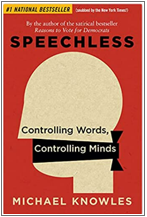
Speechless: Controlling Words, Controlling Minds
Michael Knowles, Regnery Publishing, 2022
If there is one book to help conservatives understand the tactics of the enemy and win the political fight for restoration of goodness, truth, and beauty in their country, it is Michael Knowles’ Speechless: Controlling Words, Controlling Minds. The Daily Wire talk-show host and graduate of Yale, originally known for his satirical bestseller, Reasons to Vote for Democrats, now impresses Americans with his extensive use of vocabulary as he explains the reason behind the hypocrisy that has permeated every aspect of American life.
Knowles exposes the intentional misuse of language employed by liberals over the past century in order to manipulate society. Political correctness (PC) is, per the dictionary, “a conformity to a body of liberal or radical opinion on social matter, characterized by the advocacy of approved views and the rejection of language and behavior considered discriminatory or offensive.” The author, however, proves the definition of PC to be much more precise and concise, calling it speech that “contradicts the underlying meaning of words.” He documents how this misuse of language is even more alarming than passing bad legislation or rioting in city streets, because it is the root cause of these problems and more.
 Knowles’ emphasis on the power of speech is derived from two positive and negative examples, which he lays out at the beginning of his book. He cites the words of the ancient philosopher, Aristotle, and the text of the influential author, George Orwell. Aristotle uttered the famous truth that man is “a political animal,” meaning that at the most fundamental level of his nature, man needs to function within and as a society. Orwell put this truth to theory in his novel, Nineteen-Eighty-Four with the invention of the “politically correct lexicon” called Newspeak.
Speechless shows that political correctness today is an echo of Orwell’s dystopian society, whose government sought to control the way people think and act by controlling what they say. In chapter three, Knowles explains the roots of political correctness in cultural Marxism, which denies moral principles and seeks to breed revolution through “the concrete action of men…[to] transform reality.” He cites the philosophies of Antonio Gramsci, a Marxist imprisoned by Mussolini, and Niccoló Machiavelli, an Enlightenment thinker whom Knowles calls “the prince of political immorality,” as the foundations of political correctness. They emphasized Marxist revolution not so much by physical but cultural force, which Gramsci called, “cultural hegemony.” They understood the wisdom of Aristotle and the foresight of Orwell: since man naturally needs to commune with others, seek to control the most fundamental way in which he does that — speech — and you control him.
Words do change over time, but there is a difference between the natural evolution of a word and the deliberate changing of a word to hide its true meaning, which is what political correctness does. Knowles explains the natural evolution of language using the word “literally,” “which once meant the use of a word in its most basic sense without recourse to metaphor, but now also describes the use of words metaphorically, which is the opposite of literally.” The word “literally” now means something more than it did originally, yet it does not have any biased agenda attached to its modern meaning.
In contrast, the meaning of the word “gender” underwent an unnatural evolution. In the chapter entitled, “Battle for the sexes,” Knowles states that for 600 years the word “gender” referred to “the kinds and classes of people and things,” as anyone who has ever learned a Romance language can confirm. But in the late 20th century, Feminists began using the word as “a euphemism for the sex of a human being, often intended to emphasize the social and cultural, as opposed to the biological distinctions between the sexes.” This new definition might be acceptable if there was no morally evil intention behind the act of redefining the word.
A euphemism, as such, is a stylistic word choice used to soften the reality of a situation: “I’m sorry that your mother passed away,” for example, is much more sympathetic than “I’m sorry your mother died.” However, as Knowles points out, PC does not use euphemisms to soften reality; it uses them to “conceal reality.” Redefining gender, consequentially, opens the door to allowing biological castrations, murder of the unborn (and in some cases, the born), and deconstruction of the nuclear family. Even today, new horrors once considered illegal are slowly becoming more socially licit through the rampant confusion of what sex is, starting by its misuse in everyday speech.
The radical speed at which words are changing is alarming. As Knowles writes, “Conservatives never seem to fight back. They can’t even seem to keep up. Just as soon as they learnt “eh newly” coined term or definition, jargon mutates again.” This raises the question: how is PC able to permeate the speech of every American so effectively if it is so fundamentally wrong? The answer is twofold: education and censorship.
In chapters eight and nine, Knowles shows how the next generations are being groomed in academics not to observe so much what is written on the paper, but, rather, the agendas the teacher wishes to enforce. “Black Studies,” “Women’s Studies,” “Queer Studies” are now pushed to the forefront of the syllabus to replace classic Western cultural literature — the culture of the United States.
In the classroom, one cannot study basic world history or read a Shakespearean sonnet without focusing on critical race theory or the sexual orientation of the author. As Knowles puts it, “the radicals revel in castigating the Bard or his stereotypical portrayal of Shylock as a greedy Jew in The Merchant of Venice, but they never get around to praising his profound description of ‘the quality of mercy’ that ‘droppeth as the gentle rain from heaven upon the place beneath.’”
More than attempting to destroy a student’s ability to objectively analyze a text, however, radical PC enforcers follow up their actions by “Locking Down Dissent” and enforcing “The Purge.” In chapter 14, Knowles exposes the infiltration of politics into the medical field, when, during the 2020 Covid lockdowns, the World Health Organization redefined “herd immunity” in order to make it conform to their wishes that everyone be vaccinated. The “experts” into whose hands Americans have put their lives, also declared “white supremacy a lethal public health issue that…contributes to COVID-19” during the BLM riots of 2021.
In chapter 15, the author lists many examples of how those who try to speak their mind are censored from social media, or worse, lose their jobs. The fact that an organization can consider itself so powerful as to change fundamental meanings of medical terms or make up diseases, daring to dupe those with a modicum of common sense, is no less than insulting. Yet more than that, preventing the truth from being known is even more alarming and is why many conservatives demand their right to “free speech.”
Knowles’ solution to the problem of PC, however, is not free speech. He writes: “Conservatives have wasted decades attempting to thwart political correctness through dime-store philosophizing over ‘free speech’. Speech is pointed and always has been. All cultures have taboos…[they] make clear what a culture worships and what it abhors.”
He continues by describing how every religion has a set of rules for its followers: Jews of the Old Testament were forbidden to utter the name of God, and Catholics “for millennia…have refrained from eating meat on Fridays.” Any institution that is looking out for its people puts down the law and lays out conditions for the common good. Standards are put in place to unite people and help them live their best lives. Liberals know this. “The social engineers who developed political correctness set out with the explicit goal of destroying traditional standards and establishing new standards of speech in their place,” writes Knowles.
The author believes free speech is not the balanced solution, but the opposite extreme because it would allow any opinion to be publicized, be it to the detriment of the common good. When conservatives advocate for free speech, they might fancy that they allow themselves more speaking room, but equally they allow the spread of those same false ideas they seek to condemn. “We give our ideological foes free rein to define and enforce their opposite vision of the good, to which everyone will ultimately be forced to submit or else face censorship and ostracism,” writes Knowles. He insists that it is not enough to call out liberals, but that one must ban the publicizing of bad ideas altogether, and then reinstate moral codes and traditional standards in order for the good, true, and beautiful to flourish.
In sum, a careful read of Speechless will enlighten readers as to why society’s standards have been so lowered over time and why so many misconceptions of the truth are now accepted as “the norm.” Explaining the malicious birth of political correctness and its successful instigation of unspeakable hypocrisy and madness, Speechless will encourage readers to develop a fresh, steady habit of thinking before they speak.
As Knowles points out, conservatives “must not merely demand the right to speak; more importantly, [they] must have something to say. Both men and beasts make sounds. The latter can only make noise, but the former is capable of speech, a distinction that separates and elevates him above the rest of creation.” Take away this distinction, and a man becomes no more free-thinking than a sheep.
This review was written by Theresa Kallal, a senior at St. Mary’s College in St. Mary’s Kansas, majoring in Liberal Arts. She developed her love of seeking the truth through literature from the excellent teachers who have influenced her life, especially the Dominican Sisters who taught her in high school. After college, she hopes to share her love for the classics through writing and teaching.
To read the entire book, go here to order!
Education Briefs

A University of Wisconsin (UW) survey on free speech conducted by the UW-Stout’s Menard Center for Public Policy and Service shows that nearly 60 percent of UW system students are afraid to share their opinions in class. When asked if there have been times when they wanted to express their thoughts on controversial subjects but decided to remain silent, 57 percent said yes. Nearly a third (31 percent) said they were afraid of a complaint being filed against them, and 40 percent feared their grades would be negatively impacted if they spoke their minds. Another 37 percent said they felt pressured by their instructors to agree with certain viewpoints. NBC News 15.com in Madison reported on the survey, as did nationally recognized law professor Jonathan Turley. On his website, Turley wrote: “These polls are an indictment of the entire teaching academy. We have converted our universities into echo chambers reflecting overwhelmingly (and sometimes virtually exclusively) liberal faculties … It simply does not seem to matter that the vast majority of our students are consistently polling as being afraid to speak openly in classes.” The NBC 15 report noted that last spring, University of Wisconsin-Whitewater Interim Chancellor Jim Henderson “was so incensed with plans for the survey that he resigned over it.” Nevertheless, the university to its credit sent the survey to “undergraduates at all 13 UW System campuses last fall,” amid accusations that then-Interim System President Michael Falbo did so because he feared “political consequences from Republican lawmakers concerned about campus leaders stamping out conservative viewpoints.” According to Turley, the UW system is not unique. The results of this survey, he says, are “almost identical to earlier polling at other schools.”

In late January, former president Donald Trump announced his education policy plan for 2024, which includes components that his base will applaud and liberals will scorn. According to POLITICO, a new Trump administration would focus on “the culture war components that have animated conservatives,” such as cuts in federal funding for schools that teach “critical race theory, gender ideology, or other inappropriate racial, sexual, or political content …” Trump would also seek to end “teacher tenure and the election of school principals.” His plan calls for a “parental bill of rights” and a cut in administrative positions, which makes sense when considering that much of the CRT and SEL mischief is wrought by meddling administrators with lofty titles and little else to keep them busy. And a new Trump Education Department appears unlikely to overlook academics. As Phyllis Schlafly Eagles leader, John Schlafly, observed: “Trump’s speech included that ‘we will get back to teaching reading … ’ which correctly implies that most schools have not been doing that. He also has innovative ideas for giving parents the authority to replace personnel within their public schools, thereby short-circuiting 50 years of unproductive debate over school choice.” Schlafly added: “As Trump says, ‘Personnel is policy.’” The former president further vowed that his new administration will remove “the radical zealots and Marxists” that have “infiltrated” the U.S. Department of Education.
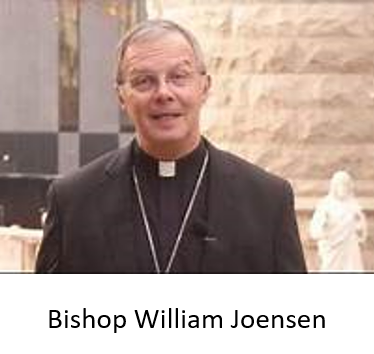
The Catholic Diocese of Des Moines, Iowa has adopted seven new policies in its parishes and schools banning “gender identity” politics, “preferred gender pronouns,” and puberty blockers. The policies took effect in mid-January at 17 schools and 80 parishes across the diocese, which covers southwestern Iowa. As may be expected, liberals and progressives immediately attacked the plan. Fox News reported that Democrat State Sen. Claire Celsi called the move “un-Christian,” claiming that “the diocese was pushing to ‘[codify] ostracism of transgender kids.’” In a belittling, self-serving manner, while at the same time pandering to the discredited mantra that discouraging children from transitioning causes them to commit suicide, she added: “These schools want public dollars and want to treat kids in a way that might cause them to commit suicide. This is not what Jesus would do.” Believers might question whether Celsi has ever read Matthew 18:6 in Sacred Scripture, where Jesus warns against scandalizing “[these] little ones.” Diocesan Bishop William Joensen said the new policies are the result of requests by school and parish leaders to “provide guidance on how to welcome and minister to those coping with gender dysphoria while following Catholic Church teaching.” Students are required to “use restrooms, wear school uniforms, and play on sports teams corresponding with their biological sex in addition to the banned use of puberty blockers and preferred pronouns on diocese properties.” Conservatives view the new policies as a nod to the First Amendment. Fox News contributor and civil rights attorney Leo Terrell noted: “The First Amendment is alive and well, and thank goodness … Let’s be very clear. The woke community has declared war on religion because they [Christians] have to respect the teachings of God. They [progressives] don’t want that. They have basically infiltrated public schools, but the First Amendment blocks them. When you have a religious institution, they have a right to implement these rules.”
How Restorative Justice Endangers Students and Teachers
The following was originally published by The American Spectator on January 27, 2023. Reprinted by permission.
As millions of children settle into an uninterrupted academic term, widespread classroom disorder is undermining efforts to reintroduce students to in-person learning.
This increased disorder corresponds with an increase in district-approved “restorative justice” programs, which address classroom dysfunction through nonpunitive measures. Though these programs have existed for decades, they are gaining momentum nationwide.
Examples of restorative justice programs include having a student accused of fighting deliver a speech to their class on the importance of using words and asking a child bullying younger classmates to participate in a circle of bullies who discuss the reasons for their actions.
Proponents of this indulgent approach to discipline note the racial disparities in academic expulsions and cite studies confirming that those who are repeatedly suspended from school are most likely to drop out altogether.
Yet much like the pro-criminal policies enabling perpetrators to recommit violent felonies in blue-state cities, classroom practices that prioritize the comfort of offending students over the well-being of their cooperative classmates are creating a spike in school misconduct and compromising the safety and security of both children and teachers.
During the COVID-19 pandemic, a study by the American Psychological Association of almost 10,000 teachers found that approximately half were planning to leave or transfer jobs “due to concerns of school climate and safety.”
There is also growing concern over classroom lawlessness from parents. In a survey last summer, the National Alliance for Public Charter Schools found that a safe classroom environment was more important to parents than the quality of instruction, with 77 percent of respondents describing safety as essential when it comes to their child’s education.
In January, issues involving classroom restorative justice practices resurfaced following the shooting of first-grade teacher Abby Zwerner by her six-year-old student in Newport News, Virginia. The incident at Richneck Elementary School occurred after teachers had expressed alarm over the boy’s behavior yet were told by administrators to “drop the matter.” The Washington Post reported that Zwerner became fearful after the boy wrote a note threatening to “light her on fire and watch her die.” The failure of Richneck officials to stop a preventable tragedy is indicative of the softening discipline policies permeating U.S. schools.
In the School District of Philadelphia, for example, engaging in “restorative” conversations is central to its “Multi-Tiered Systems of Support.” This framework deemphasizes punitive discipline through a “love sandwich,” which entails a teacher dialoguing with the offending student by opening the conversation with a positive revelation and concluding their talk with words of love and support. Yet in December, Superintendent Tony Watlington was forced to announce new safety measures after multiple shootings on or around Philadelphia schools resulted in a fatality and a shaken community.
Since its launch in 2018, Nevada’s Clark County School District has relied on the Clark County School Justice Partnership as a blueprint to resolve conflicts through “in-school strategies.” Unsurprisingly, permissive discipline has correlated with an uptick in violence. The district reported over 5,000 criminal episodes, ranging from sexual assaults to playground beatings, between August 2021 and February 2022. Last year, Nevada teachers felt compelled to protest the degenerative school climate after a 16-year-old was charged with multiple felonies, including attempted murder, after he allegedly attacked and sexually assaulted a teacher.
Colorado has cemented its role as the national model for applying restorative practices. Colorado was one of the first states to initiate behavioral modification exercises consisting of meditation meetings and conversation circles. Yet, post-COVID, several schools in the Denver Public Schools saw a 21 percent surge in fights. Despite proof that restorative efforts exacerbate rather than alleviate educational upheaval, Denver job listings reveal a still startling need for “Restorative Practice Coordinators.”
In addition, the Department of Education is investing $1.3 million in New York City schools to establish “restorative justice action teams” where students and adults can learn peaceful conflict resolution techniques.
In an article for National Affairs, Daniel Buck compares New York City’s “broken windows” response to the 1980s crime wave, which focused on police responding to “minor disruptions” such as illegally parked cars, to the “no-excuses” approach favored among charter school administrators who set boundaries that address peripheral infractions, such as not complying with a dress code. Incidentally, a firm response to low-level misconduct blunts the proliferation of more serious lawlessness, yielding safer communities and productive schools.
Reflective of the deleterious effect that justice systems create when they emphasize a delinquent’s protection over a victim’s welfare is the two-fold jump in the number of underage accused killers in New York City between January and September of 2022 compared to the same period in 2019. The increase followed the 2019 implementation of the city’s Raise the Age statute, which increased the age at which a teen can face adult charges from 16 or 17 years old to 18.
A weak-kneed approach to fighting crime is a reliable indicator of misbehavior at U.S. schools. While monitoring activist curricula permeating education remains critical, it is equally crucial that restorative justice policies are addressed and remedied.
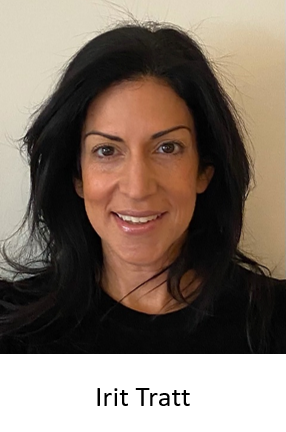
Irit Tratt is a writer who resides in New York. She received her MA in International Affairs from the George Washington University with a focus on the Middle East. She has worked on Capitol Hill for members of Congress handling foreign affairs and defense issues. Her work has appeared in The Jerusalem Post, JNS , The Algemeiner, and Israel Hayom.