A Tale of Two Schools & the Growth of Classical Education
Tragedy and triumph are terms that fairly describe the stark contrast between two public schools: one an inner-city school in Chicago and the other a public charter school in Lewisville, Texas. While these are just two examples among the nearly 96,000 public schools in the U.S., they represent both the worst of education in the bluest cities and the best in the diverse world of charter schools.
Chicago’s Frederick Douglass Academy could be a poster child for the most dysfunctional public schools in the country. A Fox News op-ed by Heritage Foundation research fellow and Americans for Fair Treatment senior fellow, Corey DeAngelis, called the Frederick Douglass Academy High School a “ghost school” among many similar schools in the city. He writes: “Built to accommodate 1,008 students, the school now enrolls just 27, yet it remains open with 28 full-time employees — more staff than children.”
DeAngelis explains that in 2024, spending at Douglass “exceeded $93,000 per student, and [this] figure excludes capital outlay and debt service, pushing total expenditures even higher. Despite this lavish funding, the latest state data from 2024 reveal not a single 11th-grade student proficient in math or reading,” proving that extravagant spending yields no positive results in student achievement. And nearly half of the 27 students fail to show up “with any regularity, turning the building into little more than an expensive daycare for a handful of kids….”
While the Frederick Douglass Academy may represent the worst of Chicago’s broken public education system, it’s merely the tip of the iceberg. DeAngelis reports that more than half of Chicago Public Schools (CPS) are “underutilized,” with 145 school buildings more than half empty, and 24 operating “at over 75% vacancy.” He notes that since 2019, “CPS has lost 10% of its student enrollment, yet staffing has ballooned by 20%, inflating costs without improving results. In 2024 alone, 80 public schools in Chicago reported zero students proficient in math, and 24 had zero proficiency in reading.”
Who’s to blame?
Clearly, public education is failing miserably in the city of Chicago, and the cost is astronomical in both financial and human terms. In the face of this disaster, the powerful Chicago Teachers Union (CTU) maintains its stranglehold on the CPS, fighting common-sense attempts to close schools that are virtually empty and championing ICE protests and other far-left political causes in lieu of teaching academics. (See Education Reporter, October 2024.)
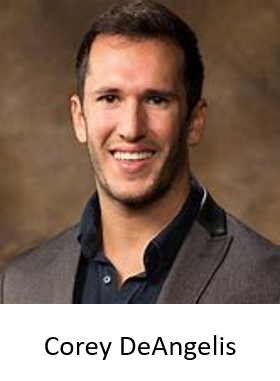
A staunch supporter of school choice, DeAngelis laments that, in 2023, “the CTU successfully lobbied to kill Illinois’s Invest in Kids scholarship program, which had provided school choice options to over 9,000 children from low-income families ….” The union “prioritized monopoly control over student opportunity,” and also led a successful effort to cap the number of charter schools allowed to operate in the city.
The enormity of the debacle would almost be laughable were it not for the fact that children are being sacrificed, including some of Chicago’s most vulnerable. Schools are emptying because many inner-city parents have managed to flee to the suburbs. But as DeAngelis writes: “Shuttering the 24 most vacant schools alone could save tens of millions annually, freeing resources for class-size reductions, technology upgrades or merit pay in high-performing buildings.”
Despite overwhelming evidence, the CTU continues to rail against such sensible moves, calling them attacks on public education, while the system continues to deteriorate. Billions of dollars are wasted and students remain illiterate, with some failing to attend school at all.
Sadly, the situation in Chicago is not unique. Similar circumstances prevail in many big-city schools, especially in blue states. Typically, teachers’ unions encourage more and more spending on staff and other resources without providing positive results, while liberal politicians ignore or acquiesce in the problem.
A light in Lewisville
About 800 miles southwest of Chicago in Lewisville, Texas, a city on the edge of the Dallas-Fort Worth metroplex, is the Founders Classical Academy, a public charter school that emphasizes the rigor and discipline common in classical schools.
Established in 2012, Lewisville is the oldest of the 23 Founders’ Classical Academies located primarily in Texas and Arkansas. In January, the Wall Street Journal published a story by James Traub describing the school and its network. Traub visited the school in September 2023, where he learned that each morning, students from the “lower school,” or grades K-5, meet in the gym to recite a poem or other writing they had memorized. On the day of his visit, he was impressed to witness 4th graders reciting “the Preamble to the Constitution, from ‘We the people of the United States’ all the way down to ‘ordain and establish this Constitution for the United States of America.’”
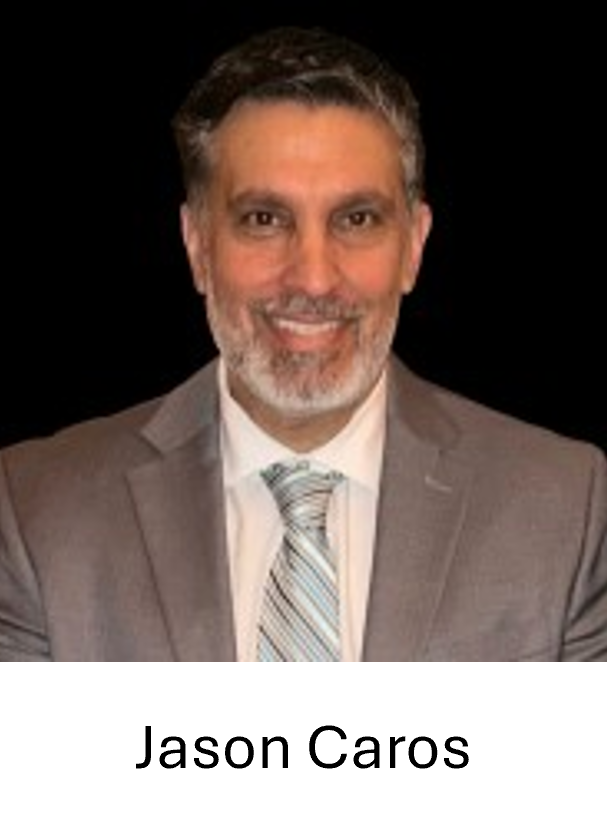
In today’s environment, such a school might expect to be charged with “Christian nationalism,” but Traub wrote that the Lewisville Founders’ headmaster, Jason Caros, rejects this allegation, arguing that “there is much to be said for traditional values, pedagogy and curriculum.” Traub described Caros and the school’s faculty as “working against the grain of a progressive, utilitarian culture that they believe offers too little to children and demands too little of them. The school’s Latin motto is ‘Scientia Virtus et Libertas,’ or ‘Knowledge, Virtue, and Liberty.’” And Founders “does not offer classes in ‘civics’; the school’s very reason for being is civic.”
Founders Classical Academies pledge to not only teach facts, but to pursue “wisdom and virtue.” The website explains that the schools teach “an intentional sequence of content that builds cultural literacy and intellectual depth,” from classic literature and primary sources to science, art, and Latin; i.e., Western Civilization.
Earlier this year, U.S. News reported that in elementary school reading performance, Lewisville’s students “met expectations” while middle school students ranked “well above” expectations in reading. In elementary school math, students ranked “somewhat below” expectations, but by middle school, they were “meeting expectations.” U.S. News based the rankings on cumulative data for the school years 2021-22, 2022-23, and 2023-24.
Like most charter schools, Lewisville’s Founders Academy selects students by lottery. Traub’s article states that the approximately 930 students “aren’t privileged,” with the median family income slightly below the national average. The student population is mixed, and Traub wrote that the traditionalist approach and rigor of the classical curriculum, with its “thick wall against peer and popular culture,” appeal to many immigrant families. The result has been a “much more diverse” student population in the lower grades.
Classical education in demand
Education Reporter has often written on the topic of classical education and the schools that employ it. (See, for example, Education Reporter, April 2025, August 2022, and September 2021.) Many, if not most, are faith-based, some are charter schools, some are private schools, and some are microschools, but all are experiencing renewed interest.
Last month, a report on the popular Fox & Friends morning show explained that the demand for classical education is growing by about “5% each year.” The segment featured as an example St. John’s Catholic academy in Rockford, Illinois. One of the oldest Catholic schools in the country, St. John’s has experienced “a rebound” in enrollment after adopting a classical curriculum.
Diocese of Rockford Superintendent, Dr. Kim White, explained that St. John’s is focusing “on the humanities rather than technology,” with the goal of teaching students how to think critically. “You won’t see tech in the classroom,” White said. “Rather, we teach the children to achieve higher levels of critical thinking” through religion, English Language Arts, and the humanities.
In Chicago, where students are floundering in the politicized maze that is public education, CTU leaders label school choice, including charter schools, “racist” while they send their children to private schools which, as Corey DeAngelis wrote, affords them the options denied to other children. “By blocking closures and choice, the CTU ensures that dollars flow to empty hallways rather than effective classrooms.”
James Traub observed of the Lewisville Founders academy that no one, including the teachers, “ever spoke the words ‘critical race theory’ or ‘woke’ …. No doubt they thought about those things in their private lives, but as classical teachers their concerns lay elsewhere.” But he conceded that classical education is “largely a red-state phenomenon,” typically attracting “conservative families with Christian nationalist identities anxious to place their children in schools that reflect early and mid-20th century values, pedagogy and curriculum.”
Traub further included in his essay what other proponents of classical education have likewise stated, that classical curricula “does not regard individual autonomy as the supreme good. Rather, it believes in what Aristotle called ‘eudaimonia,’ a word typically translated as ‘happiness’ or ‘human flourishing.’”
After all, he observed, “there is a certain kind of education” that must be taught to children, “not because it is useful or necessary, but because it is noble and suitable for a free person.”
Technology Falling Out of Favor in Schools
Parents, pundits, politicians, researchers, and educators have for years debated the role of technology in the classroom. While the trend took off in the early 2010s, it became nearly universal during the COVID-19 pandemic when schools were closed and children were forced to sit in front of computer screens all day at home, often without parental supervision.

In the years since, cell phones, laptops, and other electronic equipment have dominated the public schools in particular, with minimal academic progress to show for it and test scores that have continued to slide. The real winners are the tech manufacturers, including laptop makers such as Lenovo and Dell. And according to an April 10 Fortune article, Google has benefitted from sales of its Chromebook laptops to schools, ringing up $14 billion in global sales and capturing 60% of the education market share worldwide.
A Sept. 17, 2024 Newsweek op-ed by Ethics and Public Policy Center (EPPC) senior policy analyst, Clare Morell, acknowledged that data clearly show “[cell] phones inhibit students’ learning, cause and exacerbate discipline issues, and harm students’ mental health.” She added: “While phones may be the worst culprits for distraction from learning during the school day, the ‘educational’ screens many children are using in their classrooms, like Chromebooks, tablets, or laptops, are also hurting academic outcomes.”
But technology in the classroom may be losing its luster. Although some schools have banned cell phones, teachers find students doing the same things on their Chromebooks that they were doing on their phones, such as watching YouTube videos, playing games, and messaging and even bullying each other.
Fortune reported that schools in various states including Kansas, Maryland, Michigan, North Carolina, Virginia, and others, “are rethinking their policies of buying and assigning a laptop to every student and the millions of dollars they spent on them, as studies show implementing technology in schools has reportedly coincided with either decreasing test scores or no progress at all for students.”
While conservatives point to woke curricula, lack of phonics-based reading instruction, and the dearth of traditional math, science, and civics as culprits in the failure of U.S. schools to educate students, they also recognize the negative contribution of in-class technology.
Negative impact of screens
In October 2025, the EPPC published a heavily footnoted report called “Getting Screens Out of Schools,” which showed how “educational technology,” or “EdTech,” is hurting rather than helping students learn. The document cites research from around the world and reaches the general conclusion that, in countries like the U.S. that have invested heavily in classroom technology, screens have hindered rather than benefitted educational progress.
A key finding of the EPPC report is that, while the COVID-19 pandemic contributed to the decline in academic performance, U.S. students’ assessment scores “have been on the decline since 2012.” The report states: “In 2022, math scores for the lowest performing students hit levels last seen in the 1970s, while their reading scores were actually lower than the first year the data was collected, in 1971.”

More recent research by neuroscientists at the Teachers College of Columbia University found evidence that children’s brains process written texts “more deeply when they are presented in print rather than on a digital screen.” Study subjects “were more able to make connections with new concepts” after reading text on a printed page, which increased and enriched comprehension. (Also see Education Reporter, January 2026.)
EPPC researchers found that digital learning not only affects reading ability, but also writing skills. Their report referenced a study that showed when the alphabet is written out rather than typed on a keyboard, children’s ability to recognize the letters is improved. They further discovered that the learning loss caused by an excess of EdTech more heavily impacts “the lowest achieving students, as revealed by three primary global assessments”: the NAEP (National Assessment of Education Progress), the TIMSS (Trends in International Mathematics and Science Study), and the PISA (Programme for International Student Assessment).
Editor’s Note: The PISA is an international assessment given every three years by the Organization for Economic Cooperation and Development (OECD) to evaluate the performance of 15-year-old students in reading, mathematics, and science.
The EPPC noted that, similar to student outcomes in the U.S., “countries that have invested heavily in computers have seen ‘no noticeable improvement’ in their results for the PISA tests.”
Rather than providing a laptop to every child, EPPC recommends schools invest in computer labs where students can take computer courses and use after school or during study halls “to conduct research or complete assignments.”
Additionally, EPPC advocates investment in hardback textbooks rather than EdTech, and the use of paper and pencils for testing. “There is strong evidence that students will score better,” researchers explained, “especially in the reading and writing portions of tests, if they are taken on paper instead of a screen.”
EdTech in private schools
An article published in the December 2025 Private School Review provides a look at how private schools are implementing and regulating technology in the classroom. Combined, private and parochial schools serve about 8 million students nationwide.
Ironically, as the downside of EdTech is becoming more evident in government schools, its use is growing in many private and parochial schools, shifting from an “add-on” to a more integral classroom component.
However, many if not most private schools have a long way to go. Just 31% of Catholic schools, for example, have internet access, and many private and parochial schools lack the commitment to implement EdTech for a variety of reasons. Often, it is a financial and/or infrastructure issue as well as a privacy and/or student safety issue.
Some schools have adopted a classical education model, which favors a solid core curriculum over technology as a primary teaching tool. (See A Tale of Two Schools & the Growth of Classical Education in this issue.)
As one proponent of classical education noted, while some classical schools shun the use of technology, not all do. Some use technology “selectively,” but the overarching mission of classical schools is to preserve the human-centered, traditional nature of the curricula.
Excuses, excuses
A November 2024 report critical of EdTech, published by neuroscientist and former teacher, Jared Cooney Horvath, cited an analysis that investigated “the impact of computers on reading performance among K-12 students across the U.S.” The report concluded that “…even small daily amounts (30 min) of use of digital devices in classrooms are negatively related to scores on a reading comprehension test.”
Horvath described “a similar analysis of learning moderators within university settings” which concluded that “…expanding the use of technology at the expense of other forms of instruction is likely to have detrimental effects on achievement. Yet another set of analyses reported that investing in air conditioning has a more beneficial impact on student learning than investing in a laptop for every student (ES = 0.21 vs 0.16).”
Horvath explained that “as enthusiasts can’t lean on empirical data to support the adoption of student facing, internet connected digital devices across education, they frequently turn to three seemingly compelling arguments to excuse the lack of clear evidence of effectiveness. When placed in context, however, these arguments lose a lot of their exculpatory power.” Below are the three “excuses” offered by proponents of classroom technology, followed by snippets of Horvath’s responses.
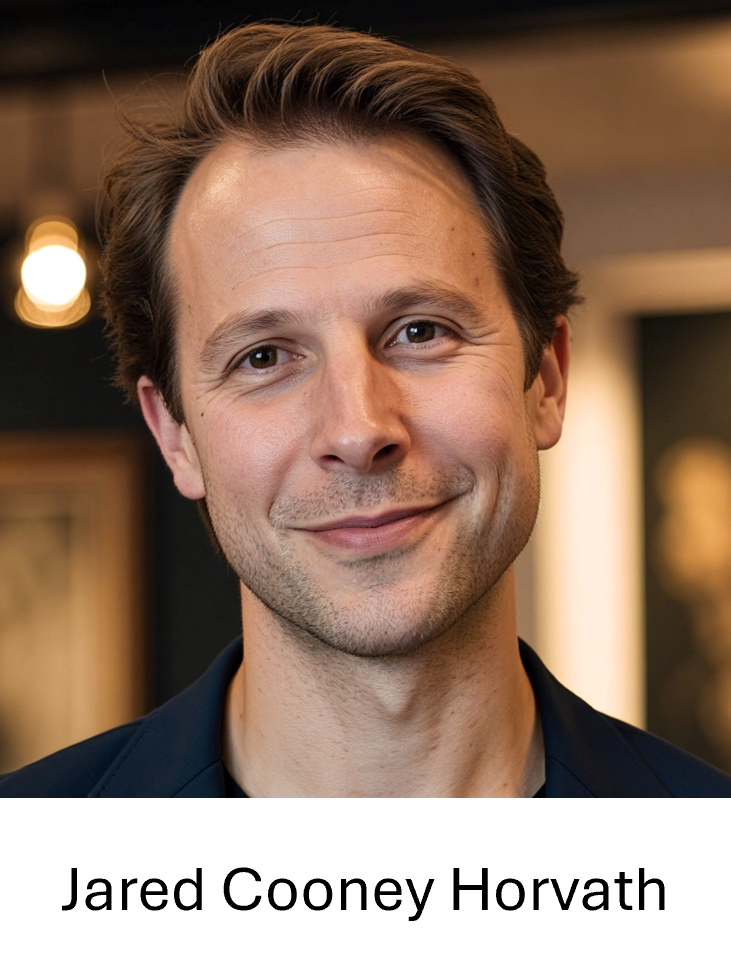
Excuse #1: Digital devices have so much potential (or “Tech is the future…”) to which Horvath responds: “When people say computers have the potential to drive student learning, they are tacitly acknowledging that these tools are not currently achieving this aim…. I am not arguing against having hope for EdTech; there is a good chance that somebody will someday create a program that outshines even the best teachers in the world. I am simply pointing out that this has not yet happened, and that promissory arguments are not a solid enough foundation upon which to change educational practice at mass scale.”
Excuse #2: Digital devices are ubiquitous (or “They ain’t goin’ nowhere…”) Horvath responds: “When it comes to effective teaching and learning (pedagogy), we should select the tool best suited to the job; not the tool that is most prevalent. Just as power tools are confined to the woodshop and Bunsen burners are confined to the science lab, perhaps student-facing digital devices should be confined to a dedicated computer lab within school….”
Excuse #3: Schools are using digital devices incorrectly (or “It’s all your fault…”) Horvath responds: “… let’s give this excuse the benefit of the doubt. If computers are in fact being used incorrectly in schools, then what is the correct way to use them? As the OECD report states: ‘[Digital technology] is linked to better student performance … when computer software and internet connections help to increase study time and practice.’ In case you missed it, let me rephrase that: learning improves when students spend more time learning.”
On January 16, 2026, Horvath delivered written testimony about the EdTech threat before the U.S. Senate Committee on Commerce, Science, and Transportation. His testimony disclosed that “Gen Z has become the first generation since cognitive records began in the late 1800s to score lower than the previous generation on measures of attention, memory, literacy, numeracy, problem-solving, and IQ, despite unprecedented access to technology.”
He further stated: “Frequent in-class computer use correlates with significantly lower math and science performance across both high-income and middle-income countries.”
The jury is out as to whether the important evidence gathered by these researchers will curb the technological monster in U.S. schools and around the world, but students are likely to benefit if it does.
Then and Now: Lost Courses, Lost Traditions, Lost Childhood
In the not-too-distant past, schools were less focused on political activism, gender ideology, and test scores, and as a result, there was time for classes like shop, vo-tech, home economics, typing, and the arts. Students spent their high school years taking for granted such things as driver’s ed, basic computer skills training, and senior class rings.
Of course, the majority of students today have been using computers since they were toddlers, but for those who haven’t, a course in basic skills could still be helpful. And driver’s education in the junior and senior years of high school taught students more than just how to safely operate a motor vehicle, it also familiarized them with traffic signage and laws and instilled a sense of responsibility.

As for class rings, the high school tradition that began at the U.S. Military Academy in West Point in 1835 has, for the most part, become irrelevant. According to multiple sources, more than 50% of high school seniors purchased class rings during the 1980s, while less than 20% do so today.
An article on msn.com by Diego Pérez Morales bemoaned the loss of “essential high school courses,” including home economics and financial literacy, which he writes “were once a cornerstone of high school education for Baby Boomers.” He laments that the move away from such courses “has resulted in a generation less prepared for practical life tasks, such as cooking healthy meals or managing personal finances.”
Woodworking and metal shop were also once common, and provided useful, hands-on skills that could serve students well later on. Some schools also offered mandatory classes in “life skills” and “civics.” Loss of the life skills classes, Morales cautions, “leaves some students unprepared for the complexities of adult life.” That stories abound today of young people living in their parents’ basements after high school and college, unable to provide or otherwise fend for themselves, lends truth to his observation.
During the 1950s and early 1960s, high schools had designated smoking areas where students could smoke during lunch breaks. And until about 1970, many high schools had supervised firearms training and safety programs. Such concepts are unthinkable today, with anti-smoking and anti-gun laws in place for decades.
Although schools still teach a form of civics, it is often blended with other subjects, such as math, science, and social studies. Known as “action civics,” “new civics,” or “civics for all,” this version of the subject is more likely to teach “radical activism” in lieu of the traditional civics classes to which Morales refers. (Also see Education Reporter, October 2025.)

But education reflects the culture, or perhaps the culture reflects education. Children once spent their summers enjoying unstructured play on playgrounds, fields, and in backyards, and learned to resolve conflicts with minimal adult interference.
While there were sports teams and many children participated, the rigorous schedule of multiple practices and games involving multiple sports, plus the other structured programs and activities common today did not exist for most kids. According to an article on NCVRO.com: “Modern psychology suggests that those unstructured, unsupervised experiences may have quietly cultivated a kind of resilience that is less common among children today.”
Morales also bemoans the loss of “regular school-sponsored teen dances” and themed events that were supervised and fun and to which students looked forward. He wrote: “These dances offered a chance to socialize in a safe environment.” Now, homecoming and graduation related events are the only ones taking place at most high schools.
While reviving the lost courses and traditions on a grand scale may not be feasible, schools in such varied locations as Georgia and California are reintroducing shop classes, and there is little doubt that the education system overall is changing.
More than a million students have left traditional public schools in recent years for homeschooling, private schools, microschools, and charter schools. Parents are demanding the return of traditional teaching in lieu of progressive activism. Across the country, there is dissatisfaction with the status quo of low test scores and weak academic performance.
Then there is the Trump Administration’s continuing effort to dismantle federal meddling in education and return it to the states. Parents and conservative activists have an opportunity to take control of education and reestablish its original intent: to raise literate, moral, and responsible citizens capable of maintaining a free society.
College Degrees Losing Favor in U.S.
In a recent Issues & Insights I&I/TIPP poll, 59% of American adults said they no longer believe a college education is worth the cost to students and their families. Just 24% of survey respondents said higher education “is worth the cost,” and 16% “weren’t sure.” By comparison, in 2013, 70% of U.S. adults considered college worth the cost.
I&I/TIPP’s results further showed that the major racial groupings all agree “a college education doesn’t give enough value to make it worthwhile.” Among whites, 61% said a degree is not worthwhile, with 22% disagreeing. Among blacks and Hispanics, 55% said a 4-year degree does not provide enough value, while 30% said it does.

A majority of parents — the most crucial group of all for the future of higher education — are no longer sold on the value of a college diploma, with 56% of respondents saying a 4-year college is not worth the cost, while 39% remain in favor.
Among the various demographic groups, I&I found a mix of opinions, although no group favored a 4-year college or university over other education alternatives. Adults with “some college” were the most critical, with 70% saying a 4-year degree is not worth the cost. Overall, 6 respondents in 10, or 59%, agreed that a 4-year college education “isn’t worth the cost.”
When I&I/TIPP asked the question, “If given the choice today, would you encourage a high school graduate to pursue a four-year college degree, a skilled trade or vocational path, or enter the workforce directly,” the responses were similarly negative towards a college career. A mere 22% chose a 4-year college degree, while 55% opted for “a skilled trade or vocational path,” 9% favored “enter the workforce directly,” and 14% “weren’t sure.”
To put it another way, wrote I&I, “64% chose the non-college option versus 22% who chose the four-year college option, a ratio of more than 2-to-1.”
Why is this so? Reasons vary from the inability of college graduates to find career jobs to the lowering of educational standards. An article by columnist Victor Joecks on Creators.com noted that “polls from Gallup, Pew and NBC News” resulted in similar findings to those of I&I/TIPP during the last year. These poll results reflect an entirely different view of higher education than has been the accepted norm for decades.
Parents and students long believed, with mostly good reason, that a college education was the single best path to career success and financial stability. Joecks quoted a 2021 Georgetown University report that showed “full-time workers with a high school diploma earn a median of $1.6 million over their lifetimes.” But graduates with a bachelor’s degree could expect to earn a median income of “$2.8 million” during their careers, “75% more than if they had only a high school diploma.”
Why the drop in confidence over a span of just a few years? Joecks blames “the destruction of educational standards” as a major cause, and he is not alone. In 2024, the Fordham Institute created a report on “grading policies that risk lowering academic standards in the name of equity.” The report showed that grade inflation was not exaggerated, but that it had, over time, become “supercharged” in the “grading for equity era.” The bottom line, wrote Fordham, is that “some aspects of traditional grading can indeed perpetuate inequities, but top-down policies that make grading more lenient are not the answer.”
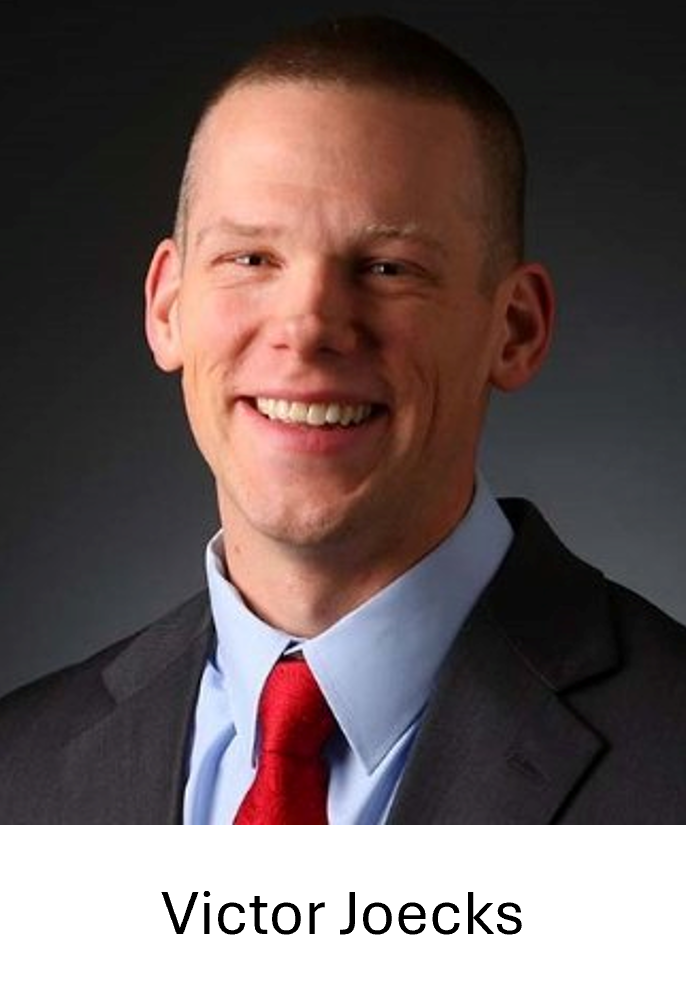
Joecks pointed out that, for decades, “the educational establishment has lowered the bar. Elementary schools send students who can’t read to the next grade. High school students graduate without being able to do freshman-level work. Politicians eliminated high school proficiency exams that would make this failure obvious. Colleges lowered standards and went woke….”
He further observed that, while lowering standards caused the quality of higher education to suffer, “it didn’t stop college tuition from skyrocketing.” Lower standards attracted more and more students, and government student aid made attendance possible, which in turn fueled “exorbitant price hikes.” As Joecks wrote: “If you subsidize mediocre to poor education, you’ll get more of it.”
More recently, some universities have tried to reverse the trend of equity grading and dumbed-down standards, but many experts and observers agree it will take a lot of effort to reverse the trend. It is unclear whether schools will rise to the occasion and institute real reforms.
While there are still a number of good colleges with high standards and solid curricula — Joecks named his alma mater, Hillsdale College, as one — most have taken the path of wokeness to the detriment of their academic quality.
If enough parents act on the opinions expressed in the recent polls and send their kids to trade schools, vocational schools, and junior colleges, the 4-year institutions will be forced to take notice or close, as at least several have done in 2025-26 due to financial challenges and dwindling enrollment.
As Joecks observed: “Without standards, college degrees aren’t worth much. Americans have started to notice.”
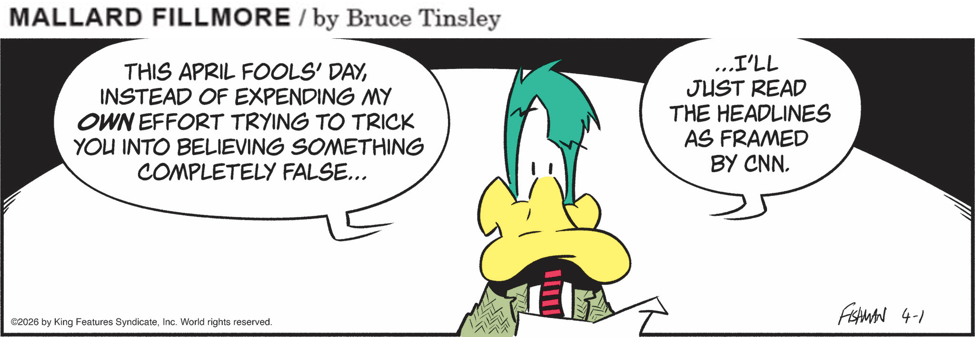
Mallard
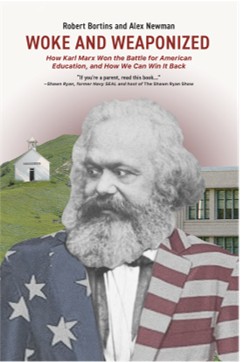
Woke and Weaponized: How Karl Marx Won the Battle for American Education, and How We Can Win It Back
by Robert Bortins and Alex Newman, Classical Conversations MultiMedia, Inc., 2026
“Government control” is the central theme of this book, authored by two men who are experienced in Christian education, homeschooling, and the history of Marxist influence in the government schools, from John Dewey to the proliferation of woke ideology. Robert Bortins is the CEO of Classical Conversations, and Alex Newman is senior editor of the New American and president of Liberty Sentinel Media.
Parents who homeschool or send their children to parochial schools may not be aware of the dangers of government strings that become entrenched due to the threat of losing key funding streams. The author of the book’s foreword, Dr. Benjamin Merkle, President of Saint Andrews College, explains why his school rejects any government funding.
Merkle explains that when a school takes government money the government becomes the most important customer, not the parents or students, and that satisfying the government agenda becomes the priority. The justification for accepting government funds is often to make higher education more affordable, but the opposite occurs. With big government funding, the incentive to operate efficiently is reduced, and a school often raises tuition.
 Bortins and Newman trace the history of how U.S. schools came to be under government control. As most readers are aware, education was originally funded and directed by the family and the church, with a Christian worldview. Over time, this system was replaced with a tax-supported system and a humanist worldview.
Utopian socialists like Robert Owens, Horace Mann, Karl Marx, and John Dewey all influenced the process, and then there was the Frankfurt School, founded by anti-Christian Marxists who fled Germany in 1933 to take prominent positions in American universities. The collectivist beliefs of these men, and others who followed, gradually infiltrated and transformed schools into centers of progressive thought.
In step with government control were the big foundations, run by prominent names such as Rockefeller and Ford, and later, Bill Gates, which influenced public schools in a similarly negative way. Despite all the money and power behind them, public schools declined in quality and began to compare badly with parochial schools.
Libertarian economist Milton Friedman proposed a solution – “school choice” — wherein the government would provide a voucher to families to defray the cost of private schools. Predictably, public schools and teachers’ unions fought tooth and nail against vouchers, but the solution did — and does — have broad appeal. Many states have launched various types of school choice programs, including vouchers.
But Bortins and Newman throw the yellow flag here, warning that he who pays the piper calls the tune. Their book provides readers with a robust discussion of the pros and cons of school choice and, in the end, they recommend firmly rejecting any government money for Christian schools.
The authors also tackle homeschooling. They write that “the long Marxist march through the institutions … hit a snag during the early 1980s when the modern homeschooling movement was born….” The number of homeschooled children has risen from near zero in 1980 to more than 3.5 million today, and it continues to grow.
Woke and Weaponized warns, however, that after first trying to intimidate homeschoolers, the government today “is attempting to bribe the next generation of homeschooling parents to give up their liberty in the former of taxpayer handouts.”
There is much to learn in this book, including that new efforts are afoot by government and the big foundations to influence, i.e. control, homeschooling and Christian schools. But Bortins and Newman are having none of it.
Woke and Weaponized is packed with practical and useful strategies parents and pro-parent activists can use to maintain educational freedom, excellence, and Christian integrity in the upbringing of their children.
To read the entire book, go to Amazon.com to order!
Education Briefs

When a 7th-grade teacher in a small Colorado town dropped EdTech from his classroom, students became more self-reliant and their energy increased. Leadville teacher, Dylan Kane, told Chalkbeat that removing screens for the month of January 2026 as an experiment “to see what would happen,” has been a success. Chalkbeat reports that “he has not brought screens back,” even though he admits that dropping technology “has turned out to be a lot more work for him and his students,” which “might be why it’s succeeding.” Kane told Chalkbeat: “I don’t find myself saying, ‘wow, these things I used to do with technology are totally irreplaceable.’” While he does miss some perks of technology, he notes that there are “just so many fewer little logistical challenges,” such as dead Chromebooks, cracked screens, and internet interruptions. “All those things are out the window,” Kane says. “We have pencils, we have paper, we have whiteboards, we have markers.” He adds that his classroom is now “more interactive,” and that he is seeing “a slight increase in effort across the board” among his students. He confesses to feeling much more “in touch” now with their thinking, and is better able to recognize when his students are confused and need extra help. He has found that some kids love the change, others say schoolwork on Chromebooks “is easier” and that they like the instant feedback technology provides. For now, Kane plans to stick to his paper-and-pencil teaching as much as possible. “But if some new tools do come along that I think are doing a much better job than what I had access to before, I’m open to it.”
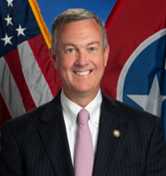
The Rutherford County, TN, library board has fired its top librarian for refusing to relocate “more than 100 LGBTQ books” from the children’s section of the county’s libraries to the adult section. The board voted to move the books because they promote “gender confusion.” According to the Associated Press (AP), after head librarian, Luanne James, complained that “relocating the books would violate her and county residents’ First Amendment rights and compromise her professional obligation against government-mandated viewpoint discrimination,” the board voted 8-3 to send her packing. The AP reported that last year, the Tennessee Secretary of State’s office “sent letters to library systems across the state requesting immediate reviews of what was in their children’s sections.” The letters explained that libraries must comply with applicable laws in order to continue receiving federal and state funding, and cited President Trump’s executive order on gender ideology. Opponents of the firing whined that it was “emblematic of the fight against censorship and suppression.” They failed to note that the books were merely being moved, not removed from library shelves and thus still available, but concerned parents wonder if the fact that they won’t be so easily accessible to children is the real problem and poses a setback for the LGBT grooming agenda.
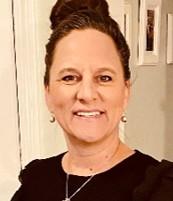
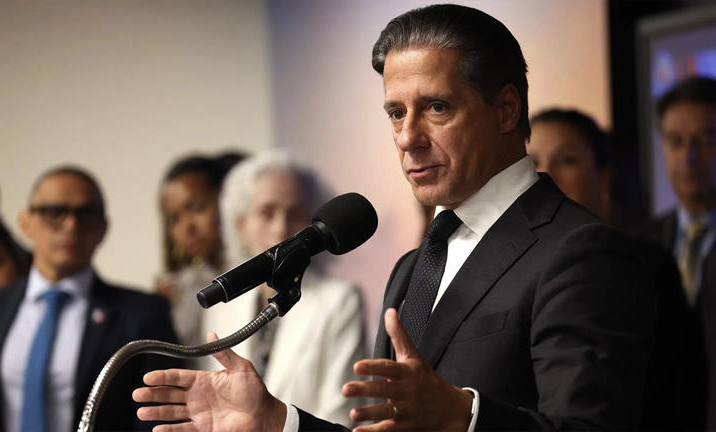
The Los Angeles Unified School District (LAUSD) is continuing to discriminate against students of other races by funding programs for black students only. Last month, the group, Defending Education, asked the U.S. Department of Education’s Office of Civil Rights to again investigate the LAUSD, charging that “the district has allocated tens of millions of dollars for services that only Black students can use.” The LAUSD started the “Black Student Achievement Plan” (BSAP) in 2021, and the allocation for the 2025-26 school year is reportedly $50 million, on top of the $125 million the district has already spent on the program. According to Fox News, one use of the money is to pay for “staffing support specifically dedicated to addressing the academic and social-emotional needs of Black students.” Defending Education filed a similar complaint in 2023, asserting that the program “violated Title VI of the Civil Rights Act of 1964 and the Equal Protection Clause of the 14th Amendment to the Constitution.” That complaint was dismissed in 2024, after LAUSD claimed it had “substantially changed its criteria for resource allocation to a race-neutral standard and that BSAP’s resources would be available to all students regardless of race.” After the complaint was thrown out, however, LAUSD board president Jackie Goldberg and Superintendent Alberto Carvalho were caught on a hot mic agreeing that “nothing has changed” for the benefit of activists who were protesting changes to the BSAP. Defending Education’s senior communication director, Erika Sanzi, said: “It’s concerning when a board of education member and the superintendent both promise in a public meeting that nothing has changed in the context of a race-based program that the district knows is in violation of federal law. It’s an admission that they have knowingly lied to the federal government about what is actually going on in the district as it relates to race-based programming.” She added that the new complaint will hopefully compel school districts to finally accept the fact that “it is against the law to include and exclude students from programs on the basis of race.”
The Bible Belongs in Public School Readings
Originally distributed by Phyllis Schlafly Eagles, April 14, 2026. Reprinted by permission.
A strong education includes reading from the greatest works of all time. A full understanding of history requires knowledge of the books that influenced leaders, thinkers, and decision-makers.
The Texas State Board of Education has released its tentative 17 page list of about 300 literary works that will be part of the public school curriculum for grades K through 12. Many familiar classics are on this list, including Charlotte’s Web, Animal Farm, and the humorous story by Mark Twain about the amazing jumping frog, which are for students prior to high school.

This list results from the enactment of HB1605 back in 2023, and will not take effect until 2030. A full seven years from the passage of this reform to its implementation is appalling.
The biblical excerpts on this reading list, which is not yet final, include the Golden Rule (which is not solely from the Bible), the Parable of the Prodigal Son, and the Road to Damascus, for Kindergarten through 3rd grade. Then there is a gap until 7th grade, when recommended readings include the Book of Psalms and the tale of Jonah and the Whale.
For high school, Bible readings are passages from David and Goliath, Lamentations, the Tower of Babel, Ecclesiastes, and the Book of Job. The Board should be criticized for recommending almost nothing from the New Testament.
The loudest protests are from those who oppose including anything at all from the Bible in public school reading lists. The Bible is the most influential and widely read book ever, and continues to rank first in readership annually.
The Bible should be listed #1 in every bestseller list, but it is kept off those lists because it wins every time. People are misled by weekly bestseller lists omitting the Bible at the top, which is the hottest seller now and has been ever since the invention of the printing press more than 500 years ago.
Sales of the Bible have been increasing, too, soaring to high levels with Gen Z who are even more interested in the Bible than older generations have been. In 2025, Bible sales reached new record highs in the U.S. and U.K., as U.S. sales totaled over 19 million copies, double the number sold in 2019.
In light of this, it is straightforward to include passages from the Bible on any list of required readings for public schools. Stories like the parable of the Prodigal Son, which is unique to the Bible and cannot be found in any prior works, are often cited and every educated person should be familiar with them.

There are threats of lawsuits to block the inclusion of any part of the Bible in a public school curriculum. Any such lawsuits will fail.
The Bible has been incorporated into great speeches like President Lincoln’s “House Divided” speech, where he used that Gospel metaphor to argue against slavery. Many of the greatest scientists of all time, such as Isaac Newton and Louis Pasteur, were avid readers of the Bible.
No one is forced to believe in the Bible or in any other reading assigned in school. Works by Leftists, such as Arthur Miller’s Death of a Salesman, are routinely assigned to high school students and they are expected to understand, analyze, and repeat the themes of these controversial writings.
Unfortunately, too much liberal propaganda remains on this list for high school students, during their formative years. The Texas Board recommends Arthur Miller’s The Crucible, which uses the Salem Witch Trials in 1692 as an allegory for the congressional investigations of communism in the 1950s, after which Miller himself was held in contempt (later reversed) for refusing to identify the communists he knew.
Books that promote the LGBTQIA+ agenda are commonly assigned to students today, and are more controversial to most parents than anything in the Bible. The books preferred by liberals and atheists are also far less influential or quoted than the Bible is, and thus less likely to prepare a student to become a knowledgeable adult.
A significant segment of our society quotes from the Bible or cites biblical figures frequently, and students should receive an education that enables them to understand these references. When someone hears a suggestion that he “turn the other cheek,” he should have been educated to understand immediately what that biblical expression means.
The Texas State Board of Education expressly states that students can opt out of any Bible reading based on religious or moral beliefs. It seems that Democrats are not really concerned about the rights of a few families who will be free to opt out, but instead are protesting that students whose parents want them to read from the Bible will be allowed to do so as part of public school curricula.
John and Andy Schlafly are sons of Phyllis Schlafly (1924-2016) and lead the continuing Phyllis Schlafly Eagles organizations with writing and policy work.
Education Related Links


Reader Books Flyer 2025