Illinois Educator’s Proven Curriculum Merits National Attention
Almeda Lahr-Well may not be a household name, but it should be. This powerhouse educator is a hidden gem whose methods and curriculum should be shared at the national level. Lahr-Well’s resume is a dizzying synopsis of accomplishment, from her extensive experience as an instructor/professor at the university and college level to her international travels and proficiency in five foreign languages. She has taught at Southern Illinois University, where she earned her Bachelor’s degree, Washington University, McKendree College, and St. Louis University, where she earned her Ph.D., to name a few. (She gained her Master’s degree at the University of Illinois.)
But perhaps Lahr-Well’s greatest achievement is the small, Christian-based K-12 school she founded 40 years ago in southern Illinois, called simply the Lahr-Well Academy. Over the years, the number of attending students has varied from 10 to 40, and the school currently employs four teachers including herself. The academy’s website offers a wealth of information about its mission, achievements, and exceptional curriculum.
Observers of today’s educational landscape with its many alternatives might suggest that Lahr-Well was way ahead of her time. Her academy predated by four decades the many microschools that have sprung up since the pandemic, founded mostly by former public-school teachers fed up with woke propaganda and lack of solid academics. Like the Lahr-Well Academy, microschools serve small numbers of students, but few are likely to measure up to Lahr-Well’s level of academic rigor.
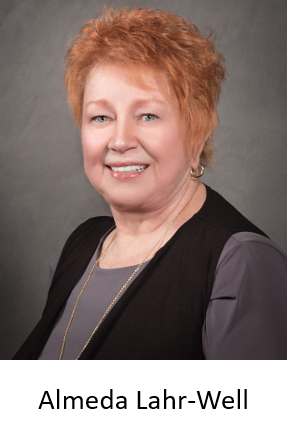
Earlier this month, Education Reporter had an opportunity to speak directly with Lahr-Well, who told us that, while indeed there are other schools with very good programs that “do some of what we do,” she has yet to find one that “comes anywhere near to matching all that we offer.” The content-packed, classical curriculum she created has turned out many hundreds of well-educated, well-adjusted students, and she has tried to share its success with others, including government education agencies as well as in the private sector, without much luck. (See Book Review, this issue.)
Most recently, she captured the ear of WorldWide Technologies’ corporate executives, but so far, they are only interested in implementing her program online, whereas her goal is to establish on-site schools for employees’ children. She explains: “I’d like to show them how they could keep their employees, especially their key employees, from going to other companies, whether here in the U.S. or internationally, by offering an in-house school for their employees’ children.” While she is not opposed to online learning per se, she believes children “need face-to-face time in addition to online instruction.”
Lahr-Well says that students who graduate from her small academy typically do so one-two years early, and still test at a second- or third-year college level. (Results are based on her pupils’ nationally standardized test scores.) “They are given a foundation in classical literature and world philosophy,” she explains, “and have more knowledge when they graduate than I have seen in any bachelor’s degree program at any of the universities where I have studied or taught, including St. Louis University and Washington University.”
The Lahr-Well Curriculum Concept
Lahr-Well’s K-12 curriculum, officially titled Lahr-Well Curriculum Concept (Learn Well, Lead Well, Lahr-Well), takes “a very classical approach” to education. She described how large companies like WorldWide Technologies and others could use it on-site to teach their employees’ children and reap the benefits later by employing those children after graduation. “Companies could offer internships to graduates,” she clarifies, “because unless they are going into the medical fields or deep sciences, these students don’t need college degrees. Rather, they need training specific to their areas of employment.”
She adds: “Furthermore, companies wouldn’t have to ‘unteach’ what their new hires have been taught in college.” Of course, if a company wanted an intern to earn a higher degree, he or she could obtain it through a part-time work/school arrangement.
“I see this as a potentially huge national benefit for the U.S.; in business, in technology, banking, automotive, and other industries,” she continued. “My program can work to prepare students for any field,” such as international business, for example. Lahr-Well explained that students must study several languages, and that, “while they don’t need to be fluent, they must demonstrate that they have a foundation in each language.”
The curriculum begins with a reading program that uses the phonics instruction method and emphasizes reading comprehension. Math instruction starts with basic arithmetic and advances through Algebra I & II, Geometry, Calculus, and Trigonometry.
Language arts includes spelling and grammar, followed by public speaking and creative writing. Students are exposed to the great literary masterpieces, and the science curriculum is a STEM program that covers the earth sciences, physics, biology, chemistry, and engineering.
The social sciences include world history, geography, U.S. history and civics, current events, the U.S. and Illinois Constitutions, and both macro and micro economics. Lahr-Well’s fondness for languages is evident in the academy’s offering of instruction in Spanish, Italian, French, German, and Chinese.
As if all the above isn’t comprehensive enough, the academy’s curriculum also includes Biblical studies of the New and Old Testaments, and teaches the Lord’s Prayer in each of the foreign languages offered. Computer programming is also on the list, “directly and indirectly linked to the STEM studies.” Robotics, music history and appreciation, art, and world philosophy round out the areas of study.
With such a robust curriculum, small class size, and generally stellar results for students who graduate from the academy, one may logically wonder why more parents aren’t enrolling their children. Lahr-Well provided as an example the response of one mother who, after being told that students typically test years ahead of their peers after just two years at the academy, remarkably asked, “why would anyone want that for their child?”
She further believes that, at least in the Midwest, families place an emphasis on their children’s’ participation in sports and extracurricular activities, which aren’t typically available at small private schools. She noted, however, that Lahr-Well Academy does include one-half hour of daily exercise, either outside or in a gym, and emphasized that there are many avenues through which students can participate in sports, such as on select teams in baseball, soccer, and other team sports. Additionally, some public-school districts allow private and homeschooled students to participate in sports without privacy-invading documentation requirements. She further pointed out that most communities offer “all kinds of extracurricular opportunities” in the civic arena, including choral groups, symphonies, and more.
Unique school calendar
Lahr-Well’s school calendar follows a unique year-round schedule, which gives families a variety of opportunities for travel and leisure. “We start school at the very beginning of August,” she explains, “and have a two-week break in October, which is a wonderful time to travel in the U.S. We have a three-week break at Christmas, followed by nine more weeks of study, and then an Easter break or spring break that includes Easter.”
The school year ends just before Memorial Day, but “even with that,” Lahr-Well says, “we exceed the state requirement of 880 hours of instruction per year.” Elementary and middle-school children log about 1,092 hours annually and high school students spend 1,100 hours in class.
She concedes that the instruction “is intense, and we want our students and our teachers to know it’s intense. So after nine weeks of power-packed education, we all need to step back and take a breath, and we do that, but we lose less because we don’t have the full three months off during the summer, and our students test way ahead [of the curve] as a result.”
Future plans
Lahr-Well laments that her attempts to reach out to government leaders at the U.S. Department of Education, as well as to governors, media outlets like Fox News, and corporate offices such as McDonald’s, Chick-fil-A, and others, have thus far failed to achieve the desired result. “We show in our advertising that after 4-6 years of study at Lahr-Well Academy, our children are testing 4-6 years ahead of their chronological age.”
She speculates that “most large companies have room to carve out space for a school at their headquarters or main satellite locations.” She believes that “if we could get our first company, first governor, or a state education department to hear us out, we might get our program more widely noticed.”
Lahr-Well will continue working to expand her successful education model, perhaps through a more concerted effort to engage the heads of education departments in red states, who may prove more receptive to classical, learning-intense programs.
Meanwhile, students lucky enough to be enrolled at the Lahr-Well Academy campus on the lower level of the Eden United Church of Christ in Edwardsville, IL, will continue their successful academic careers. Education Reporter encourages interested parents, grandparents, or anyone wanting more information about the Lahr-Well Academy or curriculum to call 618.288.8024, or visit the Lahr-Well Academy website.
Recency Bias in Library Collection Management Peddles Porn to Kids
The slogan calling for Marxism’s “long march through the institutions” is commonly attributed to Italian Marxist Antonio Gramsci, who coined it in the 1920s to spread Marxist ideology throughout the West. In 1967, German socialist Rudi Dutschke adopted it to promote the subversion of capitalist countries by becoming part of the government as well as by infiltrating the professions. Many authors have documented the effectiveness of these efforts in the U.S., particularly in the realm of higher education.

One outgrowth of such endeavors is “recency bias,” or the preference of recent events, works, and experiences over those of the past. Greek writer and lecturer, Kassiani Nikolopoulou, defined recency bias in an article on Scribbr in 2023 as “the tendency to overemphasize the importance of recent experiences or the latest information we possess when estimating future events. Recency bias often misleads us to believe that recent events can give us an indication of how the future will unfold.”
Recency bias can occur in almost any area of human enterprise, such as the art world, employment evaluation, sports, and in library collection management — the selection, acquisition, and preservation of library books and materials. As one commenter opined on reddit: “It seems a lot of quality [literature] out there is hidden by recency bias and a lack of online presence.” He was referring to the lack of information available in general as well as online, but libraries are also impacted. The management of library book collections today appears to be driven by a DEI and LGBT-fueled recency bias.
Of particular significance is the impact on children’s books. As one observer explained, the likelihood is that this bias provides “a clever strategy to get rid of classic children’s literature and replace it with Captain Underpants or worse.”
Ironically, the notion of “reducing bias” in library collection management typically means implementing recency bias, or the replacement of classical literature with books that exude the woke ideologies of the Left. This philosophy is spelled out in an online article titled Examining and Reducing Bias in Libraries — Working in Library Access Services, which states in part:
- In your library work, you are likely to see an acronym like DEI or IDEA as short-hand for library workers’ efforts to remove barriers that affect some patrons and employees more than others because they are barriers created by racism, classism, sexism, xenophobia, and other biases that are built into libraries in the United States.
The balance of the article explains how library workers can modify “library spaces, services, and collections” [emphasis added], to modify or eliminate these “barriers.”
In children’s literature, recency bias displaces uplifting tales of physical and moral courage, exploration, adventure, historical authenticity, and patriotism, and replaces them with dark-themed stories of sexual deviance, suicide, divorce, drug and alcohol addiction, and more. Many also contain sexually explicit content. The fact that so many examples of pornographic “children’s” books have surfaced in recent years is demonstrative of recency bias in action in both public and school libraries.
A few of these books have been described in Education Reporter. (See for example, the August 2022 and March 2023 issues.)
Biden Administration promoted porn to children
As described by the
Illinois Family Institute
- All Boys Aren’t Blue, a New York Times best seller, is about “queer Black boys” and includes graphic descriptions of gay sex.
- Sex is a Funny Word is “a comic book for kids that includes children and families of all makeups, orientations, and gender identities.” It targets children ages 7-10 and includes explicit sexual references. Parroting a false, far-left narrative, it tells kids: “When we are born, a doctor or midwife calls us boy or girl because of what we look like on the outside. They choose a word or label (usually boy or girl, or male or female) to describe our bodies. But that’s based on our bodies, our cover, and who they think we are … Maybe you’re called a boy but you know you’re a girl … Maybe you’re called a girl but feel you’re a boy … Maybe you don’t feel like a boy or a girl. Maybe you feel like both….” This book includes a glossary of LGBT terms and definitions.
- Red, A Crayon’s Story is aimed at very young children to instill in them the notion that boys can actually be girls and girls can be boys. The subject crayon has a red label but is actually a blue crayon. The text reads: “Sometimes I wonder if he’s really red at all” … “Don’t be silly. It says red on his label. He came that way from the factory.” … No matter, the red crayon only colors blue. The story continues: “One day, he met a new friend, Berry, who asked Red to make a blue ocean for a boat that Berry had colored. Red said, ‘I can’t. I’m red.’ Berry asked Red to try, and so Red did … ‘Thank you! It’s perfect!,’ Berry said. All the crayons then celebrated and embraced Red….”
- It’s Perfectly Normal is directed at children ages 10 and up. With “more than one million copies in print,” it depicts “nude males and females standing, lying, engaging in sexual intercourse,” and other sex acts. It tells kids that all manner of sexual activity, including homosexuality and masturbation, is “perfectly normal.” The book includes comprehensive information about birth control and abortion, with graphic illustrations of how-to put on condoms.
- The Princes and The Treasure is an adventure story about two princes who, in trying to rescue a princess, fall in love with each other instead. The “enchantress” in the story tells the princes: “True love is the greatest treasure of all” … The princes admit they do not want to marry the princess, but want to marry each other. A “vicar” marries them, saying: “I now pronounce you married … May you love each other forever.” Readers are told the two princes “lived happily ever after.”
Veteran author and investigator, Thomas Hampson, pointed out in a February 2025 article for the Illinois Family Institute (IFI) that the Biden Administration seized on a complaint filed with the U.S. Department of Education’s Atlanta Office of Civil Rights (OCR) in 2022 to promote porn to children. The complaint alleged that the Forsyth County, GA schools “violated Title IX and Title VI by removing certain books with sexually explicit content from the school libraries.” Since the books in question were all LGBT themed, the complainants charged that removal of the books created a “hostile environment” for LGBT youth.
At issue were the following titles: All Boys Aren’t Blue, Nineteen Minutes, The Bluest Eye, and The Perks of Being a Wallflower, all of which were rated “Not for Minors” by Book Looks, a website set up by concerned parents “frustrated by the lack of resource material for content-based information regarding books accessible to children and young adults.” The group says it takes no money and is not affiliated with any other group.
According to Book Looks, each of the contested titles include themes and topics unfit for minors, among them explicit sex, assault, profanity, racism, and other inappropriate content.
The Forsyth County schools’ complaint was ultimately dismissed by the local OCR, but the DC headquarters promptly reversed that decision. Writes Hampson: “Rather than fight the government in court, the local school board signed a resolution agreement with the OCR in May 2023.”
Emboldened by this victory, President Biden appointed a “book ban coordinator for the OCR” in the person of Matt Nosanchuk, a lawyer who had worked on Obama’s presidential campaigns and later served in his administration in various capacities. One of Nosanchuk’s positions was as a “point person on LGBT rights issues” for the Obama Justice Department.
Later, Biden tapped him to serve in the education department’s OCR. Observes the IFI: “There is no question that it was porn that the OCR was protecting.”
Court actions to protect kids
The IFI points out that a 1968 U.S. Supreme Court ruling sought to protect children from obscene materials in Ginsberg v. New York, in which the defendant, a store owner, was convicted of selling adult magazines to a minor. The court ruling established “different obscenity standards for minors than are used for adults.”
Writing for the 6-3 majority in the case, Justice William Brennan asserted that “the government has a legitimate interest in protecting minors from exposure to material that might harm their moral, emotional, or intellectual development.” While Ginsberg did not disturb the First Amendment rights of adults, it struck a balance between those rights and the duty of the state to protect children, who, as Justice Potter Stewart wrote, “were not possessed of a full capacity for individual choice.”
The case affirmed the right of parents to raise their children as they see fit, but it also maintained that “the state has a complementary role in ensuring children’s welfare and protecting them from harmful influences.”
In a current case, the Supreme Court is considering whether parents in Montgomery County, Maryland should have the right to opt their children out of LGBT themed instruction in the public schools that conflicts with their religious beliefs.
These parents are seeking “a guaranteed exemption from the classroom reading of storybooks with LGBTQ themes, including same-sex marriage and exploration of gender identity.” The children in question are elementary school age.

Fueled by teachers’ union advocacy, the school district withdrew its previous policy of allowing parents to opt their kids out of such lessons and readings, insisting that “the opt-out program had become unwieldy and ran counter to values of inclusion.”
ABC News quoted Justice Brett Kavanaugh on April 22 as saying he did not understand “how it came to this” in the county where he’d been a lifelong resident. “I’m surprised that this is the hill we’re going to die on, in terms of not respecting religious liberty.”
In late January, the New York Post reported that the Trump Administration fired Biden’s book ban coordinator, eliminating the position and dismissing “numerous complaints related to the removal of ‘age-inappropriate’ and ‘sexually explicit’ literature from public schools.” The Trump USDOE argued that the Biden Administration had “amplified the false narrative that removing books violated students’ civil rights, leading to the complaints.”
Craig Trainor, the USDOE’s acting assistant secretary for civil rights under Trump, said in a statement: “By dismissing these complaints and eliminating the position and authorities of a so-called ‘book ban coordinator,’ the department is beginning the process of restoring the fundamental rights of parents to direct their children’s education.”
Sexually explicit ‘children’s’ books in school libraries
According to IFI, many public and school libraries take policy direction from the American Library Association (ALA) which they acknowledge “has shifted so far left in its ideology that it now purports children should have access to ALL information regardless of the content or age of the child.” [Emphasis in original.]
In 2023, Illinois lawmakers passed IL HB2789, the Library Systems Book Banning law, which was pushed by the Illinois Library Association, the Illinois ACLU, Planned Parenthood, LGBT activists, and individual government schools and libraries. Signed by Gov. J.B. Pritzker, it “prohibits the practice of banning specific books or resources” using as a stick the loss of state funding. “In other words,” says IFI, “if any library in Illinois is responsive to parents’ objections – parents whose very taxes pay for that library to exist – those tax dollars could be withheld by the state.”
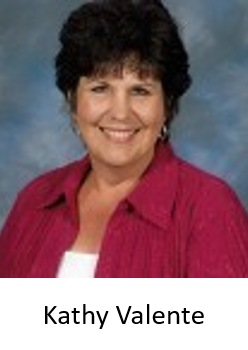
A recent report from IFI Director of Operations, Kathy Valente, reveals the shockingly graphic material to which children, including elementary-age students, are exposed in both public and school libraries in their state and across the country. While the more offensive descriptions are excluded here, a sampling of the 800 inappropriate children’s books available to minors in many school libraries and the children’s sections of public libraries are shown in the sidebar.
Additional books are included in Valente’s review, all of which contain explicit sexual themes, some accompanied by graphic depictions of sex acts. Others foment racism, violence, and other inappropriate topics.
As author Hampson rhetorically asks: “Why would anyone want a child to be exposed to such unwholesome subjects? Why would anyone fight for children’s right to access such material?” He further notes that, while the Trump Administration’s efforts to stem the tide are very positive, the next administration “can come in and rehire Nosanchuk or someone like him to force schools to make pornography available to all students.”
Hampson’s long-term solution is for ordinary citizens to take control of their local and state governments. “That means supporting people with common sense who support the founding principles of our country,” he writes, “people who model biblical principles and values, people who are leaders and work well with others.”
It also means combatting at the highest levels the recency bias in our institutions that is entrenched as a result of decades of concerted efforts by the Left. Many recognize the urgent necessity to right the ship of state that has been so long subverted, and it appears we may have help from the Trump Administration, as it works to reverse the progressive course of recent administrations.
Test Your Child’s Reading Skills
The inability of a large percentage of public-school children to read at grade level — or even to read at all — has been well publicized, particularly since the most recent National Assessment of Education Progress (NAEP) scores were released earlier this year.
But parents of students enrolled in any school, be it public, private, homeschool, or other, can easily discern how well their children are reading by using the First Reading Test Phyllis Schlafly created years ago in conjunction with her First Reader phonics instruction program. A First Reader Workbook and activity book can also be used to accompany the First Reader to enhance the efficacy of the instruction.
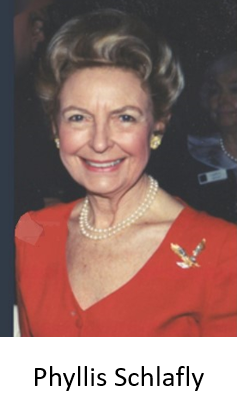
For those unfamiliar with First Reader, it is a proven method of teaching young children to read using logical steps that gradually build skill by putting sounds and syllables together to form words, then sentences, then paragraphs and stories, etc. It is a user-friendly, colorful text that is easy for a child and parent/teacher to follow. Phyllis wisely recorded step-by-step First Reader Audio Instructions to make the task of teaching reading even easier.
Phyllis emphasized that learning to read “sets a child on the road to a good education.” She knew that a solid foundation in phonics instruction helps protect kids against the flawed methods used in most schools, that of memorizing or guessing at words by looking at pictures without being taught how to correctly master sounds and syllables.
In 2015, just over a year before she died, Phyllis wrote: “If your child is not a good reader, chances are he is not stupid or afflicted with some brain disability. It’s much more likely that your child was never properly taught how to read.” She added that Common Core, which was the relatively new top-down education system at the time and continues to wreak havoc today, “uses what is called the ‘sight’ or ‘whole-word’ method. That means students are taught to memorize a few dozen frequently used words, mostly one-syllable words, guess at other words, and predict the content of the article from pictures on the page. If children do not catch on to this system, parents are falsely told that their children were born with a disability called dyslexia. Students who become disorderly are given drugs to curb the problem.”
But as Phyllis would have concurred, the sight method did not debut with Common Core, but was a repeat of the same failed method that crept into the U.S. education system decades ago. The fact that the NAEP scores have steadily declined over these same decades proves the indisputability of Phyllis’ philosophy of teaching reading.
Phyllis believed the best way for parents to ensure their children won’t develop bad habits when they start school is to teach them to read before they enter first grade. She recommended “three 20-minute sessions every day for six months,” promising that parents, grandparents, or other caregivers “would be amazed at the result.”
Even if a child is already learning the failed “look-say” or sight method in school, he or she can learn to read from a good phonics program and the systematic instruction described above.
The First Reading Test can help parents determine their child’s reading skill level. Once they have a sense of where their child stands, they can begin instruction at home using First Reader or Turbo Reader (for older learners).
Click on this link to access a printable copy of the First Reading Test.
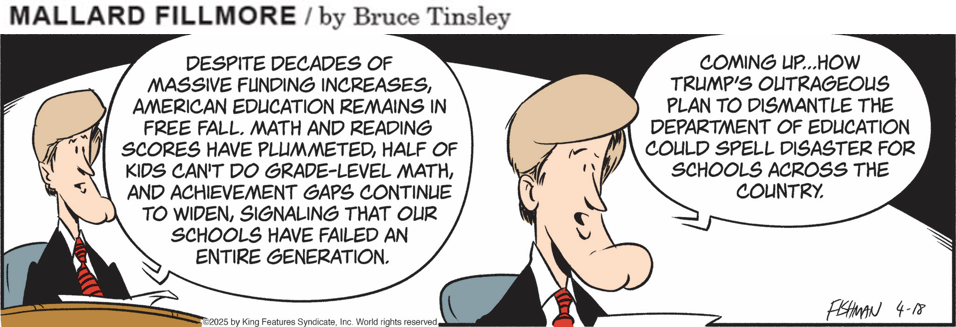
Mallard
Reader Books Flyer 2025

Mission Possible: Synergistic Academics: Saving U.S. Educational Exceptionalism
By Almeda M. Lahr-Well, Ph.D., Xlibris, 2020
Mission Possible provides an in-depth description of Almeda Lahr-Well’s patented and copyrighted “synergistic academics” curriculum, but it also weaves throughout an overview of the 400-year history of education in the United States. The author demonstrates how America‘s current dire educational predicament came about, which began with the public schools and eventually spilled over into many private and parochial schools as well.
While Lahr-Well shows what happened to K-12 education in the U.S., she also provides a blueprint for reclaiming what she calls “American educational exceptionalism.” Her book describes in detail the Lahr-Well Curriculum Concept of Synergistic Academics as it is implemented at Lahr-Well Academy in Edwardsville, Illinois, with its 35 years of proven, nationally standardized test results success for students from kindergarten through 12th grade.
The author addresses first and foremost the critical topic of phonics instruction, beginning with a bit of history in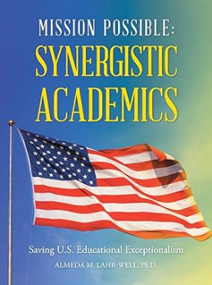 colonial times, when phonics-based reading instruction was “simple and effective. The Bible and some patriotic writings [were] among the first textbooks,” she writes, “until The New England Primer, published in the late 1680s. These resources not only built a foundation of intellect, but of traditional values as well.”
This reviewer found particularly interesting Lahr-Well’s explanation of why phonics is so critical for teaching reading in the English language. She explains that European children learned to read the Romance languages (French, Italian, Portuguese, Romanian, and Spanish), all of which originated in Latin “where there is almost a one-to-one sound-to-letter correspondence. This means that students could write/spell basically what they heard,” which doesn’t work in English.
As an example, she uses the single spelling of “ough,” which produces at least six phonemes (smallest units of sound), including the “o” in go (though); the “oo” in too (through); the off in offer (cough); the “uff” in suffer (rough); the “ow” in flower (plough); and, the “aw” sound — a lower case “o” with a dot on top in Latin — as in the word “ought.”
“With English spelling there is much more complexity,” she writes … “partly because it attempts to capture the 40+ phonemes of the spoken language with an alphabet composed of only 26 letters.”
She continues: “In fact, trying to teach reading without teaching phonics would be like trying to teach spelling without teaching the alphabet…. Phonics proved to be an extremely effective method of teaching reading in the U.S. from Colonial times until the late 1800s when government teamed up with educators to do ‘major surgery’ on what could have been ‘minor adjustments’ … which eventually destroyed the solid phonetic reading foundation.”
The Lahr-Well Curriculum Concept provides seven years of phonics instruction from kindergarten through 6th grade, with reading comprehension through 12th grade. A whole language book series is also used, and, as the author explains, “is actually based on a phonics approach that introduces reading through vowels and vowel combinations….”
Lahr-Well describes how the academic decline in reading, math, and English skills increased as the government began gaining control of the U.S. education system. She reviews each educational fad and misguided government program, after which she adds the refrain: “And generations of U.S. students are lost!”
She quotes a number of works that illustrate, expand on, or reinforce her main points, one of which is Thomas Sowell’s 1993 book Inside American Education: The Decline, The Deception, The Dogmas. Sowell’s important book is an accurate, hard-hitting, and well-documented critique of U.S. education at the time it was written. Since then, as Lahr-Well shows, the situation has only gotten worse. In a discussion of the disastrous Common Core standards, she references James DeLisle’s Dumbing Down America: The War on Our Nation’s Brightest Young Minds, published in 2014, which focuses on the shortchanging of gifted students by the education system.
Lahr-Well explains how her curriculum personalizes learning for all students; i.e., a tailored curriculum, “which engages each and every student in his/her own interests, in addition to emphasizing student responsibility for his/her own success.”
Included in her historical narrative is the 1983 report A Nation at Risk: The Imperative for Educational Reform, famously released during President Ronald Reagan’s first term. She breaks down the report in an easy-to-follow chart, contrasting each area of concern (risk) with the solution her curriculum would provide if widely used. For example, she responds to the complaint of business leaders that they must spend millions of dollars in remedial education and training programs for ill-equipped new hires by pointing out the following: “Students graduating from Lahr-Well Academy have no need for remedial work in reading, writing, spelling, or computation. By the time students graduate, at 16, 17, or 18, they are testing far beyond grade level.”
Lahr-Well correctly assesses that we are “still a nation at risk,” noting that “decades of statistics have continued to uncover how much further and further behind we find ourselves in global educational achievement.” She believes her curriculum would address this slide, providing a comprehensive, well-rounded education that is also individualized for each student.
Specifically, the Lahr-Well Curriculum Concept of Synergistic Academics offers world history woven with American history, mathematics, language arts, the basics in five foreign languages, research skills, the natural and earth sciences, physics, music and art appreciation, including hands-on art, technology, engineering, robotics, and more. Lahr-Well academy students also enjoy field trips, and are encouraged to participate in extracurricular sports and community events.
It is appropriate to reiterate here that the Lahr-Well Concept is a patented curriculum, and that it can be licensed through the author. Students and teachers could benefit from 35 years of fine tuning by Lahr-Well and her faculty, which has resulted in peerless achievement. She invites everyone who would like to see a revival of American exceptionalism through the provision of a solid academic curriculum to visit Lahr-Well Academy and discover first-hand how the program works.
This reviewer encourages readers to avail themselves of Lahr-Well’s informative book. As the author herself points out: “When students are not taught what they need to know … about their Constitution, Amendments, their civil rights, and basic academics … they remain ignorant. Their ignorance leaves them vulnerable to indoctrination. Their indoctrination leaves them vulnerable to losing their country, their freedom, and their liberties!” Discerning observers might agree this is happening today in America.
To read the entire book, go to Amazon or Xlibris.com to order!
Education Briefs

Attention deficit hyperactivity disorder (ADHD) may not have a biological basis after all, admits Dutch neuroscientist, Martine Hoogman, who convinced the world years ago that it was a bonafide brain disorder. After untold millions of children and adults have been treated with powerful drugs in the name of ADHD for nearly 40 years, we are learning that the malady may not actually exist. As Blaze Media reported, writer-broadcaster Paul Tough wrote in New York Times Magazine April 12-13 that prescriptions “to remedy imagined ADHD have skyrocketed — by 58% between 2012 and 2022.” According to the CDC, “an estimated 7.1 million American children (approximately 1 in 9) aged 3-17 had ADHD diagnoses as of 2022, up from two million in the mid-1990s. Over half of the children currently diagnosed with ADHD receive at least one ADHD medication.” These psychotropic drugs — among them the popular Ritalin and Adderall — cause significant side effects as well as addiction, some of which are serious and long-term. In her about-face, Hoogman told Tough: “Back then, we emphasized the differences that we found (although small), but you can also conclude that the subcortical and cortical volumes of people with ADHD and those without ADHD are almost identical.” British researcher Edmund Sonuga-Barke, told Tough: “I’ve invested 35 years of my life trying to identify the causes of ADHD, and somehow we seem to be farther away from our goal than we were when we started … We have a clinical definition of ADHD that is increasingly unanchored from what we’re finding in our science.” Of course, Phyllis Schlafly could have set them straight 25 years ago when she shrewdly noted: “The pediatric guidelines for diagnosing ADHD are all subjective; e.g., often has difficulty awaiting turn, occasionally may do things compulsively, easily distracted from tasks, fails to give close attention to details, makes careless mistakes. With such non- scientific behavioral criteria, it’s no wonder we hear that extraordinary numbers of children are accused of having ADHD.” Perhaps Robert F. Kennedy Jr., at the helm at HHS, will stop the needless drugging of children and fewer lives will be ruined.
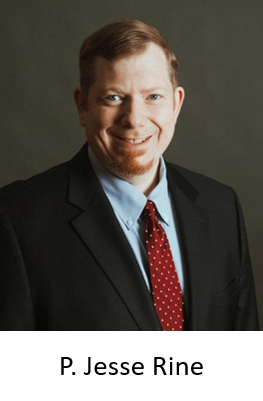
A new college guide from the Center for Academic Faithfulness & Flourishing (CAFF) is designed to help students and their families choose an authentic Christian college or university. Prospective students can access the guide free of charge on the CAFF website. A marketing email promises “just trustworthy information” rather than scores and rankings, and explains that the guide presents “a fully searchable, one-stop shop” for comparing Christian college options. CAFF states that its intuitive online directory gives “just the facts” on over 250 colleges and universities across the country so families can make the best decisions for their children’s future. CAFF was founded in 2023 to address the need to strengthen truly Christian higher education. Its mission is “to empower Christian colleges and universities to advance their faith-based missions, equip campus leaders with the resources necessary to flourish in our present age, and encourage broader support for these unique and valuable institutions.” The organization points out that, while “America’s oldest institutions of higher education were founded by Christian denominations, few have maintained their original religious character.” The group acknowledges that the moral degradation of our “cultural moment” have made the waters Christian colleges must navigate ever more treacherous, but that “authentically Christian higher education enriches society and should be preserved for future generations.” CAFF promises to identify and address challenges to the fidelity of Christian higher education, and to “connect churches, families, donors, and industry leaders with institutions that have endured in their founding missions.” The organization’s executive director is Professor P. Jesse Rine, Ph.D., a nationally recognized expert on Christian higher education, who has held faculty and administrative roles on Grove City College, Duquesne University, and North Greenville University. Its 10-member advisory board represents a variety of states across the country.
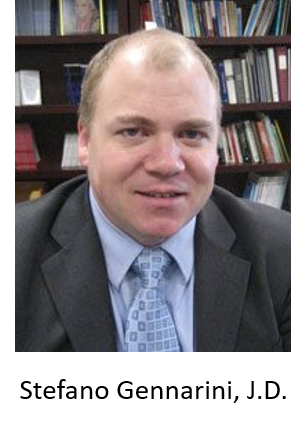
The U.S. took a strong stand against gender ideology in a first-ever event of its kind at the United Nations, sponsored by the U.S. Mission to the UN and co-sponsored by the pro-life organization C-Fam and The Heritage Foundation. The panel event featured speakers who oppose the radical gender agenda, beginning with acting U.S. Representative to the Economic and Social Council, Jonathan Shrier, who oversees the U.S. Mission’s work on social issues. Shrier emphasized the Trump Administration’s commitment to protecting “the great American values of family, truth, well-being, and freedom” and its opposition to policies that “seek to erase the category of sex and the unique characteristics that define women as female and men as male.” He noted that this includes “preserving the integrity of women’s spaces, from our schools to our sports, and ensuring that biological males do not infringe upon the rights of women and girls.” The Heritage Foundation’s Jay Richards, Ph.D., “described gender ideology as an unprecedented movement in human history that denies the category of sex as an ‘observable’ characteristic.” Detransitioner Maia Poet, who was living as a male from the age of 12, told attendees that she was “shaken into confronting the reality of her womanhood by the October 7, 2023, terrorist attacks by Hamas in Israel.” Poet is now a passionate defender of the right of young people to be free “from harmful trans ideology.” Another speaker, Erin Friday, described her successful fight to rescue her daughter, who was “drawn into the transgender movement by the public-school system without her knowledge, and the challenges she faced throughout the ordeal.” Finally, C-Fam’s Executive Vice President for Legal Studies, Stefano Gennarini, said international human rights law “assigns parents the primary responsibility for the development and wellbeing of their children, as well as the right to direct their children’s education.” He said this [law] was “deliberate” in order to “counter the possibility that state-run education systems may be used once again to control entire populations and indoctrinate them, pitting children against parents, and even denouncing them when they are not loyal to government-backed ideologies, as was the case under the Nazi and Communist regimes.”
DEI Isn’t Dead
By Kali Jerrard, National Association of Scholars (NAS)
Originally posted on the NAS website, CounterCurrent: Week of April 7, 2025. Reprinted by permission.
“Diversity, equity, and inclusion” (DEI) isn’t dead. States and schools are still holding tight to DEI, despite Trump administration directives.
At the top of the order, New York is defiantly standing against the Trump administration’s promise to pull federal funding from public schools over their DEI programs. One day after the Education Department (ED) sent the memo to education officials around the nation to confirm the elimination of DEI programs, Daniel Morton-Bentley, the deputy commissioner for legal affairs at the state education agency in New York, penned a stern response stating “we understand that the current administration seeks to censor anything it deems ‘diversity, equity & inclusion.’” He continued, “But there are no federal or state laws prohibiting the principles of D.E.I.” Morton-Bentley also added that the federal government has “not defined what practices it believes violate civil rights protections.”

While many colleges and universities quietly scrub websites to hide their DEI practices and events—as well as eliminating former DEI departments and shuffling administrators and programs into other areas at their institutions under a new name—K-12 public schools are seemingly more threatened by the potential loss of federal funding. They are making their displeasure loudly known.
New York is not alone in its defiant response. Chicago mayor Brandon Johnson stated that the city would take the Trump administration to court if their funding is pulled. Maine is currently suing the Trump administration for freezing federal funding after a weeks-long dispute over the state’s refusal to comply with current Title IX regulations.
This is all to say, we must be aware that states, schools, and professors are not currently, and will not, give up DEI practices in education easily.
The ED memo sent on April 3 asks K-12 schools to certify compliance with Title VI of the Civil Rights Act along with responsibilities outlined in the Supreme Court decision Students for Fair Admissions v. President and Fellows of Harvard College (SFFA). For background, the 2023 SFFA decision was over a decade-long fight by the group Students for Fair Admissions—with support from the National Association of Scholars (NAS) and other like organizations—that sought to eliminate race-based discrimination in admissions. Harvard used a holistic admissions process to create a de facto quota of Asian students to achieve racial balancing. The evidence of discrimination was overwhelming and the Supreme Court eventually decided that the use of racial preferences in college admissions was unconstitutional.
Though the ED memo to K-12 school administrators references SFFA as part of its anti-discrimination certification, New York education officials have pushed back. SFFA makes race-based affirmative action admissions programs unlawful at colleges and universities, but does not address issues involving K-12 schools, says a New York Times article. “The state’s letter argued that the case did ‘not have the totemic significance that you have assigned it’ — and that federal officials were free to make policy pronouncements, but ‘cannot conflate policy with law.’”
Regardless, schools will have to comply with anti-discrimination law in order to continue receiving federal funding. Even if K-12 administrators whinge at SFFA compliance, Title VI is clear: “Title VI and its implementing regulations prohibit the disparate treatment of students based on race and national origin as well as policies or practices that have a discriminatory disparate impact by race or national origin.”
Higher education is no saint in this fight either. Colleges and universities, wary of the Trump administration’s ire, have begun renaming and merging existing DEI programs so that they are not easily found. Often these new offices contain the exact same staff as the previous program or department. For example, Case Western University in Ohio recently announced that “the university-wide Office for Diversity, Equity, and Inclusive Engagement will close,” but to “maintain alignment with . . . institutional values” the school is establishing “the Office for Campus Enrichment and Engagement” headed by none other than the former director of the DEI office. Apparently, a sign change is all that’s needed to comply with federal law.
These simple bait and switch tactics may work for the time being, but are unlikely to survive so long as good citizens, Congress, the courts, and the Trump administration continue investigating these offices and programs for blatant discrimination.
NAS has long urged legislation and not litigation to dispel racial preferences in education. California Proposition 209, which passed in 1996 and was drafted by NAS members, made race-based admissions policies illegal. No matter the appearance of “compliance” with anti-discrimination law by higher education, or the outright flouting of it by K-12, Congress would do well to pass current legislation like the “College Admissions Accountability Act” introduced by Senator Jim Banks. Among other things, the bill,
- Creates a Special Inspector General within the Department of Education to investigate racial discrimination in college admissions, financial aid, and academic programs at federally funded institutions.
- Enforces compliance with the Equal Protection Clause and Title VI of the Civil Rights Act, in line with the 2023 Supreme Court ruling banning race-based admissions.
- Grants oversight powers to receive complaints, conduct investigations, recommend corrective actions or penalties—including loss of federal funding—and propose reforms.
While K-12 schools attempt to circumvent anti-discrimination law and ED mandates, or higher education quietly hides DEI practices behind closed doors—it is a stark reminder that the DEI beast is hard to kill. It unfortunately needs a wooden stake to the heart, or at the very least to be litigated and legislated back into the deep dark depths of fringe tribalism from which it arose.
CounterCurrent is the National Association of Scholars’ weekly newsletter.
Kali Jerrard is Communications Associate at NAS. She graduated in 2022 from Patrick Henry College, with a degree in Economics and Business Analytics. Prior to joining NAS, she worked as a client strategy analyst for a prolific political consulting group in Washington, D.C. Kali resides in Loudoun County, Virginia with her husband and son, and is an ardent lover of romantic era music, cooking, and English literature.
Education Related Links