Linda McMahon: Uncertain Future or Singular Opportunity?
If President Trump’s new education secretary, Linda McMahon, is unsure of her future in the administration, supporters believe it’s not necessarily a bad thing. A month into his second term, the president is doubling down on his campaign promise to close the U.S. Department of Education and send the responsibility for education back to the states.
A recent New York Post article quoted the president as wanting his pick for education secretary “to put herself out of a job.” The Post said Trump “is expected to give his education chief a deadline to deliver a plan for the agency’s winddown,” while acknowledging that Congressional action is required to complete the process.
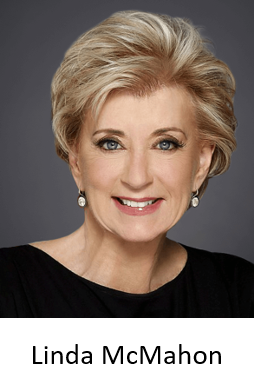
The Daily Caller reported in early February that many parents’ rights groups are urging the U.S. Senate to quickly confirm McMahon’s appointment, noting that the education-related “damages of the previous administration” must be addressed. The groups’ grievances include the Biden FBI’s investigation and labeling of outspoken parents as “domestic terrorists,” and the education department’s “war against religious institutions and trade schools” in order to “protect the higher education cartel against competition” and uphold “cultural Marxism.”
If the agency survives, McMahon will be in a position to make her influence felt, and observers are likely to witness a battle over major cutbacks. The 74 reported in late January that several members of the think tank McMahon chairs, the America First Policy Institute (AFPI), “have grabbed top posts as the senior leadership team takes shape,” which should make McMahon’s job easier.
One of those choices is Jonathan Pidluzny, who served as AFPI’s Director of Higher Education Reform. According to LinkedIn, he was responsible for developing “federal and state policy initiatives to reinvigorate market competition in the higher education sector and improve protections for free expression and promote intellectual diversity in the academy.” In the fledgling administration’s education department, he will act as deputy chief of staff for policy and programs.
Pidluzny reports to new chief of staff, Rachel Oglesby, who most recently served AFPI as chief state affairs officer, coordinating the organization’s policy priorities among its state chapters and councils. The AFPI website states that prior to joining the organization in 2023, Oglesby “worked as chief of policy and deputy chief of staff for Governor Kristi Noem in South Dakota.” Noem, of course, is now the Trump Administration’s Secretary of Homeland Security.
Another controversial figure in the new department is Candice Jackson, an AFPI alum who, according to The 74, is “an architect of the 2020 Title IX rule,” which restored due process protections to the oft-modified law. (See Education Reporter, January 2025.) Jackson served in the first Trump administration as deputy general counsel.
A fourth AFPI addition, Tom Wheeler, is a former Justice Department official, also from the Trump 45 team, “who was instrumental in reversing Obama-era guidance that said trans students should be allowed to use bathrooms that match their gender identity. He’s been named principal deputy general counsel.”
Focus on Achievement
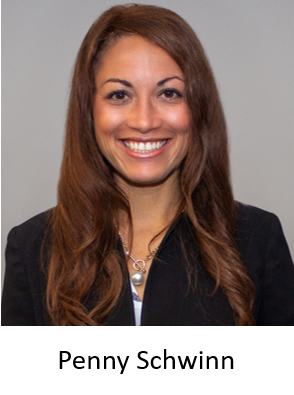
Thus, McMahon is in good company as she takes the reins of the agency, regardless of whether it survives the next four years. Yet another plus for her is that former Tennessee education commissioner, Penny Schwinn, has been tapped to serve as deputy secretary, McMahon’s second in command. Schwinn is not affiliated with AFPI, but she is focused on academic achievement, especially in reading, which should stand her in good stead with her new boss. She too must be confirmed by the Senate.

The 74 reported that Schwinn resigned her state-level post in 2023, citing frustration over her inability to put academics over race and gender indoctrination, which was hindering her efforts “to catch students up after the pandemic.” She said: “I see it as extraneous politics, and my job is to educate kids.”
While some conservatives have spoken out against Schwinn for actions she allegedly took during Covid, and for failure to remove woke curricula from schools, author and conservative education activist, Christopher Rufo, debunked those charges on X. After a face-to-face meeting with Schwinn, Rufo urged his followers to support her confirmation, stating:
- After all of the insanity over the past few years, parents are right to be skeptical of education officials. But we have to be accurate with the facts and considered in our judgments. After spending some time with Penny, I’m confident that she will be a great Deputy Secretary of Education … President Trump and Secretary McMahon selected Penny for a reason, and we should all work together to make sure she is successful. I’m optimistic that she will listen to parents and make progress that is desperately needed.
The 74 pointed out that when Schwinn was Tennessee education commissioner, she “used COVID relief funds to launch a statewide tutoring program and has been credited with revamping instruction to incorporate the science of reading.” Of course, the “science of reading” has been known for decades to countless advocates led by Phyllis Schlafly as phonics instruction. (See Education Reporter, December 2023 and November 2024.)
An article by the Fordham Institute lauded Schwinn’s credentials and accomplishments for her new position. Fordham noted that Schwinn believes ensuring children are able to read at grade level “must be a nonnegotiable goal we set for every single student in this country … This requires strong and aligned training in our colleges of education, high-quality instructional materials, exceptional professional development and ongoing supports for teachers, and additional hours of targeted acceleration opportunities for students.”
Some observers point out that, as a former teacher who has held high-level education positions in Delaware and Texas in addition to Tennessee, Schwinn has the academic experience McMahon lacks, making her a valuable asset at whatever level the ed department operates going forward. Her emphasis on reading instruction has resulted in continued improvement in Tennessee students’ test scores even since her departure, despite ongoing declines in other states. (See Same Old Same Old: 2024 NAEP Scores Stagnant at Best.)
Cutting waste
Efforts by the new Department of Government Efficiency (DOGE) to eliminate wasteful spending at the federal level, as exemplified by its recent gutting of the U.S. Agency for International Development (USAID), only serve to emphasize the education department’s uncertain future. According to U.S. News and World Report, dozens of education department DEI employees “were put on paid leave,” and others “were among those who received an offer to leave their jobs by Feb. 6 and receive a buyout worth seven months of salary.”
A Newsweek article quoted Elon Musk as saying President Trump “will succeed in shutting down the Department of Education.” The article said Musk was responding to a report that Trump “was preparing an executive order to dismantle the department.”
Regardless, Linda McMahon is expected to be well positioned to make critically needed changes to the bloated federal agency. After all, the U.S. Department of Education has throughout its lifetime failed to make a positive impact on academics, while wasting billions of taxpayer dollars on left-wing propaganda and curricula. Parents and kids are counting on her success.
Same Old Same Old: 2024 NAEP Scores Frighteningly Familiar
Some things never change, and one of these is the repetitively dismal National Association of Education Progress (NAEP) test results, which should emphasize for all Americans that something desperately needs to change in education. The 2024 NAEP reading scores for eighth graders show no significant improvement since 1992; scores overall are down five points since the pre-pandemic year of 2019 and two points lower compared to 2022. Reading assessment results were similar for fourth graders.
In math, eighth-grade scores remained essentially unchanged compared to 2022, but were down eight points from 2019. Fourth-grade scores improved by two points compared to 2022, but were down three points from 2019.
The above is a summary of national trends; test scores varied by state. The NAEP website notes: “Most states/jurisdictions and all urban districts with average score changes in 2024 had score increases compared to 2022, while compared to 2019 most states and all districts with average score changes in 2024 had declines.”
In its analysis of the latest NAEP results, Newsweek summarized that in grades four and eight, “pupils in multiple U.S. states have reading and math skills below the national average.” The article conveyed that fourth graders in 20 states “performed significantly below the national average of 237 points for math. New Mexico was the worst performing state, with a score of 224. In Alaska, students were 11 points below the national average, or 226 points. In other states, including West Virginia, D.C., New York and Arizona, students were between 1 and 10 points below the national average.”
In reading, fourth-graders in 19 states “had a score below the national average of 214. New Mexico had the lowest average of 201 points. Alaska was next in the rankings, with a score of 202. West Virginia, Oregon and Oklahoma also ranked low, with between 206 and 207 points.”
In sum, Newsweek reported: “the data published by the NAEP shows the reading and math skills of fourth and eighth grade students are significantly below those of students in 2019, the last administration of the test before the pandemic, when the national average for grade 4 and 8 students for both reading and math was higher.”
Reaction to the scores
Reaction to the latest NAEP results used the predictable excuse that students who performed most poorly are also the most disadvantaged economically and otherwise. But it occurs to almost no one in academia that students who are not taught to read using phonics, or who are not taught basic arithmetic upon which more advanced math skills can be built, are not going to excel, regardless of family income or social status. Whereas students in more well-off families are more likely to be tutored by parents or hired experts to make up for the lack of adequate classroom instruction, disadvantaged students are stuck with whole language and fuzzy math, if they learn any basic skills at all.
Newsweek reported that the U.S. Department of Education issued a statement lamenting the latest NAEP scores as follows:
- [The] NAEP results reveal a heartbreaking reality for American students and confirm our worst fears: not only did most students not recover from pandemic-related learning loss, but those students who were the most behind and needed the most support have fallen even further behind. Despite the billions of dollars that the federal government invests in K-12 education annually, and the approximately $190 billion in federal pandemic funds, our education system continues to fail students across the nation.
We must do better for our students. The Trump Administration is committed to reorienting our education system to fully empower states, to prioritize meaningful learning, and provide universal access to high-quality instruction. Change must happen, and it must happen now.”
States petition McMahon
The persistent failure of American students to make any significant strides in academic improvement is adding fuel to the fire of those calling for an end to the U.S. Department of Education. In late January, The 74 reported that education leaders in 12 red states sent a memo to Linda McMahon urging her to send federal money directly to them, despite the fact that she had not yet been confirmed as secretary.
The letter stated in part:
- As the officials directly responsible for education in our states, we believe that the diverse needs of students, schools, and communities are best understood at the state and local levels … We support many of the priorities of this Administration, including empowering parents,

expanding career and technical education, and providing more education choices for students. We stand ready to support you in your efforts to restore state and local control over education and we welcome the opportunity to meet with you to discuss our efforts and ideas for K-12 education and collaborate on solutions.
Signed by top education officials in Alaska, Arkansas, Florida, Idaho, Indiana, Iowa, Mississippi, North Dakota, Ohio, South Carolina, Utah, and Wyoming, the letter stopped short of recommending the shuttering of the U.S. Department of Education. But it urged the new administration to prioritize policies “that trust and empower state educational agencies (SEAs) to shape education systems that meet the unique needs of their students.” These include the prioritization “of state control of education funds” and the issuing of guidance that is “aligned with Congressional Intent that Defers to State Law and Policy.”
How significant an impact the letter is having on the Trump Administration is uncertain, but it’s logical to assume it can only serve to further encourage the loosening of federal reins on education. The Associated Press recently described the angst among Democrats at this prospect, using as an example Minnesota’s State Senator, Mary Kunesh, who speculated: “Imagine if we have billions of dollars frozen at the federal level. How are we going to make sure [students] have the curriculum they [need] to learn?” Apparently, Kunesh and her fellow Democrats fail to consider that if most students are not performing at even basic levels of competency, it speaks volumes about the curriculum. Many parents would agree their children aren’t learning the academic skills they need.
Project 2025
Progressives and the mainstream media have been wailing for months about Project 2025, a blueprint for a less costly, less bureaucratic government that is more accountable to its citizens, but which they label as “extreme.” These voices insist Project 2025 is driving the Trump Administration’s push to close the education department, among other moves to trim government agencies and reduce waste.
Project 2025 was created by more than 100 conservative organizations led by The Heritage Foundation, as Education Reporter described in some detail last September. What’s important for this discussion is that its blueprint includes a call for Department of Education funding to be allocated to other agencies, such as moving Title I funding to the Department of Health and Human Services (HHS) for distribution to states in the form of block grants.
With Secretary McMahon and her leadership team expected to begin sorting out details of the administration’s plans without delay, the next few months are likely to be at least challenging and controversial. President Trump has distanced himself from Project 2025, but some of the ideas presented are similar to those he has outlined in his remarks and campaign speeches.
The state education leaders’ letter sums up the situation this way: “The transition to a new administration is an opportunity to reaffirm a shared commitment to student success and educational excellence. By prioritizing state leadership and flexibility, the Trump administration can unleash the full potential of America’s schools and students … Please defer to state and local decision-making as much as possible in your actions.”
Trump EOs Rout Racist Education, Promote School Choice
President Donald Trump’s issuance of a flurry of executive orders during the first few weeks of his second term addressed education in a big way. One of these EOs strikes down radical woke indoctrination in America’s school system, including anti-Americanism, racial propaganda, and gender ideology.
Among the many pro-family groups cheering Trump’s actions, Libs of TikTok enthused: “For far too long, woke activists have been allowed to infect our school systems…. Trump aims to dismantle anti-American propaganda being fed to your children and to provide them with a rigorous education.”
The Libs expressed hope that the Trump Administration will restore the teaching of “patriotism and admiration for our country and the values for which we stand,” adding that this EO “also eliminates race-based discrimination including the promotion of CRT and DEI principles which divide people into groups by labeling them as ‘the oppressed’ or ‘the oppressors.’” The EO further “seeks to eradicate the dangerous gender ideology which has led to the destruction of girls’ sports, the sexual grooming of children, and the mutilation of healthy bodies [and] genitalia….”
As an example of the racist instruction currently in vogue, Libs of TikTok exposed a lesson promoted by the California teachers’ union (CTA), which encourages teachers to instruct white children that they are all racists and white supremacists.

The lesson uses a pyramid structure to divide alleged white racism into two parts. A small top section of the pyramid lists various examples of “Overt White Supremacy” that would universally be deemed “Socially Unacceptable.” These include “lynching, hate crimes, neo Nazis, burning crosses, racial slurs and jokes,” among other provocative and extreme examples. The much larger portion of the pyramid addresses what the lesson calls “Covert White Supremacy,” which it claims is considered “Socially Acceptable” in our racist society. This section includes almost anything CRT agitators might dream up: “White Silence, Color blindness, Make America Great Again, School-to-Prison Pipeline, Denial of Racism, Police Brutality,” and several dozen more examples, one or more of which allegedly apply to all white people.
In ordering the removal of such indoctrination, this executive order “also reinstates the 1776 Commission, which was implemented during Trump’s previous term but was removed under an executive order by President Joe Biden,” according to a report by The Epoch Times.
The 1776 Project was created in 2018 by the 1776 Commission “to help RESTORE our constitutional republic.” During the first Trump Administration, the Commission created The-1776-Commission-Report, the purpose of which, in its own words, was “to enable a rising generation to understand the history and principles of the founding of the United States in 1776” … This requires a restoration of American education, which can only be grounded on a history of those principles that is “accurate, honest, unifying, inspiring, and ennobling.” (See Education Reporter Email Edition, February 2021.)
The 1776 Commission’s report was “a direct response to the 1619 Project,” which portrayed the United States as an inherently racist nation and claimed that the main reason for the American Revolution was to preserve slavery. The 1619 Project was a product created by activists in partnership with the New York Times, and much of its content was later debunked by actual scholars of American history. Nevertheless, it stimulated the proliferation of CRT, and has been widely used as credible history in many U.S. schools.
Hiding CRT and DEI
Many observers agree the Trump EO is just the beginning, and much work needs to be done. The Libs of TikTok pointed out that “schools and organizations across the nation will attempt to challenge or defy this major change. Some will attempt to hide their intentions while others will openly oppose and violate it.”
Their concern is well founded. The University of Michigan, for example, plans to continue its DEI programs under the new title of “Office of ‘Community Culture.’” The Washington Free Beacon reports that after the president issued his executive order, the university’s school of nursing “began quietly revamping its website.” A tab with links to DEI resources was removed, and the acronym was expunged from pages that previously included it. The Beacon provided screen shots of the newly revamped web pages.
The news source further found that, rather than downsizing “a bureaucracy that employs more than 200 officials and has cost the university nearly $250 million since 2016,” the new web pages simply “link to the same DEI materials as the old ones, including a ‘DEI 2.0’ strategic plan that is in effect through 2028.” The renamed office of “‘Community Culture’ employs all the same staff as the former diversity office.”
The university’s plan whines: “[W]e are aware that we are up against many forms of oppression. Given this context, and during this next DEI 2.0 period, the [School of Nursing] remains committed to mobilizing the incredible strength and potential of our School.”
Although the new administration appears to be cognizant that many schools will attempt to implement what the Beacon called “such switcheroos,” the Office of Personnel Management (OPM) “created a tip line to report efforts to ‘disguise these programs by using coded or imprecise language,’ adding that ‘failure to report this information … may result in adverse consequences.’”
Promotion of school choice
President Trump’s second education executive order titled Educational Opportunities for American Families prioritizes “educational freedom” across all areas of the government, including the Department of Education, the Department of Health and Human Services (HHS), the Department of Defense (on behalf of military families), and the Department of the Interior (on behalf of native Americans). The goal is to expand choice programs for all American children.
The EO “directs the Department of Education to issue guidance on how the States can use federal funding formulas to support their K-12 scholarship programs.” This order would appear to dovetail with the president’s intent to return the responsibility for education to the states.
But some observers worry that Trump’s EOs may be flirting with violation of the U.S. Constitution. FEE’s Kerry McDonald noted in a recent email to supporters that “the Constitution gives the feds no authority to govern education,” a point that the president himself has repeatedly made. She adds: “Congress has not enacted national school choice. At the very least, it would seem a violation of the spirit of separation of powers if the president were to decide that choice could be delivered by Washington….” It is well to note here that both McDonald and FEE support school choice.
A January 30 article on the Cato Institute’s Liberty Blog made the salient point that “the only concrete way to avoid government indoctrination is to let families decide for themselves where the money to educate their children will be used. That means school choice, the subject of [Trump’s] second EO. But even though expanding freedom for families is highly desirable, the Constitution must come first.”
Many believe the president has no intention of “making law” through his education EOs, but that, in the short term, his purpose is to counteract the far-left indoctrination that has permeated the U.S. school system for decades, funded in large part by the federal government. It’s the president’s much emphasized wish to end this unconstitutional intrusion.
As Cato concluded: “Indoctrination is a major concern with public schooling because public schooling is ‘government’ schooling—government-funded and run schools. The solution is choice for families.”
FEE’s McDonald put it this way:
- The key is to reduce the size and scope of the federal government’s role in education—not to enlarge it. Even when we support certain programs or policies—such as school choice—we should speak out against the implementation of these policies at the federal level. Instead, we need to focus on championing such policies in every state.
It’s doubtful that President Trump and his education secretary, Linda McMahon, would disagree.
Yes Virginia, the Bible Can be Taught During the Public-School Day
The decades-old battle over prayer and the teaching of Scripture in public schools can be won through programs like Ohio-based LifeWise Academy, a thriving Bible study curriculum that is integrated into the weekly class schedules of tens of thousands of American children. According to the organization’s website, the program makes use of “released time,” which is time set aside during school hours, typically an hour a day or a week, for students to receive off-campus private religious education.
The criteria for LifeWise and similar non-profit religious organizations to operate during public-school hours include that the instruction be given at a location outside the school, that the sponsoring organization and/or the students’ families must bear the cost, and that parental consent must be given. LifeWise easily meets these criteria, as does the Bible program offered by South Carolina-based School Ministries. While this organization has not seen the explosive growth of LifeWise, School Ministries added 33 school districts last year and has a goal of reaching 250,000 children by 2030.
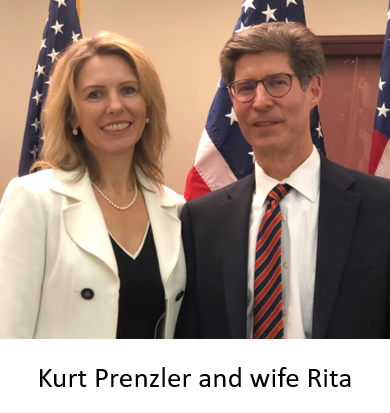
Executive Director of Phyllis Schlafly Eagles and former Chairman of the Madison County, Illinois Board, Kurt Prenzler, reports that LifeWise has grown “from serving two school districts in 2018 to more than 600 in 2024, with the goal of serving 1,000 districts by 2026.” Prenzler relates that, after reviewing the group’s financials and talking with a representative, he found LifeWise to be “a very fast-growing and successful ministry,” with solid fundraising capabilities.
Banning the Bible & School Prayer
During the early 1960s, two Supreme Court cases officially banned prayer and Bible instruction from public education. These were Engel v. Vitale in 1962, when the court held that “reciting state-written prayers in public schools was unconstitutional government promotion of religion.” Although the ruling didn’t specifically outlaw prayer itself, the end result was in practice exactly that. In 1963, the second case, School District of Abington Township, Pennsylvania v. Schempp, struck down “school-sponsored Bible reading and the recitation of the Lord’s Prayer.”
According to FreedomForum.org, the Justices in the Abington case “decided 8-1 that such practices violated the neutrality toward religion required of public schools by the establishment clause. By neutrality, the court meant not taking sides in religion and remaining neutral among religions as well as between religion and nonreligion.”
Many parents and concerned citizens reacted negatively to these court decisions, charging that God had successfully been “kicked out” of public schools. Freedom Forum noted that some educators and religious leaders “focused on the need to study religion as part of a good education” rather than that God had been banished from the schools.
A renewed push to reinstate the Bible in public-school curricula began in 2019, but as yet only the State of Oklahoma is working to codify it in its new State Academic Standards. While Texas, Louisiana, Florida, and several other states have initiated attempts to include the Bible as part of an English Language Arts or Social Studies curriculum, so far only the use of “released time” has actually been successful in providing religious education during the public-school day.
The concept of released time religious instruction dates back to 1905 and has been upheld multiple times at the U.S. Supreme Court. LifeWise points out that guidelines for usage of this time “both guard against government establishment of any one religion and allow expression of the right to the ‘free exercise of religion,’ also protected by the First Amendment.”
Kurt Prenzler believes the fast growth of LifeWise and similar ministries is the result of “a need that is recognized by many people, including volunteers, contributors, parents, and perhaps even some public-school board members and administrators.” He explains that “a lack of Bible education in the public schools” has fueled this need, and that one result is bad behavior in school — which is a problem for public school teachers. (For more on this topic, see Education Reporter, August 2024.)
About LifeWise Academy
The LifeWise Academy website explains that its programs are “powered by The Gospel Project,” and that the curriculum “takes students through the entire Bible over five years with a three-fold focus on Head, Heart, and Hands.” For example, it focuses on “head” by simply teaching what the Bible says, what happened in the story, and what it tells kids about God, themselves, or the world.
The curriculum also touches the “heart” by examining how the Bible story ties into and points to the big picture of the gospel. Students consider human failure, sinfulness, and the need of a savior as well as Jesus’ victory in accomplishing for the human family what we could not achieve for ourselves.
Finally, LifeWise focuses on “hands” by exploring ways students can live out the changed character the gospel produces … the lessons show how Jesus changes a person’s desires, actions, and character to be more like His.
Each LifeWise lesson also reviews a “Living LifeWise” character trait. The order in which the lessons are taught is flexible and can be modified as the teacher deems necessary.
LifeWise in action in Illinois
Luann Stoller is the director of the Princeville LifeWise ministry in west central Illinois near Peoria. Several other small towns in this conservative area also have LifeWise programs. The Princeville program began in September 2024 with 77 children in grades K-5 and now has 113 students enrolled out of a total of 280.
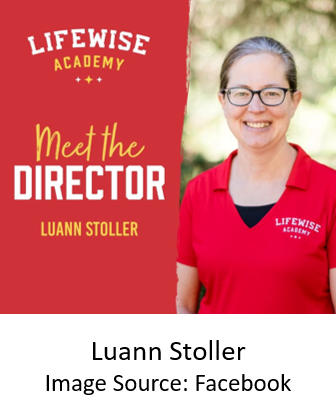
Education Reporter caught up with Stoller as she was preparing to leave for her 30-minute Thursday LifeWise class. She explained that a planned expansion to include middle school students in Princeville has been approved and will begin next fall. When asked if her program is connected to others in the area, she said: “Not directly. We operate individually, but we are all closely connected with the corporate level ministry based in Columbus, Ohio.”
The Princeville class uses the students’ PE time. “We have a bus and meet at a small Baptist church with three classes in the morning and three in the afternoon” Stollar described. “Our largest group is 24 kids. Because the time is so short, we use every minute to teach, even during the bus ride. Every lesson involves focusing on a character trait as well as a Bible passage — for example, hope. We outfitted the bus with video monitors, and we play a video on way to the church. We use the ride back as prayer time.”
While LifeWise Academy programs vary, Stoller says hers has one paid director and one paid teacher. “We have four volunteers in both the morning and the afternoon sessions.” She explained that LifeWise programs are ranked in terms of student enrollment, finances, and fundraising, and she is proud that her small-town program earned a ranking of “10” in the fundraising category.
She further told Education Reporter that a LifeWise program has been launched in the greater Chicago area’s western suburb of Aurora, characterizing this development as “huge.”
Although an obviously Christian ministry, LifeWise is not exclusive to any single denomination; rather, the organization requires that at least three denominations be involved in its programs, which they refer to as “multidenominational.” Five denominations are involved in the Princeville program: Catholic, Apostolic Christian, Baptist, Methodist, and Presbyterian. Representatives of these varied denominations come together “to support and celebrate the mission of bringing Bible education to public school students during school hours.”
The classes focus on “core themes of the Bible and emphasize the gospel of Jesus Christ,” which is “foundational to Christian belief and widely agreed upon by the various denominations that support LifeWise Academy.” The programs generally avoid doctrinal specifics.
Observers like Prenzler appreciate that LifeWise programs go above and beyond merely spreading the gospel. “I love the fact that the Bible release time groups are local,” Prenzler says, and explains that the programs have additional benefits:
- Training grassroots activists. The release time programs produce Christian citizens who are learning to be activists — how to impact local government, in this case local public schools. They are teaching everyday people to form committees; plan and communicate with local government schools, learn the law, raise money, etc. They are learning that Christians can be successful in the public square, which is important.
- Exposing the mistake of taking the Bible away from children. The success of these programs is visible, not only to Christian volunteers and parents, but also to the public-school establishment. The public schools have tried to become the church, tried to produce the “fruits” of Christian virtue without God, such as patience, kindness, love, joy, peace, and goodness. LifeWise emphasizes character-building, and it quickly becomes apparent that these Bible release time programs do a far better job of producing fruit, and people are noticing.
Prenzler adds that, in the spirit of Alexis de Tocqueville, the famed political scientist, historian, and author of Democracy in America: “The Christian release time programs in some ways produce a predictable American response; see a problem and form a voluntary group to address it.”
He explains that the process for starting a LifeWise program begins with “obtaining 50 signatures on a petition of persons within the school district.” This exercise indicates to LifeWise that there is interest in the community to move forward. The next step is to form a committee representing at least three religious denominations.
Prenzler has proven to be a valuable resource for promoting Bible released time programs by helping to recruit committee members in Illinois school districts. Readers may contact him at kurt@phyllisschlafly.com for more information, or may contact the Phyllis Schlafly Eagles by email or phone using this link.
The day may come when prayer and Bible study are restored to American public education and God is again permitted in the public square, but the continued growth of LifeWise, School Ministries, and similar programs may help turn our public-school system around in the short term.
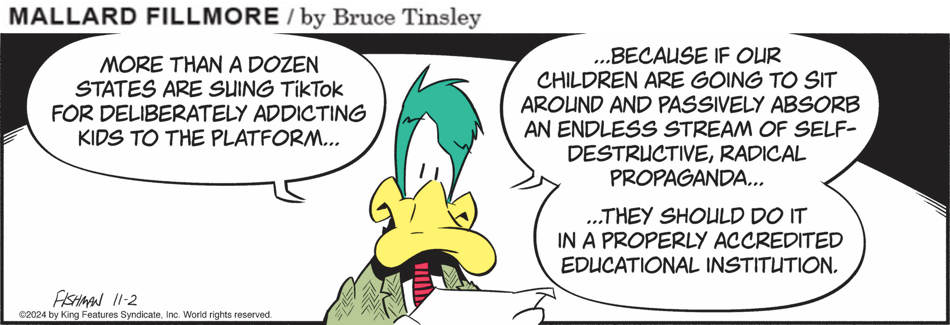
Mallard
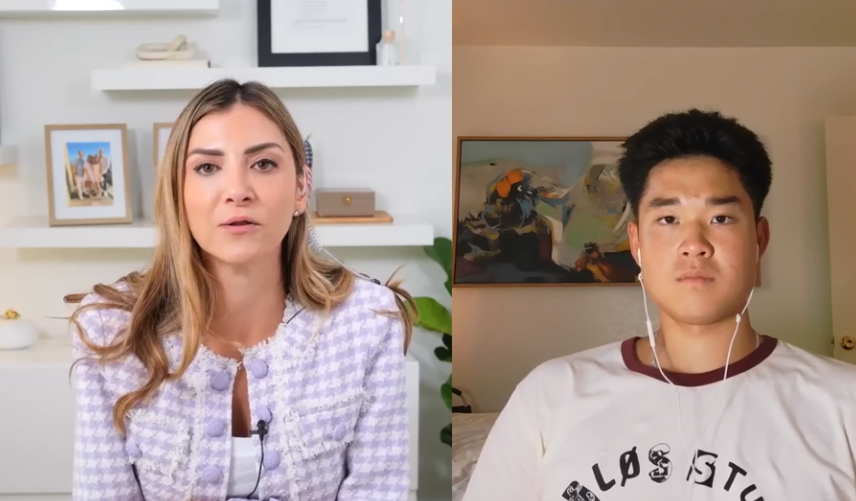
Sherwood Kids: Low-Stimulation Entertainment
Founder and CEO, Jess Hall, Launched October 2023. Subscription fees $6.67 per month; $79.95 annually.
Storyteller Jess Hall has created an entertainment platform that offers a variety of children’s audio books, e-books, and videos that parents won’t have to police for inappropriate content.
Hall explained in a 2023 YouTube interview that his interest in entertainment began when he was a child in middle school. He thought at the time how the gospel, if shared through the lens of storytelling, could reach a lot of people and perhaps be used to “change the culture.”

Later on, Hall followed his dream by earning an undergraduate degree in film, and he then pursued a Masters degree in creative writing at Oxford University in England. “My goal was always to plant seeds with stories,” he said. “The depravity in the mainstream media is creating a giant vacuum, and really amplifying the need for someone to come along and offer stories that resonate with people by sharing the values this nation was founded on, and with which the majority of Americans agree.”
Hall said he reviewed a list of so-called “children’s books” that were coming out, and “every single one had something to do with anxiety, or a really troubled past, or sexual orientation themes.” He explained that these were “picture” books, all with an agenda.
Hall decided to use his Christian faith and his education to fill the overarching need he saw for wholesome children’s entertainment free of political agendas. “I think telling beautiful stories can have a huge impact by just being true and reflecting God’s handiwork.” He explained that he was discouraged by the fact that in order to work in Hollywood, he would have had to compromise his values, and so he turned to publishing rather than film work.
“Hollywood’s an echo chamber of companies and employees that are disconnected from the rest of America and what they are producing reflects that,” he said.
Hall said Sherwood is growing a huge catalog of entertainment in the form of e-books, audio books, and videos, including “classics and content we are creating ourselves.” Kids TV shows such as “early Mighty Mouse or early Superman” can be found on Sherwood, as well as Pilgrim’s Progress or E. Nesbit books. Animated art accompanies many of the books, creating a kind of “read-along” product with images that reflect what’s going on in the story. Hall calls this “low-stimulation” entertainment, as opposed to many of the hectic-paced cartoon products served up to kids today.
Hall believes homeschool families will find a helpful library of books for classwork, as well as video entertainment their kids can watch on Saturday mornings. The platform doesn’t have ads or “woke” agendas, but does require a subscription fee based on what parents can afford.
He hopes to acquire creative content partners with similar values to his own who want an outlet for stories that might be rejected by woke producers and publishers. “I’m here to bridge the gap,” he says, “and introduce the audience to these creatives.”
Sherwood is admittedly not a “Christian” platform but a platform “powered by Christians who are trying to offer an alternative to Disney in the secular space.” Hall explains: “We judge the quality of the content rather than the creators, and we’re going to judge its usefulness in educating and training young minds.”
After researching Sherwood through its website, YouTube videos, and more, this reviewer believes the platform could be a valuable resource not only for homeschooling parents, but for all those desperate to find woke-free entertainment for their children. Interested parties can obtain a 7-day free trial before committing to a subscription.
Recently, The Epoch Times published an article very favorable to Sherwood. The writer quoted Hall as saying: “Ultimately, we want to tell timeless stories to kids, helping them grow up to be the leaders we want shaping the culture. The stories that kids believe today will shape the culture of tomorrow. The stakes are high.” We couldn’t agree more.
Education Briefs
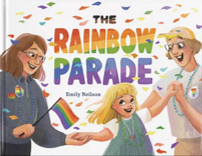
Yet another pornographic ‘children’s book’ riles parents, this time at a Penfield School District board meeting in Rochester, NY. Fox News reported that the book, The Rainbow Parade, promotes the LGBT lifestyle, gay pride parades, and “shows nudity and bondage-style fetish attire.” When outraged parents objected, board members “shut down the school board meeting early.” The board chair claimed no one had objected to the book and that there are “procedures in place” for such complaints. But after repeated attempts to voice their concerns via emails and phone calls failed to elicit a response, the parents refused to be put off. Mom Jenny Sulliver, whose 10-year-old daughter brought the book home, told Fox that she and other parents had no recourse but to attend the school board meetings in person. She said many parents “couldn’t believe” the book was available to children in grades K-5. “Emails and calls are ignored; they try to deflect and change the narrative; they don’t answer any questions,” Sulliver said. She pledged that parents will continue to speak out and demand answers from school officials. “They are not going to deny us our freedom of speech; they should be brought up on charges, quite honestly,” she added. “The school district is giving lewd materials to children; this is exactly what is happening, and they should be held accountable.” Libs of TikTok posted on X that the developments in the Penfield School District constitute “a big scandal,” and asked rhetorically why the school board is “ignoring parents’ concerns over their children being exposed to pornographic material at school.” The post noted that The Rainbow Parade’s author, Emily Neilson, “loved going to pride parades as a kid with her moms and her queer family.”

Author and Manhattan Institute senior fellow, Christopher Rufo, described how the Trump Administration’s new Department of Government Efficiency (DOGE), could strike a blow for serious reform of the Department of Education. In his weekly email communication to subscribers, Rufo explained that he recently made public “material from an ongoing investigation into ideological corruption at the Department of Education and its sprawling NGO network.” He contends that this information paints “a damning picture of the department’s reigning ideologies.” Rufo’s materials include a video in which a Department of Education-funded NGO spokesperson argued that public-school educators should destigmatize child “sex work,” for “LGBTQ+ survival,” for “queer and trans people of color” and especially for “LGBTQ+ women of color” for purposes of their ability to obtain income. It also discusses “adultism,” which essentially means that educators should not discourage LGBTQ+ youth from sex work and other forms of deviancy. In another presentation, “activists within a Department of Education-affiliated NGO claimed that babies develop racial biases and begin ‘attributing negative traits’ to nonwhite races by age five.” Rufo also provided a clip “from an NGO that had received an $8 million grant to promote the idea that America is a ‘racialized structure of power, privilege, [and] oppression.’” Rufo explained that within hours of his posting this material “the Department of Education announced that it had canceled the grants, totaling $350 million, for the Equity Assistance Centers and Regional Education Laboratories that had been organizing such trainings.” Rufo quoted Elon Musk on X commenting: “So many situations like this …” adding, “funding for racist baby training is canceled.”

Critics charge that Texas A&M university sponsored a trip for faculty and graduate students “to attend a diversity, equity and inclusion (DEI) conference” that explicitly excluded white and Asian students. The Daily Caller reported that, according to its website, the “PhD Project’s Annual Conference is intended for individuals who ‘Identify as Black/African American, Latinx/Hispanic American, or Native American/Canadian Indigenous.’” Texas A&M is a taxpayer-funded university but claims it is not violating anti-discrimination laws or the state’s 2023 ban on “school-sponsored DEI programs” by supporting restricted student attendance at the conference. The sponsoring organization claims “its purpose is to increase diversity and equity in doctoral programs and uses findings from a not-yet released study that claims the practice of racially gerrymandering student and faculty representation in programs is ‘not just ethical, it’s evidence-based.’” The Daily Caller writes that despite state bans, “DEI initiatives continue to run rampant at many state universities across the country….” But, the authors continue, “many DEI programs are beginning to crumble at prominent schools after studies revealed the initiatives may increase racial tensions and fail to increase diversity and overall student outcomes.”
UVA professor compares Kamala Harris loss to ‘violence of chattel slavery’
By Megan Rosevear, Brigham Young University
Originally posted on The College Fix website, February 18, 2025. Reprinted by permission.
‘We’re a nation that’s plagued with misogyny and sexism … to deny that would be to deny reality,’ one scholar said.
A panel of scholars recently discussing the 2024 presidential election outcome at the University of Virginia largely blamed racism and sexism for President Donald Trump’s reelection, with one scholar arguing the Kamala Harris’ loss harkens back to “the violence of chattel slavery.”
“Viewed through the lens of the history of African American women in the United States, the defeat of the first black woman nominee [of] a major party for the presidency by an openly racist and misogynistic candidate seemed to recall the voicelessness and vulnerability of black women during the eras of slavery and segregation, particularly in the Jim Crow south,” said Kevin Gaines, a UVA professor of civil rights and social justice.
Gaines, moderator for the “Race, Gender and the American Electorate” event at UVA’s Miller Center, continued that “enslaved black women endured the violence of chattel slavery and the exploitation of their labor and reproductive sexuality.”

“Even in freedom, black women historically have been overlooked and marginalized, not only by white male oppressors, but also — and often — by their extensible allies: black men and white women,” Gaines said.
Held in late January, the Miller Center, a nonpartisan affiliate of the University of Virginia, describes itself as striving “to illuminate presidential and political history accurately and fairly.”
But the panelists solely heaped criticism on Trump and those who voted for him during the event, described by organizers as a post-election analysis to discuss “the complex interplay of race, gender, and age demographics as they affected the outcome.”
Gaines said a majority of white women chose Trump, 52 to 47 percent, over Harris, adding with issues like abortion on the line, he had hoped more white women would support Harris.
“White women’s support for Trump was striking given the number of state ballot initiatives in which voters approved protecting abortion rights,” Gaines said.
Andra Gillespie, an associate professor of political science and the director of the Study of Race and Difference at Emory University, said that Fox News viewers were primed to vote for Trump due to its coverage.
“Fox News viewers tend to have very different views about politics than even other Republicans. It’s because … [they] think about the things being discussed on the news more,” Gillespie said.
She went on to talk about how the echo chamber might not have enough “editorial gatekeeping,” and so “media misinformation can proliferate.”
Professor Bertrall Ross of the University of Virginia School of Law said “we’re a nation that’s plagued with misogyny and sexism … to deny that would be to deny reality.”
In relation to the sexism and misogyny, Ross argued Harris would have won the election if she had been able to run as herself and not as Biden’s vice president. “We could’ve overcome the sexism and misogyny of our nation, and the willingness of Trump to play into that,” Ross said.
“Vice President Harris handled Trump better than any candidate I have seen opposing Trump,” Ross said. “The way she was able to bring Trump down to size… was quite remarkable.”
Ross continued by saying that “there are pockets of [voter] suppression” caused by Republican operatives “targeting minority communities.”
With regard to gender dynamics and the election, Ross said Trump pursued a “very proto-masculinity campaign. The idea of ‘Make America Great Again’ is an idea of returning to a dynamic of patriarchal control, [and] patriarchal economic dynamics,” he said.
Ross said Hillary Clinton actually won the election in 2016, but for the “electoral college antiquity,” adding that the electoral college is the “biggest voter suppressant” in the political system.
In response to a question about informed and uninformed voters, Gaines said “it’s quite likely that this election was determined by voters who did not have… as comprehensive a view of politics and the issues as… a fair amount of Harris supporters.”
“For Harris supporters, losing to Trump, who has repeatedly made vile racist and sexist attacks against Harris, was particularly galling,” Gaines said, without mentioning a specific incident.
At one point, Gaines also said, “Democrats can always find fault with the person at the top of the ticket, but Republicans … will fall in line no matter what.”
Reached for comment on the one-sided nature of the panel discussion, Joel Gardner, president of the Jefferson Council, said the university may want to find more balance.
“Professors have the right to freedom of speech pursuant to the University’s statement on freedom of expression. However, it becomes an issue and a problem when the administration adopts viewpoints as an official position or supports certain viewpoints to the exclusion of others,” he said in a written statement provided to The College Fix.
The Jefferson Council is a nonprofit alumni association formed to preserve Thomas Jefferson’s legacy of freedom and excellence at the University of Virginia.
College Fix contributor Megan Rosevear is a student at Brigham Young University where she studies journalism and various forms of dance, including ballet, ballroom, and tap. She is a member of Young Americans for Freedom. In her spare time, Megan enjoys running, spending time with her family, and writing articles for her productivity blog, which has garnered over a million views.
Education Related Links


Reader Books Flyer 2025