Student Illiteracy Hits Higher Education
While much hand-wringing accompanies each round of dismal reading assessment results, nothing of substance ever seems to be done to remedy the problem. For many years, the National Assessment of Education Progress (NAEP) scores have shown a downward spiral in grades K-12, as Education Reporter and other news outlets have consistently documented.
A variety of issues have been singled out for blame, including the COVID-19 pandemic, economic disadvantages, racism; in short, everything but the failure to teach children to read using the proven phonics instruction method has been offered up as an excuse for rampant illiteracy. And although several dozen states have passed legislation stipulating that “the science of reading” (i.e., phonics and reading comprehension) be employed in reading instruction, scores have continued to plummet.
Most recently, administrators and professors are bemoaning the fact that many students arrive at the college level, including elite universities, unable to demonstrate basic skills in reading and math.
Last month, a story in The Atlantic complained about “elite college students who can’t read books.” The author, Rose Horowitch, quoted Columbia University Literature Humanities Professor Nicholas Dames as saying students “have become overwhelmed” by the university’s required great-books course, and that they “seem bewildered by the thought of finishing multiple books a semester.”

Dames was astounded to find that many students had never been required to read an entire book in high school. “It’s not that they don’t want to do the reading,” he told Horowitch. “It’s that they don’t know how….,” which sums up the crux of the matter.
Horowitch writes that some experts “attributed the decline of book reading to a shift in values rather than in skill sets,” which doubtless plays a role, but low reading test scores result from the neglect to teach reading in the early grades.
The 74 recently reported on a study involving nearly 170,000 students and 1,500 teachers in the 3rd through the 12th grades “based on the results of a screening assessment called ReadBasix,” developed by ETS, a global non-profit company that creates assessments to measure proficiency in a variety of areas.
The ReadBasix results support the findings of a “landmark 2019 study,” which showed that students who cannot decode (or sound out words) accurately and fluently are unable to comprehend what they read. This connection between the ability to recognize words and understand them is called the “Decoding Threshold Hypothesis, which posits that the relationship between decoding and reading comprehension becomes unpredictable when decoding falls below a threshold.”
The 74 reported:
- As many as 38% of Grade 5 students and 19% of Grade 10 students in our sample were below the decoding threshold. These students did not make any progress in their reading comprehension score in the following three years; their peers did. Thus, the decoding threshold provides a way to identify students whose reading comprehension will likely remain poor unless their decoding can be improved to a level above the decoding threshold.”
In other words, unless children are taught to read using phonics early on or as an intervention later, their ability to read and understand what they are reading will not improve.
Consequences of failure
One of the consequences of failing to teach young children to read is that they are likely to skip classes altogether or engage in disruptive behavior later on. The 74 wrote: “As students get older, their struggles with reading often show up in disruptive behavior or a pattern of avoidance in class.” When it’s time to read something in class, it’s time for students who struggle with reading to go to the bathroom or skip class altogether.
In August, Education Reporter described the chaos and disorder many teachers experience in their classrooms on a daily basis. The article stressed that a remedy for such behavior is “sequenced, rigorous, and knowledge-based curricula,” which is obviously lacking in most K-12 reading and math instruction programs.
Many middle and high school teachers rightfully assert it’s not their responsibility to teach basic skills, but as a result of their students’ inability to demonstrate such knowledge, “they are already assigning excerpts of books instead of full chapters.” Some educators recommend screening students in the later grades, and then persuading curriculum companies “to offer foundational materials for older students like they do for younger readers.”
While many parents remain in the dark about their children’s inability to read, it became obvious for others during and after the pandemic. One teacher’s eyes were opened by her 7-year-old daughter who was learning to read using phonics. “As I watch her develop,” she disclosed, “I’m thinking about my own students who are 14, 15, 16. I’m like, ‘Oh, maybe this is what they missed when they were her age.’” Phonics proponents believe this is precisely the case all too often.
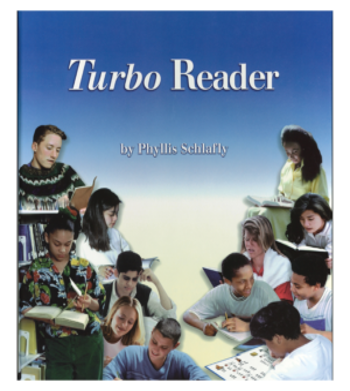
(Foundational reading instruction, such as Phyllis Schlafly’s Turbo Reader, is readily available to help older learners achieve basic reading skills at home with the help of parents, guardians, or tutors. Phyllis’ First Reader and First Reader Workbook are perfect for teaching younger children. — Ed.)
Influence of ‘EdReports’
One reason for the lag in offering students more robust reading instruction may be the work of a non-profit organization called EdReports, that claims on its website “to increase the capacity of teachers, administrators, and leaders to seek, identify, and demand the highest-quality instructional materials.”
Last May, The 74 described EdReports as “a kind of ‘Consumer Reports’ for the multi-billion dollar K-12 publishing industry.” State and local education departments use EdReports’ reviews of curricula as a guide for adoption in their school districts. Unfortunately, since 2015, EdReports has pointed school districts “to curriculum materials aligned with Common Core standards.”

An analysis by The 74 of “GovSpend, a data service that stores recordings of public meetings,” revealed the influence of EdReports. These data show that, since January 2021, EdReports and its recommendations have been mentioned more than 100 times during school board meetings.
One example of a missed opportunity to implement a potentially effective reading program happened in Ohio, as related by teacher and mom Tami Morrison, who discovered what she considered “a perfect way to help young children learn to read.” According to Morrison, the program, called Superkids, “slowly builds, introducing more and more sounds, and then it jumps right into blending those sounds into little words. At least two independent studies link the program to ‘significant positive’ results.”
But despite Morrison’s urging, Ohio’s department of education did not greenlight Superkids for the state’s K-5 reading program. The 74 stated: “At the time, Ohio leaders approved only programs that won EdReports’ coveted green rating. Superkids earned a more modest yellow.”
Education Reporter reviewed the Superkids program online and found it may have the capacity to effectively teach reading. A video on the website admits that children learn to walk and talk without much help from adults but that “reading is not hardwired in the brain.” Rather, it must be developed with “successful instructional experiences” built on “explicit, systematic phonics instruction and practice.”
The program features stories about the “Superkids” in a variety of adventures while developing phonics-based foundational skills. (This should not be regarded as a recommendation of the program by Education Reporter, but rather an observation that teachers and parents may wish to explore Superkids for themselves. — Ed.)
In an interesting about-face, EdReports recently told The 74 that its reviews of reading programs for young children “will reflect a fuller embrace of the science of reading.” The organization’s chief external affairs officer, Janna Chan, said that “phonics and fluency are now non-negotiable” for earning a “green rating.”
EdReports further says its reviewers will also verify that recommended materials no longer use “three cueing,” a practice decried by Education Reporter and others as it is part of the Whole Language method. Three cueing is the process by which children are taught to predict (guess) at words on a page using three cues: context, pictures, or syntax (e.g., is the word likely to be a noun or verb). In 2023, 8 states banned three-cueing from K-3 reading instruction because it fails to teach most children to read. These states include Florida, Indiana, North Carolina, Ohio, South Carolina, Texas, West Virginia, and Wisconsin, with more likely to follow.
The website ExcelinEd in Action.org notes that in 2020, an Education Week survey found that “75 percent of K-2 and elementary special education teachers” were using the three-cueing method to teach reading, and that “65 percent of colleges of education professors were still teaching it.”
Will phonics be restored?
The signs are encouraging that many K-12 public schoolchildren will soon learn to read by phonics in the early grades, but these should be viewed with caution. EdReports appears to have lost credibility, and other organizations are scrambling to take its place, but this doesn’t mean recommendations for good curricula will become the rule.
One potential competitor for EdReports, the Curriculum Insight Project, was introduced on Substack in January 2024 by literacy expert, Karen Vaites, who once advocated for EdReports but now openly challenges it. Vaites’ project vows to be “a collaborative effort to advance the conversation about curriculum quality and increase the transparency of the curriculum landscape. We want to make conversations about curriculum more substantial and tangible, in an effort to move the definition of ‘high quality’ beyond ‘all green’ on EdReports.” However, the project does not appear to have taken off as yet, although there is a website of sorts at eduvaites.org, and information about it still appears on both Substack and LinkedIn.
Meanwhile, today’s university students struggle with reading assignments and many ignore them altogether. As The Atlantic’s Horowitch wrote: “Some professors do find a few students up to the task but described them as ‘now more exceptions’ rather than the rule, with others ‘shutting down’ when facing difficult texts.” She added that the chair of the English department at Georgetown has said his students “have trouble staying focused on even a sonnet.”
The same level of illiteracy does not generally afflict private school students. Horowitch noted that professors find “a disconcerting reading-skills gap” among public-school students compared to those who attended private schools. The reason may be that private schools in general use a more rigorous method for teaching reading during the early grades, and teachers say parental involvement is also a factor, which may mean children who attend private schools actually learn to read at home.
Some universities are still assigning classic books in their literature courses. The Columbia College Literature Humanities program includes works such as Shakespeare’s Othello, Austen’s Pride and Prejudice, and Don Quixote by Cervantes, among others. However, according to the Fox News report previously quoted, “colleges in general have been reducing their reading load, albeit with some additions for diversity.” These additions include, for example, the divisive works of Ibram X. Kendi.
Horowitch wrote that Columbia has trimmed its reading list in the current school year. “It had been growing in recent years, even while students struggled with the reading, as new books by non-White authors were added.”
Although great rejoicing will be warranted in the event phonics reading instruction becomes commonplace and children actually learn to read in the early grades, the overarching concern will be what they are reading. K-12 school libraries are already awash in books containing explicit content and DEI woke propaganda. Concerned parent and citizen involvement on school boards and in departments of education will continue to be critical.
Election Fallout in Higher Education
The impressive victory of president-elect Donald J. Trump and running mate J.D. Vance is being roundly applauded by those who support the moral crusade to rebuild and restore America. But their opponents are not taking the election results well, and nowhere is this more evident than in academia, where liberal professors are in the majority and college students are melting down.
The College Fix chronicled the fallout in the wake of November 5 that demonstrates the challenges the new Trump Administration will face in, among other places, the realm of higher education. The good news is while college-age voters favored Kamala Harris, it was by a smaller margin than those who voted for Biden in 2020.
Perhaps most egregious of the post-election rhetoric aimed at Trump voters came from Leonard Serrato, a University of Oregon administrator, who expressed openly in a video posted to his Instagram account that he “wished Trump supporters would (expletive) kill themselves.” Micaiah Bilger, assistant editor of The College Fix, reported that Serrato’s video included other obscene and derogatory statements against Trump voters. He admitted to being “a very petty person” and said he “loves that” about himself.
Donald Trump Jr. responded to Serrato’s rant on X: “[It feels] sort of ironic that the guy that runs fraternity and sorority life at University of Oregon probably could have never gotten into a fraternity. It’s disgusting, but not surprising, that an employee at a state University would speak this way about MORE THAN HALF of the country.”
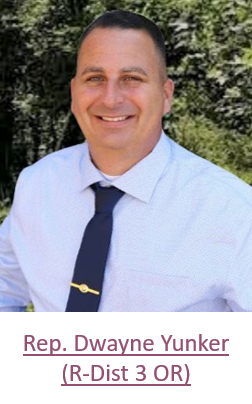
Oregon Representative Dwayne Yunker (District 3) posted that he is reaching out to the university and “demanding they inform all tuition payers of this incident, in order to prevent a possible social contagion public health crisis. This will also be brought up when the University of Oregon requests their budget from the legislature,” he wrote.
Affirming student meltdowns
When the Trump victory became official, many colleges canceled classes over their students’ “trauma,” grief, and devastation. College Fix editor Jennifer Kabbany reported that these tantrum-affirming universities included Harvard, the University of Pennsylvania, Columbia/Barnard, Michigan State University, Ohio University, Swarthmore College, and others. The messages Kabbany received from professors responding to her requests for comment generally expressed a desire to allow students a respite to assuage their grief, fear, and uncertainty of “how to go on.”
Media personality Eliana Goldin observed on X that Columbia professors canceled classes or eased course requirements in the wake of Trump’s win, but that “Jews endured calls for their genocide day and night last semester, and Columbia did nothing. Half the country votes for a candidate and Columbia elitists can’t deal.”
Kabbany quoted Ohio University Professor Amy Chadwick, who canceled her communications class “to give space to those who are devastated by the election results.” Chadwick wrote in a memo: “For those of you who are scared, traumatized, angry, etc., please know that you are not alone. There are resources available to help support you and there are pathways forward….” She then pointedly addressed students who may have dared to support Trump: “I know not everyone is upset at the results and I hope we can be gentle with each other today rather than create division.” The obvious question for Trump supporters was who exactly was creating the “division”?
In addition to canceling classes, an article by The Daily Caller News Foundation described how institutions of higher education “are decrying President-elect Donald Trump’s victory and offering a swath of therapeutic safe-space activities to help students cope with their emotions.”
According to an email from a “director for student success” at Michigan State University, the school offered students a “safe space” that included “therapy dogs, coloring books, and free hugs.” The political science department hosted a “post-election debrief and offered counseling resources for students.” The university’s Counseling and Psychiatric Services created an “election care kit” with “coping tips” such as telling students to “connect with nature and take breaks from media consumption.”
At the University of Buffalo, students were given an opportunity to “share how they have been emotionally and psychologically impacted by the election,” and Georgetown University offered a “Self-Care Suite” that provided allegedly traumatized students with milk and cookies, coloring books, and Legos.
Trump’s campaign promises for higher education
The president-elect has promised to “reclaim our once great educational institutions from the radical Left,” as well as abolish the U.S. Department of Education and keep men out of women’s sports. He also wants to crack down on DEI and antisemitism. While all these are tall orders, Trump showed during his first term that he keeps his promises. (See the book, Top 100 Trump Promises Made, Promises Kept (Amazon.com) for an easy-to-read synopsis of Trump’s first-term accomplishments — Ed.)

Kabbany reported that Trump is further expected to “roll back the Title IX changes” made by the Biden Administration, as well as remove the specter of student loan forgiveness. She wrote that he “has also proposed the creation of a free online college funded through a tax on large private university endowments. The so-called ‘American Academy’ would allow students to transfer previous coursework,” and “would not allow ‘wokeness’ — a common conservative complaint of traditional colleges.”
As for campus protests, a Trump Administration “may use accreditation” to strengthen protections for Jewish students. While the pro-Hamas demonstrations and their overall level of violence seem to have subsided at least for now, antisemitic activities continue. Just this month, two Jewish students at DePauw University in Chicago were attacked by masked men on the Lincoln Park campus, presumably for displaying a sign inviting other students to engage in conversation about Israel.
NBC Chicago reported that the students were targeted and that their injuries included “a concussion and a fractured wrist.” The attack took place “in front of the university’s Student Center” and left one student unconscious. NBC reported that that after the attackers ran off, passersby told the victims “you got what you deserved.”
Vows to resist
Even more frightening is the mood of academic leaders and professors on many campuses, who are vowing to, as The Daily Caller puts it, “stand up against” the incoming administration. These leaders are fearful of higher education budget cuts and are promising to defy “future immigration policy.” How they will do this is unclear, but Wesleyan University President Michael S. Roth provided a clue by stating that the school would not “voluntarily assist in any efforts by the federal government to deport our students, faculty or staff solely because of their citizenship status.” He promised to double down on the university’s DEI efforts and reject “the cultivated ignorance that is used to fan the flames of hatred,” which critics charge is exactly what DEI does.
Echoing the anti-Trump frenzy in higher education are the many teachers and administrators in K-12 schools who have come out of the woodwork to threaten the president-elect and his supporters. Libs of TikTok said they received so many examples of outraged lunacy that they could scarcely document them all.

A common report was of liberal women shaving their heads “to fight the patriarchy, and threatening to shoot white men on sight because Trump was elected.” Such theatrics might seem amusing and even laughable if they did not include teachers who are brainwashing children with their out-of-control bias and hatred.
In one Libs of TikTok example, Annie Dunleavy, a special education teacher at Chapman School in Connecticut, posted a video online “threatening to kill and hurt Trump supporters.” When her video became public, she was removed from the school and the superintendent announced an investigation into her threats, but she is hardly an aberration.
Instagram personality Donald Jeffries, author of the “I Protest” series on Substack as well as six books, wrote on November 18 that the postings on TikTok and Instagram reveal what he calls “America 2.0’s shocking level of insanity.” He opined: “If you watch those TikTok and Instagram videos — and there [is] an endless supply of them — you will see the face of the enemy. The angry, screaming, nose-ringed, tattooed, sometimes purple or green haired enemy.” While he acknowledged that this “Army of the Unbalanced” consists mostly of white females, “they are a very loud minority,” and they “are threatening violence.”
Jeffries pointed out the hatred these women have for white men, and noted that while stable people view them as crazy, the potential harm they could inflict on their own children or those they teach in the schools, as well as on the culture in general, is considerable. “We are at war” he charged…. “When you have appreciable numbers of women in your society expressing irrational hatred for males in general, you have lost the basis for that society.”
He further posits that if Mr. Trump “unleashes RFK, Jr. on the Medical Industrial Complex, deports millions, allows [the attorney general] to actually prosecute some Swamp creatures, this will only widen the gap between those who are clinging to sanity, and the lunatics who were never committed to an asylum to escape from.”
Observers hope Jeffries is wrong and that the new Trump Administration will instead be able to unite the country and restore sanity to America’s institutions, starting with the schools.
Escape from the Teachers’ Unions: It Can Be Done
Although the June 2018 Supreme Court decision in Janus v. AFSCME freed teachers from being forced to pay dues to their local teachers’ unions if they are not union members, many educators remain unaware of this ruling. Last month, the Independent Women’s Forum (IWF) released a documentary called Karin’s Story, which shows how a special education teacher, Karin Majewski, risked her career to escape the PSEA (the Pennsylvania affiliate of the NEA), and help her fellow teachers do the same if they wished.
IW Features is the storytelling platform of the IWF, which produced the documentary. The video opens with Majewski explaining that the teachers’ unions are actually “a money-laundering system of which teachers and taxpayers are unaware,” and later shows how much of it is ultimately used for political purposes.

Karin Majewski is a middle-school teacher in Bucks County, Pennsylvania, who has taught for 10 years in the public schools. Initially, she had no issue with the PSEA, and in fact says she knew almost nothing about the union other than that a veteran teacher presented her with the paperwork early on to join, and told her that everyone was doing it. Her eyes were opened in 2020 when the union supported the COVID-19 vaccine mandate for all 178,000 PSEA union members, including teachers, support staff, janitors, bus drivers, and other education personnel.
Majewski objected to the mandate, noting in the video that “no one asked my opinion, there was no survey sent out. They were speaking on behalf of everyone, and it was something I strongly disagreed with. I realized my money was going to fund these causes and ideas” regardless of personal beliefs and opinions. At the time, Majewski was paying $150 per month in union dues.
She decided to leave the union, and did her own research to find sources and information in preparation. She discovered the Freedom Foundation, a national non-profit organization that assists all union members, not just educators. “They were the first ones who told me about my Janus rights,” she said, as well as “how to leave the union, when to leave the union, all things I had no idea about.”
The Freedom Foundation also helped her with finding an alternative organization, the Keystone Teachers Association (KEYTA), which educators could join for protection in the event they experienced an issue in the workplace. “They were focused on helping school workers,” Majewski said, rather than being involved in politics. “To me it was a no-brainer to join them.”
After leaving the PSEA, Majewski said she witnessed efforts by union representatives to recruit new teachers and staff members, and confessed that it “began eating me up over time.” According to the IWF, “Thanks to unions’ effective recruitment efforts — which often start before new teachers have even graduated from college — more than 70 percent of teachers are union members, and most incorrectly believe they’ll be penalized if they leave.”
Majewski started a Facebook group designed to educate her peers, but the reach proved too limited for her purposes. She then decided to send an email to all personnel in her school district offering to provide information about their rights and the available alternatives to the PSEA. Minutes after sending the email, she received “a lot” of appreciative responses asking for more information, but she also received emails that were “extremely hateful” and “calling me names.” Most disturbing about these responses, she said, was that her critics seemed to equate “being a good union member” with being “a good educator.”
Shortly, she was summoned by her human resources department, and explained to the director that she sent the email because “there is no [alternative] information out there, no resources.” She pointed out that the PSEA sends out flyers and other materials, and questioned why educators could not also be informed about alternatives. Surprisingly, the director reviewed her sample KEYTA flyers and approved them for posting in district schools.
But as Majewski learned from a colleague who was herself an NEA member, the union told school personnel to remove the alternative flyers. Her reaction? She said: “It really speaks to how much money and power is involved here.” She noted that that the dues money collected is ultimately funneled to support Democrat candidates and promote liberal causes, resulting in such things as more money for Planned Parenthood and “social justice” curricula in the classroom. Longtime observers of the unions will recognize these familiar tactics.

Majewski noted in her video that these types of activities “really have nothing to do” with labor union functions, or to “helping me, or anyone, as an educator. They mandate trainings for teachers [about] unconscious biases and racism in the classroom, which affect the teachers and, in turn, affect how they run their classrooms. It creates a problem where there need not be one.”
Majewski said she understands why teachers are afraid to speak out. “They come for you in college while you’re a student-teacher,” she said. “The unions are also a part of first-year teacher orientation—I remember [the union rep] came up and basically tried to scare everybody.”
She continued: “Every school district is different, and some teachers may receive more backlash than I did…. Legally, you have a right to leave the union if you want to, and there are so many free supports out there.” She observed that a growing community of like-minded educators is emerging and she is comfortable with her decision. “I work really hard for my paychecks, and I want my money to go to places and causes I agree with.”
Majewski’s journey shows that escaping from the teachers’ unions need not be the end of a career, but may in fact be just the beginning. She now has a website packed with information for educators, including state-specific alternative options to the entrenched and highly politicized mainstream unions. Her website connects with other important resources, such as Rebecca Friedrichs’ informative website For Kids And Country, among others.
IW Features co-producer Ashley McClure noted: “Teachers shouldn’t feel coerced into financially supporting organizations that put teacher and student welfare behind politics…. Karin Majewski’s story is proof that you can leave your union, keep your job, and support organizations that align with your beliefs.”
Shuttering the Department of Education: Will it Happen?
The expressed intent of the incoming Trump Administration to eliminate the U.S. Department of Education (DOE) reflects the 2024 Republican Party Platform, which states in part: “We are going to close the Department of Education in Washington, D.C. and send it back to the States, where it belongs, and let the States run our educational system as it should be run.”
The vitriol unleashed by the Left following Trump’s impressive electoral and popular vote victory includes belittling his plans to shutter the DOE. Former Obama Administration education secretary, Arne Duncan, told CNN and repeated on The Hill.com that Trump’s pledge is never going to happen. “That’s just another empty, broken promise,” Duncan said. “Whether his supporters hold him accountable for that, I don’t know.”
According to a report by ABC News, closing the department could leave the issue of federal grants, scholarships, and other funds “hanging in the balance for the millions of K-12 and college students attending schools in the U.S.” In an article on the NPR website, Brookings Institution director of education policy, Jon Valant, admitted that the U.S. Constitution “doesn’t say anything about schools or about education, and it kicks all of that work to the states.” He allowed that “over time the federal government has come to play some really important roles, but he failed to note that those roles are likely to be unconstitutional. Instead, he maintained that they protect the civil rights of students, disburse Title I funds for low-income and disabled students, while “collecting data on schools and administering federal student loans for higher education.”
Valant claimed the DOE does not tell schools what to do or define curriculum, a claim some conservatives might dispute given the many failed policies that have trickled down from the federal government.
A November 20 article on Axios opined that the DOE “plays a crucial role in making education access and quality more equitable for students nationwide.” While critics might dispute this assertion as well, it has been a common sentiment expressed recently in the mainstream media.
Axios further stated: “The Department of Education has been a punching bag for Republicans for decades. Ronald Reagan threatened to abolish it, and many inside the GOP have echoed Trump’s calls for its end.” Nevertheless, the article concedes that shuttering the department is “not impossible,” but predicts there will be a “narrow political pathway” for the new president to do so.
Another topic for speculation is what effect the proposed closure of the DOE may have on the teachers’ unions. Presumably it may be significant. The NEA has not yet commented on the subject publicly on its website, but it did predictably lament the Trump landslide and the many down-ballot Republican victories of November 5. The NEA gave the president-elect’s nominee for education secretary, Linda McMahon, the title “DeVos 2.0,” in a snide reference to Trump’s 2016 choice of Betsy DeVos for that position.
To the surprise of exactly no one, the NEA has already vowed to oppose McMahon’s confirmation, claiming that she “is not qualified for the position,” that she will push “an extremist agenda” and that she will be “a rubber stamp for Donald Trump.”
Using the NEA’s moniker for McMahon, Politico noted that she has a business background, except for serving “a year-long stint on the Connecticut Board of Education,” and that her views on educational issues are largely unknown. “Her nomination would install a Trump loyalist into the position, who, unlike some of the president-elect’s other nominees, could sail through a Senate nomination.” The article added that McMahon headed the Small Business Administration during Trump’s first term “after a landslide bipartisan confirmation vote.”
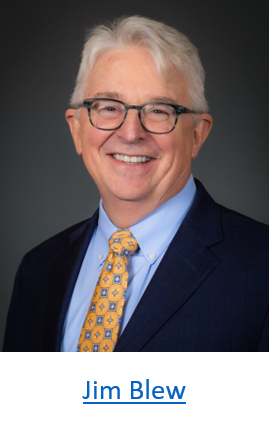
Politico observed that some Republicans are embracing the NEA’s connection of McMahon to DeVos. Former Trump education department official Jim Blew said: “If being Betsy DeVos 2.0 means being a great manager and advocating for the interests of children and taxpayers, then I would agree with them.” Blew is co-founder of the nonprofit Defense of Freedom Institute, which states that its mission is “to defend and advance freedom and opportunity for every American family, student, entrepreneur, and worker and to protect our civil and constitutional rights at school and work.”
In support of closing the DOE
Whether or not the U.S. Department of Education is ultimately disbanded, supporters of such a move are enthusiastic and vociferous. Education activist, teacher, and author, Rebecca Friedrichs, wrote in a Fox News op-ed: “President-elect Trump is exactly right to remove the federal government from our educational system. This is one giant step toward restoring parental authority and excellence in our schools.” (Read her article in its entirety in this month’s Be Our Guest—Ed.)
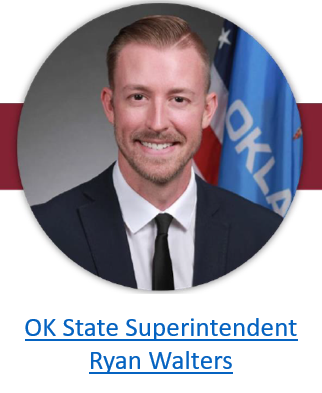
Oklahoma’s Superintendent of Public Instruction, Ryan Walters, an outspoken champion of traditional education, applauded Trump’s intention to close the DOE on both CNN and The Daily Beast.com. “President Trump is going to fulfill his promise to get rid of the federal Department of Education and focus on free market principles in education,” he said. “People forget [that] this country, the greatest country in the history of the world, was built without a federal Department of Education.”
Walters stated the obvious when he pointed out that “every educational statistic has gotten worse” since Jimmy Carter created the department. “President Trump’s 1000 percent right,” he said. We have got to get education back to the states. States have to give education back to the families.”
The Washington Stand posited that “Trump’s allies believe the 47th president will be the man to follow through” with closing the DOE and sending all education work and needs back to the states. The article quoted Superintendent Walters as saying he has already “tasked a state advisory panel to guide the transition of educational authority from the national to the state level when the Trump administration closes the DOE.” The panel will help “put together recommendations for the state moving forward. When the federal Department of Education is gone, how can we direct those dollars? How can we make sure that families know about the options available?”
Walters said Oklahoma “is also rewriting [its] history standards. We want to make sure we are pro-patriotism, pro-America,” and that we highlight “the role faith played in our country’s history…. We’ve also eliminated CRT, any kind of diversity, equity, and inclusion in our schools,” and have instituted “merit pay” for teachers.
The Cato Institute’s education analyst, Neal McCluskey, told ABC News that “dismantling the department could be as simple as giving states the funding, but allowing them to decide how it’s administered.” He explained that the federal government could take all the K-12, Title I, IDEA (Individuals with Disabilities Education Act) dollars and “block grant” them; in other words, give them to the states to decide how they are to be administered.
In the end, eliminating the DOE will require congressional action. While Republicans will have a majority in both houses in January, it remains to be seen if all will agree with the Trump Administration that the DOE should be shuttered, and whether or not a supermajority will be required in the Senate. Time will tell.
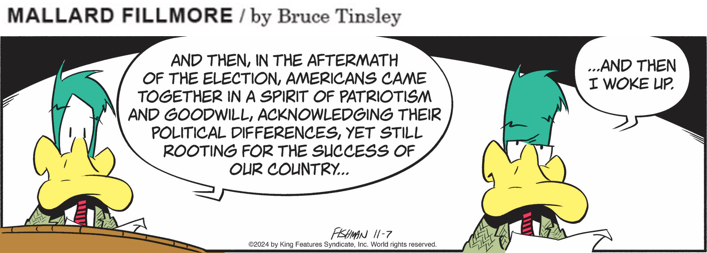
Mallard
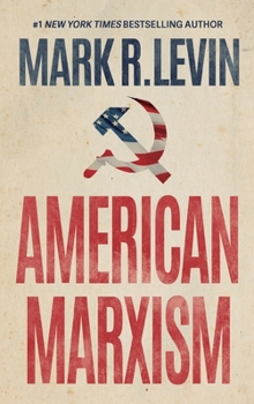
American Marxism
In recent years, a number of excellent books have been published about the history of the Progressive education movement and how its roots are anchored in Marxist and Communist tenets. While Mark Levin reexamines many of the key figures and teachings of Marxism, starting with the German-born Karl Marx himself, his book adds the new concept of an Americanized form of Marxism, which differentiates itself from other forms of the ideology.
Levin asserts that America is steeped in a counterrevolution that “is devouring our society and culture, swirling around our everyday lives, and ubiquitous in our politics, schools, media, and entertainment. Once a mostly unrelatable, fringe, and subterranean movement, it is here—it is everywhere.” He explains that this counterrevolution is Marxist in nature, and rather than protecting American society by instituting representative government, as the first American Revolution did, this counterrevolution “seeks to destroy American society and impose autocratic rule.”
The author notes that, in America, “many Marxists cloak themselves in phrases like ‘progressives,’ ‘Democratic Socialists,’ ‘social activists,’ ‘community activists,’ etc., as most Americans remain openly hostile to the name Marxism….” Moreover, he writes, “they claim to promote ‘economic justice,’ ‘environmental justice,’ ‘racial equity,’ ‘gender equity,’” and they claim “the dominant culture and capitalist system are unjust and inequitable, racist and sexist, colonialist and imperialist, materialistic, and destructive of the environment.”
He explains that the purpose of such false charges is “to tear down and tear apart the nation for a thousand reasons and in a thousand ways, thereby dispiriting and demoralizing the public; undermining the citizen’s confidence in the nation’s institutions, traditions, and customs; creating one calamity after another; weakening the nation from within; and ultimately, destroying what we know as American republicanism and capitalism.”
 Levin describes the fallacies of Marxism, and acknowledges that American Marxism “has adopted the language and allure of utopianism,” which is “tyranny disguised as a desirable, workable, and even paradisiacal governing ideology.” It is attractive to many, especially the young, as well as to those who find “Marxism’s oppressor-oppressed class warfare construct appealing because people want to belong to groups, including ethnic, racial, religious, and economic groups.”
The author shows how mass movements have been an integral part of American Marxism. Rousseau, Marx, Hegel, and others who championed the ideology, all argued in their own way that the individual must always subject himself to the collective will, for which he must endlessly fight. In sum, there must always be revolution, uprising, and chaos. Levin asks: “How do we know when we have reached the ‘workers’ paradise’ beyond a theoretical construct?” He then answers: “Marx does not tell us.”
The fomenting of social movements and militant uprisings have been hallmarks of American Marxism since the 1960s. Levin cites as an example the far-left writings of professors Frances Fox Piven and the late Richard A. Cloward, who sought “to advance a strategy which affords the basis for a convergence of civil rights organizations, militant anti-poverty groups, and the poor. If this strategy were implemented, a political crisis [e.g., riots and property destruction] would result that could lead to legislation for a guaranteed annual income and thus an end to poverty.” This is precisely what happened. Levin explains that the intent of the instituted reforms was not only to allegedly relieve poverty — they didn’t, but “to build and strengthen a new Democratic coalition” — they did.
Piven and Cloward recognized that “the progress of mass movements will always be too slow as the American system is too difficult to mold into a truly revolutionary force.” They posited, however, that “there will be opportunities to use the system against the system, and to create turmoil from within and without, bringing pressure for revolutionary change.” As we have seen, these “opportunities” have been realized in recent years with the BLM, Antifa, climate change, and radical LGBT movements.
Levin explains that “social movements, even movements that are not particularly disruptive, can do what party leaders and contenders for office in a two-party system will not do: They can raise deeply divisive issues. In fact, social movements thrive on the drama and urgency and solidarity that result from raising divisive issues.” Even “moderate or reluctant politicians can be pressured into accommodating and embracing radical movements if their own political survival is at stake.”
American Marxism provides a wealth of in-depth detail about the penetration of Marxist ideas into American institutions, starting with our university and college faculties. Levin writes that most professors have “turned their classrooms into breeding grounds for resistance, rebellion, and revolution against American society, as well as receptors for Marxist or Marxist-like indoctrination and propaganda. Academic freedom exists first and foremost for the militant professors, and the competition of ideas is mostly a quaint concept of what higher education used to be and should be.”
He adds that, for Marxists, our existing society and culture, no matter how many souls prosper within, “must be denounced and defamed.” Disillusion with the status quo is key, so that Marxism can sweep in, presenting a “new faith” that promises a new and better society. This new society inculcates “a passion, if not obsession, in future generations—despite its trail of mass death, enslavement, and impoverishment.”
In the end, Levin believes that “it is academia and its rule over the education of generations of students that serves as the most potent force for Marxist indoctrination and advocacy, and the most powerful impetus for its acceptance and spread. And it is these students, the real target of Marxist thought, who form the basis for resistance, rebellion, and even revolution.”
This indoctrination has influenced younger generations, starting with millennials, to “have a passion for justice.” They believe “humanity is not a wide and nuanced spectrum of people, but a few saints and a vast sea of sinners, some redeemable, (most) not.” In other words, they do not believe in compromise, but in the absolutes of good and evil, which “makes Marxism a uniquely alluring ideology wrapped in the language of the underdog and oppressed,” and calling for the eradication of the status quo, which is said to be thoroughly corrupt.
American Marxists characterize our society as full of “structural inequalities,” and “interminably dissolute, unjust, and immoral. There can be no justice or improvement,” they say, because “the entire enterprise was irredeemable from the start, and nothing since has or can significantly improve the society.” But Levin provides a wealth of evidence to the contrary, contrasting the glorious history of American success and prosperity with the dismal, murderous, and failed authoritarian regimes throughout history and currently in power today.
The perspectives Levin provides by quoting those critical of Marxism are enjoyable, such as those of Ayn Rand, who aptly exposed the purpose of the Marxist movement in her book Return of the Primitive—The Anti-Industrial Revolution, published more than forty years ago. Rand cut to the chase when she wrote: “The immediate goal is obvious: the destruction of the remnants of capitalism in today’s mixed economy, and the establishment of a global dictatorship.”
Later, the author exposes Marxist hypocrisy when he writes: “All the talk and proclamations about equality, human rights, indigenous peoples, empowerment of women, as well as the right to health care, jobs, and the like in the Paris Agreement, the Green New Deal, the claims of Critical Race Theory and intersectionality, etc., are essentially ignored when a Democrat administration is faced with a brutal regime like China. Meanwhile, Biden obligates the United States to global economic and financial conditions set by international governments and bureaucrats under the rubric of climate change, without any formal input from our representatives in Congress, which will very likely negatively affect our quality of life, and which countries like China have no intention of adhering to.”
What can everyday, patriotic Americans do to combat the looming threat we face? Obviously, when he wrote this book, the author did not envision another Trump presidency and the mandate the president-elect has been given by the American voters. Nonetheless, the Marxists have not retired and must continue to be resisted.
In the book’s final chapter, Levin writes: “If we are to rally to the defense of our own liberty and unalienable rights, then each of us, in our own roles and ways, must become personally and directly involved as citizen activists. The time has come to reclaim what is ours—the American republic—from those who seek to destroy it. If we expect others to rescue our nation for us, as we go about our daily lives as mere observers to what is transpiring, or close our eyes and ears to current events, we will lose this struggle.”
He provides encouragement for actions all concerned Americans can take, “from boycotts to divestment and sanctions,” and he describes how each of these actions works on a practical level. This reviewer was unfamiliar with the term “divestment,” and it was helpful to learn that it means pressuring “banks, corporations, local and state governments, religious institutions, pension funds, etc. to withdraw investments in and support for the various Marxist movements.”
Sanctions refers to urging “local and state governments to end taxpayer subsidies and other forms of support for institutions with ties to various Marxist movements and policies; and ban the teaching and indoctrination of Critical Race Theory (CRT), Critical Gender Theory, etc., from taxpayer-financed public schools.” In another instance, he describes how parents can use “the power of the purse” by sending their children to colleges less likely to brainwash them, such as Hillsdale, or other less liberal institutions.
Overall, American Marxism is an absorbing read, certain to offer new information and perspectives from the many friends and enemies Levin describes and quotes. It is important to know where the poison infecting our schools and other institutions originated, and how to recognize and combat it. In this book, Mark Levin provides the blueprint.
To read the entire book, go to Amazon.com OR Thrift Books to order!
Education Briefs
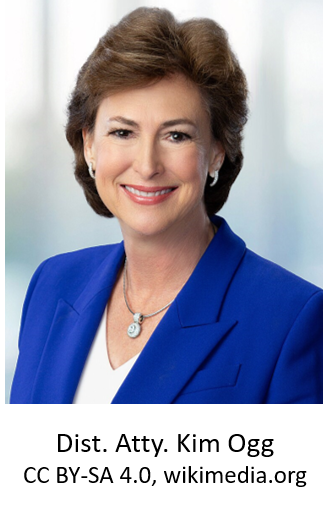
At least five people have been charged in a “million-dollar” teacher cheating scandal in the Houston, Texas Independent School District (ISD). KHOU-TV.com reported that Harris County District Attorney Kim Ogg filed charges in October in the alleged “massive teacher certification cheating ring that led to unqualified teachers in classrooms not only in the Houston area but across the state.” Two of those accused of paying for fake teacher certifications “ended up being charged with crimes against children.” Ogg said one was charged with “indecency with a child” and another with “online solicitation of a minor.” The prosecutor in the case, Mike Levine, said the “ring’s kingpin,” 57-year-old Vincent Grayson, head basketball coach at Booker T. Washington High School in the Houston ISD, “made more than $1 million” in the fraudulent certification scheme. Investigators said the scheme worked by having a “proxy test taker” pass the certification test and then give the certificate to a recipient who paid $2,500 and up for the piece of paper. Also charged is Tywana Gilford Mason, a “test proctor,” who helped ensure the proxy scheme went undetected. A second test proctor was charged for taking bribes to ignore the fraudulent test takers during the exams. Investigators found that Houston ISD assistant principal, LaShonda Roberts, recruited “nearly 100 teachers to participate in the fraudulent scheme.” The Houston ISD acknowledged the employee arrests in a statement and promised that any teachers “who passed their certification exams fraudulently,” would be terminated.

A proposed new rule in Oregon follows guidelines established by the World Professional Association for Transgender Health (WPATH), and will require both public and private insurers to cover sex-change surgeries and cross-sex hormones for all ages. The Washington Free Beacon reported that health insurers who refuse to cover such procedures, even for children, will “risk losing their state licenses.” Oregon’s Department of Consumer and Business Services used WPATH’s “latest standards of care,” which call “transgender genital surgeries and other procedures ‘medically necessary,’” to formulate the policy change. The Beacon noted that the new rule “stems from a 2023 law that made Oregon one of several so-called trans sanctuaries, guaranteeing that minors could receive puberty blockers and chemical or surgical sex changes.” Set to take effect in 2025, the new policy will dictate to insurance companies operating in the state what they are required to cover and “how they provide that coverage.” While not the first state to require insurance carriers to cover transgender procedures, Oregon is the first to follow WPATH’s standards in a statewide rule. Thus, the transgender madness continues to expand, even in the wake of a recent troubling report by the nonprofit medical watchdog group Do No Harm, which shows that 14,000 children have undergone body-changing sex transition procedures in recent years. (See Education Reporter, October 2024, with more to come on this subject.)
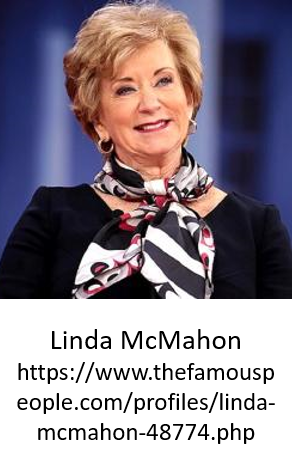
The National Association of Scholars (NAS) issued a press release officially welcoming Linda McMahon’s nomination to serve as education secretary in the new Trump Administration. The press release calls for the Senate to confirm McMahon for the position, citing “her character, experience, and commitment to reform,” all of which the NAS believes “make her an excellent choice to lead the coming era of education renaissance.” While McMahon is hardly a household name in education circles and her critics are busy disparaging her qualifications, NAS notes that she “is best known in education policy as a champion of school choice.” While conceding that choice is not, by itself, a cure for “the grievous deficiencies in American education,” it is “a powerful step in the right direction.” NAS does not speculate on whether the DOE will be eliminated, but insists it at least be vastly simplified, and the press release urges McMahon to “secure Congressional cooperation” to that end. NAS writes: “We do not know McMahon’s own intentions, but we suspect that she would like to begin by reforming the Education Department thoroughly, so as to allow President Trump to decide whether a slimmed down and depoliticized [DOE] can serve the public welfare.” In addition to a complete overhaul of the DOE, including removal of its “administrative and regulatory structure that promote the radical politicization of schools and colleges,” the NAS recommends a “thorough overhaul of the Office for Civil Rights (OCR),” which it says “has been used to impose discriminatory race and sex policies on education institutions.” The NAS plans to present McMahon with its research roadmap for reforming the DOE, “titled Waste Land: The Education Department’s Profligacy, Mediocrity, and Radicalism,” which they hope she will use as a help during her tenure.
Trump’s plan to close Education Department opens up a bright future for Students
Student test scores have plummeted since teachers unions and federal government took over.
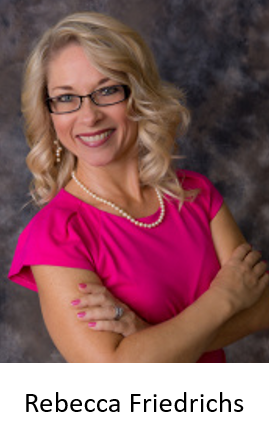
By Rebecca Friedrichs, Teacher/Writer
Originally published November 19, 2024, by Fox News.com. Reprinted by permission.
President-elect Donald Trump is exactly right to remove the federal government from our educational system. This is one giant step toward restoring parental authority and excellence in our schools.
America’s founders never intended for us to have a national Department of Education, and they specifically did not want the government intruding into education. They knew such overreach would lead to the destruction of our schools and our nation, and now we have modern proof that they were right.
Thank God, Trump seeks to dismantle the national Department of Education. It’s a constitutional move, and it cannot come soon enough!
Since our founders made clear that federal intrusion into education is destructive, how did we end up with a national Department of Education and massive federal influence over our schools?
The so-called teachers unions did it.
It all started in 1867 when President Andrew Johnson — at the behest of the commissioner of education and National Education Association — signed legislation to start a national Department of Education to collect data on our schools. The department was grouped with other federal departments at the time.
This allowed NEA to grow in influence and power over education. Slowly but surely, NEA successfully implemented its politically driven agenda, which included the removal of phonics instruction, morality, Western Civilization, the classics, and many other destructive changes. NEA aggressively pushed for all teachers to be unionized too, even though teachers did not ask for their representation.
In 1976, NEA endorsed Democrat Jimmy Carter for president. When Carter was elected, his thank you gift to the NEA was an independent National Department of Education, including a cabinet position.
This set a dangerous precedent of “educational” organizations meddling in politics to gain power and influence — exactly why our nation’s founders forbade federal influence in education. They knew education must be excellent and moral so that citizens can self-govern and protect our Republic, which is why they believed education was the responsibility of local townspeople. Parents ran the schools, hired the teachers, and oversaw curriculum decisions. The federal government and special-interest groups were not invited.
In fact, between the late 1800s and 1930 (before teachers unions intruded) and when 80% of our school funding was from local sources, 20% from state sources and ZERO from the federal government, our students were thriving. Americans were highly successful across the educational spectrum, our country was flourishing, and our schools were the envy of the world.
Since NEA and the federal government took over our schools, student test scores have plummeted.
America now has 45 — 65 million functional illiterates. Many of these are high school graduates, yet they struggle to read well enough to manage their daily lives. That’s because our schools are failing our students. Kids are no longer actually being taught how to read, which can only be achieved through phonics instruction. Instead, they are faced with educational quackery like the “look-say method,” “cueing,” and “whole language” among other flat-out lousy teaching methods.
Our test scores reveal the tragic truth, showing that 37% of 4th graders are below NAEP’s basic achievement level. Only 33% are at or above proficient.
The failures aren’t just academic. Union activists are indoctrinating our children to despise American values, God, their parents, and our republic while simultaneously teaching them to love chaos, socialism, and communism.
Now, great teachers are retiring in droves because they cannot function under all the corruption and abuse. They are being replaced by activist “teachers,” who joined the teaching profession to push political agendas. All this happened because radical unions were allowed to control our schools.
Labor union leaders, who are clueless about how to educate well, dictate almost all school curricula and policy decisions. Parents and teachers hardly have a voice anymore. That’s why we’re failing.
Make no mistake, these unions won’t stop until they have destroyed education and this country. And that’s not hyperbole. Every year, corrupt unions collect BILLIONS in dues — tax-free — and use the money to fund divisive political agendas and further the intentional destruction of our kids and our country.
No wonder NEA and its comrades are so scared of Trump’s promise to close the National Department of Education. Without it, unions and their special interests don’t have unfettered access to our kids or a direct hook into our school policy. Without it, parents and teachers can educate our children again without having to fight tooth and nail against radical, leftist ideologies coming from Washington, D.C.
There is a lot to do to restore our schools — ending the reign of unions is the most fundamental. But, President Trump will begin to clean house when he closes the national Department of Education, cuts off federal funding to schools, and restores power and authority to parents and local townspeople.
President Trump, great teachers stand with you.
This article was originally published by Fox News and also appears on the website For Kids And Country.
Rebecca Friedrichs is the founder of For Kids and Country, the author of Standing Up to Goliath: Battling State and National Teachers’ Unions for the Heart and Soul of our Kids and Country, and a 28-year public school teacher who was lead plaintiff in Friedrichs v. CTA.
Education Related Links