Biden Administration Attacks Charter Schools: Are Teachers’ Union Eyes Smiling?
With all their warts and controversies, charter schools have for years been the last best hope of parents who can’t homeschool or afford private schools yet desperately seek a better educational alternative for their children. While some charter schools may be lacking academically or are under foreign influence (as reported in the March 2022 Education Reporter), others provide a viable option. But if the Biden Administration’s proposed new regulation takes effect, charter schools may soon disappear.
The Federalist reported on April 14 that during 2020-2021, “public school attendance decreased 3.3 percent while charter school attendance grew 7.1 percent.” This doesn’t sit well with the most powerful and formidable enemy of charter schools, the teachers’ unions. Since most charter-school teachers are not unionized, their hard-earned dollars are not confiscated to subsidize far-left political causes and the inflated salaries of union leaders. The Biden Administration’s new rule aims to do an end-around to fix all that.
What’s in the proposal?
According to The Federalist, the administration “quietly released a proposal for a new administrative rule that will require charter schools to prove their commitment to far-left politics or risk losing federal funding.” This 14-page proposal, published by the U.S. Department of Education on March 14, clearly shows that the administration intends to hamstring existing charter schools and make it harder for new ones to open.

“The proposal includes a detailed list of requirements that charters will have to meet before they can receive funding, along with guidelines they will have to follow to continue keeping doors open.” Should the proposal pass, charter schools will be required to partner “with at least one ‘traditional’ public school in their area. Greedy teachers’ unions will be thrilled with this arrangement,” writes The Federalist, “as charters will be on the hook to help provide things like curriculum, ‘professional development opportunities,’ and a ‘shared transportation system’ with their public partners, not to mention providing for the students already in their care.”
Furthermore, the rule “will require new charters to prove their allegiance to leftist politics. It will be mandatory for charters to showcase their commitment to social justice and discourage school choice.
“To prove that they are indeed making a difference in the social justice movement, the schools will be expected to provide a ‘community impact analysis’ to showcase their efforts and impact in this area. This analysis will be mandatory for charters seeking federal funding and must be presented upon application. Ignoring that black and Hispanic students are the majority in many charter schools already, this will enforce the creation of ‘demographic projections’ that will be compared to local public schools. These projections will eventually lead to greater emphasis on race or ethnicity rather than on the individual students.”
The Federalist laments: “Politicizing classrooms by forcing ‘social justice’ agendas on students should not be a priority in education. Racial agendas inherent in doctrines like critical race theory do nothing but hurt students. All that matters to the Department of Education and this administration is pushing their poisonous agenda and captivating the minds of the next generation.”
An analysis of the proposal by The Fordham Institute calls the new regulation “unprecedented,” not only for the federal Charter Schools Program (CSP) “but for all federal K-12 programs.” Fordham says the rule will “add pages of new requirements for applicants that are not in the statute and are unrelated to student outcomes…” Essentially, the new rule will stifle charter schools, which are currently free of governmental micromanagement, by empowering the Department of Education to “act like a national charter school board, complete with one-size-fits-all rules for when a charter school should open (or not).”
Fordham believes the regulation “would have a chilling effect on the number of CSP applicants, even as parental and student demand for slots in high-quality charter schools continues to rise across the country. While the rules include some reasonable provisions regarding transparency around management contracts, their overall effect signals that the administration wants to rein in charter schools—and to force its own narrow ‘vision’ of when and where they should be allowed to operate.”
The administration and the Democrat Party say charter schools were never intended to be “for profit” enterprises, and so the rule includes banning for-profit private charter schools from receiving federal grant funding, despite the fact that they are already barred from receiving federal charter school funds. Just nine percent, or slightly more than 700 charter schools are operated by Education Management Organizations, or EMOs, which are for-profit companies, but the charter schools they manage are considered non-profit entities. Interestingly, some public schools are also managed by EMOs.
Teachers’ union bidding?
Last October, U.S. News & World Report quoted James Bacon, former staffing director of Boston Public Schools and current director of outreach and operations for the education technology firm, Edficiency, as writing: “Charters add more options and different models of schools to the system, which usually gives parents more choice. In many ways, the biggest pros and cons of charter schools stem from the same fact: That in most cases, charter schools are given more freedom than traditional public schools.”
A fair question then becomes whether or not the Biden Education Department, in introducing its proposed rule, is merely doing the bidding of the teachers’ unions. As The Federalist pointed out: “This [proposal] comes at a time when school choice is gaining supporters across the nation. As horrifying reports from public schools become more common, parents are desiring a better education for their kids.
“The numbers back this. Teachers’ unions and government schools are threatened by the recent upswing of support for school choice and the move toward charter schools, and they will protect what they have at all costs — even if it harms young Americans in the process.”
Ironically, when the charter schooling concept was in its infancy, former American Federation of Teachers (AFT) President Albert Shanker supported it. In fact, his support helped move the concept forward. But as charter schools grew in number and diversity without unionization, all that changed. Teachers’ unions withdrew their support and became enemies of the movement.
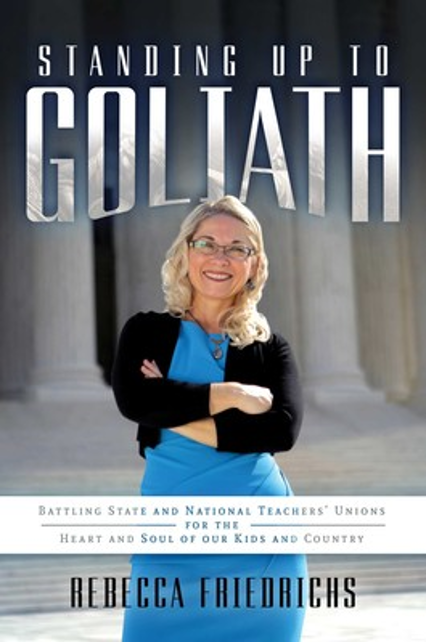
In her stunning book, Standing Up To Goliath, published in 2018, Rebecca Friedrichs shows that it’s all about the money. (See our Book Review in this issue.) The teachers’ unions cannot collect valuable dues from most charter school teachers, leaving a potential fortune on the table. Friedrichs describes how, for this and other reasons, the unions “fight against charter schools, and union-funded politicians dominate most school boards.” Many charters are therefore rejected and never get the opportunity to open. “Many that do open — and even thrive,” Friedrichs writes, “are burdened with constant attacks against their charters by union-inspired forces that watch them like hawks hoping to find some way to threaten their existence.”
Her book includes heartbreaking real-life accounts of children, some with disabilities, who were flourishing in their charter schools but were forced out when the schools closed as a result of teachers’ union efforts to shut them down.
Current environment
Approximately three-and-a-half million children attend more than 7,700 charter schools in 44 states, and the demand is high. In New York alone, as many as 50,000 students are on waiting lists to attend charter schools.
According to National Review, “75 percent of Americans are supportive of parents getting the final say in where their children go to school,” including “86 percent of Republicans, 65 percent of Democrats, 74 percent of independents, 83 percent of blacks, and 77 percent of Hispanics.”
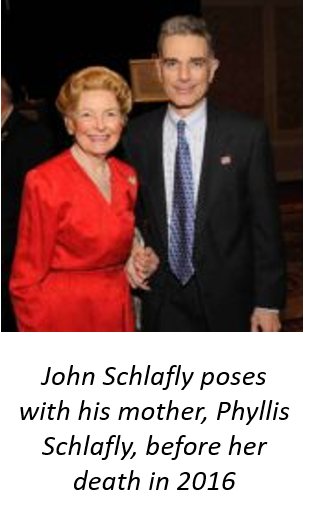
Charter schools allegedly don’t have a formal admissions process, and parents and concerned citizens often question why not. Lawyer, writer, and treasurer of Phyllis Schlafly Eagles, John Schlafly believes that admitting students by lottery, as charters typically do when the number of potential students exceeds available slots, is a recipe for dumbing down schools. “The way to improve schools is to track students by ability,” he says, “such as the Thomas Jefferson public school does in Virginia, for example. By using a competitive examination and then placing the brighter or higher scoring students into separate classes where they can advance at their own rate, charter schools could really make a positive difference in education.”
To Schlafly’s point, although charter schools do purportedly use a lottery system to admit students, with the exception of returning students or their siblings, reports of a different reality have surfaced over the years. For example, a 2013 report claimed that charter school applicants were being asked to submit research papers, short stories, or handwritten essays for evaluation prior to admission. Some schools were said to hold family interviews or require assessment exams.
A 2016 report by KPCC Public Radio of Southern California claimed that one in five charter schools was “illegally” screening applicants for admission. If true, these practices were likely undertaken to bolster student achievement and avoid the threat of closure for poor performance. Then as now, charter school applications may request previous report cards, test scores, disciplinary records, teacher recommendations, and medical records.
AmeriSchools Academy of Arizona

One group of elementary charter schools in Arizona, called AmeriSchools Academy, operates four campuses and has a program for gifted students which it promotes as a benefit “that would not be available through a traditional public-school curriculum and environment.”
The AmeriSchools’ website states: “A charter elementary school offers several benefits to gifted children that a public school usually does not. At AmeriSchools Academy, we are not bound by the restrictions and curriculum regulations that public schools must adhere to in order to satisfy state requirements. We offer curriculum flexibility as well as immersive learning—both of which benefit gifted children.”
But this could all be changing, not only for AmeriSchools but for charter schools nationwide if the Biden Administration’s new proposal is adopted. Whether or not the rule will apply to charters operating under the tutelage of foreign nationals at the expense of U.S. taxpayers remains to be seen.
Abbreviated comment period
The comment period for the new rule was restricted to just over one month, ending on Wednesday, April 13. A 60-day comment period is the norm for regulatory proposals.
According to the Washington Examiner, former Department of Education Official Robert Eitel said the proposed regulation would force a number of charter schools to close. “This is a very controversial regulatory initiative that requires more than 30 days for the public to comment,” Eitel said. “It’s unfair, it’s inappropriate, and it has the aroma of a gotcha moment that is offensive to true, fair, and proper regulatory activity.”
Eitel explained: “There’s been an ideological realignment within the Democratic Party that is reflected in this, in these priorities. This is confirmation that the Democratic Party has shifted hard to the left on education issues and that they’re no longer supportive of the charter school.”
No doubt teachers’ union leaders are collectively smiling and applauding.
More States Groom Anti-Grooming Bills
After Florida’s successful passage last month of the Parental Rights in Education law banning classroom instruction and discussions of sexual issues in K-3 public school classrooms, more states are readying bills of their own.
Despite the outcry from the pro-gender identity indoctrination crowd, including false depictions of what’s in the law (it does not include the word “gay” for example), states are listening to parents and forging ahead with similar legislation.
States considering such bills include Alabama, Arizona, Georgia, Indiana, Iowa, Kentucky, Louisiana, Missouri, Ohio, Oklahoma, South Carolina, and Tennessee. According to The Western Journal, Texas Governor Greg Abbott pledges to “make legislation similar to Florida’s law a top priority during the state’s next legislative session.”
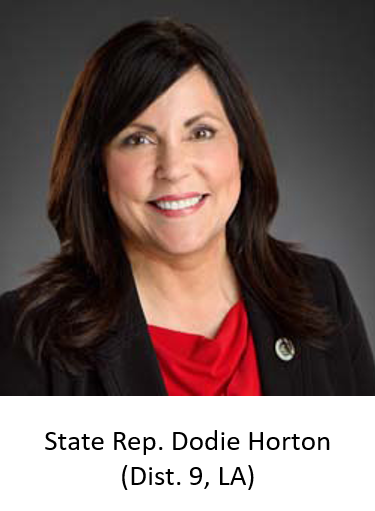
Louisiana’s proposal takes the Florida law a step further. Introduced by state Rep. Dodie Horton (R-Haughton), H.B. 837 reads in part:
- No teacher, school employee, or other presenter shall cover the topics of sexual orientation or gender identity in any classroom discussion or instruction in kindergarten through grade eight.
- No teacher, school employee, or other presenter shall discuss his own sexual orientation or gender identity with students in kindergarten through grade twelve.
Predictably under attack by the left, Rep. Horton told KSLA Channel 12 News that her bill “has nothing to do with restricting the rights of the LGBTQ+ community. There’s no need for any child to ever know the private life of their educator,” she explained. “It’s not prejudiced [toward] one group or another; it just doesn’t discuss it at all.”
Opponents whine that Florida’s law and the many similar bills under consideration in other states constitute “an overt form of structural transphobia and homophobia,” that fails to provide “a safe and supportive environment for transgender, nonbinary, queer, gay, and lesbian youths and teachers to thrive.” Supporters wonder how these issues could become problematic if they are not discussed in the elementary grades, but rightfully kept private between children and their parents, which is exactly what the left does not want.
Outing Planned Parenthood
Amid all the hoopla and lawsuits already being filed in opposition to Florida’s commonsense parental rights law lurks the influence of Planned Parenthood (PP). Evidently vigilant for new revenue stream opportunities, the abortion giant has become a provider of transgender hormone therapy.
The December 2021 issue of Education Reporter referenced Planned Parenthood’s business model which, as noted by Texas parent activist Missie Carra, has been revised “to include the very lucrative gender modification therapies and treatments.” Carra speculated whether this change might “potentially explain the assertive push for LGBTQ acceptance and inclusion in public schools.”
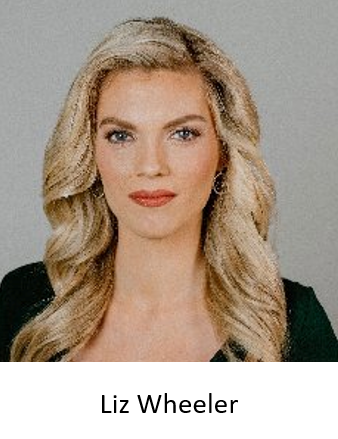
Carra’s instincts appear to have been correct. LifeNews.com reported on April 8 that conservative talk show host Liz Wheeler “exposed Planned Parenthood as the group behind the false attacks” on Florida’s parental rights law. Wheeler traced the origin of the “Don’t Say Gay” label to a March 2020 PP blog post that appeared on the organization’s website, using “the ‘Don’t Say Gay’ phrase to attack a similar Missouri parental rights bill.”
The blog post read:
- During the 2020 legislative session, Missouri introduced a ‘Don’t Say Gay Bill’ (House Bill 1565 and Senate Bill 786) that takes this a step further. It requires schools to notify the parents before a teacher can mention someone’s gender and/or sexual identity, and to notify them before they can talk about different genders, identities, and sexual orientation.
Wheeler says that, as far as she can tell, “Planned Parenthood is the group that created and popularized the misleading talking point.
“It’s a brilliant marketing tactic used by the left to try to trick Americans, both Democrats and Republicans, into opposing this bill… It wasn’t a coincidence or a phrase coined by CNN. It wasn’t something that someone happened to say and it caught fire on Twitter. No, it was a deliberate effort by an organization who really really needed this bill not to become law in order to protect their own profits.”
Wheeler quotes PP as boasting that it is “the largest provider of [comprehensive] sex education… reaching 1.2 million people each year, including students in elementary, middle, and high schools.” She adds that PP wants “to train young people to engage in promiscuous sex to feed their abortion pipeline.
“But the other, newer part of this,” Wheeler continues, “the very insidious part, is that Planned Parenthood has become over the past couple of years one of the largest distributors of transgender hormone therapy for young people.” She describes that PP promotes “gender affirming hormone therapy” on all of its regional web pages, including the prescription of hormones on a patient’s first visit. They also offer to provide “surgical support letters for gender affirmation surgery.”
PP’s sources of revenue
Wheeler says all this explains why PP coined the “Don’t Say Gay” phrase. “Planned Parenthood profits from teaching children comprehensive sex education in schools, and then, if it leads to promiscuous sex and a young woman needs an abortion, they profit from that. If they teach radical gender theory under the guise of sex education and it leads to the child developing a mental illness and saying, ‘oh, I’m transgender and I want hormones,’ Planned Parenthood profits from that too.”
Viewed through this lens, the pro-child, pro-parent Florida law and others like it pose an existential threat to a growing part of PP’s business.
Wheeler concludes: “You now see this phrase, ‘Don’t Say Gay,’ in a whole new light. You see this phrase as an agenda. You see this phrase as blood money, as part of the grooming process.
It’s fascinating to uncover these money trails and the hidden agendas behind the catch phrases.”
Incidentally, Planned Parenthood also rakes in nearly $620 million from U.S taxpayers each year.
From Transgender to Transformed
A radio program called Unshackled, which began in 1945, is a production of the Pacific Garden Mission, an organization that, among its other ministries, has served the homeless in Chicago since 1877. The mission’s professional radio productions are insightful dramatizations about the lives of real people who were “shackled” by various dependencies and addictions, and who underwent compelling life transformations after spiritual renewal.
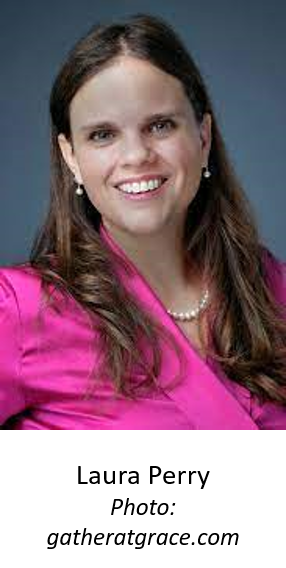
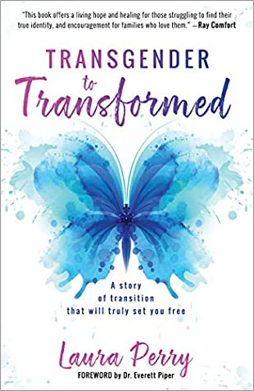
In the moving story of Laura Perry, Unshackled dramatizes the life of a young girl beginning with the trauma she suffered in childhood through her long, painful journey into and out of transgenderism as an adult. The account is based on Perry’s book about her life, titled Transgender to Transformed. The three-episode radio drama ends with Laura’s eventual return to her Christian faith and new awareness of the person she was intended to be.
The radio drama is enacted throughout with actors giving a first-person voice to “Laura” and the key people in her life. Born the third child in a Christian family in Oklahoma, Laura recalls being a rambunctious, strong-willed girl who was jealous of her brother, particularly with regard to his relationship with their mother. Laura characterized her mother as “always trying to do so many things,” meaning that she spread herself too thin and doubtless failed to realize the extent of her daughter’s distress. Laura the child found herself missing her mother “even when she was right there,” and wishing she could be a boy like her brother or anyone other than herself.
When Laura was just eight years old, she was molested by a friend’s nine-year-old brother. Not long after, she was molested by another, older boy. Like many innocent children, she was unable to process or communicate what had happened to her, but as she grew, these painful experiences remained with her.
In her eighth-grade year, the actress voice of Laura announces that “demons came into my life.” She began drinking and smoking, and in high school she abandoned her Christian friends and began running around with a bad crowd. Inside her was a strong sense that “men have all the power” and she thought about becoming a lesbian. During this time, the demon she believed to have possessed her “made me feel powerful.” She defied her worried parents when they confronted her about her wild, erratic behavior. By then she had lost her faith, and even planned with her boyfriend to join a satanic cult.
In desperation, her parents sent her to live with her uncle David in Alaska. She immediately befriended the worst kids in her new high school, and started exhibiting signs of the demonic possession she believed had overtaken her. David attempted to expel the demon through prayer, but Laura inwardly begged it not to leave her.
After only four months, Laura left Alaska to meet her parents in Montana near Glacier National Park, where they had enrolled her in a group home. A senior in high school and sixty pounds overweight, she resisted the move to no avail, so she grudgingly embraced the home’s residents as her family. Since it was a Christian home, she pretended to convert and lied about her true feelings. At the end of her senior year, she suffered a seizure and was sent home.
Laura’s mother next enrolled her in a college in Texas, and it was there that she thought seriously about becoming a man. While the radio dramatization does not elaborate, doubtless the atmosphere on Laura’s college campus did nothing to dissuade her from this notion. When a serious crime at a nearby apartment complex caused her worried mother to fetch her from college, the two were involved in a potentially deadly car crash while driving home. They somehow survived, but the miracle failed to turn Laura back to God.
Upon returning home, Laura moved in with her old boyfriend. Although living with him, she drove many miles to another town to hook up with other men. After an odd encounter with a police officer on her way home one night, during which she now believes she actually heard the voice of God, she ended her one-night stands in that town.
But Laura’s life continued spiraling further out of control. When she abandoned her promiscuous lifestyle, she turned to seriously considering transgenderism. She left her boyfriend and began attending transgender support group meetings at an “equality center.” She cut her hair and began dressing like a man, announcing herself as “Jake” at the meetings, and asserting that “she had always felt she should be a man.”
The transgender group meetings enforced Laura’s wish to “transition” and the next step was to undergo counseling. She felt overwhelmed, lamenting later that at the time she didn’t realize “that not even hormones can change your DNA; which is contained in every cell in your body.”
The dramatization emphasizes this point several times: “Every cell in Laura’s body proclaimed her womanhood, no matter how much she denied it.” This biological reality exists no matter how many hormones or surgeries transgender people undergo, and explains the high rates of despair and suicide among these groups.
In Laura’s case, she got nothing of value from her counseling sessions except a letter authorizing hormone treatments, and she relied on her transgender group members to bolster her resolve to transition. Along the way, she met a male-to-female transgender who called himself Jackie, and with whom she began a relationship. Jackie soon became her “soulmate,” the first close connection she’d ever had with another human being. By then, her voice had deepened, she had legally changed her name, and she began growing facial hair.
Nine months after beginning her transition, Laura revealed her new self to her parents. She told them that she had been born in the wrong body. They told her she needed Christian counseling. She believed that the acceptance of the LGBTQ community was “love,” whereas her parents’ rejection of her new lifestyle was not.
Eventually, both Laura and Jackie began to see their transgender friends in a new light, agreeing that they didn’t seem happy. They were chronically depressed and “whining about their childhoods.” Jackie admitted to being uncertain about the lifestyle and their transgender community.
Despite this, Laura became even more adamant about making a full transition. She underwent surgery to remove her breasts, even though her parents begged her not to do it. Her aunt Shirley told her: “This is from the pit of hell.” Before being wheeled into the operating room, Laura found herself asking God not to let her die. Afterwards, she thought she would be happier, but still felt discontented. She decided to have all her female organs removed, but even after that surgery, she remained unfulfilled.
A turning point came for Jackie when his brother Doug showed up unexpectedly one night. Jackie reverted to Steve, the male he actually was, when Doug arrived. As they reconnected and spent more time together, Steve’s masculinity began to come through. He stopped trying to look like a woman, and Laura found herself attracted to his maleness. That realization left her feeling empty and broken.
One day, Laura heard a comment on a radio show that touched her deeply: “Why is it that transgenders always want to change their bodies to match their minds, instead of changing their minds to match their bodies?” She found herself up against a wall she couldn’t get past.
While she wanted to forget that she’d ever been a woman, she faced constant reminders that she didn’t belong in a man’s world, such as when a man she worked with made a suggestive comment to her about a woman. She was caught in a wasteland between manhood and womanhood.
Laura’s turning point came when her mother asked her to create a website for her Bible study group. Reluctantly, Laura agreed. In reading her mother’s notes for the web postings, she discovered a loving God. She began to view the bible as “an intricate supernatural entity rather than just a book.” As the weeks wore on into months, she started to see a change in both her mother and herself.
Laura began praying, asking God’s forgiveness of her sins, and expressing a renewed faith in Jesus Christ. She asked God to save her. She felt overwhelmed with a sense of loss, but it took a couple of years before she was able to move past her desire to be a “man” of God. Listening to a radio ministry of Dr. Piper, she realized that “Laura is God’s creation, Jake is Laura’s creation.”
After living nine years as a man and undergoing all her surgeries, Laura could not imagine life any other way. Yet God’s truth persisted, even when she tried her best to ignore it. Laura kept hearing God’s voice saying: “You cannot claim to love me and yet reject my creation.”
She knew the Lord had not forsaken her, but she felt alone and utterly miserable. She begged God to take her life, but she continued to read His Word. She found that she wanted to please Him more than to keep her new identity.
While she doesn’t know how she managed it, Laura Perry is once again living her life as a woman. She bought a new wardrobe and started going to church. Her partner of eight years, Jackie, became a Christian and returned to his life as Steve.
Laura paid a terrible price to discover that there are things you cannot change, and your gender is one of them. Her transformational power is now shared worldwide.
As Dr. Piper, the man who changed the way Laura thought about her trans condition, said: “All of us understand the flaws of our human nature and the evil in the human heart.” G.K. Chesterton said: “The fact that human beings are not complete, noble, or good, but rather broken and in need of repair, is perhaps the most provable part in all of Christian theology. This human desire to change ourselves is as old as humankind.”
May God grant that many others considering Laura’s former lifestyle find this wonderful example of hope.
(Visit Unshackled for more uplifting stories.)
Mallard

Standing Up to Goliath
Rebecca Friedrichs, Post Hill Press, 2018
Rebecca Friedrichs’ book is a moving account of her 30-year teaching career in elementary public schools and the many wonderful teachers, parents, and students she encountered along the way. Most of these teachers, like Friedrichs herself, only wanted to educate and nurture their students, but they were continually faced with the corruption and greed of the teachers unions whenever they opposed the dictates of the leftwing agenda.
But Goliath is also the story of how perhaps the most important education lawsuit in recent decades, Friedrichs v. California Teachers Association, et al, made it to the United States Supreme Court in 2016. Friedrichs and nine other teachers brought suit against both the California Teachers Association (CTA) and the National Education Association (NEA) after many years of up-close-and-personal witnessnessing of union abuse, which left them with no redress or means for making their voices heard. The intent of the litigation was to free public school teachers and administrators from the stranglehold of the unions and allow them to form their own local associations.
 Friedrichs v. CTA reached the high court on appeal when, as the plaintiffs and their lawyers expected, two lower courts ruled against them, including the Ninth Circuit Court of Appeals. The team was encouraged that the Supreme Court would accept their case when the justices ruled in favor of Harris v. Quinn. “We were watching the case,” writes Friedrichs, “because if they won, the [Supreme] Court would almost certainly accept our case. Pam Harris and her fellow plaintiffs received a 5-4 decision in their favor, so we were celebrating.”
The Harris decision “freed only home healthcare providers and home childcare providers,” Friedrichs explains. “Our case sought to go a step further; we wanted to free all government employees from forced unionism by overturning the 1977 Supreme Court precedent-setting case Abood v. Detroit Board of Education. Friedrichs opines: “Surely, the justices in 1977 didn’t understand that permitting forced union fees would result in the abuse of workers and children, the downfall of our educational system, and that unions would become the poster child for the saying, ‘Absolute power corrupts absolutely.'”
During oral arguments on January 11, 2016, Friedrichs and her team appeared to be winning. All nine justices asked pertinent questions, and both Justices Kennedy and Roberts made points that appeared favorable to the plaintiffs. But the most convincing argument came from Justice Scalia, who observed: “… everything that is collectively bargained with the government is within the political sphere, almost by definition,” to which, shockingly, the other side agreed, after years of denial. In other words, the unions’ lawyer for all intents and purposes admitted that “since collective bargaining in the public sector is political, the unions [have] no constitutional right to force any [teachers] to pay them one red cent.”
A favorable resolution appeared a near-certainty following the oral arguments, but on February 13, tragedy struck with the unforeseen death of Justice Antonin Scalia. Instantly, defeat in the Friedrichs case became a foregone conclusion, and, indeed, a 4-4 split decision was ultimately handed down by the high court. The NEA representatives, which had been making conciliatory noises about “working together” with teachers before Scalia’s death adopted an in-your-face, you lost, we won scenario, and boasted that they had regained the upper hand.
Although readers may get the impression that Standing Up to Goliath focuses almost exclusively on the court case, it mostly chronicles the long series of events and circumstances leading to the filing of the lawsuit.
At first, Friedrichs tried working with the unions through accepted channels, politely opposing such issues as abusive teachers who were protected through tenure, the attacks on charter schools, the pitting of teachers against administrators, the disregard of legitimate parental concerns, the increasingly pornographic sex education curricula, the divisiveness of racial equity programs, the move to infiltrate and take over the PTA, and others.
For a time, Friedrichs even took a position as a union leader, believing she might make a difference in this way. But she resigned in 2011, having “gained a new understanding of teachers.” She writes that “the large majority was totally unwilling to face or expose the abuse within our union because the unions’ psychological manipulations — fear, intimidation, ignorance, and isolation — worked.” She describes how “a very loud minority of angry, union-controlled teachers effectively drowned out the voices of the terrified but overwhelmingly kind majority,” and that “most of the terrified were never going to stand up against [them] no matter how hard I fought for their rights.” Throughout the book, she characterizes the unions’ persistence in silencing whistleblowers and all who dared to oppose their power as being “all about the money.”
The author engages readers with many personal stories of teachers, parents, and even students of good will who tried to battle the unions and were coerced into silence through the scare tactics and mafia-style bullying the unions employed. Their stories are often poignant and even tragic, but told in such a way that makes the book hard to put down.
Friedrichs even bares her soul with her own stories of personal struggle, which began when her first marriage ended in divorce, leaving her to raise her biological son alone. Years later, she encountered more serious challenges when she remarried and began co-parenting her stepson with her new husband. The means they found as a family to overcome and surmount the obstacles they faced are both absorbing and inspiring.
After her crushing defeat at the hands of a divided U.S. Supreme Court, Friedrichs, her family, and her supporters regrouped. She writes: “The most common question teachers across the country ask me is, ‘Can I keep my local association and get rid of the state and national unions?’ The answer is yes, but most teachers don’t know it.”
To remedy the problem, she started a “Keep Your Local campaign to educate teachers on their rights.” Using the biblical Ruth as an example, Friedrichs called on fellow activists to stand together “with parents, pastors, mature students and community members in solidarity with teachers who want to reject union control and start their own local associations. “A massive army of Ruths is vital to come alongside, shine truth, and offer support,” she writes.
Friedrichs also founded a national organization called For Kids and Country, through which she continues her persistence in standing up to “Goliath.” Her organization’s mission is “to unite, educate, engage, and empower parents, teachers, students, and citizens in the fight to restore America’s schools and culture.”
This reviewer found Friedrichs’ book to be a must-read. From the dozens of true stories about real people caught in the public-school trap to the nearly palpable atmosphere of fear and intimidation created by union leaders in order to safeguard their power and dues money, it leaves little doubt as to the greatest problem facing public education today. The good news is it also provokes and motivates; readers will likely be called to change it.
Editor’s note: With the appointment of Justice Neil Gorsuch in 2017 to replace Justice Antonin Scalia, the U.S. Supreme Court handed down a “landmark” 5-4 decision in a similar case, Janus v. American Federation of State, County, and Municipal Employees, Council 31, or Janus v. AFSCME. When no decision was reached in the Friedrichs case, Illinois state employee Mark Janus petitioned for a writ of certiorari from the Supreme Court, which was granted on September 28, 2017. On June 27, 2018, the Court found that the application of public sector union fees to non-members is a violation of the First Amendment, ruling against AFSCME and striking down the Abood decision. Thus far, however, the ruling has not appeared to impact the teachers unions’ power and influence.
To read the entire book, go here to order!
Education Briefs

The Florida Department of Education says NO to 41 percent of math textbooks submitted for use in the 2022-2023 school year, citing numerous violations of its new B.E.S.T. state standards. The textbooks contain Critical Race Theory, Common Core, and other prohibited topics. A press release issued by the department announces that the state is rejecting 54 of the 132 submitted textbooks due to “publishers’ attempts to indoctrinate students.” The highest number of rejected texts were for grade levels kindergarten through fifth grade, “where an alarming 71 percent were not appropriately aligned with Florida standards or included prohibited topics and unsolicited strategies.” In grades six through eight, 20 percent of the math texts were rejected; in grades nine through twelve, 35 percent were eliminated. Despite these rejections, the department assures parents that “every core mathematics course and grade is covered with at least one textbook.” In 2019, Governor Ron DeSantis issued an Executive Order to eliminate Common Core and develop new education standards, including higher quality instructional materials that conform to them. “It seems that some publishers attempted to slap a coat of paint on an old house built on the foundation of Common Core, and indoctrinating concepts like race essentialism, especially, bizarrely, for elementary school students,” DeSantis said. “I’m grateful that Commissioner [Richard] Corcoran and his team at the Department have conducted such a thorough vetting of these textbooks to ensure they comply with the law.” Other states would do well to follow Florida’s example. The Center Square, 4-17-22
The National Education Association (NEA) spent twice as much of its earnings on politics as it did on its members in fiscal year 2020-2021, according to data compiled by the nonprofit Americans for Fair Treatment (AFFT). The analysis shows that the nation’s largest teachers union “donated $66 million to political activities and another $117 million” for contributions, gifts, and grants that were essentially political donations. AFFT provided its findings exclusively to the Washington Examiner, which the news outlet published on April 7. Donations for political activism totaled 18 percent of the NEA’s $374 million budget, while just nine percent was spent on direct assistance to members, who shell out annual fees of $1,000 or more for local, state, and national union memberships. According to the Examiner, the NEA’s spending makes the union “look more like a political organization than a membership organization, with two dollars spent on politics for every one dollar spent on representing its members.” The largest beneficiary of the NEA’s political spending was its own political action committee, the NEA Advocacy Fund, which received $15.7 million during the 2020-2021 school year. Other donations included $6.7 million to the State Engagement Fund, which funnels donations to left-wing political groups and Democrat candidates. A similar organization, the Strategic Victory Fund, received $1.85 million from the union. “Donations to both organizations were counted among the union’s ‘contributions, gifts, and grants’ expenditures rather than as political activities. The union also designated as a contribution a $1 million donation to a political action committee Future Forward USA Action, that backed then-candidate Joe Biden’s 2020 presidential campaign.”
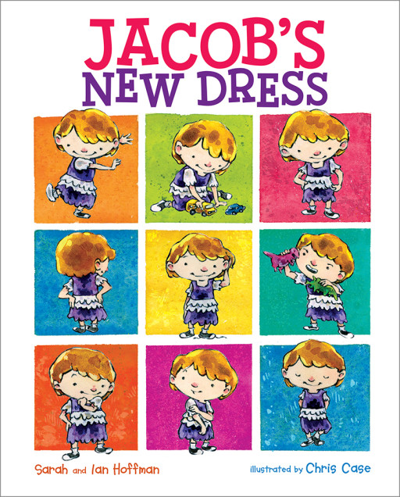
The Haverford School District in Delaware is using a transgender-centered book called Jacob’s New Dress for its K-3 curriculum. The book tells the story of a boy who loved playing dress-up and wanted to wear dresses to school. When some classmates tell him he can’t wear “girls’ clothes,” he convinces his parents to let him wear what he wants. It’s billed as “a heartwarming story [that] speaks to the unique challenges faced by children who don’t identify with traditional gender roles.” The book has apparently been used in Haverford’s second- and third-grade classrooms since 2019 “to break down some stereotypes of what it means to be a boy or a girl.” RoyalPatriot.com points out that “while critics of Florida’s Parental Rights in Education law claim that schools aren’t teaching this kind of material to young children and Florida’s law is fighting against a “straw man,” schools are offering this kind of material to young children.” Some parents have objected to the book, arguing that they do not want the schools forcing this indoctrination on their kids and demanding that the district remove it. According to National File, the book is part of the Social-Emotional Learning (SEL) scheme that “employs social ideology on race and gender.” At least six states, including Connecticut, Idaho, Maryland, Ohio, Pennsylvania, and Vermont “are using Social-Emotional Learning in both preschool and early elementary education while nine other states have adopted it for grades K through 12.”
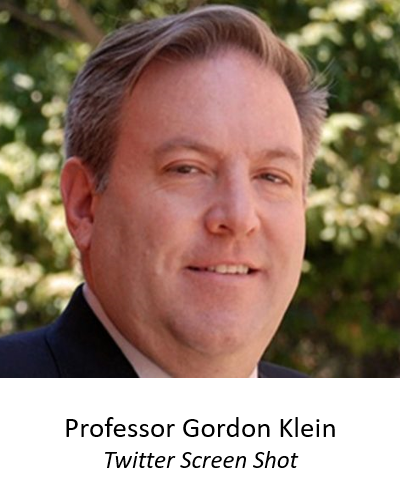
A UCLA accounting professor who was suspended for refusing to issue student grades based on race is vindicated in court. Following the death of George Floyd in 2020, professor Gordon Klein received an email from a group of students describing themselves as “non-black,” asking that he grade black students with greater “leniency.” Newsweek reported at the time that Klein quoted the email in part as follows: “We are writing to express our tremendous concern about the impact that this final exam and project will have on the mental and physical health of our Black classmates.” Other excerpts from the email were posted by The Daily Wire, including requests for a “no harm final exam, shortened exams, and extended deadlines for final assignments and projects.” Klein found the request to be a violation of the law, and pointed out the obvious in his response: that he would not be able to identify the black students since they were having virtual classes, and that even white students, if they were from Minneapolis, might be equally devastated. He further pointed out that Dr. Martin Luther King Jr. famously said that people should not be judged on the basis of skin color. A week later, the university placed Klein on leave for his “woefully racist” response. Although UCLA claims he was reinstated in late June 2020, Klein filed suit against the university. On March 30 of this year, Los Angeles County Superior Court Judge H. Jay Ford III ruled that there was “sufficient evidence to ‘support judgment in his favor'” A jury trial is scheduled for April 2023. The Western Journal, 4-7-22
‘Biden: Schools are no Mom-and-Pop shop’
It should have been a standard award ceremony on Wednesday, when President Biden hosted the 2022 National and State Teachers of the Year at the White House. But Biden just couldn’t resist throwing parents under the school bus. “They’re all our children,” he said. “And the reason you’re the teachers of the year is because you recognize that. They’re not somebody else’s children. They’re like yours when they’re in the classroom.”
Biden’s remarks echoed Terry McAuliffe during last year’s race for Virginia governor, “I don’t think parents should be telling schools what they should teach.” Unsurprisingly, his opponent Glenn Youngkin rode the wave of parental outrage to an upset victory.

Freshly reminded that standing for parents’ rights is popular, as well as principled, states like Florida have also acted to protect parental rights in education. The censorious Left reacted with characteristic hysteria, first affixing to Florida’s bill the misnomer “Don’t Say Gay,” and then childishly chanting the word “gay” in all sorts of inappropriate settings. But Florida stayed the course, eventually removing textbooks with impermissible, woke content that included lessons based on the assumptions of critical race theory.
Biden proved his jab at parents was intentional (if politically foolish) by attacking Florida, too. “There are too many politicians trying to score political points trying to ban books, even math books,” he complained. Yesterday, Education Secretary Miguel Cardona emphasized the same talking point, “What I haven’t heard is an appetite from parents for sowing division in our schools or using our schools for culture wars.” The “appetite from parents” to which Cardona hasn’t been listening is actually about resisting the Left’s imperialism in the classroom, so that first graders can learn to read, write, and reckon without being confused about their pronouns, or whether their friends’ skin color makes them racist.
“The world is surreal,” lamented Congresswoman Mary Miller (R-Ill.) “You just can’t even believe the topics that are being discussed.” Even career teachers she knows “don’t agree with any of this, and they’re not going to teach it.” She told parents, “Go find out what the curriculum is that your children are studying and the books they’re reading…. Once these bad ideas are put in their head, it would be really hard to restore that.” That’s why FRC Action has produced resources to help parents stay engaged, and perhaps even run for school board.
Miller is a mother as well as a legislator, and she personally chose to homeschool her children to protect them from public schools altogether. “One of the things that offended me is that they weren’t teaching evolution as a theory. It was a fact,” she said. “They didn’t bring God into the classroom at all. In fact, they biased the curriculum against God.” Secularizing education is one reason why our culture is “swimming in an abyss of confusion,” she explained.
Rejection of God is fueling the lawlessness and anarchy in our schools — not to mention the rest of the culture. Paul put it this way, “since they did not see fit to acknowledge God, God gave them up to a debased mind to do what ought not to be done” (Romans 1:28).
“I cannot believe… what’s happening in the classroom” is unconnected from “CDC reports of this unprecedented mental health crisis among adolescents,” FRC President Tony Perkins said. The leftist indoctrination occurring in schools “is not new, but now we are aware of it.” Parents aren’t just fighting to protect the hearts and minds of their children, but their bodies and health as well.
Worse than “all manner of unrighteousness” is what follows. “Though they know God’s righteous decree that those who practice such things deserve to die, they not only do them but give approval to those who practice them” (Romans 1:32). Our culture has reached that final stage of condemnation. “We have to emphasize the lateness of the hour,” said Perkins. And we must stand unashamed on the gospel, “for it is the power of God for salvation to everyone who believes” (Romans 1:16).
Originally published on April 29, 2022 by the Family Research Council (website frc.org or by phone toll free 1.800.225.4008). Reprinted by permission.