Playbook:
The DASH Plan for Final Corruption of U.S. Public Schools
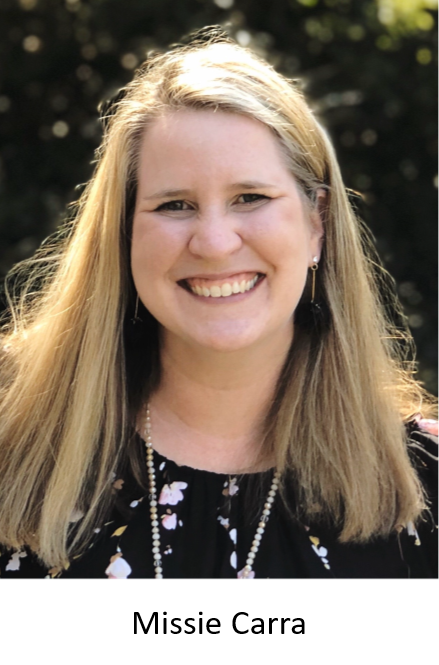
When Texas mom Missie Carra discovered the comprehensive sex education program (CSE) her middle school children were exposed to in 2018, she immediately confronted Fort Worth Independent School District administrators. But instead of listening to her concerns, they treated her with hostility and claimed the program “had been in place” for years and that she was the only parent in the district of 87,000 students who ever complained about it. Whether or not these officials were simply telling every unhappy parent the same lie, Carra decided she would not sit on the sidelines, and so she began digging into the who, what, when, and where of the objectionable program.
Her journey to find the truth culminated in the frightening realization that the entire CSE agenda is being perpetrated on American schoolchildren by design. During her quest, she took on the role of Texas State Director for the Oregon-based national organization, Parents’ Rights in Education (PRIE).
Involvement in PRIE gave Carra a vehicle for her passion to spread the word. “We are in a national crisis that can only be solved at the local level,” she told Education Reporter. “What I discovered is the culmination of a well-planned, coordinated attack on our morals, our values, and our way of life.” Understanding how high the stakes are, she has since focused her time and energy to educate parents about this issue and give them the tools they need to get involved in the fight against it.
Exposing the DASH ‘Playbook’
Earlier this year, Carra was invited to present these explosive findings at the PRIE Northwest Safe Schools Summit held in Hillsboro, Oregon just outside Portland. (See Powerhouse for Parental Action to learn more about this important group.) Her presentation, titled “The Playbook,” exposes the coordinated plan to embed CSE and reproductive healthcare in every school district in America.
As Carra’s presentation shows, the architect of this Playbook is the Center for Disease Control’s Division of Adolescent and School Health (DASH). Founded in 1988, the CDC’s DASH uses strategic, synchronized support to accomplish three things: Implement CSE; create access to sexual health services, and ensure safe, supportive environments.
Exposing the History of Sex Ed
SIECUS (formerly the Sexual Information and Education Council of the United States), is a non-profit organization founded in 1964 by then-director of Planned Parenthood, Dr. Mary Calderone. Now calling itself “Sex Ed for Social Change,” SIECUS affirms that “sexuality is a natural and healthy part of life,” a sentiment with which, Carra concedes, “most people would probably agree. However,” she adds, “they are disseminating and promoting their version of sexuality, which is based on the ideology of the eugenicist Margaret Sanger, on Planned Parenthood, and on the twisted experiments of the discredited ‘sex researcher’ Alfred Kinsey, which were carried out by pedophiles on innocent infants and children. Funding for SIECUS was initially provided by pornographer Hugh Hefner, whose legacy was the destruction of marriages, families, and modesty.”
Ultimately, SIECUS heavily influenced programs developed by the CDC/DASH, and Carra reports that “when school administrators, teachers, or school boards advocate for CSE, claiming it is beneficial because it reflects evidence-based science, SIECUS is likely where the ‘science’ is coming from.”
Exposing DASH’s Tangled Web
Shortly after the CDC’s DASH was founded, what Phyllis Schlafly called “nosy questionnaires” began showing up in public schools along with sex education programs and the first school-based health clinics, all strategically funded with taxpayer dollars.
Carra discovered that in 2010, federal tax dollars were allotted to the Department of Health and Human Services (HHS) in a consolidated appropriations act signed by then-president Barack Obama. Those dollars were funneled to the CDC’s DASH, and grants were awarded to 17 school districts in 2013 based on the districts’ applications and eligibility. Next, public schools formed partnerships with health departments and community-based organizations to implement CSE, create confidential access to sexual health services, and do it within the purported “safe, supportive environment.”
Grants awarded to school districts for CSE
These 17 taxpayer-funded grants were awarded to districts with the goal of creating a successful model program for adoption by all school districts going forward. Carra explains: “Fort Worth ISD was chosen to establish a process for selecting a CSE program and implementing it as the example for all other districts to follow.”
Grant recipients appointed “school health advisory councils” to make decisions about curricula and programs to be implemented. “The school boards are very strategic with the people they choose to sit on these advisory councils,” Carra says. “They claim that the selection process is fair and impartial but it is not.”
She explains that the councils use Risk Behavior Surveys, which ask schoolchildren very intrusive and inappropriate questions, in order to establish “need” for the program. The councils review curricula in order to choose one curriculum, and they set up partnerships with local health departments and other community-based organizations such as Planned Parenthood to provide confidential sexual health services for the students. This is the CDC/DASH “Playbook” that is being used to create and install CSE curriculum, as well as to create access to sexual health services, all without parental involvement, notification, or consent.
The Role of HECAT
To further influence the CSE adoption process, CDC’s DASH created a Health Education Curriculum Analysis Tool (HECAT). The alleged purpose of this tool is “to objectively measure the most effective evidence-based curriculum,” ensuring an easy adoption process.
Carra’s research found that the creator of the HECAT tool was so-called “sexpert,” Dr. Susan Telljohann. She further notes that when the Fort Worth ISD was the sole district under observation for the process of adopting an evidence-based science curriculum, approximately 120 potential choices were available. The CDC’s HECAT was used by the school health advisory committee, and ultimately, the committee selected HealthSMART, a curriculum published by the California-based company, ETR. Interestingly, this HealthSMART curriculum was written by none other than the same “sexpert,” Dr. Susan Telljohann.
Hoping to ensure measurable success with this program in the Fort Worth ISD, the publisher ETR provided a consultant to oversee scientific curriculum implementation throughout the grant observation period, and that consultant’s name was — drum roll here — Dr. Susan Telljohann. “She also happens to have graduated from Indiana University, where the aforementioned Kinsey Institute still operates,” observes Carra, bringing the scheme full circle. Does anyone else detect a conflict of interest here?
Projecting Planned Parenthood’s New Business Model
“As if all that were not enough,” Carra continues, “in 2018, CDC/DASH awarded a second set of grants to create confidential access to sexual health services. The Los Angeles Unified School District, one of the 17 initial grant recipients, used these additional funds to facilitate the opening and operation of Planned Parenthood clinics inside their schools.” The “sexual health services” they offer include the provision of contraceptives, IUDs, hormonal implants, STI testing and treatments, and pregnancy testing and referrals.
“During fiscal 2019-2020,” Carra lamentably says, “Planned Parenthood performed 354,871 abortions. In recent years, a number of states have passed Heartbeat Bills and other prolife legislation, and so Planned Parenthood has actively revised its business model to include the very lucrative gender modification therapies and treatments. This could potentially explain the assertive push for LGBTQ acceptance and inclusion in public schools.
“Ongoing hormonal and surgical costs are in the tens of thousands of dollars,” Carra continues. “Nationally, there are approximately 50 million public school students. They are the perfect target market for Planned Parenthood’s next revenue-generating model.”
Carra’s advice to justifiably outraged parents and citizens is to become involved and engaged. “Learn about the strategic plan,” she counsels. “Talk to your teachers, administrators, school board members, and tell your elected local and state officials about your concerns. Educate your friends, family, and your community about this issue. Join a group like Parents’ Rights in Education for support and up-to-date information. Remember that ‘The Playbook’ is the framework,” she adds, “where you can find and research the strategic goals and future plans that will impact our public-school students nationwide.
It is up to you to stop these programs in your schools, and to prevent Planned Parenthood from gaining confidential access to your minor children in your school buildings and/or during school hours. “We are in a war for our children, and it is one worth fighting.”
PRIE: Powerhouse for Parental Action
“A dark and dangerous agenda is stealing rights from parents and turning students against their families, their nation, and even against themselves.” So warns Parents’ Rights in Education (PRIE) National Director Suzanne Gallagher in a recent conversation with Education Reporter.
Gallagher is in a position to know. She has worked for nearly three decades to advance the rights of parents after the proposed curriculum in her then-middle schoolers’ district raised her concerns in the early 1990s. Determined to make a difference, she joined Phyllis Schlafly Eagles and worked for several years in her home state of Oregon as part of that organization.
“I learned from Phyllis to identify specific curricula,” Gallagher says. “The curriculum is the heart of the school, and people need to know what’s going on behind the curtain. School districts today are actually claiming they are no longer educational institutions but are social service organizations.”
The birth of PRIE
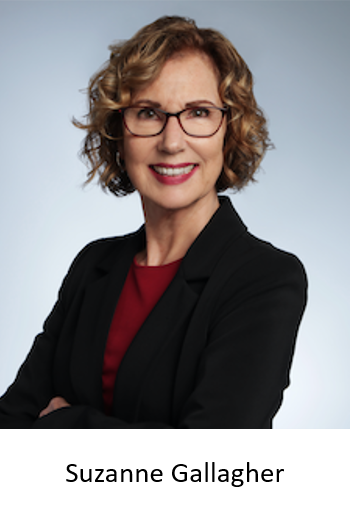
Gallagher was instrumental in naming Parents’ Rights in Education (PRIE) during its organizational conception in 2009. Founding Executive Director, Lori Porter, established the 501(c)(3) organization in 2011. Gallagher was tapped by the PRIE Board of Directors in 2018 to take the reins as Executive Director. PRIE’s work is supported mostly by small donations from concerned citizens and families who are upset and frustrated by what is happening in the public schools. The organization operates entirely with volunteers, although Gallagher hopes to eventually support a professional staff.
PRIE’s website, which Gallagher admits is “always improving,” provides a lot of information, including video presentations such as those recorded at PRIE’s Northwest Safe Schools Summit (mentioned in the “Playbook” article in this month’s issue of Education Reporter). The summit featured 12 speakers and was well attended both virtually and in person.
Gallagher observes: “Parents know instinctively that their rights are being usurped. They say, ‘how can the school district talk to my child behind my back?’ Parents’ stories of their experiences at the hands of teachers, school districts, and school boards are like gold,” she adds. “Often, people don’t believe what’s going on until it hits close to home.
“Students are other people’s minor children,” she continues with passion. “But despite this inarguable fact, one school principal I spoke with actually proclaimed: ‘They are our children too.'”
PRIE’s website also offers state-specific updates, and an invitation to sign up for email news alerts and/or fill out an online application to join an existing state chapter or start a new one. (PRIE currently operates in ten states: Alaska, Arizona, Illinois, Montana, Ohio, Oregon, Texas, Utah, Washington, and Wisconsin.) Visitors to the site can also subscribe to Gallagher’s online podcasts, which cover current topics and news events.
Values and mission
PRIE values students, parents, and communities. “Our children aren’t guinea pigs for government schools,” asserts Gallagher. “We don’t control parents — we empower them, and we enlighten communities.
“We stand for something very basic and simple, the fundamental right of parents to raise their children. And we firmly believe that children belong to their families. They don’t belong to bureaucrats. They don’t belong to the state, and they don’t belong to the teachers’ unions.”
Through its website, PRIE connects parents with like-minded peers in their areas. The site acknowledges that when parents sign up, they may be invited to get involved with a local group but are in no way are they obligated to do so. The organization’s mission states: “PRIE welcomes all students, families, and community members who care about scholastic success for K-12 public school students.” It continues:
PRIE strives for the return of community values properly represented and reflected in school policies, without the current trend of coercion and reprisal as concerns are voiced. Public school boards were created to reflect the values of their community, and to defend and represent the people, providing a bridge between policy makers and taxpaying stakeholders. PRIE believes families are the most important stakeholders. Parents’ voices matter!
Gallagher points out that parents have always had the legal right to direct the upbringing and education of their children, and that these rights have been upheld by no fewer than five Supreme Court decisions. “The only thing new about parental rights today,” she says, “is a seemingly coordinated effort playing out across the country that is usurping and undermining the family’s role within our communities.”
Among PRIE’s goals is uniting students by focusing on academics, which the organization notes “should be job #1” in schools. “We oppose labeling anyone, especially children,” PRIE’s mission states, “as that divides them at a time when an environment of acceptance is critical to their development.”
The organization opposes political activism in public schools as well as the facilitation of any medical treatments or procedures without parental consent, and believes having a good school board is key. To that end, PRIE works to restore the accountability of school boards to parents, whose rights have so often been circumvented by board members. “School board members are elected officials who represent the community and parents of students,” PRIE’s mission affirms. “It is the responsibility of the school board to know exactly what is being taught.”
Gallagher notes that school board members are often pressured by outside interests such as superintendents, teachers’ unions, and other political groups, to vote in certain ways or support undesirable programs and curricula. PRIE advocates for the election of school board members who respect parents’ rights and pay attention to their concerns.
A powerhouse for future action
PRIE has a Chapter Affiliation Process that enables new groups to be up and running in a week. Gallagher explains: “Parents are busy; often operating in survival mode. They have lots of responsibilities with work, home, and family, so we provide the assistance and expertise they need to become advocates for their children. We want boots on the ground that can function almost immediately.
“Because of demand,” she continues, “we now have a national organization. Two of our goals include framing the takeover of our K-12 education system as the national crisis that it is, and then triggering a national discussion about it, not only by parents, but also by school board members and candidates, including those running for state and local government offices.”
Gallagher explains that PRIE is stepping up its marketing efforts to take advantage of the mood in the country, adding that the organization also has a fundraising program for chapter affiliates.
Local goals
One of PRIE’s goals in its home state of Oregon is to get like-minded groups and individuals on the same page. “So many small groups in Oregon are running around doing the same thing. We need to work together because the deck is stacked against us.”
As an example, she cites the Oregon state law passed in 2011 which actually made the governor the superintendent of public instruction. This statute authorizes the governor’s office to appoint a deputy superintendent and to determine that individual’s salary. While the state senate must approve the appointment, even casual observers can see how this arrangement gives the governor and state senators potentially enormous power over what is taught in Oregon public schools. In a left-leaning state, this poses a serious threat to parental rights.
Gallagher also charges that the Ninth Circuit Court of Appeals has played an integral part in the assault on parents’ rights in the western and northwestern parts of the U.S. “The rulings of the Ninth Circuit,” she says, “have caused parents to abdicate their right to determine what’s medically accurate, age appropriate, healthy, and safe for their children in public schools.”
Victory for PRIE
But Gallagher and PRIE refuse to allow the left to define them. In a bold move that mimicked the Left’s tactics, PRIE released a proclamation in 2020 that the month of November be declared Parents’ Rights in Education Month, with 2021 marking the second year of the declaration. Gallagher recalls that, at first, the teachers’ unions loved the idea and adopted the proclamation, but later rescinded it, presumably after they realized what PRIE really meant by parents’ rights.
“The union wanted the proclamation to state that parents should work with teachers,” explains Gallagher. “They wanted to shift the focus away from parents and onto teachers and administrators.
“County commissioners were the first ones to approve our proclamation,” she continues, “and we have had some success with it.” The organization plans to continue promoting November as PRIE month.
“Asking local school boards to pass the proclamation is one way to find out who they are,” Gallagher says. “If they don’t allow a vote or they vote it down, then they are on record as voting against parents. All PRIE is saying is that parents want to be involved in their children’s education, and that we support them in that effort.”
Gallagher emphasizes that PRIE “needs more quality people to join us. We have to keep this effort going — we have the momentum!”
Learning from the BEST
The FreedomWorks organization, Building Education for Students Together (BEST), is tackling an ambitious task. Founded in January of this year, BEST’s stated goal is to “ignite a national parent-led movement by building, educating, and mobilizing the largest network of parent activists in the country to advocate for their children’s education through the election of school board members and the passage of policies that align with our vision of expanding education freedom.”
FreedomWorks’ Director of Education Reform, Laura Zorc, leads the organization in its four areas of focus:
- Parent-led state-specific coalitions — because parents are the only force large enough to impact our education system in the long term.
- School Choice — because public-school funding should follow each student, regardless of whether they attend private schools, public schools, charter schools, or are homeschooled.
- Anti-American curriculum — because Common Core standards have paved the way for biased, subjective curricula including Critical Race Theory (CRT).
- Candidate training — because to transform local school systems across the country, we must identify and elect like-minded board members.
Zorc’s prior work as a founding member of Florida Parents Against Common Core, along with her experience as an elected school board member and president of her county’s parent-teacher association, have prepared her for her current position. “Parents’ rights in education are being stripped away,” she says. “We want to tap into what’s happening in the country with increased parental engagement. My experience has shown that when parents get involved, change occurs.”
The website states: “What shifted in the school debate in the last year has been felt by everyone. Parents are waking up to these realities like never before. This creates a once in a generational-opportunity to move forward.”
BEST Candidate Academy
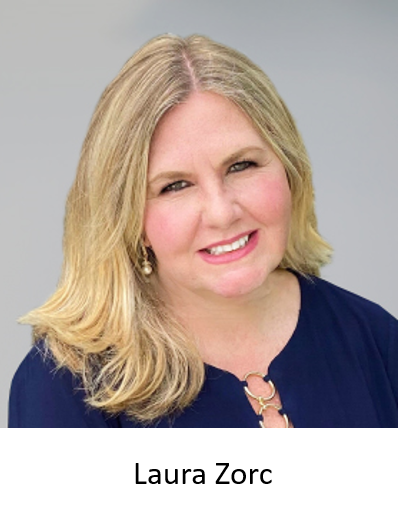
One of BEST’s chief areas of focus is candidate training. Parents and citizens considering a run for their local school boards can test the waters by registering for BEST’s free Candidate Academy. “Our candidate training is a six-week online course that meets every Tuesday evening at 7:00 p.m. Eastern Time,” Zorc explains. “We use ZOOM, and so the meetings are interactive. Candidates can ask questions and provide direct feedback.”
Zorc observes that everyone learns in different ways, and that the input BEST has already received from Candidate Academy trainees is taken to heart. “We will be updating our program in January,” she notes. “We want to help remove roadblocks to success for the candidates who sign up.”
Among the topics covered in BEST’s training sessions are the “roles and responsibilities of a school board member, school board district specifics, structure of local government, and the characteristics of effective school boards.” The Candidate Academy website offers a course outline, a BEST Handbook summarizing the organization’s goals, a “School Board Candidates Forum” guide, and a referral form site visitors can fill out “if they know of a great school board candidate.”
The website also includes video testimonials from school board candidates who have taken the training as to the value and effectiveness of the program. One graduate admitted the training “really opened my eyes as to how a school board is supposed to work, how to run a campaign, and how to put a team together. It made me realize I can do this!”
Mobilizing for change, advocating for choice
Other top priorities for BEST include coalition building for fighting CRT and advocating for school choice, and its website offers informational resources on both. Last March, the organization held its first national conference for the purpose of building relationships with parents from across the country. Since then, BEST has taken its show on the road, visiting individual communities to educate concerned parents and activists “about education freedom and how they can make a difference with groups in their areas.”
“We want to get more parents to school board meetings,” Zorc affirms. “We want to show them how to fill out Freedom of Information Access (FOIA) requests. We want to get them active. If our school boards won’t listen to us, then we need to replace them,” hence the value and importance of BEST’s free candidate training academy.
Zorc continues: “One thing we need to stress is that we can spend every legislative session playing whack-a-mole legislating for transparency, for pro-American curricula, and so forth, but at the end of the day the most important legislation parents need is the freedom to choose. How do we accomplish that? Every state needs to have at minimum a bill similar to what passed in West Virginia this last 2021 session.”
The bill Zorc is referring to was signed into law in West Virginia at the end of March by Governor Jim Justice, and which was heralded by school-choice advocates as “the nation’s broadest nonpublic school voucher program.” The new law takes effect at the start of the 2022-23 school year, when “families who withdraw their children from public schools can receive a currently estimated $4,600 per-student, per-year for private- and homeschooling expenses.” The law also applies to children just starting school.
“Florida and Arizona were always viewed as the leaders in education reform,” Zorc observes, “but the true leader right now is West Virginia because there are no strings attached as there are in Arizona and Florida, where parents must submit an application, have their income verified, their need assessed, student disabilities assessed, etc.
“My hope,” she continues, “is that during the 2022 legislative session across the country, we really get down to the heart of the issue and allow parents the financial freedom to choose the best education for their child(ren) by allowing the money to follow the student.” Meanwhile, BEST will be doing its best to support this course of action.
W.O.K.E. in Florida: Gov. Ron DeSantis Introduces New Bill
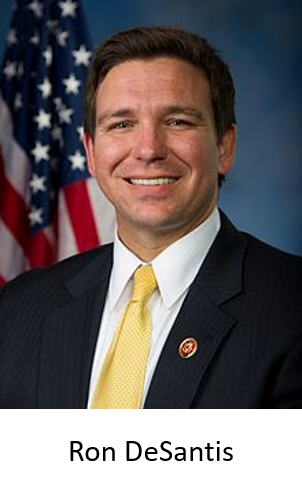
On December 15, the ever-spunky and leftist cage-rattling Florida Governor Ron DeSantis announced his latest legislative proposal: The Stop the Wrongs to Our Kids and Employees (W.O.K.E.) Act. This bill takes on CRT indoctrination in the schools as well as woke propaganda in the workplace.
A press release announcing the proposal says the Stop W.O.K.E. Act “will be the strongest legislation of its kind in the nation” and that it “builds on actions Governor DeSantis has already taken” to drive CRT and the New York Times-sponsored 1619 Project out of Florida’s schools. In sum, it codifies the Florida Department of Education’s prohibition on teaching critical race theory in K-12 schools.
DeSantis is quoted in the press release as saying: “In Florida we are taking a stand against the state-sanctioned racism that is critical race theory. We won’t allow Florida tax dollars to be spent teaching kids to hate our country or to hate each other. We also have a responsibility to ensure that parents have the means to vindicate their rights when it comes to enforcing state standards.”
Florida Lieutenant Governor Jeanette Nuñez also lauded the legislation. “As the daughter of Cuban exiles who fled from Marxist ideology,” she said in the press release, “I am proud to stand alongside Governor DeSantis and support this proposed legislation that will put an end to wokeness that is permeating our schools and workforce.”
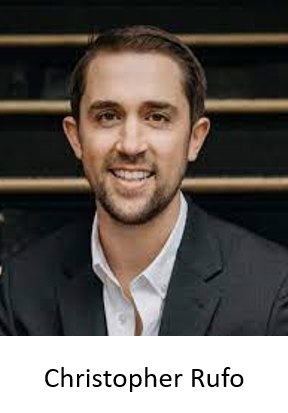
Christopher Rufo, senior fellow and director of the initiative on critical race theory at the Manhattan Institute, agrees that DeSantis’ new policy agenda “goes two steps further than successful anti-CRT legislation in other states.” Rufo observed: “First, it provides parents with a ‘private right of action,’ which allows them to sue offending institutions for violations, gain information through legal discovery, and, if they win in the courts, collect attorney’s fees. Second, it tackles critical race theory in corporate ‘diversity, equity, and inclusion’ training programs, which as DeSantis says sometimes promote racial stereotyping, scapegoating, and harassment, in violation of state civil rights laws.”
Rufo accompanied DeSantis on an early-morning visit to Tallahassee on December 15, where the governor outlined his new proposal in front of a small crowd at The Villages retirement community. Several speakers, including Rufo, also addressed the group. One speaker, a Cuban American mother from Miami, described how the “left-wing indoctrination in schools reminded her of her father’s warnings about Communism in his native Cuba.”

Rufo later appeared on the December 16 episode of Fox News Primetime to discuss the DeSantis bill with news anchor Will Cain. When Cain asked how, if passed, the law could be enforced if teachers should “vow to bring [CRT] into the classroom,” Rufo responded: “It makes the practice illegal, a violation of the law. The legislation is very simple; it gives power to parents to enforce it at the very local level. It also promotes transparency. Parents should know what is being taught to their children. This bill is taking power away from bureaucrats.”
In its press release, the governor’s office pointed out that the legislative agenda is not only about banning CRT and other woke instruction in Florida, but is also about the state’s adoption of new education standards for English Language Arts, Mathematics, Civics, Character Education and more. “We are modernizing students’ curriculum and lesson plans to match Florida’s new world-class education standards,” said Florida Commissioner of Education Richard Corcoran. “However, our classrooms, students and even teachers are under constant threat by Critical Race Theory advocates who are attempting to manipulate classroom content into a means to impose one’s values on students, when instead schools should be empowering students with great, historically accurate knowledge and giving those students and their families the freedom to draw their own conclusions.”
Mallard
Black Eye for America: How Critical Race Theory is Burning Down the House
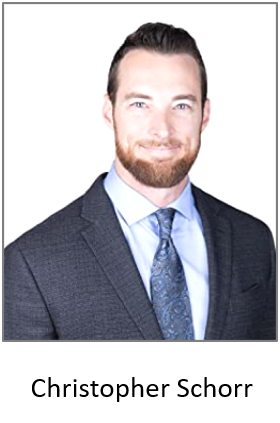
by Carol M. Swain, Ph.D. and Christopher J. Schorr, Ph.D., Be the People Books, 2021
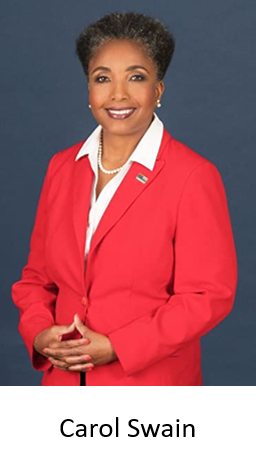
Much has been written in recent years about the scourge of Critical Race Theory (CRT), which currently has a stranglehold on our culture in general and our education system in particular. The corruption of CRT took hold years ago at the university level and has trickled down to our youngest students, today impacting even first graders. But while there are many good sources of information about this racist and divisive topic, the new book by author, public speaker, and retired university professor, Dr. Carol Swain, and researcher and American Government scholar, Dr. Christopher Schorr, should rank at or near the top of the list. All who have been touched by CRT in any way, or who know of its threat to drag our country backward, should avail themselves of this excellent resource.
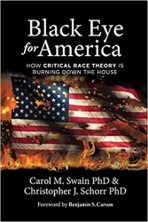 Black Eye for America offers a comprehensive explanation of CRT, its origins, its familial relationship with Marxism, and its pernicious influences. But perhaps more important than their thorough discussion of the issue itself, the authors offer a road map of strategies and tactics for fighting back.
From the opening pages of the book, the authors acknowledge “the nation’s tragic racial past and the strides that have been made to create a more just society.” They profess their Christian belief that “God created one human race,” and that “racism and prejudice are always wrong and should always be condemned regardless of the race or ethnicity of the perpetrator.” They approach CRT with staunch opposition “to political activism and indoctrination disguised as education and to so-called ‘antiracism’ programs and training that, in reality, use racism as an attempted remedy for racial and ethnic disparities.”
In defining CRT, Swain and Schorr demonstrate how for white people there is no way out of the charge of racism. If they believe in the color-blind society envisioned by Dr. Martin Luther King Jr., for example, they are told that “ignoring skin color is racist.” If they are descendants of abolitionists or come from families whose philanthropy includes financial support for black colleges and other ethnic organizations, they are nonetheless guilty of “harboring hidden racial biases.” White people, the authors note, “are ‘oppressors’ by definition. Christianity, and Western civilization more broadly, also falls into the oppressor category.”
On the other hand, they observe, “racial and ethnic minorities, especially black people, are described as helpless victims in need of liberation from pervasive and persistent racism. This patronizing account strips minorities of ownership and control over their own lives while attributing to whites seemingly godlike powers to create every sort of malady in black homes and communities.”
While recognizing that the destructive philosophy of CRT impacts nearly every area of American life, the authors are most concerned with its spread throughout the education system. “Under CRT-inspired instruction in K-12 schools,” they write, “American children are now taught to view racism as the cornerstone of American society. They are taught that whites dominate a racial hierarchy in America and exercise power as a group. White students (again, children) are forced to confront their supposed ‘hidden racism’ and its effect on society.” Students are forbidden to challenge such claims and, the authors contend, “have been punished for doing so.”
 Even more damaging is the dismissal of concepts such as color blindness, assimilation, and merit as “cynical means by which whites maintain their power and privilege” because it imparts a sense of hopelessness. “The great achievements of the civil rights movement are consequently disparaged, as are the achievements of black people who were not victims and refused to see themselves as such.”
Chapter three focuses on the origins of CRT. The authors show that this ideology, while fundamentally Marxist, “departs from traditional (or ‘economic’) Marxism by substituting social (especially racial) groups for economic groups…” The origins of this cultural Marxist approach, say the authors, “can be traced to the writings of the Italian communist, Antonio Gramsci,” who bemoaned the slow progression of Communism in the West, arguing that it was impeded “by the dominance of certain ideas over others (‘cultural hegemony’).” Gramsci proposed that “capitalism could be overthrown gradually, by infiltrating and transforming society’s major institutions—e.g., education, media, law, religion, and the family.”
Sadly, America is proving this dark prediction to be true. With regard to religion, the authors show how our Judeo-Christian heritage was not only “private” but also “public,” citing as examples “presidential addresses invoking God,” and America’s decentralized and limited form of government, which reflected the belief of nearly all the framers “that religion would supplement state power in preserving the social order.” As John Adams famously declared: “Our Constitution is made only for a moral and religious people. It is wholly inadequate to the government of any other.”
Any comprehensive overview of CRT must necessarily mention the enormous influence of prominent CRT theorist and promoter, Dr. Ibram X. Kendi, and Black Eye for America is peppered with references to his rhetoric. For example, in the discussion of CRT and America’s Christian inheritance, the authors quote Kendi as disparaging “savior theology” (or Christianity as traditionally understood) because it imparts a sense of individual responsibility for right and wrong. “Sin,” according to Kendi, is only to be found in oppressive power structures, not in individual people, and certainly not in the “victims of oppression.” Seriously?
Perhaps Kendi’s view is more understandable in light of the fact that “CRT derives from atheist thinkers who viewed Christianity as an instrument of capitalist (and racist, sexist heteronormative, cisgender, etc.) oppression. Secondly, a consistent theme in CRT is its distrust of authoritative claims, particularly those perceived as deriving from dominant groups. We thus encounter claims that math is racist and science is ‘a white way of knowing.'”
As discouraging as the first six chapters of Black Eye for America are, chapters seven and eight provide hope in the form of actionable strategies and tactics for reclaiming our country. Swain and Schorr acknowledge that “cultural Marxism’s long march through the institutions is nearly complete,” having permeated the political and administrative arms of government, the news media, academia, entertainment, and the arts. But they state: “As CRT opponents, our objective must be to arrest CRT’s momentum and then to drive it out of ‘the real world’ and back into academic obscurity.”
 The book provides a wealth of information and suggestions, with strategic frameworks to help CRT opponents develop resistance tactics, and proposals for resisting CRT, as well as practical suggestions for applying these proposals. Recommended strategies include adopting “an underdog mentality” and working harder to get people mobilized against CRT’s “institutional dominance.” This includes accepting that most institutions must be recaptured because “the country cannot do without them.” Another strategy is to become equally committed to opposing CRT as its proponents are to supporting it. “We must match the other side’s zeal when pressuring the institutions,” the authors say. They warn that fighting CRT will test conservatives, and that this fight will require the coalescing of different types of people across the political and cultural spectrum.
The authors recommend that opponents first know and understand the subject well, and they provide an appendix with resources for further reading. Next, they recommend challenging CRT under the law, or assisting others with efforts already underway, since much of CRT training and indoctrination violates First and Fourteenth Amendment protections and federal civil rights laws. Also important is building coalitions with like-minded people and groups. The authors stress that “the broader and more diverse—politically, racially, etc.—our movement is, the more effective it will be.” Getting the word out by talking to friends, family, and neighbors is also important, communicating with elected officials, and using social media.
Finally, Swain and Schorr encourage individuals and groups alike to stand their ground: “We should have the courage to take principled stances that can be persuasive and powerful. Stand up for yourself, for your children, and for others who are unfairly targeted by the ‘social justice’ mobs. Your courage will help others do the same.”
Education Briefs

The National School Boards Association (NSBA) is discovering to its financial cost that comparing parents to terrorists may have been a bad idea. According to Axios, the NSBA’s September letter to President Biden requesting federal help to deal with angry parents speaking out at school board meetings is resulting in a seven-figure funding loss for the organization this year. The letter caused an uproar when U.S. Attorney General Merrick Garland announced that his Justice Department would dispatch the FBI to investigate these parents as potential domestic terrorists. Despite the NSBA’s eventual apology for the letter, no fewer than 17 states ultimately withdrew their support for the national organization. Axios reported that the NSBA’s own records show these 17 state school board associations “paid $1.1 million in annual dues in 2019,” or about 42 percent of the $2.6 million in dues the NSBA collected from state school boards associations that year. NSBA claims it receives more dues income from school districts than it does from the state associations, and that it “continues to have the resources [it needs] to be effective.” But some districts have also severed ties with the national organization, and some state school boards are in talks “about a new national advocacy group that would compete with NSBA.” Axios.com; TheBlaze.com
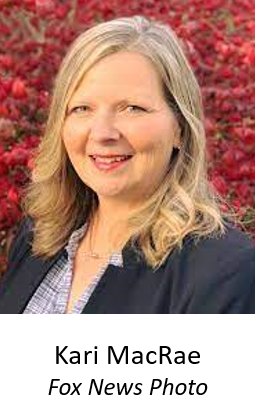
A Massachusetts teacher who was fired for posting two TikTok videos and six memes opposing CRT and gender identity politics has sued Hanover High School where she taught math and business. Kari MacRae was hired in August and fired in September by Hanover Principal Matthew Mattos and Hanover Public School District Superintendent Matthew Ferron, after her social media posts appeared in The Boston Globe and the Cape Cod Times. The Globe reported that in her TikTok video clip, MacRae, who is also a local school board member, said: “So pretty much the reason why I ran for school board and the reason why I’m taking on this responsibility is to ensure that students, at least in our town, are not being taught critical race theory; that they’re not being taught the country was built on racism. So they’re not being taught that they can choose whether or not they want to be a girl or a boy… It’s one thing to include and it’s one thing to be inclusive. And it’s one thing to educate everybody about everything. It’s completely another thing to push your agenda. And, with me on the school board, that won’t happen in our town.” MacRae is seeking “compensatory and punitive damages, attorneys’ fees, and all other appropriate relief” for violation of her First Amendment rights. Her lawsuit was filed on November 29 in the U.S. District Court for the District of Massachusetts. She is represented by the nonprofit legal organization, Judicial Watch, whose president, Tom Fitton, said MacRae “was singled out by school district officials interested in advancing an ideology.” The Epoch Times 12-4-21

Intrusive and sexually explicit surveys are showing up in Fairfax County middle and high schools and parents are up in arms. It’s the same old story Education Reporter has chronicled for decades on nosy questionnaires, but these surveys are becoming ever more pornographic and inappropriate. Last month, Fox News reported that schools in Fairfax County, Virginia, were preparing to give students as young as 12 a “youth” survey asking “specific questions about their sex and dating lives, emotions, and bullying.” One of the questions asks: “During the past three months, with how many people have you had sexual intercourse?” Another asks: “How old were you when you had sexual intercourse for the first time?” Still other questions ask about specific sex acts and sexual orientation. The district denied that the sexual questions would be included in the 6th-grade survey, but other intrusive questions about students’ home lives, emotions, and gender identity would be included. Fox reported that the survey will be given to 8th, 10th, and 12th graders, but that it is not mandatory. This begs the question as to whether parents are being required to opt their children out, which is precisely the reason parents’ rights advocates are working to change the “opt out” provision to “opt in,” making it more difficult for schools to sneakily administer these surveys without parental knowledge. Fox News Virginia-Fairfax County
Despite denials from big media, Democrat politicians, and the education establishment, an investigation by Judicial Watch shows the record is clear: CRT is being taught in Virginia schools and throughout the nation. The conservative legal organization obtained 3,500 pages of records from the Loudoun County School District under the Virginia Freedom of Information Act. “The documents reveal a district suffused with Critical Race Theory and under intense pressure from school administrators, outside consultants, and powerful state and national organizations [to teach it],” Judicial Watch reported on December 6. The organization said the records also prove that CRT instruction in Loudoun County Public Schools “starts at the top,” with school superintendents and the state’s Democrat Party leadership. These voices, of course, were among the loudest denying that CRT instruction was taking place during the heated Virginia gubernatorial campaign earlier this fall. In January 2021, Loudoun County’s then-Superintendent Eric Williams departed to head a school district in Houston, and assistant superintendent, Scott Ziegler, assumed the post. Although the school district was already steeped in controversy over CRT, Ziegler “doubled down on racism as the central threat to education.” Judicial Watch says its investigation shows that CRT’s radical political message not only permeates the educational system in Virginia, but also nationwide. “Just don’t call it Critical Race Theory.” IndependentCitizen.com, 12-6-21
Students at Maryland High School Shown Thanksgiving Video Depicting Pilgrims as Oppressors
The Howard Zinn-ification of American history has now been fully embraced by America’s institutions.
It’s not just on college and university campuses where the late Marxist professor’s anti-American history is popular.
An anonymous tip to The Daily Signal on Monday revealed that a video depicting the Pilgrims as one-dimensional oppressors was shown to students at Walt Whitman High School in Bethesda, Maryland, before Thanksgiving.
The Daily Signal reached out to Walt Whitman High School for comment, but there was no response.
Bethesda, an unincorporated area of Montgomery County, is a suburb of Washington and one of the wealthiest places in the United States. Whitman High is part of Montgomery County Public Schools.
Washington, DC Public Schools did something similar, issuing a statement to students on how to “decolonize” their Thanksgiving and to acknowledge stolen land at their holiday dinners. The video shown to Whitman High students was narrated by activist and former United Nations delegate Larissa FastHorse, whose Thanksgiving message was that “we are all complicit in standing on stolen land.”
The historical tale being told here is nonsensical. It requires one to have a narrow and shallow sense of history, where groups of people are forced into silos to fit modern political notions of oppressors versus oppressed.
In FastHorse’s narrative, the Pilgrims’ only notable traits were that they “robbed graves” and “took land” of people who were living in what is today the United States. The origin of the Pilgrims, their ideas and motivations, are entirely irrelevant in her telling.
There was nothing about the Mayflower Compact or how the Pilgrim tradition was a key element in the formation of the United States as a self-governing society.
Any context for their actions is brushed aside. What matters is that they are portrayed as white European oppressors who showed up and shattered a presumed utopia, where people did not seize land, spread disease, or brutalize their fellow man.
Were the Pilgrims and Puritans sometimes brutish and unjust in how they dealt with the tribal people they met in the New World? Yes, some certainly were. Were the Pilgrims a uniquely rapacious people, devils in human form who came to terrorize and plunder the people they met in the New World? Hardly.
One could say the same thing about the Native American tribes of the New World, too. The simplistic story of unique European oppression leaves out how some tribes were eager to enlist European newcomers in their wars to eradicate other Native American tribes in continuation of conflicts that long predated Europeans’ arrival.
The Wampanoags that partook in the first, famed Pilgrim Thanksgiving wanted a new ally to gain an edge against the powerful Iroquois Confederacy, a rival set of tribes in the Northeast region of what became the United States.
In the 1640s, the Iroquois waged a war of annihilation against the Huron and other tribes in the Great Lakes region in the so-called Beaver Wars. Just as various tribes, kingdoms, and nations went to war with each other in Europe, so too did the various peoples of the New World wage war on, enslave, and obliterate their neighbors.
The settled civilizations of South America, such as the Aztecs, used neighboring tribes as sacrificial cattle. Their downfall at the hands of Spanish conquistador Hernan Cortes came only with the help of those formerly oppressed tribes that hated the Aztecs more than the newcomers.
The world the Pilgrims arrived in at the Plymouth Colony was both blood-soaked and had changed hands many times long before they arrived.
If we really want to view history as some grand morality tale to find out who the angels and who the devils are, why should Native American Indian tribes get a pass as we condemn the Pilgrims?
The takeaway from the woke Thanksgiving video isn’t a historical one. It’s not created to give students a deeper or more complex understanding of the world or to teach them the details of history. Instead, it’s made entirely to fit a modern political agenda.
Unfortunately, the narrative weaved by the video shown to students at Montgomery County’s Whitman High is becoming common in K-12 schools, perhaps even more so in elite ones. That’s in part what the battle over critical race theory is about and why parents around the country are getting angry and organizing in opposition to its teaching.
Parents are catching on that critical race theory has nothing to do with teaching accurate history or creating better-informed citizens of a republic. Instead, it’s creating the foundation to divide ourselves into distinct classes of people separate from one another, based on the alleged crimes and grievances of our “ancestors,” who may or may not be our real ancestors at all.
This poison is being poured into schools and into the minds of young Americans to an alarming degree. As former New York Times editor Bari Weiss laid out in City Journal, elite public and private schools are going all in on critical race theory and social justice. This is in part because they know this is the language and ideology of the ruling class.
Embracing stilted and narrow, almost absurdly negative and typically inaccurate tales about American history is how one now identifies with the new managerial elite that carefully excludes and silences all who don’t embrace “diversity, equity, and inclusion.” At city council meetings across the U.S., the traditional Pledge of Allegiance to the flag is being replaced by “land acknowledgement” to various Native American tribes that passed through the area in times past.
In a sense, this is a new pledge of allegiance to woke ideology. And don’t be fooled by the talk of “reparations” or giving the land back. Those who promote this ideology have no intention of relinquishing their cultural, economic, and political power. If anything, their ideology sustains and justifies it.
Despite the name, this new class will not be inclusive, equitable, or diverse. It will uniformly conform to the ideology set by the institutions they control. Their right to rule, as they see it, comes from being on “the right side of history”—whether that history is true or not.
Generations of Americans have now been raised with ideas like what was peddled in the video shown at Whitman High. But now instead of it just being a slice of education, it’s devouring everything. What was once a trickle is now a torrent.
Our country is drowning in a flood of wokeness that is corrupting our institutions, eroding merit, and pulling us apart as a people. Critical race theory is spreading across our country like wildfire. It’s time to stop the indoctrination.
Jarrett Stepman is a contributor to The Daily Signal and co-host of The Right Side of History podcast. The Daily Signal is a news publication of The Heritage Foundation.