New ‘Science of Reading’ is Old-Fashioned Phonics
Major media reports have been touting the “science of reading” approach to literacy, perhaps at least partially in response to the latest dismal National Assessment of Education Progress (NAEP) scores in reading and math. Last April, PBS News Hour posted an article titled “Why more U.S. schools are embracing a new ‘science of reading,’” positing that the term “refers to decades of research in fields including brain science that point to effective strategies for teaching kids to read.”
On December 4, the New York Times published an article on this topic under the headline “What Costs $1,000 Per Student and Might Help Children Learn to Read?” which highlighted a newly released Annenberg Working Paper on The Achievement Effects of Scaling Early Literacy Reforms. The paper analyzed and found positive the results stemming from a California program that, while cost-effective, “emphasized training teachers in the principles of the science of reading, a movement focused on foundational skills such as phonics, vocabulary, and comprehension.”
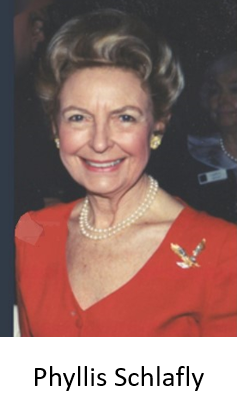
While it may appear to the younger or more casual observer that education “experts” have stumbled upon something revolutionary, these instructional elements are hardly new. What they describe as the “science of reading” is actually the tried-and-true phonics method that education stalwarts like Phyllis Schlafly, Samuel Blumenfeld, Professor Jeanne S. Chall, and many others promoted for decades during their lifetimes.
Mrs. Schlafly, for example, taught her own children to read using phonics starting with her eldest son when he was a preschooler in 1955. She later developed her First Reader phonics system for young children, followed by TurboReader for older learners, to enable everyone to learn to read with phonics. Phyllis’s wisdom in her philosophy of teaching reading transcended political barriers and biases. She knew what worked and how reading should be taught to all children, regardless of their race, ethnicity, or economic status.
A friend and contemporary of Phyllis was phonics proponent, educator, and conservative writer Samuel Blumenfeld, who shared many of her political views and her passion for teaching children to read. Blumenfeld lectured on the topic of systematic reading instruction and was the author of more than a dozen books on education, including Alpha-Phonics: A Primer For Beginning Readers in 1983.
Before his death in 2015, Blumenfeld co-wrote Crimes of the Educators: How Utopians Are Using Government Schools to Destroy America’s Children with journalist, educator, author, and editor, Alex Newman. Some consider this book to be Blumenfeld’s most important work, in which he presents the case that America’s government schools were deliberately dumbed down to advance socialism, with the disastrous “whole-word method of teaching children to read” a key element in the decline. Phyllis Schlafly often warned about the fad of “Whole Language” as well, with its emphasis on teaching children to guess at words based on pictures and context rather than teaching them to sound out the syllables that make up words.
The late Harvard Professor Jeanne S. Chall was another devoted proponent of the phonics method. As long ago as 1967, she wrote Learning to Read: The Great Debate, a critical study of research in the U.S., England, and Scotland that proved the superiority of phonics for teaching reading. According to Phyllis, this work was considered for decades to be “the definitive analysis of reading research.”
Shaking the dust off phonics
Since it has long been known that systematic phonics instruction is the single best method for teaching reading — and more recent pesky brain research continues to reinforce this fact — yet to date it has scarcely been implemented, what is prompting this acknowledgement so many years and so many illiterate Americans later?

Observers believe there are several possibilities, not the least of which are the glaringly inconvenient NAEP scores mentioned earlier, which continue to decline annually and which have become impossible to hide or explain away. Even government school teachers are sounding off about the crisis and some are fleeing their classrooms for other educational opportunities, as Education Reporter noted in November.
One theory is that Progressives have been so successful at churning out Marxist foot soldiers in lieu of educating American children that even apolitical parents are noticing and pushing back. The COVID-19 pandemic triggered parental awareness, with many parents witnessing firsthand what their children were and were not being taught. The result was a renewed push for school choice programs, a surge in homeschooling, microschooling, and other educational formats, all in repudiation of government school indoctrination and the failure to teach basic skills.
As the PBS article noted: “The science of reading is especially crucial for struggling readers, but school curricula and programs that train teachers have been slow to embrace it … a push to teach all students this way has intensified as schools look for ways to regain ground lost during the pandemic — and as parents of kids who can’t read demand swift change.”
The Annenberg study shows modest gains with the California phonics program, which focused on early elementary-school students in “about 70 low-performing schools.” The study compared results from schools that participated in the program to schools that did not. According to the New York Times, the program arose “from a 2020 legal settlement between the state and a group of students and parents. They had sued years earlier, arguing that California was defying its own State Constitution by failing to provide ‘adequate access to literacy’ in its schools. The state agreed to pay $53 million to help 75 low-performing elementary schools overhaul their reading programs.”
Researchers in the study did not specify which classroom-level changes led to improvements, and the focus was on a single outcome of third-grade test scores. Ironically, the plaintiffs in the original legal action did not benefit from the program as they had aged out of the target grades by the time it was implemented.
Will the ‘science of reading’ prevail?
Reactions to the Annenberg study have varied since its release, and it’s unclear whether the high-profile rediscovery of phonics will continue to play a role in government education. According to the Times, literacy expert and University of Illinois, Chicago, Professor Emeritus Timothy Shanahan said he is “very cautiously optimistic” about the study results but that education reforms focusing on the early grades often show success only to fade out later. “Will the schools build on this in any way?” he asked. “I get nervous about interventions that are just aimed at the youngest kids.”
New York University early reading expert, Susan Neuman, called the program gains reported in the study “modest.”
Longtime education researchers armed with information contained in books like Crimes of the Educators wonder if the uncharacteristic interest in actually teaching children to read is little more than a smokescreen to fool parents. “It’s difficult to believe the goals have suddenly changed,” says Phyllis Schlafly Eagles researcher Gwen Kelley. “At least since Dewey there’s been an almost unrelenting push for all kinds of education fads, including the whole language or ‘look-say’ method that fails to adequately teach basic reading skills.”
Kelley may have a point. In 1997, a National Reading Panel was formed “to assess the status of research-based knowledge, including the effectiveness of various approaches to teaching children to read.” The panel’s experts reinforced the decades-old established fact about phonics by declaring “phonics instruction” and its related concepts to be crucial for teaching reading. And yet, a decade later in 2010, phonics instruction was still lacking in elementary-school classrooms throughout the government school system, indicating a deliberate reluctance to fix the problem.
As PBS noted: “What emerged, though, was an informal truce that came to be known as ‘balanced literacy’ and borrowed from both approaches….” But national reading panel participant, Stanford University Professor Emeritus of Education Michael Kamil, said that in practice, “phonics elements often got short shrift. It wasn’t a true compromise…. The [dual] approach often led to students learning how to guess words, instead of how to sound them out.”
Meanwhile, phonics supporters say it will be interesting to watch the “science of reading” play out in the media and the education system, which are declaring the new catch-phrase to mean a focus on “the building blocks of words.” This is phonics instruction, folks; and it’s nothing new.
The Sinister Intent of ‘Decolonization’
“Decolonization” has become a buzzword for the “oppressed” and “oppressor” worldview, and has been cropping up more and more frequently in the news, online, and around the world. A recent New York Times article aptly stated: “As an insult, or line of attack, ‘colonial’ is enjoying a field day,” implying that “colonialism” or the international progress that “has shaped modernity” is now to be vilified and dismantled.
Pundits and news outlets like the New York Times are jumping on the bandwagon of the Palestinian cause “as an extension of the powerful movements for racial and social justice that have unfurled, particularly in the United States, since 2020. In 2021, Black Lives Matter issued a statement declaring ‘solidarity with Palestinians’ and opposition to ‘settler colonialism in all forms.’”
The NYT quoted Russian foreign minister Sergey V. Lavrov, as saying: “We are witnessing neocolonial instincts in the West…. There is a desire to continue living at the expense of others, as they have been doing for over 500 years.” Why the reporter included Lavrov’s quote is anyone’s guess, because he evidently felt compelled to acknowledge that his remarks were made “even as his country waged what looks very much like a war of imperial expansion in Ukraine.” But the Russian’s words reflect the latest politically correct mindset of the Left, including the implication that, despite the historical complexities of the region and its peoples, the Israelis must be the oppressors and the Palestinians the oppressed.
Decolonizing the curriculum
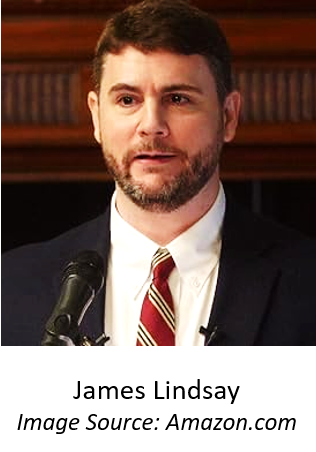
In fact, the term “decolonization” poses a more sweeping and sinister threat than many observers may imagine. In the fall of 2020, author and mathematician James Lindsay, Ph.D. penned an article for the National Association of Scholars (NAS) titled “Decolonizing the Curriculum,” in which he explained how the broader movement is to “decolonize just about everything, including [in education] the curriculum, the faculty, the university, literature, science, and even time and space. The purpose of this movement is, nominally, to create ‘justice’… —as in ‘justice for marginalized socially constructed groups’ instead of individuals….” [Emphasis in original.]
For the decolonizers, the “curriculum” refers to what gets taught, and the key word is gets, as in what is allowed to be taught. To them, the enemy is the status quo and those wishing to preserve it through the teaching of “core” subjects like math, English, and science, as opposed to electives such as “ethnic studies.” They believe that disrupting the dynamics of “systemic power” that they view as driving these decisions should be “considered of far more importance than equipping students with knowledge.”
Decolonization in a broad sense then, means disregarding the body of knowledge amassed over the centuries, particularly during the 500 years since the “enlightenment.” Researcher Rhyen Staley of the group Parents Defending Education encapsulated the definition in a Washington Times op ed on October 24:
- …decolonization is a principle of liberated, or critical, ethnic studies and is embraced by groups such as Black Lives Matter, the Democratic Socialists of America, Hamas, the American Library Association, and LGBTQ activists. It is a demand to deconstruct or remove Western influences from positions of power, elevate “other ways of knowing,” and promote non-White, non-male, non-Western groups.
Staley explained that while “ethnic studies is packaged as an anthropological and historical study of non-White cultures” and as “teaching the truth about other cultures,” the actual product turns out to be “political programming intent on attacking and destroying Western civilization in the quest to gain power.”
According to James Lindsay, decolonizing the curriculum, therefore, is to view it as “an ideological project devised by the powerful in society—meaning mostly straight, white, Western men with a ‘Eurocentric’ bent on things like science, reason, and rationality, among other proven epistemological and pedagogical frameworks—that was made the way it was to continue to promote and serve their own interests at the expense of everyone else’s, either by intention or by failing to understand that they’ve internalized their dominance and come to believe it right and natural.”
Lindsay suggests that it would be one thing if decolonizing were truly about expanding and diversifying the array of scholarship, voices, and perspectives into the curriculum, but he explains “it’s about attending to a complete revolution in terms of what we consider knowledge, how that can be determined, and how it should be taught.” In other words, decolonizers want to dismantle five centuries of what the world has come to consider knowledge, which, as Lindsay notes, “would threaten not only Western culture but the tremendous strides into modernity some aspects of that culture have enabled much of the world to take.” This, he urged, must be resisted.
The ‘hidden curriculum’
A decolonized curriculum looks a lot like what schools are teaching today, and it’s based on the precepts of radical decolonization promoters including Brazilian educator Paulo Freier, whose influence on U.S. education is the topic of Lindsay’s 2022 book The Marxification of Education. Lindsay believes understanding that Freire’s pedagogy began “from a postcolonialist mindset” helps make sense of an otherwise confusing trend in education today: “the decolonization phenomenon.”
Decolonization must happen, Freier believed, because colonization of “the knowing system — and thus education and literacy — is at the heart of why education produces and reproduces the stratified and unjust society, including through so-called ‘humanitarian’ education programs that train people to accept their oppression.” Lindsay notes that “this assumption of colonized and ‘decolonizing’ curriculum makes its way prominently into education today largely because of Freire,” although also significantly through “the work of a later Critical Pedagogue, Joe L. Kincheloe.”
In his NAS article, Lindsay identifies what he calls “an even more sinister attitude tucked away in another buzz-phrase that hovers around the ‘decolonize the curriculum’ agendas: the ‘hidden curriculum.’” He traced this phrase back to educator Phillip Jackson, whom he credits with coining the term in the 1968 book Life in Classrooms. The hidden curriculum means that which is communicated outside of the official written curriculum, i.e., the unwritten lessons, values, attitudes, and perspectives that students learn in the classroom from teacher “facilitators.”
The advantage of the hidden curriculum for decolonization purposes is that different agendas can replace the values previously conveyed in education, such as “methodological rigor, rationality, liberal civics, and ethics….” Other agendas might, for example, replace the former with “cultural traditions and witchcraft instead of empiricism,” as in the “Science must fall” and the call for decolonization movement in South Africa. This anti-scientific uprising began at the university level in 2015 and “tapped into the sentiment that scientific thinking was incongruent with African indigenous belief systems, and is thus a cultural imposition that should be eradicated along with other foreign symbols and practices.”
Fruits of decolonization
The promotion of any leftist doctrine typically manifests itself as a “cause” supported by demonstrations in the streets of Western countries by scores of mostly young people fortified with years of progressive conditioning in government schools, and primed with the notion of a righteous group grievance. The push for decolonization is no exception.
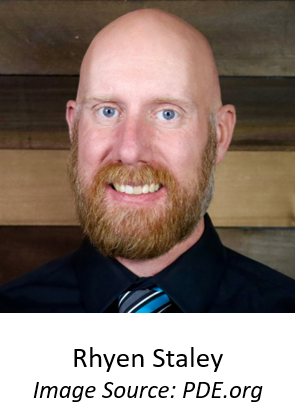
Along with the New York Times and other media voices, Rhyen Staley’s Washington Times piece connects the decolonization movement with the recent pro-Palestinian protests on college campuses and in the streets of major cities. But he rightly notes that “this is not a spur-of-the-moment rallying cry or theory relegated to the halls of academia. It is the culmination of political programming taught to students from kindergarten to college.”
Staley explains that, rather than merely an academic theory, decolonization is “a call to action” as in an actionable ideology, and that its advocates “are using the U.S. education system to sow the seeds of resentment and guilt between races, and to train children to dismantle Western civilization.”
He described for example an ethnic studies class in the Boston Public Schools titled “Resistance, Transformation, Action, and Change.” The course content includes “ideologies and past radical movements such as Marxism, postcolonialism, the Zapatistas, the Black Panther Party, the Young Lords Party, and Cuba’s communist revolution” which serves as the necessary background knowledge for students to “be inspired” to “resist oppression” and to “enact change.”
He offered as a further example the “model” preschool lesson titled “What Is Normal?” which begins by having four-year-olds recite: “We remind ourselves that we are sitting on the land of the [Indigenous land] in [city, state].” Writes Staley: “Unlike the daily routine of reciting the days of the week, this seeds the idea in the youngest learners’ heads that they are living on ‘stolen land.’ It is an insidious, subtle statement meant to program students who cannot even tie their shoes to believe that they are either ‘colonizers’ or the ‘colonized.’”
Poll tells the story
How is decolonization working out for America’s young people? According to an October 30 op-ed in the Washington Examiner, “the kids are not all right.”
This article similarly cites the unrest on the nation’s college campuses as the Israeli-Hamas conflict rages, and points out that these are not merely the actions of a few fringe elements. It goes on to describe results from a recent Harvard Harris Poll which found that 41 percent of 18-24-year-olds (Generation Z) think Hamas should be considered “militants” rather than “terrorists” and that 51 percent of the same age group believes “the Hamas killing of 1,200 Israeli civilians can be justified by the grievances of Palestinians.”
The poll further shows that among Gen Z (dubbed Zoomers), “two in every five believe government should have the power to prevent people from making offensive statements, while just 27 percent of Generation X agrees with this. Almost half of Zoomers say it is acceptable to suppress the speech of those who disagree with them about race.”
Additionally, 40 percent of Zoomers believe our country’s founders “are better described as villains” than “heroes,” and 60 percent also disagreed with the statement that “America is a fair society where everyone can get ahead.” Given this skewed view of our nation and its history, one might expect that “only 36 percent of Zoomers say they are proud to be an American,” while in contrast, “86 percent of those 65 and older are proud of their country.”
The Examiner blames the education system for immersing Gen Z in “a Manichean ‘oppressed’ and ‘oppressor’ worldview,” to which the key is that “identity reigns supreme, not actions.” As the article notes: “We need to do more to eradicate the “oppressor” and “oppressed” narrative from our classrooms, from kindergarten all the way to graduate school … We need to take a much harder look at regulating social media, even for adults. Where is all this anti-American propaganda coming from? Who is writing the algorithms that force-feed it to our young?
“If we clean up our schools and delete social media from our devices, there will be hope for the next generation.”
It’s likely to be a long uphill battle.
New Textbook Codifies Trans Craze
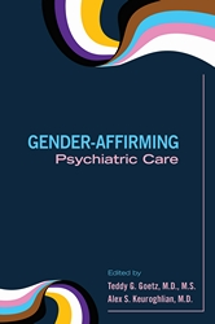
It was only a matter of time before the attempts to force normalization of the abnormal and deny undeniable biological reality would be codified in a textbook with which to “train,” or more accurately, to indoctrinate, psychiatrists and other mental health professionals. The release of Gender-Affirming Psychiatric Care, a textbook newly printed by American Psychiatric Association (APA) Publishing, promises to add false legitimacy to the already out-of-control push to “transition” children and teens.
The Epoch Times posted an article on November 30 charging that, according to critics, this new transgender textbook “could harm millions of kids.” The book’s foreword indicates it was written by 56 different authors, 50 of whom are members of the transgender community. Critics question its “reliance on a mix of transgender-identifying professionals writing about their experiences, limited scientific studies, and neo-Marxist critical theories.”
One of these critics is Alan Hopewell, Ph.D., a board-certified neuropsychologist and former senior clinical neuropsychologist for the U.S. Department of Defense. Hopewell called the textbook “disturbing” and described the content as “nonsensical gibberish which has no foundation whatsoever in science.” He told The Epoch Times: “This reminds me of brain-damaged hippies free-associating at a commune.”
Oklahoma City psychologist Dr. Lauren Schwartz warns that the textbook is based on “an evidence-informed approach” rather than an “evidence-based approach, which is more scientific,” and yet it “will be perceived as authoritative because it was printed by the APA’s publishing arm.”
Schwartz added: “Anyone wanting to practice gender-affirming care, any attorney wanting to defend it, and any legislator who wants to protect it, now has a new peer-reviewed textbook, not just ‘evidence’ in a journal or a study.”
Gender-Affirming Psychiatric Care bills itself as “cutting-edge neuroscience” and “the first textbook in the field to provide an affirming, intersectional, and evidence-informed approach to caring for transgender, non-binary, and/or gender-expansive (TNG) people.” Its 26 chapter topics include “gender-affirming care for marginalized communities such as Two-Spirit and Indigenous, Black, Asian American, Pacific Islander, disabled, migrant, refugee, and unhoused people,” an obvious attempt to create division by singling out designated victim groups.
A quote from the book’s foreword suggests that it drags into the trans mix the popular leftist notion of decolonization by asserting that “the psychiatric field was built on the work [and assumptions] of European, white, cisgender men, including their colonial, Anglo-centric, cis-heteropatriarchal worldview and pathologization of experiences that did not fit their own ‘norm.”
The foreword continues: “For millennia, outside of European colonial influences, gender diversity has flourished to varying degrees among hundreds of indigenous communities around the world,” the proof of which many observers would doubtless like to see. The Times noted: “The idea that Western countries were colonizing land stolen from indigenous people is part of critical race theory (CRT), which critics say is rooted in neo-Marxism….”
The textbook makes outrageous claims such as calling heterosexuals cisgender people “who are part of a ‘cultural and systemic marginalization’ of LGBT people who don’t align with societal norms.” It cites as a legitimate beef the biological fact that “only women can have babies.” As the foreword reads: “For example, naming an obstetrics and gynecology practice a women’s health center is cis-normative because it assumes the practice will only serve patients with one gender.”
Legal concerns
Dallas attorney Ron Miller of Lawyers for Detransitioners told The Times that “a textbook affirming gender transitioning could lead to the harming of millions of children through sterilization and side effects from hormones and surgery.” Miller’s law firm represents detransitioners who “are suing doctors who prescribed hormones and surgery for gender dysphoria.”

Miller believes danger lies ahead if this textbook becomes widely adopted, because “a textbook put out by a professional psychiatric organization such as the APA is seen as credible. We’re already in a world where thousands of kids are at risk of this ideology or this practice,” he said, pointing to the fact that the American Academy of Pediatrics approved guidance for “gender-affirming care” as long ago as 2018.
The firm’s website spells out its “Focused Mission,” which states in part: “The number of individuals undergoing treatments and procedures in the name of ‘gender-affirming care’ has increased exponentially in recent years. Unfortunately, too many of those never should have undergone such irreversible treatment.
“Our firm is singularly committed to seeking justice nationwide for those detransitioners and others who have suffered harm due to medical malpractice, fraud, and other healthcare-related wrongs.”
Another point made by critics of the textbook is that the studies it cites are “low-quality studies.” At the same time, they acknowledge that “the APA is one of the largest nonprofit publishers of ‘psychological science’ in the world,” which will likely provide a facade of professional legitimacy to its questionable premises and flawed data.
Miller cautions that the “standards” in such a textbook could “end up trickling down, even into elementary schools, where school counselors could affirm millions of children.”
Minimizing serious health risks
The zeal to drive the transgender agenda without regard for consequences has given rise to dangerous denial of the very real health risks posed by puberty blockers, hormone drugs, and the life-altering surgeries that often follow.
For example, one chapter in the textbook alleges that puberty blockers “have been used safely in children of all genders” to pause early onset puberty, and that “pubertal suppression is fully reversible.” But Dr. Hopewell told The Epoch Times that “this is the lie they’re promoting all across the country.”
It is in fact known that puberty blockers “can affect bone growth and brain development in adolescents….” (See Education Reporter, Nov. 2022.) Hopewell pointed out that “hormone drugs such as Lupron, which suppress testosterone production, also must be managed carefully, but the textbook claims ‘gender-affirming’ hormones appear to be ‘overwhelmingly safe and linked with positive outcomes.’”
Although the textbook alleges that research on cardiovascular risk associated with cross-sex hormones is “mixed,” a study conducted earlier this year in Denmark “reinforces medical evidence that transgender-identifying people taking cross-sex hormones dramatically increase their chances of developing heart disease.”
The Daily Caller News Foundation reported on the Danish study results, which were released in August and show that males taking transgender hormones were 93 percent more likely to develop a heart condition than those not taking hormones. “Biological women taking testosterone were found to be 63 percent more likely to have heart disease than women not taking hormone treatments and have over twice the risk of developing a heart condition as biological men.”
This study was conducted on young adults in their early twenties, and found that both men and women taking cross-sex hormones over a five-year period were at a “significantly increased risk of developing high blood pressure and high cholesterol and were more likely to have heart attacks and strokes.”
A 2021 article on Medscape by William Malone, M.D. warned that “most of the long-term health risks [for children and teens given such treatments] are largely unknown.” Malone wrote:
- Puberty blockers have been demonstrated to significantly impair bone health, and it is not clear whether this will result in future osteoporosis. Cross-sex hormones are associated with roughly 3-5 times the risk for heart attacks and strokes, though long-term studies are of insufficient quality for accurate risk assessments…. The risks to fertility are largely unknown, but it is almost certain that if puberty blockers are given at the early stages of puberty and followed by cross-sex hormones, sterility will result.
The Daily Caller described another study also released in August 2023 which shows that “the number of U.S. teenagers getting sex-change surgeries increased significantly from 2016 to 2019. Kids from the ages of 12 to 18 made up 3,678 of the 48,019 patients over the four years, with 405 of those patients getting genital surgery.”
Clearly, the fears of critics like Drs. Schwartz, Hopewell, and others over the release of the new Gender-Affirming Psychiatric Care textbook are well founded and should be of grave concern to parents and citizens across the nation.
Mallard

The End of Woman: How Smashing the Patriarchy Has Destroyed Us
by Carrie Gress, Ph.D., 2023, Regnery Publishing
Carrie Gress begins her absorbing historical account of the so-called “women’s movement” by showing that there were indeed injustices committed against women through the centuries. She tells the story of Hester Vaughn, who immigrated to the United States during the 1800s, lured by a man who promised to marry her, only to find upon her arrival that he was already married. She obtained a job as a scullery maid, was raped by her employer and became pregnant. Unable to afford shelter beyond an unheated attic room with a broken window, she gave birth to her baby during a snowstorm, and the child froze to death. Hester was then tried for infanticide.
Gress writes: “Although we may not see such stark examples of women’s weakness in our wealthy society today, the vulnerability of being a woman has not gone away…. Our weakness is locked up in our fertility, our hormones, our bodily cycles, and all the functions required to give life to another. This vulnerability is what women have been struggling against since the beginning of time.”
But as the author shows throughout the book, the feminists’ answer to helping women is to have them become more like the men they allegedly hate, and to end the “patriarchy,” which has only served to make women dependent on the state to meet their needs rather than a father or a spouse. In addition, feminism has served to pit men and women against each other to the detriment of both and benefit of neither.
The End of Woman is fascinating and eye-opening, beginning with the first feminist, Mary Wollstonecraft, who lived in Ireland and Britain from 1759-1797. While Wollstonecraft is considered to be “the mother of feminism,” Gress writes that the story of feminism actually began with the French Revolution. She describes the bloody “Reign of Terror” that took the lives of 17,000 people via the guillotine, many of whom were clergy, and another 10,000 who died in prison without trial.
The author explains that, unlike the American Revolution, which was fought against British rule for the sake of freedom, the French Revolution “was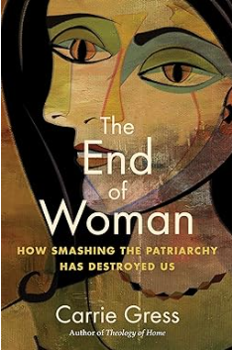 an effort to recreate and reshape society in a world without God.” It was an effort to erase the sacred and raise man and the state as the solution to the world’s problems. Many historical figures make Gress’s story come alive, including the father of sadism, the Marquis de Sade. It was the backdrop of the French Revolution and its aftermath that helped Wollstonecraft spread her feminist message through her writings, primarily her most well-known work, A Vindication of the Rights of Women.
While Wollstonecraft’s influence is still felt in the feminist movement today, like many of the feminists Gress writes about, she was a broken woman whose early life was filled with abuse, “crass cruelty,” and continual waves of poverty. After her death, her husband, William Godwin, himself a champion of free love and the godless tenets of the French Revolution, detailed her romantic relationships, her pregnancies, and her suicide attempts, which drastically lowered the public’s interest in her. Yet she has continued to play a significant role in the waves of feminist thought that have followed.
Gress does a masterful job of describing the various movements that have come into play since the dawn of feminism. Among them is Romanticism, which was “a reaction against laws, boundaries, scientism, and regimented ideas.” Romantics found the Enlightenment thinkers “sterile,” with narrow categories of reason. The only thing they agreed on was that there was no longer any room for Christianity. The Romantics were virulently anti-Christian and “saw freedom, no matter its expression, as the new creed.”
The author weaves fascinating details of the intertwining lives of Wollstonecraft’s husband, William Godwin, her daughters, and the poet Percy Shelley and his wife Mary Shelley, the author of Frankenstein. Shelley fathered numerous illegitimate children, and his creativity was “fueled by free love and drug use.” He left in his wake a trail of suicides, rancor, and sadness, and was constantly running from the debts he accumulated. But modern feminists praise his work, which wove together the writings and thought of Wollstonecraft and Godwin, including “a new icon of womanhood — free from men and children — developed in his poetry.”
Gress provides detail about the later feminist movement that began in the 1960s and ’70s. Most of the key figures from that era were Marxists or Communists, and the same ideology that resulted in the deaths of tens of millions of innocent people in the Soviet Union drove the movement to destroy womanhood and the traditional family in the West.
The feminist Betty Friedan, author of the feminist screed The Feminine Mystique, was one key player who pretended to be a simple housewife with no career ambition and a righteous sense of feminist outrage. She tried to hide her Communist connections, but David Horowitz, himself an active Communist at that time, was so intrigued by Friedan and her secret leanings that he wanted to write a biography about her, which she refused. Horowitz wanted to show the damage caused by McCarthyism by telling Friedan’s story, and despite her refusal to grant him access to her personal papers, he was able to make a convincing case.
The End of Woman is a wonderful book, peppered with prominent historical figures and intriguing anecdotes. It rips the mask off the public relations spin that woman are victims of the oppressive patriarchy and shows that the main players in the charade are “lost girls” or “mean girls.” Gress reveals that most of the feminist movement’s leaders came from broken families, abuse, or suffered from various mental illnesses. And yet these are the women who have successfully convinced millions of other women to buy into the notion that they must be equal to or better than men in order to achieve success and happiness.
While many feminist leaders may have achieved success, few appear to have achieved happiness. Gress writes: “It is readily apparent when digging into the history of feminism that there is a remarkable absence of discussion about children, about what it means to be a mother…. Perhaps like their broken relationships with their parents, or with husbands and lovers, their relationships with their children were just as strained. But more likely, the absence is to steer their arguments toward their own agenda and away from the richness of authentic, deep, and selfless relationships.”
The book also addresses the issue of abortion, probably the most important item on the feminist list, which has taken such a toll on average women and feminists alike. Gress writes about the macabre celebrations of celebrities following their abortions, and she also delves into the toll being taken on young women today by the transgender agenda. She leaves no stone unturned in her revelations, leaving the reader breathless at the enormity of the evil perpetrated on women, men, and the nuclear family.
But Gress contends that that there is an army of what she calls “flyover women” who have religious faith, love their husbands and children, and fail to buy into the feminist notion of “power,” who get no attention. She writes that “women must recognize where our real power lies and understand how to use it well. We must also end the vilification of men and move to restore the family. If we do these things, the world will not come to an end—quite the contrary, like a barren garden, it will emerge slowly, coming back to life, to be reanimated with those elements that we have grasped at but missed.”
Women and men who are alarmed at the path our society has taken for the past five-plus decades should avail themselves of this amazingly informative book. Older women may recognize that they were hoodwinked in their youth by the appealing promise of freedom and equality, and young women may wonder why they are listening to the likes of bitter octogenarian feminists like the 88-year-old Gloria Steinem. One thing is certain, every reader will learn a lot.
To read the entire book, go to Amazon.com or Regnery Publishing to order!
Education Briefs

The Epoch Times noted in a November article that some experts believe narcissistic parents may be contributing to the rise in children claiming to be transgender. One such professional is Dr. Erica Li, a pediatrician in Spokane, Washington, who “began to question why doctors were advocating for medical procedures to transition children without solid scientific evidence that the procedures came with an overwhelming benefit for their young patients.” While Li is a self-described liberal not necessarily opposed to transitioning children, she nonetheless recognizes from experience that another force is at work — parents with personality disorders. Among these disorders is “Transhausen by proxy,” a term used to describe “narcissistic parents who push gender transitioning on their children.” The Times explains: “‘Transhausen by proxy,’ isn’t an officially recognized psychological condition; it’s a play on an official condition known as Munchausen Syndrome by Proxy (MSBP), a mental illness that’s also sometimes called medical child abuse or factitious disorder imposed on others. It’s exhibited mostly by women seeking attention by exaggerating or making up an illness of children or others in their care.” Experts also blame mental health practitioners for the jump in the number of transgender children, some of whom exploit parents by telling them “it’s better to have a trans child than a dead child.” It appears that both parents and professionals share the blame; narcissistic parents gain welcome attention when their kids transition, and gender-affirming doctors “are often praised as ‘life-saving’ heroes.” In all cases, it’s the kids who lose.
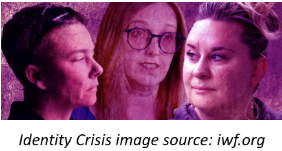
Detransitioner Isabelle Ayala filed a first-of-its-kind lawsuit against the American Academy of Pediatrics (AAP) and her healthcare providers, charging civil conspiracy, fraud, and medical malpractice. Ayala is a 21-year-old biological female who says the AAP and her doctors “pressured her into undergoing a gender transition when she was a teenager.” The Washington Examiner reports that her legal challenge “alleges the AAP published and disseminated a fraudulent 2018 ‘Policy Statement’ that has been perceived by many as an authoritative guide by medical professionals endorsing the ‘affirmative model’ for gender dysphoria.” This “guidance” titled “Ensuring Comprehensive Care and Support for Transgender and Gender-Diverse Children and Adolescents” was reaffirmed in August 2023. Ayala’s suit charges that the policy “lacked sufficient evidence and used misleading and fraudulent citations to support its conclusions and recommendations” and that it should not have been used as a treatment guide for gender-confused children. One of the doctors named in the suit is Dr. Jason Rafferty, author of the Policy Statement and an advocate of gender-affirming hormones. Also charged is Dr. Michelle Forcier, who allegedly recommended testosterone injections for Ayala after a single meeting. According to the Examiner, when the girl was 14 years old, “she suffered from numerous mental health conditions, including ADHD and PTSD from a previous sexual assault, and was coping with her parents’ marital separation,” along with the social isolation and transition of moving from Florida to Rhode Island with her father.” She then discovered the transgender community online and explored a gender transition. When her mother refused to consent to Dr. Rafferty’s recommended testosterone injections, his team applied pressure by “allegedly suggesting that the child would commit suicide if her mother did not give in.” The suit claims Ayala’s doctors were “testing” this “radical new approach on patients like her.” Later, she moved back to Florida and stopped taking the hormones, only to discover she was suffering from irreversible damage and treatment-related medical problems that have further impacted her mental health. She is one of numerous detransitioners now suing their healthcare professionals who were featured in the documentary series Identity Crisis, produced by the Independent Women’s Forum.
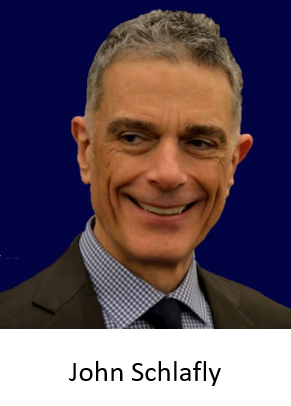
More teachers are quitting government schools as student violence continues to rise. Former eighth-grade teacher Stacey Sawyer of Florida told News Nation Now: “Over the last several years the misbehavior was getting so bad that most of my time in my classroom wasn’t in teaching anymore; I was trying to put out fires. And I got tired of being disrespected.” News Nation says a 2022 study found that one in eight teachers have experienced physical violence and that 84 percent of school administrators blamed the turmoil on the pandemic. Sawyer said the disrespect came not only from students but also from parents. She believes social media is at least part of the problem. “Kids see other kids fighting online and they think it’s cool and say ‘let’s get into a fight’ [at school]. There have been several fights at the schools where I’ve taught and I was afraid of getting caught in the crossfire.” She has witnessed students punching each other and “blood, lots of bleeding from the nose that was just everywhere.” Sawyer knows other teachers who have been physically assaulted by students, “spit on, cussed out, and one even suffered a concussion.” She said the student who caused the concussion was allowed back in school. “They’re not taking care of the problem, and it’s a big problem.” She blames “restorative justice,” the notion that if an unruly student promises to behave, they are rewarded with “a sucker,” as in “everybody gets a trophy.” But in real life, “it doesn’t work that way,” she says. In their November 21 weekly column, John and Andy Schlafly addressed the lack of discipline in the schools. “A third of teachers encounter threats by students annually,” they wrote, “yet effective punishment is not allowed. Instead, liberals are permissive about misconduct until violence occurs, and even then sometimes fail to impose appropriate penalties.” The Schlaflys recommend returning discipline to the classroom, noting that children in schools on U.S. military bases outperform those in other government schools. “The military knows how to discipline its members, without permitting bad behavior until expulsion becomes necessary,” they wrote. They added that the teachers’ unions “should be blamed for turning schools into dens of crime, drugs, and liberal ideology.”
Reflections on Christmas
During her life, Phyllis Schlafly wrote a number of commentaries on the subject of Christmas. Following are just a few of her writings on this most holy of Christian observances.
Why We Celebrate Christmas
Radio Commentary originally recorded by Phyllis Schlafly, December 2015
Amid all the Christmas trees and tinsel and gifts and holiday festivities, let us not forget that today we celebrate Somebody’s birthday, Somebody whose birthday is always remembered even after more than 2,000 years. So let’s take a couple of moments to recall the beautiful story of His birth, as told long ago by St. Luke:

And it came to pass in those days, that there went out from Caesar Augustus, that all the world should be taxed. And all went to be taxed, every one into his own city. And Joseph also went up from Galilee, out of the city of Nazareth, into Judea, unto the city of David, which is called Bethlehem, because he was of the house and lineage of David, to be taxed with Mary his espoused wife, being great with child. And so it was, that, while they were there, the days were accomplished that she should be delivered. And she brought forth her firstborn son, and wrapped him in swaddling clothes, and laid him in a manger; because there was no room for them in the inn.
And there were in the same country shepherds abiding in the field, keeping watch over their flock by night. And, lo, the angel of the Lord came upon them, and the glory of the Lord shone around them; and they were afraid. And the angel said unto them, Fear not: for, behold, I bring you good tidings of great joy, which shall be to all people. For unto you is born this day in the city of David a Saviour, which is Christ the Lord. And this shall be a sign unto you; Ye shall find the babe wrapped in swaddling clothes, lying in a manger. And suddenly there was with the angel a multitude of the heavenly host praising God, and saying, Glory to God in the highest, and on earth peace, good will toward men.
May the peace of the Lord be with you this Christmas as we remember the reason for this joyful time of year.
What Happened One Christmas Night
Radio Commentary originally recorded by Phyllis Schlafly, December 2014
The most important Christmas since the Birth of Christ was the Christmas of 1776. That’s the day a courageous, risk-taking General George Washington turned the tide of the American Revolution by his famous crossing of the Delaware River. Many of his 5,000 soldiers were so thinly clad as to be unfit for fighting. Some soldiers had no shoes, just old rags tied around their feet. Most enlistments were due to expire the first of the year. Washington wrote to his nephew that December: “Your imagination can scarce extend to a situation more distressing than mine.”
Washington developed a plan for his men to cross the Delaware River on Christmas night and attack the Hessian mercenaries who occupied Trenton, New Jersey. His plan risked everything. If it failed, the dream of American independence would die in Trenton.
At dark, the American troops started to board the boats for the crossing. The night was cold and raw. Washington reached the Jersey side at 3 a.m. The storm was in full fury, with sleet cutting like a knife. The troops with Washington made contact with the Hessians at 8 o’clock in the morning. In an hour of ferocious combat, against all odds, the Americans defeated the well-trained, well-fed, and well-rested Hessians. About 9 a.m., the Hessians surrendered.
The Americans took 948 prisoners, including 32 officers and many horses and firearms. A British historian later wrote: “It may be doubted whether so small a number of men ever employed so short a space of time with greater or more lasting results upon the history of the world.” Washington credited his victory to the Lord, writing this order to his troops: “The Providential goodness which we have experienced demand from us the warmest returns of gratitude and piety to the Supreme Author of all good.”
My Favorite Christmas Story
Radio Commentary originally recorded by Phyllis Schlafly, December 2011
By popular request, I’m going to tell you my favorite Christmas story that I first told five years ago on these broadcasts. I have a good friend who has enjoyed a tremendously successful career in television and radio. I going to tell you a true story about one of these media personalities that he personally told to me. Let’s call him Peter.
Peter’s father was a minister, so Peter grew up in a home where his father led the family in lengthy prayers and Bible study every evening. On Saturday evenings, his father had to spend all his time preparing for his Sunday sermon. So he assigned his children the task of memorizing long passages from the Scriptures. Peter said he hated those Saturday nights; they were tedious and difficult for a small boy who surely would have preferred fun and diversion on Saturday nights.
Well, Peter grew up and joined the Army to fight in World War II. He was in the Battle of the Bulge, the bloodiest battle of World War II. The Americans had more soldiers on that European battlefield than were at Gettysburg. The Battle of the Bulge went on from December 16, 1944, all through the Christmas season to January 15. It was the coldest, snowiest winter in anybody’s memory. In this Battle of the Bulge, 19,000 American soldiers were killed and we suffered 81,000 casualties.
Maybe you can imagine what it was like for Peter and a half dozen other GIs, huddled together for warmth in a bitter cold, dark foxhole on the German front that Christmas Eve.
One of the soldiers asked if anybody could say a prayer.
Peter then recited from memory the entire beautiful, inspiring story of the Birth of Christ from the Gospel of St. Luke, giving hope and comfort to those lonely, scared but brave American soldiers. Peter thanked his father many times over for preparing him for that most critical day of his life. It was really a Christmas night to remember.
Education Related Links