Homeschooling Phenomenon Continues to Explode
Many news outlets, including Education Reporter, have chronicled the growth of homeschooling, and few deny that it has become a phenomenon since the start of the pandemic in 2020. The Washington Post recently released new data which shows that homeschooling has increased more than 50 percent since 2018, with 2.7 million students now learning at home, according to Parenting Mode.
The Post reports that it collected “reliable data from 32 states and the District of Columbia, representing more than 60 percent of the country’s school-age population.” The resulting analysis includes “school registration figures for nearly 7,000 individual school districts,” and is, The Post asserts, “the most detailed look to date at an unprecedented period of growth in American homeschooling.”
The data reveal that in some areas homeschooling has increased more than 100 percent since the 2017-2018 school year, including Washington, DC, where the number of homeschoolers has jumped 108 percent. In New York, the numbers have increased 103 percent; in South Dakota 94 percent; in Rhode Island 91 percent, and in California 78 percent. Overall, the total increase was 51 percent. (Examples cited are through the 2022-23 school year except for Rhode Island, where the most recent data available reflects the 2021-22 school year).

In comparison, states that track private school enrollment showed only a 7 percent increase during the same time frame, and government enrollment dropped 4 percent, which is attributed primarily to the growth in homeschooling. In only Georgia and Maryland has homeschooling declined to its pre-pandemic levels, according to The Post, and in Florida, Louisiana, South Carolina, and South Dakota, homeschooling has continued to rise.
The Post analysis found that during “the 2021-2022 academic year, the most recent for which district-level federal enrollment data are available, there was one homeschooled student for every ten public-school students” in nearly 400 districts, “roughly quadruple the number of districts that had rates that high in 2017-2018.” The Post opined that this signifies “a sea change in how many communities educate their children and an urgent challenge for a public education system that faced dwindling enrollment even before the pandemic.”
Statistics from Parenting Mode show that homeschoolers total 6.73 percent of all K-12 students in the United States. Parents who would like to homeschool say the chief reason they have not yet done so is socialization, followed by work schedules and time management conflicts. Homeschooling parents cite concerns about the safety of the school environment followed by poor academic quality as reasons for their decision.
Teachers’ unions fight homeschooling
The Post report admits homeschooling has become “a mainstay of the American education system,” but this admission hardly indicates a shift in the Left’s view of the phenomenon. The Post states that its research “found no correlation between school district quality, as measured by standardized test scores, and homeschooling growth,” despite claims that “the homeschooling boom is a result of failing public schools.” Phyllis Schlafly Eagles leader John Schlafly points out that “the school choice movement constantly calls attention to ‘failing schools’ and presents school choice as the answer. But the reality is otherwise: Few parents in ‘failing schools’ are interested in school choice, while most parents who do exercise choice are not in failing schools.”
The analysis also shows that access to higher performing school districts fails to dissuade some parents from homeschooling, and concedes that “many parents say home education empowers them to withdraw from schools that fail their children or to provide instruction that better reflects their personal values.” It is the latter that appears to be the driving force.
Predictably, liberals are fretting about the several million homeschooled children now learning outside the purview of the government schools, as well as the potential future impact of the homeschooling movement “on society” and the government school system.
Teachers’ unions, for example, have condemned homeschooling for decades in their writings and annual conferences. For many years, Phyllis Schlafly published the radical resolutions adopted by the National Education Association (NEA) at its annual “Representative Assembly,” in both her Phyllis Schlafly Report and Education Reporter.
The NEA’s perennial resolution against homeschooling claims that such instruction “cannot provide the student with a comprehensive education experience” and calls for strict government control of homeschooling. It ends by stating that “home-schooled students should not participate in any extracurricular activities in the public schools.” Fortunately, these punitive recommendations have for the most part been ignored, and instead, state legislatures in recent years have tended to grant homeschoolers more freedom than in the past.
Ironically, American Federation of Teachers (AFT) President Randi Weingarten is taking at least some of the heat for the homeschooling boom. Weingarten has been especially vocal in attacking opponents of CRT and other radical leftist programs and curricula in government schools, and predictably insists that more funding for education would fix the current problems. But as Reason.com points out: “Weingarten has presided over four of the worst years for public schools in living memory. Since 2020, Republicans have closed the longstanding double-digit trust lead Democrats held in education, confidence in public schools has reached historically low levels, and schools are dealing with students who are behind, struggling, or even missing from school entirely after the longest widespread closings in modern times.”
An article in the New York Post called the homeschool boom “the clearest possible thumbs-down on the entire American educational establishment,” and put the blame squarely on the teachers’ unions. The article opined: “[Homeschooling’s] appeal spans every divide of politics, geography and demographics…. The NEA/AFT response is to push their media allies to churn out ‘news’ about the perils of homeschooling, and to finger right-wing extremists as driving the broader push for parental control.
But shouting ‘vast right-wing conspiracy’ doesn’t cut it.”
Parental control of homeschooling
A favorite charge of homeschooling opponents is that homeschooled children tend to be abused, neglected, or exposed to noxious political views, and The Washington Post report mentions this as well. But studies by the National Home Education Research Institute (NHERI.org) show that these students suffer abuse less often than students in traditional schools. In the same paragraph, The Post acknowledges that some homeschooled students “are taught using the classics of ancient Greece.”
Then comes the admission that pinpoints the crux of the matter for homeschooling opponents: “What all [homeschoolers] share is the near-absolute control their parents wield over the ideas they encounter.” But for most homeschooling parents, this is precisely the point — that they alone are responsible for the upbringing and education of their own children.
Many parents understandably wish to protect their children from the destructive pedagogy of the government schools, starting with the discredited “research” of the pedophile Alfred Kinsey, which forms the basis of the Comprehensive Sex Education (CSE) furnished by Planned Parenthood and SIECUS. They wish to protect their children from the bizarre teachings of Brazilian Marxist and “educator” Paolo Freire, which are incorporated into much of today’s curricula including Social Emotional Learning (SEL), and from CRT indoctrination, with its Maoist thought-reform tactics as promoted by the 1619 Project and other racially divisive curricula. (See Book Review, this issue.)
Homeschool academic achievements
Perhaps most laughable in The Post report is the following quote from so-called child advocate and Harvard Law School Professor Emeritus Elizabeth Bartholet, who said in regard to the numbers of students currently being homeschooled: “Policymakers should think, ‘Wow — this is a lot of kids. We should worry about whether they’re learning anything.’” Observers wonder if Bartholet is aware of the dismal National Assessment of Education Progress (NAEP) scores about which Reason.com recently commented: “Only 32 percent of fourth graders could read at a ‘proficient’ or higher level. Thirty-nine percent landed in the lowest score category ‘below basic.’ In math, 35 percent of fourth graders scored proficient or higher.”
Parenting Mode concedes that according to NHERI homeschooling success statistics, “78% of peer-reviewed studies on academic achievements show that homeschool students perform statistically significantly better than students in institutional schools.” This research incorporates data from various studies over more than two decades, including test-score data from the more rigorous Classic Learning Test (CLT). These studies support accumulated anecdotal evidence showing that homeschooled children consistently outperform their non-home educated peers.
But Bartholet is, after all, the same individual who called for a ban on homeschooling in 2020 citing alleged abuse. (See Education Reporter, Summer 2020.) The inconvenient truth for Bartholet and other critics is that for decades, many home-educated students have not only been high achievers but have matured into wildly successful adults, thus proving the lie of their detractors.
Interestingly, Parenting Mode also cites demographic data compiled by the National Center for Education Statistics (NCES) including that 83 percent of homeschooling households have two parents and that nearly half (48 percent) are homeschooling three or more children. For parents considering homeschooling, the annual average cost per child ranges from a low of $500 to about $2,500 on the high end, depending on where the family lives and the type of programs they use, according to Tutors.com (2023 Homeschooling Costs).
Microschooling Flexes its Muscle
In lockstep with the homeschooling boom is growth of the movement known as microschooling, commonly described as education in small learning groups but which some observers characterize as a return to the one-room schoolhouse. While types of microschools vary widely, US News.com described them as “a unique entity, usually registered as an official school and a for-profit business.”
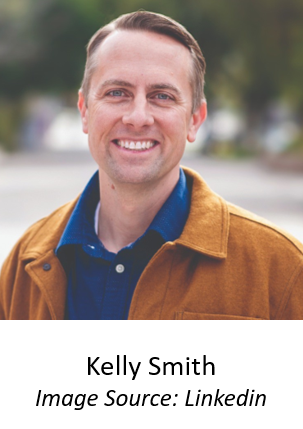
One example of such a company is called Prenda. Founder Kelly Smith describes it as “providing an effective microschool operating system, a learning model that puts the child at the center, and an inspiring and supportive community.” Prenda means “gift” in Portuguese and is akin to the Spanish word “aprender” meaning “to learn,” forming the message that “learning is a gift.” The organization instructs would-be education “guides” on how microschools work and what parents, teachers, or professionals from different walks of life need to know to start their own microschools. Prenda provides learning “modes” that can vary from rigorous academics to more creative and/or social development.
Founder Smith was inspired to start Prenda after he volunteered to teach an after-school class in computer programming at his local public library. As he describes on Prenda’s website: “Soon, the library was packed with kids working on coding projects they were truly interested in — collaborating, solving problems, and having a blast. [The] Prenda Code Club spread from library to library all over the country.”
Essentially, microschools offer individualized learning plans for students, and they often combine multiple age groups. Some “guides” are professional educators; others are not. Some microschools are Christianity-based; many are secular. They can be set up in private homes, church basements, or in rented spaces in storefronts. As U.S. News.com observed: “There are microschools for every grade level from kindergarten through high school.” There are even micro colleges such as the Micro Bard College.
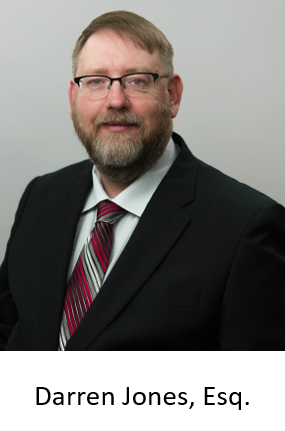
Aside from criticism by the teachers’ unions, colleges of education, and other purveyors of top-down control and leftist indoctrination, some conservatives have also expressed concerns about microschools. The Homeschool Legal Defense Association’s Senior Counsel and Director of Group Services, Darren Jones, told The Washington Post: “In some states, these [microschool] arrangements may not even be legal, because home-school parents are required to deliver all or most of the education themselves…. Only three states explicitly allow for learning pods in state law. Elsewhere, ‘it’s a fuzzy area.’”
But for working parents, microschools can be a godsend. KaiPod Learning Pods, for example, which operate in 16 states, provide a hybrid educational opportunity whereby students learn online both at home and at in-person “learning centers.” KaiPod offers “programs, teaching support, and enrichment activities,” including sports, crafts, cooking lessons, and more.
KaiPod founder Amar Kumar says his educational model allows students to work independently in a communal setting with “independent-minded [adult] educators and entrepreneurs” who guide them through their online courses. The website assures visitors that KaiPod recruits “the highest-caliber educators and provides them with the support and expertise they need to take their dream of running a microschool and convert it into reality.”
Microschools appeal not only to parents who object to government school curricula, but also to parents of children who are bullied, who attend government schools with chaotic classroom situations including disruptive students, and to those whose children simply feel “left out” and isolated.
One single working mother of four told The Post that she “needed to do something radically different” with her children when she could not get help with the three who she said have disabilities. Her 12-year-old twins now attend a Prenda-affiliated microschool in New Hampshire run by a registered nurse turned educator, whose students learn online with her oversight and assistance. Since this mother could not school her children at home, she found a learning pod for one child and a virtual school for another, in addition to microschooling her twins. She told The Post of the opportunity: “It fell from heaven.”
Microschool funding
Microschool parents pay tuition in diverse amounts— Prenda student fees, for example, are set an annual rate of $2,199 for 1st-8th grade students (billed at $549.75 quarterly) and $1,499 for kindergarten students (billed at $374.75 quarterly). Other microschools may charge much more or much less, but both microschooling families and the schools they attend can benefit from a variety of funding sources.
As of November 2023, 13 states have Education Savings Account (ESA) programs in place, including Arizona, Arkansas, Florida, Indiana, Iowa, Mississippi, Montana, New Hampshire, North Carolina, South Carolina, and Tennessee. Families receive financial assistance and the microschools benefit from students whose families can subsequently afford the fees. About half of all current ESA programs are restricted to lower-income families, but all allow parents to use the funds to pay for education-related expenses, including those associated with homeschooling and microschools.
According to Omella.com, an online platform that helps microschool owners simplify their payment and forms processes, financial help with starting and maintaining a microschool are also available through various public and private entities. Potential funding may include grants from foundations that “are specifically designed to support innovative educational models like microschools,” crowdfunding platforms such as “Kickstarter or GoFundMe,” where founders can pitch their educational approaches and missions, and local and regional education initiatives. The website also mentions government grants, community contributions, corporate giving such as corporate social responsibility programs, and venture philanthropy.
One such funding initiative is the Yass Prize, which grew out of the pandemic era, offering an initial $1 million award “to honor and advance the work of education providers who delivered a best-in-class experience during the Covid pandemic.” Today, it’s a rapidly growing effort known as the Yass Prize for Sustainable, Transformational, Outstanding and Permissionless (STOP) education, meaning that it promotes school choice by having public education dollars follow the student, and that it advocates for sustainable revenue streams through the sale of products and services and/or partnering with others “to support students so they do not have to rely on gifting.”
The Yass Prize celebrates education freedom and rewards organizations and states that offer families “the ability to use their state education dollars to make all educational decisions for their children.”
Support for microschools
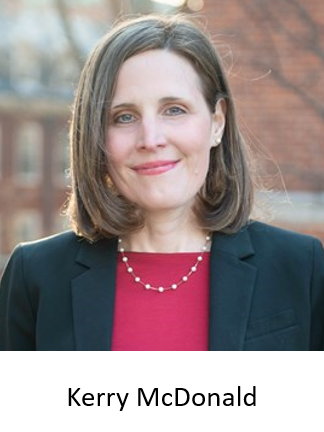
While there may be legitimate reasons for caution regarding microschools, the movement has definitely found a niche. One supporter of the effort is the Atlanta-based Foundation for Economic Education (FEE). In a new article on Fee.org, senior education fellow Kerry McDonald observes that “those who favor top-down control of education feel anxious about this bottom-up education transformation,” a nervousness that she and her organization believe “is occurring on both ends of the political spectrum.”
Be that as may, there is some justification for FEE’s perspective, which opposes top-down control of education and insists we must have “a faith in free people.” As The Post analysis on homeschooling shows, FEE correctly asserts that education freedom “is becoming a greater reality for many families, particularly as more states introduce or expand education choice programs that enable families to access a portion of state-allocated education funding to use toward tuition at private schools, microschools … and various homeschool programs….”
In September, McDonald visited microschools and learning pods in the Kansas City, Missouri-Kansas area, where a Heartland Hybrid & Microschools Summit was held that same month, sponsored by the Kansas Policy Institute.
“Of the seven learning environments I visited in Kansas and Missouri,” McDonald says, “all of them were founded within the past two to three years, and all of the founders are former public-school teachers who quit and created these alternative programs.”
She identified one of the microschool founders as Matt Barnard, who taught in Kansas City-area public schools for 28 years and launched Refine KC in August 2022 with 15 K-12 students. It has now grown to 40 students and 6 teachers.
Refine KC is a full-time, faith-focused microschool located in the leased space of a local church. The $6,000 annual per student price tag is mitigated for at least half the families through fundraising efforts and scholarships. “Like many microschools and similar learning models across the country,” McDonald explains, “Refine KC is a recipient of a VELA Education Fund microgrant.”
The VELA Fund states on its website that it supports “everyday entrepreneurs,” accelerates the “adoption” of education models that “redefine how, when, and where learning takes place,” and increases awareness to make it easier for all families “to access options that best reflect their values.”
McDonald adds that Barnard’s own children “also attend the program, which emphasizes a highly individualized learning approach tailored to the needs of each child.”
Teachers jumping ship
The government school teachers McDonald met are hardly the only ones taking issue with today’s educational environment. On October 29, Fox News reported that teachers all over the country are sounding the alarm about the current state of education in the U.S., protesting for example that students are being pushed to the next grade when they cannot meet basic academic standards.
Atlanta teacher Marquis Bryant stated on TikTok in a post which has since gone viral: “[I’ve] never seen anything like it. I don’t know why they’re not stressing to ya’ll how bad it is. I teach seventh grade—they are still performing on a fourth-grade level.”
Bryant added that many students in his class are “well behind where they should be,” unable to do basic math such as “adding, subtracting, multiplying and dividing.”
Another teacher also complained on TikTok that “her students fail to properly read, decode, have no vocabulary and no background knowledge.”
Some teachers are leaving the government schools for alternative education ventures such as microschool development. According to FEE’s McDonald: “Entrepreneurial parents and teachers everywhere are creating individualized, accessible, and highly creative learning environments in big and small communities across the U.S. If there’s not one near you, build it!”
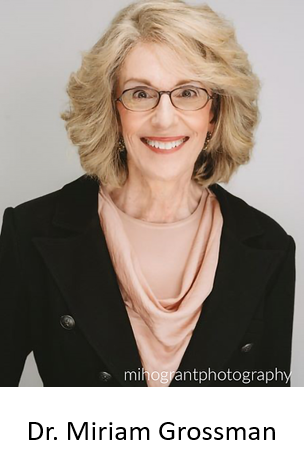
An Interview with Dr. Miriam Grossman
The following is an interview with the eminent Dr. Miriam Grossman, an accomplished child and adolescent psychiatrist, author, and expert on sexual health. Dr. Grossman agreed to take time out from her busy schedule recently to discuss her new book, Lost in Trans Nation: A Child Psychiatrist’s Guide Out of the Madness, and to share some of her thoughts about the incalculable harm being done to young people by the transgender lobby and comprehensive sex education (CSE) in the schools.
Education Reporter: We began by asking Dr. Grossman about some of the key takeaways from Lost in Trans Nation, as we have only recently learned of her new book and have not yet reviewed it Education Reporter Online.
Dr. Grossman: Children are being indoctrinated with false ideas that have no basis in science or medicine; the idea of being born in the “wrong body,” that a person’s identity and feelings are primary, and that biology can be dismissed as irrelevant or immaterial.
A dangerous outgrowth of this propaganda is the idea that it’s “normal” to reject your body, and to avail yourself of medical interventions that will then “align your body with your feelings.” This is a belief system that is not based in science.
Another key takeaway is that there is no evidence these medical interventions benefit young people in the long term. We have evidence that they harm young people, but no evidence that they actually help young people. In fact, a young person’s mental health may get much worse after these so-called transitioning procedures. And we have doctors and surgeons that are performing permanently disfiguring interventions on kids who are not capable of fully understanding what they are doing.
Education Reporter: How do you solve the conundrum of creating parental awareness about this dangerous disregard for science in favor of ideology and how can we encourage the parental involvement that has been increasing in recent years?
Dr. Grossman: It has been very frustrating because I warned parents in 2009 when we published You’re Teaching My Child WHAT?. That’s a long time ago. And the book did not get the attention it deserved. It’s out in paperback now and still not getting the attention it deserves. I’m writing, I’m doing interviews; I’ve participated in lots of documentaries. I’m grateful that the Phyllis Schlafly Eagles are paying attention to my work and helping to publicize it.
I will say that my current book, Lost in Trans Nation, is getting quite a bit of attention from the conservative world. I worked with Jordan Peterson and more than three million people have watched that podcast. I’ve interviewed with Matt Walsh; and Megyn Kelly has been fantastic. These folks have a wide audience, and this [exposure] is saving kids; saving families.
Education Reporter: What is your opinion on the homeschooling movement? Do you think the growth will help stem the tide of leftwing ideology including the transgender madness?
Dr. Grossman: I think homeschooling is really ideal. Parents have a constitutional right to direct the education of their children, and when you send your child to a government school, a public school, and there are also many parochial schools that cannot be trusted, you are often — though not always — putting your child into the hands of activists who are committed to changing society, and sex education itself is about changing society.
Take SIECUS, for example, which changed its name recently and is now called “Sex Ed for Social Change,” so they’re not hiding anything. They’re being perfectly clear that their goal is to change society. And society has changed massively since modern sex education began in 1964 with the creation of SIECUS by Dr. Mary Calderone, who was the president of Planned Parenthood. She had seed money from Hugh Hefner of Playboy Magazine. The goal at that time was the sexualization of society and the rejection of Judeo-Christian values. And they have succeeded.
Education Reporter: The New Jersey NEA chapter held a convention this fall during which one of the highlights was a performance by drag queens. Another feature was an attack on parents whom they accused of “book banning” because parents want pornographic books removed from the schools, as though that’s a bad thing. These people are the teachers who are influencing our kids every day, and this New Jersey group is hardly an outlier. Can you comment on that?
Dr. Grossman: Parents just need to realize that if they don’t wake up to this they are going to pay a price. Sometimes it is an extremely high price. Kids that are recruited into the transgender ideology not infrequently become estranged from their families—completely estranged.
All I can say is that for complacency and ignorance and closing your eyes to these issues — there’s a price to be paid. The kids I see in my office right now who have gender distress; some of them weren’t even born when I wrote my book, You’re Teaching My Child WHAT? with the chapter warning parents about gender ideology. And parents say to me “I didn’t know.”
Parents need to be proactive. I have an entire chapter and appendix in my new book so that parents will understand what’s going on in the schools. Many schools have a policy of keeping secret from the parents the child’s gender issues if that’s what the child wants. The child may be 10 years old and the school puts that child in the driver’s seat, and he or she can pick a new name and new pronouns and can use the opposite-sex bathroom. If the child then comes to the principal or the guidance counselor and says “I don’t want my parents to know,” then the parents are going to be kept in the dark.
Education Reporter: How can we help you?
Dr. Grossman: There is a printable form on my website that parents can download for free, print out, fill out, and give to the principal of their child’s school. This form puts the school on notice that the family prohibits any new name or new pronouns, and that the family does not permit the child to be exposed to these ideas, whether in a class, in an assembly, a club, or through a visitor’s talk. It makes clear that the parents do not allow their child to participate in any of it, and that if the child is exposed, they will hold the school responsible for any damages.
My website offers much in addition that people can learn, and provides easy access to Lost in Trans Nation: A Child Psychiatrist’s Guide Out of the Madness and You’re Teaching My Child WHAT?: A Physician Exposes the Lies of Sex Ed and How They Harm Your Child. Both books are available as audiobooks, and I narrated Lost in Trans Nation myself.
We are pleased to provide the link to the landing page of Dr. Grossman’s website Miriam Grossman MD. A link to the form she describes is readily available so parents can access it for themselves and pass it on to others. We are also providing a direct link here: Sample Parental Notice.
NOTE: Education Reporter reviewed You’re Teaching My Child WHAT? in its October 2023 issue.
Bio: Miriam Grossman MD is board certified in psychiatry and in the sub-specialty of child and adolescent psychiatry. Her practice currently focuses on gender-distressed young people and their parents. She believes every child is born in the right body, and has been vocal about the capture of her profession by ideologues, leading to dangerous and experimental treatments on children and betrayal of parents.
The author of five books, Dr. Grossman’s work has been translated into eleven languages. She has testified in Congress and lectured at the British House of Lords and the United Nations. She is featured in the Daily Wire’s What Is A Woman?, Fox Nation’s The Miseducation of America, and many other documentaries. Her expert psychiatric opinion is sought for witness testimony and court reports.
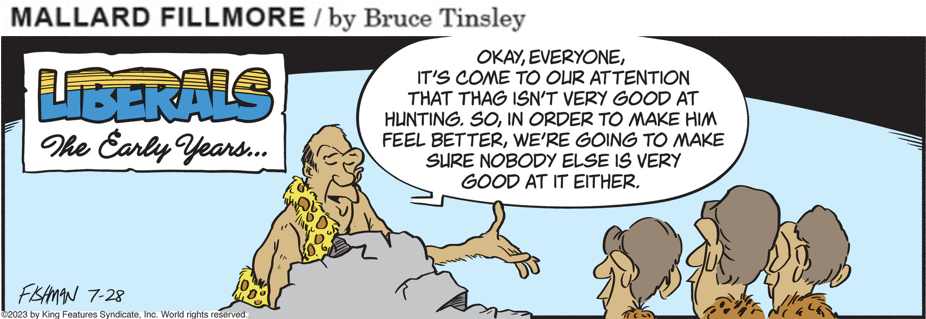
Mallard
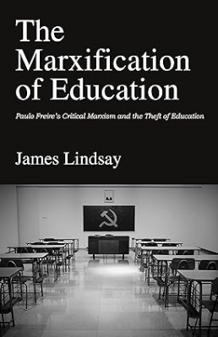
The Marxification of Education: Paulo Freire’s Critical Marxism and the Theft of Education
by James Lindsay, 2022, New Discourses LLC
In this revealing portrait, James Lindsay exposes the little-known but powerful influence of Brazilian Marxist Paulo Freire on the education of American schoolchildren for more than four decades. Lindsay’s exposé completes the picture of what we already know about the major players in the “march through the institutions,” as German Marxist Herbert Marcuse often stated in reference to the Marxist political strategy to influence higher education, which has trickled down through K-12 in the form of comprehensive sex education, socio-emotional learning, and critical race theory.
Researchers who seek the restoration of traditional education, including phonics-based reading instruction, traditional math, the study of Western civilization, and accurate U.S. history and civics, need to recognize the impact of Paulo Freire’s pedagogy, and The Marxification of Education is a good start. Freire’s work is no less important than that of Dewey or any of the major figures who have contributed to the decline of American education.
 The author points out that if parents want to know why their children are quick to join protest marches yet are failing academically, it’s because “our kids go to Paulo Freire’s schools. Chances are,” he writes, “that unless you’re a Brazilian, an educator, or deep into the front lines of the battles in the culture war, you have never heard of Paulo Freire, and have no idea what this means. But Freire is easily the most influential name in education in a century.”
Paulo Freire was a Brazilian-born educator who fused Marxist thought with Catholic Theology to create an education method called “Critical Pedagogy.” The whole of Lindsay’s book fleshes out the details of this subversive yet predominant method by heavily quoting Freire’s most famous written works, The Pedagogy of the Oppressed (1970) and The Politics of Education (1985).
Freire’s books repeatedly invoke Marx, Hegel, Lenin, Mao, Castro, and Che Guevara, but as Lindsay writes, rarely name or “put into application” any actual theorists of education. “Other educational theories would fail by Freirean standards because, to the degree that they work to educate students, they lead students to learn to reproduce the existing ‘oppressive system.’”
Instead of building upon traditional educational theory then, Friere “steps upon a soapbox, denounces it all, and declares a Marxist Theory of Education — while speaking generously of the most notorious Marxist figures in the broader Communist movements of the 20th century.” And here is where Freire injects his twisted view of religion. The author explains: “Learners in this process are meant, in his own words, ‘to be educated so that they can learn to speak the word in order to proclaim it to the world.’” Lindsay adds: “Christian readers are invited to shudder as this is literally the role uniquely assigned to God in the Bible, and learning to do so as men would be tantamount to acquiring the gnosis that we can be gods. That world is the Critical Marxist Utopia at the End of History.”
The roots of Freire’s Critical Theory began in his childhood, when his comfortably middle-class life was plunged into devastating poverty due to political turmoil in Brazil, which eventually led him to reject “colonialism” and embrace “Marxist liberationism.”
He began his work in education “in the context of adult literacy in Third World colonized nations in the 1950s and ’60s, and became highly aggrieved because agrarian peasants who could neither read nor write but were nonetheless at the center of their communities, became displaced when the need to be literate, on someone else’s terms, came to dominate their society.” In other words, progress and new social machinery came to the Third World, but activists like Freire viewed these developments as threats, as pressure to get educated in order to fill a bourgeois-colonizer job on those terms, thus feeding his Marxist-post colonialist view of colonized and industrialized society.
Lindsay describes in detail how Freire’s Critical Theory plays out in the classroom, such as the real role of the drag queen story hours, for example, which take on an even darker meaning when explained in the Freirean context. Essentially, as Lindsay explains, Freire believed the role of the educator should be as a facilitator, engaging students in the process of “conscientization” or recognition and acceptance of reality as unveiled by the facilitator. It closely resembles thought reform; if the student does not learn to become a dutiful Marxist revolutionary, he or she cannot be “truly human.”
The author further writes: “For Freire, a ‘banking model’ education — meaning any approach to education that isn’t ‘dialogical’ on Freirean terms — robs people of what makes them truly human, which is recognizing themselves as ‘knowers’ who can use their [political] knowledge to transform the world.” The “banking model” is the term Freire coined to distort traditional education, including even the collectivist Prussian education model. He thus successfully maligned any form of education “that might actually teach students anything.”
While reading through The Marxification of Education, it’s easy to see how schools have come to disregard basic skills for an emphasis on ideology-based ideas, feelings, and attitudes. In Freire’s world, writes Lindsay, “learning to read and write in the literal sense isn’t what he is interested in or talking about. Maybe people can ‘occasionally’ read or write because they were ‘taught’ in the wrong kinds of literacy campaigns, which do not focus upon ‘political literacy’ and condition them to accept allegedly dehumanizing conditions…. What we see Freire constructing here is a Marxist Theory of knowing, literacy, and education. Literally.”
At the end of the book, the author provides a short appendix, which is actually an executive summary of the entire work. Lindsay added it as an acknowledgement that “parts of this book are admittedly complex,” and “twice as long” as he originally intended. This reviewer believes his concise and informative summary is worth copying as a reference for use in speaking with others and spreading the word about Paulo Freire and his destructive pedagogy, which continues to wreak havoc on American students and families.
To read the entire book, go to Amazon.com to order!
Education Briefs
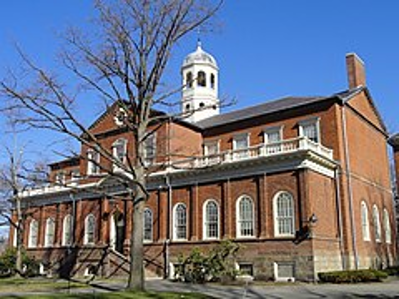
HSLDA’s director of group services, Darren Jones, recently reported on a Harvard University panel he attended that discussed the development of options for homeschoolers to participate in groups and services outside the home. One of the panelists, Bernita Bradley, is the founder of a homeschool co-op in Detroit, Michigan that operates “solely on private grants.” She said she avoids subjecting her organization to “being forced to emulate some of the public-school practices that can be harmful” to her students. Her co-op currently serves 120 Detroit-area families but she believes her core mission is to train parents to homeschool their own children. Another panelist, Emily Hill, runs a “collaborative classical nature academy” for homeschoolers in Colorado. She teaches from a Christian perspective, although the emphasis is more on overall moral instruction. She believes that the basis for the morals parents adhere to “is usually a faith tradition and this sort of religious instruction is just not possible in public schools.” Some panelists lamented that state funding of school choice in some states involves navigating “a host of regulators,” which is why HSLDA and other conservative groups have cautioned against mixing public funding with private homeschooling. The consensus of the panel was that homeschooling is a proven success and that, in the words of the symposium organizers, these emerging models, including co-ops and microschooling, “are moving into the mainstream.” Jones said he talked to parents and education leaders about taking advantage of these trends “to provide new services and opportunities to homeschooling families. HSLDA needs to keep a finger on the pulse of what’s happening in schooling and education-related legislation…. As always, our focus is how to defend and advance the rights of homeschooling families.” Perhaps most interesting about the symposium is the fact that it was held at the liberal bastion of Harvard University.
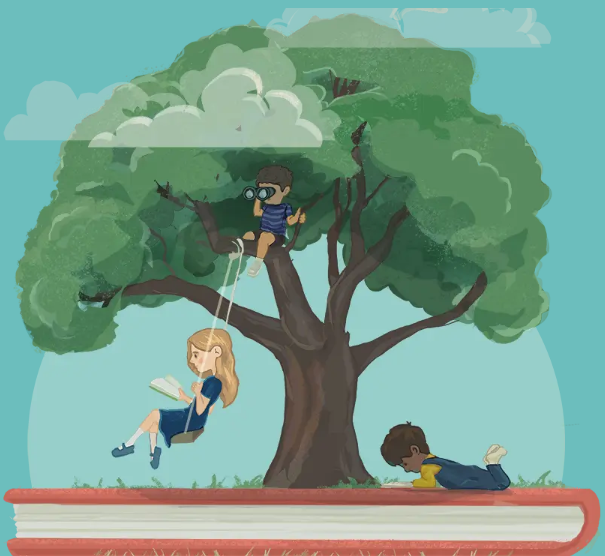
Actor and former child star Kirk Cameron is continuing his quest to foster wholesome reading material for schoolchildren by marketing SkyTree Book Fairs, which he hopes will eventually grow to rival Scholastic. “SkyTree Book Fair and I did a deep dive and discovered the cause of why sexually explicit and disgusting books get into our children’s schools, classrooms, and libraries,” Cameron said. They found that Scholastic promotes objectionable and pornographic books at school book fairs. He cited as an example Welcome to St. Hell, “a 2022 Scholastic book glamorizing gender transitioning to middle schoolers.” In an email promoting SkyTree, Cameron included pictures of a few of this book’s pornographic pages, but had to sensor them because “the original content could violate social media policies against adult material.” Scholastic has held a monopoly for decades on school book fairs, and as Cameron writes, “has fallen prey to the woke mob and radical LGBT political agenda.” SkyTree was developed as a result of Cameron’s first children’s book, As You Grow. Education Reporter followed his quest to secure story hour slots at 50 libraries across the country after his faith-based book was published, and was turned down by all of them until he threatened to sue. Now he’s helping SkyTree bring its book fairs to schools across the country. Cameron says: “SkyTree will not only promote age-appropriate books, but they will do so more efficiently to make it easier for schools to choose SkyTree over Scholastic. And it’s working because SkyTree has already secured its first public school book fair in Spotsylvania, VA.” SkyTree will not offer “race-infused storylines” or “confusing gender content,” but will focus on content that “will nurture childhood innocence and character.” Cameron hopes like-minded parents will help support SkyTree financially, as book fairs are expensive endeavors. Education Reporter will be following its progress.

Scores on the college admissions ACT tests hit a 30-year low in 2023, but instead of confronting the problem, some universities are lowering their admissions requirements. Blaze Media (theblaze.com) reported in October that “high school students’ results have been declining for six consecutive years…. According to ACT, between 2022 and 2023, the average mathematics score dropped 0.3 points, English 0.4 points, reading 0.3 points, and science 0.3 points.” Average scores were below ACT’s “College Readiness Benchmarks” in math, reading, and science, which means they were below the minimum requirements for students to have a “high probability” of success in their college-level courses. Four in ten students met “none of the college readiness benchmarks” this year, with 70 percent failing to meet basic college readiness standards in math. ACT CEO Janet Godwin told Blaze Media: “The hard truth is that we are not doing enough to ensure that graduates are truly ready for postsecondary success in college and career. These systemic problems require sustained action and support at the policy level. This is not up to teachers and principals alone — it is a shared national priority and imperative.” But instead of sounding the trumpet throughout the U.S. education system in an attempt to address the problem at the K-12 level, some universities are adopting “test-optional admissions standards.” Examples include Columbia University, Dartmouth, Harvard, New York University, Stanford, and Yale. Columbia announced in March that it “would permanently drop SAT and ACT testing requirements, becoming the first Ivy League school to do so.” Some observers wonder if these universities no longer value basic academic skills because the goal of creating Marxist activists through Critical Theory pedagogy will continue to be the main focus of students’ higher education.
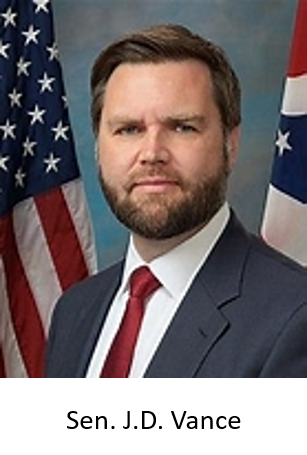
The U.S. Census Bureau wants $10 million to add a question about sexual identity to its “American Community Survey,” which is sent out annually to more than 3.5 million Americans, including recipients as young as 15 years old. An article on Just The News.com reports that the bureau is “under fire for embracing progressive ideology around gender and sexuality and pushing for taxpayer dollars to fund it.” Both U.S. Senators Marco Rubio (R-FL) and J.D. Vance (R-OH) have sent a letter to U.S. Census Bureau Director Robert Santos urging him to scuttle the plan to include the inappropriate questions. Just The News.com says the proposed change appears in the federal register showing that the survey “would ask about both someone’s sex ‘assigned at birth’ as well as asking for someone’s ‘current gender.’ That question would give the options of ‘Male, Female, Transgender, Nonbinary,’ and ‘This person uses a different term’ with an option to fill in the blank.” The budget request for the $10 million claims an “emerging need of our Nation is to improve the measurement of sexual orientation and gender identity (SOGI) population” and that this is “a critical step in producing accurate data.” But the senators contend in their letter that “this could hurt the agency’s credibility in the eyes of the American people. Biology determines gender, not subjective belief, and the bureau should not jeopardize the legitimacy of crucial statistical information by endorsing unscientific and untrue concepts like gender identity. For generations, the American people have looked to the U.S. Census as an unbiased, authoritative source describing the objective reality of life in America. It is not worth sacrificing this trust to advance controversial social ideas through government surveys.” Other organizations, including the Heritage Foundation, also blasted the idea, accusing the federal government of “pushing a political agenda.” The Bureau also reportedly wants to add survey questions about race, but as the Heritage spokesman noted: “It’s time for the administrative state to stop contributing to the division of our country into identity groups.”
Boston University will investigate Kendi Center after ignoring questions for years
Originally published by The College Fix September 27, 2023. Reprinted by permission.
ANALYSIS: The College Fix has questioned Kendi’s work dozens of times in the past two years.
After ignoring questions about Ibram Kendi’s work, or lack thereof, for years, Boston University (BU) will now look into management at the Center for Antiracist Research.
BU will investigate the center’s “culture and its grant management practices,” following complaints. The center reportedly raised $55 million, which includes at least $10 million from former Twitter CEO Jack Dorsey.
“To ensure its long-term impact and sustainability, Kendi made the decision to restructure the center to create a residential fellowship program for antiracist intellectuals, creators, and students,” BU announced on September 21. “He announced the layoffs as part of the restructuring (19 staff people were laid off, leaving a staff at the center of 15 to 17 people moving forward).”
This comes not only after Professor Saida Grundy first raised concerns in 2021, according to the student newspaper, but after The College Fix and other media outlets have questioned Kendi’s output.
BU said it “recognize[s] the importance of Dr. Kendi’s work and the significant impact it has had on antiracist thinking and policy” and looks forward to working with him on the inquiry. But Kendi’s “work” has often been lacking and other joint ventures with the professor have fallen through.
Most recently, and just prior to the public implosion of the center, The Fix reported that Kendi had not written an academic paper in the past four years. The August 21 article noted he had written at least two children’s books in the same period.
In March 2021, The Fix asked: “What exactly does Ibram Kendi do all day,” following original Fix reporting that found the center director had made at least $300,000 lecturing on how America is racist.
The Fix also questioned a promised “Racial Data Lab” in January 2021 that was supposed to be a partnership between Professor Azer Bestavros and the center. When asked for comment on the tracker, Bestavros said it had nothing to do with his work. “Your questions are not about my work or my research,” he said at the time in an email.
The Fix asked him if he had any concerns about Kendi’s ability to follow through on projects — media reporting had shown he failed to deliver on a similar racial data tracker, instead relying on volunteers with The Atlantic. Yet, Kendi cited the “COVID Racial Data Tracker” as an accomplishment of the center in his September 22 statement.
Bestavros did not reply to requests for comment six months later, nor did Kendi’s team respond. The Fix frequently reached out to Boston University, including spokesman Colin Riley and other Kendi associates, for comments over the course of [writing] two articles on Kendi’s tracker and a third one about the now-ended relationship with The Boston Globe.
The Fix reached out to at least seven different Kendi associates or representatives a total of twenty times for just those three articles. In all cases, requests for comment were ignored or not substantially answered.
Kendi did comment on the situation in a post on X, formerly known as Twitter.
While acknowledging “missteps” he also played his favorite card, saying that “[l]eaders of color and women leaders are often held to different standards” and called his center’s work “crucial” for “antiracist” efforts.
Matt Lamb has previously worked at Students for Life of America, Students for Life Action and Turning Point USA. While in college, he wrote for The College Fix as well as his college newspaper, The Loyola Phoenix. He holds a B.A. from Loyola University-Chicago and an M.A. from the University of Nebraska-Omaha. He lives in northwest Indiana with his family.
Education Related Links