Classical Christian Schools: Their Truth is Marching On
A school building constructed in the 1920s will soon be home to a brand new Christian school called the Cornerstone Christian Academy. It will be the second Christian school to debut in Loudoun County, Virginia in as many years, with the opening of Evergreen Christian School to high school students in Leesburg last fall.
As many observers recognize, Loudoun County has been ground zero for a parents’ rights movement that took off during the COVID-19 pandemic, and parents have been abandoning the public schools ever since.
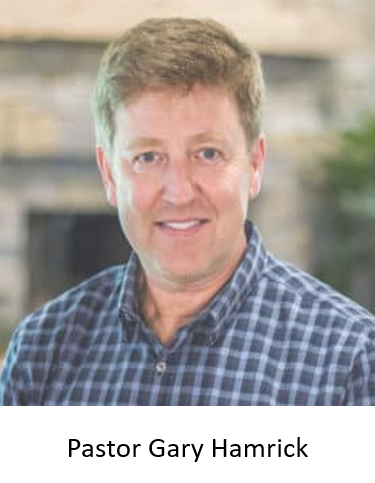
The Christian Broadcasting Network (CBN News.com) reported on July 7 that Cornerstone has received at least 2,500 applications. The projected enrollment for the first year is 500 students, a nearly unprecedented number for a school that won’t open until the fall of 2023. It is representative of the desperation level of many parents to find a new educational option for their kids.
Founded by Senior Pastor Gary Hamrick and the Cornerstone Chapel in Leesburg, Virginia, the new K-8 Christian school is located near Middleburg, about 20 miles from the church. CBN News reported that the school building, most recently occupied by the Middleburg Academy, a fully independent, nonsectarian school that closed in June 2020, “has classrooms, desks, a gym, cafeteria, and enough space for 500 elementary and middle school students.” The church anticipates expanding the school by adding a grade level each year until it accommodates all K-12 grades.
Making the big announcement
In announcing the new school to his congregation in February of this year (which is included on the Cornerstone Chapel website), Hamrick recounted the horror stories coming out of the Loudoun County Public Schools, including the high-profile school board meeting confrontations, the two on-campus sexual attacks which the board and the administration attempted to cover up, and the teaching of transgender ideology and CRT in the classrooms.
For Hamrick, the final straw was the dismissal of teacher Tanner Cross for refusing to call students by preferred pronouns. He recalled asking himself: “What can we as a church do to help rescue parents, students, and teachers from the school system and create an environment where students can learn and teachers can teach from a biblical worldview?” His decision to found Cornerstone Christian Academy received a standing ovation from church members.
Hamrick admitted that he wanted to start a school 30 years ago, but explained: “To be honest, the idea of starting a Christian school then was a nicety, today it’s a necessity.” He stressed that he does not want to disparage all of Loudoun County’s public schools, and that “there are some wonderful teachers and staff. But I make this announcement because things have changed, and we want to offer an option… This is a beautiful place the Lord is providing us.”
He described the 90-day feasibility study that had to be done before the contract to purchase the school property could be completed, which proved satisfactory. He described how the school looked with its 22 classrooms, music room, athletic fields, including a high school regulation baseball field, and said: “Hand us the keys. We’ll be glad to make use of it.” He added that as the property has been vacant for two years, it does need some updating, including a new HVAC system and an upgrade to the water treatment system, which precluded their being able to open this fall, and instead had to push it back to fall 2023.
Although the contract is finalized, no students have been enrolled thus far, nor have tuition rates been set. But the overwhelming level of interest that followed the public announcement all but guarantees the school will be a success. Hamrick hopes to get an endowment to fund the school, and he acknowledges they have been receiving donations since the announcement was made. There are plans to offer scholarships.
Hamrick told CBN News that “he has heard from parents in 27 states eager for their children to attend.” He has also been contacted by many teachers interested in the new school, noting that so far, he’s received “over 450 emails from teachers wanting employment.”
Public school enrollment declining
Loudoun County’s community news source LoudounNow.com observed that the news about Cornerstone “comes just months after Loudoun County Public Schools recorded a 7% drop-off from projected enrollment — missing about 5,000 students.” It’s a phenomenon that has been reported nationwide during the past two years.
An August 5 commentary in The Washington Stand, a Family Research Council (FRC) publication, noted that since 2020, “a mass exodus of over 1.2 million students has left the public school system as parents seek alternative education routes, such as public charter schools, private schools, and homeschooling.” The article might also have mentioned classical Christian schools like Cornerstone, which are popping up in many states—some as charter schools, although, as Pastor Hamrick clarified: “We’ll be apart from the government schools so we will not be a charter school.”
The Stand quoted FRC’s senior fellow for Education Studies, Meg Kilgannon, who noted: “There are more and more challenges for public school systems across the country: teacher shortages, medical overreach, falling test scores, disciplinary issues, and even violence. Add to that the fact that parents rightly felt betrayed not only by prolonged closures in some regions, but also by overly political and sexual content in curricula.”
Whether or not public-school enrollment continues to decline remains to be seen, but parental discontent with the increasingly extreme indoctrination shows no sign of letting up. Charter school enrollment has grown by seven percent, and enrollment in parochial Catholic schools is higher than it has been in 50 years. The number of homeschooling households has continued to rise as well over the past several years.
Cornerstone to fill a growing need
As a Christian school offering a solid curriculum from a uniquely scriptural perspective, and entirely independent of any government support, Cornerstone will be filling an educational niche that is growing across the country.
Hamrick admits he expected a lot of interest in a Christian school option that will incorporate classical elements, but said Cornerstone would be working with other Christian schools in the area as a partner, not a competitor. “We’re offering this alternative because we’re concerned with the trends we see in our culture as we get closer to the return of Christ. We have to look at how we are going to build one another up and support each other in the Lord. This is one of the ways.”
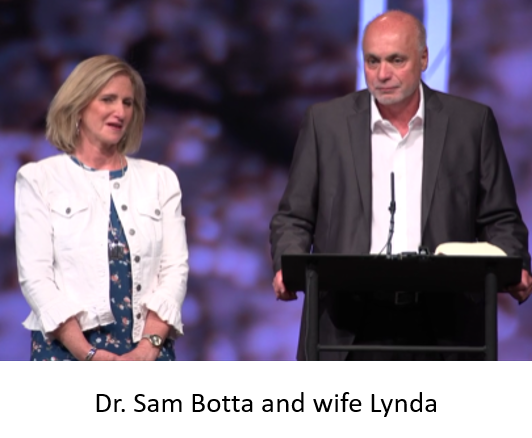
On Father’s Day 2022, Cornerstone Chapel Senior Pastor Gary Hamrick announced that Dr. Sam Botta would head his church’s new Cornerstone Christian Academy. Education Reporter welcomed the opportunity to visit with the new chief administrator about his new position.
A New Jersey native, Dr. Botta is a former principal and assistant superintendent of Christian schools, and also taught in public schools. He is a licensed minister and has logged time as a basketball coach.
Botta says he is grateful and humbled by this new opportunity God has given him, and believes that, contrary to the stated belief of some public officials, “parents are the primary educators of their children.” He makes clear that parents “will be welcome in our school” and that “we are going to link arms so that all God has created your children to be we will help them become.”
He relishes the exciting fact that he is part of a team that is building a school from the ground up, a very challenging yet gratifying prospect. “The determination of curricula, the hiring of teachers and staff; pretty much everything down to the ordering of paper clips is now part of my job description,” he jokes, albeit with some gravity. “Of course, the Word of God will be the cornerstone for everything we do.”
As for the curriculum, Botta’s team will pull from the very best of the classical elements to ensure that students receive a sound academic foundation while developing a strong Christian worldview. “There will be some distinctive features of our school,” he explains. “We will stand on truth and not shy away from objective truth, such as the preciousness of life, the fact that we are all created male or female, that marriage is between one man and one woman; those truths the world does not want to hear.
“What we will identify as ‘calling prep’ will also be part of our curriculum,” he adds. It’s a concept we glean from Psalm 139, verse 14 in scripture, that ‘we are fearfully and wonderfully made.’ This means each student’s school experience will be to discover how God has wired him or her. For example, some students will go on to college while others will take up a trade or have a different type of calling.”
In introducing his new Cornerstone Academy Head to his congregation in June, Pastor Gary Hamrick revealed that Dr. Botta’s “was the first application we received, and even though we combed through hundreds more after it, his remained at the top of the list.”
Interestingly, it was at his wife Lynda’s urging that Dr. Botta applied, and he is glad he listened to her sage advice.
Important Questions for School Board Candidates
The April 1998 Education Reporter included a comprehensive questionnaire designed for distribution to candidates running for local school boards. Given the recent successful efforts by parents and concerned citizens to replace liberal school board members, now may be an opportune time to provide readers with an updated version of that questionnaire in a format they can download and use as they see fit.
Just this past May, conservative school board members were elected by fed-up voters to ten seats in school districts in and around Fort Worth, Texas. Three incumbents were replaced by candidates who were demanding transparency, an end to forced masking, and an end to the teaching of CRT. They were hardly the only examples, and these victories highlight the frustration parents feel at the refusal of the teachers’ unions, school boards, and school administrators to respond to their concerns.
Below is a model school board candidate questionnaire that can be used to query local candidates during this fall’s election cycle and into 2023.
For a printable copy, click here.
| School Board Candidate Questionnaire |
|---|
|
|
| ACADEMICS: |
|
| POLICY: |
|
| PARENTS’ RIGHTS: |
|
Sexualizing Children with Inappropriate Curricula and Pornographic Library Books
Last month, it appeared that the Miami-Dade School District Board, which governs the largest school district in Florida and the entire southeastern United States, would inject some sanity into the relentless push to sexualize schoolchildren.
On July 23, The Washington Stand reported that the Miami-Dade board voted five to four against the adoption of two new sex education textbooks that had been under scrutiny for months and which a number of parents found objectionable. But just a week later, the board reversed its decision and approved the textbooks.
According to Politico, parents submitted 278 petitions against the new materials, titled Comprehensive Health Skills, arguing that “the lessons extend beyond what schools should be educating students on [about] sex.” Issues cited include instruction on gender orientation, abortion, and emergency “Plan B” contraceptives, which some parents consider inappropriate. While the district denied the petitions, the board initially voted down the textbooks.
Politico reported that school board members who rejected the books criticized their peers for taking up the issue again “when the ink is still wet” on the decision. But board chair Perla Tabares Hantman, whose “flipped vote made the difference” in the ultimate approval of the books by the close five-to-four margin, claimed to have voted yes out of fear that rejecting the books could cause the school district to be in violation of state standards.
Board members who voted to approve the books pointed out that under Florida law parents can opt their children out of sex education lessons, and advised school district leaders “to blast that out to the community.” But many parents would prefer the “opt-in” choice for controversial curricula and activities because they often fly under the radar with no clue given as to what children are learning.
In yet another twist to this story, the August 23 primary election brought a change to the Miami-Dade School District Board. Phyllis Schlafly Eagles President Ed Martin reported that the board “saw a landmark shift from a leftist majority to a conservative [majority]”. Martin said: “These huge victories are due not only to concerned parents, but to the great help and organization of grassroots groups like the 1776 Project PAC and their team. Conservatives need to realize that if we’re going to save America and return to our root values of liberty, we’re going to have to do it from the ground up!”
Disguising LGBTQ advocacy
While many states have passed laws restricting or prohibiting ideological indoctrination in K-12 classrooms, public school districts have continued to include it anyway. The covert teaching of Critical Race Theory (CRT) has been the most highly publicized offense, but schools also hide gender identity and transgender propaganda under the banner of mental health and suicide prevention.
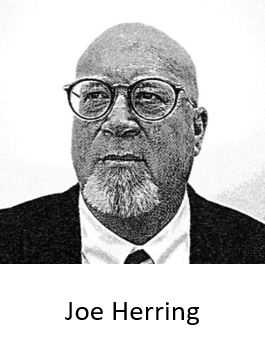
To avoid the overt “grooming” of students, which has led to parent protests at school board meetings, school staff are being taught through professional development workshops and seminars to disguise their sexualized teaching. Independent investigative journalist Joe Herring described one such event in an op ed published online by The Lion, a publication of the The Herzog Foundation, a charitable group “dedicated to the development of quality Christ-centered K-12 education.” Herring wrote that the Lincoln, Nebraska Public Schools in early August required school counselors, nurses, social workers and other health-related personnel to attend a “mandatory professional staff development workshop” presented by “self-described transgender author and speaker Ryan Sallans.”
Billed as a presentation on “human growth and development,” Herring wrote that “the workshop was instead thinly veiled advocacy for LGBTQ and transgender lifestyles.” Sallans, a biological female, “clearly delineated the tone at the outset by describing a failure of school staff to ‘use a student’s preferred pronouns’ as ‘harassment.'”
According to Herring, a common theme of all Sallans’ presentations is that “transgenderism is just another of life’s circumstances to be respected, like race or ethnicity.” Indeed, LGBTQ activists have for years compared their lifestyle preferences to immutable racial traits.
Herring’s op ed also described a larger conference that was held in May in Nebraska with more than 500 educators in attendance. “Resiliency, Advocacy and Celebration was the theme for 2022,” Herring explained, “as keynote presenters and more than 30 breakout workshops framed hotly debated issues such as transgenderism, gender identity and LGBTQ activism as entirely normal phases of child development.”
Herring added that, at the August event, Sallans promised that transgender people and their supporters “are going to put Lincoln, Nebraska on the national stage for the trans community with all their efforts to help kids transition.”
As he pointed out, “what was billed as an exercise in raising awareness and promoting understanding quickly morphed into a clarion call for social/sexual upheaval among schoolchildren — paid for by taxpayers in the name of ‘mental health.'”
Libs of TikTok exposes pornography in school libraries
In at least one school district, parents are being denied access to school library catalogs and thus prevented from reviewing the books that are available to their children. Libs of TikTok reported on July 29 that through a FOIA request initiated by outraged parents, an email surfaced from South Carolina’s Richland School District Two officials “demanding [that] the library be locked.”
Libs of TikTok published the email, which was originally written last year by Amy Whitfield, Richland Two’s Lead Library Media Specialist and which resurfaced on June 13. The email reads in part: “Considering the current political climate and scrutiny of school library collections, Nancy Gregory, Richland Two’s Chief Academic Officer, has asked that we remove guest access to our library catalogs to prevent access by anyone outside of Richland Two who may have malicious intent in searching our library collections.”
One wonders if “malicious intent” refers to parents wishing to discover what their children are exposed to in order to protect them from objectionable and, in some cases, hard core pornographic content.
Libs of TikTok quoted parent and school board candidate McGee Moody, who said: “Schools are trying to push an agenda. They don’t want parents to know what’s going on in the classroom. When you block off a library, it tells me you have something to hide; there’s something you don’t want people to see, and that’s a huge red flag.”
The library lockdown did not prevent parents from accessing the catalog, however. Several of the district’s elementary schools use a different system to access library information online, and parents were able to view the catalog despite the district’s efforts to hide it.
Among their findings were 29 books for middle schoolers on gender identity, including stories about “transgender kids using opposite sex bathrooms, cross-dressing toddlers, and our “‘racist’ Founding Fathers.” High school offerings included outright pornography, such as Flamer, a book containing sexually explicit content.
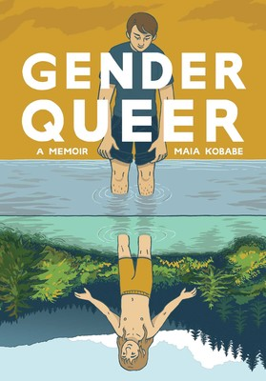
Sadly, Richland District Two is hardly unique. Libs of TikTok tweeted that the Jefferson County Public Schools in Louisville, Kentucky, include in their libraries such pornographic books as Gender Queer and Lawn Boy. A parent who boldly read excerpts from these books at a school board meeting was shut down when board members objected to the “obscene” content. The parent pointed out that this was exactly her issue, but the board nonetheless cut off her microphone, a familiar tactic of school boards that prefer not to hear the truth about the pornography on their district library shelves. One board member labeled anyone who opposed the books “anti-LGBTQ” to deflect from the graphically obscene content.
Twitter responses to the post mostly condemned the books and the school board’s action in stifling the mother’s testimony. One user commented: “This isn’t the first time it’s happened during a public board meeting and it won’t be the last. Their defense usually ends up being ‘we didn’t know it was there.'” Another user said she tells her kids to “check out the book” and then “burn it.”
Oregon School District in hot water
The Salem-Keizer School District, which is the second-largest district in Oregon, was also exposed for having the pornographic Gender Queer in school libraries, and parents were outraged that this book was available to their kids.
As reported by Libs of TikTok, the district pretended to respond to parents’ concerns by forming a special committee to evaluate the book. Chosen to head the committee was Suzanne West, director of strategic initiatives for the district. West’s job description reads: “Crafting and developing strategies that support the district’s movement to become a more anti-racist and anti-oppressive school system.”
West and her committee complained that the pages containing pornographic depictions were taken out of context and “do not represent the intention of the book and only served as an illustration…” A logical question is “why is it even licit for the public-school system to provide underage students with graphic illustrations of sex acts?”
Perhaps more telling than anything is this statement by the committee: “It being a graphic novel makes the book more accessible to a variety of readers,” an obviously inadvertent admission that at least some if not most of the district’s middle and high school students have limited or non-existent reading skills. But fear not, students will be exposed to graphic sexual acts anyway through library books such as Gender Queer.
Despite the committee charade, the Salem-Keizer School District will keep this book in its libraries “to help be more inclusive and allow all students from the LGBTQ+ community to have a resource to refer to.” But as Libs of TikTok noted: “The individuals choosing to provide this book to children won’t even allow it to be read at a public hearing. How is a book considered too graphic for the public but deemed ‘inclusive’ for children? Why do they want what they’re teaching our children to be kept a secret? Why are parents routinely shut down when they voice their concerns?”
The answer to these questions is clearly that the progressive left aims to continue forcing its extreme agenda on education by labeling all who object as “bigots,” “transphobes,” “haters,” and “book banners.” Parents and concerned citizens need to push back by removing their children from public schools if possible, and to continue electing conservative, pro-family school board members as the opportunities arise. (See our School Board Member questionnaire in this issue of Education Reporter.
Pornography Damages Children and Teens
A critical element of the often-tragic stories that result from the exposure of youth to pornography is the psychological and physical damage it causes. While most adults would agree that pornography is especially harmful to children, many of these same adults sanction the teaching of explicit sex education in the schools, as well as the inclusion of pornographic books in school libraries.
An organization called Protect Young Eyes published a list in 2021 of five ways pornography attacks the developing brains of children and ultimately twists their views of sex, relationships, and other people. The article is titled 5 Ways Pornography Harms Children and Teens and describes in some detail its physical impacts on the developing brains of the young.
At the time of publication, 5 Ways asserted that “90 percent of children ages 8-16 have seen online pornography.” Since one of the last regions of the brain to fully develop is the prefrontal cortex, which the article describes as “the ‘brakes’ of the brain,” young people can easily sustain neurological damage from exposure to pornography due to their inability to fully control how they react to what they see. The prefrontal cortex is typically developed by age 25.
Following is a synopsis of the five ways pornography impacts children and teens according to Protect Young Eyes:
- Pornography harms a child’s precious brain. It actually changes neural pathways.
- Pornography harms a child’s view of sex. How it appears on the screen (or shown in books and magazines) is not how it is in real life.
- Pornography harms a child’s view of people. Porn diminishes the ability to see a real person.
- Pornography harms a child’s quality of life. Because it is a super-normal stimulus, kids can’t stop watching, which causes loss of sleep and time.
- Pornography causes children to harm other children. When young kids see pornography, they practice pornography on other children.

The article explains that the brains of young people are “hypersensitive to reward stimuli. Meaning behaviors can become habitual VERY quickly. Neurons in the different regions of the brain comprising the reward system communicate using dopamine … It enhances reward-related memories and creates emotional associations with rewards … It’s not the reward itself, but the expectation of a reward that most powerfully influences emotional reactions and memories.”
While young children most often encounter pornography by accident through the idle electronic devices of adults, such as a computer screen with images carelessly left in view, the results of exposure can quickly become disastrous. In these cases, it is the responsibility of parents and other adults in the child’s life to protect them from such digital dangers.
Many observers place the blame for problems children and teens experience with pornography squarely on the failure of parents to monitor internet access, and surely parents and adult caregivers have grave responsibility in this arena. One psychologist Education Reporter spoke with, who preferred not to be named, charged that unmonitored and unregulated use of electronic devices and screens were almost entirely at fault for the explosion of youthful addiction to porn, and most professionals would likely agree with his assessment.
But the blame must also rest with schools, particularly when parents object to explicit sex education, transgender indoctrination, and pornographic library books, yet the schools refuse to listen, or when they deliberately hide these activities. Although some public officials believe schools should displace parents when it comes to education, this is a fallacy, and these officials must be held accountable at election time.
The 5 Ways article does not limit its content to the dangers posed by pornography, but provides ways parents can safeguard their children through the use of digital protections, and offers additional advice parents may or may not wish to take.
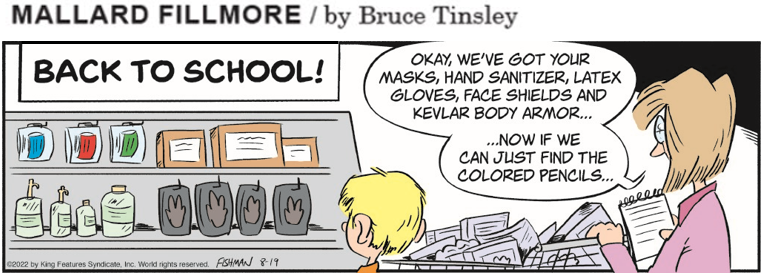
Mallard
First Reader; Turbo Reader
by Phyllis Schlafly, 1994, 2001 respectively
The new school year is already underway across the country, and parents should want to be sure their children are learning the most important educational skill of all: how to read and to understand what they read. If a child is not taught to read by the end of first grade, chances are he will have a much harder time becoming a proficient reader, and will fail to advance academically or learn to become an independent thinker.
Decades of research shows that children best learn to read by sounding out words through the phonics method rather than by memorizing a body of common words and guessing at others, also known as the whole language or sight word method. Often, teachers of older students complain that their kids cannot read, and that the schools put enormous pressure on them to “accommodate” these students. Most likely, all the “accommodation” these kids need is proper instruction using a good phonics-based reading program properly so they can learn to unlock the sounds and syllables, read words, and then quickly progress to reading sentences.
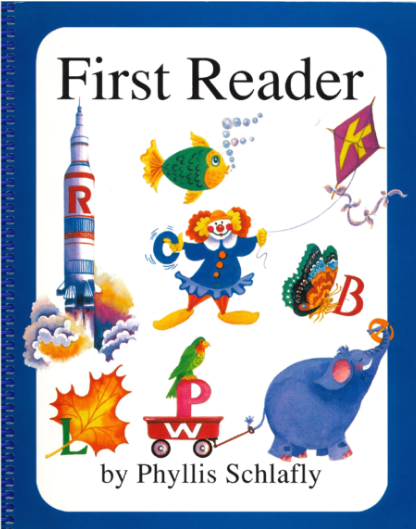 Parents can help their children avoid these pitfalls in both public and private schools by availing themselves of two wonderful, affordable teaching tools: First Reader (for young children), and Turbo Reader (for older students and adults). Both First Reader and Turbo Reader use the same reliable phonics instruction system developed by the late Phyllis Schlafly.
During her extraordinarily accomplished life, Phyllis was a passionate advocate of literacy, in particular, for teaching children to read by phonics before they enter school. In 1995, she made an important speech at the annual CPAC (Conservative Political Action Conference) conference about the alarming level of illiteracy in the U.S. and the problems created by the teaching of whole language. (Click on the image above to hear this great speech to the CPAC attendees.)
When asked the question what was the “most fulfilling thing” she had ever done, Phyllis famously responded that it was teaching her six children to read, and she knew from experience that the traditional phonics method was the most reliable way to teach them. She said: “Reading is the adventure of teaching the child to sound out letters and syllables and then say the word.”
Both First Reader and Turbo Reader are easy to use and teacher-friendly. Because they employ a tried-and-true method, they never go out of style or need to be replaced, which means they can be handed down and used over and over again. First Reader is colorful and appealing to children of preschool age through first grade, and it also has an optional First Reader Workbook that helps teach them how to write words, and works in conjunction with First Reader. Turbo Reader follows the same logical sequence in a format more appropriate for older students, taking them from sounds to words to stories in a matter of weeks.
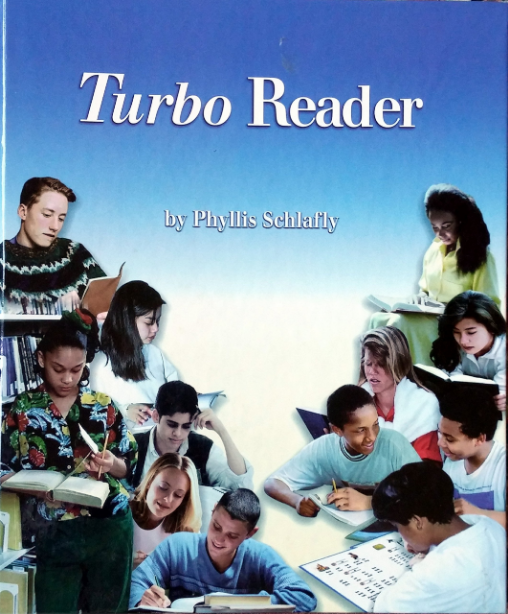 It’s important to note that any teacher, whether public, private, charter, or homeschool, can teach their students to read using Phyllis’ time-tested method. Over the years, users of both First Reader and Turbo Reader have commented on the ease and effectiveness of these important tools.
For example, a 2020 review by the mom of a five-year-old boy on Amazon.com said of First Reader: “We have tried several books and programs to teach him to read because he was showing great interest. However, none were really enjoyable for him [but] this one seems to progress at just the right pace to give him enough practice on each topic while not boring him from too much repetition. Also, it has pictures which he loves, but the pictures don’t give away the words or sentences, which is a huge plus for me!”
Other comments attest to the user friendliness of the system and the fact that it requires “very little instruction.” Another reviewer wrote: “I had gotten lots of suggestions for reading curriculum from friends and family, but they were either heavy handed on the reading principles that seemed to overcomplicate and overwhelm … or they skipped the phonics altogether and only trained sight reading. I’m so glad that I kept looking! What a treasure.”
Reading skills come easy to children taught to read using First Reader and Turbo Reader. Don’t let your children (or grandchildren) miss out.
Education Briefs
California’s Oakland Unified School District teachers ditched phonics in 2015, resulting in the total failure of students to learn to read. Now they are reembracing phonics. On August 20, The Daily Wire reported that Oakland schools, which once had one of the most successful reading programs in California because it was phonics-based, lapsed into failure after abandoning it over fears that it smacked of “colonialism,” better known today as “white supremacy.” To the Oakland teachers, apparently nothing symbolized white supremacy more than teaching all children, including minority and low-income children, to read successfully so they can grow up to achieve the American Dream.
In the interests of social justice then, these teachers convinced the district to switch to “a whole language approach, and student reading rates plummeted.” Now, fourth- and fifth-grade teacher Kareem Weaver admits he is “part of a nationwide movement fighting to bring back the phonics-based approach.” But as The Daily Wire pointed out, if Weaver and his colleagues had “looked at the data when ditching phonics in the name of social justice, he would have avoided implementing a system that makes children dumber and illiterate. Better yet, had he listened to conservative icon Phyllis Schlafly, this entire ordeal would have never happened.” The Wire went on to discuss Phyllis’ First Reader, its effectiveness and its ease of use. (Click on the image to hear Phyllis’ 1995 interview about First Reader.) The real tragedy is how many children have needlessly been lost to illiteracy in the Oakland School District since 2015.

Florida’s new plan to recruit veterans could fill 9,500 open teaching positions in the state’s public-school system. As Governor Ron DeSantis explained in announcing the initiative: “Our veterans have a wealth of knowledge and experience they can bring to bear in the classroom, and with this innovative approach they will be able to do so for five years with a temporary certification as they work towards their degree.” The Hill reported that to be eligible, veterans must have at least four years of military service with an honorable or medical discharge. They do not need a four-year college degree, but must have earned a minimum of 60 college credits with at least a 2.5 grade point average and must pass a background check. The Florida teachers’ unions have decried the plan, charging that it “will not solve the biggest issues educators are facing — low pay and lack of respect.” They might have added that many teachers are weary of union bullying and being forced to teach CRT and other woke curricula. The liberal media have also trashed the initiative. Incredibly, after viciously attacking every positive move Governor DeSantis has made, MSNBC’s Joy Reid blogged that “taken together, these policies threaten to turn classrooms from centers of healthy education into centers of indoctrination.” But it’s difficult for her lies to stand in the face of parent uprisings, the overturning of liberal school boards, and the desperate flight of teachers from the public schools — all of which reveal the inconvenient truth.
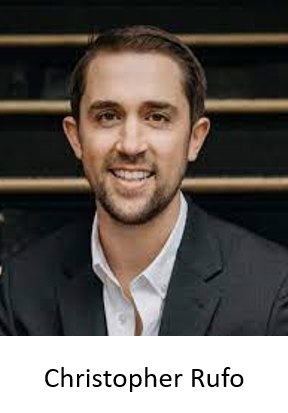
Kindergartners in Portland, Oregon, will be taught gender identity lessons that “seek to turn the principles of academic queer theory into an identity-formation program for elementary school students.” As Christopher Rufo explained in a recent City Journal article: “The premise is simple: privileged white heterosexuals have created an oppressive gender system in order to dominate racial and sexual minorities.” Activists routinely present as fact the misleading notion that immutable racial or ethnic traits can be compared equally to sexual preferences. But this curriculum takes on an even more sinister tone because it suggests that indigenous peoples had different views of gender — like those of today’s woke liberals of course — than did the “white European people who brought their views of gender with them and forced them upon the people already living there.” This begs the question of whether there is any real evidence that indigenous peoples believed such lunacy. Rufo reveals that the brainwashing begins in kindergarten “with an anatomy lesson featuring graphic drawings of children’s genitalia. The lesson avoids the terms ‘boy’ and ‘girl’ in favor of gender-neutral variants…” According to the curriculum, “some girls can have penises and some boys can have vulvas.” These lessons grow increasingly intense as grade levels go up, with first and second graders receiving indoctrination in “the key tenets of gender-identity theory.” By fifth grade, kids are asked to make commitments that effectively turn them into what Rufo calls “political activists for queer theory and the broader sexual revolution.” All we can hope for is that parents will revolt — which cannot come soon enough.
Classical Education, Declassified
When I was a junior in high school, my mom told me she had read about a small school named Hillsdale College in a book called Colleges that Change Lives. It dawned on me for the first time that I did want college to be a life-changing endeavor.
I was hooked on Hillsdale after my first visit, when I learned that, as a classical liberal arts school, Hillsdale was less concerned with churning out the next generation of workers and more concerned with caring for the minds and souls of its students, helping them through their personal and intellectual metamorphoses.
I had never heard of classical education before my visit, but it immediately seemed to respond to some of the anxieties I felt about the adult life that loomed before me. I feared the monotony of a corporate job, the emptiness of shallow friendships and relationships, and the overall hollowness of a life with much toil and little reward.
Classical schools like Hillsdale are beginning to surface more and more in nationwide discussions about education as parents and educators alike determine the best way to proceed with education in a post-COVID era. Classical education appears not only at the collegiate level, but also in the form of K-12 schools.
The defining characteristic of classical education is in the name: it’s about the classics.
Classical education is centered on the Western tradition, which is the study of European and American history, literature, philosophy, and theology. The Western tradition spans from the ancient times until the early to mid-20th century. Students learn subjects that have long since disappeared from classrooms, like grammar, sentence diagramming, phonics, theology, philosophy, Greek, Latin, logic, rhetoric, and the Great Books.
In part, classical education focuses on the Western tradition because that tradition makes up the foundation of modern American life. Though some might like to believe that modern life is completely separate from and unrelated to the past, modern life is both a continuation of the past and a deviation from it.
When I got to Hillsdale, I realized that great literature was made up of much more than memoirs and intellectually lazy, dystopian young adult novels. At Hillsdale, my eyes were opened to an entire world of writers and philosophers whom I had never previously read, and who treated questions about truth, religion, and objective morality with the precision and depth that such fundamental topics necessitate. The Great Books were complex, and did not pretend that modern man’s disdain and apathy toward truth must mean truth does not exist.
I learned about prominent thinkers from the Western tradition— such as French philosopher Alexis de Tocqueville— who predicted some of our modern problems.
In his Democracy in America, which he wrote during a trip to the United States in the early 1800s, de Tocqueville said: “Society is endangered not by the great profligacy of a few, but by the laxity of morals amongst all.”
Studying the Western tradition allows students to see that the dismissive modern attitudes about identity, humanity, and God are appealing to the modern man because they require no evidence, no effort, and no risk. By looking to the past, we can discover the richness of life that has been lost.
At the heart of classical education curriculum and lessons plans are the transcendentals: goodness, truth, and beauty. Classical students learn, debate, and discuss ideas with the goal of reaching truth, even if that truth is uncomfortable, unpopular, or inconvenient.
Today’s world loves the opposite of the transcendentals: evil, lies, and ugliness. Not only are we divided on nearly every social and political issue, but individually, we are also unhappier than ever before. Many people shape their life choices and belief systems on their own selfish thoughts and desires, which are fleeting and often misguided.
Classical education responds to this chaos by showing students that everything is ordered. Because everything belongs to an order, everything—even human life itself—has a “telos,” or a purpose toward which it is naturally inclined.
Topics like grammar, phonics, and sentence diagramming are important in classical education because they give a student a better understanding of the way that reading and writing are ordered, or structured. Topics like logic, religion, and philosophy give a student a better understanding of the way reality and morality are ordered.
When I began my freshman year at Hillsdale, I knew little about classical education, but quickly realized the stark contrast it had with my public-school experience.
On one of the first weekends of my freshman year, several of the girls in my dorm voluntarily decided to sit in a big circle and debate theology. Girls used various kinds of evidence to support their interpretations, relying on both logical arguments and Bible verses.
After I gave my opinion, one of the girls asked me why I believed what I did. I told her, “Because that’s just what I think.” She replied, “That’s not a very good reason.”
That may have seemed an insensitive response, but it was true. I realized right away that if I was going to learn anything from my education, I would need to humbly accept the fact that not only could I be wrong, but also that reality is bigger than myself.
I realized that truths about reality—such as whether or not God exists—cannot come exclusively from my own head, but rather must come from something completely outside myself and my own desires for how the world should work. Even if I didn’t yet know how to find truth, I knew that I couldn’t rely on my ideas alone.
Classical education’s dedication to goodness, truth, and beauty—seen in this extreme example—has rippled throughout the rest of my Hillsdale experience.
In one class, we noticed beauty by doing our homework in cursive and writing in nicely bound notebooks. Many students voluntarily attend church every week—if not more often—out of a willing and ardent desire to worship God. In many classes, we try to ascertain the truth about historical events by reading the original sources.
Some professors teach using the Socratic method, which is teaching by asking questions. The ancient thinker, Socrates, taught his students by asking them questions that were designed to point to the flaws in their arguments and eventually led them to uncover the truth through their own reasoning.
My classical education’s emphasis on goodness, truth, and beauty has changed me indelibly. I am prepared to enter the workforce not only because I have the right certifications, but also because I have become the mature kind of person who can teach myself, devise creative solutions, discern truth from falsehood, and love God and neighbor.
When my mom discovered Hillsdale in Colleges that Change Lives, it sounded almost too good to be true. But, as a rising senior at Hillsdale, I can attest that my school and my classical education have indeed changed my life.
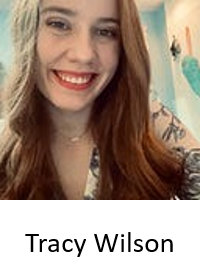
Tracy Wilson is a journalism and classical education student. She writes a newsletter that is centered on classical education, but her interests include alternative educational models.
This article was originally published on Substack on July 26, 2022
Reprinted by permission.