After Confronting the School Board
…Next Steps
From Virginia to Texas to Nebraska, parents and legislators are taking their state and local school boards to task for replacing substantive academics with Critical Race Theory (CRT), comprehensive sex education (CSE) and other woke curricula, forced masking, and an overall failure to teach essential skills.
In Virginia, one school board actually responded favorably to parents’ demands that the district’s radical comprehensive sex education program be rejected. Unlike Virginia’s Loudoun County School Board, which has repeatedly thwarted parents’ efforts to remove offensive propaganda from district classrooms, the Russell County board voted unanimously to honor the will of parents by rejecting the sex ed rules, despite threats from the Virginia Department of Education.
Planned Parenthood Peddling Sex to Children
Parents, grandparents, and concerned citizens may recognize the problems in their school districts but don’t know where to begin to right the ship. Many teachers openly support CRT while school district officials deny it’s being taught. And even though CRT and CSE programs have been infiltrating the schools for years, as Phyllis Schlafly often wrote about in the Phyllis Schlafly Report and Education Reporter, their content has become even more astonishingly destructive and explicit.
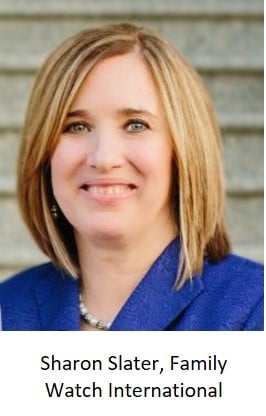
In its July 19 Washington Watch, the Family Research Council reported that while the eyes of parents are justifiably focused on CRT, “they’re also getting a good look behind the curtain at what their children are hearing about sex.” Family Watch International’s Sharon Slater told FRC that the sex education “is out of control, and it’s only going to get worse.”
Phyllis also warned about the connection between the federal government and Planned Parenthood in promoting explicit sex education in the classroom, which Slater confirms. “If you’re wondering who’s driving these wildly inappropriate sex ed programs, look no farther than Planned Parenthood,” she said. “They actually brag about being the largest provider of comprehensive sexuality education or sex education in the United States…. And they mostly have a monopoly on all the curriculum that is being ordered through the U.S. government.”
Schools that receive federal grant money through the $100 million-dollar CSE program started under the Obama administration and which has become even more extreme under Biden, are typically getting the programs through Planned Parenthood. Incredibly, noted Slater, they market some of these pornographic curricula as “abstinence education.”
The intent of CSE indoctrination is to get kids hooked on sex. Once they do, Planned Parenthood sells them condoms, contraceptives, and of course, abortions.
X-Rated Curriculum in Ohio
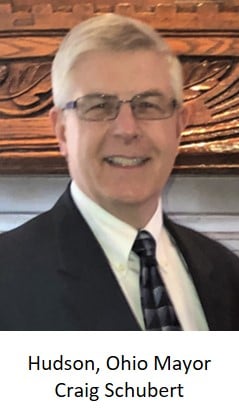
Just this month in Hudson, Ohio, located between Akron and Cleveland, Mayor Craig Schubert threatened the entire local school board with criminal charges for “highly sexual writing prompts” given to 17-year-olds. The mayor spoke not only for himself but for outraged parents attending the same school board meeting. A few of the prompts, which the mayor called “child pornography in the classroom,” include: “Write a sex scene you wouldn’t show your mom”; “Write an X-rated Disney scenario”; Write a sermon for a beloved preacher who has been caught in a sex scandal”; [Describe] the first time you had sex.” Many other prompts were equally horrific, although some were benign.
Cleveland.com reported the incident on September 15 and The Daily Mail.com did likewise on September 16. Parents are calling for school board members as well as the teachers involved to resign.
During the meeting, Mayor Schubert told the board: “It has come to my attention that your educators are distributing essentially what is child pornography in the classroom. I’ve spoken to a judge this evening and she’s already confirmed that. So I’m going to give you a simple choice: either choose to resign from this board of education or you will be charged.” Both news outlets reported that Ohio law is “murky” as to whether the teachers and board members could be criminally charged.
Police officer Erik Dirker also addressed the board, calling for the installation of cameras in the classrooms. “Police officers wear body cameras to monitor their behavior, and they have brief interactions with the public,” Dirker said. “You guys have our kids all day and we don’t know what’s going on in the classrooms.”
Parent Monica Havens, a former teacher, said: “I can’t even wrap my brain around [it] as a teacher, I don’t care if it’s for college credit, these are minors. When these topics are encouraged and read by adults, that is pedophilia.” But school officials, including Hudson High School Principal Brian Wilch, claimed to be unaware of the pornographic prompts.
Fighting Back in Nebraska
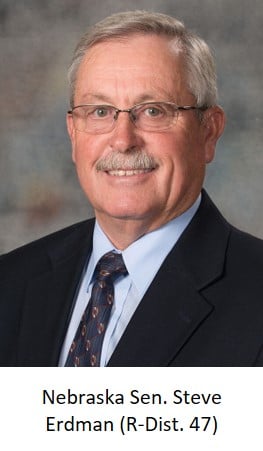
Nebraska State Senator Steve Erdman is calling for “the entire Nebraska Board of Education to be replaced.” In his August 6 “Straight Talk” column, which is posted weekly on his official webpage, Erdman bemoaned the fact that “the board has failed to listen to the people of Nebraska, failed to adequately reform the sex education standards, and has failed to educate Nebraska’s students. Instead of doing what the vast majority of the people want and what is best for our students, they have insisted upon promoting their own Left-wing ideological agenda while failing to adequately educate Nebraska’s K-12 students.”
Despite revisions in the second draft of the standards, Erdman says the board has “effectively changed nothing.” Erdman cited section H.E. 7.7.2.d of the standards, which “teaches students to: ‘Recognize that biological sex and gender identity may or may not differ.’ Worded this way, the new state standards will allow even the most extreme activists for the LGBTQ+ movement to indoctrinate students inside our schools with their own views on sexual orientation and gender identity. Nebraska’s parents asked the State Board of Education to remove this item altogether, not to reword it in a more palatable and less offensive way. So, the board has refused to listen to the people.”
CSE is hardly confined to schools in the Nebraska panhandle, which Erdman represents, but infects classrooms to varying degrees across the country. Family Watch International provides a map on its StopCSE.org website where parents can find information about federally funded CSE programs in their state, as well as state statutes addressing parental rights.
Reclaiming the School Boards
Parents and citizens interested in changing the course of their public schools can start by finding out how their state and local school board members are selected, and then running for school board themselves or seeking out good candidates. The Education Commission of the States is an excellent resource; its website includes a list of both the K-12 School Board Governance by State and the K-12 State-Board-of-Education Governance by State. These lists also cite applicable laws governing the selection process in each state.
Local school board members are elected by the voters in all but a handful of states. Massachusetts, for example, allows regional school planning boards to determine the number, composition, and method of member selection. In Minnesota, members are “appointed by the school board or governing board of each member district.” In New Jersey, some district school board members are elected while in other districts they are appointed by the mayor “or other chief executive officer of the municipality.” In some Virginia counties, school board members are appointed by a school board selection commission.
Members of state boards of education are typically appointed by the governor, often with input or approval by the state senate. In California, state board of education members must be confirmed by two-thirds of the senate. Engaged citizens can research their state’s requirements to determine how they might influence the selection of state board members.
School Board Boot Camp
The Family Research Council (FRC) offers a webinar series called School Board Boot Camp. This resource provides information about serving on a school board and encourages parents “to take control of their children’s education in their communities.”
The boot camp includes real-life testimony and guidance from current school board members, who describe their experiences and explain what it takes to serve on a county school district board. And it provides opportunities for ongoing information updates, such as how to file Freedom of Information Requests so parents can find out what their children are learning.
LifeSiteNews – Planned Parenthood Spearheading Pornographic Sex Ed
Family Watch.org
FRC Action.org
Classical Education Renewal: Will it Save America?
Jeremy Wayne Tate, educator and CEO of Classic Learning Test, recently told Phyllis Schlafly Eagles President Ed Martin: “A renewal movement is happening with people returning to the classics, returning to the great traditions, the tried and true.” A guest on Martin’s weekly Pro America Report, 7-15-21, Tate added: “I think people are sick and tired of [public education] experimenting on our kids, and so we’re seeing this return in the homeschool world, the Christian school world, the Catholic school world, and the charter school world. They’re reintroducing classical education and it’s starting to go national.”
In response to Martin’s fear that we have lost a couple of generations to destructive fad teaching, Tate agreed that “we’ve slipped away from the basics.” He pointed out that testing companies dictate content, and that these companies today are radical. “The College Board is run by David Coleman, the grand architect behind the Common Core standards” he explained. “Our founding documents call us back to be a great nation, but they are not being presented to our students that way. And this situation needs to change.”
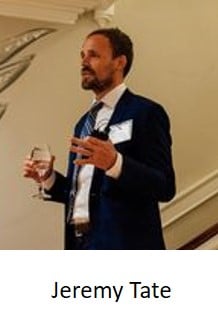
In 2015, Tate founded the Classic Learning Test (CLT) as an alternative to the standardized college admissions tests to reflect, well, classical learning. As the Wall Street Journal opined in 2019: “A growing segment of schools and home-schooling families see the SAT and ACT, which are aligned with the troubled Common Core curriculum and its emphasis on utilitarian ‘skills’ and bland ‘informational texts,’ as poor fits with the kind of teaching they believe students need. They think education should build on ideas formed over centuries and help students enjoy beauty and practice good judgment.”
When Martin asked about Common Core, which despite significant controversy remains in place, and CRT, which is also not new but is prompting public outcry, Tate responded: “There’s a void: we’ve removed core knowledge and timeless texts from K-12 education, and something needs to fill that void.”
He continued:
Currently, the CLT is accepted at more than 150 colleges and universities in the U.S. and internationally. If the classical education resurgence continues, this number will no doubt increase.
Classical Education Options
Jeremy Tate isn’t the only one talking about classical education. The Manhattan Institute published an “Issue Brief” in July on this topic titled Classical Education: An Attractive School Choice for Parents. In his introduction, the report’s author Brandon McCoy acknowledged that classical education “differs profoundly from the instruction offered by modern district public schools. It is heavily oriented toward the liberal arts, guided by the Western canon, and grounded in Greek and Roman traditions of academic excellence.”
McCoy wrote: “In the religious school sector, classical education often incorporates biblical texts and training. These schools often brand themselves as classical Christian schools or classical academies and inculcate their students with a rigorous education and Judeo-Christian values.”
“Some Catholic schools have also harked back to a classical model in teaching their tradition. While not representative of most Catholic schools, some parochial schools have made an effort to give parishioners the option of classical education, [and] some Catholic-affiliated networks have also created schools to offer a classical Catholic education.”
The report notes that many of the most ardent supporters of classical education can be found in the homeschooling and micro-schooling movements. “However,” McCoy wrote, “several public charter schools have adopted aspects of classical learning. These schools, particularly in urban areas, are designed to give students from disadvantaged groups a stronger educational foundation and a better shot at college readiness…many classical charter schools incorporate secular ‘character training’ into their curricula.”
While McCoy’s paper focuses on classical-model charter schools in New York City, Washington, DC, and Nashville, TN, it includes a general overview of classical education and a brief history of the evolution of public education in the U.S.
Classical Christian Schools
According to the Association of Classical Christian Schools (ACCS): “Classical Christian education has seen the fastest, most consistent growth of any private school movement in the U.S.” This is music to the ears of Christians nationwide who are looking for alternatives to the public schools. They are often the ones battling public-school boards and curricula in what is so far mostly a futile hope of restoring sanity and real academics to the classroom.
For those seeking alternatives, the Classical Christian Schools website offers a wealth of information and resources, including a list of the more than 290 ACCS-member schools.
Christian schools not in the network but wishing to transition to a classical curriculum will find the tools and guidance to do so. Member schools pay annual dues in return for resources and membership perks.
Hillsdale-Affiliated Classical Charter Schools
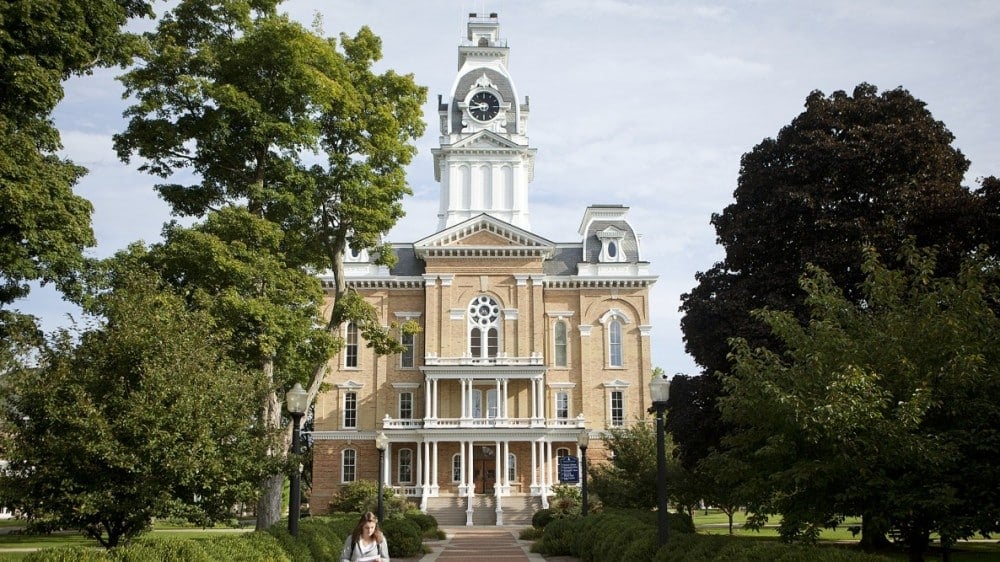
The renowned Michigan-based Hillsdale College supports 24 classical charter schools across the nation with licensed K-12 curriculum and other assistance. In addition, nearly 20 private and parochial schools are licensed to use Hillsdale’s K-12 curriculum. One of these schools is located in Misahualli, Ecuador.
Two other classical schools in Florida and one in Georgia were founded through Hillsdale’s Barney Classical Schools Initiative (BCSI).
While most of the classical school alternatives discussed above involve a cost to parents in tuition, supplies, or other expenses, most offer scholarships, partial scholarships, and/or payment plans to help defray or manage these costs. States that have enacted school-choice measures may also provide assistance.
Classical Strides in Colorado
The state of Colorado boasts a number of classical schools. In Colorado Springs, the Chesterton Academy of Our Lady of Walsingham opened its doors in August, the newest member of the Minneapolis-based [G.K.] Chesterton Schools Network. Three of the 34 Chesterton schools are operating in Colorado — two are located in the Denver area — and these offer a “substantive classical education” that includes authentic Catholic teaching.
Walsingham’s Headmaster, Mark Langley, has a long history of involvement in classical education. A graduate of the first classical Catholic school in the U.S., Trivium School, founded in Lancaster, Massachusetts in 1978, Langley is a force in classical education renewal. In an interview with Education Reporter, he said: “There is a compelling need to return to this type of education, the study of Latin and Greek, the Great Books of the Western World, and the writings of the great authors.”
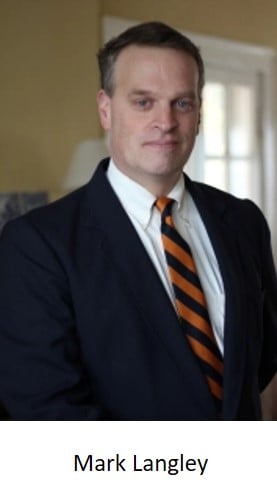
Many classical education advocates, Christian and otherwise, agree with him, as dozens of schools have copied the Trivium’s classical model. Theology, math, science, daily Mass, and a mandatory chorale program to perpetuate Catholic sacred music round out Walsingham’s curriculum.
In 2003, Langley was invited to start a school in Cleveland, Ohio. He answered the call and founded The Lyceum, where he served as headmaster and subsequently academic dean for 17 years. The Lyceum became a model for the design of the first Chesterton Academy Network, of which Our Lady of Walsingham is a member school.
Langley is passionate about his students and intertwines classical education with his faith. “The value of a genuine Catholic liberal education is seen in the interior beauty of those who have devoted a relatively small part of their lives to the formation of their souls in beauty, goodness, and truth,” he said. “No matter how few there are who undertake such a pursuit, they are the leaven that the world needs.”
Walsingham parents are proud of how quickly their school got off the ground. “God truly worked a miracle to make this school a reality in just one year,” said Jenny Vostatek, parent, founding member and vice chair of the new academy’s board. “From finding the headmaster and location to hosting a successful, in-person fundraising gala that netted over $150,000, the Lord has definitely blessed this school. We can’t wait to showcase the talents of our incredible faculty and students throughout the year within our community.”
Ultimately, Walsingham hopes to increase its enrollment to 75 students, which Headmaster Langley believes is the ideal size. “We are trying to run a school with a familial environment,” he explained. “A lot of classical educators make the mistake of trying to operate their secondary schools as if they were classical liberal arts colleges, but teaching has to be proportionate to students’ minds.” For example, while the high school student is simply not ready to read Aristotle’s Metaphysics, he is, nonetheless ready for Euclid’s Elements.” In other words, Langley believes high school students must be challenged with excellent and substantive academics without the expectation that they will think and behave like adults.” His success so far bears out this belief.
Rural Town Goes Classical
West of Colorado Springs on U.S. Highway 24, as it climbs the pass through the front range of the Rocky Mountains, lies the town of Woodland Park. On August 23, the town opened Merit Academy, a new classical charter school that, like Walsingham, went from concept to reality in just one year.
As reported in The Federalist, 9-13-21, the classical K-8 school, which plans to grow into a high school, “offers a low-screen, high-relationship environment and a focus on creative and critical thinking through careful attention to classic works and traditional approaches to math and science.” These are things parents say they want that weren’t available through the Woodland Park Public School District (WPSD).
Merit Academy’s founding board member, John Dill, is a retired Air Force Space Command lieutenant colonel who now works as a military contractor. Dill and his wife stopped homeschooling their twin daughters to help start the school, which also offers outreach to homeschoolers as part-time students. Dill told The Federalist’s Joy Pulliam that, while homeschooling was working for his family, “they just felt they could do more than take care of their own education needs — they could also help others.”
“I’m a rural kid from the mountains of Maine looking at the rural kids in the mountains of Colorado and saying, ‘This isn’t right, they need to be educated too,'” Dill said. “If our nation is ever to get better, we need better schools.”
The board’s classical school model was rejected by the WPSD, which uses an online platform called Summit that many parents shunned even before the COVID-19 lockdowns. Pulliam writes that Summit “has been dogged with privacy, politicization, and screen-time concerns” among parents across the country.
After the WPSD denied the Merit’s application in December 2020, the board contacted a Colorado school-choice lawyer, who informed them of a little-known Colorado law that authorizes boards of cooperative educational services, or BOCES, to contract out education services. He advised that a BOCES could work for them like an independent charter school authorizer, variations of which are allowed in 45 states. Eventually, the Woodland Park BOCES was approved and the project moved forward.
In its first year, Merit Academy has 186 students, with 65 more on a waiting list. The small-town parents and entrepreneurs who made the school a reality are praying they will find the resources to expand as their classical program grows.
Summer: No Vacation from CRT
In August, the African American Policy Forum (AAPF) offered a Critical Race Theory Summer School called “Forbidden Knowledge,” co-sponsored by the Center for Intersectionality and Social Policy Studies. The five-day online course promoted CRT and vilified CRT’s opponents, meaning anyone who questions or debunks its divisive and historically inaccurate narrative. While readers may assume this type of course is new, some semblance of it was taught as far back as 1989.
Targeted attendees for the course were “students, practitioners, and stakeholders” of CRT and “intersectionality,” an invented term with a complex definition that many find incoherent, but that could be construed to mean the leveraging of every victim group the left uses to destroy America. More than 50 speakers and presenters gave their two cents at the conference.
Kimberlé Crenshaw, co-founder and executive director of AAPF, was one of five “core” summit faculty members. A 90-page course booklet opens with a letter from Crenshaw that states in part:
The booklet’s introduction, also with Crenshaw’s byline, further sets the tone.
Course panelists offered “concrete strategies and tools,” to combat what the first session claimed are “the difficulties [that] other disciplines, civil rights campaigns, and community organizing efforts have confronted as they have taken up the challenge to treat racism as a systemic and structural problem.” These “difficulties” could possibly consist of a failure to find enough genuine racism to justify the division and chaos their “strategies and tools” create.
The first-session’s introduction promised to “leave participants with a sense of how, across different sectors of society—media, public education, political campaigns, etc. the prospect of transformational change is short-circuited by formally race neutral rules and practices, ideologies of colorblindness, and the search for individual bad actors.” But weren’t “formally race neutral rules and practices” and “ideologies of colorblindness” precisely what pioneers of the civil rights movement demanded 50 years ago and which have largely been achieved, including the election and re-election of President Barack Obama in 2008 and 2012?
CRT Taught in Schools
Critical Race Theory Summer School acknowledges that CRT is being taught in schools, despite new laws against it in many states and denials by public-school officials and school board members. Page 36 of the guide promises that attendees “will learn directly from classroom educators and education justice leaders how they have incorporated CRT insights, not the theory itself (emphasis added), into high school social studies, history and civics classrooms…. We will take inventory of the significant resources available to K-12 teachers, school districts, students and parents to enliven school curricula. Participants include teachers and teacher educators with the Connecticut Anti-Racist Teaching & Learning Collective and the Zinn Education Project.”
Clearly, the message is that CRT will be taught but perhaps not so called, and will therefore be harder for parents to identify, even as the indoctrination of their children continues. And CRT’s meaning in the context of the Summer School course is not limited to race; it encompasses all far-left ideology currently being spoon-fed to schoolchildren.
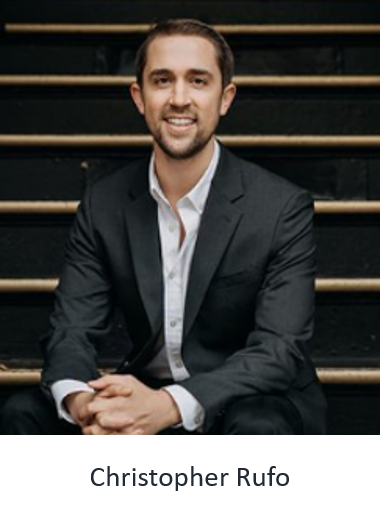
When the news of the CRT Summer School broke on Twitter last month, Christopher Rufo, senior fellow at the Manhattan Institute, author, director of documentary films, and prominent opponent of CRT, tweeted this reply: “So critical race theory is taught in public schools. Got it!” Another Twitter user said: America’s already bankrupt education system just got worse. Instead of classical knowledge and higher mathematics and culture, racist CRT will be the substitute. Wonderful!”
The good news is that many parents are beginning to realize there is a war on, not only for their children’s minds but for their souls as well, and they are standing up to fight.
Critical Race Theory Summer School 2021
Christopher Rufo on Twitter
Mallard
OLD ABE
by John Cribb, Republic Book Publishers, 2020
John Cribb has written a remarkable historical novel that chronicles in a uniquely personal way the struggles of Abraham Lincoln. From his humble birth in LaRue County, Kentucky to his childhood in rural Indiana, to his law practice and political beginnings 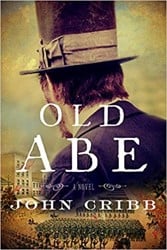 in Springfield, Illinois, to the crushing responsibility he bore in Washington, DC during the Civil War, Old Abe is well worth reading.
The story focuses on the last five years of Lincoln’s life, starting with his improbable election to the presidency over his Democrat opponent, the famed Stephen Douglas. Cribb’s tale is absorbing and often touching; this is not your average account of Abraham Lincoln and the Civil War.
The author describes the young Lincoln as a voracious reader, which over the years taught him almost everything he wanted to know. Vivid descriptions of the life and characters in the prairie town of Springfield and the political process of 1860 captivate the reader, beginning with the raucous nomination of Lincoln for president by the Republican Party of Illinois in a tent they called “the wigwam.”
Almost no one expected Lincoln to win the national party’s nomination. The other candidates included William Henry Seward of New York, who was favored to win, Salmon Chase of Ohio, Simon Cameron of Pennsylvania, and Edward Bates of Missouri. All had baggage of their own, and all except Bates became part of Lincoln’s first administration.
After Lincoln was nominated, Cribb credits him with saying: “Make no contracts that will bind me. I can’t be bound by promises I don’t make myself.” Thus, the author sets the stage for the hero he presents in Old Abe; an honest man, yet convincingly human and not without flaws.
Most poignant in the early part of the story is Lincoln’s departure from Springfield for Washington, DC as president-elect in February 1861. Cribb describes a cold, drizzly morning at the small train station where a thousand friends and associates turned out to bid Abe farewell. Viewed by the reader from today’s historical vantage point, the scene is tinged with sadness as Abe doffs his hat to the crowd and makes a short speech, knowing as we do that he will never return. Following a 12-day journey, he takes the oath of office in the shadow of secession and war.
Old Abe provides a rare glimpse into an apocryphal time, not only the horrific casualties of America’s most costly war as Lincoln witnessed it, but the personal trials of his life. We meet Mary Todd Lincoln as we’ve never seen her in history books, a wife, a mother, with a tumultuous personality that today might be characterized as “schizophrenic.” Cribb’s characters, both real and fictional, show how the war between the American states tore families apart, including Mary’s family, when her brothers and brother-in-law joined the Confederate army.
In the picture Cribb paints for us, we never doubt the Lincolns’ love for each other despite their sometimes-stormy relationship, nor their devotion to their children. When we meet them, their eldest son, Bob, is nearly seventeen, and their second son, Eddie, has already died of consumption at the age of four. Two other sons, Willie and Tad, were ages nine and seven respectively when Lincoln was elected. Cribb skillfully weaves Lincoln’s relationship with his sons into the chronicle of his presidential duties. His description of the tragic death of Willie in February 1862 shows how the loss nearly brought the sixteenth president to his knees and pushed Mary Lincoln to the brink of madness.
Cribb writes that “Abraham Lincoln had always hated slavery,” but was not an abolitionist. As the south threatened secession and war loomed, he made it clear that preserving the union was his top priority. He believed that if the south was allowed to separate from the union, it would mean the end of the great American experiment of self-government, and that government of the people would perish from the earth.
Despite his personal distaste of slavery, Lincoln worried about losing the border states to the Confederacy if he moved to abolish it outright. And yet, as the war progressed in earnest, he knew the Confederate Army was using slave labor to aid their war effort. His conscience kept reminding him that “all men are created equal, that they are endowed by their Creator with certain unalienable rights….”
After much prayer and deliberation, Lincoln penned his Emancipation Proclamation in the summer of 1862. Upon the advice of his cabinet, he did not announce it at once, believing there was no advantage while the south was clearly winning the war. He issued the proclamation on New Year’s Day 1863, as the tide was ever so slightly beginning to turn.
The author covers all the major battles, twists, and turns of the Civil War, from Bull Run to Antietam to Gettysburg and Lincoln’s famous address, to Sherman’s march on Atlanta, the fall of Vicksburg, and Lee’s eventual surrender at Appomattox. The historical figures we learned about in school become real people, and Cribb shows the destructive scope of the war on all fronts.
Cribb’s storytelling occasionally entertains with humor in Lincoln’s banter with his sons, in his humility, and his witty turn of phrase. For example, just prior to his second presidential election, Mary says to him: “I’m afraid we will lose, Abraham.” He responds: “Well, that’s up to the people. If they turn their backs to the fire and get scorched in the rear, they’ll have to sit on the blister.”
Abraham Lincoln was assassinated just six weeks into his second term. It threw a country reeling from the effects of four years of bloody civil war into a further tailspin, and spelled the end of hope for the orderly and merciful reconstruction of the south that he had envisioned.
While the author’s insightful writing inspires tearful sadness, perhaps the real tragedy today is the canceling of our history. Painful as the era of slavery and the Civil War was, in the end it spelled victory for the America of our Founders; for the government of the people, by the people, and for the people.
Education Briefs

With homeschooling on the rise as well as defections from public schools for other educational alternatives, school districts are instituting efforts to lure students back. Homeschool numbers show no sign of dropping off and public schools are scrambling to stop the bleeding as tax dollars decline with every lost student. Nationwide, districts are reporting lagging enrollment. This summer, Colorado’s Adams 14 School District north of Denver initiated a $43,500 advertising campaign to attract students using billboards. New superintendent Karla Loria went a step further, going door-to-door in search of “missing” students. Her outreach paid off, but despite all this the district’s enrollment is down five percent. In Texas, where the increase in homeschooling families has been described as “off the charts,” the Dallas Independent School District enrollment is down by about 12,000 students. In Oregon’s Buncombe County, lost students are costing the district nearly $4,600 each and, in that state’s largest school district, enrollment has fallen more than three percent. North Carolina is reporting a five percent overall drop in public school enrollment, with kindergarten numbers down 15 percent. Washington Examiner, 8-27-21; Colorado Sun, 8-22-21
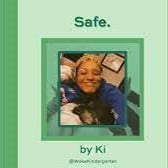
A Fairfax County, Virginia public school promoted videos called “Woke Kindergarten 60 Second Texts” for a second-grade summer learning program. The Bailey Elementary School for the Arts posted one of the videos — “Safe,” by Ki — on its website, then promptly removed it when a whistleblower called attention to it. The video advances CRT themes under the guise of reassuring kids that “we all deserve to feel safe.” The video narrative suggests a number of places where kids deserve to feel safe, such as “home,” with “a partner” — a rather odd example to give young children. But the kicker is when the childish voice of the narrator says: “I feel safe when there are no police,” with the obvious implication that police pose a danger to children. A spokesperson for the district claimed the video was posted by mistake and taken down when it was discovered, but a “Fairfax County Summer Learning 2021” guide for second-graders includes these videos in a list of “Mentor Texts for Writing.” The school’s website also reportedly included links and topics such as “Black Lives Matter, tools for teaching Critical Race Theory, New York Times articles which discuss white parents are what’s wrong within public schools, antiracism tools for teachers and a collection of social media accounts to check out that further discuss and implement similar ideas.” Safe, by Ki, YouTube; Defending Education.org/Copy-of-G2-Summer-Learning-2021.pdf; Fox News.com, 8-5-21; Fairfax Times.com
Wisconsin’s Gateway Technical College has a message for interested Science, Technology, Engineering and Math (STEM) scholarship students: White males need not apply. SC Johnson, “The Family Company,” offers a scholarship program called the SC Johnson STEM Scholarship Program at Gateway, which has a total value of $45,000 after four years. This means scholarship recipients are awarded $7,500 for each of their two years at the technical college, then $7,500 for each of two additional years after they transfer to a four-year college or university. Additionally, scholarship recipients qualify for a guaranteed matching amount from the four-year institution. This life-altering opportunity is essentially denied to white males if their families earn more than $50,000 per year, but there is no such income restriction for women or members of other racial groups. Asian men, for example, are overrepresented in the STEM program but not held to the same income restrictions. SC Johnson denies any intent to discriminate, using as its excuse: “This scholarship is designed to create pathways to greater economic and social mobility for those with limited financial means and for those who have been historically underrepresented in high-demand STEM fields. It does not exclude people based on gender or race.” When The College Fix asked for research “pointing to a family income of $50,000 as the line of demarcation for material success in life for white men, they received no response from either SC Johnson or Gateway Technical College. The College Fix.com/STEM Scholarship
The Independent Women’s Forum says today’s freshman orientation “serves as a crash-course on how to navigate the politically correct halls of higher education, where words are violence, gender is a choice, and all whites are racist.” The Women’s Forum published five lies colleges and universities teach freshman students before they even step foot in a classroom. Lie #1: “White privilege is real.” Skin color is the most important factor about a student and “white, male Christians have it the easiest in life while all others are oppressed in some way.” All are branded with a demographic that eclipses everything else. Lie #2: “Words are violence.” This serves to nullify the First Amendment and predisposes students either to keep their heads down and their mouths shut or to call each other out for the slightest “offense.” Lie #3: “One in five coeds will be sexually assaulted.” While this topic must be taken seriously, the “one-in-five stat has been debunked.” At the same time, promiscuity is constantly promoted on most campuses. Lie #4: “Gender is a choice.” College freshmen are coerced into “the complex and confusing world of preferred gender pronouns, such as ‘ze,’ ‘hir,’ and ‘xem.'” Students are informed about campus LGBTQ centers, which introduce them to hormone therapy and sometimes offer transgender medical coverage. Lie #5: “Being colorblind is racist.” Most universities today teach kids that “the only way to not be a racist is to be actively anti-racist.” Parents and students beware. Independent Women’s Forum, 8-19-21
My University Sacrificed Ideas for Ideology. So Today I Quit.
"The more I spoke out against the illiberalism that has swallowed Portland State University, the more retaliation I faced."
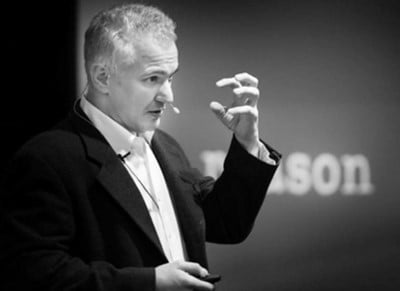
Dear Provost Susan Jeffords,
I’m writing to you today to resign as assistant professor of philosophy at Portland State University.
Over the last decade, it has been my privilege to teach at the university. My specialties are critical thinking, ethics and the Socratic method, and I teach classes like Science and Pseudoscience and The Philosophy of Education. But in addition to exploring classic philosophers and traditional texts, I’ve invited a wide range of guest lecturers to address my classes, from Flat-Earthers to Christian apologists to global climate skeptics to Occupy Wall Street advocates. I’m proud of my work.
I invited those speakers not because I agreed with their worldviews, but primarily because I didn’t. From those messy and difficult conversations, I’ve seen the best of what our students can achieve: questioning beliefs while respecting believers; staying even-tempered in challenging circumstances; and even changing their minds.
I never once believed— nor do I now— that the purpose of instruction was to lead my students to a particular conclusion. Rather, I sought to create the conditions for rigorous thought; to help them gain the tools to hunt and furrow for their own conclusions. This is why I became a teacher and why I love teaching.
But brick by brick, the university has made this kind of intellectual exploration impossible. It has transformed a bastion of free inquiry into a Social Justice factory whose only inputs were race, gender, and victimhood and whose only outputs were grievance and division.
Students at Portland State are not being taught to think. Rather, they are being trained to mimic the moral certainty of ideologues. Faculty and administrators have abdicated the university’s truth-seeking mission and instead drive intolerance of divergent beliefs and opinions. This has created a culture of offense where students are now afraid to speak openly and honestly.
I noticed signs of the illiberalism that has now fully swallowed the academy quite early during my time at Portland State. I witnessed students refusing to engage with different points of view. Questions from faculty at diversity trainings that challenged approved narratives were instantly dismissed. Those who asked for evidence to justify new institutional policies were accused of microaggressions. And professors were accused of bigotry for assigning canonical texts written by philosophers who happened to have been European and male.
At first, I didn’t realize how systemic this was and I believed I could question this new culture. So I began asking questions. What is the evidence that trigger warnings and safe spaces contribute to student learning? Why should racial consciousness be the lens through which we view our role as educators? How did we decide that “cultural appropriation” is immoral?
Unlike my colleagues, I asked these questions out loud and in public.
I decided to study the new values that were engulfing Portland State and so many other educational institutions—values that sound wonderful, like diversity, equity, and inclusion, but might actually be just the opposite. The more I read the primary source material produced by critical theorists, the more I suspected that their conclusions reflected the postulates of an ideology, not insights based on evidence.
I began networking with student groups who had similar concerns and brought in speakers to explore these subjects from a critical perspective. And it became increasingly clear to me that the incidents of illiberalism I had witnessed over the years were not just isolated events, but part of an institution-wide problem.
The more I spoke out about these issues, the more retaliation I faced.
Early in the 2016-17 academic year, a former student complained about me and the university initiated a Title IX investigation. (Title IX investigations are a part of federal law designed to protect “people from discrimination based on sex in education programs or activities that receive federal financial assistance.”) My accuser, a white male, made a slew of baseless accusations against me, which university confidentiality rules unfortunately prohibit me from discussing further. What I can share is that students of mine who were interviewed during the process told me the Title IX investigator asked them if they knew anything about me beating my wife and children. This horrifying accusation soon became a widespread rumor.
With Title IX investigations there is no due process, so I didn’t have access to the particular accusations, the ability to confront my accuser, and I had no opportunity to defend myself. Finally, the results of the investigation were revealed in December 2017. Here are the last two sentences of the report: “Global Diversity & Inclusion finds there is insufficient evidence that Boghossian violated PSU’s Prohibited Discrimination & Harassment policy. GDI recommends Boghossian receive coaching.”
Not only was there no apology for the false accusations, but the investigator also told me that in the future I was not allowed to render my opinion about “protected classes” or teach in such a way that my opinion about protected classes could be known—a bizarre conclusion to absurd charges. Universities can enforce ideological conformity just through the threat of these investigations.
I eventually became convinced that corrupted bodies of scholarship were responsible for justifying radical departures from the traditional role of liberal arts schools and basic civility on campus. There was an urgent need to demonstrate that morally fashionable papers—no matter how absurd—could be published. I believed then that if I exposed the theoretical flaws of this body of literature, I could help the university community avoid building edifices on such shaky ground.
So, in 2017, I co-published an intentionally garbled peer-reviewed paper that took aim at the new orthodoxy. Its title: “The Conceptual Penis as a Social Construct.” This example of pseudo-scholarship, which was published in Cogent Social Sciences, argued that penises were products of the human mind and responsible for climate change. Immediately thereafter, I revealed the article as a hoax designed to shed light on the flaws of the peer-review and academic publishing systems.
Shortly thereafter, swastikas in the bathroom with my name under them began appearing in two bathrooms near the philosophy department. They also occasionally showed up on my office door, in one instance accompanied by bags of feces. Our university remained silent. When it acted, it was against me, not the perpetrators.
I continued to believe, perhaps naively, that if I exposed the flawed thinking on which Portland State’s new values were based, I could shake the university from its madness. In 2018 I co-published a series of absurd or morally repugnant peer-reviewed articles in journals that focused on issues of race and gender. In one of them we argued that there was an epidemic of dog rape at dog parks and proposed that we leash men the way we leash dogs. Our purpose was to show that certain kinds of “scholarship” are based not on finding truth but on advancing social grievances. This worldview is not scientific, and it is not rigorous.
Administrators and faculty were so angered by the papers that they published an anonymous piece in the student paper and Portland State filed formal charges against me. Their accusation? “Research misconduct” based on the absurd premise that the journal editors who accepted our intentionally deranged articles were “human subjects.” I was found guilty of not receiving approval to experiment on human subjects.
Meanwhile, ideological intolerance continued to grow at Portland State. In March 2018, a tenured professor disrupted a public discussion I was holding with author Christina Hoff Sommers and evolutionary biologists Bret Weinstein and Heather Heying. In June 2018, someone triggered the fire alarm during my conversation with popular cultural critic Carl Benjamin. In October 2018, an activist pulled out the speaker wires to interrupt a panel with former Google engineer James Damore. The university did nothing to stop or address this behavior. No one was punished or disciplined.
For me, the years that followed were marked by continued harassment. I’d find flyers around campus of me with a Pinocchio nose. I was spit on and threatened by passersby while walking to class. I was informed by students that my colleagues were telling them to avoid my classes. And, of course, I was subjected to more investigation.
I wish I could say that what I am describing hasn’t taken a personal toll. But it has taken exactly the toll it was intended to: an increasingly intolerable working life and without the protection of tenure.
This isn’t about me. This is about the kind of institutions we want and the values we choose. Every idea that has advanced human freedom has always, and without fail, been initially condemned. As individuals, we often seem incapable of remembering this lesson, but that is exactly what our institutions are for: to remind us that the freedom to question is our fundamental right. Educational institutions should remind us that that right is also our duty.
Portland State University has failed in fulfilling this duty. In doing so it has failed not only its students but the public that supports it. While I am grateful for the opportunity to have taught at Portland State for over a decade, it has become clear to me that this institution is no place for people who intend to think freely and explore ideas.
This is not the outcome I wanted. But I feel morally obligated to make this choice. For ten years, I have taught my students the importance of living by your principles. One of mine is to defend our system of liberal education from those who seek to destroy it. Who would I be if I didn’t?
Sincerely,
Peter Boghossian
Peter Boghossian has taught philosophy at Portland State University for the past decade. In the letter above, sent to the university’s provost, he explained why he is resigning. Peter Boghossian is an author, philosopher, and educator. His most recent book is
How to Have Impossible Conversations.
First published in the Substack “Common Sense with Bari Weiss.” Reprinted by permission.