Chaos Erupts as Trump Administration Moves to Protect Women’s Sports
The same suspects — mostly liberal Democrats, Progressives, and various other leftists — who were once the loudest champions of Title IX and women’s sports, are now flouting federal law and filing lawsuits to prevent women from successfully competing in those sports. The favored class these days appears to be men who either believe they are women or, as many suspect, are merely pretending to be women.
A high-profile example is that of the University of Pennsylvania (UPenn), which the U.S. Department of Education announced at the end of April is in violation of Title IX by allowing biological men to compete in women’s sports and use women’s locker rooms and bathrooms. Specifically, the department is referring to the 2022 swimming competition in which a biological male, “Lia,” a.k.a William Thomas, who ranked 462 in men’s swimming, overwhelmingly beat his female competitors in women’s swimming when he decided he was really a girl.
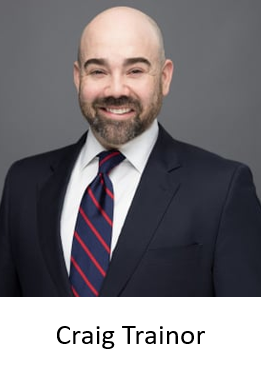
A press release dated April 28 from the Education Department’s Office for Civil Rights (OCR) charged that “the University’s policies and practices violated Title IX by denying women equal opportunities by permitting males to compete in women’s intercollegiate athletics and to occupy women-only intimate facilities.” Acting Assistant Secretary for Civil Rights for the Education Department, Craig Trainor, said the Trump Administration “will not allow male athletes to invade female private spaces or compete in female categories.”
The administration is requiring UPenn to issue a statement to its university community that it “will comply with Title IX in all of its athletic programs; restore to female athletes all individual athletic records, titles, honors, awards or similar recognition for Division I swimming competitions misappropriated by male athletes competing in female categories,” and; send a letter of apology on behalf of the university to each female student whose individual recognition is restored “for allowing her educational experience in athletics to be marred by sex discrimination.”
At risk for UPenn and other schools that allow men to invade women’s sports and locker rooms is the withdrawal of federal financial assistance. As the Washington Free Beacon reported, the Education Department’s non-compliance finding “comes weeks after the Trump administration revoked $175 million in federal funding to the University of Pennsylvania and warned of additional cuts over the school’s inclusion of biological men in women’s sports.”
UPenn swimmers Riley Gaines and Paula Scanlan, among a dozen other female athletes, famously filed suit against the NCAA in 2024 for violating Title IX by allowing biological men to compete in women’s sports. Three of the UPenn swimmers who were forced to compete against “Lia” Thomas also sued the university.
On February 5 of this year, President Trump signed an executive order banning biological men from participating in women’s sports. One of the plaintiffs in the suit against UPenn told the Free Beacon she was “thrilled to see that there are finally people in positions of power willing to support and protect women.”
The president’s EO noted: “In recent years, many educational institutions and athletic associations have allowed men to compete in women’s sports … This is demeaning, unfair, and dangerous to women and girls, and denies women and girls the equal opportunity to participate and excel in competitive sports.”
Defiance in Maine
The Education Department’s OCR also found that the state of Maine “violated federal Title IX anti-discrimination law after Katie Spencer, a young transgender pole vaulter, won a state championship.” The department said Maine could also lose federal funding “if it doesn’t ‘swiftly and completely’ reverse its policies.” Like Thomas, Spencer competed much more successfully against women than when he competed in men’s events.
The outcry that followed Spencer’s win — he jumped more than six inches higher than his nearest female competitor — culminated in a “televised spat” between Maine’s Democrat Governor, Janet Mills, and President Trump during a governors’ meeting at the White House in February. Mills promised to see the president “in court” when he threatened to pull Maine’s federal funding if the state did not comply with his executive order. The administration later released a statement calling Mills’ refusal to support women and girls “shameful,” but the state wasted no time in filing suit.

In connection with the controversy, the Maine House of Representatives censured Representative Laurel Libby (R-Minot) in March for a Facebook post she made in support of the female pole vaulters who were defeated by Spencer. Libby’s post contrasted how the male student just one year previously had competed in the boys’ pole vault, finishing in 5th place. “Tonight,” she observed, “’Katie’ won 1st place in the girls Maine State Class B Championship.”
Maine’s Democrat House Speaker and majority leader, Ryan Fecteau, demanded she remove the post, and when she failed to do so, passed a motion along party lines to censure her. Libby is forbidden to speak on the House floor or vote on any legislation until she makes an apology, which she has similarly refused to do, insisting that her post “was intended to stand up for women and girls.”
Instead, Libby sued the Speaker for violating her First Amendment free speech rights, but all the district judges in Maine recused themselves from her case. Quoted in the New York Post, free-speech attorney Greg Lukianoff, president of the Foundation for Individual Rights and Expression, said: “Stripping an elected representative of her right to speak and vote for refusing to delete a lawful Facebook post is a blatant violation of free speech and the First Amendment…. The Constitution doesn’t grant lawmakers the power to muzzle colleagues for making arguments on one of the hottest topics of the day in a way that they don’t like.”
Thus far, Biden-appointed Rhode Island U.S. District Court Judge Melissa DuBose has ruled against Libby, as has the First Circuit Court of Appeals, forcing her to seek redress from the U.S. Supreme Court. On May 20, CBS News and other sources reported that the high court granted Libby’s request for emergency relief, restoring her right to vote in the Maine House, at least for now.
In early May, Maine dropped its lawsuit against the Trump Administration after federal funding was restored for the “Child Nutrition Program of the Maine Department of Education.” However, the state still faces “other legal battles related to the transgender issue,” namely the lawsuit for its continued defiance of Trump’s EO to keep biological males out of girls’ and women’s sports and for violations against Title IX.
Divided states and opinions
During his administration, Joe Biden tried to make transgender students a protected class by redefining sex to mean “gender identity” under Title IX. (See Education Reporter, January 2025 and May 2024.) But the administration’s draft rule governing “fairness” for transgender athletes was withdrawn, and as The 74 reported, “protections for LGBTQ students have been repeatedly struck down by the courts.”
The states are evenly divided on the issue, with a total of 23 and the District of Columbia allowing trans athletes to play on sports teams that reflect the gender with which they identify. Many states that oppose transgender participation cite safety concerns and a desire to protect woman and girls.
The 74 pointed out that, similar to Maine, “several states are finding that adhering to their own laws can invite a federal investigation — and an abrupt cut in aid — from an administration that is comfortable calling out educators who they see as failing to protect young women in sports.”
A cacophony of responses to the specter of biological men playing women’s sports has surfaced in recent months, due not only to the emphasis placed on it by the Trump Administration, but also to overwhelming evidence that, not only do they put biological females at risk of injury — including serious injury — but they typically beat their female opponents by substantial margins. Last year, National Review described a UN study which found that “female athletes lost nearly 900 medals to transgender-identifying male competitors who had intruded into women’s sports.”
Titled “Violence against women and girls in sports,” the UN study showed that by March 2024, “over 600 female athletes in more than 400 women’s division events across 29 different sports were defeated by transgender-identifying men,” losing more than 890 medals to biological male competitors. Other studies have shown that it matters little whether or not the male athletes are receiving hormone therapy.
A recent survey by the Pew Research Center shows that “about two-thirds of U.S. adults support policies requiring transgender athletes to compete on teams that match the sex they were assigned at birth.” While 56 percent of respondents said they believe “trans people” should be protected from discrimination “in jobs, housing, and public spaces such as restaurants/stores,” 53 percent “oppose or strongly oppose requiring health insurance companies to cover medical care for gender transitions.”

And opposition to biological men competing against women appears to span the political spectrum. As ABC News and other outlets reported, for example, California Governor Gavin Newsome broke with his party on a recent podcast, noting that “transgender athletes playing in female sports is ‘deeply unfair.’” He also speculated that Kamala Harris hurt her presidential prospects by supporting “taxpayer-funded gender transition-related medical care for detained immigrants and federal prisoners.” Whether Newsome is sincere or merely grandstanding to appear more moderate in preparation for a 2028 presidential run is anyone’s guess.
On the opposite side of the spectrum, Rep. Marjorie Taylor Greene (R-GA), chaired a hearing of the U.S. House DOGE subcommittee on May 7, in which she took USA Fencing chairman, Damien Lehfeldt to task for allowing biological males in female fencing competitions. The hearing was held in response to reports of a female fencer who refused to compete against a biological man that identifies as a woman.
Greene quoted from a blog post of Lehfeldt’s in which he shared his feelings about his daughter “hypothetically competing against a man.” Greene charged: “You came here today to defeat women in their own sport. You are a man who would tell his daughter to lose to a biological man and enjoy it!” Greene further noted on X: “I will NEVER accept men beating women down in their own sports.”
Meanwhile, Laurel Libby told the New York Post of the Maine House’s action against her: “Our female athletes are already having to compete against biological males, and now they’re being told by this censuring action not to even speak up about it — to sit down and shut up, essentially.” Many observers in Maine and across the country agree it’s a terrible message.
Transgender Pushback Flares Across the Country
As a recent case in Virginia shows, not all sports-related transgender issues arise from men pretending to be women. The Daily Caller News Foundation’s Jaryn Crouson reported on an investigation involving several male students who “expressed discomfort with a female student using the boys’ locker room.” The girl had allegedly used the boys’ locker room several times previously, and had reportedly filmed the boys’ reaction on her cell phone.
But instead of looking into what were valid concerns of the boys, the Loudoun County Public Schools (LCPS) opened a “Title IX investigation into the three boys attending Stone Bridge High School, questioning whether they perpetrated sexual harassment by complaining about the girl’s presence.”
In a May 6 press release, Virginia Governor Glenn Youngkin and Attorney General Jason Miyares announced that the A.G.’s office will “investigate the school division’s conduct.” Youngkin expressed outrage over reports that LCPS is investigating the male students. “It’s deeply concerning to read reports of yet another incident in Loudoun County schools where members of the opposite sex are violating the privacy of students in locker rooms. Even more alarming, the victims of this violation are the ones being investigated—this is beyond belief,” he wrote.
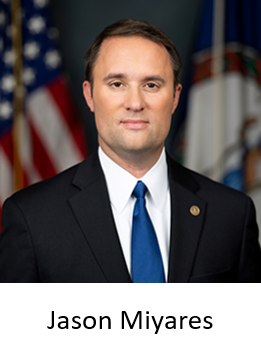
Youngkin asked Miyares to “investigate this situation immediately so that every student’s privacy, dignity and safety are upheld. Students who express legitimate concerns about sharing locker rooms with individuals of the opposite biological sex should not be subjected to harassment or discrimination claims.”
The Youngkin administration has policies in place that require students to use the locker rooms that correspond to their biological sex, and that “require parental notification if a student is permitted to use a locker room that differs from their biological sex” so that parents can opt their child out and be permitted to use alternative facilities. “Parental rights are not negotiable,” Youngkin said.
Miyares said this latest incident is “what happens when school boards disregard common sense…. This is about safety and privacy, not political correctness — and it’s time Loudoun County recognized that.” LCPS’s school board policy allows students “to use the facility that corresponds to their consistently asserted gender identity.” Staff must “allow gender-expansive or transgender students to use their chosen name and gender pronouns that reflect their consistently asserted gender identity without any substantiating evidence, regardless of the name and gender recorded in the student’s permanent educational record.”
Obviously, publicly funded schools are doing whatever they want despite state requirements and policies, at least in Loudoun County, Virginia, which has been a hotbed of controversy for years. Education Reporter has chronicled numerous issues occurring in the LCPS. (See October 2021, November 2021, January 2022, and more.) Despite ongoing parental complaints and outcry, the district appears to be continuing its flawed policies.
One bright spot in Virginia was the February announcement that the Virginia High School League (VHSL) had placed a ban “on student athletes assigned male at birth from participating in girls’ sports” in response to President Trump’s Executive Order. This was a departure from VHSL’s 2014 policy that implemented a waiver process “for trans students who had undergone sex reassignment before puberty or met other requirements like hormone therapy.”
How long the ban will be in place remains to be seen, but for now VHSL’s governing body believes its policies “need to be in compliance with [the president’s] executive order so that our member schools and school divisions wouldn’t have to choose between the league and the executive order.”
Washington state school district pushes back
On the other side of the country, the Kennewick School District has filed “a formal Title IX Civil Rights complaint with the U.S. Department of Education’s Office for Civil Rights (OCR)” against Washington state officials. Named in the suit are Washington State Superintendent Chris Reykdal, the Office of the Superintendent of Public Instruction (OSPI), and the Washington Interscholastic Activities Association (WIAA) “for policies and practices leading to sex-based discrimination in Washington state schools and student athletics.”
The parents’ rights group, Parents Defending Education (PDE), reported on the action in a March 27 “incidents” update. PDE explained that the Kennewick school district’s board requested “URGENT federal intervention due to open and egregious Title IX violations currently occurring within the state’s student athletics as well as requisite school district policies mandated by the state which are [in] direct violation of Title IX.” [Emphasis in original.]
PDE President, Nicole Neily, applauded the school board’s action. “It’s exciting to witness the growth of a movement that’s empowering school districts to finally speak up and protect our children when state education officials violate their rights — and federal law,” she wrote in an email to supporters.

At issue is the state’s and the WIAA’s approval of biological males participating in girls’ sports. The district pointed out that “at least one male [is] competing against females” in girls track. In 2024, the male student won the girls’ “state 400m title which led directly to his team winning the girls’ state 2A track title.”
The board further complained that the Kennewick School District is between a rock and a hard place because it risks losing state funds for refusing to revise its transgender policy “to conform to a state-wide model policy (3211/3211P) that directly violates Title IX” by allowing biological males to compete in girls’ sports. Conversely, changing the policy to conform with the state puts the district “in violation of President Trump’s executive orders” thus risking the loss of federal funding, which accounts for 10 percent of Kennewick’s annual budget.
The district explained that the state is further trying to force Kennewick to exclude parents from transgender identity changes involving their children by mandating that the district modify its policy to allow the gender identity of students to be hidden from parents.
In concluding its formal complaint, the district wrote:
- The Kennewick School Board is committed to fostering a school environment that respects both the rule of law and the fundamental role of parents in their children’s education. The [board] is committed to ensuring the protection of biological female athletics, maintaining “all female” locker rooms separate from male locker rooms, and prioritizing the privacy rights of our students. However, we find ourselves caught between conflicting directives that threaten not only our federal funding but also the rights and values of the families we serve. We urge your department’s immediate attention to this matter….
Is the tide turning?
Some believe the tide may be turning on the unprecedented and potentially dangerous practice of permitting biological males to participate in girls’ and women’s sports.
In a recent interview with the New Hampshire (NH) Journal, co-founder of Moms for Liberty and a visiting fellow at The Heritage Foundation, Tiffany Justice, said “we’re winning and the science, obviously, is with us.” NH journalist Michael Graham agreed that [biological] facts haven’t changed and “aren’t going away.” Most people aren’t going to continue to believe what they’re being told if their eyes tell them something different.
Justice says common sense is prevailing over far-left ideology. “I believe, through different litigation and lawfare as well as different policies that are being passed and major reforms in our medical institutions, this craziness, this madness, the idea of gender ideology will be stopped,” Justice said. “I do believe that the tide is turning.”

Female fencer Stephanie Turner, who took a knee in March rather than compete against a male athlete, was named “Courage Wins Champion” by XX-XY Athletics’ founder Jennifer Sey. The Daily Caller reported that footage of Turner’s action tallied “more than one million views in only hours.” She received a “DNF” (Did Not Finish) and her male competitor, Redmond Sullivan, moved on in the competition.
XX-XY Athletics states on its website that it is “unapologetic” about its goal. “We are here to protect women’s sports and spaces … Sex matters. It is the single biggest determinant of athletic performance. It is unfair and dangerous to allow males (XY) to compete in girls and women’s (XX) sports.”
Attorney, former judge, and legal writer, Patricia Barnes, posted on X that Turner was the real winner. “It appears she didn’t want to fence a male claiming to be a female,” Barnes wrote. “Bravo! And shame on @usfencing and the @NCAA for putting her in that position.”
Perhaps author, evolutionary biologist, Manhattan Institute Fellow, and publisher of Reality’s Last Stand.com, Colin Wright, Ph.D., summed it up best in his recent City Journal article:
- The presence of male athletes in women’s sports has become an unexpected political flashpoint—not because the issue is complicated, but because it is so straightforward. If politicians are willing to lie about something this absurd, we wonder, what else are they lying about? Some consider the issue trivial, but its absurdity draws a political dividing line: Are you on the side of common sense, or of a fanatical ideology?
A majority of Americans appear to agree with Wright. In addition to the Pew findings cited in Education Reporter’s lead article, the New York Times reported similar results of an Ipsos poll in January 2025 — that 79 percent of Americans oppose biological males competing in women’s sports, with just 18 percent supporting it.
Wright duly pointed out that the controversy “isn’t just about sports. It’s about whether we live in a society governed by truth or one dominated by ideological fantasies,” and that institutions embracing such irrationality must face consequences. This is precisely the core of why so many Americans believe the transgender madness must be defeated once and for all.
The South May Rise Again in an Educationally Positive Way
Like a few brave flowers blooming among weeds, several southern states have emerged as educational success stories, at least in the subject of reading. It turns out that, surprise, surprise, the difference in a nutshell was implementation of the tried-and-true phonics instruction method in their public schools.
An article by the online financial, economic, and political information source, ZeroHedge, singled out as an example the GEO Prep Mid City Academy, a K-8 public charter school in Baton Rouge, LA, “which is almost entirely filled with disadvantaged black students drawn from a lottery.” The school reportedly received failing grades for performance until it assumed new leadership in 2017, after which it “steadily improved and landed in the top third statewide in reading proficiency last year.”

The difference-maker was a focus “on the basics of learning: a proven curriculum, teachers trained to master it, and testing to hold everyone accountable for progress.” According to Kevin Teasley, the head of GEO Academies, a network of eight charter schools located in the Baton Rouge area of Louisiana and in Gary, Indiana: “We are just completely devoted to academic achievement. Our success comes from our repetitive and long-term commitment to getting results.”
Although as Education Reporter has repeatedly documented, charter schools often provide a better curriculum than traditional public schools, ZeroHedge contends that the GEO Prep Mid City Academy “is emblematic of the surprising public school revival in a handful of mostly southern states, with Louisiana and Mississippi leading the way … As public education sinks deeper into a crisis of low performance and high absenteeism, the southern states are demonstrating how schools can significantly lift student achievement.”
In Louisiana, Mississippi, and Tennessee, ZeroHedge points out, “it took many years to persuade districts to replace a mishmash of ineffective reading curricula with content backed by research that was vetted by the states. Just as important, teachers had to undergo intensive training to understand the many components of the science of reading….” Teachers colleges obviously fail to prepare them to provide the phonics instruction so necessary for creating proficient readers.
Historical context
ZeroHedge expressed surprise at how Louisiana and Mississippi could lead the rise in academic achievement given the fact that they are among the poorest states in the nation, a condition the article attributed to “the particularly deep penetration of slavery in their economies and their subsequent anti-union laws that have suppressed wages.” While there may be some truth in those assumptions, Phyllis Schlafly could have told them it was all in the method of teaching reading.

Additionally, the inimitable Thomas Sowell showed in his book, Social Justice Fallacies, that not all economic depression can be traced to race or even to slavery. He cited the Appalachia region of the country, for example, which he described as “more than 90 percent white,” but where “the median household income is not only less than half the median household income of white Americans in the country as a whole, but also thousands of dollars less than the median household income of black Americans in the country as a whole.” Sowell disclosed that, in 2014, New York Times Magazine rated American counties in economic terms, and “six of the bottom 10 counties were in eastern Kentucky,” which census data showed at the time to have populations that were “more than 90 percent white.”
While the turbulence of the post-Civil War era hampered reconstruction in the ravaged south, a variety of factors contributed to the region’s lack of economic progress well into the 20th century. Interestingly, History.com documents that it was “the triumph of the more radical wing of the Republican Party” after the war ended, “which began with the passage of the Reconstruction Act of 1867,” that allowed newly enfranchised black citizens to gain “a voice in government for the first time in American history, winning election to southern state legislatures and even to the U.S. Congress.”
But by 1876, “only Florida, Louisiana and South Carolina were still in Republican hands. In the contested presidential election that year, Republican candidate Rutherford B. Hayes reached a compromise with Democrats in Congress: In exchange for certification of his election, he acknowledged Democratic control of the entire South.”
History.com further notes:
- The Reconstruction Act of 1867 aimed to reintegrate the Southern states but faced opposition, particularly from Southern Democrats who resisted changes to the social order…. Ultimately, the Reconstruction era ended in 1877 with the rise of the Jim Crow laws, which enforced racial segregation and discrimination in the South.
In light of such historical fact, many find it curious that the Democratic Party managed to anoint itself as the champion of minorities, the downtrodden, and the poor.
Today’s reality
Today, the improved academic achievement in Louisiana, Mississippi, Alabama, and other southern states doubtless has less to do with the region’s past and more to do with its focus on teaching basic skills. Additionally, progressive forces are said to exert less influence in the south than they do in other areas of the country.
For example, ZeroHedge writes that both Louisiana and Mississippi “are in the bottom quartile in public education spending,” proving yet again that throwing money at education does not necessarily make it better. Perhaps just as important, Louisiana and Mississippi “have relatively weak teachers’ unions that typically oppose the kinds of reforms that are driving up proficiency scores in the two states.”
Conversely, states in the northeast including New York and Massachusetts, as well as other blue states including Michigan, Illinois, and California, all of which have powerful teachers’ unions, are more focused on DEI and other woke measures in the name of achieving equity rather than on reading and math proficiency. They view academic rigor and testing as unfair and racist. Teachers’ unions in California have thus far “prevented lawmakers from passing a law to mandate the science of reading. But a continuing decline in NAEP rankings” may eventually prove to be a “catalyst for change” that is so desperately needed.
The American Enterprise Institute’s director of education policy, Rick Hess, told ZeroHedge that southern states “have seized on a political environment that allows them to do the things that matter…. To drive improvement, it’s easier if you have the politics of Mississippi than the politics of Massachusetts.”
Blue states following

Some blue states are jumping on the phonics bandwagon. One example is Maryland, where RealClear Investigations reported last year that Carey Wright, the superintendent who spearheaded the reversal of fortunes in Mississippi, was facilitating a similar turnaround there. RealClear described Wright as “an old-school champion of rigorous standards” who was “pushing back against efforts in other states to boost test scores by essentially lowering their expectations of students.” Surprisingly, one of the states mentioned was Oklahoma, not exactly a bastion of liberalism, and known for its support of traditional academic standards and parents’ rights. (See Education Reporter, November 2024 and August 2023, etc.)
Another example of blue-state turnaround is Colorado. After a decade of effort, “phonics-based curricula” is getting into classrooms there, mimicking Carey Wright’s efforts in Maryland, and progress is being made on “a better accountability system.” ZeroHedge reports that Colorado’s national ranking rose “12 notches to 6th place last year.”
Wright told ZeroHedge that states “are mirroring a lot of the things that we did in Mississippi because it’s been successful. We used approaches based on research showing they work and that’s why I feel strongly about what we did.” But in blue states especially, education officials who genuinely seek better student outcomes will have to find ways to bypass the influence of powerful teachers’ unions and politicians that seem determined to maintain the dismal status quo by thwarting any meaningful improvement.
Experts say the next area for reform is likely to be in lifting math achievement. If Louisiana, Mississippi, Louisiana, Tennessee, and other states in the region continue on the successful course they have set for reading, the south may indeed rise again. Observers hope these states will lead the rest of the country in establishing a new and more positive pathway for American education.
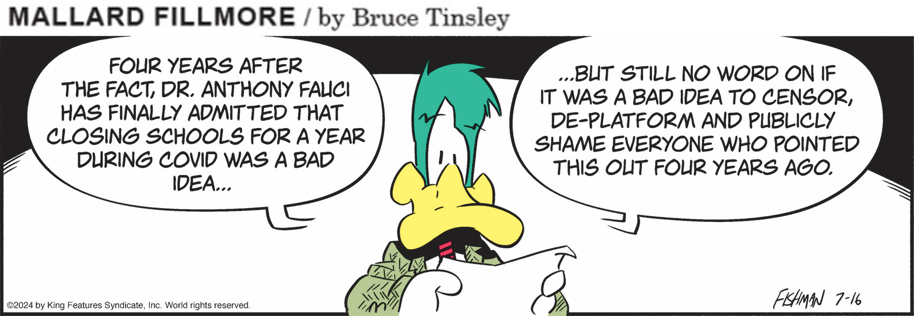
Mallard
Reader Books Flyer 2025

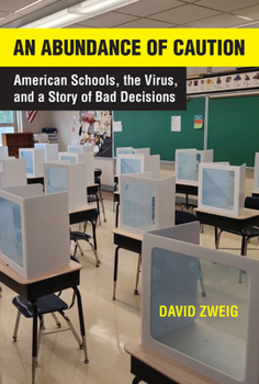
An Abundance of Caution: American Schools, the Virus, and a Story of Bad Decisions
By David Zweig, 2025
Journalist and author David Zweig has written a disturbing account of how bad decisions by people in high places forced the closing of schools around the world during the COVID-19 pandemic, mostly at the behest of flawed computer “modeling” that did not and could not account for the myriad real-life factors that were in play.
The tragedy of shuttered schools played out primarily in the U.S., as saner heads prevailed in other countries and schools reopened in Europe after only a short period, if they closed at all, which in Sweden they did not. Credible evidence compiled in Sweden and elsewhere showed that children were at low risk from the disease and that significant transmission at school was not happening.
The first 100 pages of this meticulously researched and documented book were enough to convince this reviewer that there was likely more at work than mere “errors” in judgment, as a pattern emerged of U.S. politicians, the medical establishment, and the major news media disregarding what should have been clear indications that schools did not need to be kept closed. The mere fact that the teachers’ unions vehemently supported the closures should have provided a clue that officials were on the wrong path.
 Zweig paints a detailed picture of how, despite convincing evidence that children were not at risk from COVID-19 and not likely to transmit it willy nilly to adults, flawed science and political motivations prevailed throughout the pandemic. The myth that children were at risk and posed a potentially lethal threat to adults won the day, and closing the schools was alleged to somehow mitigate these dangers.
Zweig explains, for example, that in 2020, the New York Times was “arguably the most influential media outlet in the country among the cultural elite,” impacting journalists and decision makers at other media outlets in particular. Essentially, the Times set the tone for the rest of the news media.
The author writes that a week before New York Governor Andrew Cuomo’s May 1st, 2020 announcement that New York schools needed to remain shuttered in order to “keep students and educators safe,” the Times published a brief writeup of a call President Trump had with governors in which he suggested some schools should reopen. The only comment in the article on Trump’s suggestion was that it was “unbidden” and ran “counter to the advice of medical experts.” There was no mention of the fact that schools in Europe were reopening or that medical experts there had reached the same conclusion as Trump “and the opposite conclusion of the unnamed American experts the Times was referring to.”
Similarly, masking was ultimately promoted for everyone and even forced on very young children despite a lack of evidence that masks actually worked and despite Anthony Fauci’s initial warnings against masking.
Zweig writes: “Fauci, CDC officials, and other health authorities were aware, or should have been aware, of the prepandemic scientific literature that showed a lack of evidence of benefit of community masking. For them to recommend a change in guidance and say, with certainty, that this was an effective intervention was essentially fraud.”
The author laments the almost total blackout in the U.S. media of relevant information that would in any way cast doubt on the wisdom of school closures, lockdowns, and forced masking. This included a June 2020 meeting of EU education ministers from 22 countries that agreed there was “no indication that reopening” schools, particularly primary schools, “furthered the spread of COVID-19.” Interestingly, Zweig himself wrote two compelling pieces exposing important evidence the major media outlets refused to cover, and the only news outlet that agreed to print them was Wired magazine.
An Abundance of Caution drives home the reality of the extent of suffering the closing of schools caused to children, beginning with an increase in abuse. While there were exceptions among private schools, most U.S. students didn’t return to their classrooms for more than a year. Many children from lower income families “were no longer getting a subsidized or free lunch at school, and millions of parents observed their kids slowly withering from months of isolation … A distressing number were disappearing from the system entirely.”
Countless others grew frustrated with online learning, and there were tales of lower income kids whose parents took them to fast-food restaurants to access the internet. Zweig writes that “one in five students never logged in or were sufficiently disconnected that they were deemed to essentially be truants….”
The author does look at other aspects of the pandemic, such as the rejection by public health leaders and the media of the theory that the virus had leaked from the lab in Wuhan, China. While not the author’s focus, it nonetheless paralleled the school closure mandate in that it relied on political consensus rather than scientific data.
A major focus of the establishment media and much of the medical establishment, as well as contentious Democrats, was on opposing anything President Trump and his Republican supporters did or proposed doing throughout his first term. Whatever position the president took on a pandemic-related issue, a vociferous line formed to oppose it.
After nearly five years of meticulous research, Zweig has done the American public an enormous favor. Rather than letting all the bad science and abject failures of the medical establishment and politicians fade into oblivion, he spells it all out in meticulous detail. It’s not a pretty picture, and it should infuriate all right-thinking people.
The horror of the pandemic, and the mistakes that could have been mitigated or prevented, should not be forgotten. Questions should be raised as to the true motives of the main players and decision makers in directing what was truly a national scandal. Was the main goal to thwart and discredit Trump? Was it, as some observers believe although not mentioned in Zweig’s book, to see how far populations could be pushed into submission?
We will likely never know, but Zweig has written a compelling and thought-provoking page turner that all Americans should read.
To read the entire book, go to Amazon or Thriftbooks to order!
Education Briefs

The transgender agenda appeared to run aground in the liberal United Kingdom last month, when the UK Supreme Court declared that men who say they are female are NOT ‘women.’ WND.com reported that the high court’s “stunning” decision “reversed an agenda that long had been making inroads into society there.” Top UK news source, The Telegraph, described the decision as a “landmark ruling.” Author JK Rowling hailed it as a “victory.” The unanimous 88-page decision stated that “the concept of sex is binary,” under the UK’s Equality Act of 2010. And the court action didn’t stop there. According to Scotland’s The National, a judge in that country has ruled that “Scottish schools must have single-sex toilets.” This ruling came as the result of a lawsuit by parents “who had withdrawn their child from Earlston Primary School” after officials planned for the school’s new building to only include “unisex lavatories,” a policy the court found to be illegal. The parents further shared their fear that their child would be punished if he “misgendered” a trans student, and that they “felt they had no choice” other than to take him out of the school, which they said “left him devastated.” The child’s mother raised concerns in 2023 when the school pushed for the “social transitioning” of a student who was then allowed to participate “in sports day races based on ‘gender identity.’” The parents expressed gratitude over the victory, but aptly noted that “common sense says we should never have been in this position in the first place.” The ruling covers all schools in Scotland.

On May 19, the organizations Defending Education, Colorado Parent Advocacy Network, Protect Kids Colorado, Do No Harm, and Dr. Travis Morrell filed a federal lawsuit against Colorado state officials for a new law these groups say violates the First and Fourteenth Amendments to the U.S. Constitution. Colorado’s H.B. 25-1312 forces citizens “to use language endorsing the State’s views on highly contested and highly political matters of sex and gender.” The law promotes gender ideology; specifically, “the notion that sex is not fixed at birth,” that individuals can be “born in the wrong body,” and that those “experiencing gender dysphoria should use potentially irreversible procedures (including hormone treatments and surgery) to change their body to conform to an internal sense of gender identity.” Section 8 amends Colorado’s “Anti-Discrimination Act” to compel citizens to call those claiming to be the opposite sex by their “chosen name” and any other words by which the individual “chooses to be addressed.” Persons failing to do so are guilty of a “discriminatory practice” under the new law, and also if they “’publish, ‘display,’ ‘circulate,’ or ‘mail’ any communication that ‘indicates’ that a person’s presence at a place of public accommodation is ‘unwelcome, objectionable, unacceptable, or undesirable’ because of ‘gender expression.’” Which means individuals can dress or act however provocatively they wish despite any rules of decorum a business or other entity may have in place. The law also prohibits Coloradans who own or work in “a place of public accommodation from publishing or sending materials that refer to a transgender-identifying individual by their birth name (i.e., not their ‘chosen name’) or use their biological pronouns (i.e., not their preferred pronouns).” The plaintiffs say they are bringing this legal action “to protect their rights, their members’ rights, and the rights of every person in Colorado who does not want to be punished” for their sincerely held views about sex and gender. They further assert that the contested provisions of the law “should be declared unconstitutional, and Defendants should be enjoined from enforcing them.” Education Reporter will follow the progress of this litigation.

Disturbing student test results paint a failing picture in both blue and red states. The watchdog group, Wirepoints, reports that according to 2024 data, not one student tested proficient in math in 80 Illinois schools. In reading, not a single child tested proficient in 24 schools. However, these same schools “graduate nearly 70 percent of their students,” according to the Illinois State Board of Education’s 2024 “Illinois Report Card.” As Wirepoints notes: “Teaching students the basics of reading and math is the bare minimum function of an educational system. Unfortunately, an increasing number of Illinois schools don’t accomplish that, even though covid is one more year behind us.” Two states away, students in the red state of Kansas fare somewhat better but demonstrate disappointing results nonetheless. The Kansas Policy Institute (KPI) reports that the state ranks #15 in education spending but 34th overall in student achievement. “Once again,” they write, “the data disproves the education lobby’s claim that spending more money is the key to achieving better outcomes.” For example, KPI charges that the Kansas Association of School Boards claims the state’s public schools rank #13 in achievement, “but that’s not true.” Rather, the Kansas NAEP proficiency rankings “range from #29 to #44, and ACT demographic scores are in the mid-30s.” In 2023, Kansas spent $19,885 per student, adjusted for the cost of living, while Illinois spent $24,979. In contrast, of the states referenced in The South May Rise Again, Louisiana spent $17,724, Alabama spent $16,884, Mississippi spent $16,106, and Tennessee spent $15,631. While the education debacle in Illinois has been well publicized, observers point out that public education costs are extremely high across the country when compared to overall low student achievement. Illinois and Kansas, among many other states, may want to learn from their southern neighbors, who are spending thousands of dollars less per-pupil annually while achieving far better academic results.
Boy wins girls HS track events in Maine; parents are both college professors
By Dave Huber, Associate Editor, The College Fix
Originally posted on The College Fix website, May 10, 2025. Reprinted by permission.
That thing that “never happens” happened yet again last week: A biological male competing against females won first place in two track events.
It happened in (surprise!) Maine, which so far has held firm against President Trump’s executive order banning biological men from competing against women in interscholastic athletics.

In what appears to have been a tri-meet, North Yarmouth Academy junior Soren Stark-Chessa won the girls 800 meter and 1600 meter (mile) runs, the latter by almost 20 seconds.
As noted by Outkick, the 800 event was a closer race with Yarmouth High’s Lilah Connor finishing second by one-and-a-half seconds. In a video you can see Connor shaking her head in dismay after crossing the finish line.
The hilarious thing about Stark-Chessa’s victories is that his winning times suck. He won his events with a 2:43.31 and a 5:57.27 respectively.
Given that the meet appeared to have been a local one among three schools, I had a sneaky suspicion he did “just enough” to win … without making it look too lopsided.
Lo and behold it appears I was right: Last year as a sophomore, Stark-Chessa won the state “Class C” girls 800 championship with a time of 2:19.72 (ten seconds ahead of the second place girl, which is rather substantial for that distance), and finished 3rd in the 1600 with a 5:10.08, both substantially faster.
But even those (girls’) championship times are at best mediocre for high school boys. Had he run in those boys’ championship competitions, Stark-Chessa would have finished 19th in the 800 meters and 22nd in the 1600.
(Disclosure: Yours truly was a track guy who ran the 400 and 800 meters in high school — best times 49.8 and 2:03.00 respectively — but I ran a 5:03.5 mile in 8th grade. My younger sister would go on to heights of much greater magnitude.)
Stark-Chessa apparently began identifying as female sometime between his freshman and sophomore years as he competed on the boys’ track team in 9th grade, according to Outkick.
Stark-Chessa also has been an all-state “girls” cross country runner and an all-conference “girls” Nordic skier. In the fall of 2023, a parent of two girls who raced against Stark-Chessa in cross country said her kids were in a “lose-lose situation.”
“They don’t want to pretend Stark-Chessa is a girl and congratulate him on beating females,” the parent said according to The Lion. “But they fear they will be seen as ‘hateful’ or bad sports otherwise.”
Oddly enough Stark-Chessa’s parents are both college professors. Soren’s dad, Frank Chessa, is a professor of medicine and associate course director of ethics and professionalism at Tufts University School of Medicine.
Soren’s mom, Susan Stark, teaches philosophy at Bates College where she’s at work on a pair of projects, according to her faculty page. The first is “a defense of the moral and social imperative of making reparations, not only for institutionalized slavery, colonialism, and genocide, but also for ongoing racist policies and white supremacy.”
In a 2022 paper, Stark notes one reparative approach is returning “stolen” land to descendants of original indigenous inhabitants (“historical injustices must be acknowledged, addressed, and repaired—that their significance overrides any harm caused by returning the stolen land”).
The second project deals with “reproductive ethics” for which Stark argues that “reproductive justice […] requires that midwifery and obstetric care address structural racisms and other forms of oppression in their practices and in the education of their practitioners.”
Dave Huber has been writing about education, politics, and entertainment for over 20 years, including a stint at the popular media bias site Newsbusters. He holds degrees from the University of Delaware and taught in the First State’s public schools for over 25 years.