The ‘Q’ Behind LGBT: What it Means
While the argument could be made that any sense of traditional sexual normalcy has already been shattered with the advent of the transgender movement and the general acceptance in American culture of sexual deviancy, others say we haven’t seen anything yet.

For years, the Left trumpeted the acronym “LGBT,” which stood for the labeling of individuals as Lesbian, Gay, Bisexual, and Transgender. In 2016, however, the Gay Lesbian Alliance Against Defamation (GLAAD) added ‘Q’ for Queer, lengthening the acronym to LGBTQ to include so-called “queer or questioning identities.” More recently, activists have tacked on an I and an A — for Intersex and Asexual — in their endless quest to expand opportunities for the denial of immutable biological reality.
But it is the addition of Q to the acronym that is raising concerns among both conservatives and liberals, who charge that queer theory is a doorway to the normalization of pedophilia, bestiality, and virtually any form of sexual deviancy that remains taboo.
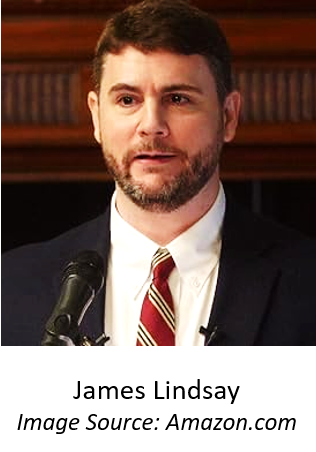
Author, researcher, and mathematician Dr. James Lindsay wrote on New Discourses.com that queer education is child abuse and that “nearly all of the gender and sexuality education in America is ultimately based upon Queer Theory, which has nothing to do with ‘LGBT’ education.” He adds: “Queer is not an identity like gay, lesbian, or bisexual. It is by definition an explicitly and intentionally activist identity. That is, it is a political stance, not a fact of who someone is—in fact, not an identity at all.”
An article in The Epoch Times last August described “queer theory” as a sexual ideology that began gaining popularity during the 1970s. Proponents “embrace the idea that sexual consent laws should be eradicated for all children, even infants,” a notion that harkens back to the flawed (and criminal) research of discredited former zoologist and “sex researcher” Alfred Kinsey, who used pedophiles to carry out twisted experiments on innocent young children and babies in the 1940s and ’50s.
Kinsey claimed his research proved human beings are “sexual from birth,” and, as The Epoch Times writes, “queer theorists [today] embrace the idea that sexual consent laws should be eradicated for all children, even infants.” (See Alfred Kinsey & John Money: Psychopathic, Serial Sexual Predators (devilslane.com))
Pedophilia or sexual orientation?
The Times article laments that while conservatives are preoccupied with the transgender agenda, there is a quiet push to classify pedophilia as a sexual orientation rather than as a potentially criminal disorder that calls for psychiatric treatment. “In academic circles,” they write, “the push is intensifying to classify pedophilia as another sexual orientation, instead of a mental disorder.”
One obvious step toward this end is replacement of the word “pedophile” with the term “minor-attracted person” (or MAP), a designation that is considered “less stigmatizing” for those who are sexually attracted to children but do not act on their urges. Former Old Dominion University Professor Allyn Walker, a female-to-male transgender, argued in her book The Long Dark Shadow: Minor-Attracted People and Their Pursuit of Dignity, that “MAPs” deserve less stigma, and that the general public does not understand the difference between sexual attraction to children and criminal behavior.
After Walker’s November 2021 interview with the Protasia Foundation, during which she called attention to the preferred “minor attracted persons” term and caused a stir in the media, she and Old Dominion parted ways. She blamed “mischaracterization” of her research due partly to “my trans identity” for her unplanned departure from the university.
Observers say the value in re-categorizing pedophilia as a sexual orientation is to render it another protected class. Thirty-year veteran of prison counseling, Jon Uhler, who has worked with sex offenders, told The Epoch Times that counselors are now being trained to view sex offenders as victims of trauma. He said they are taught to consider information from interviews with pedophiles as truth, instead of “realizing that they’re dealing with the world’s greatest deceivers.” Uhler speculated that there will be “a push to have [pedophilia] recognized as a sexual orientation, which would grant it civil rights status.”
Destructive pedagogy
James Lindsay wrote that queer theory teaches kids to “resist and challenge all norms and expectations of normalcy,” with the intent to make them activists “in this disruptive, destabilizing mode of misunderstanding the world. That has no place in our educational institutions, especially when it’s happening outside of parental knowledge and approval.”
He uses as an example the Drag Queen Story Hours (DQSH) in schools and libraries, which pose as family-friendly enticements to get kids interested in reading, but which in reality provide “a performative approach to queer pedagogy that is not simply about LGBT lives, but ‘living queerly.’” Lindsay quotes the educational paper Drag Pedagogy, which argues for Drag Queen Story Hours in schools:
- It may be that DQSH is “family friendly,” in the sense that it is accessible and inviting to families with children, but it is less a sanitizing force than it is a preparatory introduction to alternate modes of kinship. Here, DQSH is “family friendly” in the sense of “family” as an old-school queer code to identify and connect with other queers on the street.
Taken an ominous step further, activists claim that protecting children’s innocence “can injure the child’s development” and that offering “a new mode of analytical inquiry that insists upon embracing the child’s queer curiosity and patterns of growth” is preferable. (Ref. “Queer Futurity and Childhood Innocence,” by Canadian researcher Hannah Dyer.)
Lindsay explains that Dyer’s paper “is specifically about and contains a section heading on ‘Queering the child’s innocence,’ which is perfectly in line with what the ‘drag pedagogy’ people want. Queer Theory in education is therefore so destructive that it aims to rewrite the innocence of childhood as an evil that prevents children from developing ‘queer curiosity and patterns of growth.’”
Protected class
It’s easy to see the threat this line of thinking presents in light of changing the status of pedophilia to sexual orientation. When a group of 50 parents successfully prevented a Drag Queen Story Hour at the San Fernando Public Library last October, the featured drag queen, Pickle, publicly admitted: “It is not a person’s right to physically prevent a protected class of citizens from entering a public library.” [Emphasis added.]
Lecturer and author Derrick Jensen told The Epoch Times that “queer theory examines what is normal and who that hurts or helps…. Normal is oppressive…. Queer theory argues that the violation of the child doesn’t cause the harm done by adult-child sex—it’s caused by a society that makes the child feel guilty for having sex.”
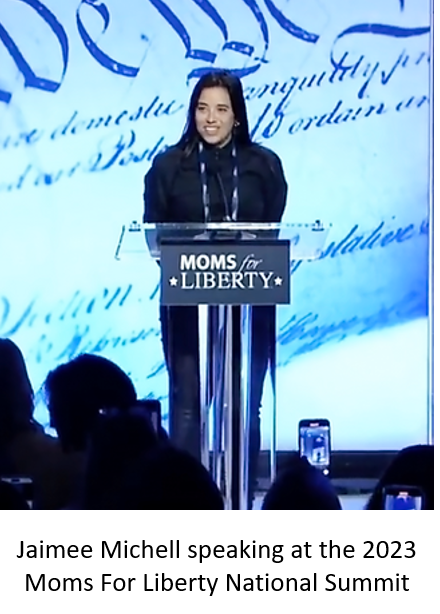
Gays Against Groomers founder Jaimee Michell agrees that queer theory seeks to normalize pedophilia. She noted that some of its earliest proponents were pedophiles, including the poet Allen Ginsberg, a supporter and member of the North American Man/Boy Love Association (NAMBLA). Ginsberg wrote an essay defending child sex in 1994 which claimed that “pubescent boys and girls” would “get used to our lovemaking (sic) in two days, provided the controlling adults will stop making these hysterical noises that make everything sexy sound like rape.”
Michell added that the transgender craze encourages kids to embrace the agenda without parental knowledge and ties in with queer theory’s low-key effort to mainstream pedophilia. “Allowing minors to make decisions on transgender surgery that would alter their lives forever is one step closer to allowing children to consent to sex with adults,” she said. “I think the push for queer theory in the classroom and gender ideology, indoctrinating them with pronouns, different genders that don’t exist in reality, is to push them toward and normalize them being able to consent.”
The Death of Science Education in America
Traditional science education in America is in its death throes, and precious few are seeking to halt its demise. One notable exception is physicist John Droz, a member of the CO2 Coalition, an all-volunteer group of 10,000 individuals dedicated to strengthening the understanding of the role of science and the scientific process in addressing complex public policy issues such as climate change.
The coalition believes science produces “empirical, measurable, objective facts and provides a means for testing hypotheses that can be replicated and potentially disproven.” In a nutshell, this describes the “scientific method,” a centuries-old approach to investigating the material world for the purpose of forming hypotheses and testing them with experiments to determine scientific reality and acquire knowledge. They write:
- Rooted in Isaac Newton’s work, which included creation of the calculus, the Scientific Method has long underpinned examination of the physical world and technological advancement. [It] requires that questions be asked, observations made, and hypotheses formulated, tested, and proven or rejected. Conclusions are always subject to challenges with new evidence and insights.
Last year, Droz went to bat for reinstatement of the scientific method to science education in North Carolina when he discovered it had been scrapped in his home state “for the promotion of a faddish theory of entirely unscientific inquiry.” After reviewing the state’s K-12 science standards, he filed a complaint with the North Carolina Department of Public Instruction. The state responded that they had received “some 14,000 inputs on the Science Standards,” and that Droz “was the only one bringing up the issue.”

But two members of the 18-member North Carolina Board of Education agreed with Droz, and the scientific method was restored to K-12 science education in July 2023. Droz acknowledged that the support of the board members was key to “correcting the deficiency in the state standards.”
He further believes that the lack of emphasis on critical thinking needs to be addressed by the state board, and is optimistic that this will be done as well. “It should be clear that there is an intimate connection between critical thinking analysis and the universal problem-solving procedure of the scientific method,” he said.
Next Generation Science Standards
What prompted the abandonment of the age-old scientific method in North Carolina’s science standards, and is the same situation occurring in other states? The catalyst was the release in 2013 of the Next Generation Science Standards (NGSS) and “A Framework for K-12 Science Education” which immediately preceded them. State boards of education began implementing the NGSS and by 2019, 20 states and the District of Columbia had adopted them in their entirety, with another 24 adopting standards influenced by the Framework.
A plethora of establishment organizations jumped on the bandwagon to support the standards, but a few skeptics took the time to properly analyze them. The Cornwall Alliance for the Stewardship of Creation, for example, a network of Christian theologians, natural scientists, economists, and other scholars warned last year that “a serious threat has come to the education of America’s children in the form of the NGSS and the Framework.”
Cornwall cited the group Citizens for Objective Public Education (COPE), which performed an extensive review and analysis of the documents and found three major issues along religious lines alone:
- The NGSS address religious questions but fail to do so objectively. Many people wouldn’t recognize this because they think of secularism as non-religious.
- The specific religion promoted by the science standards is Secular Humanism. The Humanist Manifestoes define “Religious Humanism” as “an organized set of atheistic beliefs that (1) deny the supernatural, (2) claim that life arises via unguided evolutionary processes rather than as a creation made for a purpose, and (3) claim that life should be guided by naturalistic/materialistic science and reason rather than traditional theistic religious beliefs.” The science standards affirm each of these positions.
- Key to every aspect of the science standards is their insistence that all scientific questions must be addressed and resolved solely in terms of Methodological Naturalism, “the idea that science is not permitted to explain the cause of events within the natural world with anything other than a materialistic explanation through the use of ‘material’ or ‘natural’ causes (that is a cause resulting from the unguided interactions of matter, energy and the forces).” Such a methodological principle excludes appeal to God or any other intelligence as the explanation for anything found in nature.
COPE provided comments on the Framework and NGSS in three documents dated June 1, 2012, January 29, 2013, and April 21, 2013. The organization believes the Common-Core aligned Framework “promotes a formula favoring an atheistic worldview, and that state standards in general tend to be ‘dumbed down’ so that most students can meet them.”
NAS exposes the NGSS
In April 2021, the prestigious National Association of Scholars (NAS) released a 98-page report titled Climbing Down: How the Next Generation Science Standards Diminish Scientific Literacy, which “presents an extensive critique, including exactly what is contained in the NGSS (and what is not), and how they adversely affect K-12 science education wherever they are implemented.”
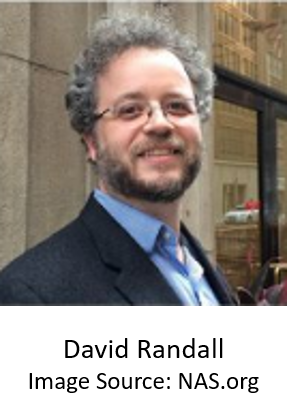
The report’s authors are appropriately credentialed, including Professor of Nursing Jennifer Helms, former NASA education and outreach teacher James Nations, and NAS’s director of research, David Randall. The authors charge that the NGSS abandon “thoughtful analysis, sorting through evidence, systematic analysis, the discovery of truth, and building arguments based on findings.”

Furthermore, they “severely neglect content instruction, politicize much of the content that remains, largely in the service of a diversity and equity political agenda, and abandon instruction of the scientific method, an omission which should alarm anyone concerned with the quality of K-12 science education and the future of science in general.”
In its October 31, 2023 weekly newsletter Countercurrent, NAS observed:
- The NGSS are an educational travesty which will do nothing but further cripple American science achievement at a time when we need it most. Even worse, there is no lack of quality science standards in the U.S.—many states simply abandoned them for the subpar NGSS, in large part to save face and properly pursue a DEI agenda in their schools. These states must reverse course and provide proper science education to their students….
What’s in the standards?
Climbing Down is more broadly focused to include K-12 education because, as the authors write:
- K-12 education has become extraordinarily nationalized in the last generation … These educational standards, promoted most notably by the Bill & Melinda Gates Foundation and the federal government, have sought to evade America’s traditional and constitutional delegation of public education to the states and localities—delegated precisely so as to avoid a centralized straitjacket on American education. The federal government’s financial incentives, combined with the bureaucratic evasion that these are only standards, not curricula, have created a de facto national curriculum, which limits school curriculum choice ever more tightly.
NAS acknowledges itself as “a vigorously pro-science organization. We recognize that systematic and disciplined inquiry into nature has shaped the modern world, mostly for the better. The aspiration to extend man’s understanding of biology, chemistry, physics, and the other natural sciences is both worthy and fruitful. And because we uphold that view, we are alarmed when we see forces at work within the institutions of science that check or compromise legitimate inquiry.”
NAS’s report cites the Thomas B. Fordham Institute’s Final Evaluation of the Next Generation Science Standards, which was critical of the NGSS despite Fordham’s support of the Gates Foundation and Common Core. After comparing the NGSS with 55 other sets of science standards, including those from all 50 states and Washington, DC, plus four non-state sets of standards, the best grade Fordham could give them was a C, along with a numeric score of 5 out of 10. NAS noted: “Even Fordham, the foremost organization in the country that rates state science standards, could not overlook the serious errors and inadequacies within the NGSS.”
At the outset, the report’s authors establish that the standards fail to meet even the basic prerequisites for a K-12 educational standard nor do they provide a science education adequate for taking introductory science courses in college.
Among the many problems with the NGSS is teaching to the test, a common flaw of all Common Core standards. But for true science education, writes NAS, “this poses a significant problem, because much of the content limited by NGSS ‘assessment boundaries’ — which specify what is not on a test and thus may not be taught at all — is crucial for understanding concepts that are foundational for future college-level science courses.”
The NGSS also lack math education, which has been replaced “by a preference for subjective judgment in critical areas.” Also deficient are chemistry, physics, and life sciences, especially biology, which may be understandable if viewed in light of the biological realities now being denied by mainstream medicine and culture as well as education. The physical sciences fare no better.
NGSS include Engineering
While the NAS report found the addition of engineering a positive note, which previous standards did not include, the authors acknowledge that:
- A substantial disconnect exists between the high-school engineering standards and the essential math and physics content that will allow a student to grasp engineering concepts. Without the requisite physics content, engineering can only be given a cursory nod. Likewise, the delay of algebra to grade nine in the Common Core mathematics standards results in pushing higher-level math so late into high school that vital trigonometry and calculus understanding is missing when a student learns high school-level engineering.
They add that the NGSS’s engineering component “consists overwhelmingly of ‘global issues’ such as environmentalism and social welfare, rather than any preparation for building bridges, offshore oil rigs, fiberglass, electronics, or space elevators. Neither does it mention that engineering might be dedicated to the national interest by work for the American military.”
Other troubling findings include that the NGSS rely heavily on computer models rather than empirical data which “encourages students to confuse the map for the territory, the abstracted representation provided by a model for the natural world itself.”
The climate sequence is replete with an “emphasis on activism to reduce pollution, etc., rather than disinterested inquiry into the nature of climate science.” NAS points out that from kindergarten onward, the NGSS insert environmentalist policy prescriptions and label them as science, along with the doctrines of sustainability and human-caused climate change … so conspicuous that it would be impossible for even a neutral reader to miss….”
The standards insert social justice propaganda into science classes to allegedly level the playing field for students, but in doing so, they sell all students short. “The central claim,” states NAS, “is that non-dominant groups, such as blacks, Hispanics, the poor, and girls, don’t do so well in science classes—because of the ‘privilege’ of ‘dominant groups.’ While the student population in the United States is becoming more diverse, science achievement gaps persist by demographic subgroups. Science standards therefore must be framed so that ‘Achievement gaps [are] closed among demographic subgroups of students.’ The NGSS characterize the ‘achievement gap’ as a function of privilege, which the standards must strive to eliminate.”
Many observers view this as insulting to minority groups in particular and to all students in general. As the NAS report states: “The NGSS do not explicitly say ‘we have removed rigorous content because we don’t believe black and Hispanic students can handle it.’ Yet the material they substitute for content knowledge, such as process and inquiry, is material meant in various ways to inspire and/or support ‘non-dominant populations.’” The bottom line: “the NGSS’ desire to promote diversity and equity subordinates science instruction to remedial English and mathematics.”
Finally, Climbing Down charges that the NGSS’ “astonishing devotion to activism” is entirely improper in science education. As with many other progressive curriculum standards tainting modern government education, the NGSS “facilitate the work of those activists who steer science education toward training progressive activists.”
The CO2 Coalition says John Droz’s example of standing for scientific integrity in North Carolina may provide broader inspiration to resist “the education establishment’s degradation of science teaching.” Along these lines, the coalition offers books, videos, and lesson plans free upon request, correctly asserting that “the cost of failing to repel the modern attack on rational thought is incalculable.”
Charter Schools Get Better Results
Parents are moving their children from government school district schools to charter schools in increasing numbers and have been doing so for the past four years. So confirms a report titled Believing in Public Education: A Demographic and State-level Analysis of Public Charter School and District Public School Enrollment Trends, released in December by the National Alliance for Public Charter Schools.
Charter School Success in the Big Apple

According to a recent Fox News report, New York City charter school students scored 7 percentage points higher on state English exams, with 59 percent of charter students earning a passing grade versus 52 percent of government school students. Charter students scored 13 percentage points higher on math exams, with 63 percent of charter students passing opposed to just 50 percent of government school students.
Fox interviewed American Federation for Children Senior Fellow Corey DeAngelis for the report. DeAngelis pointed out that “charter schools are doing more with less,” as New York City spends about $36,000 per government school student per year, with spending on charter-school students some 20 percent less.
He explained that charter schools have to cater to the needs of their customers. “Underperforming charter schools get shut down; underperforming government schools just get more money year after year.” He further noted that “charter schools are accountable to families and their children,” whereas government schools “are accountable to the teachers’ unions.”
DeAngelis predicts that when test score discrepancies become known, the familiar excuse will be that the government schools need more money. The teachers’ unions “will continue to try to restrict their competition as much as possible,” he said. “They did this already with the enrollment cap on charter school students in New York City, where 30,000 to 40,000 students are on wait lists as parents try to find better opportunities for their kids’ education.”
DeAngelis said all options should be on the table for parents, including charter schools and private schools. He charged that the teachers’ unions and the Democrat party have a “never ending money laundering scheme” whereby the money goes to the unions, gets funneled back to the Democrats, and then to the government schools. “Wash, rinse, repeat,” he said. “This is all about power dynamics. It’s nothing to do with logic or what’s right for the kids … Test scores are just one part of the story and parents are voting with their feet for charter schools in record numbers.”
Since 2019, New York charter school enrollment is up 10 percent, while government school enrollment is down 3½ percent. “Kids don’t belong to the government,” DeAngelis said. “Parents should make the decision” where their children go to school.
Alliance researchers studied enrollment data from 2019 through 2023 in both charter schools and government school district schools. Among the findings: Charter school enrollment has climbed 9 percent since 2019 while government-school district enrollment declined 3.5 percent. And this does not include the thousands of students across the country who are languishing in district schools while their names remain hopefully on charter-school waiting lists.
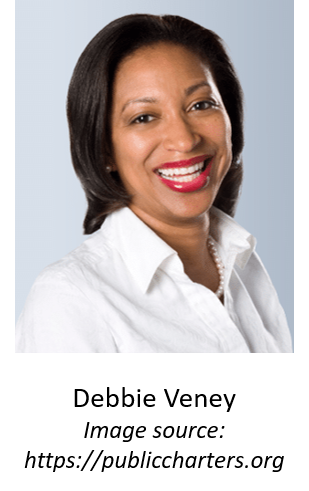
In a press release, Debbie Veney, Senior Vice President, Communications and Marketing at the National Alliance and report co-author stated: “Charter schools are the only piece of public education that is steadily growing. Where there is space, families want seats in charter schools. And when a good public-school option is not available, families are leaving public education altogether. This trend should serve as a rallying cry to anyone who believes we can keep telling parents to just accept whatever is given to them.”
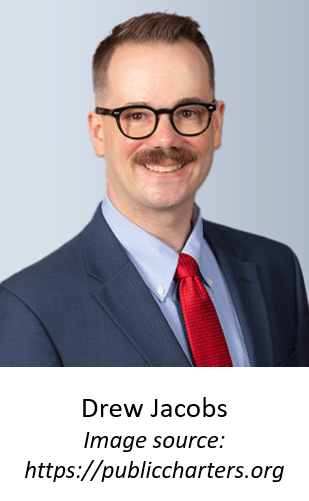
Drew Jacobs, Senior Director, Policy, Research, & Evaluation and also co-author of the report added: “Families seized the opportunity to select educational options that work better for their students, including charter schools. The result of continued charter enrollment growth and district enrollment loss has held steady over several years.”
A December op-ed in the Wall Street Journal (WSJ) noted that 2023 was “the year for school choice — from vouchers to homeschooling to pod schools with parents who use education savings accounts. The winners include charter schools, as union-run K-12 schools lost hundreds of thousands of students during Covid-19 who haven’t returned.”
The WSJ complained that while attendance and achievement are up in charter schools, particularly among black and Hispanic students, “these improvements remain too much at the margin, and unions still dominate K-12 school governance in most places. Charters face relentless hostility from school boards and politicians who deny equal funding or co-location in buildings where public schools are losing students and there is room.”
The op-ed went on to note that parents in general like choice options, and “as most students in most charters outperform those in nearby public schools, parents like having the ability to escape schools where failure reigns.” The article cited New Jersey as an example of where “the growing demand for charters might be eroding political resistance to school choice in a state where public unions have traditionally all but run the government in Trenton … Elected officials ignore the new political dynamics at their peril.”
In New York City, charter school students outperformed district government school students by a significant margin on recent standardized tests. (See sidebar, this page). The New York Post opined that “New York’s 25-year experiment with charters has proved they work…. Which leaves all the special interests that feed off the regular public-school system desperate to choke off charter growth, with teacher-union power in particular muscling lawmakers into outright hostility.”
The Post recommends that caps limiting the number of charters allowed in New York City and statewide be lifted, given that charter schools receive thousands of dollars less than district government schools, have more freedom to adopt innovative approaches since they are run outside the purview of the state’s department of education, and outperform their district school counterparts overall.
Commenters on the Post article made additional salient points about charter schools. One person noted that charter schools can more easily expel troublemakers than district government schools so as “to maintain a learning environment.” Another noted that “charter schools offer advanced math and science classes” whereas district schools are dropping such classes because they have been deemed unfair or as promoting inequality. But parents want such classes available to children who qualify and are interested in taking them.
About charter schools
As their name suggests, charter schools operate under unique “charters” or contracts between organizers and sponsors. Organizers may be groups of parents or teachers, community leaders and members, or a combination of these; sponsors may be for-profit education companies.
Charter schools are considered “public” schools but some critics charge that they should more aptly be described as private schools because they operate independently of traditional government school districts.
While advocates insist that charter schools are “open to all students,” the reality is that many charters have at least some control over student admittance. Many have a distinct focus, such as STEM education, the fine arts, or foreign language immersion, for example.
Some charter schools are smaller, some larger; some boast a more rigorous curriculum, such as a classical curriculum, and some are more project focused. This is not to suggest that all charter schools are automatically a better option, although many are. Regardless, the rising popularity of charter schools indicates that, like the school choice movement overall, many parents are finding charters a more viable option than the teachers’ union-directed government schools.
Fighting the Good Fight: MassResistance Turns 30
The past several years have given rise to many effective, parent-driven, grassroots organizations that are fighting to protect children from the educational onslaught of the Progressive Left. But one stellar group has been in the thick of the culture wars for decades: MassResistance just celebrated its 30th year of pro-family activism in 2023.
The organization’s beginnings were humble; a group of fed-up parents met around a kitchen table during the summer of 1993 in Newton, Massachusetts, which they describe as “a very liberal suburb of Boston.” The issue at the time was that the government school system was already introducing “a graphic, homosexuality-laced mandatory sex-ed program for the 6th grade.” The district kept very quiet about the content, but a few parents found out about it and were very upset.
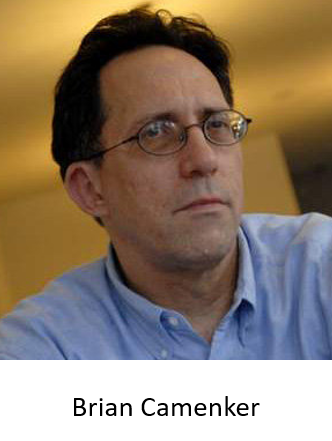
Led by concerned dad Brian Camenker, a couple of dozen angry parents took on the Newton schools in opposition to the curriculum. As Camenker recounted in 2018, the parents attended a School Committee meeting and “read the disgusting parts of the curriculum to them. The school officials were very hostile and duplicitous. The local media accused us of being terrible people. Boston’s homosexual newspaper viciously attacked us. We were novices, and it was trial by fire.”
The fledgling group refused to be intimidated. Instead, they recruited candidates for the eight School Committee positions in the 1993 fall election. Their opponents made every effort to thwart their success, including attacks by the media. Planned Parenthood even set up a political action committee against them in Newton.
Camenker reflected that although their candidates didn’t win, the group’s efforts and growing notoriety opened new doors. The Archdiocese of Boston helped connect them with conservative leaders across the state, and they gained new followers when the same odious sex education programs threatened students all over Massachusetts. These programs included the distribution of condoms that provided “X-rated instructions allegedly for ‘AIDS prevention.’”
In 1994, the kitchen-table group officially organized as the Parents’ Rights Coalition, and later that year, wrote and submitted a bill to the Massachusetts Legislature “that would force schools to allow parents to view these programs — and opt their children out.” With the help of the Archdiocese’s lobbying group, the bill was introduced in the State House, and while Camenker observed that “most legislators wanted nothing to do with it,” the coalition was gaining strength in numbers, particularly among moms who “wouldn’t take no for an answer” from their state representatives. In the end, the bill passed and was reluctantly signed by then-Governor Bill Weld. It still remains law in Massachusetts.
Becoming MassResistance
The Parents’ Rights Coalition continued its work in Massachusetts, exposing the radical LGBT agenda and fighting the imposition of “gay marriage” on the state in 2003 by activist judges on the Massachusetts Supreme Court. Although their efforts proved unsuccessful, they published a comprehensive history of how it came about in a book titled Mitt Romney’s Deception: His Stealth Promotion of “Gay Rights” and “Gay Marriage” in Massachusetts.
In 2005, the group started a blog called “MassResistance.” The name caught on and became synonymous with the culture war battles the organization was waging against the dark forces targeting children, families, and society as a whole. By 2006, they had officially changed their name to MassResistance.
The organization continued to attract attention with its fearless defense of parents and other champions of moral decency. They supported David Parker, a Lexington, Massachusetts father whose kindergarten son was being taught that having “two mommies” and “two daddies” was the same as having normal parents. When Parker met with school officials and demanded he be allowed to opt his son out of such lessons, they refused — and had him arrested and jailed overnight. MassResistance rallied in defense of Parker, whose story became international news.
Next, the group supported Dr. Paul Church, a urologist who was dismissed from several Boston-area hospitals for telling the medical truth about homosexuality. MassResistance became such a force in the state that many “horrible anti-family bills” were stopped in the legislature due to the group’s influence.
Going national
During the next few years, pro-family activists in other states and internationally took notice of MassResistance’s efforts and sought to emulate them. In 2009, the first MassResistance state chapter was formed in Virginia. More states followed, and within four years the group boasted chapters “from Hawaii to Maine.”
Now, after 30 years, most states have MassResistance chapters, including Washington, D.C. and the U.S. territory of Puerto Rico. Countries around the world such as Australia, Canada, several Caribbean islands, the U.K., Mexico, Nigeria, and Taiwan, to name a few, have followed the organization’s lead and formed comparable groups.
One example of MassResistance successes in the U.S. is in forcing the removal of pornographic books from school libraries. For a year, the Wyoming chapter documented the proliferation of obscene “children’s books” in Campbell County schools with the blessing of County Commissioner Daniel Reardon, as well as the attacks on parents who dared to object. As Education Reporter described, Reardon abruptly resigned amid the controversy, and a more parent-friendly commissioner succeeded him.
The Wyoming chapter reports that as of January 2024, “There’s been a momentous turnaround.” The revamped county commission appointed a conservative-majority Library Board that has withdrawn from the corrupt American Library Association and created a new anti-porn library book policy. When the former library director refused to follow the policy, she was fired.
A particular win for MassResistance chapters has been the disruption and prevention of Drag Queen Story Hours around the country; for example, in the San Francisco, California area. In one instance, the story hour went on but “was greatly watered down” as a result of MassResistance protests. This time, reported group members, “the ‘Drag Queen’ was just an odd-looking woman who read mundane books to the kids,” unlike the garish, sometimes frightening looking men who read provocative, pro-LGBT books to young children.
On its website, MassResistance states that its strategy is “to engage in issues and events that most other conservative groups are afraid to touch.” While some may take issue with this assertion, MassResistance members have shown over the years that they “don’t compromise with the Left.” The website states: “We provide analysis so the average person understands what’s really happening. And we give citizens and activists everywhere the tools and strategy to effectively confront the anti-family forces against them … We understand that the truth is a powerful force against the lies and propaganda of the Left.”
The organization points out the oft-proven conservative contention that the Left “cannot defend their radical positions through normal discourse and rational argument. Instead, their strategy is to demonize those who disagree with them.”
Without doubt, MassResistance is aggressively targeted; first and foremost by “the widely discredited Southern Poverty Law Center (SPLC), a far-left attack group that libels conservatives.” MassResistance charges that the SPLC “has posted the most outrageous lies” about the group, its staff, “calling us a ‘hate group’ for protecting children from left-wing agendas.”
MassResistance insists its members will stand strong against the SPLC and other groups that defame them. “This serves as a method for angry leftists and dishonest journalists to demonize and intimidate us and others. But no one here is intimidated!”
From Education Reporter to MassResistance: Congratulations on 30 years of fearlessly fighting for the pro-family cause, and here’s to 30 more years of success.
Education Related Links

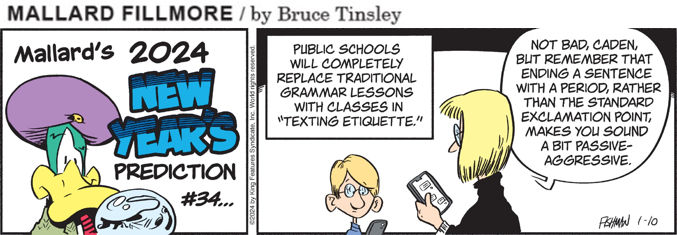
Mallard
Indoctrinating Our Children to Death: Government Schools’ War on Faith, Family, and Freedom — and How to Stop it
by Alex Newman, 2024, Liberty Sentinel Press
Even researchers who are familiar with the destruction of education in America and globally, including the major players who have brought about its demise, will learn something new from Alex Newman’s latest work. And to the casual observer as well as the “educational expert,” much of this shadowy story is barely known.
Newman is perhaps uniquely qualified to write such a history. A fan and admirer of the late educator, author, and historical researcher, Sam Blumenfeld, Newman co-authored one of Blumenfeld’s last books Crimes of the Educators: How Utopians Are Using Government Schools to Destroy America’s Children, and is a researcher and educator in his own right.
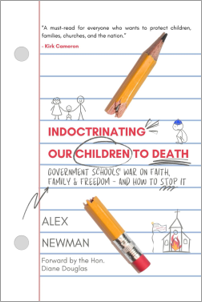 His latest book points out that public education actually began, not with Horace Mann or John Dewey, although these “socialist luminaries” certainly carried out their radical plans for the government takeover of education, but with an obscure individual named Robert Owen in 1820. Owen started a communist commune in Indiana called “New Harmony,” that rejected Christianity and private property. A Welsh utopian, Owen wanted to “show the world that collectivism was actually superior to individualism.”
Owen rejected the prevailing views of the day that man is innately wicked, believing that “the reason men were evil, selfish, individualistic, and violent was the result of their upbringing, not their nature.” He held that human nature is essentially good, “and that a collectivist education would help create what would later come to be known as the ‘New Soviet Man.’”
But Owen’s experiment failed miserably within two years. Newman notes that New Harmony preceded Karl Marx’s “The Communist Manifesto” by about two decades, but that its failure did not dissuade collectivism’s disciples. Rather, the prevailing wisdom “was that the commune failed not because of anything wrong with communism or collectivism, but because the people living there had not been properly socialized and ‘educated’ to be collectivists from childhood.”
Newman writes: “Just like Marx and Engels would claim decades later, the Owenites believed that what was needed were government schools that would take over child rearing from the earliest possible ages. And so that became their sole focus.” An interesting note is that Owen’s collectivist ideas on education, which he codified in a series of essays in 1813, became the basis for the oft-cited “Prussian Model” of collectivist education— “schooling of the state, by the state, and for the state”—which essentially prevails today throughout the world.
Indoctrinating Our Children details the progress of government schooling through the Horace Mann years, before which America’s thriving education system, dominated by homeschooling, church-run schools, entrepreneurs, and tutors, produced the best-educated people on the planet. As Newman notes: “Literacy data and vast amounts of anecdotal evidence from that era show that literacy levels were significantly higher in the mid-to-late 1700s than they are today. Modern studies on the subject confirm that.”
Along with Mann’s push to radically transform education from “the process of giving children intellectual tools and moral instruction,” to using tools for the purpose of “re-shaping human nature and society to achieve a heaven-on-earth ideal,” was the introduction of the “whole word method of teaching reading.” This was to replace the phonics method that had been in use for thousands of years. As readers of Education Reporter know, the failure to teach children to read by phonics has dogged the education establishment since Mann’s time, and which Phyllis Schlafly, among many others, warned about for decades.
Newman contends that the education establishment under Dewey and post-Mann established a “national religion” of Humanism. Charles F. Potter, a signer of the “Humanist Manifesto, “spelled out explicitly what few Americans were willing to see or understand at the time when he wrote in 1930: “Education is thus a most powerful ally of humanism, and every public school is a school of humanism.” A few decades later, this view was formalized by the U.S. Supreme Court, which ruled that, as Newman describes, “after centuries of being at the center of American education, the Bible and prayer in schools, as mandated by state and local authorities from the time public education came into being, were suddenly found to be ‘unconstitutional.’”
In dissent, Justice Potter Stewart wrote what an educated public should have seen from the announcement of the decision: “Refusal to permit religious exercises thus is seen, not as the realization of state neutrality, but rather as the establishment of a religion of secularism,” or what Dewey and his cohorts would have referred to as humanism. In short, while pretending to uphold the Constitution, the U.S. Supreme Court “did the very thing the Constitution was supposed to prevent Congress from doing. It established a national religion and compelled Americans to support it with their taxes, and more significantly, with their children.”
Indoctrinating Our Children is packed with information; so much so that it’s difficult to summarize. For example, on the topic of illiteracy, the author observes at one point: “Incredibly, some especially unhinged ‘educators’ argued that teaching children to read properly was all part of a vast ‘right-wing’ conspiracy. Now, brain scans performed with new technology have actually shown the damage being done to the physical brains of children victimized by the quackery … The education establishment pretended not to notice.”
“The fact that this giant ‘mistake’ continues to be supported by the education establishment to this day,” he continues—”and that it always seems to be socialists, communists, and collectivists pushing it — suggests that there is a much more nefarious agenda at work.”
From the Frankfurt School to the anti-American influences of the big foundations, notably the Rockefeller Foundation, to the NEA’s involvement with Soviet Russia to the nationalization of American education through the U.S. Department of Education, Newman leaves no stone unturned. He devotes a number of chapters to more recent developments in education, from the implementation of the Common Core Standards during the Obama Administration, to Social and Emotional Learning (SEL) and its many tentacles, to the extensive data-mining and digital monitoring of children, documenting its pervasiveness and sinister intentions.
He alludes to the oft-repeated conservative contention that the education department needs to be abolished, but notes that “getting the feds out, by itself, won’t solve the systemic problems plaguing education in the United States today.” He believes that abandonment of the government schools on a large scale in favor of homeschooling or the selection of a good private or religious school is the only answer for the preservation of children and the nuclear family.
“The time has come to treat this situation like the deadly threat that it is,” he writes. “If you still have children in a public school, or if you know anyone with children trapped inside, act like the building is on fire—because it is.”
This reviewer highly recommends Newman’s comprehensive and informative read on how U.S. education arrived at such a critical juncture, and the bleak outlook for reform, despite increased pushback from American parents, legislators, and concerned citizens. Whether or not public education is completely irredeemable is anyone’s guess, but Newman, for one, believes it is.
To read the entire book, go to Amazon.com to order!
Education Briefs
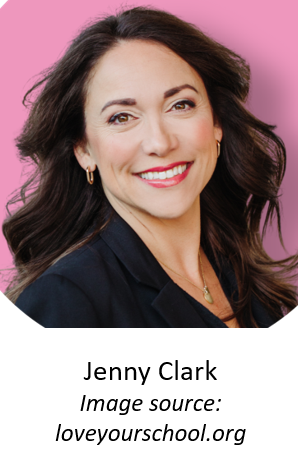
Supporters of school choice predict 2024 will be their third successful year in a row for growth. One year ago, Education Reporter described Arizona’s comprehensive school choice program, noting that it was the first of its kind in the nation but that it may be in jeopardy due to the change in the governorship from Republican to Democrat in the hotly contested 2022 mid-term elections. Since taking office, Governor Katie Hobbs (D) has been searching for ways to derail Arizona’s popular ESA (Education Savings Account) program, which the previous Governor Doug Ducey (R) signed into law. On January 16 of this year, The Center Square.com quoted Jenny Clark, founder of Love Your School Arizona as saying: “Governor Hobbs has made it perfectly clear that she wants to dismantle the ESA program at any cost. She wants to send tens of thousands of kids back to public school for 100 days. This would cause unbelievable educational chaos and trauma for Arizona children.” Clark is referring to Hobbs’ insistence that students be required to “spend 100 days in a public school in order to be able to use ESA funds.” Her scheme is part of the proposed state budget, which observers say faces “a tough road ahead with a Republican-led legislature.” Center Square pointed out that “Hobbs’ ideas align largely with proposals by Democrats in the legislature, who are hoping to rein in the program.” As for school choice success overall, American Federation for Children senior fellow Corey DeAngelis told the Washington Examiner that 2023 boasted “the biggest wins the school choice movement has ever witnessed,” with 10 additional states adopting some form of school choice. “A universal school choice revolution has ignited,” he said, adding that he expects this trend to continue in 2024. “Twenty-two states have GOP trifectas, where Republicans control the legislature and the governor’s office,” he continued. “If all legislators with ‘Rs’ next to their names voted like Republicans and listened to their constituents, we’d have at least twice as many states with universal school choice.”
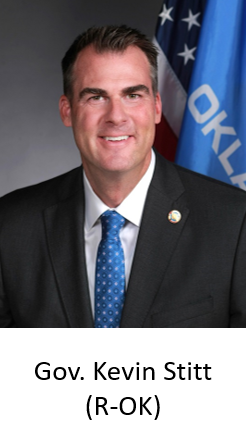
Diversity, Equity, and Inclusion (DEI) programs and offices seem to be in decline, at least in higher education, as the Washington Examiner recently documented. The article first noted that the imposition of DEI initiatives “was deceptively sold as a set of policies designed to promote ‘the fair treatment and full participation of all people,’ particularly groups that ‘have historically been underrepresented.’” But as the Examiner observed, DEI offices quickly became “epicenters of division and ideological conformity, stirring hostilities and imposing an intolerant monoculture.” Among the states taking action against DEI at the college and university level is Florida, which last May banned state funding for DEI programs at the state’s public universities. Texas also acted against DEI abuses last year, abolishing all DEI office training for staff and “eliminating diversity statements in hiring.” Iowa’s Board of Regents eliminated DEI positions at the university level and also at the narrower department and “unit” levels. In Wisconsin, Republicans compromised with Democrats, agreeing to limit DEI positions by putting a freeze on new hiring. In Georgia, 26 state colleges were barred from requiring job applicants to take “diversity loyalty oaths” and banned all DEI training, including for existing staff. Oklahoma’s Republican Gov. Kevin Stitt signed an executive order eliminating DEI programs and the related staff that are not necessary for ensuring compliance or accreditation. Stitt’s order also banned compulsory diversity statements for new hires. The Examiner noted that not all states will be able to achieve such results due to the political makeup of their governor’s offices and state houses. But the article stated: “Fortunately, 2023 saw more than a dozen states start to take action against the DEI hydra, with six achieving concrete steps that other states should follow.” Whether or not that happens remains to be seen, as onerous DEI programs and directives in business and industry continue to flourish.

Another Libs of TikTok (LOTT) investigative report exposes on X how the State of Virginia is working with Planned Parenthood (PP) to cut out parents from their child’s medical decisions using “judicial bypass.” The LOTT journalist posed as a 16-year-old pregnant girl looking to obtain an abortion without her parents’ knowledge. The PP administrator first admitted that she thought parental consent was required in Virginia and asked the caller to hold while she checked. When she returned to the line, she explained that in Virginia “there is a way to get an abortion without your parents being involved at all. But it does require you to get something called a ‘judicial bypass.’ It’s like a court order the court signs off on that says you do not have to have parental presence at your abortion.” She went on to provide a phone number for information on obtaining the paperwork, and then explained that “these organizations are typically going to do all of this for free. They’ll have someone represent you in court so you don’t even have to go. They’ll get that paperwork for you and then you will have to bring it with you to your [abortion] appointment.” The LOTT journalist confirmed that “my parents will not have to find out about this,” to which the PP administrator responded: “No, they won’t have any indication. It will be handled completely by the attorney that’s appointed for you. This is the reason judicial bypass exists.” The journalist then asked about financial help with the cost of the abortion, and was told by PP that they have “a limited amount of financial assistance available.” She also confided that there are “outside funding agencies” available to help with any shortfall, and offered to provide those phone numbers as well. Finally, the journalist was assured that “we [PP] would do everything we could to help you get somewhere [outside Virginia] where you could do it [obtain the abortion]” in the unlikely event the judicial bypass was not approved. But the PP administrator said: “I have never heard of somebody not being approved for a judicial bypass process.” PP of Virginia admits it will assist minors to cross state lines for abortions if necessary, and fund them, all without parental knowledge. And judges across the state assist in this scheme to thwart parents.

The Parental Rights Foundation wants parents to be aware that state legislatures across the country are launching their 2024 sessions and that the watchdog organization will be monitoring their progress. Founded in 2014, the Parental Rights Foundation’s mission “is to defend, support, and advance the right of parents to direct the upbringing, education, and care of their minor children through research, education, advocacy, and legal representation.” One of the organization’s activities is to monitor state legislatures for bills impacting parental rights, either in support of or opposition to those rights. “In past years, state legislatures have undertaken bills to protect parental rights as fundamental or even to spell out an entire parents’ bill of rights,” organization president Michael T. Ramey wrote on January 4. “Other legislatures have taken up bills to make sure public-school boards recognize a parent’s right to know what their child is learning in school and to be informed of changes to their child’s health and welfare. At the same time, there are legislative proposals every year that threaten the vital role of parents as the primary defenders and decision-makers for young children.” The Foundation sends letters and provides testimony to battle the bills that threaten children and families. “And when it makes strategic sense to do so,” Ramey writes, “we will email alerts to members so they can weigh in via emails or phone calls to their lawmakers.” In this way, the group hopes to stop bad bills from being passed. “On the flip side,” Ramey adds, “we look forward to when we can send letters or provide testimony in support of bills that offer the kinds of protections children and families need, such as protections rooted in liberty for parents to direct the care, custody, and control of their children. These are the wins we are working for.”
Celebrating History: A Glimpse Through Time in St. Louis’s Lafayette Square
Editor’s Note: Across the country, America’s history is being erased; statues are being removed, sports teams and even animal and bird species are being renamed to appease the WOKE. Following is a short walk down the 200-hundred-year memory lane of an historic St. Louis neighborhood, which has managed to retain its original flavor.
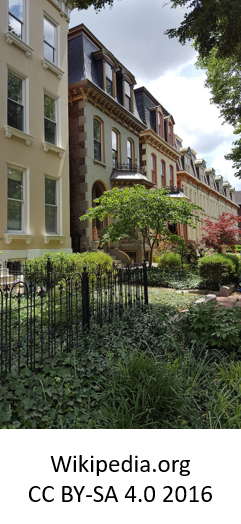
From the corner of Mississippi and Park Avenues in the historic Lafayette Square neighborhood of St. Louis, Missouri, the neighbors and passers-by have long admired the architecture of Victorian-style homes, listened to bands play on summer nights in Lafayette Park, or observed General Thornton Grimsley parading his cavalry around the loop in 1850, showcasing his military prowess. Standing in this same spot today, one can count up to nearly two hundred years and reflect that almost everything looks and sounds the same as it did long ago.
This is what it means to be part of an historic neighborhood. One does not just live in the community; the community lives on in the people. Its scent remains in refurbished old wood and the fresh clay dried in new bricks. Against the powerful cultural trend to tear down what is beautiful but decaying and build anew what is ugly but practical, the people of Lafayette Square have fought to preserve their history. Theirs is a success story, and one which merits a glance back in time.
It all began with the westward movement of American settlers. Even before the Louisiana Purchase in 1803, what is today Lafayette Park was already known as “the Commons,” hundreds of acres set aside for hunting, raising livestock, and gathering resources. Having completed their expedition, Lewis and Clark’s findings were being published and attracting more and more settlers to the area. The Gateway City of St. Louis offered the perfect opportunity for businesses to supply the adventurous souls heading west; one could make a fortune selling the necessities for travel or bartering the riches from previous westward explorations to the traffic passing through.
St. Louis was becoming not just a launching site for travelers but also for settlement. Men whose names remain well-known in the city made their debuts at this time. Henry Shaw’s iron company boomed, and frontiersman and businessman Robert Campbell’s fur trade expanded, providing the wealth Shaw would later use to create the Missouri Botanical Garden and allow Campbell the freedom to lavishly decorate his home with the Victorian furniture that visitors can still see today in this preserved landmark.
Living among these famous men were others lesser known but with similar stories of success. One was the aforementioned General Thornton Grimsley, a merchant in the saddle trade who patented the military dragoon saddle — the upgrade to the first cavalry saddle. Grimsley was a member of the St. Louis Board of Aldermen, and he enthusiastically supported retaining a portion of the Commons for the enjoyment of all the city’s residents. Another was Edward Bredell, who was involved in mining and merchandise. These men chose to settle in the Commons, which would later become Lafayette Square.
In those days, the specter of “the wild west” not only existed beyond the cities but often within them as well, and as much as parts of St. Louis boasted of wealth, they were riddled with “wild west” style crime. When St. Louis Mayor John Fletcher Darby, who served from 1835 to 1837 and 1840 to 1841, saw that crime was increasing in the Commons, he provided a solution: he encouraged people to move into the area so that the presence of law-abiding citizens might serve to drive out the rabble.
Thus, the public grounds were sold in 1836 to make room for housing, and the modern-day Lafayette area quickly became a seat of wealth in the city. Grimsley and Bredell both settled here, and not far from them Charles Gibson, who had been awarded “the Grand Cross of the Prussian Crown” by Emperor William II, and who would become the man responsible for keeping Missouri neutral during the Civil War. His neighbor and, consequentially, his daughter’s father-in-law, was Archibald Gamble, a retired lawyer who built a lavish Victorian Italianate mansion designed by local architect George Barnett.
Barnett’s style appealed to many local homeowners, and soon the architectural theme of Lafayette Square became the Victorian style. Today, strolling through its streets or having the opportunity to peek into these proud, long-standing homes during a house tour offers a nostalgic treat only found behind such old, elegant brick facades. The original tamers of the Commons likely never dreamed what would emerge from this piece of urban wilderness.
As new houses took shape, there arose a debate over a thirty-acre parcel of land that had been held in reserve. Homeowners argued that it should be set aside as real estate for public education. But Catholic residents in the area disagreed, arguing that public education “would not benefit the children.” (Public education was growing at that time with the influence of big government advocate Horace Mann, who favored the total takeover of education by the state, so these residents may have been prescient. (See Book Review: Indoctrinating Our Children to Death—Ed.)
In any case, Mayor Darby considered his options and approved the residents’ proposal to reserve the land as a park. In 1844, these thirty acres of no-man’s-land became the first public park in St. Louis. Shortly thereafter, in 1851, the area surrounding the park was formally christened “Lafayette Square” after the famous French soldier in the American War of Independence.
The creation of the park was a turning point in the neighborhood’s history, as it would become and remain the focal point of the Square. Yet the residents’ dreams of a beautiful place of recreation remained in the realm of imagination. Overgrown with brush, the park was such in name only, and those living nearby continued to use the grounds as grazing land for livestock. Little by little, the mayor and board of aldermen worked to make the dream of the park a reality. A fence was erected to keep cattle out. A fountain was built in the midst of the hills, and paths were cut through the trees.
Before long the wild land was tamed. A painting of the park from this period shows women in petticoats pushing strollers along the paths; bright parasols dotting the landscape, and men and women laughing around the fountain and across the bridge that had been constructed. The urban oasis soon attracted additional prominent local figures who built homes nearby. Stephen Barlow, president of “the St. Louis Iron Mountain and Southern railroad company,” who was also involved in the “Free Soil” movement against slavery, erected his house across from the park on Mississippi Avenue. (The Free Soil Movement was a small but “influential political party in the pre-Civil War period that opposed the extension of slavery into the western territories.”)
But perhaps the most influential homeowner was General Grimsley. The average neighbor might frequent the park not only for parties or good conversation, but more likely to witness the daily event of General Grimsley’s cavalry parades. The side-burned saddle merchant knew no better spot to train his troops, and perhaps flaunt his military prowess, than upon the neat paths that wound among the tall trees. Grimsley was, of course, the neighborhood “eccentric,” but he became a necessary part of the daily happenings there.
Like an epicenter, the life of the neighborhood branched out from Lafayette Park, and anyone walking down Park Avenue on a given evening could simultaneously hear music floating down from its pavilions or smell hops lingering in the air from nearby beer gardens. This was Lafayette Square in its golden age, before the winds of changed rolled in.
In 1896, a historically destructive cyclone blew through parts of St. Louis, leaving the Lafayette Square area in shambles. Houses were heavily damaged. Roofs were pitched. Some buildings never recovered. St. John’s Episcopal Church — which today is the home of St. Mary’s Assumption Catholic Church — still lacks the top half of its bell tower, a reminder of the twister’s impact on the neighborhood more than one hundred twenty-five years ago. As for the park, photographs reveal it was barely recognizable as residents stood dazed among felled trees and a solitary statue.
For the sake of the 1904 World’s Fair, St. Louis turned its attention to restoring the park to its former beauty, but other parts of the neighborhood were not so lucky. Many of the ornate Victorian homes were too expensive to repair. The original homeowners had passed on, and it remained up to later generations to decide how much they were invested in preserving the legacy of the past.

For many years, the houses remained standing but were in disrepair. Lafayette Square had escaped scarring from the Civil War unlike other St. Louis neighborhoods, but during the World Wars it was not protected as a historic site, and crime once again increased. The city began scheming to find more useful purposes for this tract of land.
During the 1950s & ’60s, St. Louis created plans for building projects and plans for interstate highways; plans which required the destruction of the old to make way for the new. Blueprints were drafted to install a new route through the middle of the city and, unfortunately, it would have cut through Lafayette Square as well, displacing more than seventy villas that were in the way. Michael Pfefferkorn — a correspondent to the mayor during this time — compiled a crisis list of city neighborhoods in need of restoration. Lafayette Square was at the top of his list.
Much like the French general after whom it is named, Lafayette Square stood a fighting chance to oppose demolition because it had a powerful ally — the neighborhood youth who took up the banner of preserving the area. Before attempting to bulldoze the neighborhood, the city compromised by essentially “putting it on sale.” Ornate Italian villas were listed at unbelievably low prices. One homeowner, for example, bought “a 23-room mansion on Park Avenue directly across from the center of Lafayette Park…[for] a shocking $12,500,” which is equivalent to less than $100,000 today (Webster, 2023).
The niche homes that exuded history, wealth, and a bygone age proved tempting to new home buyers. Parallel to the results of Mayor Darby’s plan over a hundred years prior, as more and more people moved in, crime declined and the charm of the area blossomed. The people united and formed The Lafayette Restoration Committee in 1972 to save their neighborhood from destruction. Visible changes were made. On the front page of Preservation News was the story “St. Louis Highway Rerouted,” as the committee successfully lobbied for redirection of the road.
The restoration was not easy. Scripted reconstruction plans for homes would cost thousands of dollars. But in 1974, the committee rejoiced to receive government funds as Congress passed Historic Preservation Loans legislation which “insured loans to preserve, rehabilitate, or restore residential structures of historic value.”
Continuous efforts on the behalf of homeowners worked to pique both local and visitor interest in the neighborhood. Pamphlets advertising house tours and booklets providing detailed explanations about the architecture of the villas were posted and published (Lafayette Square Restoration Committee, 1976). The French Restoration Committee also took interest in the area and hosted “Lafayette Days of Celebration” to showcase the historical celebrities after whom many of the streets are named: Auguste Chouteau and Pierre Laclede, for example.
Finally, in 1978 a grand committee — the Preservation Alliance of St. Louis — was founded to save many of the city’s neighborhoods. In the first volume of its newsletter the Preservation Alliance expressed its purpose in upper-cased type: “FIX IT, DON’T TEAR IT DOWN!” Five of its twenty-five members were advocates for Lafayette Square and among them was Mike Pfefferkorn. The neighborhood’s pride was being restored, and no one could have expressed it better than a local newspaper headline titled: “Lafayette Park, We Are Back.”
Today, hundreds of documents about historic Lafayette Square are available in the archives of the Missouri Historical Society, and their existence is no coincidence. Contemporary homeowners have taken up where past generations left off. They maintain their Victorian homes, expensive as the process may be. Lafayette house tours are still organized and advertised throughout the year. Nowhere else is a visitor to St. Louis likely to be more charmed than by the pastel-colored, cornice-crowned, three-story dwellings while walking up and down the cobblestone-sided roads heralded by old-fashioned street signs.
At the corner of Mississippi and Park, a coffee in hand, one may observe the residents chatting as they jog by, hear the fountains running in the park ponds, and listen to the breeze whisper about the long history of this unique neighborhood.
References
- Conley, T. G. (1974) Lafayette Square: An Urban Renaissance Lafayette Square Press.
The State Historical Society of Missouri Research St. Louis - Crisis Team List; Box 7; folder 137. Michael Gene Pfefferkorn Papers (S1219);
SHSMO-St. Louis Research Center. - Biddle, J. (March 1975). Community Preservation Efforts. Preservation News. Page 5.
Retrieved from SHSMO-St. Louis Research Center; Michael Gene Pfefferkorn Papers
(S1219); box 8; folder 176. - Webster, I. (2023). CPI Inflation Calculator. in2013dollars.com.
https://www.in2013dollars.com/us/inflation/1970?amount=12500 - Historic Preservation Loans; Box 7; folder 137. Michael Gene Pfefferkorn Papers (S1219);
SHSMO-St. Louis Research Center. - Lafayette Square Restoration Committee. (1976). Retrieved from SHSMO-St. Louis Research
Center; Michael Gene Pfefferkorn Papers (S1219); box 8; folder 176. - French Restoration Committee. (May, 1976). Lafayette Days of Celebration. Retrieved from
SHSMO-St. Louis Research Center; Michael Gene Pfefferkorn Papers
(S1219); box 8; folder 176. - Preservation Alliance of St. Louis. (July, 1979). Newsletter. Page 3. Retrieved from SHSMO-St.
Louis Research Center; Michael Gene Pfefferkorn Papers (S1219); box 7; folder 137. - Duffe, M. St. Louisans Rediscovering Victorian Homes Near Gracious Park. Retrieved from
SHSMO-St. Louis Research Center; Michael Gene Pfefferkorn Papers
(S1219); box 8; folder 176. - Lafayette Square Restoration Committee. (2023). Welcome to the Square. Lafayettesquare.org https://lafayettesquare.org/
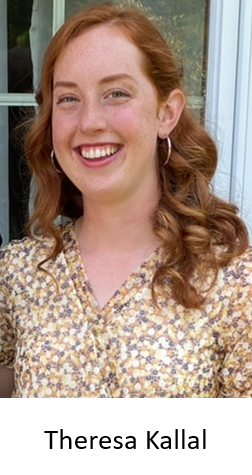
Theresa Kallal a junior attending the University of Missouri-St. Louis. She is completing her major in dual languages – Spanish and French – and enjoys widening her cultural competence through the many opportunities St. Louis and its unique history has to offer. She hopes to continue her studies abroad in Spain, and spend time in Europe polishing her language skills, which she hopes will benefit her in business or nonprofit work.