CRT Goes to Medical School
At least 58 of the top 100 medical schools in the U.S. now include mandatory Critical Race Theory (CRT)-related programs and curricula. With just over 150 accredited medical schools currently in operation, this means nearly 40 percent are already infected to some degree with “anti-racism,” “cultural competency requirements,” and “diversity, equity, and inclusion” propaganda. While we know CRT is taught in one form or another in most universities and colleges as well as in many K-12 classrooms, its proponents have now successfully invaded the once sacrosanct environment of the medical school.
The issue of wokeness in medicine surfaced in November 2022 when research posted on the CriticalRace.org website revealed details about CRT-specific programs and curricula on medical-school campuses throughout the nation. This website features an interactive map that visitors can click on to find a breakdown of CRT curricula specific to institutions of higher learning in each state, including medical schools.

A sidebar on the right-hand side of the page shows the schools that have recently been updated with information taken directly from their websites. For example, the University of California San Diego School of Medicine (UCSD) will “examine our current curriculum critically and rethink the way we present race and racial disparities” and “implement new health equity content in preclinical and clinical courses and exams.” The university vows it will “invest time in faculty training on implicit bias, microaggressions, racism, and health inequities.” Among other actions, UCSD will “develop an Antiracism Lab to dissect, explain and identify solutions to oppose racism and promote racial tolerance, equality and justice.” These actions are being integrated into a medical school that has enjoyed a reputation for excellence.
Washington University School of Medicine in St. Louis, Missouri is an example of a medical school much farther along in its promulgation of CRT. Founded in 1891 and long considered a top university in the U.S. and internationally, “Wash U” approved an “Anti-Racism statement and a school-wide Understanding Systemic Racism (USR) curriculum.” Diversity and bias training are required throughout the university’s seven schools, encompassing all faculty, staff, administrators, and students. It includes “training on systemic racism and white supremacy culture and how this impacts both education and health.”
Effort in Florida to curb CRT
Last April, Florida Governor Ron DeSantis signed House Bill 7 into law, dubbed the Stop Woke Act, “to protect Floridians from discrimination and woke indoctrination in the workplace and in public schools.” DeSantis said of HB 7: “[W]e will not let the far-left woke agenda take over our schools and workplaces. There is no place for indoctrination or discrimination in Florida.”
However, in November a federal judge blocked the new law as the result of a suit brought against the state by a group of university professors and students. Despite this setback, the judge’s action has not stopped DeSantis’ efforts to rid Florida’s public institutions of CRT.
Some observers note that while muzzling conservative viewpoints and silencing dissenters on social media and elsewhere, the Left was quick to attack the Florida law as a violation of the First Amendment. Fox News reported that in striking it down, “Judge Mark Walker took shots at both sides for their arguments,” but he ultimately characterized HB 7 as “positively dystopian.”
The Obama-appointed Walker was “slammed on Twitter” for overturning the law and for calling professors “priests of democracy.” One user tweeted: “Our judiciary is a clown show.” Another posted: “How about they [the professors] try being ‘priests’ of calculus and basic English skills instead?”
Yet another Twitter user suggested that the ruling “was a warning that woke ideology is a dangerous foe to target.” He added: “Don’t you dare attack the new religion.”
‘Do No Harm’
Just days after the ruling, Fox News Digital called attention to a report by the organization Do No Harm that shows the lengths to which the University of Florida College of Medicine (UFCOM) is going to push CRT’s “destructive woke agenda on students.”
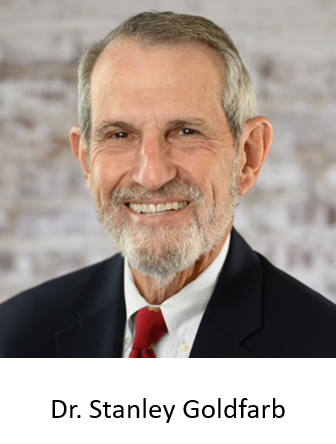
Do No Harm describes itself as “a diverse group of physicians, healthcare professionals, medical students, patients, and policymakers united by a moral mission: Protect healthcare from a radical, divisive, and discriminatory ideology.” The group’s chairman, Dr. Stanley Goldfarb, explains in a YouTube video posted on the Do No Harm website: We want to treat everyone as an individual, and in the best way possible. The radical ideology of ‘anti-racism’ is creating new barriers and bad practices that are endangering the health and wellbeing of everyone — including the people it claims to help.”
When Education Reporter reached out to Dr. Goldfarb for comment, he graciously responded with some additional thoughts:
- The woke agenda in healthcare and in medical education is particularly destructive for two reasons. First, focusing on equity in healthcare means discriminating; it means treating groups of patients differently based on nothing more than skin color. According to Dr. Ibram Kendi, the high priest of the woke religion, we must utilize current discrimination to remedy past discrimination. But patients should be seen as individuals and not as members of any racial or other group. The inevitable outcome will be increasing distrust of the healthcare system and therefore worse care for everyone.
He continued with his second reason for opposing CRT, calling out UFCOM specifically for a decline in the capability of incoming medical students due to the school’s preoccupation with diversity “rather than identifying the most qualified individuals who have performed in the most outstanding ways in their undergraduate studies and in their performance on achievement tests, [which are] good indicators of academic success in medical school. This focus on racial diversity replaces what should be the key focus on merit as the basis for entering medical school. Inevitably, this will mean a less capable healthcare workforce.”
Do No Harm’s report on UFCOM accuses the school of “indoctrinating its medical school graduates in divisive philosophies and other forms of social justice activism.” It maintains that this conditioning starts “the moment a prospective student begins exploring UFCOM, continues through the admissions process, and persists throughout the doctoral program. It further shows that UFCOM invests considerable resources into pushing CRT programs and curricula including the paid faculty and staff hired to advance them.
Do No Harm revealed that the main landing page of the UFCOM Office of Admissions displayed “a photograph of medical students with their fists high in the air, and holding a sign that reads #WhiteCoatsForBlackLives.” The report includes an image of the photo and caption, but when Education Reporter attempted to view the referenced page, it had apparently been taken down, possibly in response to the telling media coverage.
Florida colleges and universities capitulate
On December 28, Florida’s Director of Policy and Budget issued a memorandum to Commissioner of Higher Education Manny Diaz and Chancellor Ray Rodrigues requiring that each college and university system in the state provide “a comprehensive list of all staff, programs, and campus activities related to diversity, equity, and inclusion, and critical race theory.” The memo also demanded that details be provided on the “costs associated with the administration of each program or activity.” Diaz and Rodrigues and their departments were given a deadline of Friday, January 13, in which to respond.
On January 18, The Chronicle of Higher Education, among other news outlets, reported that “the presidents of Florida’s 28 state and community colleges” said in a statement that they would “identify and eliminate, by February 1,” any coursework or program “that compels belief in critical race theory or related concepts such as intersectionality.” The presidents affirmed they would remove “any programs, policies, or academic requirements” that promote or force students to believe “the idea that systems of oppression should be the primary lens through which teaching and learning are analyzed and/or improved upon.”
The joint statement was released at a Florida State Board of Education meeting, and admitted that the umbrella of diversity, equity, and inclusion (DEI) was shielding “some initiatives and instruction” that “push ideologies such as critical race theory and its related tenets.”
This capitulation of Florida’s college and university presidents appears to indicate a clear victory for Governor Ron DeSantis and his vow that “Florida is where WOKE goes to die.” As Phyllis Schlafly Eagles leader John Schlafly noted: “At first glance, this seems to be a very positive development.”
While state legislators and attorneys general in many other states are taking steps to curb the advancement of CRT in education and business, Florida continues to position itself at the forefront of such efforts as this latest development clearly demonstrates. Evidently, Florida’s higher education officials recognized in a very timely manner that the governor’s demand for fiscal transparency would have revealed the presence of CRT at their institutions.
Conservative political pundits are also fueling the fire with their rhetoric against CRT. Fox News contributor, radio commentator, and civil rights attorney Leo Terrell called it “government-sponsored racism.” Writer, editor, and commentator Ben Domenech claimed on a recent Fox News Sunday broadcast that “other nations around the world are laughing at the United States for embracing the woke religion that is critical race theory.”
But those who are speaking out against CRT come from all walks of life and political viewpoints. They include former and current school board members, parents, social media activists, and some celebrities. Despite its entrenchment in the education establishment, along with deep-pocket funding by leftist donors and foundations, the climate may be ripe in 2023 for the phasing out of this divisive and discredited school of thought on university and college campuses, in K-12 classrooms, and in the nation’s medical schools.
Legal Insurrection:
Because ‘the Remedy for Racism is Never More Racism’
“Legal Insurrection describes the spirit of what we do, and what we do is disruption. That’s how we’ve been described.” So says Professor William A. Jacobson of the Legal Insurrection Foundation (LIF), a non-profit organization founded in 2019 and whose mission is to “investigate, educate, and litigate.” LIF monitors CRT coursework, training, and related programs in educational institutions across the nation.
The year 2022 was LIF’s busiest and most prolific so far. One of its websites, CriticalRace.org, is a unique platform of databases and interactive maps showcasing the presence of CRT curricula and activities at universities and colleges across the U.S., and is mentioned in Education Reporter’s lead January article, CRT Goes to Medical School. The website’s expansive databases provide a wealth of verifiable information about CRT indoctrination in private schools, K-12 schools, medical schools, and most recently, in the nation’s military academies. The sheer volume of data has prompted more than 100 media mentions.
Jacobson told Fox News: “The ongoing damage to medical education and practice should be a wake-up call to lawmakers, since so much of medical school education and medicine is funded directly or indirectly through the government. The incoming House of Representatives should hold hearings on the destructive racialization of medical schools and medicine.”
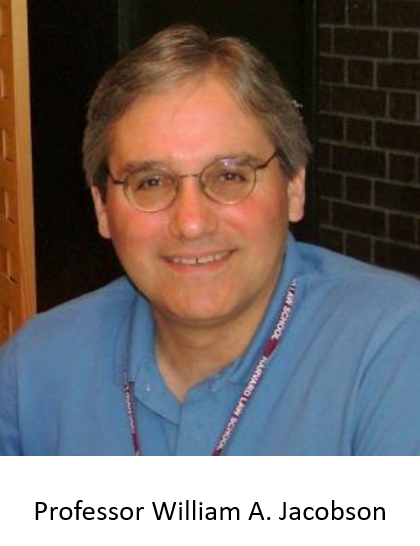
The Legal Insurrection Foundation’s websites also include Equal Protect.org, a brand new project the group is undertaking, which will be its focus in 2023. As Jacobson explains, the goal of the Equal Protection Project is “to fight the current form of racism that exists in school districts, in universities, corporations, and even government, which takes the form of preferring one race over another in order to advance the diversity, equity, and inclusion agenda.”
Providence Public School District prompts civil rights complaint
Jacobsen says LIF will shift from merely shining a light on the advancement of CRT through CriticalRace.org to “actually bringing litigation to challenge policies.” This new focus grew out of a complaint LIF filed against the Providence, Rhode Island Public School District (PPSD) with the U.S. Department of Education. The complaint charges the district with establishing a program that extends “student loan forgiveness to new teachers that is exclusively available to non-White educators.”
According to LIF, the PPSD openly discriminates by offering “up to $25,000” in student loan forgiveness “once the teacher completes three consecutive years of teaching in the district.” The catch is that the recipients of this largesse must “identify as Asian, Black, Indigenous, Latino, biracial, or multi-racial.” In other words, white teachers need not apply.
The complaint states, “The program violates Title VI of the Civil Rights Act of 1964, the Equal Protection Clause of the Fourteenth Amendment of the U.S. Constitution, and a variety of state law anti-discrimination statutes.”
It’s important to note that neither Jacobson nor others associated with LIF oppose recruiting teachers of various races and ethnicities. They believe the answer for past racial discrimination is equal protection and fairness for all, not more or different discrimination. “The discriminatory loan forgiveness program is a pure racial preference,” Jacobson say; “just check a box and you are eligible or not. It reduces people to the color of their skin or ethnicity, and doesn’t even try to take into account their individual life experiences.”
He adds that legally, there are right and wrong ways to achieve diversity, and that PPSD’s is an example of the wrong way. “Outreach to expand the pool of applicants and examining the systems to weed out bias to ensure equal treatment are permissible,” he explains. “Conditioning hiring incentives and employment benefits based on which racial or ethnic box is checked is the legally wrong way to do it.”
LIF files amicus briefs
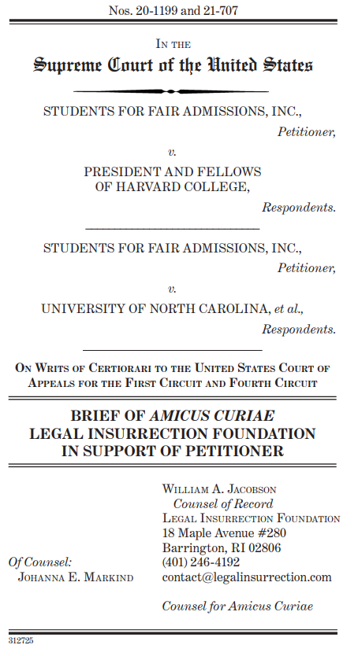
LIF has also been busy filing amicus briefs in support of free speech and against discrimination, including a SCOTUS Brief filed on behalf of the plaintiff and petitioner in the case, Students for Fair Admissions Inc. v. President & Fellows of Harvard College. The case was argued before the high court on October 31, 2022, and a decision could be announced at any time.
LIF’s Summary of Argument states:
- The grand judicial experiment of excusing racial discrimination in university admissions in the hope it would promote the educational objective of diversity of viewpoint has failed, and accordingly, this Court should overrule or modify its holding in Grutter v. Bollinger, 539 U.S. 306 (2003) (“Grutter”). Despite the Court permitting the use of race in higher education admissions, viewpoint diversity is increasingly endangered on campus. Since Grutter, the range of viewpoints permitted on campus, particularly on matters regarding race, has narrowed. It’s time to return to the constitutional prohibition against racial discrimination without an exception for education.
With more than 600,000 users of its CriticalRace.org databases, seven million interactive visits, and dozens of favorable stories by high-profile media outlets such as Fox News, The Blaze, Newsmax, National Review, The Epoch Times, Washington Examiner, Campus Reform, Breitbart, and The Daily Signal, and grudging mentions by less favorable “mainstream” media who nonetheless “recognize the thoroughness and reliability of the data,” LIF pledges to continue adding new features to its websites and expanding its strategic initiatives.
Jacobson encourages supporters and users of LIF’s websites to “stay tuned for exciting updates” in 2023. Parents and others who have voiced opposition to CRT applaud their efforts and wish them continued success.
Setting the Stage for College Transformation
A New Life for New College?
A January 6 press release from Governor DeSantis’ office listed his appointees to the New College Board of Trustees as summarized below.
Christopher Rufo is a leader in the fight against CRT in American institutions, a Senior Fellow for the Manhattan Institute, a writer for City Journal, and a filmmaker. Rufo’s research and activism inspired a presidential order and legislation in 15 states, where he has worked closely with conservative governors and lawmakers to craft successful public policy. Rufo earned his bachelor’s degree from Georgetown University and a master’s degree from Harvard.
Matthew Spalding, Ph.D., is the Kirby Professor in Constitutional Government at Hillsdale College and the Dean of the Van Andel Graduate School of Government at Hillsdale’s Washington, D.C., campus. As vice president for Washington Operations, he also oversees the Allan P. Kirby Jr. Center for Constitutional Studies and Citizenship and Hillsdale’s academic and educational programs in the nation’s capital. He co-chaired President Trump’s 1776 Commission and co-authored The 1776 Report. Spalding earned his bachelor’s degree from Claremont McKenna College and his master’s and doctorate degrees from Claremont Graduate School.
Charles R. Kesler, A.B., A.M., and Ph.D., is the Dengler-Dykema Distinguished Professor of Government at Claremont McKenna College and editor of the Claremont Review of Books. An author himself, Kesler’s most recent work is titled The Crisis of the Two Constitutions. Kesler earned his bachelor’s degree, master’s degree, and doctorate degree in government from Harvard University.
Mark Bauerlein, Ph.D., has taught at Emory University since 1989, with a two-and-a-half-year break from 2003–2005 to serve as director, Office of Research and Analysis, at the National Endowment for the Arts. Apart from his scholarly work, Bauerlein is an accomplished author, having published the eye-opening books The Dumbest Generation and The Dumbest Generation Grows Up, the second of which Education Reporter reviewed in May 2022. Bauerlein earned his doctorate in English from UCLA.
Debra Jenks, is a Partner and Attorney at Jenks & Harvey, LLP. She is an arbitrator for the American Arbitration Association and currently serves on the Fourth District Court of Appeals Judicial Nominating Commission. Jenks earned her bachelor’s degree from New College of Florida and earned her juris doctor from Lewis and Clark Law School.
Jason “Eddie” Speir, is co-founder, chairman, and superintendent of the Inspiration Academy. He was previously the Founder and Chief Executive Officer of 3t Systems and Mortgage Cadence. Speir earned his bachelor’s degree from the University of Northern Colorado.
The nominees are subject to confirmation by the Florida Senate.
On January 6 of this year, a date that may eventually live in infamy for reasons other than the so-called January 6 “insurrection” of 2021, Governor Ron DeSantis appointed six conservatives to the 13-member board of trustees of the New College of Florida. DeSantis’ goal is to transform the 700-student, leftwing public liberal arts institution into “the Hillsdale of Florida.”
The governor’s office told Fox News Digital in a statement that the DeSantis appointees all have “a firsthand understanding of the Florida education system as a product of their work with us and the Florida Department of Education on other important initiatives.” The statement claims that New College has been “captured by a political ideology that puts trendy, truth-relative concepts above learning,” and that it “has reached a moment of critical mass, wherein low student enrollment and other financial stresses have emerged from its skewed focus and impractical course offerings.”
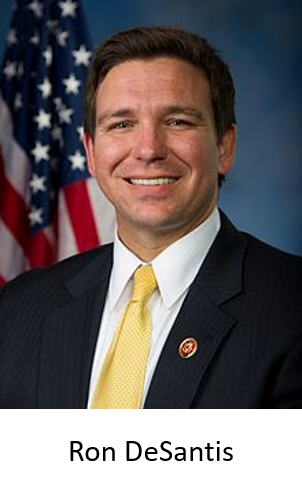
According to new appointee Christopher Rufo, the governor is taking an important step in the right direction to reclaim American institutions that have been usurped by Marxists. “Left-wing radicals have spent the past fifty years on a ‘long march through the institutions,’” he said. “We are going to reverse that process, starting now. Governor DeSantis has laid out a vision for recapturing the institutions and restoring them to American principles.”
Rufo is a formidable foe of CRT, and an argument can be made that he has done more than anyone else to shed light on the ugly reality of this destructive agenda. His work has been featured throughout the media, both in the U.S. and internationally, but some insist that, so far, its proponents appear to be winning. An interesting side note is that, according to an article published in the Miami Herald on January 18, Rufo “laid out a hypothetical blueprint for conservative capture of a public university, starting with an independent board of directors appointed by a state’s governor,” in an address he made at Hillsdale College last year.
The Herald further quoted Rufo as saying: “We have to get out of this idea that the public university system is a totally independent entity that practices academic freedom. These are public universities that should reflect and transmit the values of the public, and the representatives of the public; in other words, state legislators, have ultimate power to shape or reshape those institutions.”
Legal Insurrection’s William Jacobson agrees. “I’ve lectured and written many times how higher education cannot be transformed from within, there has to be outside action,” he wrote. “The bureaucracies, particularly as to DEI (Diversity, Equity, and Inclusion), are too entrenched and powerful, as are the ideologically one-sided faculty, senior administrators, and Trustees.”
He nonetheless believes there is hope. “Governor Ron DeSantis is showing how transformation is possible. His ‘Stop Woke Act’ may or may not survive judicial review (so far not), but he’s taking a more productive route that needs to be emulated in all red states: Take on the bureaucracy at every level.”
The Daily Caller quoted the governor’s press secretary, Bryan Griffin, as saying: “New College of Florida, under the governor’s new appointees, will be refocused on its founding mission of providing a world-class quality education with an exceptional focus on the classics.”
DeSantis’ Chief of Staff, James Uthmeier, added: “It is our hope that New College of Florida will become Florida’s classical college, more along the lines of a Hillsdale of the South.” Hillsdale Spokesperson Emily Stack Davis joked that while her university’s copyright is “secure” and “the college is quite at home in the great state of Michigan, the growth of the classical liberal arts is a wonderful thing, and the prospect of any liberal arts college returning to its founding mission is a source of hope for the nation.”
School Choice Expansion in 2023 and What it Really Means
A late December article in the Washington Examiner predicted a surge in school choice programs in Republican states in 2023. The article stated: “After a banner year in 2022 that saw Arizona become the first state to enact a universal school choice program supporters praised as the ‘gold standard’ of school choice, other state legislatures are poised to enact similar programs in the coming months.”
In Arizona, the Empowerment Scholarship Account (ESA) program dollars follow the student, and parents can decide where they want to enroll their child. Any student who opts out of public schools may receive approximately $7,000 annually for private school tuition, homeschool supplies, tutoring, or other educational aids.
Do School Choice Programs
Help Students?
School choice programs in one form or another have spread across the country since the first effort of any significance came to fruition in Milwaukee in 1990 — a private school voucher program that is still operating today.
Many parents fed up with public schools view school choice as a remedy, but do these programs improve student learning? In 2021, the America First Policy Institute (AFPI) evaluated the overall success of school choice programs in the U.S., and found that they do.
As an example, AFPI pointed out a University of Arkansas Research Study dated March 2021 showing that “higher levels of education freedom are significantly associated with higher NAEP achievement levels and higher NAEP achievement gains in all our statistical models.” The study further found that “the positive association between education freedom and state NAEP scores tends to be more than three times as large as the average effect of an elementary school intervention on student test score gains and about twice as large as the average effect of a middle school intervention on student achievement gains.”
Alexander William Salter, professor of economics at Texas Tech University and a research fellow at TTU’s Free Market Institute, documented in the Austin American-Statesman on January 22 of this year the positive outcome of a randomized study on school choice programs.
Salter cited the work of education scholars M. Danish Shakeel, Kaitlin P. Anderson, and Patrick J. Wolf, who surveyed “21 randomized controlled trials of voucher programs,” emphasizing that “importantly, each one of those studies is its own experiment. Across the 21 experiments, they find ‘moderate evidence of positive achievement impacts of private school vouchers.’”
Salter also found evidence that school choice programs improve education outcomes even within district schools. “They have to step up their game to keep up with private schools and charter schools that attract choice-empowered students, and they often do.”
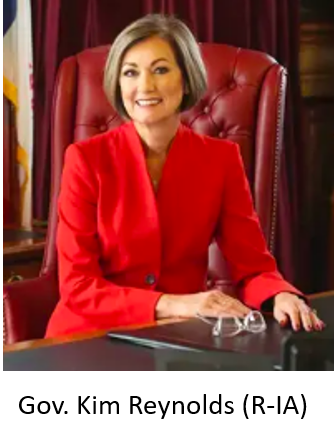
Some red states are already following Arizona’s lead. In an exciting new development, Iowa Governor Kim Reynolds signed a school choice bill called the Students First Act on January 24, 2023 “allowing any Iowa student to use public money to pay for private school tuition or other expenses.” As in Arizona, the money will follow the student.
During the 2022 legislative session, Reynolds tried to get a school choice initiative passed, but members of her own party dragged their feet and the legislation failed. Now, with a new crop of legislators more friendly to Reynolds’s cause, Iowa was able to pass the bill. Texas also gained school choice-friendly legislators, and Governor Greg Abbott has said he will support a voucher program. Last May, Abbott pledged to give parents “a choice about which school is right for their child with state funding following the student”.
On January 20, The American Federation for Children reported that Utah’s House of Representatives passed HB 215, establishing an “Education Savings Account (ESA)” for all the state’s children. The bill passed the Utah House by a sizeable 54 to 20 margin and has advanced to the Senate.
Called the “Utah Fits All Scholarship Program,” this legislation would make all students eligible to receive an annual ESA of $8,000 for education expenses, including tuition for private schools, tutors, homeschooling curricula, and “partial scholarship awards” for students who remain in public school part-time. The bill favors students who some characterize as “falling through the cracks,” and it also includes a provision to increase public-school teacher pay.
The left is calling the teacher pay provision “a bribe,” and lamenting that, if enacted, the bill will harm public education. An ABC News affiliate reported that the Utah Parent-Teacher Association issued a press release stating that “although they do support increasing teacher salaries, they cannot stand behind distributing school vouchers that may cost as much as $8,000 per student with no oversight on teaching quality, standards, assessment and accountability.” Supporters of school choice believe this is precisely the reason such programs work; they at least have the potential to give students a better education as well as to avoid woke indoctrination.
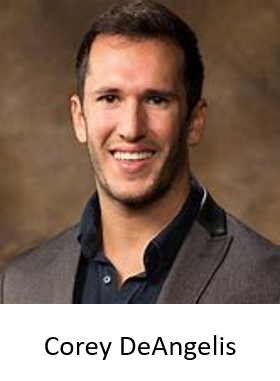
Corey DeAngelis, senior fellow at the American Federation for Children, executive director at Educational Freedom Institute, an adjunct scholar at the Cato Institute, and a senior fellow at Reason Foundation, told The Daily Signal last August that he was looking forward to 2023 and that, for school choice, “the winning has just begun. [T]he wind is at our backs and the teachers’ unions have overplayed their hand. At this point, they’re actively destroying their own empire by inserting political nonsense into the classroom… parents [are] pushing back.”
What does ‘school choice’ mean?
But does more school choice mean a better education overall? That’s a tough call even for parents who support school choice and only want the best education possible for their children.
Nearly 32 years ago in 1991, when the first Bush administration was making noises about enacting a federal school choice program that would allow parents the freedom to choose alternatives to government schools, Phyllis Schlafly described what real school choice should look like. While acknowledging that each of the 50 states would have to pass its own version of any federal program, Phyllis compiled a list of eleven features parents were looking for, including:
- Choice to attend any public school within a district.
- Choice to attend any public school in the state.
- Choice to attend a public school dedicated to teaching the basics, including phonics and other traditional skills, and to enforcing discipline. (Phyllis acknowledged that in 1991: “Only a handful of such schools exist,” and that parents “camp out overnight for days to be in line to enroll their children for the limited slots available.”)
- Choice of curriculum content in the public school; e.g., choice of learning how to read by the proven phonics method… choice of an abstinence-based sex ed program,” etc.
- Choice to allow parents to opt out their children from curricula, books, classes, surveys, or methodology which parent consider privacy-invading or offensive to their religion, morals or values. (Today, the preference is to allow parents to opt their children “in” rather than “out,” an effort which Phyllis would have approved, but few states and districts allow it.)
- Choice to attend a private school.
- Choice to attend any public, private, or religious school.
- Choice for high school juniors and seniors to complete high school at a community college.
- Choice to attend a single-sex elementary or secondary public school. (Approximately 366 single-sex schools are reported to exist in this country as of 2022.)
- Choice to homeschool, with public money going to homeschoolers.
- Choice to homeschool combined with attending selected courses or activities at a public or private school, such as math, science, football, or band.
Phyllis also emphasized that students should have a choice of curriculum, books, and methodology. “Just to allow choice among government schools which have the same curriculum would be a cheat on the children and their parents,” she wrote. Today, other than the curricula in use at classical private and charter schools, finding a satisfactory “choice” for kids may be a challenge for parents, many of whom may not realize what their children should be learning because they were not properly schooled themselves.
Then there is the critical matter of accountability, and parents should recognize that in any school choice program, they are the ones to whom schools should be accountable. As Phyllis asserted: “The only kind of accountability that can have any meaning is accountability to parents and taxpayers, and the way that accountability should be enforced should be by allowing parents to choose the school where their school dollars are spent, and also to choose the curriculum and teaching methodology they want for their children… Choice is a fraud if it means choosing a different building but being denied a choice of curriculum.”
Arizona school choice program at risk
Twenty-one years after Mrs. Schlafly wrote her report on what school choice should mean, Arizona enacted the most comprehensive program in the country, and approximately 30,000 of the state’s children are already taking advantage of it. But it may not have a chance to either prove its worth or reveal its shortcomings.
In the wake of Arizona’s hotly contested and controversial mid-term election, the announced Governor, Democrat Katie Hobbs, has vowed to dismantle the popular ESA program, citing fiscal concerns. In her recent “state of the state” address, she charged that the program would destroy the budget. “Funding this expansion is poised to cost Arizona taxpayers an estimated $1.5 billion over the next 10 years if left unaddressed,” she claimed.
While an argument could be made that Arizona’s open border poses a more serious threat both fiscally and otherwise, Hobbs is no exception to the general failure of Democrats to address this issue. While offering a nod to border security by claiming that all citizens deserve “a safe Arizona,” she offered no real solutions. Instead, she took a veiled shot at conservatives, charging that “immigration has been politicized for far too long” and that “Arizona voters told us in November they don’t want or need political stunts designed solely to garner sensationalist TV coverage and generate social media posts.” She failed to mention what the many thousands of disenfranchised Republican voters in Arizona might have said at the polls had they been allowed to exercise their right to cast their ballots.
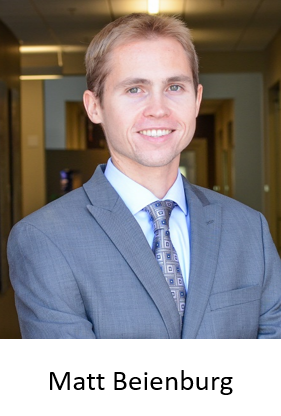
Voices are already being raised against Hobbs’ threat to derail school choice. The Center Square.com reported on January 17 that, while governors wield considerable power, they can’t scrap validly enacted legislative programs on their own. Goldwater Institute Director of Education Policy Matt Beienburg said Hobbs “can aim to abolish the program, but her hands are tied due to the legislative process handing the reins to other statewide officers.”
According to Beienburg, near the bottom of the Hobbs administration’s new 500-page budget plan, which purports to virtually eliminate funding for Arizona’s ESA program, is the admission that “the governor has no such unilateral power to do this.” He added: “Policymakers should remember that the only Arizona incumbent to lose a statewide race (of either party) this past cycle was the left-leaning champion of the teachers unions who opposed school choice and ESA, and who voters replaced with State Superintendent Tom Horne, who has pledged to uphold and protect the program. And fortunately, the continued distribution of funds for ESA families rests squarely with the offices of Superintendent Horne and school choice champion Treasurer Kimberly Yee — neither of whom report to the governor.”
Beienburg further noted that the Goldwater Institute “is ready to challenge the governor’s office in court should she attempt to hinder the ESA program via executive order.”
Mallard
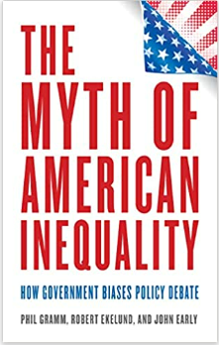
The Myth of American Inequality: How Government Biases Policy Debate
By Phil Gramm, Robert Ekelund, and John Early, Rowman & Littlefield, 2022
A Wall Street Journal “Best Book of 2022” in the politics category, The Myth of American Inequality should be required reading for every incoming college freshman, if for no other reason than to provide perspective for the indoctrination that will almost inevitably follow. As the most recognizable name of the three authors, former U.S. Senator Phil Gramm leads the charge in a masterful exposé of the demagoguery behind the prevailing wisdom that America is a grossly unfair country with an ever-increasing gulf between rich and poor. The book’s premise is that if government misreporting of income distribution were not so significant and intentional, much of today’s social and political polarization might not exist.
 Along with Gramm, eminent economist Robert Ekelund and mathematical economist and statistician John Early demonstrate how the government skews the overall economic wellbeing of Americans by failing to count two-thirds of “transfer payments” to the poor as income. “Excluded from the measurements of household income are some $1.9 trillion of government transfers,” the authors write, “programs like refundable tax credits, where beneficiaries get checks from the Treasury: food stamps, where beneficiaries buy food with government-issued debit cards, and numerous other programs such as Medicare and Medicaid, where government directly pays the bills of the beneficiaries.”
To further widen the income inequality gulf, the government does not deduct from household income the amount of taxes working Americans pay. Given these facts, even those with a very rudimentary knowledge of economics can see why the income gap between rich and poor may appear so disparate.
Low-income people don’t have to count many government handouts as income, so there is only a partial accounting of what they actually receive. Some may work only a few weeks or months of the year, and while such earnings count towards their annual income, two-thirds of their government benefits do not. At the same time, Americans who work full time must count their gross annual income before taxes, despite never seeing the tax money they pay, and their disposable annual income appears much higher than those who receive multiple government benefits. Some such wage earners may actually be at a lower income level than their supposed poorer counterparts.
The authors back up their eye-opening information by providing official government statistics and explaining how these data radically overstate income inequality. They don’t need to provide contentious arguments; the numbers speak for themselves and are included in easy-to-follow charts, tables, and graphs throughout the book. Although complex, the authors make the data understandable, and the government bias undeniable.
The book divides the “earned income” levels of American households into five quintiles, beginning with the lowest, or “bottom” quintile, and ending with the highest, or “top” quintile. In one shocking finding, the authors show that “among prime work-age persons in the bottom quintile in 2017, only 36 percent were actually working, compared with more than 90 percent for households in the middle and higher quintiles.”
While other factors do come into play, the startling finding in the above analysis is that “With the same proportion of prime work-age persons working the same number of hours as the top quintile, the average bottom-quintile household would have earned four times more” than it did, which would have reduced the income disparity between the top quintile and the bottom quintile by nearly 75 percent.
Perhaps the most interesting chapters in the book are seven and eight. Chapter seven describes the oft-maligned “super-rich,” of whom ordinary Americans are convinced pay no taxes at all. The authors acknowledge that the chapter’s title does refer to the wealthiest Americans, but add that “there is no obvious definition for the term. In the 96th to the 99th percentiles, just below the top 1.0 percent, these households earned almost 90 percent of their income from the wages and salaries they earned by working. They earned an average of almost $355,000 per year and, on average, kept less than $225,000 after taxes.”
Certainly, these people are well off, but as the authors write, “hardly super rich.” They show that even among those who earn very high incomes, such as corporate CEOs, doctors, lawyers, celebrities, and sports stars, some don’t remain at that level for very long. Finally, the authors make the case that the wealthy do shoulder their fair share of the tax burden, and that large charitable donations may lower their tax bills but benefit those served by the charities, often those in the lowest income quintile.
Chapter eight shows how “income mobility,” or the movement from one income bracket to another—typically higher—bracket changes the distribution of income for individuals and families over time. It offers an interesting bit of historical perspective from America’s founding to the civil war era and the abolition of slavery to the early 20th century and beyond. “Economic mobility is alive, powerful, and widespread in America today,” the authors write. “While an old saying tells us it is better to be born rich, beautiful, and brilliant than to be born poor, plain, and ordinary, people who are born poor, plain, and ordinary find success in America every day.”
Ultimately, as The Myth of American Inequality demonstrates, “America’s promise is centered on opportunity. When we as individuals lend a helping hand, we help others up. But if all our government does is provide subsidies to those who have fallen, it is letting them down and too often keeping them down.” From cover to cover, this book reveals this truth; let’s hope it gets into the hands of enough readers to make a difference.
To read the entire book, go here to order!
Education Briefs

Prestigious Thomas Jefferson High School for Science and Technology in Virginia failed to notify top students in a timely manner that they had received National Merit Scholar certificates, and Lieutenant Governor Winsome Sears is furious. The school dragged its feet for months before notifying students of the awards — which were announced last May — and then simply dropped the certificates off at their desks without announcement or fanfare. These awards are only given to the top three percent of high school seniors in the United States and they provide recipients with an advantage when applying to universities and colleges. According to Conservative America Today, Sears has asked Virginia Governor Glenn Youngkin and Attorney General Jason Miyares “to open a formal investigation” into the matter. When the foot-dragging came to light, Sears, who is black, tweeted: “This is reprehensible. Our children’s education is not a zero-sum game. We cannot punish success to have ‘equal outcomes at all costs.’” Some parents of affected students believe the school’s withholding notification of the awards “was driven by the obsession with the ‘woke’ ideology’s demand for ‘equity.’” Parent Shawnna Yashar said her son lost out on being able to list this important merit award on his college applications because he didn’t find out about it until November 2022 and his applications were due in late October. When Yashar complained, the school’s director of student services, Brandon Kosatka, told her that Thomas Jefferson “wants to recognize students for who they are as individuals, not focus on their achievements.” Yashar and the other parents disagree, charging that refusal to notify students of the awards amounts to “theft by the state.”
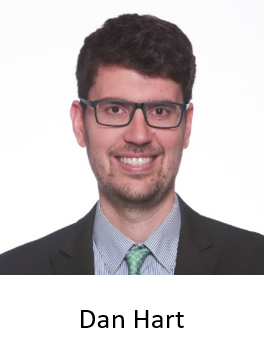
In December, The Washington Stand reported on what it calls the little-known movement of transgender people “detransitioning” from the lifestyle. While the transgender explosion has shown no signs of stopping in recent years, “a related but much less highlighted trend is simultaneously occurring — a movement almost completely ignored by the mainstream media,” which is the “detransitioner” movement. Last October, Reuters.com wrote about an analysis showing that “at least 121,882 children ages 6 to 17 were diagnosed with gender dysphoria from 2017 through 2021.” But Reuters and others neglect to report on new studies also showing that transgender youth are detransitioning at rates higher than activists admit. The Post Millennial reported on the Re/Detrans Canada event, held at York University in Ontario in November 2022, where researcher Kinnon Ross MacKinnon presented studies that show “detransition rates far higher than the oft-cited ‘less than 1 percent’ statistic that proponents of gender-affirming care for minors are so fond of repeating.” For example, while one study from the Netherlands showed a detransition rate of just two percent, “a similar study from the U.S. showed an almost 30 percent detransition rate.” Three studies from England showed rates “between 6.9 and 9.8 percent.” According to The Washington Stand writer Dan Hart, the online discussion forum Reddit has a “Detrans” chatroom (or “Subreddit”) which currently has over 40,000 members. “While the causes for gender dysphoria are often complex and multifaceted,” noted Hart, “cultural and institutional influences beholden to a pro-transgender ideology have become primary contributors to the confusion over biological sex that is occurring among thousands of adolescents. The power that social media has to shape the minds of young people who have experienced abuse and are looking for affirmation is readily apparent [in the accounts of many detransitioners], along with the potent influence that medical and psychiatric professionals have in pushing their young patients down a path of gender transition drugs and surgical procedures that often create irreversible physiological harm.”
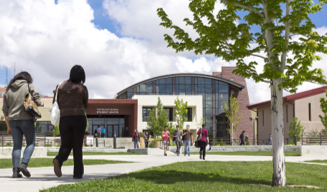
Community colleges across the country are experiencing staffing shortages due to a ripple effect from the pandemic, having lost 13 percent of their employees from January 2020 through April 2022. Inside Higher Ed.com reported on the problem this month, noting that while four-year institutions essentially recovered their losses following the pandemic, community colleges “have lagged.” The higher education consulting firm EAB collected the data, and along with the League for Innovation in the Community College, “an organization dedicated to helping community colleges innovate to improve student success outcomes,” aired its findings publicly in December. EAB Director of Strategic Research, Tara Zirkel, says community college staffs “are now too small to carry out necessary college functions after employees left for higher-paying roles at four-year universities or in private industry, or sought out jobs with remote options or more flexible work schedules….” The losses affect all community college staffing levels, from IT personnel to cafeteria workers to faculty, with faculty members “in career and technical education fields proving particularly difficult to retain as private sector employers offer higher pay to fill their own workforce gaps.” This development is particularly distressing for high school graduates who for many reasons are not planning to enroll in a four-year institution. Some community colleges, such as the Colorado Community College System, say they are trying to address the problem with more competitive wages. Tara Zirkel believes it’s important that campus leaders start to address attrition and recruitment problems now. “Given demographic shifts and the decline in the number of working-age adults,” she said, “community colleges will be forced to vie for an increasingly limited pool of candidates, which means continuing to go head to head with private industries and universities. This is not just a right-now problem,” she adds. “This is an into-the-future problem.” Many parents and students are counting on their community colleges to solve it.
Real Reform Must Involve Superintendents
The following originally appeared on the Independent Women’s Forum (IWF) website on December 22, 2022. Reprinted by permission.
2022 has been a year of long-overdue school board accountability. Boards could no longer use COVID as an excuse to slam the schoolhouse door in parents’ faces, and shocking videos laid bare the obscene content these boards were placing in the hands of America’s children. A round of scandalously low test scores turned up the heat on groups that, for too long, had been content to operate quietly.
This was a reckoning, but it only ever touched on half the problem of local school governance. Superintendents, some of the most powerful education bureaucrats, skated by unscathed.
Superintendents have an important role to play: They oversee the daily operations and future planning for their school districts. These officials are generally either elected by the voters or appointed by school boards. In private-sector terms, the school board is the Board of Directors and the superintendent is the CEO.

Superintendents have long enjoyed cushy jobs with little public oversight. Back in 2010, four Atlanta-area superintendents made headlines for being paid more than the Vice President of the United States. In 2014, a Los Angeles-area school district board cut its superintendent’s pay after it came to light that he made $663,000 the previous year. Earlier this year, the Arizona Auditor General found that the Buckeye Elementary School District allegedly overpaid its superintendent by more than half a million dollars over a period of six years.
With little oversight, superintendent positions are ripe for abuse of public funds. But even in cases where funding is not misused, high pay for these officials is not the outlier; it’s the rule. The average superintendent in the Council of the Great City Schools, which represents 78 of the nation’s largest public school districts, was making a salary of $242,000 in 2014. Recent data on superintendent salaries are scarce, but in 2019, 100 Texas superintendents made more than a quarter million dollars per year. This doesn’t make them inherently bad, but it makes them expensive public servants whose job performance must not be ignored.
Overall high pay for superintendents could be tolerated if they were pulling students’ academic achievement out of the pits. But none of these districts are known for stellar performance. In fact, they’re known for the exact opposite. In the private sector, anyone paid this much would be expected to deliver quantifiable positive results. In the public bureaucracy, incompetence is rewarded, if it is discovered at all.
Most superintendents in large districts don’t stick around long enough to really see the results of their efforts show up in student achievement data. In 2021 and 2022, on average, more than 25% of the nation’s largest school districts hired a new superintendent each year, according to Education Resource Strategies. From 2016 through 2020, the average turnover rate in the 100 largest districts was just shy of 20%.
Unlike school boards, which have regular and public meetings, superintendents are generally shielded from being questioned or criticized in a public forum. Most parents probably don’t know the name of their school superintendent. These officials have a level of importance that far outweighs their accountability.
Superintendents have a great deal of say over how COVID money is used, or, in many cases, not used. Most of the $189.5 billion allocated by Congress for K-12 COVID relief still remains unspent. Superintendents sat on the money rather than use every available resource to reopen schools safely and make up for the lost instructional time. These officials also have a say in school policies, and too many have permitted wokeness to override sanity, allowing biological boys in girls’ sports and enabling tax dollars to be used on pornographic library books aimed at children.
At a time when both sides of the political aisle are concerned with teacher accountability and compensation, the same debate must be had about superintendents. How many of them are truly worth what they cost taxpayers? Before we find out, smart school boards will move to right-size superintendent paychecks and introduce transparency and accountability that these bureaucrats have evaded up to this point.
In addition to writing for Independent Women’s Forum and other conservative media, Angela Morabito runs Thirteen Strategy Group, a communications firm that works with client organizations in the conservative movement. She is a former spokesperson for Campus Reform and former Press Secretary for the U.S. Department of Education, where she went head-to-head with the Left, the media, and the teachers’ unions on behalf of the Trump administration. Angela previously worked in public affairs, digital media, and higher education administration.