Will 2022 Extend the 'Year of the Parent'?
Conservative media outlets have characterized 2021 as “the year of the parent,” which begs the question of whether 2022 will continue in the same vein. Early indications are that concerned parents are not going anywhere and are more likely to increase in number and gather momentum.
In Loudoun County, Virginia, the veritable ground zero for parental outrage and pushback, concerned parents kicked off 2022 by filing a lawsuit against their school board “for violating open meeting laws.” The Founding Freedoms Law Center (FFLC), the legal arm of The Family Foundation, is representing these parents, charging the Loudoun County Superintendent and School Board with violating their rights by keeping them “from fully participating in publicly held meetings.”
To be sure, 2021 was a record year for parental discontent, with the single greatest contributing factor being the COVID-19 lockdowns that kept school children at home and gave parents a bird’s eye view of what they were actually learning and not learning— comprehensive sex education (CSE), Critical Race Theory (CRT), socio-emotional learning (SEL), gender identity politics, and a smattering of flawed academics. Add to all this the forced masking and other strict protocols when students were actually permitted back into the classroom, and the recipe for parental frustration was complete.
As the Washington Examiner opined on January 3: “[With] the inclusion of critical race theory and gender ideology in school curricula, the fight over mask mandates, and the Loudoun County public school rape case, a wide breadth of issues pertaining to education motivated a new kind of voter.” The Examiner was referring to the Virginia election outcome in particular, but similar issues shook local politics and motivated parents across the country.
School boards flipped in many areas
One result of parents taking a more active role in their children’s education was the turnover in local school board members last fall. The Washington Examiner reported in November that “in down-ballot races nationwide, conservative candidates took incumbent liberal school board members out of office.”

The Examiner cited three school board races in diverse areas of the country as examples; one in Douglas County, Colorado just south of Denver; one in Southlake, Texas in suburban Dallas, and another in Des Moines, Iowa. Voters flipped the Douglas County, Colorado School Board “from a 7-0 teacher-friendly board to one controlled 4-3 by conservative-backed candidates.” In Des Moines, three candidates supported by the conservative group “1776 Action,” won their races, and Southlake, Texas, school board candidate Andrew Yeager, who ran as an opponent to the district’s diversity plan, won a landslide victory. Observers noted that Yeager’s victory tipped the scales against the plan, giving board members who already opposed it a majority.
Laura Zorc, executive director of the parent organization Building Education for Students Together, which trains parents to successfully run a school board race, told the Washington Examiner: “In 2021, parents have been on the front lines battling to protect the future of America. It’s the year parents have woken up and thrown down the gauntlet.” (See Education Reporter, December 2021 for an article on Zorc’s organization.) She believes parents will stay the course in 2022.
White House implicated in NSBA letter
U.S. Education Secretary Miguel Cardona is doing his part to stoke the fires of parental disaffection. As if the uproar last fall over the National School Boards Association (NSBA) letter comparing parents to domestic terrorists wasn’t enough, new evidence suggests that the request for the letter originated in Cardona’s office. Emails obtained through a FOIA request by the parents’ rights group Parents Defending Education show that the secretary personally asked the NSBA to draft the letter, which brings the request and resulting DOJ action full circle.
The Washington Examiner reported on January 11 that the emails reveal “an exchange between NSBA board member Marnie Maldonado and NSBA Secretary-Treasurer Kristi Swett discussing the letter, which was written, Swett said, in response to ‘a request by Secretary Cardona.'”
On January 13, Fox News reported that forty-one Republican lawmakers signed a letter to President Biden demanding Cardona’s resignation, a copy of which was obtained by the network. Fox quoted the lawmakers as writing: “In the aftermath of [the NSBA] letter and the fierce blowback it caused, Secretary Cardona rewarded Viola Garcia, the NSBA President and co-signer of the letter, with an appointment to the National Assessment Governing Board.”
The letter charged that anyone who “believes an individual that equates parents voicing their concerns at school board meetings to domestic terrorists … is someone unbecoming of a role in an administration which has pledged to foster a path forward to unify and heal our country.”
The lawmakers concluded that [Biden’s] “pledge to help bring unity will ring even more hollow if Secretary Cardona continues in his current position. As such, in order to uphold your promise to help bring unity and healing to a divided nation, you must fire Secretary Cardona effective immediately.”
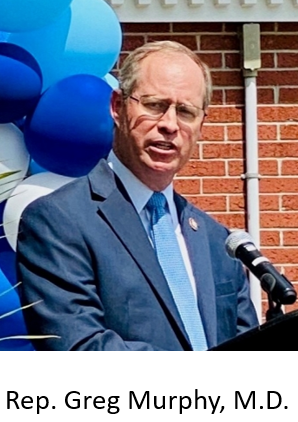
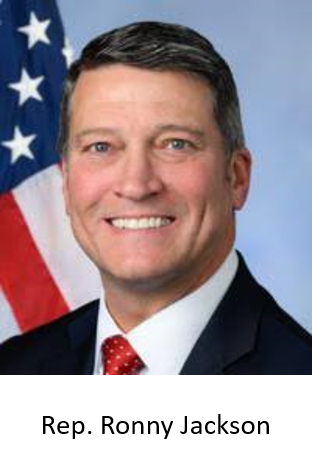
Among the more high-profile Republican letter signers were Reps. Elise Stefanik of New York, Greg Murphy of North Carolina, and Ronny Jackson of Texas.
A spokesperson for the Department of Education reportedly denied that Cardona solicited the NSBA letter despite evidence confirming that he did.
Here they go again—teachers bail on students
In cities like San Francisco and Oakland, California, Chicago, Illinois and Atlanta, Georgia, teachers’ unions are balking at in-person classes and demanding still more COVID-19 protections.
In Chicago, the teachers’ union voted to cancel classes in the new semester in favor of remote learning after a surge in COVID-19 omicron variant cases hit the windy city. After-school programs and athletics are also canceled. A union spokesperson said teachers “would only return once the school district took measures to make them feel safe and the number of COVID cases substantially subsides.”
P.J. Media.com reported on January 2nd that “more than 2,000 schools in the most liberal locales, bullied by corrupt teachers’ unions—caved to anti-science hysteria and locked their doors this week.” The article cited a Michigan professor “who followed the data and came to a straightforward conclusion: There is no evidence that shutting down schools the last two years limited the spread of COVID-19.”
In Arizona, a new school choice program is funding tuition for eligible students whose public schools are using the omicron variant as an excuse to close. The Daily Caller reported on January 4 that the “Open for Learning Recovery Benefit Program” will award parents up to $7,000 for tuition, transportation, and online tutoring “to help cater to students who fail to perform in virtual learning environments.” Eligible parents can take advantage of the program even “if a school closes for only one day.” A grassroots teachers’ union operating in Arizona, the National Educators United, called for a minimum “two-week pause” on classroom learning beginning January, 3.
School choice advocate Corey DeAngelis called the Arizona choice program “a step in the right direction toward freeing families from the clutches of the teachers’ unions once and for all.”
Interestingly, blue state governors such as California’s Gavin Newsom and blue city mayors including Chicago’s Lori Lightfoot, are bucking their teachers’ union supporters and trying to keep the schools open. Even the state government in Massachusetts made noises against closing the schools. Perhaps they see the writing on the wall; parents are weary of the teachers’ unions and the disruption and harm closed schools are doing to their children and their lives, and they will likely show their anger at the ballot box in 2022.
TheBlaze.com, 12-31-21
The Amazing Power of One
While many parents and concerned citizens have recently become active by founding or joining parents’ rights organizations, others have demonstrated that the power of one also plays a critical role in today’s war for our children.
Deborah Simmons of Round Rock, Texas, became such an activist nine years ago when she discovered the attempted insidious invasion of her school district by a Planned Parenthood-backed comprehensive sex education (CSE) program. “For nine years, I’ve concentrated on fighting CSE, but in my research I’ve also found that backers of CRT and SEL — the less-well-known socio-emotional learning — use the very same strategies to implement these programs. They are all coming from the same places.”
Like fellow Texas researcher and activist, Missie Carra, Simmons began digging into the origins of CSE and discovered that “following the money is how you really find out what’s going on.” She traced the underpinnings of the proposed program in her school district to a concerted effort by the Texas Freedom Network, a nonprofit organization founded by Cecile Richards, daughter of former Texas Governor Ann Richards, and a former President of Planned Parenthood.
Simmons’ journey led her to become involved at various levels of government, from local politics in Round Rock, to state capitols across the country, and everything in between. While she is a member of the Protect Child Health Coalition, she does not speak on their behalf. “Working independently allows me to do all the things I’m currently doing without having to attend board meetings or fulfill other commitments,” she explains. Not that she finds fault with such obligations, but she relishes the freedom to chart her own course.
Legislative accomplishments in Texas
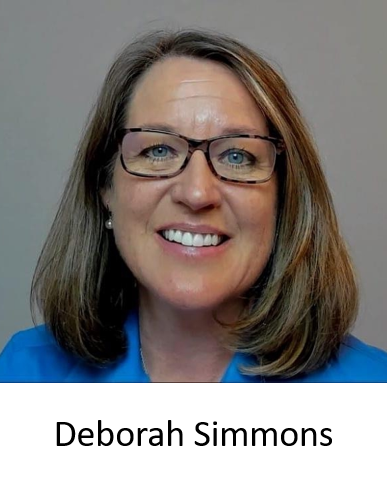
For example, when the Texas Legislature is in session, Simmons is a familiar figure in Austin. “Our legislative session is only 140 days long every two years,” she explains. “This is a short duration as state legislative sessions go, so I’m able to dedicate my time to it for all 140 days.”
She is proud of the legislative achievements Texas conservatives have made in recent years, including defunding Planned Parenthood, an endeavor that began in 2017. She told Education Reporter that fighting the abortion industry is a main area of focus for her, and that the experience was an exercise in the importance of staying the course. “The Texas defunding movement made a huge impact,” she explains in reference to the passage of State Senate Bill 22 in May 2019, which took effect in September of that year. The law prohibits government entities from funding or “providing anything of value” to abortion clinics and their affiliates, including digital or physical presence in schools.
“Abortion provider employees immediately stepped off School Health Advisory Councils (SHACs),” Simmons relates. “They ceased providing instruction in classrooms, and school districts removed sex education programs including Planned Parenthood’s ‘Families Talking Together’ and [the publisher] etr.’s ‘Get Real’ program.”
Changes in education law
Simmons reports that Texas enacted new education standards in November 2020, all of which must be taught in compliance with state administrative code. “But there are 617 student expectations that kids are expected to learn in health education alone, which includes sex education. School boards are required to determine if and what Human Sexuality Instruction will be taught. We need a concentrated effort on behalf of academics, not medical health,” she asserts. “States should not be writing health standards, but rather should be concentrating on academics.”
In a related positive development, Simmons reports that Texas has also enacted “new transparency requirements for School Health Advisory Councils (or SHACs),” which make it harder for districts to hide objectionable curricula.
“There were two significant changes to education law in the 2021 legislative session,” she describes. “First was passage of an opt-in requirement, which mandates that parents opt their children in to human sexuality instruction rather than opting them out, effective through August 1, 2024.” (The opt-in requirement is a popular measure favored by parents in school districts across the country and is a win for Texas parents.)
“Second,” Simmons continues, “the SHACs must post meeting notices and document and post meeting minutes, as well as record their meetings on audio or video. District Boards of Trustees must develop a policy for the adoption of curriculum materials for the district’s human sexuality instruction, including making these materials available in the public domain, with processes for copyrighted materials. Districts must provide detailed descriptions of the content and more information on parental rights.”
But this welcome change in Texas law is only as good as the character and makeup of the school boards, since board members appoint those who sit on the SHACs, and the SHACs adopt the CSE curricula. So, a focus on school board elections remains critical nationwide.
Safeguarding the souls of children
Simmons believes the first duty of parents is “to safeguard the souls of their children,” and this conviction drives her to oppose the pornography industry to which she says children are routinely exposed because of the sticking point in current obscenity laws. “While these laws prohibit subjecting minors to so-called ‘harmful’ materials,” she explains, “the ‘out’ is that children can be exposed to pornography ‘for educational purposes.’ In this way, materials that are harmful to minors can be welcomed in classrooms and libraries via educational obscenity exemptions.”
Not only is pornography allowed in the classroom, but Simmons’ investigative work shows that the online databases students routinely use for research purposes “contain tons of pornography.” She explains:
“Obscene content has been found extensively embedded in vendor-supplied digital resources commonly referred to as “Homework Databases” including those supplied by EBSCO and Gale (Scholarly Resources for Learning and Research), which are widely purchased by schools and libraries. These database companies may also offer online encyclopedias, periodicals and magazine collections, and/or eBooks.”
Simmons continues: “States often participate in cost share model contracts with these companies on behalf of their school districts and public libraries. Sometimes, school districts and libraries contract directly with the database companies.”
Internet ‘protections’ that fail to protect
Simmons points out that “The Children’s Internet Protection Act (CIPA), 47 U.S.C. sec. 254, requires schools and libraries with computer Internet access to certify that they have safety policies and technology protection measures in place, such as software filtering technology. They must do this,” she notes, “in order to receive discounts for internet access and internal connections under the schools and libraries universal service support mechanism known as Education Rate (or E-Rate) funding.” E-Rate is a federal program that provides schools, libraries and certain other entities with funding for internet access and internal connections, as well as maintenance of internal connections.
“On computers that are accessed by minors,” Simmons explains, “these protection measures must block or filter internet access to pictures that are obscene; that constitute child pornography; or that are otherwise harmful to minors. However,” she qualifies, “once students pass through a school network filter by accessing an approved resource, the filtering stops, and inappropriate content embedded in that resource can be accessed, including pornography and other harmful content.”
Simmons notes: “The National Center on Sexual Exploitation (NCOSE) has published evidence charging EBSCO as one of the offenders on its 2021 Dirty Dozen List for being a major facilitator of the sexual exploitation of women and children since 2017.” NCOSE’s website charges EBSCO with “[exposing] children to graphic sexual content and more.”
Once a month, Simmons meets online with a network of like-minded volunteers and researchers across the country, who work to identify and expose what she calls “these insidious land mines. It’s a horrible game of whack-a-mole,” she admits.
From her many contacts, including a key associate in Colorado, comes the report that Colorado parents have filed a lawsuit against EBSCO’s online library resource after discovering “substantial amounts of easily accessible, hardcore pornography” in its database system that “bypasses school internet filters and private, parent-supplied internet filters.”
Over the past two years, Simmons adds, “legislation has been enacted in Utah and Idaho requiring that online school resources be filtered. But,” she adds, “similar bills were filed in multiple other states in an attempt to address this issue without any success.”
Working with parents
Despite her tireless dedication during the Texas legislative session, while maintaining her extensive research network and keeping her finger on the pulse of national and local issues, Simmons manages to find time to work with individual parents.
“I try to help parents reconcile with how they can help their children once they identify a problem,” she relates. “I help them file requests for information, including FOIA requests, and I also work as a consultant.” She admits that parents aren’t always successful when up against school administrators and objectionable curricula, but that “along the way, they make little impacts that benefit the entire school district. The challenge is to continue the fight without backing off.”
Simmons’ advice to other parents with school-age children is not to take anything for granted. “Don’t trust the schools; be aware of what your children are learning. We should be able to trust those who are teaching our children to take care of their souls, but when a school is not doing that, we need to look at other alternatives. Show up, be a witness, and follow the feeling in your gut. Then be willing to take chances by doing the right thing.”
Hidden Treasure:
iVoter Guide Takes Guesswork out of Voting
Often, citizens go to the polls knowing the candidates at the top of the ticket, but little if anything about those running farther down the ballot. Yet down-ballot races are equally if not more important if we are to save our democratic republic.
While it may be more difficult to obtain information about local candidates and races, the organization iVoterGuide is working hard to make sure citizens are informed when they go to the polls. A visit to iVoter Guide.com yields critical information needed to educate voters, including candidate evaluations, campaign finance data, sample ballots, and much more. The main page of the organization’s website announces its identity: “Grounded in God. Rooted in research.”
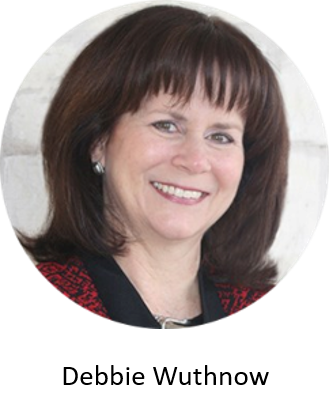
“When voters go to our website,” says iVoterGuide President Debbie Wuthnow, “they will receive a customized ballot simply by entering their registered voter address.” Wuthnow explains that the website offers information on federal and statewide candidates, and drills down to the local level in many areas.
An interactive map allows visitors to select their state and provides a variety of specifics, including localized information about election cycles, polling places, voter registration, and more. “This is not your mama’s voters’ guide,” Wuthnow emphasizes. “In 2022, we’re evaluating about 12,000 candidates in 33 states. We do a deep dive on each one, from who their donors are to their positions on important issues, and endorsements they’ve received. The goal is to evaluate their political ideology. For example, do they value religious liberty? Are they pro-life?”
Gathering information
When Education Reporter interviewed Wuthnow, along with Operations Manager Kori Peterson and Lead School Board Researcher, Tobi Paxton, an obvious question was “how do you do it?” How does a small staff gather all that data and compile it online?
The answer is that iVoterGuide networks with hundreds of volunteers across the country, which the organization calls “panelists.” These volunteers comb voting records and research available data on state and local candidates in their areas. They also administer surveys. “We survey candidates on current issues, on education, and we even have a judicial survey for prospective judges,” explains Wuthnow. “Candidates answer the questions in their own words, then our panelists go over all the data and reach a consensus as to which evaluation the candidate will receive on the conservative-to-liberal spectrum.”
Wuthnow concedes it’s a huge undertaking that could not be successful without the group’s extensive network of affiliated organizations and volunteers. “We started sponsoring voter guides in Texas in 2008 in just seven of our largest counties,” she explains. “We were able to go nationwide in 2012 and began linking arms with like-minded groups such as the American Family Association Action (AFA Action), the Family Research Council Action (FRC Action), Concerned Women for America (CWA), Wallbuilders, and many more.”
Currently, iVoterGuide partners with dozens of like-minded organizations, and in 2020, reached 3.5 million voters. In 2022, the organization plans to reach at least five million voters.
To broaden its scope and influence, iVoterGuide recently became part of AFA Action, the AFA’s legislative and policy arm. As a result of the merger, Wuthnow is now vice president of AFA Action. She will continue to serve as division president of iVoterGuide and is excited about her expanded role. “The change became effective in January 2022,” she notes. “My focus is broader but I will continue working to make iVoterGuide a national resource for our citizens.”
Spotlight on school board races
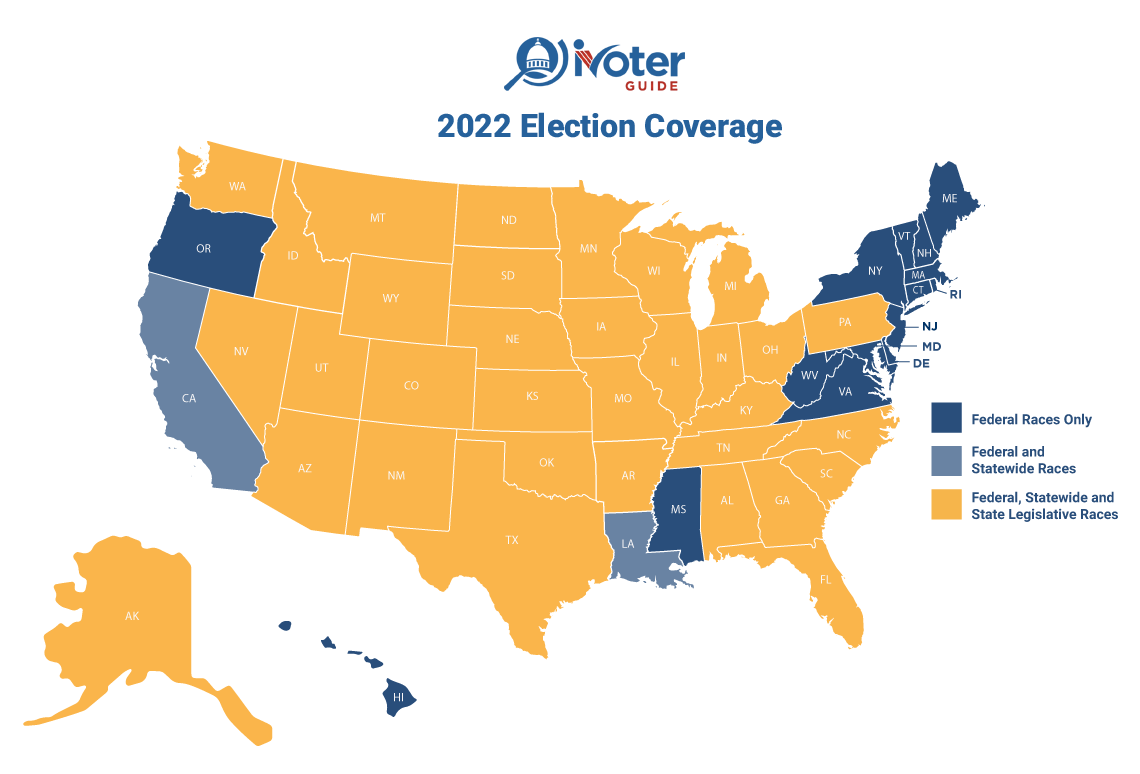
Recognizing the critical importance of the makeup of local school boards, iVoterGuide began a School Board Voter Awareness Initiative last year. The website observes: “Many of the problems threatening the nation today can be traced to years of misplaced priorities in public schools,” and that “much of this responsibility and power rests with local school boards.” School board races have largely been overlooked by voters or viewed as an afterthought, “but,” the website states, “captured by Leftist organizations and special interest groups who have exercised their influence over our children for far too long.”
This initiative is iVoterGuide’s answer to the dearth of readily available information about school board candidates. “Finding information on local candidates, unless you know them personally or know someone who knows them, is like searching for a needle in a haystack,” observes Tobi Paxton. “It’s a huge problem, but the good news is that school board elections can be decided with relatively few votes compared to higher-profile races. If we can get principled school board candidates elected, we can begin to change course.”
Paxton works to identify candidates running in key school board races across the country, a monumental task. “We need at least several hundred more panelists to get the job done,” she admits. “In order to evaluate aproximately 12,000 legislative candidates, as well as key school board races, it will take about 1,200 volunteers nationwide.” Whether or not she will get them remains to be seen, but either way, she says she’ll start working on six school board races in Oklahoma in April. “We’ll identify the candidates and find out their personal philosophies and positions on key issues,” she describes.
“The importance of putting the right folks on school boards is the basis for everything,” Wuthnow emphasized. “We have to get it right if we are to reclaim our schools.”
iVoterGuide is donor supported. The group sends out weekly educational emails to those who sign up. They also offer a School Board eBook, which describes the educational crisis in America and highlights the importance of local school board members, which it calls “gatekeepers of our schools.” The eBook is packed with important and helpful information such as how school boards impact decisions about specific curriculum choices and how they can be influenced by school district administrators and state governments.
This invaluable free resource should be accessed by concerned parents and citizens everywhere.
Taking Steps to Restore Liberty
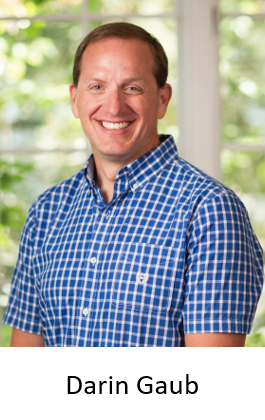
After serving honorably in the armed forces for decades to uphold the U.S. Constitution, including four tours of duty in Afghanistan, retired U.S. Army Lt. Colonel Darin Gaub realized he could not sit idly by and watch his country’s constitutional freedoms disappear. So he pulled together a team of experts in several critical areas, including data analysis, political strategy, public relations, and administration, and founded an organization called Restore Liberty.
Based in Helena, Montana, Gaub’s organization has several goals, the first of which is designed to encourage American citizens to affirm their support of the principles on which our country was founded. Gaub’s team created a Declaration of Constitutional Consent, which is simply a written affirmation of our founding documents, including the Declaration of Independence and the U.S. Constitution.
“We started off with the consent declaration and the Sanctuary Status map, which shows the network of grassroots contacts we have built in counties across the nation,” Gaub explains. “These are people we’ve identified who pledge their commitment to our constitutional freedoms and way of life.”
“The intent is to have individuals sign the declaration, either digitally or by printing the document and then emailing or snail mailing it to their elected officials, starting with the president and their state governor, at a minimum. The hope is that they will send it to their state reps and local officials as well. It sends a clear message that they are not happy with the direction our country is headed and that they are committed to America as it was founded under our constitution.”
The Restore Liberty website has a printable document listing what it calls “Practical Tacticals,” a collection of recommended actions citizens can take to help restore our republic. Suggestions include both the obvious and not so obvious:
- Run for city and county commissions or councils.
- Volunteer to serve on local citizen advisory boards.
- Volunteer as a poll watcher.
- Run for your local school board, even if you don’t have children in the school system.
- Speak out at local council meetings and testify before state and local commissions to hold local officials accountable.
- Establish a civic group independent of political entities to discuss local concerns and issues.
- Support constitutionally minded student groups, and demand that school boards allow equal access and treatment.
The more than two dozen suggestions encourage citizen participation in local political and civic arenas to advance constitutional government and America’s founding principles. “We focus on judicial races and school board races,” Gaub says. “We work with local groups across the country to help them identify good candidates in their areas for endorsement and support. The idea is to establish a network of citizens with similar aims and help each other advance the cause of constitutional government by electing good people to local offices, such as the county sheriff’s office, for example.”
Gaub says Restore Liberty is not interested in membership numbers or in reinventing the wheel. “Each local organization we work with reaches its own group of people to promote a candidate. We advise them on how to get their candidates elected, but fundraising is always an issue.”
Restore Liberty works with a number of conservative organizations across the country. They recommend iVoterGuide for help with identifying good candidates, and the Patriot Academy for educational assistance.
“It’s really about encouraging freedom and building strong networks one citizen at a time,” Gaub says. “We have to focus on educating the public and our elected representatives about America’s original intent, the role of our constitution, and the philosophy of natural rights. Once we get people elected who are willing to represent those values, we have to keep them in office and hold them accountable.”
Mallard
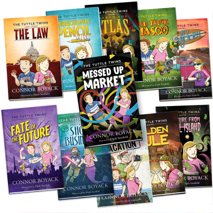
The Tuttle Twins Series
Connor Boyack., Libertas Press, 2021
With the scarcity of solid academic teaching in civics and history in public schools, The Tuttle Twins is a refreshing 12-volume series that conveys important concepts about freedom, personal responsibility, economics, government, and more, set in story lines children can identify with and understand.
When Boyack created the characters of nine-year-old twins Ethan and Emily Tuttle, his goal was to teach children through their adventures about capitalism, how free markets work, how to live by the golden rule, and the concept of true justice rather than the socialist “justice” popular in education today. The books examine adult topics and make them understandable to a young audience and are generally recommended for ages five through ten, although the subject matter is sophisticated enough to appeal to slightly older children, and some of the concepts may be lost on five-year-olds.
 This reviewer read The Tuttle Twins Learn About the Law, which presents the concept that natural rights come from God and that citizens need to protect these rights through a moral government, while demonstrating that it does not always work out this way.
The author shows through concrete examples that children can understand, how the redistribution of wealth by government equates to stealing, which the twins concede is “always wrong,” no matter who is committing the theft. The ideas presented are based on Frédéric Bastiat’s famous book, The Law, which advocates that “true laws protect people and their property from plunder,” such as by pirates, the kid-friendly example Boyack uses to illustrate his point. “When true laws exist and are respected,” the twins’ fictional neighbor, Fred, explains to them in the story, “people work hard to improve their lives. Everyone prospers together and is happier.”
Fred uses the example of his own home-grown tomatoes to illustrate the concepts presented. What if his neighbor, Mrs. Lopez, should take some tomatoes without asking? If it’s wrong for her to do that, does it become right if she gets her police-officer uncle to help her take them? The parallel is whether something the children know is always wrong becomes right when it’s done by a government official. The idea that government can be the bad guy by plundering and bullying citizens, and that this is wrong, comes through in the story without too deep a dive for the target audience.
“When there is no legal plunder,” such as by unjust laws, Boyack writes, “people rely on the kindness and service of others for the things they need. But when the law allows legal plunder, it turns everyone against each other. Everyone wants to take instead of give. Some people stop working hard and look to the government to take care of them instead. When this happens, the government begins to control everything.”
The story shows children that it is necessary to fight back against such laws through knowledge of what true laws are, and by supporting good government. On their way home from Fred’s house, the Tuttle twins come up with a plan to share the prized tomatoes he had given them with Mrs. Lopez, who is very appreciative of the gesture and in turn gives them fresh-baked cookies to take home with them.
Each of The Tuttle Twins books conveys sound concepts and most are based on well-known works. In The Tuttle Twins and the Creature from Jekyll Island, for example, which this reviewer also read, the basis is The Creature from Jekyll Island by G. Edward Griffin. The lesson is that the Federal Reserve System’s creation of “fiat money” produces negative consequences. The story uses the phrase “the creature from Jekyll Island,” uttered by the twins’ grandfather, to illustrate the points the author wishes to make. The twins picture “the creature” as a kind of octopus, and wonder why it is taking their grandfather’s money.
Boyack uses the plotline that the Tuttles are beekeepers, in order to illustrate the concept of a central monetary system, and shows how difficult if not impossible bartering for various goods and services would be in the modern world. At the farmer’s market, Grandpa Tuttle asks the children why they are selling their honey, and they tell him they want to earn money to buy roller coaster ride tickets. He shows them how bartering does not work by having them ask at the ticket booth if they can trade some honey for ride tickets.
Grandpa explains that “money is a means of exchange so people can sell the things other people want so they can buy the things they want. It makes trading a whole lot easier.” The twins ask what the creature from Jekyll Island has to do with all of that. “One of the sneaky things the creature does,” Grandpa explains, “is make prices go up. He asks: “What if the creature makes the price of a ticket go up from $1.00 to $2.00?” in order to show how easy it is for the Federal Reserve to manipulate the system.
The book describes how the Federal Reserve came into existence and how it can print as much money as it wants, which in turn causes inflation, all within the child-friendly story line.
Other titles in the series include The Tuttle Twins and the Road to Surfdom, which demonstrates the dangers of central planning, based on the book The Road to Serfdom, by F.A. Hayek. The Tuttle Twins and the Education Vacation exposes the problems associated with our government-controlled education system and contrasts it with the concept of educational freedom. John Taylor Gatto’s book, The Underground History of American Education is the basis for this topic.
Boyack’s books are short, about 60 pages each, and include colorful illustrations. The twins have a consistently stable, supportive family structure and exceptional neighbors who appear throughout the series.
The Tuttle Twins have amassed an impressive body of positive reviews. One online reviewer wrote: “I see how books like these could help children understand our government, the way it is supposed to work, and, sadly, how it is changing.” Another observed: “These kids’ books simplify complex ideas from economists, historians, and professors — and make it fun.”
A consistent observation of parents is that the books do not have a strong political overtone and that they “encourage hard work, honesty, and treating others fairly.” They are not religious, although some of the stories mention God and all convey traditional Judeo-Christian values and morality.
Overall, The Tuttle Twins series is worth a look for parents and grandparents who are seeking good educational reading for the children in their lives from the age of six up to the age of twelve.
Education Briefs

Fox News reported on January 12 that the National Education Associate (NEA) wrote a letter to social media companies urging them to “stifle propaganda” about CRT being stoked by “violent, radicalized parents.” The NEA missive followed closely on the heels last fall of the infamous National Association of School Boards’ (NSBA) letter to President Biden asking the White House to intervene against parents who complain at school board meetings. In the wake of revelations that Education Secretary Miguel Cardona solicited the NSBA letter, critics say the NEA’s letter “represents yet more coordination between government and interest groups to silence parents.” Fox News interviewed Ian Prior, a parent and executive director of the group Fight for Schools. Prior observed: “This looks like a concerted effort between the federal government and outside groups like the NEA and NSBA to interfere with the First Amendment rights of parents. It doesn’t stretch the imagination to believe that the federal government was also involved in the NEA letter.” On January 14, the Fox News program, The Five, discussed the letter, quoting it in part as citing “the alarming growth of a small but violent group of radicalized adults who falsely believe that graduate-level courses about racism are being taught in K-12 public schools because of information spread on social media.” Fox News Anchor Jesse Watters noted: “Parents will not be silenced. This is a rambunctious country; we have free speech.” Fox Analyst Dagen McDowell reminded viewers that the Justice Department is forming a new domestic terrorism unit. “Who do you think they’re going after?” she asked rhetorically, answering her own question with “mama and papa.” Fox News.com, 1-12-22; The Five, 1-14-22
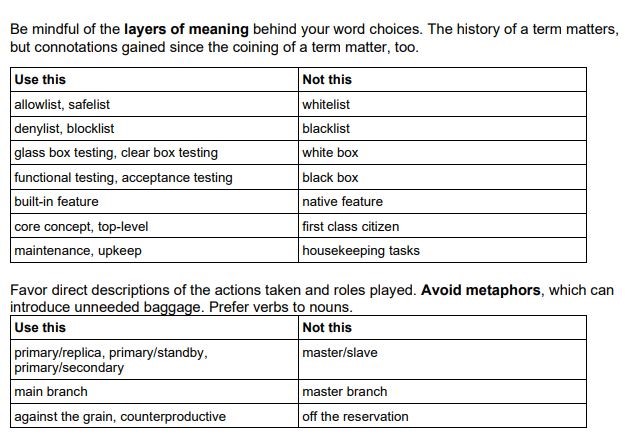
Universities and colleges have been waging a war on words for years, and the University of California-Irvine’s (UCI) Inclusive Language Guide is the latest effort to come under fire. UCI issued the guide last year “to help its Office of Information Technology staff remain committed to ‘equity, diversity, and inclusion.'” UCI’s guide rejects the old maxim that “it’s better to kill two birds with one stone,” despite the fact that this innocuous phrase has been used for generations without posing a hazard to birds. Nonetheless, UCI now considers it an example of “violent language,” and recommends using “feed two birds with one scone” instead. Other no-nos include the terms “demilitarized zone,” which the guide says should be replaced with “perimeter network,” “hang,” which should be replaced with “stop responding,” “kill” (as in kill a process), which should be replaced with “halt” or “stop,” and “nuke,” which should be replaced with “delete.” Of course, inclusivity must be front and center, and accordingly, the guide favors gender-neutral terms such as “folks,” “team,” and the use of “ya’ll” instead of guys or girls. Any terms containing the word “man” are out and preferred pronouns are in. Along racial lines, “whitelist” and “blacklist” are out, and “safelist” and “denylist” are acceptable. “First class citizen” must be replaced with “core concept” or “top-level.” Last month, the Wall Street Journal criticized the guide, scolding UCI for its “banalities.” The university was reportedly influenced by the “inclusivity guides” of Microsoft, Google, and Apple. The College Fix, 1-10-22
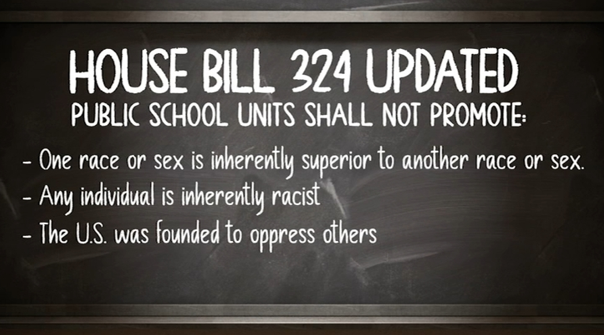
A North Carolina bill to remove critical race theory (CRT) from public schools is considered the model for legislative proposals that ban CRT while avoiding censorship. According to a December report released by the American Enterprise Institute (AEI), state lawmakers “have either sought to ban compulsion, inclusion, or promotion [of CRT].” AEI says the latter — promotion — was preferred by the North Carolina State Legislature, and “is the best model for legislatures to follow.” While the lawmakers’ bid to ban CRT was vetoed by North Carolina’s Democrat Governor Roy Cooper, AEI’s research finds that banning the promotion of CRT prohibits school districts from incorporating the theory in teacher training and from contracting speakers or consultants who integrate it into their presentations. “This approach encompasses the prohibition against compulsion,” AEI wrote. “But most importantly, it threads the needle of preventing the politicization of the classroom without presenting any barrier to honest and accurate classroom instruction.” The report affirms the need for state bans on CRT, as school districts continue to deny the theory is being taught even while teaching it. Washington Examiner, 12-13-21
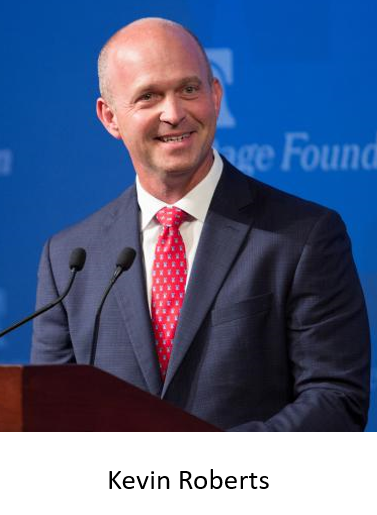
As CRT is rooted out of public schools in some states and continues to be under fire nationally, will the void it leaves further fuel the push for classical education? Many parents and conservative education experts hope the answer is yes. Classical education has been making a comeback in recent years, and Education Reporter has covered its progress. Recently, Heritage Foundation President Kevin Roberts spoke with the Washington Examiner about this topic. “The reason I believe classical education should replace CRT is because it puts the focus where it needs to be, which is on the formation of the student,” Roberts said. He charged that conservatives “kind of allowed” CRT and other progressive curricula to take hold in public schools, “because of our emphasis on how a student was being prepared for work.” Mary Rice Hasson, senior fellow in Catholic Studies at the Ethics and Public Policy Center and co-author of the 2018 book Get Out Now: Why You Should Pull Your Child from Public School Before It’s Too Late, agrees. She observed that a Republican from the 1980s would say that the purpose of education is to equip people with skills to “be successful in a global economy.” But, “as a conservative and Catholic,” she added, “education should be designed to form the person with our end in mind.” Roberts believes “what you can’t teach is what you must form, and that is the understanding of character that comes from reading the great books and the essays, and deep thinking in classrooms, and you get that with the classical approach. That’s why [classical education] has to replace CRT, and for that matter, most American curriculum.”
Virginia Governor Youngkin Is No Populist After All
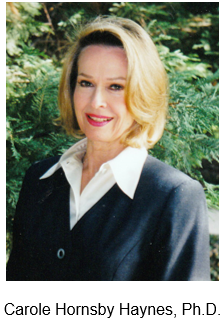
Though he never claimed to be a populist, Glenn Youngkin rode the wave of public anger against hostile school boards that are pushing radical race and gender ideologies. Yet Youngkin’s selection of advisers and personnel has sent up warning signs of danger ahead for Virginians.
Shortly after his victory over Democrat Terry McAuliffe, Youngkin chose Heritage Foundation president Kay Coles James as the co-chairman of his gubernatorial transition team. Conservative organizations, over time, tend to drift leftward and Heritage has followed that pattern. Rather than taking bold action to drive change, the nation’s largest conservative think tank seems to be more concerned in raising money and conserving itself by aligning with the establishment. It certainly does not embody the wave of populism that is swelling across the nation.
A 2020 Fox News op-ed by James following the death of George Floyd — an unarmed black man by a white police officer in Minneapolis — is a clear indication that her beliefs are opposite those of populists who voted for Youngkin.
“But we cannot shrug off Floyd’s killing — along with the killings of so many other black Americans throughout our nation’s history and up through — today.
“How many more black people must die, and how many more times will statements of sympathy have to be issued? How many times will protests have to occur? How many more committees will have to be formed until America admits that racism is still a problem in this country?
“Racism in America is a fatal wound….”
James continued:
“There is no other country like ours in the world — nothing compares to its greatness. But the issue of racism is America’s Achilles’ heel. It has been embedded into our culture for 400 years, since the first Africans were seized from their homes on the other side of the world and brought to colonial America in chains and enslaved.”
“The racism experienced by black Americans is not a political issue and to anyone who tries to use it as one, on the left or the right, I say shame on you.”
James concluded her moral high road denunciation of America,
“Americans must speak up and reject the racism and division in their own communities…. It will take courage to speak up, but it is the only way we can overcome racism and the problems plaguing our nation.”
James did not mention the fact that most black murders are committed by other blacks. She did not denounce violent Black Lives Matter protesters who burned and looted the nation and brutally attacked innocent people.
During his Fox News show, Tucker Carlson called out James for her denouncement of America as an irredeemably racist nation, including her with those leaders who “sided with the destroyers. In many cases, they egged them on.”
“When the violence began, what we needed more than anything was clarity in the middle of this … Instead, almost all of our so-called conservative leaders joined the left’s chorus, as if on cue.”
Another odd personnel selection is Joshua Marín-Mora, a member of Youngkin’s communications team who is active in LGBTQ political causes and has served on the Georgetown Latinx Leadership, a left-wing student organization that has advocated for safe spaces, supported the Black Lives Matter demonstrations across the nation, and criticized Georgetown’s refusal to impose a fee on students that would subsidize a reparations initiative.
Despite his campaign pledge to ban Critical Race Theory, Youngkin chose an education secretary, Aimee Rogstad Guidera, who has association and financial ties to the Critical Race Theory education swamp.
Guidera was the founder and chief executive of Data Quality Campaign, a national nonprofit that advocates for the collection of data on American school children. DQC received nearly $26 million from the Bill & Melinda Gates Foundation, which donates large amounts to Critical Race Theory linked projects (also here and here). Other contributors include Bloomberg Philanthropies, Carnegie Corporation of New York, and the Chan Zuckerberg Initiative.
DQC’s founding organizations included Achieve Inc., the Council of Chief State School Officers (CCSSO), the National Governors Association (NGA), and The Education Trust, with major funding from the Bill and Melinda Gates Foundation. Using the CCSSO and NGA, Gates pushed Common Core into the nation. DQC’s founders and major funders are also linked to Critical Race Theory projects.
The DQC board includes two powerful figures in the Diversity Equity Inclusion (DEI) movement — Erika McConduit and Cassandra Herring.
A 2018 case study done by DQC describes their mission to use data to transform the purpose of public education from academic to Social-Emotional Learning. SEL is the vehicle used to inject Critical Race Theory ideology into schools.
Data collection by companies such as Second Step and Rhithm, which promote radical left ideologies, is a major concern of organizations pushing back against Critical Race Theory.
Republicans have a long history of capitalizing on cultural outrage to make political changes but then hand over major concessions to the opposition who continue the leftward shift. Whether the populist movement survives in Virginia will depend upon the perpetual vigilance of the grassroots, not the GOP establishment advisors or pundits.
Reprinted by permission – January 13, 2022
Copyright @2022 Carole Hornsby Haynes, Ph.D. www.drcarolehhaynes.com Email at: chaynes@drcarolehhaynes.com
Carole Hornsby Haynes is a national education policy analyst and adviser, commentator, writer, historian, business owner, and classical pianist. She holds a doctorate in curriculum development as well as degrees in music and history. She studied at the University of Memphis, Rhodes College, DeShazo College of Music, the St. Louis Conservatory, and performed professionally on the piano and pipe organ.