The Rockefeller Plan for Federal Aid to Education — No Real Choice
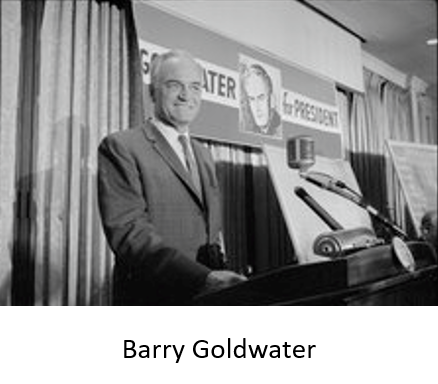
In the 1964 edition of A Choice Not An Echo, Phyllis Schlafly described her chance discovery of a 1957 meeting of what Phyllis called “kingmakers” at St. Simons Island. She exposed the Rockefeller political machine that U.S. Senator Barry Goldwater (R-AZ) confronted when he announced his 1964 candidacy for the Republican presidential nomination in the primary election against New York’s Governor Nelson Rockefeller.
Before Nelson’s youngest brother David — president of Chase Bank and the youngest grandson of John D. Rockefeller — launched his invitation-only “kingmaker” group (the Trilateral Commission), he was involved in steering America’s national political system to select the Republican party’s presidential nominee at this secret meeting. Also present was Henry Kissinger, a Harvard professor and director of a Special Studies Project for the Rockefeller Brothers Fund. 1
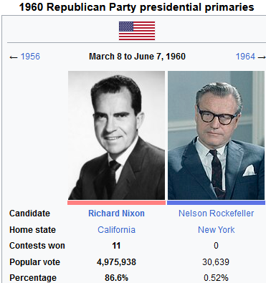
Nelson founded the Special Studies Project the year before (1956) when he became president of the fund, taking over leadership from his older brother, John D. Rockefeller III. 2 The panel reports generated by the project would serve as the platform for Nelson Rockefeller’s 1960 presidential campaign. 3 Included in the project was a subpanel V on U.S. utilization of human resources.
The report from subpanel V, titled “The Pursuit of Excellence: Education and the Future of America,” was authored by the chairman of the subpanel, John W. Gardner, president of the Carnegie Corporation of New York. 4 After Goldwater’s defeat in the general election, Gardner would become Lyndon Johnson’s Secretary of Health, Education and Welfare and the engineer of Johnson’s “Great Society.” 5
Gardner oversaw passage of the landmark Elementary and Secondary Education Act of 1965 (currently named the Every Student Succeeds Act) that redefined the federal role in education. The implication is that, despite Nelson Rockefeller’s loss to Barry Goldwater in the Republican primary election, when Johnson defeated Goldwater, Rockefeller’s Federal education policies were implemented in the Johnson administration by the author of Rockefeller’s education platform.
Invisible primaries conducted by invisible people
The St. Simons meeting agenda included conducting an “invisible primary” whereby party kingmakers selected the candidates they wanted the public to elect. Phyllis began Choice by explaining that “kingmakers” had been robbing the American people of their constitutional birthright to a presidential election choice since 1936. At stake was control of annual federal spending, yet “the press is strangely silent” about the heists. In other words, she opened the book with a clear understanding that what she discovered was not new but was always unconstitutional.
Party insiders (elected officials, donors, interest groups, activists, and political staffers) associated with both major American political parties have been pre-selecting nominees since the 1790s. Insider deliberations take place through private conversations among themselves and with the potential candidates. Eventually they make public declarations of their candidate choices to support with endorsements, money, and manpower before the public begins voting.
Hans Noel, co-author of The Party Decides: Presidential Nominations Before and After Reform, went on record stating: “These people who have a stake in the outcome aren’t going to just let it play out. They’re going to try to rig it in their favor.” 6 And so it was with Nelson Rockefeller, who would become the Republican governor of New York the following year. Nelson had “an insatiable lust for the Presidency.” His bid for the governorship was a step in the process to position himself against the conservative Republican incumbent vice-president Richard Nixon in the 1960 Republican presidential primary. 7
Rockefeller gave Nixon no choice — so Goldwater gave America a choice
Nelson Rockefeller withdrew his candidacy after losing 11 primary contests to Nixon. 8 He lost the contest, but not control of the Republican party. He refused to support Nixon as the Republican nominee and demanded that Nixon submit Rockefeller’s platform to the Platform Committee at the convention.
Knowing full well that Rockefeller was head of the largest delegation to the Republican convention, Nixon capitulated to Rockefeller, who let it be known that if the committee ignored his program, he would take the fight to the convention floor. 9, 10 Senator Goldwater described Nixon’s agreement as a “surrender to Rockefeller” and said “the entire convention had been the victim of an ‘unprecedented last-minute attempt’ to impose a platform dictated by a spokesman for the ultra-liberals.’” 11 Among the Rockefeller-Nixon platform items that were unacceptable to Goldwater was the proposal for federal aid to education — an idea he denounced in his 1960 book, The Conscience of a Conservative. 12
When the Nixon-Lodge ticket narrowly lost the election to the Kennedy-Johnson ticket, Goldwater made it clear he did not want Nelson Rockefeller nominated as the Republican candidate in 1964. 13 Rockefeller’s cronies were undeterred, and the Rockefeller-Goldwater schism that began in 1960 set the stage for the dramatic Republican Revolution Goldwater led in 1964 to break Americans free from the elitists referred to as Wall Street Republicans or New York kingmakers. 14, 15
Goldwater Republicanism v Rockefeller Republicanism — a forced choice
On Nov. 7, 1963, Rockefeller announced his second bid to become the Republican presidential nominee stating, “I believe that vital principles are at stake (emphasis added).” 16
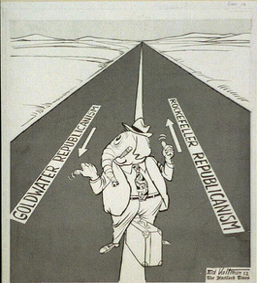
With the country still reeling from the Kennedy assassination and Johnson’s assumption of the presidency on November 22, 1963, Goldwater countered Rockefeller’s “principled” rationale by announcing his candidacy in January 1964. 17 Goldwater retorted, “I will offer a choice, not an echo. This will not be an engagement of personalities. It will be an engagement of principles.” 18
The choice Goldwater offered Americans was a choice between Rockefeller Republicanism, that is, progressive, big government policies (which were aligned with Johnson’s policies) and “an opportunity to choose conservative leadership.” 19, 20, 21
Nelson Rockefeller’s progressive social policies of Federal aid to education and medical care were essential to his supporters in New York but they did not play well with Republicans in the states between New York and California. 22
Goldwater won several key primary victories and was nominated on the first ballot at the Republican convention in July 1964. 23, 24 But in the general election against Lyndon Johnson, Goldwater’s vote against the 1964 Civil Rights legislation on the grounds that parts of it were unconstitutional put him in an unfavorable position with Black voters and members of his own party. 25 Goldwater had supported the Civil Rights Acts of 1957 and 1960 but objected to the Title II and Title VII provisions of the 1964 legislation. 26 His efforts to defend his vote were not effective. When Johnson defeated Goldwater, Martin Luther King declared, “The American people made a choice … to build a great society, rather than to wallow in the past” (King, “A Choice and a Promise”). 27
Footnotes:
1 https://www.rbf.org/about/our-history/timeline/special-studies-project/in-depth
2 https://www.rbf.org/about/our-history/timeline/rbf-founded
3 https://www.jstor.org/stable/27551900?read-now=1&seq=2#page_scan_tab_contents
4 https://archive.org/details/prospect-for-america-the-rockefeller-panel-reports/page/344/mode/2up?q=human+resources
5 https://www.pbs.org/johngardner/chapters/4.html
6 https://www.vox.com/2014/12/29/7450793/invisible-primary
7 https://timesmachine.nytimes.com/timesmachine/1958/07/01/81885781.html?pageNumber=30
8 https://en.wikipedia.org/wiki/1960_Republican_Party_presidential_primaries
9 https://www.youtube.com/watch?v=82J4zurKccI
10 https://timesmachine.nytimes.com/timesmachine/1960/07/24/issue.html
11 https://www.nytimes.com/1960/07/24/archives/goldwater-hits-platform-accord-pledges-fight-in-convention-on.html
12 https://babel.hathitrust.org/cgi/pt?id=mdp.39015046344738&seq=82
13 https://timesmachine.nytimes.com/timesmachine/1960/11/10/99963432.html?pageNumber=38
14 https://optv.pbslearningmedia.org/resource/1964-republican-convention-conservatism-video/retro-report/
15 https://www.smithsonianmag.com/history/1964-republican-convention-revolution-from-the-right-915921/
16 https://library.cqpress.com/cqalmanac/document.php?id=cqal74-1223238
17 https://www.whitehouse.gov/about-the-white-house/presidents/lyndon-b-johnson/
18 https://www.nytimes.com/1964/01/04/archives/goldwater-says-hell-run-to-give-nation-a-choice-he-joins-gop.html
19 https://www.nytimes.com/1964/01/04/archives/goldwater-says-hell-run-to-give-nation-a-choice-he-joins-gop.html
20 https://www.cambridge.org/core/journals/journal-of-policy-history/article/
21 https://www.loc.gov/item/2016684293/
22 https://www.nytimes.com/1964/02/16/archives/political-evolution-of-nelson-rockefeller-in-less-than-six-years-he.html
23 https://www.smithsonianmag.com/history/1964-republican-convention-revolution-from-the-right-915921/
24 https://www.nytimes.com/1964/01/12/archives/rockefeller-goldwater-contest-is-assessed-future-of-the-republican.html
25 https://timesmachine.nytimes.com/timesmachine/1964/06/19/118664532.html?pageNumber=1
26 https://timesmachine.nytimes.com/timesmachine/1964/06/19/118664663.html
27 https://kinginstitute.stanford.edu/goldwater-barry-m
The Rockefellers’ Fundamental Transformation of American Education
The fundamental transformation of American education to serve a national workforce agenda began long before Democrat presidential candidate Barack Obama announced on Oct. 30, 2008: “We are five days away from fundamentally transforming the United States of America.” 28
Almost immediately after the 2009 swearing in of Obama, the U.S. Department of Education introduced “college and career readiness” for all students as a national goal in its Race To The Top (RTTT) grant competition. 29 RTTT provided grant money to selected states to transform their education systems by adopting a common set of standards and assessments aligned to those standards, which were already conveniently available through participation in the Common Core State Standards Initiative (CCSSI). 30
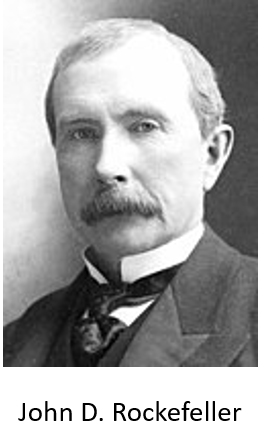
Although RTTT’s “college and career readiness” for all students was unveiled as innovative, the plan to transform America’s K-12 schools from publicly funded, locally controlled education agencies into a national network of human resource development sites began more than a century earlier when John D. Rockefeller, Sr. (JDR, Sr.) established the General Education Board (GEB) in 1902 with an initial donation of $1 million. 31 JDR, Sr. used philanthropic “soft power” in the form of privately funded grants (a model for the Bill & Melinda Gates Foundation and others) to direct the course of American education to workforce development after the Civil War.
“Soft power” according to Joseph Nye of Harvard University, “is the ability to obtain preferred outcomes by attraction rather than coercion of payment.” 32 But it was after his youngest grandson, David Rockefeller, president of Chase Manhattan Bank, established the Trilateral Commission, that the Rockefeller family’s soft philanthropic power merged strategically with political power to accelerate the transformation process. 33
By capturing the White House, the power elite can work from the inside to get Congress to pass laws aligned with their agenda. This combined “smart power” fast-tracked the transformation of American education into a national human resource development system designed to monitor human development from cradle to grave as described in Marc Tucker’s 1992 letter to then-First Lady of Arkansas Hillary Clinton. Tucker sent the letter to Hillary at the Governor’s Mansion in Arkansas after her husband won the 1992 presidential election.
“America’s choice” or a Rockefeller agenda?
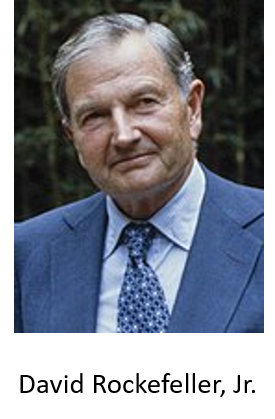
Marc Tucker, author of the “Dear Hillary” letter, was president of the National Center for Education and the Economy (NCEE) which was partially funded by the David Rockefeller/David Rockefeller, Jr. Trust. 34 David Rockefeller, Jr., vice-chairman of Rockefeller Family & Associates, was listed among the members of Tucker’s board of trustees on the “Dear Hillary” letter’s cover page, as was Hillary Clinton. 35 Also on the list of trustees was Bill Clinton’s friend, Ira Magaziner; both had been Rhodes Scholars at Oxford. 36 Magaziner chaired an NCEE commission that produced America’s Choice: High Skills or Low Wages (1990), a report that strongly criticized American worker training and advocated for youth-apprenticeship programs. 37 NCEE tapped Hillary to lead the effort to publicize the report. 38
In the letter, Tucker described an initial meeting he had with David Jr. and others in David’s office to discuss the plan they had for Clinton’s education agenda. Tucker described their shared belief that with Clinton’s election, “this country has seized its last chance.” (Perhaps he was alluding to Clinton as the last U.S. president who was a member of David Rockefeller’s Trilateral Commission). David Jr. was also listed as a contributor to NCEE’s report, “A Human Resources Development Plan for the United States” that included essentially the same content as the “Dear Hillary” letter. 39
The letter advised the future first lady on how Bill should prepare the public to accept their plan to fundamentally transform American education through incremental legislative steps and federal grants while conducting a propaganda campaign to garner public support for their radical agenda. He wrote:
-
Our idea is to draft legislation that would offer an opportunity for those states — and selected large cities — that are excited about this set of ideas to come forward and join with each other and with the federal government in an alliance to do the necessary design work and actually deliver the needed services on a fast track. The legislation would require the executive branch to establish a competitive grant program for those states and cities and to engage a group of organizations to offer technical assistance to the expanding set of states and cities engaged in designing and implementing the new system (emphasis added).
Establishing a “competitive grant program” and awarding grants to selected “states and cities to engage a group of organizations to offer technical assistance” are precisely the components of Obama’s RTTT program. Tucker described the rollout of the public relations campaign for his legislative agenda as a gradual two-pronged approach to avoid public backlash. He wrote:
- Radical changes in attitudes, values and beliefs are required to move any combination of these agendas…. [Bill Clinton] could start on the consensus-building progress this way, taking his message directly to the public, while submitting his legislative agenda and working it on the Hill. After six months or so, when the public has warmed to the ideas and the legislative packages are about to get into hearings (emphasis added), then you might consider some form of summit, broadened to include not only the governors, but also key members of Congress and others whose support and influence are important.
The role David Rockefeller, Jr. played in shaping Bill Clinton’s education policy through his association with Marc Tucker was not coincidental. While governor of Arkansas, Bill Clinton became a member of David Rockefeller Sr.’s Trilateral Commission. 40 A month before the 1992 election, David Jr. wrote an opinion piece in the New York Times titled “Why I Trust Clinton.” He opined:
- I have decided — as a father, a businessman, and a supporter of public education reform — to cast my vote for Bill Clinton…. When it comes to the intricate issues of systemic educational change, he understands the interlocking functions of technology, human development, school finance, educational equity, and public commitment that must undergird any successful human resource policy (emphasis added).” 41
The ideas David Jr. expressed in his article were the essential elements of Tucker’s “Dear Hillary” letter. The piece also promoted other socialist ideas such as universal health care and globalism. Although sitting presidents must relinquish their membership, Clinton’s involvement with the Trilateral Commission during his presidency is evident in his 1998 letter to David Rockefeller, Sr. congratulating him on the 25th anniversary of TC and in Clinton Presidential Library records. 42, 43
Presidential trilateral triumvirate and the Rockefeller education agenda
Clinton was the last of a triumvirate of presidents who were members of David Rockefeller, Sr.’s Trilateral Commission that included Jimmy Carter and George H.W. Bush. 44 (Bush followed Carter as Reagan’s vice-president, wielding influence behind the scenes until his ascendency to the presidency in 1988). The education policies of the Carter-Bush-Clinton administrations, however, still propel the nationalization of American education that began with John D. Rockefeller, Sr. but which were dramatically accelerated when Carter signed the Department of Education Organization Act in October of 1979. 45
The chart below depicts the Fabian Socialist-style incremental (evolutionary) building of the organizational structure and programs that David Rockefeller, Sr. admired during his university years. 46
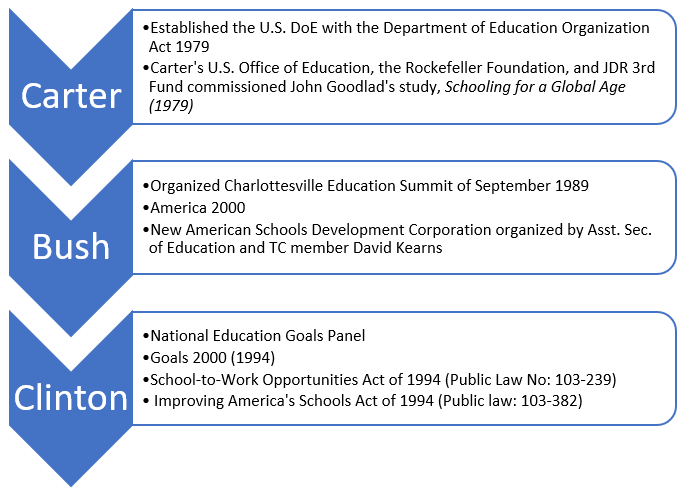
The Carter administration’s Department of Education Organization Act established the administrative infrastructure of a national education system headed by a cabinet secretary. The Bush administration launched a campaign for a standards and accountability system that would begin the nationalization of instructional content and assessment with America 2000 and partner with corporations to fund innovative (i.e., progressive education) methods of delivery when Deputy Secretary of Education, former Xerox CEO David Kearns, launched the New American Schools Development Corporation. 47, 48 Clinton then used the Bush policies to further the Rockefeller agenda. 49
Author and education expert Sam Blumenfeld summarized how the accumulated effects of the Carter-Bush education policies culminate in the transformation of American education in the Clinton administration:
- Goals 2000 [an iteration of America 2000] is raw social engineering, intended to restructure all of American society and not just the schools. The School-to-Work Opportunities Act establishes a formal partnership between the U.S. Departments of Education and Labor. The grant money for this education-labor linkup is tied to compliance with requirements outlined in Goals 2000. It also mandates transforming public education into a glorified voc-ed system, more in line with a planned economy than a free economy (emphasis added). The Improving America’s Schools Act is a reauthorization of the Elementary and Secondary Education Act of 1965 through which the Johnson administration opened the floodgates of the U.S. Treasury…. 50
The administrative infrastructure and national education goals developed throughout the Carter-Bush-Clinton administrations were preserved and enhanced in the G.W. Bush administration’s “No Child Left Behind Act” then “perfected” in Obama’s Race to the Top grant program that funded states’ adoption of the Common Core State Standards Initiative. 51, 52
Footnotes:
28 https://www.columbiamissourian.com/news/local/thousands-cheer-obama-at-rally-for-change/
29 https://www.federalregister.gov/documents/2009/07/29/E9-17909/race-to-the-top-fund
30 https://www.thecorestandards.org/
31 https://dimes.rockarch.org/objects/QwffoPZ82XeVhYwD3YiGCc
32 https://www.nature.com/articles/palcomms20178
33 https://www.trilateral.org/
34 https://ncee.org/funders-2/
35 http://blumenfeld.campconstitution.net/
36 https://riheritagehalloffame.com/Ira-Magaziner/
37 https://eric.ed.gov/?id=ED323297
38 https://www.edweek.org/teaching-learning/in-new-role-hillary-clinton-treading-on-familiar-policy-turf/1993/04
39 http://www.channelingreality.com/Education/Marc_Tucker_Human_Resource_plan.pdf
40 https://isgp-studies.com/org/tc/membership-lists/trilateral-commission-list-1990-north-america-only.pdf
41 https://www.nytimes.com/1992/10/16/opinion/why-i-trust-clinton.html
42 https://isgp-studies.com/org/tc/membership-lists/extra-documents/
43 https://clinton.presidentiallibraries.us/items/show/101107
44 https://www.everycrsreport.com/files/19810501_IP0092_2d3ea09e2c6068af730f41d315f4ea490bc91878.pdf
45 https://www.govinfo.gov/content/pkg/STATUTE-93/pdf/STATUTE-93-Pg668.pdf
46 https://ia800904.us.archive.org/35/items/
47 https://eric.ed.gov/?id=ED327985
48 https://www.c-span.org/person/?12983/DavidKearns
49 https://www.presidency.ucsb.edu/documents/statement-signing-the-school-work-opportunities-act-1994
50 http://blumenfeld.campconstitution.net/main.htm
51 https://www.greatlakescenter.org/docs/Policy_Briefs/Mathis_NationalStandards.pdf
52 https://files.ascd.org/staticfiles/ascd/pdf/siteASCD/policy/CommonCoreStds.pdf
A Choice Not an Echo 2.0
In the updated 50th anniversary edition of Choice (published November 2014 and referred to in this article as Choice 2.0), former Texas Congressman Ron Paul wrote in the foreword that activists “will find a disturbing similarity between the Establishment’s treatment of grassroots conservatives in the 1950s and 1960s and its treatment of the liberty movement in 2008 and 2012” (p. xii). The updated Choice 2.0 gives extensive space to the “Rockefeller Machine” with particular attention to Senator Goldwater’s description of David Rockefeller’s Trilateral Commission (TC). David Rockefeller organized the TC in 1972 at the Rockefeller family’s estate in Tarrytown, NY nearly a decade after Phyllis originally published Choice. 53
Phyllis lauded Goldwater for his exposure of the TC’s report “The Crisis of Democracy” presented at the plenary session of the TC’s May 30-31, 1975 meeting in Kyoto, Japan. 54 She said Goldwater “was one of the earliest to recognize the multinationals’ long-range scheme to induce Americans to accept a dumbed-down school system and a lower standard of living in order to compete in the global economy with cheap Third World labor.” 55 The full text of the report discussing American education states:
- In the United States, some retrenchment in higher education is already underway as a result of slower growth in enrollments and new ceilings on resources. What seems needed, however, is to relate educational planning to economic and political goals. Should a college education be provided generally because of its contribution to the overall cultural level of the populace and its possible relation to the constructive discharge of the responsibilities of citizenship? If this question is answered in the affirmative, a program is then necessary to lower the job expectations of those who receive a college education. If the question is answered in the negative, then higher educational institutions should be induced to redesign their programs so as to be geared to the patterns of economic development and future job opportunities (emphasis added) (p. 190). 56
Regarding public administration, the same report recommends, “… a general reform of public administration and especially of local implementation systems should be a central practical concern …” (emphasis added) (p. 185). Reform of “local implementation” translates as hierarchical centralization of administration, relegating local agencies to implementers of decisions made at higher nodes in the chain of command. In reality, Lou Gerstner’s 57 and Marc Tucker’s 58 exhortations to eliminate local school boards was not their idea — it was the Trilateral Commission’s.
In essence, the report recommends that the purpose of American education be transformed from a liberal arts education preparing the youth of local communities to govern themselves and engage in government (as stipulated in several state constitutions), to workforce preparation for global citizenship in an economy planned by a collaborative of international corporations working in partnership with national governments to maximize profitability and minimize individualism “for the greater good,” which really means for their greater good.
Choice 2.0 and the 2016 Election
Phyllis included a chapter in Choice 2.0 titled “Still Seeking a Choice Not an Echo: 2016.” She did not mention Donald J. Trump — he had not yet ridden down the golden escalator to announce his bid for the presidency (June 16, 2015). 59 She did, however, endorse him two years after her book was released. 60
She warned readers about closed-door events of Republican mega-donors to draft their pick — JEB Bush, the second son of Bush ’41. 61, 62 Phyllis encouraged the American grassroots by reminding them that the “Rockefeller machine” had been beaten twice before; once with the nomination of Senator Barry Goldwater over Governor Nelson Rockefeller, and once with the nomination and election of Ronald Reagan. She emphasized the importance of the ongoing fight to overcome New World Order globalist ideas, including efforts to federalize American education.
Phyllis Schlafly did not live to see grassroots Americans elect Donald Trump against the will of the Establishment in 2016. She would not have been surprised, however, by the opposition’s tactics and strange bedfellows reportedly employed to put Biden in the White House in 2020. 63, 64
America Still Needs a Choice in 2024
Since the distribution of Rockefeller wealth among increased numbers of Rockefeller descendants, and the death of David Rockefeller and other founding leaders of the Trilateral Commission, the “Rockefeller Machine” does not command the formidable presence it had when the Brothers were alive. 65, 66 But the transformation of American education envisioned by the Rockefeller dynasty is ongoing.

The infrastructure needed to achieve that transformation is still in place and has been instrumental in infusing the social-emotional learning agenda of David Rockefeller’s daughter (David Rockefeller, Jr.’s sister), Eileen Rockefeller Growald, into American Schools. 67
Sixty years after Phyllis first sounded the alarm about the hijacking of presidential elections by elitist kingmakers, Americans still need to reclaim their constitutional birthright to choose their president. The names may have changed since 1964 and 2014 and the strategy of deception has become more sophisticated, but the goal of the “next generation” kingmakers is the same — get control of government offices at the highest levels.
Last month, NBC news published an exclusive story, “Experts war-gamed what might happen if deepfakes disrupt the 2024 election. Things went sideways fast.” 68 The experts, dozens of prominent former senior U.S. and state officials, civil society leaders, and executives from technology companies, gathered recently in New York to participate in a simulated election exercise.
The exercise “explored a scenario with an array of both domestic and foreign actors launching election disinformation, exploiting rumors and seizing on political divisions.” For example, elderly voters are informed via phone calls that their local polling places are closed due to threats from militia groups. A flurry of photos and videos flood social media showing poll workers dumping ballots. But the phone calls and videos aren’t real — they turn out to be “deepfakes” created with artificial intelligence tools to reduce voter turnout and cause mistrust in election results.
During a recent premiere of his new documentary, General Michael Flynn was asked by a member of the audience, “How do we ensure we have free and fair elections in November?” His response was, “In my opinion, we won’t have free and fair elections in November.” He suggested that the only way to beat the odds of election tampering is to increase voter turnout to such a high percentage that it will overcome any interference tactics.
Phyllis helped Goldwater overcome the odds of beating a powerful political machine to cinch the Republican presidential nomination in 1964. She wrote A Choice Not an Echo to educate voters about the tactics of the kingmakers who manipulated the choice of nominees in order to select their choice.
Phyllis’s legacy of resistance against those who would subvert our voting rights for their globalist agenda lives on in her books and in the acts of resistance they inspire. In 2024, Trump can’t fight the elites and win by himself. Like Phyllis, we must do everything we can to foil the tactics of deception used to control our elections. Only by working together can we save the America we love.
Footnotes:
53 https://www.scribd.com/doc/30079700/T51-The-Trilateral-Commission-at-25-1998
54 https://archive.org/details/TheCrisisOfDemocracy-TrilateralCommission-1975
55 https://store.phyllisschlafly.com/product/a-choice-not-an-echo-updated-and-expanded-2014-hardback/
56 https://archive.org/details/TheCrisisOfDemocracy-TrilateralCommission-1975/page/n189/mode/2up?q=college
57 https://www.wsj.com/articles/SB122809533452168067
58 https://www.americanprogress.org/article/governing-american-education
59 https://www.youtube.com/watch?v=XRAzC7RLg5w
60 https://www.washingtonpost.com/news/post-politics/wp/2016/03/11/phyllis-schlafly-endorses-trump-in-st-louis/
61 https://www.politico.com/story/2012/08/for-gop-mega-donors-a-convention-of-their-own-080074
62 https://www.washingtonpost.com/politics/
63 https://time.com/5936036/secret-2020-election-campaign/
64 https://www.ft.com/content/918e7c25-363c-4181-a967-0875dbe22b30
65 https://www.nytimes.com/2017/03/20/business/david-rockefeller-dead-chase-manhattan-banker.html
66 https://www.forbes.com/sites/michelatindera/2017/04/20/
67 https://philanthropynewsdigest.org/features/nonprofit-spotlight/casel
68 https://www.nbcnews.com/politics/2024-election/war-game-deepfakes-disrupt-2024-election-rcna143038
What Books Should Kids be Reading?
(Third in our series of recommended reading lists for children of all ages. We will continue to publish additional lists in Education Reporter over the next few months. — Ed.)
Classic children’s books are scarcely to be found in school classrooms and libraries today, so parents must ensure that their kids are reading books that educate, absorb, and entertain in a manner that stimulates curiosity and increases the child’s eagerness to learn about the world.
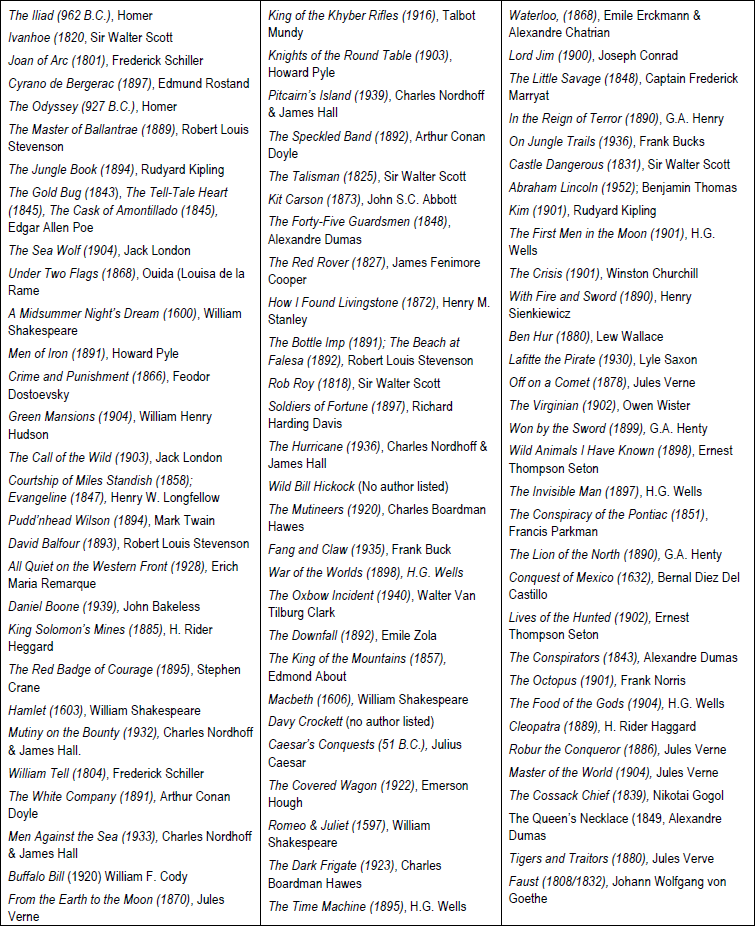
The following list displays the title, year published, and author of each book. This is part 2 of The Ultimate Reading List — Classics that Endure, which originally appeared in the June 1997 issue of Education Reporter.
Additional Education Reporter suggested reading lists:
- A Child’s Reading List (February 2024)
- The Ultimate Reading List — Classics that Endure (Part 1) (March 2024)
- The Ultimate Reading List — Classics that Endure (Part 2) (April 2024)
- Children Will Love Discovering Lost Classics (May 2024)
- Bennett’s Reading List (Part 1) (June 2024)
- Bennett’s Reading List (Part 2) (July 2024)
- The Best Children’s Classics (Part 1) (August 2024)
- The Best Children’s Classics (Part 2) (September 2024)
- Recommended High School Reading List (October 2024)
NOTE: Most books on this list can be ordered online through booksellers including:
- ThriftBooks
- Amazon.com : vintage books classics
- Project Gutenberg (Free Archive, eBooks only) Choose (EPUB3 (E-readers incl. Send-to-Kindle))
> > > > Send to Kindle to upload ebooks to your Kindle device downloaded from Project Gutenberg.
The Ultimate Reading List — Classics that Endure (Part 2 of 2)
Click the image below to open as a (printable) PDF document
Mallard

Dumping Gifted Student Programs for Diversity
Government schools in Seattle are making news for dropping gifted student programs in order to be “more inclusive, equitable and culturally sensitive.” It’s an ongoing trend in school districts across the country that penalizes higher-achieving students by removing challenging curricula and “honors” courses.
An April 2 Fox News report noted that Seattle Public Schools (SPS) began phasing out its “Highly Capable Cohort (HCC) classrooms and schools for advanced learners during the 2021-22 school year, claiming the program did not address racial inequalities.”
The HCC will be phased out by the 2024-25 school year, and removed entirely by 2028, critics say, with a dumbed-down, cumbersome program that will likely benefit no one but will force teachers to “create personalized lesson plans for as many as 20 or 30 students.” The new program already requires that students be screened annually for “an ability to learn at an accelerated pace.” This begs the question of whether some students could be forced to fill a niche they are uncomfortable with or unqualified for in order to achieve progressive SPS political goals.
The SPS insists that its advanced program is “getting better” and “will be more inclusive, equitable, and culturally sensitive. In particular, students who have been historically excluded will now have the same opportunities for services as every other student and get the support and enrichment they need to grow.”
But skeptics abound. Johns Hopkins University School of Education Professor Johnathan Plucker, told the The Seattle Times: “The devil’s in the implementation. The district promises it will conduct a complete review of all the data, giving a holistic evaluation of every student’s strengths and academic achievement … But it’s too early to know if the new system is effective yet.”
One parent who found her son’s HCC school to be a “lifesaver” after he learned to read at age 4 and continued to progress at an accelerated pace, is appalled that the program is being phased out. The Seattle Times reported that this mom and her like-minded peers doubt that “the new model will work because teachers in neighborhood schools won’t know how to teach to gifted kids and might overlook them, causing them to turn disruptive or slowing their academic progress.”
Some teachers agree, citing the excessive time and resources required to prepare individualized learning plans for every student in their classrooms. Plucker concurs that teachers will be unfairly burdened. “That is almost asking the impossible of people; that is just so hard,” he said.
Woke school board catalyst
Instrumental in shuttering the SPS’s gifted and talented program was school board head Chandra Hampson, who ironically was accused of racism in 2021. According to the Daily Mail.com, Hampson and another board member were found to have “violated the policy against harassing, intimidating, and bullying over their treatment of two black employees who were working on an anti-racism plan.”

While an investigation failed to find “clear evidence” that the board chief and her colleague discriminated against the staff members because of their race, it did conclude that they “used their positions and authority to the detriment” of these employees.
Hampson now stands accused by parents of a different type of racism; this time as discriminating against white and Asian students because there were too many of both groups enrolled in the HCC programs. SPS data show that for the 2022-23 school year, 52 percent of highly capable program students were white, 16 percent were Asian, and 3.4 percent were Black. The SPS points to this data as proof that the program was discriminatory and needed revamping.
But popular Seattle talk radio personality and researcher, Jason Rantz, observed that while critics argue that the HCC “did not reflect the diversity of the community,” the move to dismantle it “was prompted by Black Lives Matter activism.” Rantz added:
- Outraged more by the success of white and Asian students than by the untapped potential of black and Hispanic pupils, progressives would rather drag achievers down than elevate everyone. These self-proclaimed saviors boast on social media about tackling inequities, oblivious to the harm they inflict. Indeed, the program to replace the HCC, and be implemented in every classroom, ensures that gifted students will be unchallenged, struggling students will escape the attention they deserve, and teachers will be overwhelmed. In other words, everyone will be equitably harmed.
War on merit?
One black father was quoted by several news outlets, including’s Rantz’s radio show, as pleading with the Seattle School Board to “consider the disservice you would be doing to the minorities that are already in the HCC program.” The concerned dad argued that the HCC “does more for Black children, particularly Black boys, than it does for their peers.” But the board, allegedly so committed to supporting diversity and minority interests, was unmoved.
Last year, the Culver City School District in southern California eliminated accelerated class programs from its high school curriculum. A Fox News op ed by reporter and writer Asra Q. Nomani charged that the “Woke Army” is attacking America’s future “by trying to destroy [the] concept of merit.”
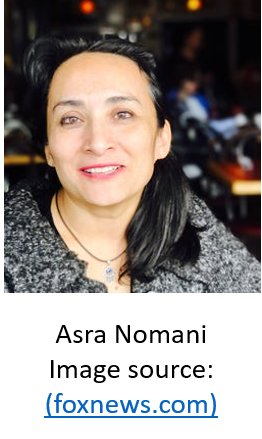
She described the many students and parents who were “understandably angry about advanced learners left behind in the name of ‘equity,’” and charged district officials with waging a war on merit for years as self-described “equity warriors.”
Nomani wrote: “School district officials have been seeking ‘equitable education’ not equal [education]. Their plan included ‘Learning workshops on the concept of Critical Race Theory for parents and Professional Development on the concept of Critical Race Theory in the Classroom.’” She noted that the action in Culver City is “emblematic of a wider trend in which ‘equity’ is being used as an excuse to take away opportunities from advanced learners and high achievers to cover up the miserable failures of public-school officials who have not been able to close the achievement gaps between black and Hispanic students with Asian and white students.”
A Fox News report on the network’s popular program, The Five, also called out the Culver City School District for abandoning its gifted students curriculum. Host Brian Kilmeade called the development “sickening,” and noted that some districts backed off from eliminating such courses after parents fought back. Fox News host and former press secretary for President George W. Bush, Dana Perino, voiced her total opposition to the removal of accelerated classes in the name of equity, calling the practice “gross.”
Fox News pundit Patrice Lee Onwuka urged school districts to “stop punishing gifted students” and that “the war on merit and honors programs is hurting black children [and] others.” Onwuka cited the story of Dr. Patricia Bath, an ophthalmologist who pioneered laser eye surgery in the 1980s.
“A merit-based program set Bath on a career path,” Onwuka wrote. “In high school, she won a competitive research opportunity from the National Science Foundation at Yeshiva University. Bath called it ‘life changing’ for a White Jewish school teacher to mentor her, a Black teen from Harlem.”
Onwuka’s point is that all children are harmed by the withdrawal of merit-based programs, and that more students could be inspired to follow the path of successful achievers such as Bath “by providing more enrichment programs and rigorous courses of study to gifted young people of different backgrounds. We must challenge their intellectual curiosity, not dull it.”
Not all gifted programs are equal
Gifted education programs and curricula vary from state to state and are typically locally based. There are no official federal standards or mandates governing gifted education or its administration, which many would doubtless consider a good thing. However, the Elementary and Secondary Education Act does define gifted students as those “who give evidence of high potential or capability in areas such as intellectual, creative, artistic, or leadership capacity who need special services and activities not ordinarily provided to fully develop those capabilities.”
A November 2022 article in U.S. News (usnews.com) noted that schools for gifted children “encompass a wide range of schools, including both private schools and public charter and magnet schools. The article quoted Lauri Kirsch, president of the National Association for Gifted Children’s board of directors, as cautioning parents “to keep in mind that just because a school is labeled for gifted students doesn’t necessarily mean it’s all that different, instructionally speaking, from a traditional school environment. Because there can be so much variety, parents should research each individual school carefully to make sure it’s the right fit for their child.”
The late Phyllis Schlafly would have stressed that parents should examine both curricula and extra-curricular activities for gifted students. As long ago as 1997, she uncovered a program in New Jersey public schools that was little more than an exercise in guided imagery and amateur psychological analysis, which she described in her weekly Phyllis Schlafly Column. The document she acquired defined the “Philosophy of the Gifted and Talented Program” for 4th graders. Phyllis explained:
- Page after page instructs the teacher how to give guided imagery exercises under the caption “Your Mind’s Eye.” “Room will be darkened. Students must find comfortable position. Eyes may be closed or open. Closed is preferable…. Concentrate on slowly breathing, releasing energy from body.”
- “Tranquil Scene” is the title of one imagery exercise. “You’re standing on a sandy beach…. Feel the sand between your toes…. See little white fluffy clouds drifting, drifting…. See yourself sipping your favorite drink. Taste it … enjoy.”
- At the end of the exercise, the teacher is instructed to count to ten, thereby “giving the students an opportunity to adjust to returning.” It certainly sounds like an out-of-body experience if it takes a count of ten to return to reality.
The New Jersey program included clairvoyance, sleep and dream analysis, and other psych-related topics. Parents today might be more skeptical than ever about the quality of any type of government school curriculum, including programs for gifted children, and thus more vigilant.
Nonetheless, parents across the country are seeking out gifted options and objecting loudly when they are sacrificed on the altar of “equity.” And there is at least one online platform that promises to help parents find the best schools and neighborhoods for their kids, should they be inclined to search. Niche bills itself as “the country’s leading platform connecting students and families with colleges and schools” that best fit their needs, including gifted and talented schools and programs.
Keeping gifted programs
Indications are that it’s unlikely gifted programs will disappear completely from the educational landscape anytime soon. Most parents want them to continue, and after decades in school districts nationwide, they have become, to an extent, entrenched.
Additionally, states have their own means of defining and assessing “giftedness,” and most gifted schools and programs are seeking to include more minority and low-income students by advocating for more effective means of identifying them. So, the outcry against these programs and the scramble to remove them may soon lose a primary excuse for doing so.
In any case, it may be more important for parents to continue fighting to retain the programs that genuinely offer academic advancement for students, accelerated or otherwise. For as Asra Nomani wrote: “It’s not just a war on merit. It’s a war on kids and the future of America … In the 1950s and 1960s, communists in China targeted intellectuals for murder and labor camps during the violent Cultural Revolution of China’s past, and, in the same way, social justice warriors in America’s Woke Army have kids in honors classes in their crosshairs.”
A Choice Not an Echo
by Phyllis Schlafly, originally published in 1964; Updated and Expanded Edition, 2014, (Hardback, (phyllisschlafly.com); original edition also available.
Americans are engaged in a fierce battle to exercise their constitutional right to elect their choice for the next president of the United States, and the fiercest fighter in that battle is the Republican presumptive nominee, Donald J. Trump. 69, 70 His fight against a globalist power clique’s control of the 2024 election is reminiscent of the fight Phyllis Schlafly described in her seminal 1964 book, A Choice Not an Echo. 71 Phyllis exposed the “invisible primaries” conducted by elitists to put their preferred candidates in key government offices. Once in position, these elitists’ “choices” pull their levers of power to pass legislation and authorize Federal spending in favor of the elites’ globalist agenda.
 The first edition of Phyllis’s book explained how the House of Rockefeller wielded political power to ensure that the constitutional conservative senator from Arizona, Barry Goldwater, did not interrupt their short-range plans to make Nelson Rockefeller the 1964 Republican nominee, who would then further their long-range plans of orchestrating a world economy run by a centralized governance system.
They were not successful, in part because of Phyllis’s book. Goldwater upset the elitists’ plans and became the Republican nominee. Though he did not win the general election against Lyndon Johnson, Goldwater’s primary win changed the course of American history. Thirty-five years later, the Orlando Sentinel wrote:
- Rockefeller’s defeat was decisive for the Eastern establishment that had dominated the Grand Old Party financially and politically for decades. Power shifted [from the Wall Street Republicans] decisively south and west. The Goldwater campaign gave Ronald Reagan his first national platform, and two years later, he was governor of California. Reagan redefined the Republican mainstream… 72
Phyllis explained that she wrote the book because “[she] believed that the most constructive thing [she] could do … was to give our people the facts … which would assist them to reject the efforts of the little clique of kingmakers who wanted to force upon us another “me too” candidate who would pull his punches and evade the vital issues…. I made my decision in light of what I believe to be the best interests of the America I love…” (p. 199).
She updated and expanded the book in her 2014, 50th Anniversary edition with 13 additional chapters organized under the heading, “The Battle Continues: 1968-2016.” In that edition, she exposed Jimmy Carter as a member of David Rockefeller’s Trilateral Commission — “a power clique of some two hundred banking, commercial, political, and communications leaders” — whose members were placed into the Carter administration’s cabinet and sub-cabinet positions (p. 166).
She credited Goldwater with exposing “that those who nominated [Democrat] Jimmy Carter and staffed his administration were essentially the same crowd who had controlled Republican presidential nominations for so many years and that they had the same goals” (p. 167). In so many words, Phyllis was quoting Goldwater to expose the Republican-Democrat uni-party orchestrated by David Rockefeller.
Phyllis’s timeless work remains an essential political guide for those who value freedom, and should be required reading for all those seeking to preserve it.
Education Briefs

On the 63rd anniversary of the failed Bay of Pigs invasion of Cuba on April 17, 1961, during which 1,500 Cuban exiles attempted to stop Fidel Castro’s takeover of the island nation, Florida Governor Ron DeSantis signed a bill strengthening the state’s standards on teaching about the dangers of communism. CBS News Miami reported that, beginning with the 2026 school year, “education on the history of communism will be expanded in the state.” In signing SB 1264, DeSantis said: “We will not allow our students to live in ignorance, nor be indoctrinated by Communist apologists in schools. To the contrary, we will ensure students in Florida are taught the truth about the evils and dangers of Communism.” A press release announcing the signing of the legislation highlighted the new statute’s requirements, which include: Adding to communist history standards already on the books “with instruction on the history of Communism in the United States and the tactics of Communist movements”; authorizing the newly established Institute for Freedom in the Americas at Miami Dade College to promote the importance of economic and individual freedoms as a means to advance human progress—specifically in Latin America and the Caribbean”; enabling Florida’s Department of State, in collaboration with the Florida Department of Education, to recommend to the legislature the creation of a Florida-based museum on the history of Communism”; and, preparing students “to withstand indoctrination on Communism at colleges and universities.” The new law also authorizes the Florida Department of Education “to seek guidance about the curriculum from anyone who was a victim of communism.”

The National Association of Scholars (NAS) has introduced a Curriculum of Liberty to “educate American college students toward freedom, the pursuit of truth, and virtuous citizenship.” The NAS acknowledges “that [this] is only the latest of a great many sketches on how to redo higher education—many of them worthy, few of them influential.” But as the curriculum’s author, David Randall, writes: The NAS “has been offering a great many policy reforms the last few years, and I think that it is worth articulating a basic vision of higher education, which I take to be in accordance with NAS principles, to provide a background for those proposed policy reforms. Then too, the new surge of successfully enacted education reform policies offers the possibility that a sketch of education reform principles may indeed have real-world effect.” Randall rightly observes that higher education in the U.S. “inculcates tyranny, conformity, and depravity. It forms elites who are unconcerned with law or liberty and are confident that they should impose on their countrymen, by any means they possess, their perverse ideology of ‘liberation’… The survival of the American nation depends upon the creation of national institutions guided by courageous men and women who possess the qualities of leadership.” The Curriculum of Liberty consists of 10 sections: 1. Education Structure, which includes Admissions Requirements, Pedagogy, and Exit Requirements. 2. Human Sciences, including History, Anthropology, Economics, and Military Science. 3. Liberty, which includes European History, American History, Western Political Philosophy, and American Government. 4. Scientific Reasoning, which includes Mathematical Reasoning, Scientific Methods, Experimental Design, and Engineering. 5. Scientific Knowledge, which includes Physics, Chemistry, Biology, and Computer Science. 6. Humanities Reasoning, which includes Philosophy, Poetics, Iconography, and Musicology. 7. Humanities Knowledge, which includes Western Humanities, British Humanities, American Humanities, and Eastern Humanities. 8. Language, which includes the History of English, Foreign Language, Linguistics, and Philology. 9. Self-Reliance, which includes Law, Business, Nursing, and Self Defense. 10. Virtue, which includes Bourgeois Virtues, Noble Virtues, Civic Virtues, and Spiritual Virtues.

In 2023, 10 states enacted or expanded school choice programs, among them Arkansas, which passed its universal school choice program called Arkansas LEARNS (Literacy, Empowerment, Accountability, Readiness, Networking, and School Safety). Governor Sarah Huckabee Sanders prioritized the program by signing an Executive Order to ensure it received prompt attention shortly after her January 2023 swearing-in ceremony. Through the LEARNS Act, Arkansas families can receive 90 percent of their child’s education dollars in an education savings account (ESEA), or about $6,600 per year, which can be used for tuition at eligible private schools. According to School Choice Week.com, for the 2023-24 school year, “44 percent of students participating in LEARNS have a disability, and 31 percent are first-time kindergarteners.” However, for the 2024-25 school year, additional students will qualify for participation, including students enrolled in D-rated schools, children of first responders and law enforcement officers, and students whose parents have served or are currently serving in the U.S. military or military reserves. By the 2025-26 school year, all K-12 students in the state will be eligible for the program. According to Kerry McDonald of the Foundation for Economic Education (FEE), what’s particularly encouraging about the LEARNS program is that it will expand in the 2024-25 school year to include microschools and homeschooling students. In a commentary she wrote for Forbes, McDonald pointed out that the expansion will likely be a catalyst “for education entrepreneurship and expanding the supply of innovative learning options.” She quoted Laurie Lee, chairman of the pro-school choice Arkansas Reform Alliance as saying: “Microschools are bringing the original intent of the schoolhouse back … LEARNS has now brought innovation to Arkansas by allowing parents to have options that they didn’t [have] before due to their zip code or income.” If LEARNS proves successful, it may well provide a model for expanding existing programs in other states and for states that don’t yet have a school-choice program.

A popular New York City youth soccer field was rendered unusable when illegal aliens refused to vacate the pitch before a game. The New York Post reported that on April 14, a high school soccer match was canceled due to a group of about 30 migrants who refused to leave the pitch (soccer field) at Thomas Jefferson Park in East Harlem so the kids could play their game. The coach of the Manhattan Kickers, Erik Johansson, told the Post: “I directly asked them to leave and some of them kind of took it into consideration, but then four or five of them said, ‘You know what, f**k it, we don’t have to leave, we can do whatever we want.’” About 40 high school students were on hand for the match. When the police showed up, they attempted to resolve the situation by asking the coaches for the teams’ permit to play at the field. But as Johansson told the Post: “When you show up with two teams in uniform, a ref, and two coaches, usually nobody is asking to see your permit.” He explained that by the time his assistant was able to forward a copy of the permit, “the game had been delayed 30 minutes and the teams didn’t feel safe.” Johansson said the teams were fearful that after the police left and the game ended, “you don’t know if they’re waiting for you.” His point was presumably that the players and coaches couldn’t be sure the migrants wouldn’t retaliate after the police kicked them off the field. “So we just all agreed, this is too dangerous,” he said. A native of Sweden, Johansson told the Post he had experienced similar situations in his home country with the “massive influx of migrants” there. “I have seen this before; I know how bad it can get,” he said. Parents were justifiably alarmed, and the Kickers have decided not to play at the Thomas Jefferson fields anymore, even though good soccer fields are at a premium in the city with both adult and youth teams competing for the limited space. One mom said the message the kids got was that those “who refused to follow the rules won,” and that the incident was a sign “of the Big Apple becoming lawless.” But the lawlessness in New York City and elsewhere stems from the lawlessness at the U.S. southern border, and the Biden Administration’s refusal to stop it. In the meantime, U.S. citizens suffer, and our youth are increasingly at risk.