Fighting the Battle for Middle-School Algebra
Readers of Education Reporter know how drastically U.S. education has declined during the 40-plus years since the release of the landmark report “A Nation at Risk,” and particularly in recent years. In 2023, NAEP test results showed that fewer than 30 percent of government-school students were reading at grade level and a paltry 26 percent were proficient in math. Today, it’s not about teaching academics but about indoctrination with politically charged concepts such as DEI (diversity, equity, and inclusion), social and emotional learning (SEL), and more.
Among the subjects under attack by liberals is algebra, which is critical for launching not only STEM careers but college careers in general. The push to delay algebra until 9th grade or later has been going on for at least a decade, and a February 4 article in the Wall Street Journal (WSJ) points out that currently only about “a quarter to a third of eighth-graders across the U.S. take algebra.”
The WSJ described a battle between the San Francisco Unified School District (SFUSD) and a group of determined parents who fought to restore algebra to middle school. The result was that the district indicated in early February that it would reverse its 10-year-old policy of preventing students from taking algebra until high school, which was implemented “in an attempt to combat racial inequities in math by waiting until more students were ready.”
On Feb. 13, the SFUSD School Board voted to make the reversal official, albeit with implementation of the change to take place over 3 years. According to the Washington Free Beacon, a select number of schools “will experiment with one of three approaches to the course: making it mandatory for all eighth graders, offering it only to those who are ready and interested, or setting it up as a ‘second’ math class that anyone who wishes can take. Students on campuses who aren’t part of the pilot schools but who want to take algebra will have to enroll virtually or take it as a summer class before starting 9th grade.”

Observers including Phyllis Schlafly Eagles leader, John Schlafly, believe restoring Algebra I to middle school is critically important, and lament the SFUSD’s timeline. “Restoring algebra will take 3 years,” Schlafly notes, “with only one third of students per year, starting next fall. A generation of students has already been shortchanged.”
The district’s about-face came in response to parental demands that their children be allowed to take algebra in 8th grade. These parents “launched petitions, a ballot measure, and a lawsuit, sparring with school officials over questions of equity and privilege.”
A similar effort took place last year in Cambridge, Massachusetts, when parents argued for middle school algebra to be restored to the district. “Algebra I in eighth grade is an important gatekeeper that affects students’ life trajectories and can be provided to all students with proper support,” one parent wrote. “We should send the message to our middle-school scholars that they can do this math — and encourage them, not dissuade them.”
The San Francisco parents struggled for years to restore algebra to middle school “after the district in 2014 concluded that starting students in ninth grade was the optimal way to achieve equity.” The district defended its action by “pointing to data showing fewer students of all races failed algebra after moving the subject to ninth grade.”
But in a recent board presentation, officials admitted that “students’ math scores declined since the algebra ban took effect a decade ago and that the racial gap in advanced math classes has not been fixed. Overall, 8th -grade math proficiency in the district has fallen from 51 percent to 40 percent…. Proficiency among black students fell from 11 percent to 4 percent.” Some observers note that this math decline is happening in schools across the country.
Ultimately, credit for the algebra renewal goes to the determined parents, who objected that “it wasn’t fair to hold back those [students] ready to advance and that the school district was creating new inequities because wealthier families could pay for students to take accelerated math outside school.” The SFUSD eventually offered “workarounds” which included having students “take summer courses, more than one course in a year, or courses that ‘compress’ Algebra II and precalculus,” all of which failed to mollify the upset parents.
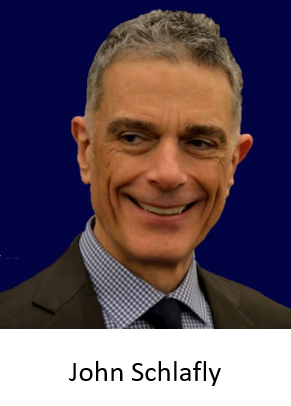
John Schlafly takes the parents’ argument a step further. “Students should be introduced to algebra in the 7th or 8th grade, even if some students struggle with it,” Schlafly says. “If students don’t learn algebra until the 9th grade, they won’t be ready for advanced math in the 10th, 11th, and 12th grades.”
According to a 2021 article from Mind Matters, some educators want to eliminate algebra altogether, claiming that it “is one of the biggest hurdles to getting a high school or college degree — particularly for students of color and first-generation undergrads. It is also the single most failed course in community colleges across the country. So if you’re not a STEM major (science, technology, engineering, math), why even study algebra?”
Mind Matters wrote that taking algebra in the 8th grade “offers both rigor and opportunity, potentially enhancing mathematics literacy across the student population….” The advantages include that students who take algebra in eighth grade are significantly likely to enroll in advanced math courses; for example, by boosting student enrollment in advanced math in 9th grade by 30 percentage points. It is also proven to be a “stepping stone toward high school calculus and college STEM majors.”
Negative impact
Conversely, studies also show that eliminating or even delaying algebra has a negative impact on students. A 2021 article in Psychology Today reported on a study from the U.K. titled Lack of Maths Education Impacts Adolescent Brain and Cognitive Development. The study showed that “a lack of math education negatively affects brain development.”
The report acknowledged the “increasingly popular” trend of questioning “the need for an education in mathematics” but noted that the study “questions these practices and suggests that a lack of math education caused students to have lower levels of the neurotransmitter GABA, which is important for many brain processes.”
The study found:
- Although the causal mechanism between math education and GABA concentration remains unclear, the association itself is potentially quite important and certainly warrants further study. As mentioned, GABA, the brain’s primary inhibitory neurotransmitter, has been shown in numerous studies to affect domains such as learning (Trepel & Racine, 2000), synaptic plasticity (Lunghi et al., 2015), and even developing motor functions (O’Shea et al., 2017). Put simply, it is possible that continued math education can have significant effects on adolescent brains, far and above simply preparing students for careers in science.
‘Algebra for all’
The deceptive term “algebra for all” has come into vogue in recent years and actually means the dumbing down of algebra, allegedly to level the playing field for all students. California was “one of the first states to push an ‘algebra for all’ approach that strongly encouraged eighth-grade algebra.” In other words, once algebra was stripped of its original rigor, school districts deemed it suitable for 8th graders.
However, studies show that even dumbed-down algebra doesn’t always achieve the intended result, with the numbers of students who move on to more advanced math classes often remaining static or showing only modest gains. A 2023 Annenberg Brown University Working Paper reported similar results in overall math achievement.
As observers may logically assume, California isn’t the only state with school districts that embrace algebra for all. Virginia’s Fairfax County School District is one example, and there are others.
Some educators suggest that teaching children sound basic arithmetic and reading by phonics in the early grades may do more to level the playing field across all subjects than any dumbed down algebra program later on. Kids want and need to be challenged. While some will be successful and others may struggle, all would benefit from the opportunity to take Algebra I in 8th grade or sooner.
Authentic Abstinence Education: The Last Program Standing
Since the 1990s, pro-life educator Scott Phelps has followed in the footsteps of Phyllis Schlafly and her trusted Eagle leader, Kathleen Sullivan, in promoting authentic abstinence program materials for teens. Authentic abstinence means education focused on marriage as the ultimate goal rather than on “risk avoidance,” of which Phelps contends abstinence programs today typically consist.
Education Reporter visited with Phelps recently to find out more about The Success Sequence, his organization’s program offerings that spread the positive message he and his predecessors so enthusiastically supported. Phelps worked with Kathleen Sullivan, and has authored and distributed authentic abstinence until marriage materials through his company, Abstinence and Marriage Education Resources (A&M) for the past two decades.
Sullivan’s group was using Phelps’ materials in Florida under the program title CCAP (Collier County Abstinence Program). For many years, she was successful in getting a number of the county’s government schools to include the program in their health education curricula.
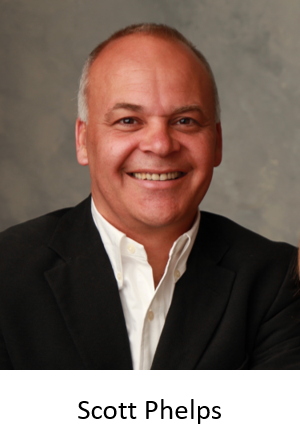
While CCAP is no longer active, Phelps’ organization has taken up the slack, staying in touch with Sullivan and working to continue her abstinence program in Florida.
“We supply the materials to government schools, charter schools, private schools, Catholic schools, churches, Christian schools; you name it,” he relates. “We have five programs, four of which are specifically designed for government schools, and one that is designed for religious schools and churches. (See Abstinence Until Marriage Materials Explained, this issue, for more information.)
Throughout its history, A&M’s abstinence programs have reached more than two million students. As with CCAP, Phelps’ programs are designed to be included in schools’ health-education curricula, although he admits he has another goal in mind.
“We exist to supplant sex education programs,” he says. “We believe sex education is corrosive and should be abolished completely. Sex education is the codification of the sexual revolution; it’s the sexual revolution brought into our classrooms and force-fed to kids all over the country. What we do is not a form of sex education; it is completely the opposite. We contradict sex education.
“We are called Abstinence and Marriage Education Resources because we’re teaching abstinence as primarily preparation for future marriage,” he continues. “Marriage is the cornerstone of culture, and if we’re going to restore marriage as the cornerstone of culture and fundamental to our communities and society, we have to help young people understand what marriage is, why it matters, and why sexual activity is best reserved for that context.”
Phelps emphasizes that his programs are not intended as tools for promoting pregnancy prevention. “We are prolife, we are pro-pregnancy, we are pro-baby,” he explains. “We don’t want young people to view pregnancy as a bad thing to be prevented, but as a beautiful thing to be cherished in the context of a loving marriage relationship.”
Abstinence education as ‘risk prevention’
He further points out that the problem is not with pregnancy but with unwed pregnancy. He explains that “typically, too many programs purport to teach the abstinence message but essentially say things like ‘you really shouldn’t be having sex because bad things can happen like pregnancy and disease.’ He says these programs unfortunately equate pregnancy with disease.
“Fertility rates are on the decline,” he adds. “We have done way too much to lower the fertility rate with abortion and contraception, and that’s not good for our society.”
Phelps maintains that abstinence education, if taught at all, is rarely taught well, and is almost exclusively about avoiding problems, without a clear message about future marriage. He adds that it’s taught as an option to the primary message, which is contraception. “They’ve actually changed the language to ‘sexual risk avoidance,’” he says. “Even pregnancy care centers use the term, and it is a very common moniker now instead of abstinence until marriage. But for A&M,” he notes, “marriage is not part of our message, it’s the heart of our message. It’s the centerpiece of everything we want to teach. When marriage is front and center, everything else falls into place.”
Phelps says the problem is never the kids caught in the sex education quagmire, but “the geniuses who get between us and the kids. The kids embrace our message,” he asserts. “They are hungry for it.”
As for the future, A&M will continue to work to create awareness of its programs, looking for new opportunities to promote the materials. Phelps has written several op-ed pieces that have been published in the Chicago Sun Times in recent years, including data showing that abortion and STDs occur overwhelmingly outside of marriage. “There’s a clear correlation between decreasing marriage rates and increasing rates of STDs,” he notes.
He’s currently working on an article that challenges the current strategy of emphasizing contraception rather than marriage, which he says came through during the Republican presidential candidate debates last fall. “That’s a really bad plan; that’s the sex education agenda,” Phelps notes. “The problem isn’t access to contraception, it’s lack of marriage. So that’s the point of the article.”
Phelps says that every day the work of A&M becomes more difficult but also more necessary. “The darker the night, the brighter the light,” he believes. “Our message is so beautiful because it’s true, and kids see that. All truth is God’s truth.”
He vows to continue to spread the message that he credits Phyllis Schlafly and Kathleen Sullivan with starting. “They worked with (former Rear Admiral, POW, and U.S. Senator from Alabama) Jeremiah Denton and really launched the whole thing,” he recalls. Now, he says his organization represents “the last man standing” in terms of a clear abstinence-until-marriage message.
“There really isn’t any other national organization promoting this message. Virtually everyone has modified their language to be more in step with the culture of today. Let’s don’t say ‘abstinence,’ let’s just say ‘here’s how to avoid your sexual risk.’” He cites the other part of the message promulgated by current abstinence programs as “it’s really important to help kids learn to delay sexual activity; we really need to help them wait until they’re older or until they’re in a long-term committed relationship. But all of that is vague, ambiguous, and unhelpful. Marriage needs to be talked about, promoted, and lifted up in a very clear and concise way, which is what our programs do.”
Authentic Abstinence Programs Explained
Editor’s Note: The materials described in this article may be familiar to longtime members of Phyllis Schlafly Eagles. They were initially distributed by Project Reality, then on behalf of CCAP, and currently by A&M Research under the Success Sequence Program.
Abstinence & Marriage Education Resources (A&M) has provided the Success Sequence Program to schools in all 50 states and Puerto Rico for an estimated 2 million teenagers, presenting a clear alternative to non-stop cultural messages that promote sexual promiscuity.
Today’s teens are exposed to 9 hours of media per day, much of which not only promotes promiscuity but denigrates the institution of marriage. A&M founder Scott Phelps says we must be particularly concerned about our youth, who are the primary recipients of these constant and pervasive negative influences.
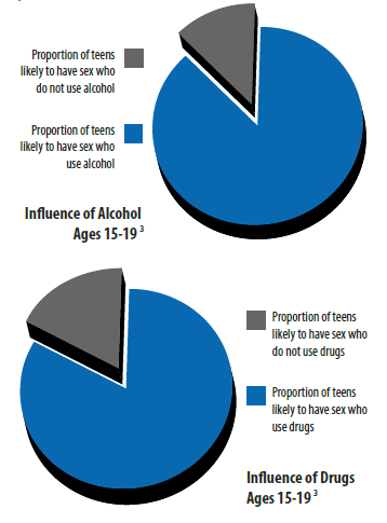
The media also fosters the notion that sex is cool and normative. But Phelps says these harmful messages “hinder students’ ability to perform well academically and socially.” Research from Columbia University indicates that sexually active teens are more likely to use alcohol and illegal drugs.
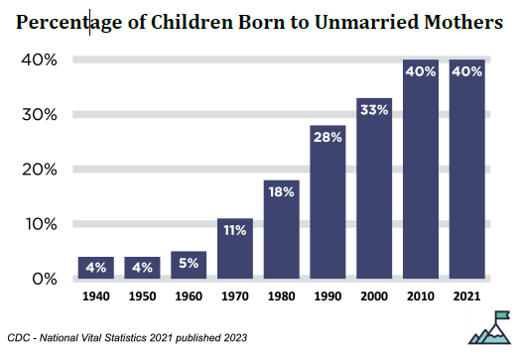
They are also more likely to experience an unwed pregnancy. The non-marital birth rate in the United States now stands at 40 percent and is moving quickly toward the 50 percent mark. Soon, every other child in America will be born out of wedlock, which has significant implications for individuals and society. The breakdown of marriage and family is at the very heart of American social decay. But identifying negative trends is only the beginning. The challenge is to find the solution.
Phelps’s organization seeks to strengthen the institution of marriage in America by reaching our youth with a clear, uncompromising message on the objective benefits of marriage. Through its programs, A&M teaches youth the importance of marriage and family and helps them understand that saving all sexual activity for marriage is one of the best ways to prepare for a healthy, future marriage and family.
A&M provides training and resources for educators to convey a clear abstinence message to youth with a particular emphasis on preparation for future marriage. Furthermore, research from the Centers for Disease Control indicates that abstinent teens demonstrate higher academic performance than their sexually active peers.
Research indicates that teens who avoid sexual activity are half as likely to be expelled from school, half as likely to drop out of school, and twice as likely to be attending or graduate from college.
A&M Resources seeks to partner with schools to improve academic success, and to protect students’ future educational, occupational, and familial opportunities. Phelps explains that they “provide high quality curricula to help teens understand the numerous benefits of reserving all sexual activity and childbearing for a marriage relationship.”
Phelps says the programs are well received by youth and have strong evidence of success. “Incorporating our character-based abstinence education programs into a school’s health curriculum will go a long way to improving test scores and overall academic performance.”
The workbooks
A&M Resources’ series of programs for teens help parents, teachers, and youth leaders provides a clear and compelling message to youth. Each of the five program workbooks is available in two versions; one for students and one for teachers.
The first workbook, Game Plan, was developed for students in grades 6-9 in both the government and private school setting. Game Plan uses a sports analogy to help students understand the importance of strategically setting goals, including choosing to save sex for marriage. Students are encouraged to make a “Game Plan” for their lives.
The next workbook, Quest, is designed for students in grades 7-10 in government or private schools. Quest uses true stories to help students along life’s journey. Practical instruction helps them identify their future goals, such as marriage and family, and avoid obstacles such as sexual activity and other risk behaviors that could keep them from achieving those goals.

The third workbook, Aspire, provides students in grades 8-12 with help and encouragement to seek their future goals. These include educational and financial success, as well as a healthy future marriage and family life.
The Navigator program is geared for students in grades 9-12 who attend government or private schools. Navigator helps them identify and avoid risk behaviors such as sexual activity, pornography, alcohol, tobacco, and other drugs. Students are encouraged to navigate their way to a healthy, successful future.
Finally, Excel was developed for students in grades 7-12 in faith-based settings. It is a Bible study resource for churches, Christian schools, and pregnancy centers. Through the Excel program, students follow the biblical account of Joseph (Genesis 37-50) as he resists pressure to engage in sexual activity in order to accomplish all that God had prepared for him.
In addition, A&M offers free video resources for teachers to use in their classrooms, as well as free teacher training. To find out more about these proven resources or to order the workbooks, please use the contact information below.
info@SuccessSequence.com, 224-735-3628, www.SuccessSequence.com
Scott Phelps is Founder and Executive Director of the Abstinence & Marriage Education Partnership. Each year, he speaks to thousands of teens around the country on the benefits of abstinence until marriage. He provides training seminars nationally to help educators and parents effectively communicate the message of abstinence to teens. Scott holds a bachelor’s degree from San Francisco State University and a Master’s degree from Trinity International University in Deerfield, Illinois. Scott is the author of Aspire and Excel, and the co-author of A.C. Green’s Game Plan and Navigator, published by Project Reality. Scott and his wife, Carrie, have four children and reside near Chicago.
What Books Should Kids be Reading?
(First in a series of recommended reading lists for children of all ages.
We will publish additional lists in Education Reporter over the next few months. — Ed.)
In the twisted world of today, when both school libraries and the “children’s” section of public libraries are riddled with pornography masquerading as “children’s” books, parents may wonder what books might actually benefit their kids.
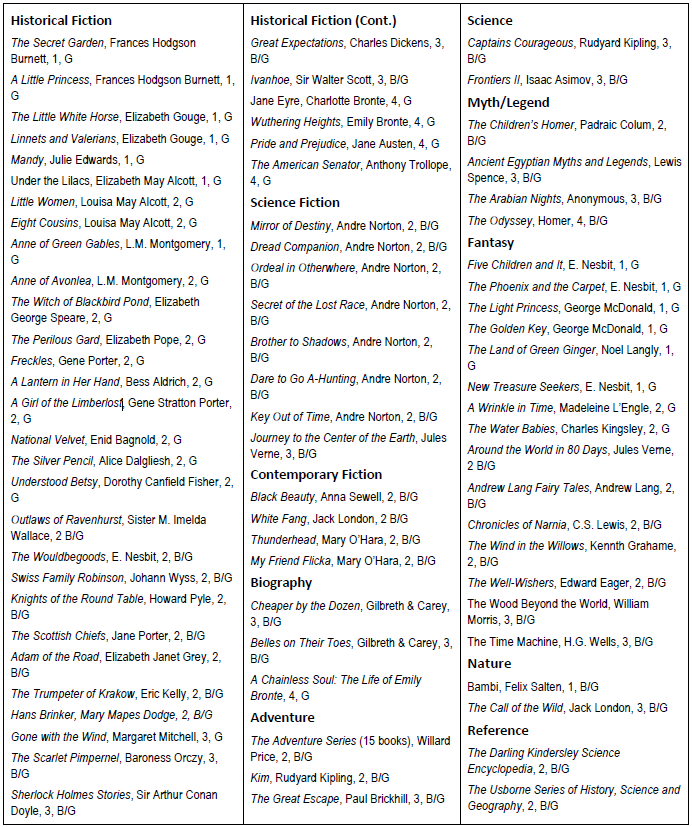
Following is a list of classic children’s works recreated from the original list compiled by Phyllis Schlafly, which was initially published in the September 1995 issue of Education Reporter. The books are divided by category, and each listing is followed by a code indicating 1 = easy, 2 = medium difficulty, 3= hard, G = more suitable for girls, B/G = suitable for both boys and girls. The higher the level of difficulty, the older the age range of the potential reader; e.g., levels 3 and 4 indicate the books should be read by older children (grades 7-9).
Additional Education Reporter suggested reading lists:
- A Child’s Reading List (February 2024)
- The Ultimate Reading List — Classics that Endure (Part 1) (March 2024)
- The Ultimate Reading List — Classics that Endure (Part 2) (April 2024)
- Children Will Love Discovering Lost Classics (May 2024)
- Bennett’s Reading List (Part 1) (June 2024)
- Bennett’s Reading List (Part 2) (July 2024)
- The Best Children’s Classics (Part 1) (August 2024)
- The Best Children’s Classics (Part 2) (September 2024)
- Recommended High School Reading List (October 2024)
NOTE: Most books on this list can be ordered online through booksellers including:
- ThriftBooks
- Amazon.com : vintage books classics
- Project Gutenberg (Free Archive, eBooks only) Choose (EPUB3 (E-readers incl. Send-to-Kindle))
> > > > Send to Kindle to upload ebooks to your Kindle device downloaded from Project Gutenberg.
A Child’s Reading List
Click the image below to open as a (printable) PDF document
Mallard

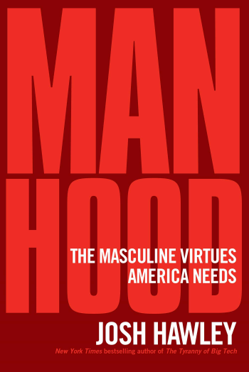
Manhood: The Masculine Virtues America Needs
by Josh Hawley, 2023, Regnery
Senator Josh Hawley (R-MO) has written a book that is in a word, wonderful. As the title suggests, it is directed at the men of today, whom he seeks to rouse from their leftist-induced apathy and assume the masculine roles of leadership, strength, virtue, and purpose.
He begins by presenting the case for a renewal of masculinity as ordained by the God of the Bible, starting with our first father, Adam. God charged Adam with caring for the Garden of Eden; he was “to work it,” and “keep it;” including naming the animals, and to “be fruitful and multiply.” In other words, Adam had a mission from God, as does each man starting with Adam on down to those living today.
 Throughout the book, Hawley incorporates personal stories about his life. We meet his grandparents, his parents, his uncle who owns and operates a concrete company in Arkansas, his wife and young children. The men in his life all worked hard, practiced the Christian faith, cared for their families, and while not perfect, set a good example for others. We read about the young men he met during his days as a coach, as a college law professor, some of whom had no sense of purpose in their lives because they were discouraged by today’s negative view of men and manhood.
One of the most poignant stories in the book involves the death of Hawley’s close childhood friend, who had every indication of a bright future, but who nonetheless committed suicide at the age of 22. The loss profoundly impacted Hawley’s life. “His death was shattering in many ways, and among the things it destroyed in my life was any illusion that all was well with the world,” he writes. “There is a darkness in the world that resists what is good and strains to destroy it. There is a darkness within us. This is the reality each man must face. This is his battleground.”
Throughout the book, Hawley shows how the Bible says man must act in order “to realize what he could be” and how he “must conform his character to God’s purposes for his life.” This requires sacrifice and commitment to the welfare of others; namely, a wife and family; concepts the modern world despises and rejects. In fact, the world follows a very different story; one that culminates in contemporary liberalism but actually dates back to the ancient Greek philosopher, Epicurus.
Hawley writes that Epicurus taught that the universe is “neither planned nor orderly,” but that it is entirely random and without purpose. Epicurus questioned the existence of “the gods,” and believed “mankind should focus on what really matters, pleasure and happiness.”
The author uses the Epicurean philosophy to provide contrast to the will of God for mankind as expressed in Genesis, and applies Epicurus’s ideas to the state of the world today. He shows how this ancient philosophy evolved through historical players such as Jean-Jacques Rousseau and the French Revolution to Marx and the cultural Marxists of the 1960s, who determined that masculinity was “just another oppressive social system”; a ‘’patriarchy that imposed male dominance through the rules of public discourse (which men allegedly set), social expectations (which men allegedly controlled), and family traditions (like male leadership in the home), all enforced by domestic abuse and other violence.”
“Experts,” including the American Psychological Association, have increasingly decried traditional manhood as, “on the whole, harmful.” Hawley writes that, according to these leftists: “To be a man is, of itself, to contribute to the supposed tyranny of the social order. It is to be trash. An entire generation of cultural Marxists and other liberals have drummed this theme into the heads of anyone who will listen…. The lesson has been rehashed and recycled for decades by the media, Hollywood, and various politicians. You will find it now even in elementary schools, where proposed curricula teach the youngest children that masculinity is shameful and oppressive. It has become the conventional wisdom of our Epicurean age: manhood is toxic.”
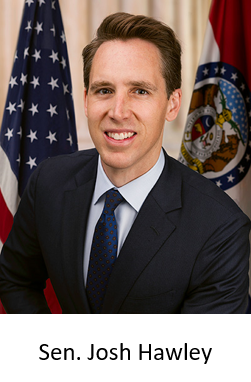 But as Hawley’s book makes clear, the God of the Bible says the opposite: He made men for good and meant for them to lead. God gave man dominion over the earth, which directly contradicts today’s pagan notion of environmentalism and “climate change.” The author points out that the climate change fanatics “equate human production with despoliation, the use of the earth’s resources with environmental rape.” For them, apocalyptic environmentalism has replaced Judeo-Christianity as the new religion.
Finally, the author sums up the dire circumstances in the world today quite succinctly by noting that ultimately, modern liberalism creates victimhood, thus relieving men of responsibility for their actions. “Being a victim gives him the right to demand society do something for him, rather than the other way around” he writes. “It assures him society owes him; victim status excuses his failures…. It also gives him a ‘job’ of sorts; the right to be an activist and demand that government fork over what he is ‘owed’ by taking it from his alleged oppressors.”
While Hawley allows that this scenario may offer a type of “meaning” to a life otherwise without meaning, it is “a pathetic and shallow meaning, built on complaining of one’s own incompetence.”
But Manhood presents an entirely opposite view of how men should conduct their lives. While the author intersperses sacred Scripture throughout the book, he is not preachy, and the ultimate picture he paints of what life and our republic could be if inhabited by more virtuous men will make readers longing for it to be so. He demonstrates again and again what it means to be a man: “a husband, a father, a warrior and builder, a priest and a king.”
In sum, writes Hawley, “Every man can be a man of peace, a man of order…. He can choose self-discipline and strive for self-command. He can commit himself to a woman for a lifetime and put her interests ahead of his. He can be a father who will love his children and devote himself to them. He can work with industry and build something honorable. And America needs men who will do these things. In this age of fatherlessness and self-absorption and irresponsibility, America needs men who will start families and build homes and leave legacies of character that will span generations.”
This reviewer believes both men and women will benefit from reading Senator Hawley’s inspirational work. While the message is directed at men, women can use it to help the men in their lives reach their potential, be they husbands, sons, or grandsons. Women have certainly played a role in the destruction of traditional manhood, and they can do much to help restore it. Our country and our future depend on it.
To read the entire book, go to Amazon.com to order!
Education Briefs

A new report by the Brookings Institution and The74 shows that thousands of government schools are at risk of closing due to “massive enrollment loss.” The declines are not confined to certain areas of the country but, according to Brookings, “are everywhere.” Some highlights of the report include that during a 4-year period encompassing the COVID-19 pandemic, “about 12 percent of elementary schools and 9 percent of middle schools lost at least one-fifth of their enrollment, and that “4,428 schools in the country reached or exceeded a 20 percent decline.” Just before Christmas 2023, the Jackson, Mississippi school board voted to close 11 schools and merge two more. Some schools on the closures list “have lost 30 percent or more of their students since 2018.” Researchers found that of the many school districts with more than 50,000 students, those experiencing enrollment declines of 20 percent or more are located in the South, including for example, Memphis, Tennessee, and Dekalb County, Georgia (near Atlanta). But similar losses are also occurring in Los Angeles, Philadelphia, Albuquerque, and Salt Lake City. In Clark County, Nevada, 33 of the district’s 300-plus schools experienced a 20 percent decline in students in just two years. Tucson, Arizona, had 15 percent of its 82 schools lose at least one-fifth of their students. In Kansas City, Missouri, 2 elementary schools were closed in 2023, one of which “saw at least a 20 percent drop in enrollment after the pandemic,” and 5 more schools, which for now are still open, have experienced similar declines. Researchers and other experts say the future “is uncertain” and does not bode well for any significant shift in enrollment trends. It’s not difficult for many observers to assess the problem: parents are demanding better options for their children than the government schools, and are increasingly seeking them out.
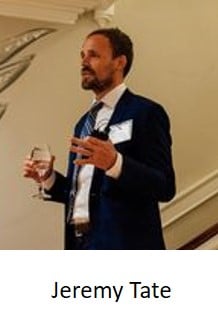
On February 15, 2024, educator and architect of the Classic Learning Test (CLT), Jeremy Tate, announced on X: “Today we had 20,500 students [taking the test], double the previous single day record.” As a college entrance exam, the CLT is a welcome alternative to the increasingly woke and dumbed down SAT and ACT for many students and parents. In 2023, Florida adopted the CLT as a legitimate alternative. Tate established the CLT in 2015, and Education Reporter featured his work in 2021. A complete list of colleges that accept the CLT is available here. The test fits hand in glove with a classical education, which is also becoming more sought after in today’s educational environment. A recent Fox News opinion piece noted that the CLT “sets students up for success in work and life because it orients educators to teach cultural literacy and critical thinking skills — two main pillars of knowledge that teenagers need to thrive in adulthood.” It adds that, in contrast, the SAT exam “primarily assesses students’ test-taking abilities and thereby erodes rigorous education. The SAT’s format requires educators to teach to the test, which dulls even the best learning experiences.” As the Fox op-ed further noted: “The CLT is not just a test. As the culminating exercise of classical education, the CLT is the consummation of a superior K-12 experience that elevates students’ capacities for success in higher education and as members of society. Those outcomes triumph over the documented failures of K-12 schools or colleges to instill critical thinking skills. America’s children deserve better than what they’re getting now from our education system.”

The prevalence of woke education, beginning in kindergarten, is becoming more difficult for the mainstream media to ignore, as a recent Newsweek op-ed shows. While disavowing any support for the author’s views, the article nonetheless states the obvious, that woke education “is making our kids illiterate” and that “the scholar activists must be stopped.” Perhaps most outrageous is the spread of “woke kindergarten” programs that target young children with DEI (diversity, equity, and inclusion) propaganda instead of teaching phonics and elementary math concepts. The op-ed observes: “The politicization of education is one of the greatest failures of our time. Instead of focusing on how to help kids, adults are using students as pawns in a political and ideological war.” The author cites as an example the Hayward Unified School District in northern California, which he says spent “a quarter million taxpayer dollars to bring in someone to train teachers to ‘disrupt whiteness.’” This was part of the district’s woke kindergarten program, which led to “a 4 percent drop in proficiency in both math and English.” The op-ed points out that “the educational activist industry has become so lucrative that the tried-and-true methods of teaching are all but ignored.” In other words, no effective reading instruction or math skills are being taught, and as a consequence, students are increasingly illiterate. According to the op-ed’s author, black children are being hurt the most, even while they are the supposed reason for the DEI indoctrination. He allows that “there are many dedicated, hardworking educators who do not get the credit they deserve,” and who face what appear to be insurmountable challenges, yet manage to overcome them with scarce resources. “It’s past time that they are encouraged and supported,” he states. The op-ed exhorts readers to “stand on the right side of history by standing against the elites who are using children as the rope in their ideological tug-of-war.”
University defends Glitter+Ash ‘queer’ Lent observance amid backlash
Originally published by The College Fix, February 16, 2024. Reprinted by permission
Fort Hays State University leaders are defending as “free expression” a recent “Glitter+Ash” event on campus that offended Christians and Catholics for offering a twist on Ash Wednesday billed as an inclusive, pro-“queer” observance.
“Glitter+Ash is an inherently queer sign of Christian belief, blending symbols of mortality and hope, of penance and celebration,” student organizers stated in announcing their event, held on Ash Wednesday, which marks the beginning of a holy season for Catholics leading up to Easter.
“Ashes are a statement that death and suffering are real. Glitter is a sign of our hope, which does not despair,” stated the group “Us4U,” which describes itself on Facebook as “an inclusive, faith-based, student organization focused on providing service.”

The event drew widespread condemnation on social media, including accusations that it was heretical and disrespectful. One student in the Fort Hays Christians group called it a “personal attack,” adding the event mocked Christian beliefs, according to a screenshot from Libs of TikTok.
Riley Zeller, vice president of Fort Hays Students for Life, told The College Fix in a written statement the “sanctity of Ash Wednesday should not be twisted or mocked to fit a larger agenda.”
“Through the Catholic Church, the ashes on our head symbolize that we are sinners, but with Christ those sins are forgiven,” Zeller said. “I think it is an important time we as Christians stand up for our faith and the true meaning of being a follower of Christ. We are called to love, but more importantly we are called to share the truth of the gospel.”
Campus leaders responded Wednesday with a statement defending students’ rights to host a wide variety of gatherings while clarifying “Glitter+Ash” was not a university-sponsored nor university-endorsed event.
“In the interest of ensuring that the First Amendment right of every individual is respected, FHSU remains viewpoint-neutral on this and other Student Organization-led events,” the statement read.
“We are in the process of updating our student organization event announcement procedures to clarify that these are announcements from the Student Organizations, not the university, and the content of the emails and the events themselves may not reflect the opinions/beliefs of the university or university leadership.”
“The Kansas Board of Regents and Fort Hays State University are committed to the free expression of ideas and beliefs, and we are united in our commitment to full and open inquiry and discourse and the robust exchange of ideas and perspectives,” the statement added.
The Hays Post reported on [Ash] Wednesday that the event took place without a physical protest. It did not state how many took part in receiving either the rainbow-colored glitter ash or traditional ash drawn in the sign of the cross on their foreheads on Wednesday.
The Post reported the event has been held for the past five years, and that in the past it drew an average of 30 participants.
“There is a tradition of exclusion, and we don’t feel it really reflects what Jesus was about,” Cheryl Duffy, Us4U adviser, told the Post. “Jesus was about love and inclusion, and we want to open up that tradition to everyone.”
In response to the backlash, its student president told the Post: “We stand for love and supporting the community. We are not going to let that affect us or influence us or change us.”
But one pastor who dropped out of participating in the event was Troy Miller at the United Methodist Church in Hays. In an interview Thursday with The College Fix, he said he was slightly “caught off guard” by the event’s details.
“Because time was short and social media was exploding with various responses, I quickly sought to remove myself and my student organization from the crossfire of a subject that was quickly becoming volatile,” he said in a written statement.
He added that he serves in a denomination that is moving toward inclusivity and he supports that.
“However, like all local congregations, I serve a large group of people who are collectively working to lean into this together, in unity, while holding a multitude of varying opinions. We are a ‘big tent’ church that seeks to practice love, grace, and acceptance to all people,” he told The Fix. “Because we are a church of several hundred people this is a complex issue with many layers that must be handled with equal understanding for all involved.”
He cited the idiom from John Wesley, the founder of Methodism, that “The world is my parish.”
“With that same spirit I believe Fort Hays State University and the community of Hays are the parish God has called me to serve. I will do my best to make certain that nothing unnecessarily hinders that,” he said. “Because I felt that my participation in the Ash Wednesday imposition of ashes in the Memorial Union could put me in a compromising position, I respectfully withdrew.”
Kayley Chartier is a student at Fort Hays State University and a student reporter for The College Fix.
Education Related Links