Fearless: Moms for Liberty Hold Annual Summit
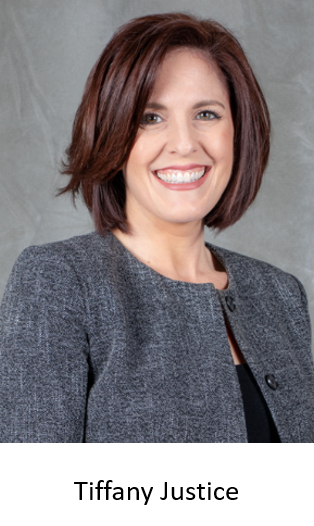
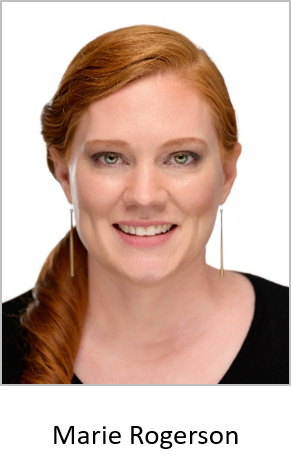
Former president and current 2024 presidential frontrunner, Donald Trump, headed a list of prominent speakers at the Moms for Liberty “Joyful Warriors” National Summit held June 29 through July 2 in Philadelphia. Trump thanked the group’s leaders Tiffany Justice, Tina Descovich, and Marie Rogerson, and commended them for “the amazing job they’ve done building the organization into a grassroots juggernaut with 120,000 members in 45 states and growing every single day.” Trump observed that “people are inspired [by your work] and you have a lot of people who are very much in support.” He praised the crowd “of activists and citizen leaders” for attending the summit, saying: “You have to be an activist nowadays because we are dealing with crazy people.”
Of moms in general, Trump said, “you have proven there is no earthly force more powerful than the love of a mother for her children; so true. In school board races, PTA meetings, and town halls across the nation, you have taught the radical Marxists and communists a lesson they will never forget — don’t mess with America’s moms.” He added: “As we gather today, our beloved nation is teetering on the edge of tyranny; our enemies are waging war on freedom and faith, on science and religion, on history and tradition, on law, on our children, on the family, on America itself.” But, he contended, “the people in this room” and fellow lovers of liberty will never let that happen “because we love our nation, we love our children, and we love our freedom.”
The four-day summit drew hundreds of attendees from 40 states, including organization chapter leaders. It attracted a number of influential speakers, among them Republican presidential hopefuls Gov. Ron DeSantis of Florida and businessman Vivek Ramaswamy, North Carolina’s Lieutenant Governor Mark Robinson, Florida Congressman Byron Donalds (R-District 19), and Dennis Prager, speaker, writer, talk radio host, and co-founder of PragerU.
But the conference wasn’t limited to stump speeches by politicians and positive reinforcement from other speakers. As reported by the Washington Examiner, the summit also featured “training sessions to give parents the tools they need to advocate their rights as parents against local school boards.” These sessions covered topics such as “how to spot classroom materials that ‘sexualize’ children,” how to file Freedom of Information Act (FOIA) requests, how to deal with a hostile media and political adversity, and more.
“It’s one more tool in my peaceful arsenal,” the Moms for Liberty chapter chairwoman for Pierce County, Washington told the Examiner. “I can use that knowledge to then help disrupt some of these lies that are being told to us.” Another chapter leader from Maryland said: “They’re providing us with the information and the resources for how to go about those types of everyday battles within our school system.”
Targeted by the Left
The remarkable growth and success of Moms for Liberty has landed the organization squarely in the Left’s crosshairs. The far-left Southern Poverty Law Center (SPLC) recently labeled the Moms “an extremist hate group” along with several other parents’ rights organizations, including the successful Parents Defending Education.
Tiffany Justice called out the SPLC for “painting a target on the backs of parents” and for adding her group to its “hate map.” She told the Washington Examiner that inclusion in the SPLC’s map and its 2022 Hate and Extremism report is “insulting” and “absurd” and could have “safety implications for the organization’s thousands of members.”
Addressing the charge in a separate interview with Fox News personality Harris Faulkner, Justice vowed that the SPLC’s label “wouldn’t deter the organization.” She explained that Moms for Liberty is “a group of moms and dads and grandparents and aunts and uncles, community members that are very concerned about the direction of the country.” She continued:
- We’re going to keep doing the work that we do across the country. [I]f you talk to the moms and dads on the ground, they’re concerned about some of the things that they’re seeing taught in schools. They’re concerned about the fact that not every American child is learning to read…. So we’re going to keep focused on our mission of getting liberty-minded individuals elected to school board[s] and ensuring that parental rights are protected at every level of government.
Efforts to silence parents
Moms for Liberty believes “there is an ongoing effort to silence and suppress parents’ voices,” and mounting evidence supports this contention. For example, a growing effort by teachers, school administrators, and mental health support personnel is quietly helping gender dysphoric kids “transition” without telling their parents.
Last month, the Daily Mail Online reported on a virtual workshop where “dozens” of teachers “traded tips on helping trans students change gender at school without their parents’ knowledge, while criticizing a raft of new Republican laws on sex and identity.” The sponsoring organization, the Midwest and Plains Equity Assistance Center (MAP), is funded by the Department of Education.
In another example, Fox News reported on June 13 that the National Council of Teachers of English (NCTE) recommends that “states discard literacy standards and incorporate teachings of ‘race, antiracism, anti-Blackness, and LGBTQIA+’ in K-12 classrooms.” The group claims there has been bias in literacy instruction “since the 1600s,” ignoring diversity.
But parents’ rights observers say it’s actually the wishes of parents that are ignored in such one-sided recommendations and advocacy.
‘Joyful Warriors’ stand their ground
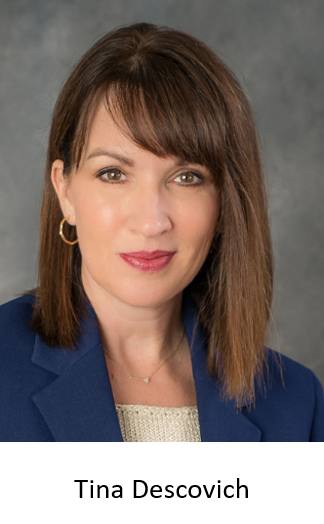
Moms for Liberty co-founder Tina Descovich explained that the city of Philadelphia was chosen as the site of their event because “the Liberty Bell inscription says it all: Proclaim liberty throughout the land, and to all the inhabitants thereof.” She continued: “It was a call to all of Pennsylvania when the bell was first installed in 1753 and it’s a call to all Americans today.” She explained that the very first part of her organization’s Mission Statement reads: “Moms for Liberty is dedicated to fighting for the survival of America,” and added: “Philadelphia is the birthplace of our country. The Declaration of Independence, the Constitution, and the Bill of Rights were all written here.”
She might have mentioned that Pennsylvania is also home to the second-largest chapter of Moms for Liberty, second only to the organization’s home base of Florida.
Outside the downtown Marriott Hotel where the conference was held, the “massive protests” that were allegedly planned against the Moms largely fizzled out, and those that occurred were essentially peaceful. According to the Washington Examiner: “Several organizations, including ACT UP Philadelphia, Defense of Democracy, National Parents Union, and the Young Communist League, scheduled rallies and ‘dance party protests…’ The organizations handed out [so called] banned books, blared music, and heckled conference attendees.”
Inside the Marriott, hotel staff members “spoke of positive experiences” they had with the attendees. At the close of the conference on July 2nd, “staff lined the convention center to give the mothers a round of applause for their cordiality and respectfulness.”
As for Moms for Liberty’s future, Justice and Descovich say their organization is not backing down. “The media and others have tried to paint us as a far-right-wing organization, and it’s just not true, and it’s unfortunate because it’s the silencing and suppressing of the voices of the American people … We’re going to stand our ground. We’re not doing anything wrong.”
War on Unborn and Parental Rights in Ohio
An op-ed written by attorney Ed Martin, president of Phyllis Schlafly Eagles, and published by The Hill.com, sheds light on a ballot initiative in Ohio which, if passed, will close the door on parental rights and set a dangerous precedent across the country. At issue is a pro-abortion amendment to the Ohio constitution that opponents say “would outlaw virtually any restrictions on abortion and all other procedures, including sex-change surgeries, that touch on reproduction, for both adults and minors. It would cancel out not only parental-consent laws but also mere parental notification for minors’ abortions or sex-change surgeries….”
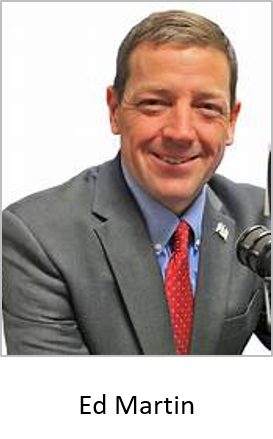
Martin points out that the Biden Administration “is leading the charge” in the ideological campaign “to push parents out of fundamental decisions involving their children and thus to destroy parental rights,” citing Biden’s familiar quote: “There is no such thing as someone else’s child. Our nation’s children are all our children.” He noted that similar references have been made by Vice President Harris and White House Press Secretary Karin Jean-Pierre that “American children are our children. They belong to all of us.”
Martin’s article calls out the false notion that “government should play the role of parents” as one that “most people reject,” and cautioned that despite this, “radicals across our country are working to nullify existing parental consent laws and to stop parental involvement in some of the most consequential life decisions children can make.”
The Ohio ballot initiative was introduced by the ACLU and United for Reproductive & Gender Equity (URGE) and, as Martin describes, “heavily financed by left-leaning, dark-money groups, including the New Venture Fund, Planned Parenthood, and others. These groups stand to benefit both financially and ideologically when parents are eliminated from the picture and the government becomes the primary influence in a child’s life.” He concluded that “under the guise of ‘reproductive rights,’ it will end parental involvement in children’s decisions to seek abortions or sex-change surgeries.”
“The ACLU has been waging war against parents for decades,” Martin wrote, “by challenging parental consent and notification laws for abortion in states such as Alaska and Indiana. They’ve extended their anti-parent agenda to the classroom, fighting against parents who want to be informed if their child is grappling with their sexuality or gender.”
He added that URGE “has publicly called for the abolition of existing parental rights laws.”
Taking a ‘Stand’
Suzanne Bowdey, a writer for The Washington Stand, concurs with Martin. In a July 11 article, Bowdey opined that “parents are desperately hoping” the “dangerous late-term abortion amendment with the transgender loophole” proves unsuccessful. “If it passes,” she wrote, “Ohio moms and dads will have zero say over their children’s abortions or bodily mutilation.”
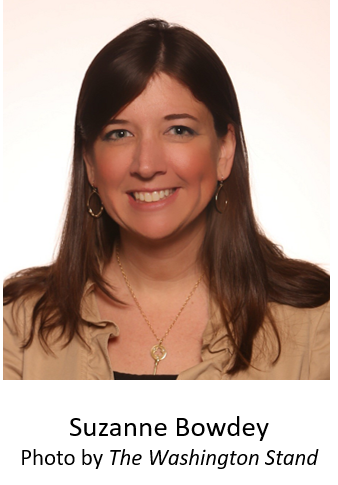
Bowdey quoted Aaron Baer, president of Ohio’s Center for Christian Virtue (CCV), who warns that the new leftist strategy since the Dobbs decision is to ferociously “attack” the states “to add radical, late-term abortion language” to their constitutions.
- And in Ohio, the language is so broad that it would extend to wildly unpopular transgender procedures too — giving minors absolute autonomy over their bodies. Like they’ve done in other states, extremists are trying to undermine the Republican pro-life majorities in the legislatures by going directly to the people — a tactic that critics warn is changing the country’s most sacred documents by mob rule.
Bowdey observed that Ohio’s constitution is an easy target for activists because “it only takes 50% of the vote to alter the state’s most important document.” Even so, Protect Women Ohio, an organization that opposes the amendment, says it is so unpopular with voters that “national groups had to pay people to knock on doors.” Undercover videos even show signature gatherers talking about accepting invalid names to get more money.
Fortunately, conservatives in the state legislature recognized what was coming and planned a counteroffensive in the form of a special election (Issue 1) scheduled for August 8. “A ‘yes’ vote,” wrote Bowdey, “would take three major steps to stop the abortion and transgender mob”:
- 1) it would raise the threshold needed to alter the Ohio constitution from 50% to 60%; 2) it would require that all 88 counties submit signatures in favor of any proposed amendment (not half as it stands now); and 3) it would do away with the 10-day “cure” period to replace and correct signatures, a provision that critics say has been abused in recent years.
CCV’s Baer pointed out that Planned Parenthood, the ACLU, and others are pouring tens of millions of dollars into this Buckeye crusade, which could be the biggest confrontation over abortion in 2023. “We can’t overstate it enough,” he said. “There is a very direct tie between a ‘yes’ vote on August 8 and protecting life in the state of Ohio.”
Despite the heartbeat law already on the books, which is currently being blocked by the courts, once something is enshrined in a state’s constitution, it supersedes all other laws.
But while the battle in Ohio is focused on abortion, it is also about the right of parents to raise the children who are already born. As Ed Martin wrote, “parents should have access to information about their own children. They have a right to be closely involved in day-to-day decisions regarding their education and health, among other things. Parents are best positioned to direct their children’s course, to provide them with love, and to ensure their well-being.
“The government is not and never will be an appropriate substitute.”
The Costly Failure of Public Schools
The failed U.S. public schools are more than 200 percent more expensive to operate today than they were in 1970, according to the most recent figures published by the National Center for Education Statistics (NCES). These numbers include costs for “instruction, support services, food services, and enterprise operations.”
New York is the most expensive state for K-12 education, with a whopping annual per-pupil price tag of $29,597 in 2020 “in constant dollars based on the Consumer Price Index (CPI), prepared by the Bureau of Labor Statistics, U.S. Department of Labor, adjusted to a school-year basis.” In 1970, the same per-pupil cost for New York public school students was $9,905.

Eastern and northeastern states rank highest in annual education costs. For example, schools in Connecticut spent $23,784 per student in 2020, as opposed to $7,102 in 1970; New Jersey spent $24,597 per student in 2020 compared to $7,587 in 1970. Vermont students cost the system $26,536 each in 2020 compared to $6,026 in 1970. In Washington, DC, the annual cost to “educate” a child in 2020 was $28,454 as opposed to $7,603 in 1970.
Perhaps surprisingly, Wyoming spent more money to educate its students in 2020 than any other western state, including California. Wyoming spent $19,752 compared to $6,391 in 1970, and is surpassed only by Alaska, which posted a 2020 per-pupil expenditure of $22,141 compared to $8,381 in 1970. California spent $15,860 per student in 2020 compared with $9,752 in 1970.
School choice for Pennsylvania?
Public schools in Pennsylvania racked up a per-pupil cost of $20,133 in 2020 as opposed to $6,583 per student in 1970. These figures make a good argument for proponents of HB 479, the Pennsylvania Award for Student Success (PASS) school choice initiative, which was approved by the Republican-led state Senate on June 29. The measure now returns to the Democrat-led state House where budget negotiations are threatening to derail the program.
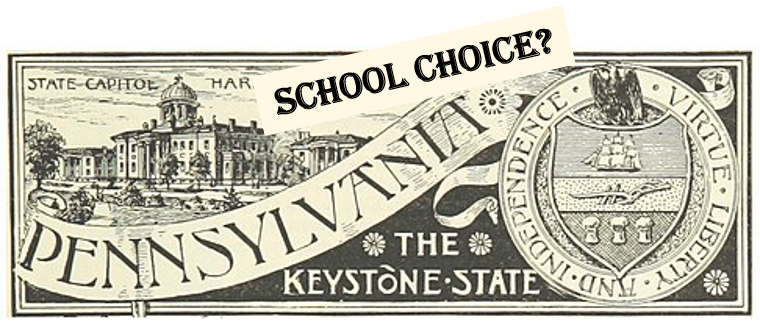
A private school education in Pennsylvania costs approximately $11,732 per child in 2023 dollars, more than $8,000 less than a public school did in 2020. The PASS program would award scholarships worth between $2,500 and $15,000 per year to eligible students, and would initially target low-income families with children in public schools that rank academically in the bottom 15 percent.
Some Pennsylvania lawmakers want to throw even more money into the state’s failed public-schools rather than encourage competition through the proposed school choice scholarship program. For example, House Education Majority Chairman Peter Schweyer blamed the state government for “failing our schools,” and says he “stands with House Democrats, teachers, and public education advocates to fight for adequate funding for PA Public schools.” Schweyer claims “it’s time to stop demonizing the schools and teachers and start giving them the tools they need to succeed.”
Pennsylvania Governor Josh Shapiro (D), a previous supporter of the PASS proposal (dubbed the “Lifeline Scholarship Program” when it was first introduced), now says he will veto the measure if it survives the budget battle. According to a July 8 Twitter post by school choice advocate Corey DeAngelis: “The fight over educational choice in Pennsylvania is far from over. Only a partial budget has been approved for now—and Mr. Shapiro can’t even follow through on his veto threat until Ms. Ward [Sen. Kim Ward, PA Senate interim president pro tempore] reconvenes the Senate. She’s said she won’t do so until Sept. 18, unless the governor comes to his senses first.”
NAEP scores decline — again!
But what exactly have parents gotten for the many billions of tax dollars that have been poured into the public-school system for more than five decades? The answer is a lot if the reference is to education fads and dangerous socio-emotional learning (SEL) including CRT and comprehensive sex education, but precious little in terms of academics instruction. The Spectator.com reported last month that in May, “news emerged about record low scores for history and civics for eighth graders nationwide, with 40 percent scoring ‘below basic.’” Just 13 percent were considered proficient in history.
In addition to these results, the National Assessment for Education Progress (NAEP) recently released its Long-Term Trend Assessment Results in Reading and Mathematics for 13-year-olds tested from October through December of the 2022-2023 school year, and the results are woefully bad.
While many conservatives acknowledge a decline in the overall status of the NAEP as a valid measure — after all it now tests for social and emotional characteristics in possible violation of both federal law and the Fourth Amendment (see Education Reporter Online, November 2021) — its findings are nonetheless worthy of mention.
NAEP reports that “the average scores for 13-year-olds declined 4 points in reading and 9 points in mathematics compared to the previous assessment administered during the 2019-20 school year. Compared to a decade ago, the average scores declined 7 points in reading and 14 points in mathematics.” In addition, reading scores declined “at all selected percentiles since 2020,” meaning that scores dropped at all levels of performance from the lowest to the highest. The results were even worse for math, and these are unlikely to improve given the current politically charged climate.
Last month, Fox News posted an opinion piece on a new math program called “Reparations Math” being offered by the discredited New York Times 1619 Project. The author writes that “Throughout the Reparations Math curriculum, the racial wealth gap is used to justify reparations as the only solution to close that gap….” No opposing viewpoints are given in the curriculum.
The op ed goes on to note: “In states like Illinois, in 2022, only 8% of Illinois Black eighth graders were NAEP Proficient or above in math. That, despite the fact that in 2019 the Chicago school system adopted the 1619 Project curriculum for instruction in every high school.”
The charge that “math is racist” is not new, but the question is how far the NAEP scores will have to fall before parents who remain asleep finally wake up.
NEA Convention 2023:
Same Liberal Snoozefest, Same Liberal Lies
Perhaps the most interesting thing about the NEA’s annual Representative Assembly (RA) over the July 4 holiday was that the union actually held the meeting in Orlando, Florida, despite its aversion to the state’s governor and the pro-parent education laws enacted by the legislature. In her keynote address, NEA President Becky Pringle labeled Florida “our nation’s Ground Zero for shameful, racist, homophobic, misogynistic, xenophobic rhetoric and dangerous actions.” The union staged its own protest on July 5, using the laughable themes of “Freedom to Learn” and “Teach Truth,” which prompted some observers to question whether the NEA is capable of grasping the meaning of either.
According to Mike Antonucci’s Education Intelligence Agency (EIA), which makes a valiant annual effort to penetrate the wall of secrecy surrounding the RA and report on its proceedings, this year’s event was no less scripted and “stage-managed” to ensure that “no shadows were cast across its self-image as the progressive defender of democracy.”
But as Antonucci reported, the RA itself was hardly conducted in a democratic manner. The delegates “spent most of their time at the four-day convention introducing, debating and voting on ‘new business items’ (NBIs),” but neither the bulk of NEA’s members (who don’t attend the conference) nor the public were permitted to know which ones passed and which did not. “The union put the proposals and actions behind a firewall,” Antonucci noted, and attending members weren’t disclosing much.
Only Education Week covers RA
However, Education Week did report on some of NEA’s RA activities. While in the past the NEA issued a limited number of press passes to various media outlets, that practice has changed over the past couple of decades. The public-school friendly Education Week, currently the only media outlet permitted to cover the convention, reported on July 6 that RA delegates approved a substantive measure to fight anti-LGBTQ+ policies in the form of a new business item with a price tag of $580,000.
While not the only item to pass, “this one was the most expensive by far.” Education Week described the NBI as “a measure for the NEA to mobilize against legislative attacks on the LGBTQ+ community; providing professional development on using pronouns and supporting transgender students, among other areas; and strengthening contract protections for LGBTQ+ educators.”
Evidently still apoplectic over Florida’s parents’ rights in education law and the similar laws that have passed or are pending in nearly 20 other states, the NEA focused heavily on LGBT issues during the RA. Delegates even wore shirts with the phrase “We Say Gay” in defiance of the Florida law that contains no mention of the word “gay.”
One teacher who attended the convention whined that [given the current legislative climate in many states] he was afraid he might not be able to “live authentically, or I can’t do some teaching around different family structures.” But what the NEA and some of its members likely fear is being prevented by law from indoctrinating students about deviant lifestyles and being forced to teach actual academics, the dire need for which is proven by the recently released dismal NAEP scores in reading, math, history, and civics. (See The Costly Failure of Public Schools in this issue of Education Reporter.)
A public-school administrative staffer attending the convention claimed LGBT teachers “are leaving in droves,” allegedly out of fear of current laws requiring that the teaching of sexual topics be relegated to parents. But anecdotal evidence shows teachers are leaving for more compelling reasons, including working conditions and the increasing threat of student violence. Despite the popular belief that most if not all teachers agree with the union’s far-left agenda, many struggle with free speech restrictions and the burden of wokeness they are forced to bear every day in their classrooms. (See Education Reporter’s review of Standing Up to Goliath by Rebecca Friedrichs, April 2022.)
Mike Antonucci reported that the NEA’s staff union “placed a petition on ActionNetwork.org that accuses some NEA leaders of prejudice and racism. ‘At NEA Headquarters there is a persisting culture of mistreatment and disrespect of our Black staff that has continued to go unchallenged,’ the post reads.”
He concluded: “There are legitimate concerns about [the NEA] whitewashing history, covering up errors and misdeeds, and promoting only a positive, glowing image.”
It sounds like the same old NEA Education Reporter has been reporting on for decades.
Teen Eagles Release Final Worldview Video: Secular Humanism
The St. Louis Teen Eagles (TE) have released the final video in their three-part series explaining the major worldviews. This video tackles the Secular Humanism worldview. Last month’s installment featured the Marxism-Leninism worldview.
Secular Humanism attaches prime importance to human beings, rejecting any concept of the divine or supernatural, and accepts that humans are capable of morality and self-fulfillment without a belief in God. The theology of Secular Humanism can be summed up by its founder, Paul Kurtz, who said: “Humanism cannot, in any fair sense of the word, apply to one who still believes in God as the source and creator of the universe.” This worldview rejects the truth of man’s sinful nature and instead believes humans are perfectible and that we should strive to perfect every human person.
Secular humanists believe in the theory of evolution, but as the video explains, there are multiple theories of evolution because none of them can explain away the evidence of a supernatural power.

Generally, Secular Humanism accepts Neo-Darwinism, the premise adopted by scientists in the 1930s that blended original Darwinian theory with the then-new science of genetics. Neo-Darwinism claimed that it can take millions of years for one species to transform into another species. But when additions to the fossil record essentially disproved this theory, another was invented called “Punctuated Equilibrium,” which posits that species remain in “punctuated equilibrium” for a while, and then over a much shorter span of perhaps several thousand years, quickly transition into another species.
Since even Punctuated Equilibrium cannot account for the appearance of an initial species, secular humanists accept that “the first species just happened to appear from chemicals mixing in a swamp somewhere billions of years ago.” But as the TE video points out, Charles Darwin himself believed that “probably all the organic beings… have descended from some one primordial form into which life was first breathed.”
Politically, Secular Humanism favors democracy, but not as most Americans understand it. Rather, they believe in a secular government with concentrated power. Some go so far as to advocate for a secular world government rather than many separate local or national governments. As may be expected, secular humanists are progressive, and seek to move America away from the traditional Christian values that created Western civilization.
Economically, Secular Humanism favors socialism, which proponents believe can work because they also believe human beings are perfectible — which is the very basis for this worldview. However, some secular humanists prefer capitalism, given the many documented failures of socialism.
This worldview believes in what it calls “Historical Evolution,” the notion that humans have evolved unguided by a higher power, and whose history has resulted solely from human intelligence. Secular humanists believe human beings are inherently good, and that since they have free will, they are sometimes driven to evil by their environment.
Secular Humanism further contends that human history is shaped by human ideologies rather than on the actions and behaviors of human beings themselves. For example, while they concede that Christianity shaped human history in the past, Christian ideology is now outdated and cannot address modern problems.
Ultimately, this worldview believes the human race is evolving toward perfection and that perfection will eventually be achieved on earth by human beings alone.
Editor’s NOTE: This concludes the Teen Eagles’ video series on “Worldviews Explained,” produced by Eagle Nest Productions. Please visit their website often for updates.
Mallard

Brutal Minds: The Dark World of Left-Wing Brainwashing in our Universities
By Stanley K. Ridgley, Ph.D., Humanix Books, 2023
Of all the books that have been written about the alarming and even dangerous state of higher education in American universities, this is possibly the most important of them all. And if the reader assumes that he or she “has heard it all,” please be disabused of that notion, for Brutal Minds reveals shocking yet little-known details about an odious “co-curriculum” that college students are subjected to but ill prepared for and of which most parents are completely unaware.
Leftwing influences on both Ivy League and state university campuses are no secret, including indoctrination by many professors, but the common assumption is that those in charge of dorm life and extracurricular activities are there to make the university experience easier and more pleasant for students. In fact, however, nothing could be further from the truth.
While it must be acknowledged that “a new generation of radical faculty rejects the entire premise of traditional university instruction in favor of a political activist model,” it is also true that much of the intimidation, indoctrination, and brainwashing takes place both on and off campus outside the normal courses of study. But as Ridgely writes, the ideologues are coming after even the STEM students, for no area of the university is immune.
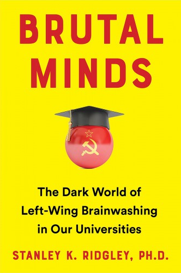 The author explains that what he terms “brutal minds” are “distributed across the campus as faculty and bureaucrats, and the worst of the lot go by the name of ‘student affairs….’” Their ideology is embedded in their policies, which provide them anonymity.”
And it is precisely this anonymity that makes the co-curriculum purveyors so effective and so dangerous. As noted, they often operate outside of regular curricula and programs under the vague umbrella of “student development.” They promote an anti-racist ideology that includes harassment, intimidation, and coercion in the form of “social justice workshops,” and “antiracist” programs. “Almost without exception,” Ridgely writes, “these programs constitute unauthorized psychotherapy sessions conducted quite often by unlicensed personnel under false pretenses.”
Brutal Minds describes in detail the behavior modification techniques used in thought reform, and notes that they are based on the three-stage model of brainwashing that was part of Chairman Mao’s Cultural Revolution in Communist China, and which remains in use today.
The easiest prey for these activists and their agenda are the young students, and freshmen are logically “the most vulnerable.” The perpetrators deny that they employ a brainwashing program, and mask what they are doing with a variety of euphemisms such as “Education for Freedom,” “Transformative Education,” and “Social Justice Education.”
The author notes that the phrase “transformative education,” has been adopted to replace “the tainted label ‘re-education’ with all of its unsavory connotations.” He explains that the techniques used by thought reformers vary, depending on legal protections, which “are much more developed in the United States, and thus American thought reformers are more restricted in the methods they can use to achieve the goals of transformative education.”
Essentially, the process is to attack the moral values and beliefs with which the student enters the university, create in the student a significant sense of guilt, force him or her to divulge personal and family information for exploitation by the instructor or facilitator, and finally, to create a new mindset and way of thinking. Students must discard their former family-oriented values and embrace the new collectivist, Marxist views of the session facilitators, who admit: “[T]here can be, and usually is, some degree of pain involved in giving up old ways of thinking and knowing and learning new approaches … and it may hurt them that new ways of knowing may create estrangement [from their families] where there was none.” As Ridgely writes: “Critical ideology permits no middle ground between its poles of good and evil. In this case, those poles are antiracism and racism … critical thinking and the asking of questions is discouraged; converts are taught to feel rather than think.”
Chapter Two is especially critical for parents in that it provides detail about the very real abuses perpetrated in these brainwashing sessions and the right of their children to resist them. Ridgely describes the programs and curricula as “psychotherapeutic interventions of antiracist pedagogy,” which are identified by various labels, including “Difficult Dialogue,” “Courageous Conversations,” “Intergroup Dialogue,” “Racial Caucuses,” and “Brave Spaces,” among others. The most important thing for parents and students to understand is that these sessions are generally not mandatory, and that students must refuse to become victims no matter the level of arm-twisting, intimidation, and coercion to participate.
Part II of Brutal Minds exposes the “iron triangle of higher education” and how it operates “in plain sight” to accomplish everything discussed thus far. Ridgely writes that like the creature imagined by the ancient Greeks—Cerberus—“this bureaucratic structure appears to have three separate heads, but has a single body.
The three heads are:
- university schools of education, and individual departments of education without standalone ed schools
- university student affairs offices
- outside non-professional organizations
While it appears as three heads, it is a single brigade of persons who can, and often do, participate as members of all three. Ridgely examines how the three heads of the beast operate separately and together, from the heavily politicized schools of education to the student affairs offices to the external organizations that work in lockstep with them.
“Two primary professional clubs constitute this third head of the Cerberus,” writes Ridgely, the American College Personnel Association (ACPA) and the National Association of Student Personnel Administrators (NASPA)…. These clubs are like political party organs that maintain ideological purity.
The off-campus associations have as their chief goal “to undermine American higher education and transform it in accord with neo-Marxist doctrine….” These nonacademic clubs “generate incredible amounts of propaganda in the forms of articles, books, journals, seminars, conferences, awards, and participatory ‘institutes’” that train “those in the residence life wing of student affairs to install a fake curriculum in dormitories, one that reflects the tenets of critical racialist ideology. This curricular model mimics an actual academic curriculum, complete with assessment of student learning.”
In the face of all this, what reason for hope does Brutal Minds leave with concerned parents and grandparents? The final chapter of the book outlines Ridgely’s recommendations for “resistance,” “restoration,” and “renewal.” He writes that “strong countermeasures must be taken at several levels and by entities both public and private.”
For example, parents must realize they are being played, that they are to the student affairs staff, “a problem to be overcome.” The author asks: “Should you be suspicious of the student affairs cadre? Of the student success cadre? Yes, most certainly. You can’t afford not to be.” He then describes how upbeat, jargon-laden emails and newsletters will come parents’ way, absent of course “the ideological domination of student affairs by critical racialism and the consequent programs that attack students in the guise of developing them and fostering student learning.”
Given that critical racialism is entwined with coercive methods, complaints against institutions that receive public funds may provoke requirements of transparency. “If an institution receives federal funding,” notes Ridgely, “then these institutions must abjure the imposition of the critical racialist creed under penalty of law and threat of defunding.”
Additionally, “workshops and racial caucuses that attack or coerce participants on the basis of race, ethnicity, gender, or sexuality violate federal civil rights laws, and the persons who conduct these activities and who propagate racialist doctrine can be subject to legal sanction.” Abuses by state universities may also be brought to the attention of state legislators.
Finally, Ridgely writes, “the student must become the hero in this tale, and that ultimately will determine whether that tale will unspool as a tragedy or as an epic.” Students well informed of the dangers they will almost certainly face are well equipped to deal with the threats. “Armed with the knowledge of their legal rights and the legal prohibitions that restrict rogue faculty and workshoppers from much of their activities, students can seize control of their collective educational fate.”
Parents with children already enrolled or about to enroll in a college or university should avail themselves of the indispensable information in this well-researched, compelling book.
To read the entire book, go to Amazon or Humanixbooks.com to order!
Education Briefs
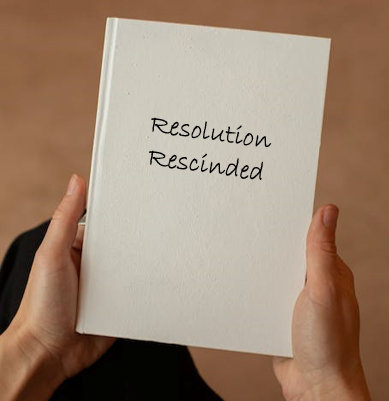
The duly elected Francis Howell School Board members in St. Charles County, Missouri, voted 5-2 on July 20 to revoke a resolution allegedly against racism that is in itself racist. The resolution was adopted by the previous board in 2020 after the death of George Floyd and the Black Lives Matter riots in Minneapolis. The St. Louis Post-Dispatch reported that its adoption followed on the heels of a protest march in St. Charles County that attracted about 2,000 protestors, some of whom claimed Francis Howell School District’s curriculum and hiring and disciplinary practices were discriminatory against “people of color.” The five board members who voted to rescind the resolution were elected in 2022 and 2023, part of a wave of local elections that favored pro-parent and anti-woke policies. The new board rejected the resolution as “woke activism” and, according to the Post-Dispatch, “drafted an alternative ‘against all acts of racial discrimination, including the act of promoting tenets of the racially divisive Critical Race Theory, labels of white privilege, enforced equity of outcomes, identity politics, intersectionalism, and Marxism … the Board hereby declares its commitment to establishing, supporting, and sustaining a culture of racial harmony and goodwill districtwide.’” The rescinded resolution, which will be removed from school hallways, states that racism is “a crisis that negatively impacts our students, our families, our community, and our staff,” and that “[w]e will promote racial healing, especially for our Black and brown students and families. We will no longer be silent. We are committed to creating an equitable and anti-racist system that honors and elevates all, but one that also specifically acknowledges the challenges faced by our Black and brown students and families.” The two board members who supported the resolution served on the board when it was adopted. The new board members were backed by the pro-parent political action committee called Francis Howell Families.
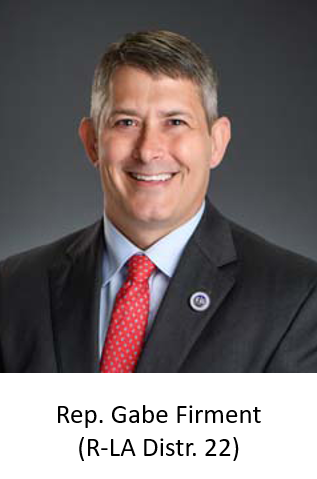
Louisiana has become the 20th state to safeguard children from life-altering transgender surgeries, overriding Democrat Governor John Bel Edwards’ veto of the Stop Harming Our Kids Act (HB 648). According to Fox News, the Republican majority in the Louisiana House voted 75-23 in a special session on July 18 to override the governor’s veto of the bill, which will prohibit doctors in the state from performing gender-reassignment surgeries and prescribing or administering hormones and puberty blockers to minors. State Representative Gabe Firment, the bill’s sponsor, issued a statement following the successful House action: “HB 648 has passed both chambers of the state legislature with veto-proof majorities, and the people of Louisiana have made it clear that our children are worth fighting for.” In vetoing the bill, Governor Edwards claimed that “sex-change surgeries on minors are not occurring in his state and that the bill is being fueled not by evidence of a growing problem but by ‘propaganda and misinformation generated by national interest groups.’” But the Center for American Liberty’s Mark Trammell told Fox News Digital that the governor’s failed veto “shows that he cares more about appeasing special interest groups than protecting children from medical procedures and drugs that physically mutilate and sterilize.”

The Minnesota Department of Education has a new “LGBTQ education specialist who called for teachers to discuss nonbinary identities with preschoolers” as far back as 2019, when he was the LGBTQ program director for Minneapolis Public Schools (MPS). On June 17, The Daily Caller reported that Jason Bucklin, an LGBT activist, “now plays a major role in promoting LGBT curriculum and policies in schools throughout the state.” In a March 2019 #EDTalksMN event on Creating Inclusive Classrooms, Bucklin lectured about discussing sexual orientation with kindergarteners. He claimed: “We’ve been having questions about how do we explain nonbinary identities to our preschoolers? If a teacher doesn’t identify as a boy or a girl, how do we explain that to preschoolers who are just learning that there’s only boys and girls?” He recommended promoting “children’s books” about the subject as a solution, but many parents might question what business it is of teachers of young children to broach such subjects. Bucklin went on to assert that if teachers don’t intervene and [indoctrinate] young children about “gay” and “nonbinary” lifestyles, then the kids will assume that “gay” means “something bad.” He continued: “So what the result is, for six years, until we think it’s developmentally appropriate to talk about it in a certain way; for six years they get to develop a negative connotation between the word ‘gay’ and something bad. And then in sixth grade we’re supposed to untangle that … we’ve let them for six years learn a negative connotation … unless we interject.” Again, on what authority do teachers interject sexual topics — certainly not on parental authority in most cases. And the assumption that young children will automatically associate the word “gay” with something negative unless teachers intervene screams of a lame excuse to introduce the LGBT agenda. Yet Bucklin is the person who now has the power of the state’s department of education behind him to help schools “create LGBTQ school inclusion policies and practices using a racial equity lens to create a safer and more affirming learning environment for LGBTQ students.” His position “also involves implementing the policy initiatives of the LGBT activist group, the Gay, Lesbian, and Straight Education Network (GLSEN), including “comprehensive policy, educator support, student-led clubs and inclusive curriculum.” Parents beware!

Homeschooling families persuaded Minnesota lawmakers to strike new standardized testing requirements from both the House and Senate versions of a bill. According to HSLDA, the proposed measures would have required homeschooling families “to submit the results of annual standardized tests to local public school superintendents,” and would have granted these officials “the authority to request ill-defined ‘protocols’ regarding testing, as well as proof that the protocols had been followed.” Amy Buchmeyer, staff attorney for the Home School Legal Defense Association, said had the bill passed, it would have been the most restrictive in the nation. “It could have undermined one of the many unique benefits of homeschooling,” she said, “the ability of parents to customize educational programs [that] best meet the needs and interests of individual children.” Homeschool proponents swung into action once the testing requirement came to light. Rob Prigge, executive director of the Minnesota Association of Christian Home Educators (MÂCHÉ) praised the impression homeschool families made on lawmakers “during a pair of rallies at the capitol.” He noted: “I’m not aware of another example where the majority of lawmakers relented from what they had planned to do.” Two homeschooling moms were asked to testify, and Prigge said they were “persuasive” because “they were able to discuss the direct impact the law would have on their families and homes.” HSLDA credits the value of “larger advocacy groups” like MÂCHÉ in researching and informing homeschooling families about challenges such as the Minnesota legislation. MÂCHÉ leadership combs through bills and “is judicious in determining the proper level of response for dealing with legislation that might curtail homeschool freedom.” Prigge vows his organization will continue to work with state policymakers “to represent the group’s families and preserve their rights and protections.”
Fabian Permeation and Capture of the NEA: The People, Processes and Purpose
By Dr. Mary Byrne
Editor’s Note: The May and June issues of Education Reporter featured parts one and two of a series by Dr. Mary Byrne, Ed.D., on how the National Education Association (NEA) is molding the future of American education. The May article demonstrated that, before the NEA could succeed in this effort, it first had to be remolded itself. In June, we explored the history of the Progressive Education Association (PEA). This month, Education Reporter publishes part three, the final portion of this fascinating exposé.
When Teachers College, Columbia University’s George Counts approached the National Education Association (NEA) with his social reconstructionist ideas, the NEA had already been primed for transforming the role of schools from education to preparation as social change agents. In 1913, the NEA published bulletin 41 that proposed to redefine the duties of citizenship. An excerpt of bulletin 41 as cited in the Reece Committee report follows:
- High school teachers of social studies have the best opportunity ever offered to any social group to improve the citizenship of the land. This sweeping claim is based upon the fact that the 1 million high school pupils is probably the largest group of persons in the world who can be directed to a serious and systematic effort, both through study and practice to acquire the social spirit.
- It is not so important that the pupil know how the President is elected or that he shall understand the duties of the health officer in his community. The time formerly spent in the effort to understand the process of passing a law under the President’s veto is now to be more preferably used in the observation of vocational resources of the community.
- The committee recommends that social studies in the high schol shall include community health, housing, homes, human rights versus property rights, impulsive action of mobs, the selfish conservatism of traditions and public utilities. (emphasis added) (p. 225)1
Thus, the NEA recommended the Fabian-Dewey agenda for high school curricula including the social studies of urban problems and socialism.
Two days after delivering his “Dare” speech to the PEA in 1932, Frontier Thinker George Counts (see April 2023 issue) approached the NEA with his ideas to build a new social order characterized by governmental economic planning and a national education system.2 The NEA had been primed for a national system of education since its organizing meeting in 1857. In July 1934, Dr. Willard Earl Givens, a graduate of Teachers College, Columbia University where as a self-identified socialist and chairman of the committee of the NEA Department of Superintendents, produced a statement entitled, “Education For the New America.”
Givens had gotten his Master’s degree at Teachers College, Columbia in 1915 and studied there until 1917. He took power at the NEA at a time when George Counts’ Marxist radicalism (1927-1955) was at its height. Givens, who had chaired the committee of the NEA’s Department of Superintendents, gave an address titled, “Education for the New America,” at the 1934 Proceedings of the 72nd Annual Meeting of the NEA. He announced that a dying ‘laissez-faire’ must be completely destroyed and all of us, including the ‘owners’, must be subjected to a large degree of social control. (p. 78)3 Shortly thereafter, Givens was made the NEA’s executive secretary and served in that capacity from 1935 to 1952, giving George Counts a contact in the alumni network.4
Why the radicalization of the NEA matters
Dr. Malcolm Skilbeck, a fellow of the Academy of the Social Sciences in Austrailia, completed his doctoral dissertation at the University of London where the Fabian Society’s London School of Economics is located.5, 6 Skilbeck’s 1972 thesis, Education and The Reconstruction Of Culture: A Critical Study Of Twentieth Century English and American Theories, provides an analysis of the influence Fabian Society co-founders Sidney and Beatrice Webb had on the social reconstruction agenda (experimentalism) of John Dewey and Harold Rugg for shaping a national common core curriculum in the United States, particularly with respect to Rugg’s development of his social studies textbook series.7, 8
Excerpts from his now 50-year-old dissertation expose the Fabian foundations of the United States’s Common Core State Standards and assessments developed in partnership with the London-based Pearson Publishing Company and incentivized for adoptions by States through the Obama Administration’s Race to the Top Grants.9, 10 Interestingly, Pearson gave the Obamas a joint $65 million book deal bigger than any previous presidential book deal in history — an unprecedented amount of money for a presidential memoir.11 The excerpts are below:
- Reconstructionist thinking is conspicuous in those modern nation-building enterprises which seek to direct schooling by broad social policy objectives. Throughout the twentieth century, in England and America, many educational thinkers have diagnosed a contemporary cultural crisis and proposed large-scale remedial treatment. These proposals have come most notably from Fabian socialists, scientific rationalists like [H.G.] Wells and [Bertrand] Russell, Dewey and other American experimentalists…. (p.2)
- …Curriculum content and strategies for teaching and learning are a detailed complex of centrally important strategies for the reconstructionists. By contrast with classical humanists, much emphasis is given to a supposed need to re-define and to re-integrate traditional organizations of subject matter. Science, and particularly social science material, is given a predominant place, and various schemes of organization are proposed — most significantly the so-called social core curriculum, familiar as a more or less totally integrated programme of study which is organized around themes and issues of current social relevance and concern and grounded in a new set of social-moral values. (p. 56)
- Realization that through universal, public education a whole nation’s children may be influenced has led those reconstructionists in societies where the common school is a reality to propose measures for reaching and influencing whole populations. Of these measures the most notable is the common core curriculum. (p. 606)
- Sidney Webb, on one of the rare occasions when he was aroused to a passionate denunciation, criticized “class education” which condemned people to a servile role, and hinted at a curriculum that would unite the classes and eliminate vocational predestination. There is no contradiction between this ideal of social unity as reflected in a common core curriculum and a utilitarian approach to learning. (pp. 446-447)
- Thus the universal, public school was assigned the task of stabilizing change by forming an integrated, democratic character in the youth. The curriculum was to be the principal means to this end, and it was to serve a symbolic function, as exemplar of the new democratic order. Hence the distinctively moralistic tone of reconstructionist curriculum theorizing, the emphasis on a set of basic values, the prominence given to historical and social subject matter, and the recommendations concerning pupil participation and activity. (p. 607)
The NEA supported the effort to institutionalize the Common Core State Standards into American schools with information dissemination, tool kits, and a public relations campaign.12, 13, 14 Though it did not start out as a tool of the Fabian Society, it has, through its leadership and support of political candidates over the course of a century, consciously or unconsciously assumed the role of one its American allies.
Conclusion
Fabian Society co-founders, Sidney and Beatrice Webb, endorsed a “core curriculum design” where studies would extend into adult life in order to create a “world consciousness” — elements that characterize the Common Core State Standards (CCSS).
The long-standing relationships among members of the British Fabian Society and the American financial elite, the American academic elite, and the American political elite (especially U.S. Presidents Clinton and Obama) provided a powerful network for designing and implementing a more than 50-year-old plan to capture American public education for the social reconstruction of the United States according to the globalist agenda of the British Fabian Society.
Phyllis Schlafly called out the NEA in 1997 for its desire to “Mold the Future” of American children according to the desires of a foreign agenda. If those in positions of power in this country, especially members of Congress and governors of states, had listened to her then, perhaps the United States could have reversed course and saved a generation of children from the propaganda and control of elites who have no respect for American children or our country.
If they choose to stay the course, parents will have to realize that their responsibility is to take the reins from foreigners and education experts, and to “Mold the Future” for their children and the world.
Footnotes:
1 https://archive.org/details/full-reece-committee-investigation
2 https://www.encyclopedia.com/education/news-and-education-magazines/education-1929-1941
3 https://archive.org/details/NEA–TrojanHorseInAmericanEducationSamuelL.Blumenfeld1984
4 https://archive.org/details/blackboardpowern0000gord/page/14/mode/2up
5 https://web.archive.org/web/20110926215323/http://www.assa.edu.au/fellows/profile.php?id=302
6 https://www.theguardian.com/education/2022/sep/26/malcolm-skilbeck-obituary
7 https://www.researchgate.net/scientific-contributions/Malcolm-Skilbeck-47919498
8 https://discovery.ucl.ac.uk/10019123/1/294121.pdf
9 https://www.washingtonpost.com/news/answer-sheet/wp/2015/09/23/common-core-the-gift-that-pearson-counts-on-to-keep-giving/
10 https://www.federalregister.gov/documents/2009/11/18/E9-27426/race-to-the-top-fund
11 https://www.vox.com/culture/2017/3/2/14779892/barack-michelle-obama-65-million-book-deal-penguin-random-house
12 https://www.nea.org/professional-excellence/student-engagement/tools-tips/common-core-101
13 https://coretaskproject.com/2013/02/10/nea-ccss-toolkit/
14 https://www.edweek.org/teaching-learning/nea-delegates-endorse-common-core-supports-but-not-testing/2013/07