Common Core Killed Cursive, but it’s Making a Comeback
If the numerous reasons to despise Common Core since its introduction in 2010 weren’t enough — the pornographic sex education, ridiculous math standards that teach political activism rather than math, low English and science standards, including failed reading instruction, et al — students have also been denied the ability to learn cursive handwriting.
Common Core (CC) standards removed cursive writing from the curriculum, allegedly due to a need to focus on all things digital. Standardized testing and teaching to the tests were part of the mix, and cursive writing was a traditional skill the CC reformers thought they could dispose of with little fanfare or pushback.

In 2013, Phyllis Schlafly described CC as “a violation of federal law,” “the mark of a totalitarian government,” “propaganda,” and “encrusted with lies.” She added that CC’s biggest lie of all was that 42 states initially adopted it because they liked the standards, when the the sole reason was actually federal coercion. Phyllis wrote: “CC is foisted on the locals by a combination of bribes, federal handouts, and as the price for getting a waiver to exempt a state from other obnoxious mandates.”
One of CC’s lies was that cursive writing took too much instructional time that could have been spent doing “other things,” likely those to which many parents might have objected. CC proponents also used the pandemic as an excuse to dismiss the need for cursive writing instruction and to place more emphasis on the use of technology for communication.
A University of Southern California education professor asserted in a 2023 Stateline article: “If you are going to spend time on some indication of written communication, keyboarding skills are more important … In the scheme of educational policies, I’m not sure there’s a single topic I care less about. We’ve fallen behind during COVID, we’re dealing with chronic absenteeism, student mental health is in crisis, and we’re spending time on cursive?”
But many disagree. Deanna Heikkinen of the Rose Writing Center noted on her blog that Common Core created “a very test-centric education system, where every minute is scheduled, leaving little time for skills like handwriting.” But cursive writing “engages both sides of the brain,” she explained, and when researchers test kids using sensors, the results are striking. “[C]ursive lights up more areas of the brain than either printing or typing,” Heikkinen wrote. “This increased brain activity helps with memory and focus, meaning students are more likely to retain what they are writing.”
The cited research further demonstrates a strong connection between cursive and motor skills. Heikkinen stated:
- If you’ve watched a young child learning to print, you’ve probably seen them reverse their b’s and d’s, or struggle with letters that have loops. This often relates to dysgraphia, a difficulty with writing. Interestingly, studies show that kids who learn cursive early are much less likely to have these issues. The continuous motion of cursive helps train the brain and hand to work together more smoothly.
Phyllis Schlafly recognized this in 2013, when she wrote: “Researchers have found that practice with writing letters can improve idea composition and expression, activate the brain, and aid fine motor-skill development.”
A world without cursive
Many view the abandonment of cursive handwriting as a major loss, the ramifications of which are not fully realized. An essay on the website of the National Museum of American History dates the development of cursive writing instruction for American schoolchildren to the 1840s, with widespread teaching beginning in U.S. schools in 1850.
This article traces the evolution of handwriting “from quill to slate pencil to ink pen” to use of the typewriter beginning in the early 1900s. With the introduction of computers, penmanship took a further backseat to electronic communications, such as email.
While penmanship was on the decline before the advent of Common Core, the CC standards signaled the final death knell for teaching cursive writing in public schools. The Del Ray, VA Patch pointed out that without the knowledge of cursive, “today’s students are unable to read founding documents such as the Declaration of Independence, the U.S. Constitution, and the Bill of Rights — let alone handwritten notes from their grandparents and great-grandparents.”
In fact, some experts say, the phasing out of a centuries-long means of communication could trigger a whole range of problems from failure to accurately decipher handwritten legal and historical documents to the inability to read a handwritten missive from a bygone era.
Even the famous podcaster and left-leaning pundit, Joe Rogan, weighed in on the demise of handwriting: “We’ve kind of abandoned cursive,” he observed. “So, if people in the future go to read ancient scripts of human beings that lived in the 20th Century, they’ll be like, ‘What is this…’”
Rogan continued: “Think about it. Our grandchildren [are] trying to read those immigration docs of their ancestors, which are both recorded and signed in cursive. But instead of easily seeing the port and country of origin? They’re looking at it like an archaeologist staring at a wall of fascinating hieroglyphics.”
The resurgence
As of 2025, half of all U.S. states require students to learn cursive handwriting. A report appearing on mycursive.com provides a reference guide with details on each state’s requirements. The website notes: “It seems more state legislators and education leaders realize a potential need to preserve the art. In fact, the past 9 years or so have been very active.”
Visitors to the group’s Cursive News Archives page can find information on individual state actions and on the topic in general. Both blue and red states are among the 25 that mandate the instruction, including Alabama, Arizona, Arkansas, California, Delaware, Florida, Georgia, Illinois, Indiana, Iowa, Kentucky, Louisiana, Maine, Maryland, Massachusetts, Mississippi, New Hampshire, North Carolina, Ohio, Oklahoma, South Carolina, Tennessee, Texas, Virginia, and West Virginia.
Most states require that cursive handwriting be taught between 3rd and 5th grades, with some, such as Kentucky, requiring its introduction as early as 1st grade. Proficiency is typically required by 5th grade. In Louisiana, the teaching of cursive begins in 3rd grade and continues through 12th grade. Mississippi specifies that instruction begin in 2nd grade and continue through 8th grade.
Some states that do not mandate the teaching of cursive by law do include the expectation of such instruction in their state learning standards. For example, Missouri’s education standards set the expectation that students will learn to write legibly in cursive in the 2nd and 3rd grades, but it is not a state legal requirement.
The Missouri House of Representatives introduced HB375 last December to legally require the teaching of cursive, but after two readings the bill is stalled and currently not on the House calendar.
As previously noted, the push to revive the teaching of cursive is supported by research. In 2023, Reader’s Digest summarized studies that showed handwritten note taking as opposed to typing notes on a computer actually helped students retain more content detail, even though the writers captured fewer words of a lecture than the typists did. “Students who take handwritten notes need to quickly process the lesson and rewrite it in a way they can understand, giving them an advantage in remembering new concepts long-term.”
These studies further showed that “students with handwritten notes were able to remember and still understand the concepts of the lecture after a week had passed.” The article concluded that, clearly, “writing by hand is one of the little things that can make you smarter.”
The AI connection
Perhaps ironically, the technological advances that allegedly made cursive writing obsolete may be a catalyst for bringing it back. A relatively new problem has arisen, particularly in higher education, which is that students are cheating their way through college using artificial intelligence (AI); specifically OpenAI’s ChatGPT, launched in 2022.
A May 23 article in the Wall Street Journal (WSJ) pointed out that when this year’s college graduates were freshmen, “there was no such thing as ChapGPT.” Students had to do their own homework and research, write their own term papers, and now “they can just use artificial intelligence.” As one college professor opined, “AI-assisted writing is like ‘going to the gym and having robots lift the weights for you.’”

The WSJ explained that the reintroduction of the “blue book,” an exam booklet with a blue cover and blank pages, may be enough to derail the AI-spawned cheating that has exploded since the advent of ChatGPT. It would force students to write out their own answers, preferably in cursive, which is much faster than printing. It also means students would actually need to study and learn the material in order to fill the pages with their own words.
A return to the blue book, or whatever the color of the cover happens to be, won’t be easy, but there’s a new demand for them, and business is booming for companies like “Roaring Spring Paper Products,” a family owned business in Pennsylvania. Today’s college students aren’t used to writing on paper — and the handwritten exams put a burden on professors trying to read their chicken scratch. Still, taking exams and writing essays on laptops nowadays almost guarantees cheating.
One professor told The WSJ that when he used the blue books for an in-class essay, giving his students a prompt in advance so they could prepare but not allowing them to bring their notes, it “worked so well that [he] is sticking with blue books next year.”
While other professors have followed suit, an article on Gizmodo.com says the return of blue books isn’t “a fix-all for the broad variety of ills caused by students’ AI-use.” The article quoted a blog post of Philip D. Bunn, assistant professor at Covenant College in Georgia. Bunn posted that before AI, “the traditional essay was a great indicator of a student’s intellectual capacity and was very difficult to fake unless you went to the trouble of hiring a ghostwriter.” He believes the in-class blue book exam cannot replicate the traditional essay written outside of class, and that “something serious is lost if we give up entirely on the traditional essay” because of ChatGPT cheating.
Some believe the only solution is to enact new laws and regulations surrounding the use of AI, which may ultimately happen but will take time, and in any case may prove difficult to police. The key may be to require that important assignments as well as in-class exams be handwritten in cursive.
As Phyllis Schlafly Eagles associate, Dr. Bruce Schlafly, observed: “We’ve been told that it is no longer necessary to teach handwriting in elementary schools, since the computer keyboard has replaced the written word. But not so fast. With colleges returning to handwritten exams to combat the use of artificial intelligence to cheat by students using a computer, elementary schools will have to begin teaching handwriting again.”
In Your Child’s School Library: Dinosaurs, Owls, and Condoms, Oh My!
To introduce the premier of her May 25, 2025 podcast, pro-life activist and president of Live Action, Lila Rose, stated that “dinosaurs, owls and condoms are just a few of the topics sitting side by side on the shelves at your local library.” She might have added that these same books can be found in public-school libraries, not only at the high school level but in elementary and middle schools as well.
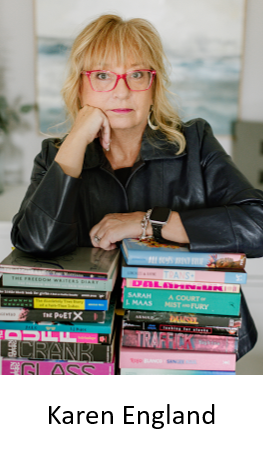
Rose’s guest that day was Karen England, president of the Capitol Resource Institute (CRI). She is the founder of CRI’s Take Back the Classroom (TBTC) and Take Back The Community projects. Known also as “The Kitchen Table Activist,” England has spent “over 27 years advocating for parental rights, religious freedom, and the sanctity of life.” Her mission is to empower like-minded parents and citizens to “make a difference at the local level.”
One of England’s priorities is to shine the light on the pornographic books available in most public-school libraries, and as part of Take Back the Classroom, her group of dedicated staff and volunteers are creating a comprehensive, searchable online database that will showcase the more than 400 books containing graphic sexual content currently on library shelves in school districts nationwide.
During the podcast, Rose asked about the structure of the common library systems, both the local public libraries and the public-school libraries. England explained that public libraries are mostly funded locally, with some federal money, and typically governed by city or county councils. “Public school libraries,” she explained, “are governed by the school boards, but librarians get a budget and they pick the books…. There is no process, no second set of eyes on the books they are ordering for our kids.”
When asked how librarians are selected and trained, England said most have masters’ degrees from schools of education, and often the perception is that they know better than parents what kids should be reading. Their training comes primarily from the leftist American Library Association (ALA), which buys into the discredited Alfred Kinsey philosophy that children are sexual from birth and that “kids should be allowed access to any content they want at any age so they can explore their sexuality.”
Lila Rose described what she read on the ALA website. “It talks about schools and minors’ rights,” she said. “These are insane, ideologically driven rights based on radical sexualization, including the right to identify with the opposite sex as a toddler.” She added that the ALA promotes the right of minors to access any and all library resources, and “if it’s available to adults, it should be available to children.”
The website states: “Library policies and procedures that effectively deny minors equal and equitable access to all library resources available to other users violate the library bill of rights. The ALA opposes all attempts to restrict access to library services, materials, and facilities.”
England asked rhetorically when people were going to realize libraries and librarians could no longer be blindly trusted as they may have been when she was a child. “School libraries used to be governed by volunteer parents and the school board. Now, it’s an entire department, and they’re doing their own thing, and they’re stocking our [library] shelves with really, really inappropriate material for kids.”
She described a librarian in Oregon who quit her job rather than stock the shelves in her school library with a predetermined quota of sexually explicit “children’s” books. When Rose asked who made the decision about what books to buy, England explained: “There’s usually a district official that oversees the school librarians, and this official — call him or her a head librarian — sits all the librarians down with the books displayed and tells them, ‘you have to stock this amount of these books and this amount of those books, and this is what you have to do.’ So, there are librarians who love kids and love their libraries but cannot go along with exposing children to what they know is inappropriate and potentially harmful.”
Inappropriate book examples
Rose and England showed the audience some of the grossly unsuitable books that appear alongside what most parents would consider “normal” books in the children’s section of public libraries and school libraries nationwide. These particular books were pulled from the shelves of a public library in southern California.
On a low shelf with books for four-year-olds, Rose found a book titled I Help at Home, which instructs kids on how to set the table, fold laundry, and perform other simple household tasks. “Lovely,” she said in describing the book. “And here’s a book about owls; super cute.” She displayed yet another book about dinosaurs.
“But on the same shelf, maybe a foot away,” she continued, “you can find these books.” She then showed a book titled It’s Perfectly Normal, only, as England explained, “it’s perfectly not normal”. This book is recommended for ages 10 and up but Rose found it on a low shelf in the section for much younger children. “Even for 10-year-olds,” she observed, “this is completely inappropriate.”
The book is illustrated in cartoon format, as England explained most obscene children’s books are so as not to be labeled “kiddie porn,” and in the very beginning it tells kids “there’s not just boys and girls; gender is about the thoughts and feelings of a person about being male or female.” Later on, it describes other genders. The book discusses various sex acts that it claims “are perfectly normal” alongside intercourse. She stressed that the images in the book are “very graphic” and not intended to teach kids about puberty. “It’s about sexualizing children,” she said.
The book also delves into “LGBTQ+ propaganda” and instructs kids that “these are all sexual identities you can have.” It tells 10-year-olds that these identities are all the same and all are normal; that kids “can pick one or another and it doesn’t matter.”
The book describes masturbation in detail, with graphic images of children performing the act. A section on condoms includes instructions about how to use them, and provides information on IUDs and birth control pills — and, as England and Rose reiterate — this information is available to elementary school children.
A section on abortion asserts that “every woman has the right to end an unwanted pregnancy and there are good reasons to have an abortion.” It discusses abortion along with miscarriage, putting both on the same moral level, and admonishes young readers to have “safe sex.”
Another book Rose presented during the podcast was The Every Body Book which, like It’s Perfectly Normal, seeks to confuse children about gender and tells kids they may “feel like a boy or girl or neither.” England explained, “these books aren’t scientific or about puberty. The Left wants you to think we reject books about puberty. We don’t want to get rid of scientific puberty books. We’re trying to get rid of sexually explicit books.”
The Every Body Book shows pictures of a “pregnant” man and a pregnant woman, discusses “safe sex,” and presents abortion as a choice when people decide they are not ready to have a baby. The book also instructs kids to ask if they are not sure about the preferred pronouns of other people.
England observed that all the authors of these types of books are “far-left progressives,” some of whom have experienced sexual trauma. “But they all believe kids are sexual and they believe in the library bill of rights.” She pointed out that obscenity laws began changing after the Kinsey studies, and that 43 states exempted libraries, public schools, and universities from obscenity laws.
Both England and Rose emphasized that, while kids can obtain the information contained in It’s Perfectly Normal, The Every Body Book, Rebel Girls Celebrate Pride, Sex is a Funny Word elsewhere, the difference is that these library books are taxpayer funded.
In Sex is a Funny Word, young children are fed the familiar fallacy that, when a baby is born and pronounced a girl or a boy, that isn’t always the case. “We may feel we’re the opposite sex and that is who we think we are,” the book states. “Maybe you’re called a boy but you know you’re a girl. Maybe you’re called a girl but you feel you’re a boy. Part of being a kid is learning what you like and don’t like.”
As England noted: “Think about how damaging that [message] is to the proverbial ‘tomboys.’ I have friends who have told me, ‘I am so glad I was not introduced to this as a kid, because I wanted to be a boy. I had all brothers.’
“I’ve gone through hundreds of these books,” she continued, “and they are all propaganda. They are about normalizing all manner of sexual behavior, desensitizing kids, and all very LGBTQ+ friendly.” She added that many of the books hold out as heroes LGBTQ protesters, and all are very negative about fathers, traditional households, and heterosexual marriage.
The solution
Thanks to Karen England and CRI, parents now have a means of checking their local school libraries for inappropriate and obscene books aimed at kids. As England explained to Lila Rose: “We’ve put a website together called Take Back the Classroom.com where visitors can look up their state, their school district, and their school, and see the books that are in that school’s library.” She added that parents can also find excerpts from the individual books. The current TBTC Book List itself is available at this link.
Lila Rose discerned that “there’s a profound difference between a book that’s truly educational about how the body works and the sexual relationship in the proper context, and quite another to put a very overt, dark, and sexually deviant ideology on top of sex and make that the entryway for children to learn about it.” She reiterated the fact that these books are visually appealing and accessible to young children. Yet parents do not know about nor are they invited to be a part of their children’s exposure to what that they might well consider extremely inappropriate and offensive content. “It’s incredibly insidious,” she said.
England agreed there is “no good reason” for these books to be included in any school library where there are underage minors. “Graphic sex, rape scenes, abuse; none of that belongs in the minds of any of our minor children, whether they are ‘germane’ to the story or not.” Both England and Rose agreed the books and their information amount to “grooming,” and that the numbers of minors identifying as transgender or gay are spiking as may be expected in lieu of their exposure to relentless propaganda.
Many of the books on CRI’s list have been around for a long time, and schoolchildren have been subjected to deviant content for years while few were paying attention. But this issue is becoming more well known and now there is a means to find out exactly what’s in the libraries of our public-schools and public libraries through CRI’s Take Back the Classroom and Take Back The Community.
England and Rose encourage parents to visit these websites and take advantage of the information and tools provided by becoming active in their local school districts. (See next article for more information.)
Many viewers responded to Rose’s podcast featuring Karen England, which Education Reporter described in our previous article, Your Child’s School Library, a few of which are included below. Some merely thanked her for exposing this issue on the podcast.
One viewer described her years-long effort to convince her county library system to purchase pro-life books and was denied every time without any reason given. She wrote that after 50-60 denials, she reached out to the county curator and “politely” asked for an explanation. “Turns out [the curator] was pro-life and had no idea this was happening. The denials were coming from a team of just a couple people. Now they have new policies for book requests and it was just because I asked! It doesn’t take a huge amount of time or energy to just contact your county officials and voice your concerns. Of course, this doesn’t always happen in every county, but my county is VERY blue and so there is hope!”
Another viewer, a new mom, said she visited her local public library while she was pregnant and asked afterward: “Where are the animal books? Trucks? Hungry Caterpillars? The children’s section was an absolute joke and was definitely pushing ideology….”
Finally, a librarian responded: “Librarians DO have expertise, and many of us do NOT agree with the ALA. … Many of us detest the twisting of the freedom of expression for the violation of children.” This librarian added: “It is a PARENT’s job to guide their kids through the public library. The school library should be heavily controlled for age-appropriate and high-quality materials because of the children.” [Emphasis in original.]
Many parents wish more librarians felt the same way.
Parents Can R.E.M.O.V.E. Offensive ‘Children’s’ Books from School Libraries
“Parents are the first and strongest advocates for their children. When we stand up and speak out, we can take back the classroom, reclaim our rights, and protect our kids from state-sponsored grooming.” — Karen England
The Capitol Resource Institute (CRI) is recruiting volunteers to help audit school libraries and expand the organization’s database of bad books as part of its Take Back the Classroom initiative.
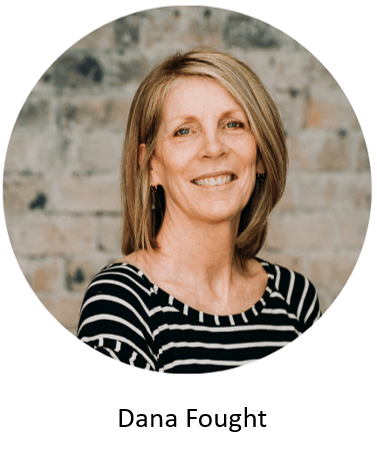
Just this month, Education Reporter and Phyllis Schlafly Eagles Director, Kurt Prenzler, spoke with CRI Program Administrator, Dana Fought, who explained how CRI trains volunteers to audit public-school libraries to determine if they stock pornographic books. Once identified, the titles can be included in CRI’s school-specific database of inappropriate books.
Fought described the computer process techniques for performing the audits, which can vary from district to district. The process is not difficult and can provide absorbing and rewarding work. As Prenzler observed, “let’s just say CRI has a well-developed system” that is easy and efficient for volunteers to use.
Fought said CRI’s aim is to spread the word that its website exists and what it offers, including a free step-by-step guide, called the R.E.M.O.V.E. (Reviewing Explicit Materials Opposing Vulgar Education) toolkit, which educates parents on how to go about ousting a particular book from their school library. “It’s important to locate the specific school district’s policy for challenging these books and to follow it,” she advised. “Those seeking to remove a book should document everything they do.”
She cautioned that “most courts across the country would disallow the removal of a particular book, LGBTQ or otherwise, simply because a parent does not agree with the content. These decisions have found that objection to a book’s subject matter (political, social, or religious themes or ideas) does not constitute sufficient grounds for removal from the shelves of public-school libraries.”
As a side note, Fought said the American Library Association (ALA) is not the only culprit pushing sexually explicit LGBTQ books, but that “organizations, such as GLSEN,” do so as well. GLSEN has long pretended to be all about preventing bullying and harassment of LGBT youth in schools, but they are avid promoters of woke LGBT ideology, as are GLAD, PFLAG, and others.
Fought’s recommendation is for interested parties to start with the heterosexually explicit books. She mentioned as an example the works of author Ellen Hopkins, which are sexually explicit and filled with dark themes such as rape, alcohol abuse, and other forms of addiction. The CRI book list includes sample excerpts of egregious content for many of the books, with more being added as the organization’s detective work progresses.
Following are CRI’s step-by-step instructions for R.E.M.O.V.E.ing an objectionable book as they appear on the website:
Step 1: Research the [District’s] Policy
Start by locating your school district’s book challenge or reconsideration policy. If it’s not online, ask for it in writing — and keep a paper trail of every communication.
Step 2: Explore the Library
Search the online library catalog (look for Follett Destiny or Alexandria). Use your child’s login if needed. Search titles and read reviews on Amazon or other parent forums. If you find something questionable, document it.
Step 3: Build a Case
Track book titles, which schools have them, how many copies exist, and why they are concerning. Keep screenshots, photos of pages, and download our Book Tracker to stay organized.
Step 4: Submit a Challenge
Fill out the official reconsideration form (per your district’s policy). Be specific, clear, and back your challenge with evidence — both visual and descriptive.
Step 5: FOIA If Necessary
If your district stonewalls you, file a Freedom of Information Act (FOIA) request. Be detailed in what you’re asking for (e.g., book purchase records, email communication with vendors).
Step 6: Follow Up
Check back frequently — schools receive new donations and make purchases throughout the year. What wasn’t there yesterday might be there tomorrow.

Once parents learn of the pornographic or otherwise inappropriate books on their school library shelves, they can share the information with other parents. As Karen England discovered, “often parents don’t know what their kids are exposed to every day.”
CRI encourages people not only to find out what’s in their children’s school libraries, but to visit their local public libraries as well and see for themselves if any pornographic or propaganda-filled books are on the shelves in the children’s sections.
Kurt Prenzler noted: “People often think there are no bad books in ‘their’ local public-school libraries, but as President Ronald Reagan said, ‘trust, but verify.’ And to invoke the State Farm Insurance tagline, parents should ‘Discount Double Check.’ CRI needs volunteers to help do this checking.”
Volunteers are especially needed to identify the objectionable books in school libraries. Next, concerned parents, grandparents, and citizens are encouraged to go through the six-step process to remove the books. CRI hopes that people who are alarmed by these revelations will feel motivated to help.
For more information or to volunteer, readers may contact Dana Fought by email to DanaF@capitolresource.org or by phone at 618.514.2599. CRI may be reached through its websites: Take Back the Classroom, and Take Back The Community.
Some Good News for Protecting Kids
In an important victory for children and parents, the U.S. Supreme Court on June 18 voted 6-3 to uphold Tennessee’s common-sense SAFE Act, SB1 (Save Adolescents from Experimentation), which protects minors under age 18 from undergoing gender transition procedures, including puberty blockers, hormones, and surgeries. This ruling supports a lower court decision that SB1 does not violate the Equal Protection Clause of the 14th Amendment to the U.S. Constitution, which was the primary complaint. (See Education Reporter, December 2024.)
A CBS News report on MSN.com lamented that the decision in U.S. v. Skrmetti — the Biden Administration’s challenge to the Tennessee law — “restricts gender affirming care for minors experiencing gender dysphoria,” which “is likely to have broad implications in half of the country.”
As an example, Oklahoma City’s hoodline.com called the high court’s ruling “a precedent for other states,” including Oklahoma, where a similar bill (SB 613) “saw a robust pass in the legislature and was subsequently greenlit by the federal district court.” The state is now awaiting a decision from the 10th U.S. Circuit Court of Appeals.
In a press release issued June 19, Oklahoma Senate Majority Leader Julie Daniels (R-Bartlesville) applauded the SCOTUS decision, stating:
- The court said the state has a legitimate, substantial and compelling interest in protecting minor children from physical and emotional harm. Our law protects children and families from making these life-changing, irreversible decisions until a child turns 18. They must be mature enough to understand the risks and long-term effects of gender transition procedures.
Supreme Court opinions
Chief Justice John Roberts delivered the opinion of the court upholding the Tennessee law, and was joined by justices Thomas, Gorsuch, Kavanaugh, Barrett, and Alito.
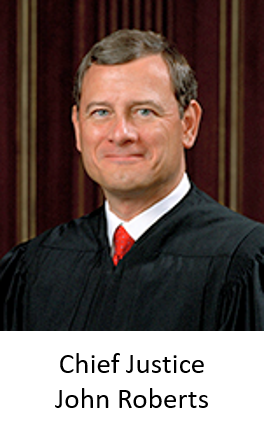
In ruling that the law does not violate the 14th Amendment, Roberts acknowledged the controversial “scientific and policy debates about the safety, efficacy, and propriety of medical treatments in an evolving field,” noting that “the voices in these debates raise sincere concerns; the implications for all are profound. The Equal Protection Clause does not resolve these disagreements. Nor does it afford us license to decide them as we see best.”
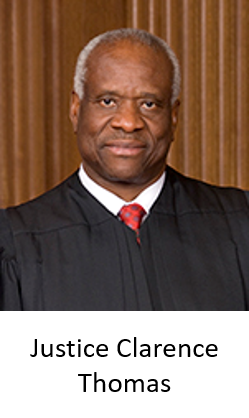
Justice Thomas called into question the ethics of the common gender transition procedures. He wrote:
- Setting aside whether sex-transition treatments for children are effective, States may legitimately question whether they are ethical. States have a legitimate interest “in protecting the integrity and ethics of the medical profession.” Washington v. Glucksberg, 521 U. S. 702, 731 (1997)…. Mounting evidence gives States reason to question whether children are capable of providing informed consent to irreversible sex-transition treatments, and thus whether these treatments can be ethically administered.
Justice Barrett asserted that legislatures rather than courts should make policy judgments involving medical conditions such as gender dysphoria, while Alito, writing his own opinion in support of the final ruling, only concurred with brief sections of the majority opinion.
Justice Alito wrote: “The legislature concluded that the prohibited medical procedures were ‘experimental in nature and not supported by high-quality, long-term medical studies,’ and that often ‘a minor’s discordance can be resolved by less invasive approaches that are likely to result in better outcomes.’” §§68-33-101(b), (c). He asserted that Tennessee’s findings are “consistent with those made by other respected bodies that cannot be charged with hostility to minors experiencing gender dysphoria or to transgender people in general.”
The dissenting justices predictably claimed the Tennessee law “discriminates against transgender adolescents….” According to CBS News, Sotomayor “accused the majority of ‘retreating from meaningful judicial review exactly where it matters most’ and abandoning ‘transgender children and their families to political whims.’”
Takeaways on ruling
Applauding the Supreme Court’s decision in Skrmetti, an article in The Washington Stand called the decision “a win for children, common sense, and constitutional integrity.” Author Joshua Arnold observed that the court “chose not to force left-wing gender ideology down the throats of states whose legislatures chose to reject it.” He noted that the opinion carefully describes Americans who “identify as transgender,” as persons whose “gender identity does not align with their biological sex.”
Arnold lauded the court for “refusing to acknowledge sex-based categories as relevant to Tennessee’s law,” such as “sexual orientation, gender identity, or sex stereotyping.” The opinion states that, first of all, “SB1 classifies on the basis of age. … Second, SB1 classifies on the basis of medical use …” neither of which classification turns on sex.
The Stand pointed out that court decisions are inevitably influenced by culture, and that, as such, the high-court justices “are well aware of multiple [relevant] newsworthy developments.” The justices, for example, “highlighted the eroding credibility of WPATH (the World Professional Association for Transgender Health), the European walk-back of gender transition procedures for minors, and especially the Cass report, which caused England’s National Health Service (NHS) to totally redraw its model of care for gender dysphoric youth.” (See Education Reporter, November 2022, November 2024, and December 2024 for more information on these topics.)
More good news
In another positive development in the struggle against transgender madness, LifeSite News reported on June 4 that the FBI asked American citizens “to report anything they know about medical professionals who continue to perform life-altering gender ‘transition’ procedures on confused children.”
The FBI posted the appeal on its “official X account” on June 2. LifeSite explained that while more than half of the states have laws protecting minors from gender transition procedures, “there is no federal ban in place that the federal government could enforce,” so it’s unclear how much weight the FBI request will carry. However, it sends a message that reinforces President Trump’s January Executive Order declaring that the federal government “will not fund, sponsor, promote, assist, or support” the medical “transitioning” of gender-confused minors, “and it will rigorously enforce all laws that prohibit or limit” the practice.
The FBI is asking citizens to provide tips about “‘any hospitals, clinics, or practitioners performing these surgical procedures on children by phone at 1-800-CALL-FBI,’ or to submit them [via] the official Electronic Tip Form at tips.fbi.gov.”
LifeSite wrote that the mostly ignored individuals who detransition, “attest to the physical and mental harm of reinforcing gender confusion, as well as to the bias and negligence of the medical establishment on the subject, many of whom take an activist approach to their profession and begin cases with a predetermined conclusion that ‘transitioning’ is the best solution.”
Worthy of note here is the fact that gender transition surgeries “make a lot of money,” as “gender affirming” physicians have been caught admitting on video in the past.
Social media truth
Occasionally, interesting observations surface in the vast ocean of postings on social media. For example, an Instagram post suggested that the transgender movement may have begun as the result of a need for a “new revenue stream.” The post’s author speculated that, after the LGB war had largely been won, “the T” added a whole new dimension to victim-based ideology and opened up a wealth of new fundraising opportunities.
A Monty Python YouTube video from the “Life of Brian” posted on Substack similarly cuts to the chase, albeit using the group’s signature comedic format. The skit features one of the characters, Stan, asking the group to call him “Loretta” because he wants to be a woman. When asked why he wants to be a woman, he responds “because I want to have babies.”
His cronies scoff that men can’t have babies, to which Stan maintains “it’s every man’s right to have babies if he wants them.” Another character replies that he can’t have babies because he doesn’t have a womb.
Judith, the lone female player, responds with “I have an idea. Suppose you agree he can’t have babies because he doesn’t have a womb. But he does have the right to have babies.”
“What’s the point of having the right to have babies when he can’t have babies?” asks the common-sense character.
“It’s symbolic of our struggle against oppression,” another asserts. Mr. Common Sense then tells the group: “It’s symbolic of [Stan’s] struggle against reality.”
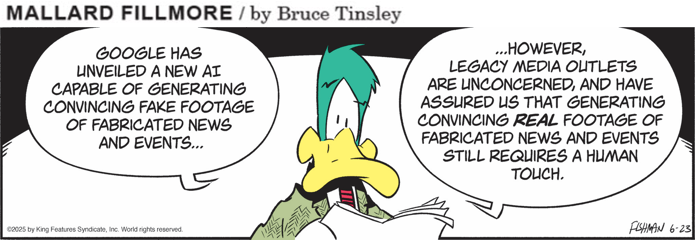
Mallard
Trailblazers of America
By Various authors, New Book Series for Children from PragerU, 2025
The writers at PragerU have come up with a new book series designed for young readers that brings to life the explorers and adventurers that built America. The series currently consists of 8 books, 7 of which focus on individual heroes in U.S. history, with book 8 a compilation of all the others.
The books seek to fill a need. A PragerU spokeswoman explained on video: “We are becoming a nation with amnesia, despite the very rich and complex history we have as Americans.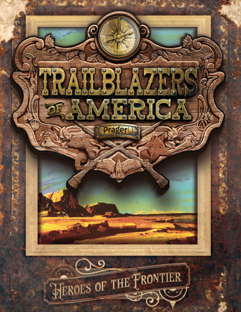 At PragerU, we decided to solve this by coming up with an incredible series called Trailblazers … which will encourage kids to read while teaching them about American history…. It’s a great resource.”
The heroes profiled in the series are featured in the following order:
- Book 1 — Daniel Boone, tells the story of this frontiersman’s exciting adventures using true historical accounts. It is a biographical tale that “teaches kids all about the start of westward expansion.”
- Book 2 — Johnny Appleseed is the tale of John Chapman, who became known in American folklore as Johnny Appleseed, a real-life character who through his love and knowledge of nature, along with his entrepreneurial spirit, helped settlers survive by planting apple trees to secure free land for them. Once they settled, he helped them get a start in taming the wilderness.
- Book 3 — Follows the famous pioneer captains Meriwether Lewis and William Clark as they explore the vast reaches of the American West. The book shows the pair’s resilience and ability to adapt as they faced hostile Native Americans, wild animals, and challenging terrain. They were also some of the first to set eyes on the dazzling natural beauty of the western half of the continent that their explorations opened for everyone.
- Book 4 — Davy Crockett brings to life the legendary “King of the Wild Frontier,” who is one of America’s most well-known heroes. The story profiles Crockett’s life from his frontier days to his becoming a soldier to his time in politics, culminating in his last stand defending the Alamo in Texas.
- Book 5 — Is the story of John C. Frémont, an American explorer, soldier, and politician, who served briefly as a U.S. Senator from California and was also a candidate for president. He led battles in the west against Mexico, and during the Civil War, he secured the only successful Union victory in the western region of Missouri in 1861.
- Book 6 — Is all about the California Gold Rush, starting with the discovery of the precious metal in 1848 at Sutter’s Mill, owned by Swiss immigrant and businessman John Sutter. News of the find attracted a massive flood of adventurers, fortune seekers, and prospectors to California, which had a profound impact on Sutter’s life and on the region where he lived.
- Book 7 — Bass Reeves, tells the story of a runaway slave who became a famous, gun-fighting U.S. Marshall in the “Wild West.” Reeves tamed portions of the unsettled territory in Oklahoma and Texas, and the book is not only a biography of this American hero, but also brings to life an exciting chapter in America’s westward expansion.
As previously noted, these stories are combined in Book 8, which contains “over 200 pages of detailed stories, maps, field guides, writing prompts, and more….” The series brings the true stories of these American legends to life, along with colorful descriptions of the wilderness, mountains, and plains they traversed and explored. Their stories also convey a sense of the American spirit that helped shape the country for the settlers that followed.
PragerU is a non-profit organization with a stated purpose of educating children and adults using digital media and technology. It describes itself as “the leading hub for pro-American content online.” PragerU says it releases new content every day, from its “flagship” short videos to podcasts to news clips.
The organization offers children’s content under its “PragerU Kids umbrella, featuring shows, books, and lesson plans to educate the next generation at home and in schools,” including its new Trailblazers of America book series described in this review. The organization pledges that its offerings consistently convey messages that support liberty, economic freedom, and Judeo-Christian values.
PragerU advertises that it offers free educational and entertaining pro-America content for every grade. But not all content is free, including the Trailblazers series, which consist of hardbound books.
While best suited for students in 3rd through 5th grades, older children and even adults can learn from the Trailblazer books as well. One customer praised the “historical content, storytelling, and maps” that the books include. Another wrote that the stories “entertain throughout” and yet another commented that the series “is inspiring” in that it describes actual classic “heroes.”
One parent confessed to not knowing much about John Frémont until “the Trailblazers” installment, but commented that she was “pleasantly informed and entertained” throughout the story. Frémont’s adventurousness (he was nicknamed ‘The Pathfinder’) “was inspiring to read about – and a reminder of the kind of spirit necessary to survive—and succeed—in such an untamed land.”
PragerU is probably a resource many more parents would take advantage of if they knew about it. This reviewer hopes the word will spread so more families can access the wholesome content available through this organization.
To read the entire book, go to Amazon or PragerU to order!
Education Briefs
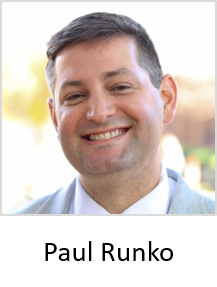
In an op-ed appearing on The Daily Signal.com, Defending Education’s Paul Runko suggests schools should celebrate Title IX Month, not Pride Month. Runko, director of strategic initiatives, K-12 programming for the organization, bemoaned the fact that schools nationwide “fill their bulletin boards with rainbows, host Pride events, and encourage elementary school children to participate in LGBTQ-themed activities.” Rather, he argues, they should be embracing the cause of achievement and fairness, Title IX Month, which was officially recognized in 2025 by the U.S. Department of Education under President Donald Trump. The idea is to celebrate equal opportunity for all rather than the sexual lifestyle of the few. Writes Runko: “Public schools support families of all backgrounds and beliefs. They should strive to unify, not divide. Title IX Month is an opportunity to highlight a shared national value: fairness….” While for good reason not everyone supported Title IX when it was enacted in 1972, most reject the way the law has been manipulated and perverted in recent years, particularly by allowing biological men to invade women’s sports and locker rooms. As Runko points out: “Celebrating Title IX doesn’t just respect history—it affirms a timeless principle: that equality in education is worth championing. And unlike the ideological distractions that currently dominate the month of June in many schools, it keeps the focus exactly where it should be—on students, learning, and opportunity.”

Three college students are suing the state of Virginia for denying them access to public scholarship opportunities because they want to pursue religious majors. The students are all planning to attend Liberty University in Lynchburg, and say they could get the same grants that are being denied them if they were enrolled in a public college. As reported by The College Fix, two of the students were refused grants from the Council of Higher Education while the third had a grant request denied through the state National Guard program. The students are being represented by Alliance Defending Freedom (ADF) attorney Jake Reed, who told The College Fix there is precedent for their case. He cited the 2020 Espinoza v. Montana Department of Revenue case, which found that “the state could not exclude parents from a school choice program just because they chose to use the money at a Christian school.” In the 2022 Carson v. Makin decision, the Supreme Court ruled that “Maine could not exclude religious schools from its own voucher program.” In 2017, the high court ruled in the Trinity Lutheran case that “a Lutheran preschool could not be excluded from a recycled tire program for playgrounds simply because of its religious nature.” While the court did rule against students who were planning to use scholarship money for a theology degree program in 2024, the ADF points out that the Virginia students “aren’t necessarily pursuing ministerial careers,” which some legal experts think may help them prove “raw religious discrimination.”

A 10th grade English teacher is quitting the classroom, citing the fact that her students ‘can’t even read’ and need to be ‘cut off’ from technology. Yahoo News cites “bad behavior” as another of Hannah Maria’s reasons for abandoning her career as an educator. But in her video on X, which went viral, she blames technology first and foremost for “ruining your child’s education.” She points out that most of her students grew up with iPads, and most don’t know how to read because “they’ve had things read to them or they can click a button and have something read out loud to them in seconds.” She failed to note that most of her students were likely never taught to read using phonics in elementary school, but most experts agree technology also plays a role. Maria also said students’ “attention spans are waning” as a result of “high stimulation” and rapid-fire variety on screens. Maria and teachers like her believe students’ excessive reliance “on AI-enabled devices” is leaving many of them “unprepared for life outside of school.” She is calling on “regulators and school boards to step in and solve the issue before it’s too late.” As Yahoo News opined, “if AI tools become more potent and pervasive while literacy rates continue to drop, teachers, regulators, and parents may have to rethink the way they educate the next generation.”
America Needs to Revitalize Civics Education
By Kali Jerrard, National Association of Scholars (NAS)
Originally posted on NAS CounterCurrent website, June 16, 2025. Reprinted by permission.
Civics education’s slow death in the United States is clearly seen in recent protests around the nation.
To understand the bearing of civics education on American current events, it would be helpful to first answer the question: What is civics education and why is it important?
Civics education is the study of the rights and responsibilities of citizens, with focus on an understanding of how the government works, understanding what freedom is, and what we must do to preserve such freedom and the democratic process through effective engagement. The importance of a civics education is best understood when such an education is missing. A passage from the introduction of the Civics Alliance’s American Birthright explains it well,
- Too many Americans have emerged from our schools ignorant of America’s history, indifferent to liberty, filled with animus against their ancestors and their fellow Americans, and estranged from their country. The warping of American social studies instruction has created a corps of activists dedicated to the overthrow of America and its freedoms, larger numbers of Americans indifferent to the steady whittling away of American liberty, and many more who are so ignorant of the past they cannot use our heritage of freedom to judge contemporary debates. We must restore American social studies instruction centered on liberty if we are to restore the American republic to good health.

Right now, America is polarized. While this sentiment is true most of the time—the joys of a de facto two party system—the current polarization is only made worse by the declining quality of education and a loss of civics understanding.
A 2022 report by the National Center for Education Statistics on the national U.S. history assessment test administered to eighth graders revealed less-than-ideal results. Scores began declining in 2014, and even then, the scores were not significantly different from those when the test was first offered in 1994. To break it down, the average score in 2022 was nine points lower than the average score in 2014, 13 percent of eighth graders performed at or above proficient level, and the percentage of students scoring at or below basic on the exam rose to 40 percent of eighth graders in 2022 from 34 percent in 2018.
Civics education is not only necessary as a cornerstone of K-12 education but it should continue into higher education—specifically in a college or university’s core curriculum so that every student gains a deeper understanding of their rights and duties—after all, education should both enrich culture and shape character, and ultimately promote virtuous citizenship. In an article for Minding the Campus, Jeffrey Schulman argues that reinstating civics and literature education—or humanities education in general—would do much to arrest the political chaos in America.
The focus on STEM over humanities in higher education has left a gap in civics knowledge and other associated skills. Schulman states, “Ignorance of our country’s political tradition is increasing: Precipitous declines in humanities enrollments in colleges are accompanying lower scores in reading and writing on standardized tests.” After graduation, many college students are being released into society as “technically qualified” workers, but are also animus- and ideology-fueled vessels of civics destruction.
Knowing that we Americans have a right to freedom of speech, and of free association, is quite different from knowing why we have these rights or when they ought to be exercised. Much of modern civics education is something called action civics: think K-12 teachers appearing with students at a local state capitol decked out with signs or, as in my colleague Chance Layton’s neighborhood, the occasional anti-gun march—among others—during school hours led by teachers and their students often under the age of ten. Will these students know the importance of their rights? The rarity of them? Is protesting the only right? What are our duties to the government? Why vote? What is a jury? Why pay taxes? Who serves in the military? What is a prison? What are the qualifications for elected office? Why don’t they ask the kids at Tiananmen Square, was fashion the reason why they were there?
Sending children or college students off to protest is not a sufficient civics education. Students must learn first the structure and function of government in American life, along with the many details that such instruction entails.
When this education fails or is missing entirely, the results can be devastating.
Let’s compare two of the major protests which have taken place recently. Take for instance the Los Angeles protests against the ICE raids ordered by President Trump. These protests began with a few hundred people outside of a Los Angeles federal detention center and the Los Angeles Edward L. Roybal Federal Building and spiraled into chaos after clashes with the National Guard, which was deployed by President Trump. Protestors vandalized and set taxis on fire, and blocked the 101 Freeway, all while reports of more vandalism, looting, and violence continued to pour in. Without discussing the intricacies of the law, the immigration/migrant issue, or even federal versus state rights, the protestors were abusing their First Amendment right to peaceably assemble and subsequently, were not practicing civics.
Compare this situation to the “No Kings” protests which coincided with Flag Day and the parade in Washington, D.C. celebrating the Army’s 250th anniversary. The “No Kings” protests were actually mostly peaceful, with more than 5 million participants and over 2,100 rallies and protests around the nation. According to the “No Kings” website, the protests were organized “to reject authoritarianism—and show the world what democracy really looks like.” “Mostly peaceful” in the context of these slew of protests means that while scenes of verbal altercations were often heated, violence was rare and importantly not condoned by participants. These scenes offer a dramatic contrast to the protests in Los Angeles, where students pick up as many hours in mandated ethnic studies courses as civics.
The need for better civics instruction has never been greater. In an effort to fulfil this great need and our mission to promote virtuous citizenship, the National Association of Scholars and the Civics Alliance have studied the ways in which activists have subverted education to achieve their political aims, written model legislation to counter these activists, and drafted model state standards to promote a better civics education and our American Birthright. These efforts seek to teach America’s foundational history of liberty and to reinstate love, law, and liberty as touchstones of American social studies education.
Making good citizens should be a, if not the, priority of the educational system.
CounterCurrent is the National Association of Scholars’ weekly newsletter.
Kali Jerrard is Communications Associate at NAS. She graduated in 2022 from Patrick Henry College, with a degree in Economics and Business Analytics. Prior to joining NAS, she worked as a client strategy analyst for a prolific political consulting group in Washington, D.C. Kali resides in Loudoun County, Virginia with her husband and son, and is an ardent lover of romantic era music, cooking, and English literature.
Education Related Links

Reader Books Flyer 2025