Radical Left Circling Wagons with ‘Media Literacy Education’
As if the educational deck isn’t already stacked against schoolchildren with explicit sex education, transgender brainwashing, CRT indoctrination, and pornographic library books, a push to add “media literacy” standards is underway. Leftists are circling the wagons to further ensure that not a glimmer of unbiased instruction is included in the school day. An exposé by Real Clear Investigations (RCI) sheds light on this liberal offensive and the concept behind it.
For several years, Americans have been hearing the terms “disinformation” and “misinformation,” typically when used by liberals to describe anything written or spoken that is counter to the Democrat party line on COVID-19, the validity of the 2020 elections, and everything in between. According to RCI’s Ben Weingarten, the proponents of media literacy instruction claim “the goal is to teach students ‘how to consume information, not what information to consume.’” But the reality may be quite different.
In January 2023, New Jersey became the first state to officially establish K-12 Information Literacy Education, which is described on Governor Phil Murphy’s website as “a set of skills that enables an individual to recognize when information is needed and to locate, evaluate, and effectively use the needed information.” Media literacy laws exist in 10 other states, some through bipartisan legislative efforts, but New Jersey takes credit as the first to specifically establish education standards.
As Weingarten observes: “At a time when the nation’s political and thought leaders are wrestling over the meaning of facts and truth, and distinctions between disinformation, misinformation, and plain old information, the New Jersey bill is part of a growing effort to have teachers tell students how to settle these questions.”
John Sailer of the Civics Alliance and the National Associate of Scholars (NAS) also cautions against these bills, noting that in Florida, “a bill that has advanced in the state legislature targets what most people acknowledge as a problem—namely, the widespread misuse of social media. Yet,” he adds, “bills like these are worth tracking because the guise of ‘media literacy’ often functions as a trojan horse, casting certain political views as prima facie wrong and biased.”
RCI and others say the issue of media literacy ignores the elephant in most classrooms, that “children suffer from a ‘base-knowledge problem,’” meaning that students don’t have the reading literacy to comprehend or analyze media content when presented to them, particularly in urban schools. This logically opens the door for teachers, often young and liberal, to interpret for students what they cannot read or understand for themselves.
But the problem of illiteracy hasn’t stopped either the federal government or many state governments from considering such laws, often with Republican assistance, using the old reliable label of “national security” to legitimize top-down control by Big Tech and corporate media. Perhaps leftwing politicization is the real goal of “media literacy,” which jibes with John Sailer’s premise that such education offers a “false promise,” and is actually “social-justice-steeped pedagogy” that won’t help students understand the world.”
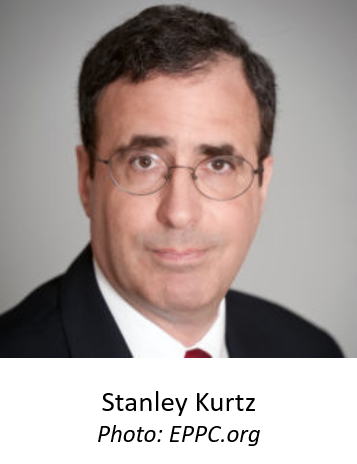
Equally frightening, the Ethics and Public Policy Center’s (EPPC) education expert, Stanley Kurtz, told RCI that media literacy “embodies the leftist view of so-called disinformation,” which treats “even the most respectable conservative bloggers and podcasters” as illicit. Kurtz likened the New Jersey law to the failure of the Biden Administration’s subtly harmful attempt in 2022 to set up a “disinformation board” within the Department of Homeland Security, which U.S. Senator James Lankford (R-OK) was key in helping defeat last August. “But,” Kurtz said, “the state of New Jersey … has just injected something like a government disinformation board into its own schools. Other states, be warned.”
Some Republican legislators agree with Kurtz. One called the New Jersey bill a political weapon for targeting “young impressionable minds.” And RCI’s Weingarten noted that Republican legislators “in Delaware and Illinois largely opposed media literacy bills that passed in their states on similar grounds.” Kurtz noted: “[T]he education left excels at lending a bipartisan sheen to what are in fact deeply politicized programs and proposals.”
Media literacy exploited as social justice
As is often the case with progressive fads and advocacy, media literacy education has the support of activist organizations. One key purveyor is aptly named the National Association for Media Literacy Education (NAMLE), and even a brief visit to the group’s website shows what they are about.

A variety of articles and videos listed under the Fighting Misinformation About Coronavirus link support the official narratives of the past few years. Included is at least one article debunking alternative treatments for COVID-19 and alternative medicine in general, and which still implies the discredited charge that President Trump recommended the use of bleach as a remedy, although Trump is not mentioned by name.
Another link on NAMLE’s website ties its media literacy education with Common Core Standards “in English Language Arts (ELA) & Literacy in History/Social Studies, Science, and Technical Subjects, and provides several foundational connections to media literacy education with examples and discussion questions for educators … NAMLE believes that media literacy education—the process of teaching how to access, analyze, evaluate, create, and communicate using media in all of its forms—supports many of the most challenging goals of the Common Core State Standards (CCSS).”
The Civics Alliance’s Sailer reported in City Journal in 2021 that critical media literacy “was referenced in the descriptions of 17 presentations” at NAMLE’s annual conference that year. He noted that the organization introduced its event by announcing: “Media literacy has many connections with social justice; in fact, many would say that media literacy is social justice.” Sailer explained that this happens “through ‘critical media literacy,’ which the NAMLE defines as a tool to understand ‘the relationships between media, information, and power.’ Critical media literacy (CML), it turns out, plays an important role in media literacy education—and that’s not a good sign.”
Sailer’s article describes media literacy education’s pedagogy by citing UCLA professors Douglas Kellner and Jeff Share’s The Critical Media Literacy Guide, which he says demonstrates their Marxist view that ‘in every epoch, the ruling ideas are the ideas of the ruling class’ to argue that media literacy should be taught through the lens of power and identity groups.” Critical media literacy seeks to undermine what it sees as the dominant institutions of Western capitalist society—or, to use the academic jargon, to foster “counter-hegemonic alternatives.”
The bottom line is to change society. According to Sailer, media literacy embodies Kellner and Share’s pedagogy that “aims to empower teachers and students with a sense of civic responsibility to confront social problems with progressive solutions, often involving media and technology. The ultimate end is to “support social justice educators with ideas and strategies to inspire their students to action.”
So far, Republican legislators overall don’t seem to get it. While some did oppose the New Jersey law, others viewed the language as “pretty balanced and uncontroversial.” But as the Ethics and Public Policy Center’s Kurtz told RCI: “many Republican legislators—particularly in blue states—are eager to work across the aisle, yet [are] poorly versed in the latest leftist education fads.”
What is a Worldview?
Much like the obviously simple question “What is a Woman?” which made headlines when then-Supreme Court Nominee Ketanji Brown Jackson couldn’t or wouldn’t answer it, many people cannot answer the question “What is a Worldview?”
An online search for the term quickly provides a number of definitions. WorldviewU.org describes it as “a type of belief system or ideology,” adding that “a person’s worldview can influence the way everything in the world is viewed, interpreted, and explained.”
The Merriam-Webster Dictionary defines worldview as “a comprehensive conception or apprehension of the world especially from a specific standpoint,” which sounds plausible enough given that Webster has in recent years gone “woke.” An example of this wokeness occurred in fall 2020 following Supreme Court Justice Amy Coney Barrett’s famous use of the term “sexual preference.” A hysterical outcry arose from the Left, and the Federalist observed that Webster responded by changing the term’s definition to “note it is ‘offensive’ on the same day that senators scolded her for her use of the word during day two of her confirmation hearings.”
Teen Eagles explore worldviews

In their first video installment called Worldviews Explained, available on YouTube, the St. Louis Teen Eagles (TE) organization defines the term simply and succinctly as “how we think, understand, and act.” The TE video explains the Biblical Christian worldview in terms of theology, biology, politics, economics, and history, starting with the obvious premise that it is Christ-centered, and that all things point to a trinitarian theism: one God who exists as three separate persons, Father, Son, and Holy Spirit, “equal in essence but different in function.”
When Education Reporter reached out to ask what prompted the Teen Eagles to explore this subject, the group’s president, Ava Aschinger, responded:
- Our objective in creating this series is to give a summary of the top competing worldview beliefs of our day, specifically the Christian, Marxist-Leninist, and Secular Humanist worldviews, and what each believes about common topics. We want the audience to know that everyone has a worldview and that your worldview determines your internal motives, decisions, and actions. With this knowledge, one will be able to defend their worldview and teach others.
Aschinger further explained that the organization plans to build on its first video series, using it as “a foundation for future projects.”
The TEs believe it’s important to know and understand what worldview means. As the group’s administrator Andrew Muller observes:
- How you view everything in life, whether that be movies and marriage, truth, religion, politics, or government, is based on a set of assumptions and values. In an effort to educate our fellow Americans on the importance of this reality, the St. Louis Teen Eagles have started our three-part video series we’re calling “Worldviews Explained,” which summarizes three of the main worldviews at work in America.
Teen Eagles Poised for Growth
The St. Louis Teen Eagle (TE) program began back in 1996 as an outgrowth of classes taught at the St. Louis-based Pillar Foundation, and championed by the late Phyllis Schlafly. The goal, as stated on the TE website, was “to give high school students leadership development… Today, Teen Eagles strives to develop the next generation of leaders, communicators, and movers-and-shakers in society.”
Daniel Hite, Director of The Pillar Foundation and adult sponsor of the group, says the activities of the organization stay very close to their TE Mission Statement which “is very worldview oriented.” Its opening sentence, for example, reads: “The St. Louis Teen Eagles is a group of serious-minded Christian conservative students expressing a Biblical worldview by developing and equipping young leaders to positively influence our culture.”
“This year,” explains Hite, “the St. Louis group launched ‘Eagle Nest’ which is their new media emphasis to reach a broader audience with the Biblical Christian worldview as well as understanding conflicting worldviews in our culture. TE monthly meetings have now expanded to weekly as they grow their studio work. The TEs get educated on these conflicting philosophies and how they affect America—what is consistent with American values and what is not.”
He adds: “They also have many opportunities to express their worldview not only in the educational realm, but in the grassroots political realm as well.”
Interested readers are encouraged to visit the TE website and YouTube page (@stlteeneagles).
Biblical Christian Worldview
Christians believe in a Creator and a Redeemer, and that the Bible is divinely inspired. This worldview accepts that mankind, as a fallen race due to the disobedience of our first parents, can only be saved by our Redeemer, Jesus Christ, through the repentance of sins, a willingness to reject self, and by taking up our crosses and following Him. Thus, the Biblical worldview establishes a moral code that is based on objective truth.
As the TE presentation describes, biologically, the Biblical Christian worldview embraces Creationism, the belief that God created “each living organism separately, in much their present forms.”
Politically, this worldview accepts that human rights are God-given, and that human governments should exist to protect those rights, while guarding against human tendencies to suppress them. The presentation quotes David Noebel, who wrote in Understanding the Times: A Survey of Competing Worldviews (Volume 2): “God ordains governments to administer His justice. When government rules within the boundaries of its role in God’s order, we submit to the state’s authority willingly because we understand that God has placed it over us. But, when the state abuses its authority or claims it to be sovereign, we must acknowledge God’s transcendent law rather than that of the state.”
The TE presentation traces America’s constitutional republic to a verse in the Book of the Prophet Isaiah (33:22): “For the Lord is our judge [judicial], the Lord is our lawgiver [legislative], the Lord is our king [executive]; it is He who will save us.”
The video further states that in the field of economics, the Biblical Christian worldview embraces a form of “democratic capitalism that allows for the free exchange of goods and services that helps others without fraud, theft, or breach of contract.” Add to that respect for the ownership of private property and the result is a view of economics that can be said to be scripturally based.
Historically, Christians believe in God’s creation, the fall of mankind, and our redemption by the life and death of God’s son, our Lord Jesus Christ, and they know that the Bible provides a reliable chronology of world events. Archeologists have confirmed this truth through various discoveries, particularly in recent decades.
Other Worldviews
The names and number of other worldviews can vary depending on the information source. A few have been selected for review here.
The atheistic, or naturalistic view of the world is ever popular, and is also known as the secular humanist worldview. It is nonreligious and in essence holds the belief that there is no God, and that only the physical, natural world exists.
Writing on CrossExamined.org, author and pastor, Dr. Brian Chilton, notes that, among other problems with this worldview, atheism cannot explain away “the existence of human consciousness,” which is a non-material reality. “It has been mathematically demonstrated by the theorem of Borg, Vilenkin, and Guth (i.e., the BVG Theorem),” wrote Chilton, “that there cannot be an infinite regress of material worlds. Every material world must have a beginning point.” In other words, the question of who or what created the matter that resulted from the atheistic notion of a “big bang” remains unanswered, since even that single “primordial atom” had to have somehow been created.
The agnostic and pantheistic worldviews each accept a different form of God. Some agnostics believe God may indeed exist, but that it is impossible to know anything about Him, while others claim it is impossible to know whether or not God exists at all.

Panentheists (not to be confused with pantheists) believe “all in God”; that is, everything and everyone is God. Pastor Chilton cites Hinduism as the best example of the panentheistic worldview.
The polytheistic worldview embraces belief in many gods, and is one of the oldest and most widely held worldviews. The ancient Greeks and Romans embraced polytheism; it has been the belief system of many religions down through the ages.
Yet another recognized worldview is Deism, which accepts the concept of a Supreme Being but rejects divine revelation. Deism “asserts that empirical reason and observation of the natural world are exclusively logical, reliable, and sufficient to determine the existence of a Supreme Being as the creator of the universe.” This worldview gained traction after the Age of Enlightenment in 18th Century Europe and North America. Deism posits that God did indeed create all things but, conveniently for the enlightened, He stays out of the affairs of mankind and “does not intervene in the universe.”
Of all the worldviews, Biblical Christianity alone embraces objective truth stemming from a Creator God as the source of everything in the universe, handed down to mankind through His inerrant Word which is the Bible. For the better part of two centuries, Darwinian evolution has been the accepted cause of all living and non-living things in the visible world. Mankind has become god, and “science” has replaced faith.
As previously noted, the Teen Eagles’ presentation is now live on its YouTube channel (@stlteeneagles), and a summary of the Marxist and Secular Humanist worldviews is slated to follow soon.
Education Reporter will update readers when these important, informative videos become available.
American Federation for Children Champions School Choice
Former Trump Administration Secretary of Education, Betsy DeVos, long a supporter of education freedom, is also founder of the nonprofit American Federation for Children (AFC), which works to promote the expansion of school choice programs across the country. Long time school choice activist Corey DeAngelis is a senior fellow with the organization, which believes education dollars should “fund students, not systems.”
Recent surveys consistently show that high percentages of Americans favor school choice, with AFC reporting that 73 percent of parents support choice programs. School closures during the pandemic alerted many parents to what was actually going on in their children’s classrooms, and the result has been a groundswell of parents’ rights efforts, from vocal participation at school board meetings to the formation of new parents’ rights groups. These activists work with state legislators in many areas to curb radical leftwing curricula and enact school choice laws.
In January of this year, EdChoice Public Opinion Tracker found that “more than 70 percent of parents support school choice policies… [such as] education savings accounts (ESAs), vouchers, charter schools, and open enrollment, at 74 percent, 71 percent, 70 percent, and 75 percent, respectively.” Over 7 in 10 favor school vouchers, with broad approval across all demographic groups. The downside to this survey is that it also showed that many parents who support school-choice are unaware of such policies in their states.
Organizations like DeVos’ AFC are working to change this; they support school choice activities across the country and help foster awareness. AFC’s website includes state-specific details about such programs on a comprehensive, interactive map. For example, visitors learn that in Missouri, an ESA program exists which AFC helps support with financial backing and “boots on the ground” assistance. This program enables low- and middle-income families to gain “access to great schools through private school choice.”
Currently, more than 30 states and Puerto Rico have some form of school choice available. On May 2, the Oklahoma state legislature approved final passage of the Oklahoma Parental Choice Tax Credit Act, sending HB 1934, or what Governor Kevin Stitt called the transformative school choice bill, to the governor’s desk for his signature.
Specifically, this legislation provides tax credits as follows:
- $7,500 per student in households earning under $75,000 annually
- $7,000 per student in households earning $75,000 – $100,000 annually
- $6,500 per student in households earning $150,000 – $225,000 annually
- $6,000 per student in households earning $225,000 – $250,000 annually
- $5,000 per student in households earning more than $250,000 annually
- $1,000 per child for parents who choose to homeschool.
Oklahoma’s school choice program is part of a total education package that the state’s House and Senate debated for months and finally approved on May 15.
In Texas, an ESA program sponsored by Texas Republicans that would provide $8,000 for most K-12 students is locked in a battle for approval. The Lone Star Standard reported that, perhaps surprisingly, this legislation is facing opposition from rural Republicans, who claim their districts can’t afford to lose students. The article referenced the Wall Street Journal Education Board (WSJ Ed. Board), which contends that the real reason for the pushback has more to do with threats “from teachers unions, who don’t want any competition from other schools, even though some public schools may be failing.
“The anti-choice logic also fails to consider that ESA programs could foster a better supply of schools in coming years,” the WSJ Ed. Board continued. “Why not advocate more schools in rural areas, rather than holding back choice for everyone else across the state?”
On May 15, Texas Governor Greg Abbott called for an expanded school choice law, threatening to veto limited proposals that don’t measure up. He vowed to work “around the clock with the legislature to reach that goal.” Interestingly, the AFC PAC is reported to have spent $1 million in Texas during the 2022 election cycle, doubtless in support of candidates who favor education choice.
DeVos personally funds AFC
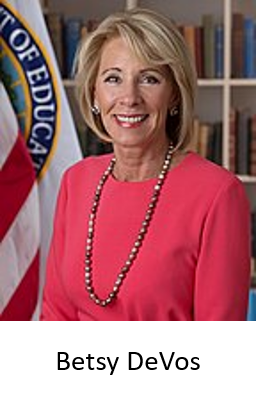
On March 30, NBC News.com published an article about AFC’s efforts, citing its influence in supporting pro-school choice candidates to the tune of “$9 million funneled into state elections last year.” The article charges that DeVos and her husband used “at least $2.5 million of their own money in AFC’s ‘pivotal role’ in getting school choice policies passed in at least three states and introduced in several more.”
Predictably, NBC was not particularly friendly to DeVos or the organization she founded; accusing it of backing nearly 200 candidates, some of whom “are pushing a wave of legislation boosting DeVos’ longtime goal: subsidizing private schools with public dollars.” But DeVos has been a target of snarky and even vicious attacks by the Left since she served in the Trump Administration, precisely for her support of education freedom as well as her role as the former president’s education secretary.
Such assaults do not appear to have dampened her resolve to continue her efforts, which failed during her Trump years but which more recently may even be characterized as wildly successful.
“We’re doing a lot of winning — I’m almost getting tired of winning so much because we’re winning all across the country,” NBC quoted Corey DeAngelis as having posted of AFC’s successes on Twitter in March of this year.
“They’ve been quite strategic,” acknowledged Patrick Wolf, an education policy professor at the University of Arkansas. “They’ve particularly targeted rural Republicans who are opposed to school choice. They just had to take out a few marginal incumbents, and thereby put the fear of God into the rest of them.”
The consensus seems to be that many of the pro-school choice laws and policies could not have been enacted without AFC. “Each state’s political landscape is unique and subject to myriad factors,” noted NBC. “But the federation’s spending preceded a marked increase in both the scale of private school subsidies on the table at the state level and the rate at which the laws have been enacted.”
AFC plans to continue full-steam ahead with these efforts. Its website states: “The vast majority of credible evidence shows that school choice programs improve academic outcomes for not only the program participants but also the students in public schools; save taxpayers money; and reduce racial segregation. The case for school choice is overwhelming.”
Parents’ Rights Movement Full Speed Ahead to 2024
On March 24, Thefederalist.com reported on an undercover audio tape published by the parents’ rights group Freedom Families United, which reveals school board members being trained to disregard parents’ wishes if they oppose woke curricula.
New Mexico School Board Association (NMSBA) trainer Andrew Sanchez can be heard telling the state’s school board members that “parents do not have a fundamental right to tell you how public school teaches their child.” He further claims: “Parental rights end when you decide to send your kids to public school. What you teach this generation that will soon be voting [is] going to be instrumental to [our] future as a democracy and as society goes forward.”
In the audio, Sanchez warns school board members that they are “potential targets with regard to any understandings of parental rights and/or subjects of curriculum.” The message here may be that when parents object to the teaching of CRT or the availability of obscene library books, school board members, as holders of the public school’s purse strings, should be prepared to ignore parents and ensure that those materials remain in place and fully funded.

Sanchez further cautions school board members that parents are likely to invoke their constitutional right of freedom of religion, but contends that parents give up some of their constitutional rights when they send their children to public schools. He adds: “So, you’re going to see a lot more based on that religious freedom type argument.”
Many parents disagree with Sanchez, noting that he is an example of an unelected state bureaucrat instructing elected school board members on what to do and how to think. One parent suggested posting a billboard with Sanchez’s picture and the quote: “Parents have no rights in public schools.” Another stated the obvious: “None of this would be an issue if [schools] only taught basic subjects rather than indoctrinating [with] political beliefs.”
The Federalist opined that Sanchez “mocked parents concerned about excessive wokeness in the classroom and claimed teachers in Florida ‘don’t even teach the Civil War anymore.’” To the contrary, “a quick examination of Florida’s K-12 standards, however, shows educators are required to teach their students about the Civil War and Reconstruction.”
While Sanchez affirmed that teachers in New Mexico “will talk about Black Lives Matter” because “they have to,” he denied that schools in the state are teaching CRT.
Neither The Federalist nor Freedom Families United disclosed how the leaked audio presentation was obtained.
Freedom Families United joins the parents’ rights army
One of many grassroots organizations springing up around the country in defense of parental rights, Freedom Families United was founded by Casey Petersen, a U.S. Army veteran who served in Afghanistan, and his wife, Micayle. The Petersens reside in New Mexico and are parents of two. After his stint in the army, Casey earned a master’s degree in engineering.
The website explains that the Petersens were prompted to start the group after Casey encountered CRT in his job at Sandia National Laboratories in 2020, which he found both racist and offensive. He blew the whistle on what was taking place there yet managed to keep his job until he refused to disclose his Covid-19 vaccination status in February 2022.
Petersen says he felt “called upon” to found Freedom Families United in response to the proliferation of CRT and “the corruption and war on the family” within our schools. The group encourages parents and concerned citizens to join them in their fight, and they provide an email address on their website specifically for tips about woke curricula and other objectionable programs and activities. Senders may submit tips anonymously if they choose.
Hot topic in 2024

Events are shaping up to keep education at the forefront politically in 2024, with parental rights likely to be key. Conservative America Today reports that “recent events at the local, state, and federal level show that the ability of parents to monitor the curriculum of their children is growing in importance.” The furor has only intensified as efforts by teachers and school administrators to hide woke activities and deny parents their right to oversee what their children are learning increasingly come to light.
On March 24, Bethany Mandel, conservative writer and co-author of Stolen Youth: How Radicals Are Erasing Innocence and Indoctrinating a Generation, which Education Reporter reviewed in April, posted on Twitter that her local school district “in Montgomery County, Maryland (@MCPS) will not allow parents to opt-out of any LGBTQ+ content they want to throw at your kids. Nor will they even tell you what the content is…. They think they own your children.”
Mandel wrote an article on the subject in the New York Post, citing the inability of parents to opt their children out of objectionable programs and activities, including “books about gender and sexuality” starting in kindergarten. She described an email from the district which stated: “Parents and students may not choose to opt-out of engaging with any instructional materials, other than ‘Family Life and Human Sexuality Unit of Instruction’ which is specifically permitted by Maryland law…. As such, teachers will not send home letters to inform families when inclusive books are read in the future.”
Most parents realize the Maryland district is hardly the only one adopting and enforcing such policies.
Parents Bill of Rights
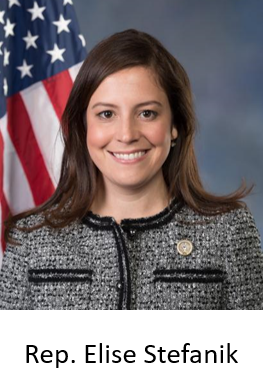
On Friday, March 24, the U.S. House of Representatives passed the Parents Bill of Rights Act, which would amend the 1965 Elementary and Secondary Education Act to require schools to be more transparent regarding curricula, library books, and transgender-related activities. The vote was largely along party lines, with 213 Republicans voting for passage and 208 Democrats voting against the bill. Five Republicans joined the Democrats in voting NO.
Sen. Josh Hawley (R-MO) introduced the bill at the federal level in November 2021 in conjunction with similar state legislation introduced in Missouri by the Show-Me Institute. Despite a storm of criticism from the Left, Hawley’s bill advanced through the U.S. House and passed 16 months later.
In addition to more transparency surrounding curricula, the bill requires federally funded elementary and middle schools to obtain parental consent in order to change “a minor child’s gender markers, pronouns, or preferred name on any school form; or allowing a child to change the child’s sex-based accommodations, including locker rooms or bathrooms.” It reaffirms parents’ right to address their local school boards, and to be informed about violent activity occurring at their child’s school.
The fact that Sen. Chuck Schumer (D-NY) vowed that the bill will never see the light of day in the U.S. Senate should add fuel to 2024 election campaign fires. Schumer told his allies at CNN that the legislation is “Orwellian to the core” and blamed its passage on “hard right MAGA ideologues.” Multiple Democrat representatives bandied about the familiar diatribe against “book banning” to sympathetic mainstream media pundits.
But in the wake of the bill’s passage, Rep. Elise Stefanik (R-NY) asserted: “Parents are the primary stakeholders in their child’s education, and House Republicans are working to protect their right to know what is going on inside their child’s classroom…. Children belong to their parents; they are not wards of government schools.”
Many parents agree, and consider the bill to be nothing more than common sense. As author Mandel pointed out in her NY Post article: “Just imagine progressive backlash if red states started including biblical values and literacy into curriculum and wouldn’t allow an opt-out or notification. Progressives want to proselytize their own religion, and anyone who dares object is labeled fascist and a bigot.”
Mallard

Mediocrity: 40 Ways Government Schools are Failing Today’s Students
By Connor Boyack and Corey DeAngelis, Libertas Press, 2023
To parents and others looking for an overview of what’s wrong with public schools in an easy-to-read, short-chapter format, this is the book for you. Authors Boyack and DeAngelis summarize each of 40 ways that government is failing our schools in a separate chapter, using news bites, anecdotes, and telling data points to validate their overall charge of mediocrity. The 40 chapters coincide with the 40-year anniversary of the Reagan Administration’s Report, A Nation at Risk, which was published on April 26, 1983 and warned that America was threatened by “a rising tide of mediocrity” in education.
Some critics may contend that the word “mediocrity” hardly describes the true state of public schools today, with politically charged racial and sexual indoctrination commonly taught either in place of true academics, or infused into the academics that are taught. The most recent NAEP test scores bear this out, with the authors noting that just 33 percent of fourth graders are able to read at a proficient level, and only 31 percent of eighth graders are able to do so.
They write that “the release of NAEP scores is always accompanied by government officials claiming we need more and better testing with more and better instructions — more and better of what has been done before.” They quote Natalie Wexler, author of The Knowledge Gap, who writes: “It’s as though we’ve been prescribing medicine that is actually toxic — and when the patient fails to improve,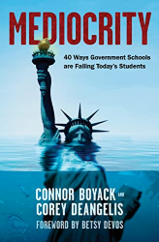 or even gets worse, we just call for larger doses.”
These calls for more inevitably also mean more money, as if the increasing amounts poured into schools — from an average of nearly $12,000 per student in 2013 to more than $13,000 six years later — has done anything to raise NAEP scores, or any other performance metrics for that matter. In the chapter titled “Schools: A Jobs Program for Adults,” Boyack and DeAngelis show how the increase in school funding has not resulted in better curricula or any significant increase in teacher pay, but in an increasingly bloated administrative bureaucracy. “Half of the states now have more non-instructional personnel than teachers,” they write, and this includes “growth in high-pay administrative positions.”
No recent book on our nation’s failed education system is complete without implicating the teachers’ unions, and Mediocrity does not disappoint. In a particularly telling anecdote, the authors describe how, at the 2019 NEA Representative Assembly, teacher delegates voted down a resolution to rededicate the union “to the pursuit of increased student learning in every public school in America by putting a renewed emphasis on quality education. NEA will make student learning the priority of the Association,” it stated.
This resolution further promised to view every program and initiative through the lens of promoting “the development of students as lifelong reflective learners.” What could matter more to an education association than the above? But this resolution failed while, as the authors point out, other resolutions were approved that endorsed “the fundamental right to abortion,” supported reparations for descendants of slaves, lauded the Black Lives Matter movement and the teaching of “White Fragility” in NEA development efforts.
“If this sounds like teachers are more focused on radical left-wing politics than quality education,” the authors write, “it might sound that way because it’s true.”
As may be expected, the authors cover the gamut of issues contributing to what they call mediocrity in the schools; for example, rote memorization of information, teaching to tests in place of “actual knowledge comprehension and application.” They review the ways students were used as “political pawns” during the pandemic and the parent rebellion that began when schools could no longer hide what they were teaching in virtual classrooms, which culminated in the infamous FBI labeling of upset parents as “terrorists.”
One of the most troubling chapters is titled “Sexual Abuse, Again and Again,” in which the authors describe the staggering level of sexual abuse of students in schools. A team of journalists from the Associated Press collected data from 2013-2015 showing that “For every adult-on-child sexual attack reported on school property, there were seven assaults by students.” Given that such attacks overall are “greatly underreported,” this problem is “far worse than mere mediocrity.” And, despite having “long been put on notice by the Supreme Court, schools ‘frequently were unwilling or ill-equipped to address the problem.’”
Boyack and DeAngelis lament that the natural curiosity of young children is quickly squelched when they start school and learn conformity. “Students learn to be quiet and do what they’re told—to conform instead of explore their curiosity.”
In their chapter on “Unsafe Schools,” the authors paint a disturbing picture of the wasteful spending to ostensibly make schools safer, while in the 20 states that allow teachers or school staff to be armed, “there has yet to be a single case of someone being wounded or killed from a [school] shooting.” They conclude: “Not only are schools unsafe, but their transformation into security systems—and the prohibition on most teachers from arming themselves to eradicate these ‘gun-free zones’ that attract shooters—is counterproductive at best.”
Mediocrity shows how, through the dumbed-down curricula, toxic school environments that include unchecked bullying, a lack of teaching basic skills and the inability to think critically, students are often unprepared for college and must struggle through remedial courses. Boyack and DeAngelis write that “hundreds of colleges place more than half of incoming students in at least one remedial course.” Yet nearly 80 percent of students believed they were ready for college when they graduated from high school, “and the same percentage of students had a high school GPA of 3.0 or higher. Clearly, there is a disconnect.”
What can be done to reform the mediocrity? The authors provide their conclusion by describing renowned New York City Teacher John Taylor Gatto, among whose admirers was Phyllis Schlafly. Gatto taught at some of the worst-performing schools in the city, including a junior high school in Harlem. Bucking the trends of the day by using methods that were uniquely his own, Gatto became the recipient of a number of teacher awards, including New York City Teacher of the Year in 1989 and 1990, and New York State Teacher of the Year in 1990.
The authors note that ultimately “Gatto quit because he couldn’t succeed—his creativity and compassion for the students wasn’t enough. He was operating within a failing institution that undermined his efforts.” Gatto went on to become an author and public speaker, “warning parents across the country about just how problematic government schools had become.”
Finally, Boyack and DeAngelis advise parents that, having read their book, they have two options. They can turn a blind eye to the 40 examples of mediocrity and failure provided, believing their neighborhood schools aren’t so bad, and after all, were good enough for themselves and their parents before them. Or, they can “heed the warnings and take action” by pursuing better alternatives for their children.
The authors point out that it “has never been easier to step off the government school conveyor belt and explore other paths. Whether you choose private schools, microschools, homeschool coops, online learning, tutoring, cloud-based classrooms, or another option in a quickly evolving landscape of education entrepreneurship, there are solutions out there for every child.”
To read the entire book, go here to order!
Education Briefs
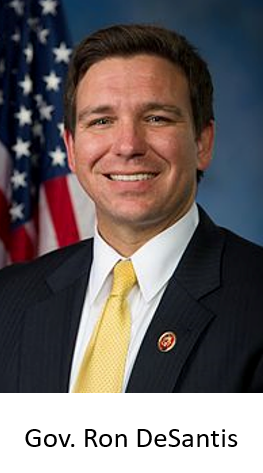
Florida Governor Ron DeSantis on May 17 signed into law five bills protecting women and children from radical transgender ideology. While not the first state to do so, Florida’s passage of Senate Bill 254 puts it in good company with 16 other states that have enacted similar laws. SB 254 prohibits “sex-reassignment prescriptions and procedures for patients younger than 18 years of age,” and attaches penalties including loss of license, civil liabilities, and felony charges with up to five years imprisonment and a $5,000 fine for violators. Next, DeSantis signed House Bill 1069, which expands and solidifies last year’s Parental Rights in Education law. He then signed Senate Bill 1438, Protection of Children, which prohibits the issuing of permits “or otherwise authorizing” the admission of a child “to an adult live performance,” such as a drag show. Again, penalties apply for violations. Further exercising the power of his pen, DeSantis then signed House Bill 1521, Facility Requirements Based on Sex, which “provides requirements for exclusive use of restrooms [and] changing facilities by gender; prohibits willfully entering a restroom or changing facility designated for opposite sex and refusing to depart when asked to do so …” This law extends the gender separation requirements to domestic violence centers and prisons. Finally, DeSantis signed House Bill 225, Interscholastic Activities, which authorizes that private school, virtual school, and home school students may participate in sports and extracurricular activities at public or private schools regardless of where they live. This bill also “preserves the First Amendment right to speech including in public prayer at the beginning of high school sporting events.” The Washington Stand observed that of all these bills, SB 254 caused the most panic among leftists. “[The] LGBT group Equality Florida and Democratic lawmakers boisterously protested the bill outside the Senate chamber on March 13, while it was under consideration,” The Stand reported. “At the event, state Rep. Anna Eskamini (D) complained that Republicans were ‘erasing our trans babies.’” On April 18, protestors threw underwear with “leave my genitals alone” written on it from the balcony on lawmakers below; law enforcement escorted the group, which included children, from the building, cited six people for trespass, and arrested one on a charge of disturbing the peace.” Education Reporter will provide more information on these important new laws next month in our June issue. Stay tuned.

Target is the latest corporation to flout the majority of Americans with a woke nod to transgender insanity. On May 11, the Daily Mail Online reported that Target is promoting a “Pride collection” of pro-LGBTQ clothing for toddlers and elementary-school children, with up-front displays in many stores. The group Gays Against Groomers (GAG) is urging customers to boycott the retailer by taking their business elsewhere. GAG outed the clothing line on Twitter, complete with photos and a video of the items, which include shirts for children with the slogan “Trans People Will Always Exist!,” rainbow-striped tutus for toddlers, onesies for infants emblazoned with ¡Bien Proud!, and T-shirts with the pronoun “they” accompanying drawings of male, female, and unisex figures. Target is reportedly also adding transgender swimsuits that have “extra room in the crotch area for ‘tucking;’” in other words, so boys can wear girls’ swimsuits. GAG charged that the retailer is “indoctrinating and grooming [kids] with LGBTQ ideology. It is highly inappropriate and disturbing. We hope there are enough parents out there that understand how wrong this is and show them that this garbage will not sell. The only thing these people understand is money. Target deserves the Bud Light treatment. We will work to put the pressure on them.” The response was immediate and negative, with many shoppers vowing to boycott the company. One savvy Twitter user posted that Target is “Looking to boost their ESG score.” Others said they will no longer be able to shop there. While some are applauding Target’s actions, comparisons to the Bud Light fiasco, which has allegedly cost the beer giant some $4 billion in value and counting, are already being made. As of May 25, Target has already lost market value and “is pulling much of its so-called ‘pride’ merchandise from store shelves.”

A recent national poll shows that a majority of Americans don’t want public school teachers discussing politics with their children in the classroom. Conservative America Today.com reported that Grinnell College and pollster J. Ann Selzer conducted the poll, which found that while most Americans approve of citizens and elected officials speaking their minds on politics, they oppose public-school teachers doing so. Among Republicans and those who said they lean Republican, 68 percent oppose teachers speaking about politics in class; as did 65 percent of suburban women, 63 percent of those earning $100K or above, and 64 percent of Catholics. Other questions included whether or not respondents would favor a ban on children receiving gender-affirming medical care, with parental consent. Republicans favored a ban by 68 percent, with 28 percent opposed, while 78 percent of Democrats said they would oppose such a ban, with just 18 percent in favor. When pollsters asked who should determine which books are allowed in school libraries; 57 percent said librarians should play a big part, but 55 percent said students and their families should play a big part. Survey results show that the overall takeaway is that “a majority of Americans do not want elected officials at the state level to play a big part in these decisions.” The Grinnell College National Poll began as a pilot project in 2018 and is now conducted twice annually with questions covering current events, national trends, and public policy. The college contends that the poll has become “a trusted source of information for journalists and the public, a platform for innovative teaching in the classroom, and a vital way for Grinnell College to join the national conversation about our nation’s future.” Grinnell is a small private, residential liberal arts college located in Grinnell, Iowa. It was founded in 1846. The subject poll queried 1,004 U.S. adults and was conducted in March 2023.
‘Remoulding’ the NEA for ‘Molding the Future’
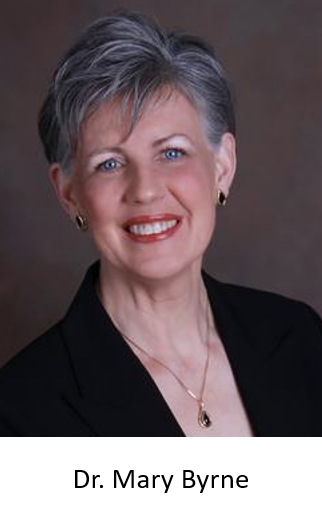
Editor’s Note: In last month’s Education Reporter, Dr. Mary Byrne, Ed.D., provided an in-depth look at how public education in America has changed over the past century and the forces that have worked to effect these changes. This month, Education Reporter continues to publish her extensive research on this topic in the first of three follow-up articles.
The August 1997 Phyllis Schlafly Report posed the question, “Is the NEA Union ‘Molding the Future’?”1 Phyllis wrote: “The NEA’s political work is as much about ideology as harvesting increased tax dollars for public schools.” Then she identified a list of federal legislation the NEA supported to eliminate parents’ authority over their children’s education; expand big government control of education; expand government-run health care; support the U.N. agenda; and, support cultural values and behaviors aligned to “the New World Order” while denying any respect for traditional American culture and values.
Phyllis’s identification of the National Education Association’s (NEA) ideological agenda and its relationship to the federal government’s progressive education policies demonstrated her shrewd powers of discernment. She did not elaborate, however, on how the NEA came to adopt that ideology or its origins.
As discussed in the April 2023 issue of Education Reporter, members of the “Dewey Group” at Teachers College, Columbia University, were the primary thought leaders permeating American-based organizations and injecting their Marxist-laced, British Fabian ideology as activists implementing the Fabian’s global agenda.

The banner at the top of the iconic Fabian Window (also mentioned in the April 2023 issue) displays the phrase, “Remould it nearer to the heart’s desire.” This phrase, representing the Fabian’s mission to reconstruct the world, is an excerpt from an Iranian poem, “The Rubaiyat.”2 Fabians are not unique in referencing the Rubaiyat to publicize their agenda. The phrase also appears in the opening pages of a document produced by another progressive think tank, the Council of the Club of Rome.3, 4 So that, “Molding the Future” is a common agenda among several progressive elitist think tanks.

The stack of books between the images of Fabian Society founding members at the bottom of the window indicates that, for the intellectual Fabians, the process to “remould” or socially reconstruct the world would be accomplished primarily through education.5 A shield bearing the image of a wolf in sheep’s clothing located above the globe on the anvil suggests the stealth practices of permeation and deception which Fabians use to capture positions of power in key institutions of culture — government, universities, labor unions — and promote legislative policies supporting their plans.
The answer to Phyllis’s question “Is the NEA Union ‘Molding the Future?’” is an unequivocal “Yes, but . . .” Yes, the NEA is molding the future of American education, but, its function is more like a front organization for international actors who are operating the NEA in order to mold American culture nearer to their hearts’ desire. Since its inception, NEA’s founders and leadership have envisioned a different America through the centralization of education at the federal level of government — something the Founders never intended, but neither was the ideology of social reconstruction of American citizens and the nation intended by the Founders.
What kind of education is being ‘remoulded’?
George Washington described a liberal arts education as the foundation of a free citizenry. He warned against elevating other forms of government other than the new republican form of government invented by the Founders and authors of the United States Constitution. He warned in his farewell address,
- … we ought to deprecate the hazard attending ardent and susceptible minds, from being too strongly, and too early prepossessed in favor of other political systems, before they are capable of appreciating their own…. For this reason, I have greatly wished to see a plan adopted by which the arts, Sciences and Belles-lettres [beautiful literature], could be taught in their fullest extent … with the means of acquiring the liberal knowledge which is necessary to qualify our citizens for the exigencies of public, as well as private life….6
The NEA is indeed working to mold the future of America into something unintended by its Founders. But the NEA itself was “remoulded” by Fabian influencers in the 1930s who permeated, captured, and redirected its future to reflect something unintended by its founders. The NEA was transformed from a professional organizaation into an instrument for union organizing, political activism, and government capture.
Who dunnit?
The April 2023 Education Reporter identified the people and processes at work in the British Fabian Society and its American sister organizations, the Intercollegiate Socialist Society/League for Industrial Democracy, which are orchestrating the social reconstruction of the United States. Their goal was/is to transform our sovereign, self-governing republic into a socialist member-state cooperating in a world government. Their strategy was to “Educate, Agitate, Organize” teachers who would cultivate popular support for global socialism among students while organizing those teachers into labor unions as voting blocks to support candidates and legislation aligned with their social reconstruction agenda at the state and federal levels.
This article series describes how the NEA was “remoulded” from a professional organization into a radical political and labor-organizing powerhouse by Fabian operatives. It includes a history of a younger, parallel education organization, the Progressive Education Association (PEA), that shared leadership with the NEA through Teachers College activists John Dewey and George Counts.
Origin of the NEA as a professional education organization
Prior to the 1850s, public schools were still a relatively new concept. In 1647, colonial Massachusetts was among the very first places in the world to make the education of young people a public responsibility; however, most schools were privately run.7 By the mid-1850s, the number of public schools was starting to rival private academies, and schoolteachers formed associations in 15 of the 31 states for the purpose of sharing information, experiences, and ideas. But there was no national body to coordinate the interests of teachers until August 1857, when 10 of the 15 state education associations issued a call to “unite … to advance the dignity, respectability, and usefulness of their calling.”8
Thomas Weston Valentine, Esq. principal of a large public school in Brooklyn, had been the prime mover to establish the New York Teachers Association.9 He wrote the call for teachers throughout the country to meet in Philadelphia “… for the purpose of organizing a National Teachers Association [NTA].”10 The mission of the association was to “…advance the interest of the profession of teaching, and to promote the cause of popular education in the United States (emphasis added).”11
Although the U.S. Constitution deliberately did not include education as an enumerated power of the federal government, Valentine shared his vision of a cabinet position for a federal department of education (similar to a ministry of education in European countries) at the first conference. In his opening speech, Valentine stated:
- I trust the time will come when our government will have its Educational Department just as it now has for Agriculture, for the Interior, for the Navy, etc. … But until this shall be done—as it must be, sooner or later—we need some such combination of effort as shall bring the teachers of this country more together…. (p. 18)12
Within a decade, Valentine’s dream came true. President Andrew Johnson established a federal department of education in 1867, but many in Congress hated the new department. They saw it as an unconstitutional power grab and abolished it just a year later.13 More than a century would pass before the NEA would lobby the Carter administration for another federal department of education with a cabinet position.
American teacher organizing — a British idea
At an 1859 NTA conference, Ohio Teacher Association leader Andrew Rickoff suggested the formation of NTA was influenced by British thought leaders responding to the social problems in urban areas created by the industrial revolution. Rickoff suggested:
- Through the active exertions of friends of public instruction in Great Britain, a kind of information and training is given in the national and of the “British and Foreign” Societies schools, scarcely thought of in our own country … it is useless to deny that in the large manufacturing towns, and even in the rural districts, a class of people is growing up who have not had instruction at home … (emphasis added) (p. 173)14
Once organized, the NTA functioned mainly as a forum for promoting America’s developing public school movement. It was a rhetorical outlet for these education leaders and their plans to address issues developing in newly formed schools that were educating children living in newly created manufacturing towns. The structure of the NTA functioned as a non-governmental department of education.
In 1870, the NTA absorbed three smaller organizations: the American Normal School Association, the National Association of School Superintendents, and the Central College Association, and was renamed the National Education Association (NEA). In 1886, the NEA was incorporated in Washington, D.C. Zalmond Richards—founder of Union Academy in Washington, D.C. and a faculty member at Columbian College (now known as George Washington University (GWU)) —became the NEA’s first president. GWU currently houses the NEA archives.15
In 1906, the NEA received a Congressional charter giving it tax-exempt status under the presumption that it served as a non-partisan organization for the purpose of upgrading teaching to a profession. The presumption was valid because at that time public servants could not unionize. When NEA’s headquarters moved to Washington, DC in 1919, it grew from a fledgling professional organization to an effective lobbying agency.
Also, in Washington, D.C. in 1919, an informal group established the Progressive Education Association (PEA). PEA’s purpose was the dissemination of information about progressive education pedagogy rather than matters of professional status. The PEA and NEA were connected by education interests, but they would become intimately bound by the permeation of, and capture by, thought leaders of a variation of progressive education, social reconstructionists, on faculty at Teachers College, Columbia University. Both the PEA and NEA in turn became radicalized in a manner their founders had not intended.
See the second part of this article in the upcoming June Education Reporter.
Dr. Mary Byrne is an educational consultant and a co-founding member of the Missouri Coalition Against Common Core. She holds a doctorate in special education from Columbia University, and has spent the past 38 years in education and education research at all grade levels.
Footnotes:
1 https://www.phyllisschlafly.com/family/education/the-phyllis-schlafly-report-august-1997/
2 https://www.therubaiyatofomarkhayyam.com/rubaiyat-full-text/
3 https://archive.org/details/TheFirstGlobalRevolution/page/n1/mode/1up?view=theater
4 https://www.clubofrome.org/about-us/
5 https://blogs.lse.ac.uk/lsehistory/2017/09/13/hammering-out-a-new-world-the-fabian-window-at-lse/
6 https://www.loc.gov/resource/mgw2.024/?sp=229&st=pdf&pdfPage=87
7 https://www.massmoments.org/moment-details/massachusetts-passes-first-education-law.html
8 https://babel.hathitrust.org/cgi/pt?id=miua.0677752.1857.001&view=1up&seq=1&q1=Valentine
9 https://timesmachine.nytimes.com/timesmachine/1857/08/07/78503592.pdf?pdf_redirect=true&ip=0
10 https://archive.org/details/newyorkteacher00assogoog/page/308/mode/2up?q=Valentine
11 https://archive.org/details/blackboardpowern0000gord/page/22/mode/2up
12 https://babel.hathitrust.org/cgi/pt?id=miua.0677752.1857.001&view=1up&seq=1&q1=Valentine
13 https://www.politico.com/agenda/story/2015/09/department-of-education-history-000235/
14 https://babel.hathitrust.org/cgi/pt?id=miua.0677752.1857.001&view=1up&seq=1&q1=Valentine
15 https://library.gwu.edu/timeline-national-education-association-nea