McMahon Confirmed to Head Dying Ed Department
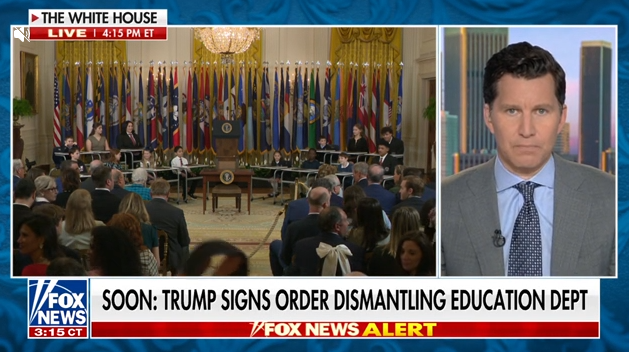
On March 3, the full Senate confirmed Linda McMahon as President Trump’s new Secretary of Education with a 51-45 vote along party lines. In a report about her confirmation, The Hill opined that “McMahon will have to catch up quickly, as the Department of Education has undergone multiple changes in the roughly six weeks since Trump took office.” Indeed she will, as her boss on March 20 signed an executive order calling for the shutdown of the department “except for certain critical functions.”
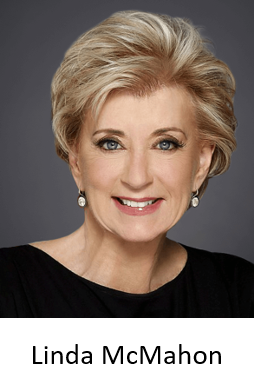
This latest development is hardly news to McMahon, who has declared her support for Trump’s position, explaining during her confirmation hearing how she envisions a shutdown could work. She emphasized that closing the department “wouldn’t mean eliminating its funding,” and pledged to present a plan “that I think our senators could get on board with, and our Congress could get on board with.”
Trump’s latest executive action impacting education indicates that the department would continue to maintain responsibility for Title I funding for low-income schools, Pell Grants, and the management of student loans, at least until such time as these programs can be moved to other agencies. However, on March 21, the president stated that the student loan portfolio would be moved to the Small Business Administration (SBA).
During her confirmation hearing, McMahon reiterated that defunding such programs “is not the goal here.” She said that, on the contrary, “I’d actually even like to see an expansion of Pell Grants. I’d like to see short-term certificates … for students who aren’t going on to four-year universities, who could have the opportunity to use Pell Grants for skill-based learning.”
Shocking overspending revealed
A Fox News story recently described “an alarming trend” uncovered by the fiscal watchdog group Open The Books. The organization’s research shows that staff levels at the Department of Education “have decreased since 2000, but the agency’s spending grew by 749%.” Despite this meteoric rise in spending, student NAEP scores have continued to plummet, as Education Reporter described just last month.
In response to the 20-year lows in reading and math scores revealed by the NAEP, the Trump Administration placed the commissioner of the National Center for Education Statistics (NCES), Peggy Carr, on leave. While [as yet] not an official termination, Carr’s dismissal came less than a month after the dismal NAEP results were released.
Appointed by the Biden Administration, Carr admitted when the NAEP results came out that the news was “not good.” The only positive sign —marginal at best— was a “slight” improvement in fourth-grade math scores. But as Open The Books’ data on the Department of Education shows, there has been no such decline in federal education spending.
The group’s research on the ed department “is part of a wider initiative to chart agency outlays versus agency spending in an effort to provide the public with ‘a clearer picture of the government as it stands.’” The group’s CEO, John Hart, told Fox News Digital:
- In many federal agencies, spending has outpaced not just inflation but also growing headcounts — often many times over. This begs an important question: Where is the money going? Taxpayers deserve to see the growth in spending in each agency so they can decide how many we need … If the excessive waste and fraud we’ve uncovered over the years — and DOGE is highlighting — is any guide, taxpayers may be better served by far fewer than 441 agencies, including the ones that are defunct.
In its quest for transparency, Open The Books has investigated 50 federal agencies thus far, often with shocking results: for example, the Federal Emergency Management Agency (FEMA) and the Agency for International Development (USAID). The group found that FEMA’s staffing levels reached “roughly 290% over the last quarter-century,” while spending grew “seven times faster at a rate of 2,096%.” At USAID, “staffing levels grew roughly 218% while spending grew about 468%.”
Open The Books charts government data as far back as it goes and makes its reports accessible to the public. The group will continue to publish relevant data as it moves forward with its analyses of federal agencies.
Ed Department fallout
In addition to President Trump’s latest EO abolishing the Department of Education, one of his previous executive orders prioritizes states with school choice options when awarding education-related grants. Newsweek reported that 15 U.S. states and the District of Columbia “have at least one universal private school choice program, which allows families to use taxpayer-funded education money to attend private schools, be homeschooled, or seek options other than local public schools.” At least 14 other states have “at least one private school choice program.”
While opponents whine that such programs penalize lower-income students, these are precisely the kids most choice programs are primarily designed to help. The NAEP results alone demonstrate that traditional public schooling is not helping disadvantaged kids.
NEA President Becky Pringle told Fox News that special needs students “won’t have the services they need” if federal education spending is curtailed. She employed the familiar excuse that “students who have more resources do better,” dismissing the reality of the NAEP results, as if the billions of dollars poured into public education since the Education Department’s creation have improved student outcomes at any level.
Newsweek reported that, according to an Education Week analysis, a total of 20 states “have tax-credit scholarships, 16 have Education Savings Accounts, 10 plus the District of Columbia have vouchers, five have direct tax credits and two have tax-credit educations savings accounts.”
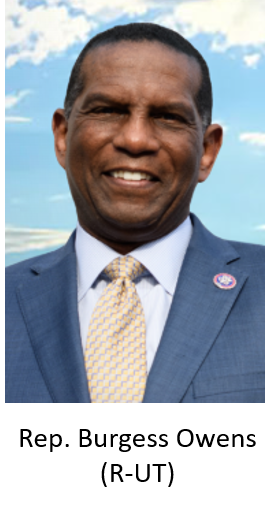
In January, Republicans in the U.S. Senate and House reintroduced the Educational Choice for Children Act, which was originally introduced in 2022 by Sens. Tim Scott of SC, Bill Cassidy of LA, Steve Daines of MT, and Todd Young of IN. Reps. Adrian Smith (R-NE) and Burgess Owens (R-UT), and Sen. Bill Cassidy reintroduced the bicameral legislation, which would provide “a charitable donation incentive for individuals and businesses to fund scholarship awards for students to cover expenses related to K-12 public and private education.”
The bill’s 30 co-sponsors in the House are promising to make it “ a top priority for the 119th Congress.” Rep. Owens said the Act “puts power where it belongs—in the hands of families, not bureaucracies.” He explained that it will allow “millions of students nationwide to access scholarships for tuition, books, and supplies—whether they’re in public school, private school, or learning at home. The days of tolerating a one-size-fits-all system that traps students in mediocrity are over. We will keep fighting to ensure that every child has a future filled with hope, opportunity, and the tools to achieve their American Dream, regardless of their race, income, or zip code.”
If passed, the law would provide $10 billion in annual tax credits for taxpayers, to be administered by the U.S. Treasury Department, with a base amount provided to each state and the tax credits distributed on a first-come, first-served basis.
It was amid this uncertainty that Linda McMahon took the wheel of the rapidly sinking ship that is the U.S. Department of Education. At the very least, it will be drastically cut back. She said recently: “Removing red tape and bureaucratic barriers will empower parents to make the best educational choices for their children. An effective transfer of educational oversight to the states will mean more autonomy for local communities. Teachers, too, will benefit from less micromanagement in the classroom—enabling them to get back to basics.”
More details will doubtless be forthcoming as to which responsibilities will remain with the education department until it is completely dissolved should that take place, and which will be handed off more quickly to other agencies. Education Reporter will continue to follow this important story.
Microcosm of Failure: Madison County Public School Students Can’t Read
The National Assessment of Education Progress (NAEP), also known as the nation’s report card, paints a bleak picture of student achievement nationally, but the NAEP and other state assessments drill down to the school district level in critical subjects such as reading and math.
The research organization Wirepoints has documented Illinois’ education failures, the most evident of which have occurred in the Chicago area and have been well publicized. (See Education Reporter, October 2024.) But the problems exist statewide, and an example is the lack of student competency in reading and math at several Madison County, Illinois school districts, located just northeast of St. Louis.
In the Alton Community Unit School District (CUSD) 11, only 24 percent of students are proficient in reading, and just 16 percent are proficient in math. Despite these dismal numbers, 73 percent of students manage to graduate in the district, and 100 percent of teachers are rated “excellent or proficient.” Per-pupil spending in the Alton CUSD 11 increased 45 percent from $11,737 in 2010 to $17,016 in 2024.
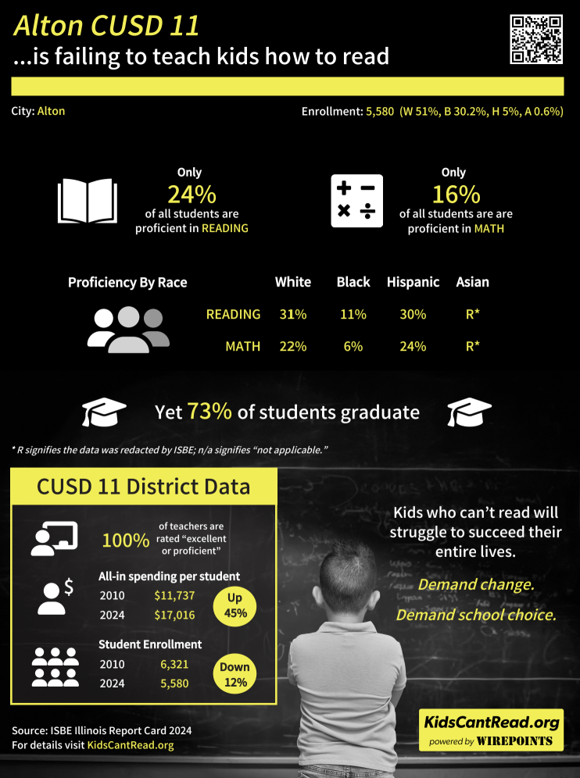
Students in the Highland, IL CUSD 5, fare somewhat better, with an overall proficiency rating of 47 percent in reading and 26 percent in math. Per-student spending in Highland rose from $10,002 in 2010 to $13,953 in 2024.
In the Roxana Community School District 1, only 30 percent of all students test proficient in reading, and 20 percent are proficient in math.
While each of these districts significantly increased their spending over the 14-year period studied, enrollment declined in all three. In Alton, spending rose 45 percent while enrollment decreased by 12 percent. Per-pupil spending in the Highland CUSD 5 increased 40 percent even as enrollment dropped 10 percent. The Roxana CUSD 1 recorded a whopping 97 percent jump in per-student spending, while its enrollment fell 17 percent.
Obviously, in this microcosm of performance results, the rise in spending did nothing to improve student proficiency in the critical subjects of reading and math.
It is perhaps ironic that student performance is so low in Madison County schools, particularly in reading, given that it was for many years home to the tireless champion of phonics instruction, the prominent author, Republican political leader, and pro-family advocate, Phyllis Schlafly. Phyllis often warned about the folly of abandoning phonics instruction for fads such as “whole language” or the “look-say” method.
Traditional public-school enrollment dropping
In June 2024, the Pew Research Center reported that traditional public school enrollment numbers “have shifted over the last decade,” with many districts experiencing declines. Pew documented that in the fall of 2011, “about 47.2 million students attended public elementary, middle, and secondary schools, accounting for 87% of all school enrollment. By fall 2021, the number of public-school students had dropped to about 45.4 million.” This trend has continued.
One reason for the decline is that many parents are turning to charter schools, as Education Reporter described in June 2022 and January 2024. While they are technically public schools, many charter schools offer what parents consider a better curriculum and classroom environment than traditional public schools. Many charter schools have long waiting lists and require testing and/or written essays to determine admittance.

In Illinois, nearly all the charter schools are located in the greater Chicago area, with a few in Rockford, and about a half dozen one-off charters operating in towns around the state, including the state capital of Springfield. There are no charter schools currently operating in Madison County.
Another factor is the growth of both homeschooling and what have become known as microschools. Approximately 3.7 million children are homeschooled, and an estimated 1.5 million more are enrolled in the approximately 95,000 microschools operating in the U.S. as of 2024. Some microschools dovetail with homeschooling.
Pew research further shows that private school enrollment, including parochial schools, has remained relatively steady, with historically about 10 percent of all students enrolled in these schools. It is therefore unlikely that private-schools have played a significant role in the declining public-school enrollment numbers, which have not only occurred in Illinois, but in school districts across the country.
Ultimately, the persistent decline in public-school enrollment, despite hefty spending increases, shows that parents are fed up with the issues plaguing traditional public education, and that throwing more taxpayer dollars at the problems has failed to solve them.
Most parents oppose the propagation of a leftist political ideology, which occurs to a greater or lesser extent depending on the school, even as their children are not learning how to read or do math. They are desperately seeking alternatives that fit with their budgets and lifestyles, and are removing their kids from public schools when they find them.
(Editor’s Note: Some information in this article was provided by Kurt Prenzler, executive director, Phyllis Schlafly Eagles.)
The Best and Worst of Times for Homeschoolers: Victory in Wyoming Tempered by Horrible Bill in Illinois
The Homeschool Legal Defense Association (HSLDA) had reason to rejoice earlier this month when Wyoming Governor Mark Gordon ® signed HB 46, the Homeschool Freedom Act, into law. The bill was introduced in the Wyoming House by Rep. Tomi Strock, a homeschooling mom, and promoted in the state’s upper chamber by fellow homeschooling mom, Sen. Evie Brennan, who is herself a homeschool graduate.
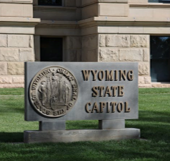
The new law removes requirements for homeschooling families to “submit curriculum to the local school board” or to notify, report to, or obtain approval to homeschool from state or local government officials. Globe Newswire reported that HSLDA’s senior counsel, Will Estrada, advocated for Wyoming families in support of the legislation.
“This is an important moment for homeschool families in Wyoming,” Estrada said. “The ‘Homeschool Freedom Act’ affirms the fundamental right of parents to direct the education of their children without unnecessary government intrusion. We commend Representative Tomi Strock and Senator Evie Brennan for their tireless efforts in championing this vital legislation.”
The Wyoming celebration is bittersweet, as potentially disastrous legislative efforts are underway for homeschooling families in Illinois. In Virginia, Senate Bill 1031 recently died in committee after a successful effort by HSLDA, the Home Educators Association of Virginia (HEAV), and the state’s homeschooling community. This bill would have removed the religious exemption for homeschooling that had been in place in Virginia since 1976.
Battle in Illinois
Illinois families face an uphill battle against an egregious anti-homeschool bill. H.B. 2827, known as the Homeschool Act, passed out of the state legislature’s Education Policy Committee by a vote of 8-4, and is expected to be voted on by the full house before the end of March. It will then go to the Illinois Senate and finally to the desk of Gov. J.B. Pritzker, who is likely to sign it, although he has not publicly taken a position for or against the bill.
Opponents say the legislation places an undue burden on homeschooling families, establishing requirements that, if not met, could result in jail for noncompliant parents. A headline in The Federalist summed up the issue in the deep blue state. It read: “Illinois bill would let failing school system send homeschool parents to jail.”
The proposal would require homeschooling parents to prepare a “portfolio” of their children’s work whenever local school district officials might deem necessary, e.g. “at any interval and frequency,” and must meet the officials’ satisfaction. Homeschooling parents will be required to report themselves in writing to their district officials, beginning in 2026.
WorldNetDaily journalist and editor, Bob Unruh, pointed out: “Parents who do not [submit their paperwork] will be considered truant. They face Class C misdemeanor charges, which are punishable by up to 30 days in jail. They also face fines and lengthy hearings forcing them to comply with the Act.” Additionally, violations of the proposal could subject parents to “investigations by state child welfare officials.”
HSLDA’s Estrada warned that, as written, the bill is “open-ended for unelected, unaccountable bureaucrats to be able to write different sections of regulations. If this bill is passed into law, it’s going to be expanded in future years to put even more restrictions on homeschool and private school families.”
An editorial in the Chicago Tribune on March 11 pinpointed what some observers believe is the primary reason for the legislation. The bill’s authors wrote: “Homeschooling is currently the fastest growing form of education in the United States. The true number of homeschooled children is likely to remain unknown without adequate notification and oversight.” The message is clear that the failing Illinois public schools are losing students, as are many others across the nation, which costs the school districts money. Illinois government officials obviously believe corralling and controlling families who have escaped the state’s public-education system is the solution to the problem.
Activist ‘Teach-In’ at University of Michigan Disparages Trump, Musk
A teach-in on February 12 at the University of Michigan was obviously held for the purpose of vilifying President Donald Trump and Elon Musk, describing them as “lawless, anti-democratic” extremists acting “to the detriment of the country.”
A headline for the event stated: “U.S. president and the richest man in the world are challenging constitutional precedents and about to collide with the courts.” The theme of the teach-in was presented in the form of questions: “Why is this happening? What is at stake? And what can be done about it?”
According to Jennifer Kabbany, editor of The College Fix, the teach-in was conducted by “a parade” of 10 professors representing a variety of fields, including “public policy, law, political science, business, and communications.” Each spoke for about 10 minutes to an overflow crowd of several hundred students in the University’s Angell Hall auditorium. Another room had to be set up to accommodate the overflow audience.

Among the speakers was business professor Jerry Davis, who bemoaned that “Big Tech and Silicon Valley used to actively support left-wing causes — but no more.” Using a recently coined derogatory term, the “Nerd Reich,” he said Musk and his friends “don’t believe in democracy … They are clearly enthralled by an anti-Democratic ideology.” Davis opined that the “Big Tech founder class sees themselves as the ‘makers,’ and others as the ‘takers.’”
Law professor and legal historian, Julian Davis Mortenson, told students President Trump is “overstepping his constitutional powers,” and charged that [his leadership] is an “assertion of regal imperviousness to the obligations of the law that not even — literally — King George at the revolution asserted.”
Mortenson huffed: “It’s scary stuff…. Right now, my hair is on fire and I am unsettled and maybe even scared about the republic in a way I haven’t been perhaps since after September 11,” as though leftists actually believe in the U.S. as a constitutional republic. Such inflammatory [and baseless] rhetoric was doubtless unsettling to many in the young audience.
Professor of political science, Vincent Hutchings, whose faculty bio adds that he specializes in “diversity and social transformation” as well as “Afroamerican and African Studies,” spoke on the subject of what motivates the electorate. He asserted that “a majority of white Americans have voted for the Republican presidential candidate and that ‘the racial divide is the biggest divide in American politics.’” He apparently ignored the fact that African Americans voted for Trump in respectable numbers, choosing instead to exploit the tired myth of racism and “white supremacy.”
Hutchings claimed: “The black-white divide is bigger than the gender gap, it’s bigger than the class-education gap … it is the foundation of the current party system in our country.”
Other speakers advanced the notion of Republican “megadonors,” and accused this hypothetical wealthy group of transforming the Republican party and making demands to cut “highly popular government programs.” Professor Robert Mickey claimed these “‘megadonors’ are demanding radical cuts to the regulation of business, and demanding the nomination of extremist judges committed to interpreting the constitution in ways that would result in major cuts to the regulation of business.”
Conservatives might logically observe that this is another instance of the left accusing the right of exactly what the left is doing; in this instance nominating and promoting activist judges to advance its political agenda. Phyllis Schlafly often warned during her lifetime about liberal judges “legislating from the bench.” (As an example, see the Phyllis Schlafly Report — September 2004.)
Professor Mickey further charged that “white Americans” are panicked about “the ownership of the country,” and that they are “united by concerns over immigration.” This assertion was doubtless intended to suggest to the captive audience that legitimate concerns about open borders and illegal alien crime are actually unfounded and even racist.
Mickey accused the Republican Party of no longer being committed to “Democracy,” a favorite term of the left, and said “he’s surprised the GOP has connected with the blue-collar class with an ‘unpopular’ policy agenda.” His last statement revealed a level of ignorance despite his academic status. If Trump’s message resounded with blue-collar voters as it did with the Republican base, then obviously it was popular.
One student who attended the teach-in spoke afterward to The College Fix, expressing his disappointment in its “one-sided nature.” He spoke on condition of anonymity fearing reprisal, indicating that students who disagree would likely be ostracized or worse. He added that he felt “many of the professors’ assertions were either hyperbolic or flat out incorrect.”
“It’s unfortunate that Michigan tax dollars are funding these kinds of blatantly partisan faculty activism,” the student said. “The ultimate irony is that it was promoted across campus as a totally ‘neutral’ forum for discussion.”
The College Fix also exposed the University of Michigan’s event on X. The post includes a short video and a link to Kabbany’s full article about the event. In response, one commenter urged: “Encourage young people to go to trade school. College is a waste of money.” Another posted: “Trump ran on Elon running the DOGE effort. Voters gave them the win. Suddenly, Marxist professors don’t like Democracy anymore.”
Many conservatives worry about such unanswered propaganda falling on impressionable ears, especially in conjunction with persuasive professors and peers. They point out that if these activist sessions are happening at the University of Michigan, it’s likely they are happening in colleges and universities across the country. One consolation may be that the Trump Administration seems aware of what’s going on in higher education, and is moving to address the problems at all levels of the U.S. education system.
Mallard
What a Character! Notable Lives from History
By Marilyn Boyer, Master Books, 2024
The recommendation for this 10-book historical series comes from an Education Reporter reader, who described the set as “a wonderful resource for teaching history with a Biblical view; ideal for ages 4-8 but enjoyable for any age.” We took her advice and are glad we did.
This 10-book collection brings historical figures and events to life. Each book focuses on a specific theme, such as inventors, pioneers, spies, presidents, and even animal heroes, and the variety of themes is likely to keep kids interested while teaching them with historical accuracy.
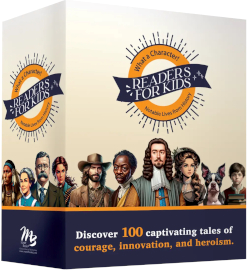 The stories are designed to inspire readers with tales of courage, perseverance, and faith, often highlighting the values and character traits that drove these individuals to achieve greatness. The stories epitomize what made America great.
The books can be used as independent reads or for students to practice reading aloud, such as in a homeschool class setting, a microschool, or to supplement public or private-school reading and language arts classes. They include “definitions of challenging words” to help broaden the student’s vocabulary. A few of the books include short articles that expand on the main topic. For example, in America’s Famous Spies, short articles on the War of Independence, the Civil War, and World War II provide context for the activities of the spies.
The 10 books include:
- Amazing American Presidents, which profiles 10 of America’s greatest leaders, including George Washington, Abraham Lincoln, Teddy Roosevelt, and Ronald Reagan, to name a few.
- America’s Famous Spies, features Nathan Hale, Lydia Darragh, and several other spy figures during the War of Independence; Belle Boyd and others during the Civil War; and the Ghost Army and the Navajo Code Talkers during World War II.
- America’s War Heroes profiles, among others, Ethan Allen during the War of Independence, David Farragut during the War of 1812, Sergeant York during World War I, and Desmond Doss during World War II.
- Extraordinary Animal Heroes features 10 animal stories, and is doubtless a children’s favorite. While six of these “heroes” are dogs, also profiled are a donkey, a pigeon, a bear, and a horse.
- Famous American Statesmen describes such stalwart figures as Benjamin Franklin, Patrick Henry, Francis Scott Key, Daniel Webster, and more.
- Famous Pioneers and Frontiersmen tells the stories of American explorers including Daniel Boone, Elizabeth Zane, Davy Crockett, Lewis and Clark, Kit Carson, Wild Bill Hickok, and more.
- Famous Women in History includes Abigail Adams, Dolley Madison, Florence Nightingale, Annie Oakley, Amelia Earhart, and several other famous historical female figures.
- Heroes of Early America brings to life the bravery of Captain John Smith, Myles Standish, Pocahontas, William Penn, Noah Webster, and other colorful early American heroes.
- Heroes of the War for Independence expands on a few of the profiles in the earlier books by bringing to life Paul Revere, Betsy Ross, John Sevier, Nathanael Green, the Marquis de Lafayette, and others.
- Inventors and Scientists tells the stories of heroes who pioneered America’s great scientific breakthroughs, including Eli Whitney, Robert Fulton, Samuel Morse, Louis Pasteur, Thomas Edison, Booker T. Washington, the Wright Brothers, and several more.
All the books contain colorful illustrations on most pages that enhance the various stories, especially for younger readers. They provide a welcome alternative to the revisionist, woke history to which many American children are subjected.
This reviewer believes the series can only deepen students’ knowledge of our history and increase their love for their country and for learning. As the books can be used and reused, passed along to other family members and be enjoyed by adults, the series should prove well worth the price.
To read the entire book, go to Master Books to order!
Education Briefs

A recent Fox News online post explains the why of the homeschooling surge and suggests that parents are likely to continue the trend in 2025. Fox summarized an article by Home Addict in the format of a slide deck, which points out that homeschooling is an educational choice that “has moved from fringe to mainstream,” with 3.7 million homeschooled children currently representing “6.73% of all K-12 students.” Texas and Georgia lead the pack in homeschooling numbers, with 8.1% and 7.9% of all students homeschooled respectively in those states. Despite their leadership, Fox reports that Florida, Tennessee, and Indiana now “top the list of states seeing an influx of education-focused families,” having eliminated cumbersome reporting requirements and expanding tax benefits for homeschoolers. Real estate professionals in these states are experiencing increased requests for homes as forward-thinking parents seek homeschool-friendly places to live. Despite the stereotype of socially handicapped homeschooled kids, Home Addict contends that their social skills actually improve, citing National Home Education Research Institute (NHERI) studies showing that “87% of research indicates homeschooled children have better social skills than peers.” This is because 90% of homeschoolers participate in weekly sports, volunteering, homeschool co-ops, or other community activities, which provide beneficial interaction with both adults and peers. Home Addict contends that the motivations prompting parents to homeschool in lieu of public education include divisive sex and other “woke” curricula, safety concerns in an increasingly violent school environment, and general frustrations with public-school systems, all of which are likely to continue at least temporarily in 2025.

The 71,000-student Fresno, California Unified School District (FUSD) stands accused of “hiding” academic support programs from white students. A WorldNetDaily article explained that the FUSD, the third largest school district in the state, instituted an “Office of African American Academic Acceleration” in 2017, which focuses exclusively “on mentoring African American middle and high school students.” The office currently “runs 13 various programs with a $12 million [taxpayer] budget” that, while not specifying a racial requirement, exclude other students by marketing exclusively to African Americans. These programs have caught the attention of the Pacific Legal Foundation (PLF), which has mounted a challenge to the FUSD on behalf of the Californians for Equal Rights Foundation (CFER) for “unlawfully gating access to the student help programs.” PLF lawyer Wilson Freeman called the exclusion “unfair and unconstitutional,” whether it is “explicit or implicit.” Freeman explained that “taxpayer-funded academic support programs should be available to all students based on need, not race. FUSD’s practices violate multiple legal protections, including the Fourteenth Amendment’s Equal Protection Clause, the Civil Rights Act, and California’s Proposition 209.” The legal action charges that FUSD administrators instruct teachers to inform “only African American parents and students about these opportunities, leaving other students unaware.” The PLF points out that “academic need doesn’t discriminate,” but can affect students of any race who may need extra help “to reach their full potential. This includes children whose parents belong to CFER, a non-profit group that fights for equal treatment under the law.”

Amid the most recent dismal NAEP results, a shining star emerged. Students in the state of Mississippi were the only ones to achieve impressive gains in reading. From the poorest state in the union, which ranks the fourth-lowest in per-pupil education spending, comes the news that fourth-grade reading scores were the highest in the country. The 74 summarized these gains in an article titled There Really Was a ‘Mississippi Miracle’ in Reading. States Should Learn from It. Given that the overall NAEP scores were so low, it may be tempting to question the importance of these results, but Mississippi “raised the bar and the floor” at the same time, as both the highest and the lowest student reading scores rose. The 74 reported that “Mississippi is also the only state to see gains across all performance levels over the last decade … Its black students rank third nationally, and its low-income kids outperform those in every other state.” What is the basis of Mississippi students’ success? The answer may be gleaned from the Mississippi Department of Education’s Leading in Literacy overview. The stated core beliefs include: “All students deserve access to evidence-based literacy instruction using standards-aligned, high-quality instructional materials (HQIM) grounded in the Science of Reading,” a.k.a. phonics-based instruction. The overview also states: “All students deserve explicit, systematic literacy instruction that spans birth to grade 12 and must occur across the curriculum for students to experience success in achieving literacy proficiency needed for college and workforce success.” (Emphasis added.] Enough said.
Yes, American Education Can Survive Just Fine Without Federal Department

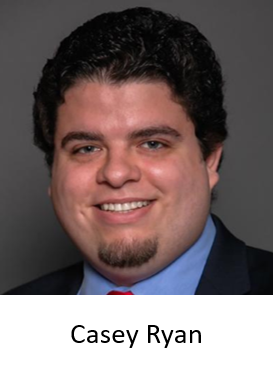
By Casey Ryan, Daily Caller News Foundation Contributor
Originally posted on The Daily Caller website, March 18, 2025. Reprinted by permission.
Despite President Donald Trump’s plan to dismantle the Department of Education (ED), he is currently using the agency to hold schools promoting antisemitism, gender ideology, and equity, diversity and inclusion (DEI) accountable. This poses a new question that must be addressed. How can the administration continue to hold schools accountable when the department no longer exists?
In recent weeks, the Trump administration through ED cut $400 million in federal funding from Columbia University over incidents of antisemitism, including an anti-Israel encampment in 2024.
ED then followed by launching investigations into more than 50 universities for using “racial preferences and stereotypes in education programs and activities” and for “allegedly awarding impermissible race-based scholarships.” The department is clear in that these actions “can result in loss of federal funds.”
There is concern that the Trump administration may lose its grip on this authority if the department is eliminated or significantly downsized. While this is a legitimate concern, the administration will still have the power to hold bad actors accountable.
ED is relatively young and was only created in 1980 after then-President Jimmy Carter signed legislation into law creating the agency. Before then, a separate Office of Education existed from 1867 until that point.
This office originally served the purpose of “providing educational information to the state and local education authorities” with only three people serving as staff at the start. This remained the office’s objective until 1965 when then-President Lyndon B. Johnson signed the Elementary and Secondary Education Act into law.
This new law increased the federal government’s role in education while reducing local control. The federal government would then account for 8% of public school budgets. Johnson essentially paved the way for what would become today’s ED by growing the federal government’s role in the education system.
For the majority of its first seven decades, the Office of Education existed within the Department of the Interior (DOI). In 1939, then-President Franklin D. Roosevelt moved the Office of Education to the Federal Security Agency, which was a short-lived government agency that dissolved in 1953.
After the dissolution of the Federal Security Agency, then-President Dwight D. Eisenhower created what is known as the Department of Health and Human Services (HHS) and transferred the Office of Education to this new agency. This department handled education issues until the creation of ED in 1980.
As Trump works to dissolve ED and give more power to the states, functions such as providing federal funds to America’s schools can be given back to the DOI or HHS, or even to the Department of Treasury. All these options would be great alternatives for upholding the federal government’s downsized role in education.
In fact, dissolving ED should have no impact on holding schools accountable. The administration would only need to move specific offices dealing with funding and continue business as usual on this front.
Take the University of California (UC) system, for example. UC has approximately 300,000 students now with $50.1 billion in funding for the 2022-2023 school year. Data from 2024 revealed that nearly $16 billion of the university’s funding was from the federal government.
Each campus within UC expends resources on DEI staff and race-based “advisory councils” as well as segregated affinity groups for employees. UC also has policies that mandate the recognition of “nonbinary” as a gender and “clear and continuous prioritization of diversity by Chancellors, deans, and other administrators” to increase “racial diversity.”
As long as UC wastes funding on DEI and gender ideology, the university system certainly does not need federal funding. Regardless of whether the responsibility of education funding belongs to the DOI, HHS, or Treasury Department, the administration will have the same power to cut UC’s funding until the university chooses to use its resources wisely.
ED did not exist until 1980, and the authority over education matters fell under other jurisdictions up to that point. Dissolving ED only eliminates waste that should have never existed in the first place. The offices that ensure the executive branch can hold bad actors accountable can easily be folded into other agencies. Trump can continue to clean up our nation’s education system without a hitch once ED is eliminated.
Casey Ryan is a writer and investigative reporter at Parents Defending Education.
The views and opinions expressed in this commentary are those of the author and do not reflect the official position of the Daily Caller News Foundation.
Education Related Links


Reader Books Flyer 2025