‘Social-Emotional’ Learning (SEL) Standards Coming to a State Near You
Parents who are lucky enough to live in one of the more than 20 states that have not officially standardized SEL requirements should be aware that they are likely to be coming soon. For example, the state of Missouri’s board of education is on the cusp of adopting new social-emotional learning standards, with the public comment period having closed on September 15, 2023.
The Missouri Independent newspaper wrote on August 30 that state education officials are “cautiously” moving ahead with plans to implement “social-emotional learning standards for all Missouri students,” but that they are worried about what the newspaper called “political blowback.”
This is because many Missouri parents, conservative activists, and politicians know that SEL is about twisting kids’ minds to embrace CRT, LGBTQ, and other leftist agenda items, and that it’s also a scheme to collect comprehensive data on every student, over and above what’s already being gathered and stored.
What SEL is NOT about, as proponents claim, is helping students “gain confidence, emotional intelligence, and social skills….” However, the assertion that “those benefits spread from the schools into families and communities,” is probably correct. Brainwash the children and they are likely to bring the doctrine home to their families, friends, and neighbors so that before long everyone is embracing the tenets of Marxism.
The Independent quoted Missouri State Board of Education Chair Charlie Shields as admitting that “People are just going to attack and say, ‘Well, this (SEL) has no part in education.’” But instead of accepting that most parents and concerned citizens don’t want leftist indoctrination and mind control in their public schools, Shields doubled down saying: “As we move this forward, I think it’s imperative to frame it as: This is what has to happen for learning to take place.”
To some observers, his remark could be construed as a threat: If we can’t teach your kids what to think, feel, and believe according to our globalist agenda, we’re not going to teach them anything. Anyone who is aware of the National Assessment of Educational Progress (NAEP) scores realizes that public schools aren’t currently teaching much in terms of academics anyway.
SEL origins 100+ years old
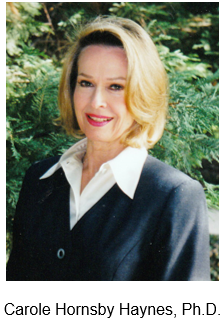
National education policy analyst, advisor, commentator, writer, and historian Dr. Carole Hornsby Haynes wrote in Education Reporter in 2021 that “the concept of conditioning and/or training children to adopt specific behaviors has been around since the early 20th century.”
The term social-emotional learning itself was invented in 1994 at a meeting hosted by The Fetzer Institute, whose founder, John Earl Fetzer, was a disciple of Alice Bailey, the occultist and organizer of the Lucis Trust. Although Fetzer died in 1991, his organization lives on, describing itself as “a Community of Freedom,” with its purpose and activities couched in the vague language of new-age spirituality.
Dr. Haynes wrote that SEL “first gained a foothold in federal law with Clinton’s Goals 2000” and was “designed to change student attitudes, values, and beliefs.” In order to get federal funding, states had to adopt the statute’s National Education Goals. She noted: “The ESEA’s reauthorization as Goals 2000 mandated state curriculum standards and standardized tests, circumventing local control. This led to more federalized control with No Child Left Behind, Race to the Top/Common Core, and the Every Student Succeeds Act (ESSA). SEL was key in all of these.”
SEL’s international connection
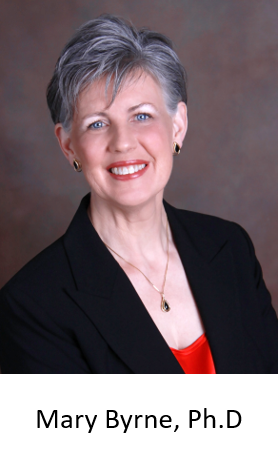
Dr. Mary Byrne, longtime educator, co-founder of the Missouri Coalition Against Common Core, who currently serves on Missouri’s academic standards work group for secondary history, tells Education Reporter that SEL standards are being implemented on a global scale. Byrne states:
- The United Nations Educational, Scientific, and Cultural Organization (UNESCO) is a primary force behind the SEL movement worldwide. A major way UNESCO advocates for SEL is through its Mahatma Gandhi Institute of Education for Peace and Sustainable Development. SEL Is key to achieving the UN’s Sustainable Development Goals. In UNESCO’s view, the endgame of SEL is not to meet the social and emotional needs of each child, but to shape all children to meet the needs of a global society by adhering to the sustainable development goals.
She adds that the UN and other non-governmental organizations (NGOs) “are putting tremendous pressure on states in this country to adopt SEL standards. They use indirect pathways to push their agenda through their partnerships with education-focused NGOs, such as the Council of Chief State School Officers (CCSSO).”
One ardent supporter and purveyor of SEL is the Collaborative for Academic, Social, and Emotional Learning, better known as CASEL. Byrne notes that CASEL “also heavily lobbied Congress to appropriate grant money for the promotion of SEL in K-12 classrooms” through the previously mentioned ESSA and COVID relief funding. Since 2021, federal COVID relief funds have been pouring into the schools through the Department of Elementary and Secondary Education (DESE).
The August 2023 Update on Social-Emotional Learning Standards from the Missouri Department of Elementary and Secondary Education under the topic of “CORE Skills” reads: “MO students with strong CORE skills are better equipped to become successful students and productive contributors to a global society.” [Emphasis added.] There is no mention of students learning to become contributing citizens of the United States of America or to the state in which they live.
Dr. Byrne observes: “The most fundamental problem with SEL is that no one knows what it is.” She points out that according to the international NGOs that are shaping education policy in the U.S., “SEL is a replacement for theistic-based religious instruction,” and says “it doesn’t end there.” Her research shows that at least one document acknowledges SEL’s mental health aspect. “SEL is bundled with mental health services as part of a comprehensive mental health service delivery model. This is very dangerous, because now, without any cohesive agreement about what SEL is, standards of what is considered ‘normal’ conform to third party value systems, not the students’ families, and are assessed to measure student ‘success’ in conforming to these standards.”
Creating parent awareness
The national pro-parent group Moms for Liberty is also tackling the issue of SEL. Moms co-founder Tiffany Justice describes the standards as “horrible,” charging that SEL “tries to get kids to ignore their instincts and turn against their parents and the values they’ve been taught at home. It turns them against what they know instinctively is right and good.
“It destabilizes the child,” she continues. “It opens kids up to indoctrination.” For these reasons, SEL is on the group’s radar, and its leadership is working to raise awareness among its extensive network.
A number of other education-focused conservative voices have warned about SEL in recent years. The September 2018 issue of Education Reporter noted: “One way social and emotional learning is cropping up in schools has to do with normalizing the abnormal. Some schools are not only subjecting students to drag queens … but students and parents whose moral compasses tell them something is amiss are subjected to harassment and re-education under the guise of SEL.”
A company called Ripple Effects, which describes itself as “a woman-owned social enterprise,” markets SEL programs for pre-K through grade 12. The company’s website defines SEL as follows:
- S is for social – strengthening the connective tissue between self and others, both interpersonal relationships and the wider social contexts that impact how people experience themselves and others.
- E is for emotion – recognizing feelings, naming them in ways that make personal and cultural sense, understanding their changing nature and how they impact perception — managing their intensity and expressing them in ways that empower the feeler while also respecting others.
- L is for learning – specifically learning the non-academic things that enable people to develop a strong sense of themselves, get along, and get ahead in an increasingly diverse and fast changing world. [Emphasis added.]
This explanation confirms that SEL has nothing to do with teaching academics and everything to do with molding the attitudes and feelings of impressionable children according to the doctrine of globalist progressives. A closer look at Ripples Effects’ founders calls into question their fitness to influence education at all, let alone manipulate the psyches of children. For example, founder Alice Ray is a media producer and co-founder Sarah Berg is a technologist. Their company references CASEL on its website, an indication that SEL promoters work in lockstep to advance their agenda.
The need for data collection
In order to make sure SEL standards are effective, tracking and amassing data are key elements. The development of technology has come a long way since Phyllis Schlafly warned repeatedly of the dangers of collecting data on schoolchildren before her passing in 2016. Phyllis wrote in 2010: “The building of databases that track students from pre-school through entry into the workforce began with the emphasis in the 1990s on testing and standards, and was expanded under ‘No Child Left Behind’ mandates. This data collection has been proceeding at what observers call a ‘breakneck pace’ under the Obama Administration because of the offer of federal grants awarded through the Race to the Top competition, the American Recovery and Reinvestment Act, and $250 million in Stimulus funds.”
The success of student re-education under SEL depends on data mining and tracking. Even the NAEP assessments now measure social-emotional characteristics, a violation of federal law and the Fourth Amendment right to privacy.
About the Missouri standards
The proposed K-12 Social-Emotional Learning Standards from the Missouri Department of Elementary and Secondary Education appear below, prefaced by the assertion that “Students will demonstrate…”:
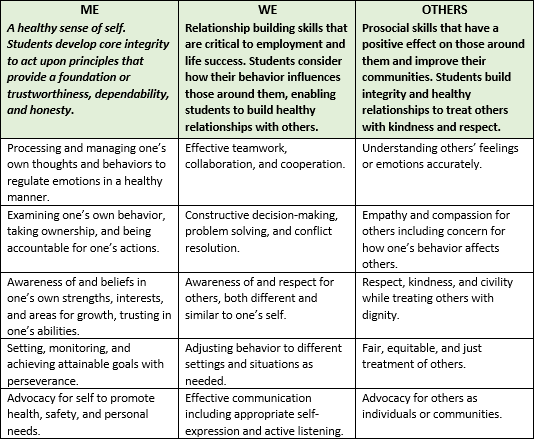
To even the casual observer, these standards are vague and subjective. For example, whose principles will determine how the “ME” standard is put into practice? Who decides if a student is managing his or her “thoughts” in a healthy manner and what are the criteria? Whose definition of what is “healthy” will be the determining factor in whether a student is achieving the recommended standard?
In the “WE” portion, who determines what is “appropriate” self-expression? For example, how will schools handle the child who wants to pray before a meal or a sporting event?
As for the “OTHERS” standard, who will decide which “prosocial skills” have a positive effect? Common Core curriculum standards have cemented federal control in the ESSA, which changed the primary purpose of education from academics to social engineering under the banner of SEL.
Most parents and educators expect students to treat each other with respect and be able to cooperate with each other on assignments and projects as needed. But many parents believe this is as far as the schools should go if they are to focus on academic learning, which by now most agree they do not.
A possible solution
According to Dr. Mary Byrne, both our elected state officials and education bureaucrats “are under tremendous pressure from their Washington, DC-based trade organizations to create education policy that conforms to the NGO SEL agenda despite the will of the people of their state.”
She adds that it is government officials working for the NGOs and furthering those agendas rather than respecting the will of the people “who are responsible for the growing distrust the American people have of government at all levels.” She believes the solution is “to clean house” of government officials who ignore their constituents, as well as to “stop taking federal money, and re-establish local control of education at the school board level.”
The one ray of hope is the growth and influence of parents’ rights groups like Moms for Liberty, and the legislative advances being made in many state legislatures throughout the land. By virtue of his comments to the Missouri Independent, education chair Shields is acknowledging that parents oppose these globalist intrusions into local public education, and that they are watching.
Building Blocks for Liberty Builds Allegiance to Constitution
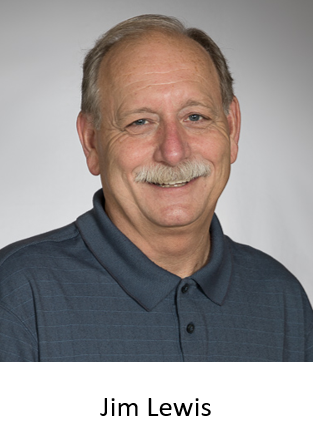
Ask Marine Jim Lewis about Building Blocks for Liberty (BBFL), and he’ll describe a 501c3 non-profit organization dedicated to the preservation of the U.S. Constitution by educating American citizens one group at a time. Education Reporter caught up with Lewis recently, and his pride and passion for our uniquely American document comes through loud and clear.
“Unfortunately, many people today don’t understand that the Constitution is the rule book for how our federal government is supposed to operate,” Lewis says. “Building Blocks for Liberty is committed to changing that.”
“Our Founding Fathers were not dummies,” he continues. “They created a Constitution that clearly defines the separation of powers. When you read it for yourself and know where to look for additional understanding as to the Founders’ intent, you will understand exactly what authority was delegated to each branch of the federal government.”
Summing up the work BBFL does, Lewis explains: “We essentially give genealogy classes on the U.S. Constitution and founding principles, including the words of our Founders, so that attendees can understand its concepts and how the Constitution applies to our various levels of government. We also speak to numerous groups in a variety of venues and hold special events.”
One example of the work they do is conducting “Constitution Boot Camps,” which are five-hour, instructor-led workshops using materials attendees can take with them after class. Describing the boot camps as “apolitical,” Lewis explains that they cover topics including “natural law, the enumerated powers as found in Article I, Section 8 of our Constitution, judicial case citations, the constitutional theory of nullification, the concept of a Republic versus a Democracy, and more.”
Boot camp participants receive a binder with the presentation, several books including The Federalist Papers, The Handbook For We the People, Bastiat’s The Law, and The Citizens Rule Book, The Patriot Primer, plus a pocket copy of the U.S. Constitution. The organization provides all this for $25, and additional family members can attend for just $5 each.
BBFL also offers its boot camp program on video, with four 45-minute presentations available that users can view at home, at church, as part of a homeschool class, or with family, friends, and neighbors. “This way,” Lewis points out, “people can host their own boot camp classes. We also include a teacher’s guide to help users conduct the classes themselves. The Handbook was written as a textbook,” he adds, “for further study or reference after the in-person or DVD boot camp presentations.”
A fruitful partnership
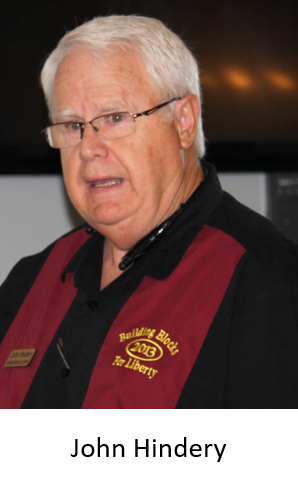
BBFL was officially established in 2013 by Jim Lewis and fellow Marine John Hindery. Both men served four years in the United States Marine Corps, where they took their oath to uphold and protect the Constitution. Following their tours of duty in the armed services, they became “increasingly alarmed about the endless attacks on the liberties of Americans by an overreaching government.”
The Daily Citizen describes a survey that shows many Americans “are entirely unaware of the basic freedoms they enjoy and are ignorant of key facts about the U.S. Constitution.”
The 2023 Annenberg Constitution Day Civics Survey found “disheartening statistics,” such as that only five percent of all survey respondents could correctly name “all five rights guaranteed by the First Amendment to the Constitution.” Thirty percent named three or four of the five rights, with forty-six percent able to name only one or two, and twenty percent unable to name any of the five rights protected by the First Amendment.
Seventeen percent of those surveyed could not identify any of the three branches of the federal government. Ten percent could name only two branches, and seven percent could name only one.
Annenberg Public Policy Center Director Kathleen Hall Jamieson said, “it is worrisome that one in six U.S. adults cannot name any of the branches of government and that only one in twenty can name all five freedoms protected by the First Amendment.”
The Annenberg civics survey has been conducted annually on Constitution Day, September 17, since 2004.
The Daily Citizen noted that,
- As a representative democracy, the American people are responsible for the government of the United States. We, as voting citizens, direct her course and guide her future.
- Without knowledge of how our Constitution works, we cannot exercise our role in self-government in a prudent and wise way.
- When it comes to educating the public in civic knowledge, as this year’s Constitution Day survey shows, there’s still much work to do.
To offset the misinformation and threats to freedom they witnessed on a daily basis, Lewis and Hindery combined their love of history with their desire to educate the public about the Constitution by forming their teaching partnership. The two were joined in 2016 by Bob Hilliard, author of The Handbook For We The People. Hilliard completed his education at Stephen Austin University in Texas after serving for two years in the United States Navy, and he is now a member of the BBFL board. While the organization is based in Ohio, Hilliard heads the Texas contingent.
Lewis explains that Hilliard spent nine years in serious study of the Constitution “and wanted to teach others what he had learned, so in March 2016 he held his first Constitution Boot Camp in Texas.” To date, BBFL has held more than 100 such workshops in Ohio, Indiana, Kentucky, Michigan, North Carolina, and Texas.
The very first Constitution class was held in 2011 as a 10-week course meeting once a week. Requests poured in to shorten the class, and in 2013, the first one-day Constitution Boot Camp was born as part of BBFL’s comprehensive constitutional education program.
Opposition to a Convention of States
One thing that comes through loud and clear when speaking to Lewis is his group’s opposition to a Con Con, and they offer classes on why it’s a bad idea. BBFL’s website includes an informative article titled Convention of States: “Guidelines” for Writing Amendments to the Constitution, which begins by stating that the “Convention of States (COS) is once again proving it has no understanding of the Constitution or the principles upon which it was established.”
The author, Joe Wolverton, II, J.D. provides common-sense arguments against a con con. He points out, for example, the fact that “state legislators, governors, and judges are already ‘bound by oath or affirmation to support this Constitution.’ That hasn’t stopped state governments from colluding with the federal government in the consolidation of power into D.C. That hasn’t stopped state governments from participating in every unconstitutional plan, policy, act, order, and opinion that comes out of Congress, the White House, or the Supreme Court.”
He continues: “The point is to show that there is a way to force the federal beast back inside its constitutional cage without running the risk of an amendments convention that could so easily and uncontrollably exceed its authority and all but amend the Constitution out of existence: Article VI.”
The late Phyllis Schlafly would doubtless agree with Wolverton. Just months before her passing, Phyllis wrote of the Convention of States project, which she had long opposed:
- Article V of the Constitution has only 22 words about a convention for proposing amendments. The most important is the word “call.” Only Congress can “call” the convention. That means states have no control over who can be a delegate, who makes the rules, who sets the agenda, or who wields the gavel. Some conservatives assume that a constitutional convention would propose only conservative ideas like a balanced budget. We cannot assume something like that as long as Congress has total control over the proceedings. The constitution we have now is the best political document ever written. It would be foolish to try to make changes to it through a Convention of States.
BBFL Special events

On August 26, BBFL held an educational conference called Faith, Family & Freedom in Sharonville, Ohio outside Cincinnati. The lineup of speakers included Pastor Matt Trewhella, author of Doctrine of the Lesser Magistrates, Holly Adams of Turning Point USA Faith, and more. Joanna Martin (aka Publius Huldah), spoke about the folly of hosting an Article V Constitutional Convention and “what the Founding Fathers said we should do about federal overreach.” Constitutional attorney and president of Greater Cincinnati Right to Life, Rachel Citak, joined Pastor Trewhella in covering the topic of marriage, family, and the sanctity of life.
In addition to events like these, as well as speaking to church congregations and homeschool consortiums, BBFL offers a standard class on the Constitution for students in middle school on up through high school, which is the group’s target market. “We’ll go into any school where we are invited,” Lewis explains, “because we believe providing these tools to young people is critical. In fact,” he continues, “we offer a class for children as young as five years of age, although we obviously keep it simple for them. But it does prepare them for the more advanced concepts of American liberty based on constitutional principles that they’ll learn later on.”
Besides the states previously mentioned, BBFL’s crew teaches classes as far away as Pennsylvania. For those who want more than a one-day workshop, there is a 12-week class taught by BBFL instructor Rob Tuttle that includes more history.
Anyone interested learning more about the Constitution or who would like to request a class for their church or school, may do so by accessing the BBFL list of classes and speaker events on the website. The group is currently scheduling classes for 2024. Visitors can fill out a form to receive email updates about new developments and upcoming events.
Lewis says his group is always looking to expand into more states. They welcome volunteers to help organize or staff events to increase their reach, and monetary donations to help fund their ongoing expansion. The overarching goal is to fulfill their mission of spreading knowledge about, and cultivating allegiance to, our priceless U.S. Constitution.
Houston School District Reforms: Same Old Story?
It’s a familiar story in American education: A state assumes the operation of a failing school district with much ado and controversy, but nothing of substance ever changes in terms of academic improvement. In a move that actually began in October 2019 amid allegations of misconduct by the Houston Independent School District (HISD) Board and the failure of the HISD’s Wheatley High School to meet state standards, the Texas Education Agency (TEA) assumed control of the district last March.
The announcement of the so-called “takeover” came with the issuance of a final 300-page report documenting allegations of the board’s misconduct for, among other things, failure to publicly deliberate in a quorum or post meeting notices before making key decisions affecting the district as required by Texas law. Despite a series of legal setbacks, the Texas Supreme Court in January 2023 cleared the way for the TEA to replace the Houston ISD’s superintendent with a new “board of managers.”
In June, the TEA selected former Dallas ISD Superintendent Mike Miles as the new superintendent of the state’s largest district. The appointment of Miles stirred a hornet’s nest that was already buzzing. He was no stranger to upheaval in Dallas, where his “New Education System” (NES) experienced “both successes and controversies.” In Houston, 57 schools have thus far voluntarily opted into the program, after just 28 schools were initially selected.
Fe Bencosme weighs in
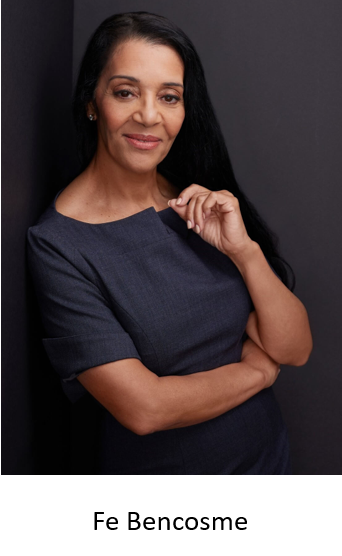
When the Houston situation came to the attention of Phyllis Schlafly Eagles researcher Gwen Kelley, Education Reporter wanted to find out more about it and the controversial new superintendent hired to institute the reform. HISD school board candidate and former educator, Fe Lisa “Fe” Bencosme, graciously agreed to share her thoughts with us.
Bencosme is knowledgeable, well-spoken, and admittedly conservative. First of all, she says, “the term ‘takeover’ is a misnomer; it should in this case be called an ‘intervention.’ We’re talking about a bloated system that was in grave need of an overhaul.”
While Bencosme admits she has no particular inside knowledge about the district’s current intrigues, her sense is that “special interests are losing their power, and will kick and scream to prevent that from happening.” The clear implication is that those who want to keep the status quo will try do so whether or not the future of thousands of children hangs in the balance. This includes local inner-city Democrat politicians, the mainstream news media, liberal activist groups and, while Bencosme didn’t name it, the Houston Federation of Teachers (HFT), a chapter of the national American Federation of Teachers (AFT).
Activists push back
The union filed a number of grievances against the HISD and Superintendent Miles, despite the 57 principals who asked to be included in the NES group of schools. HFT President Jackie Anderson told Click2houston.com that these principals “did not follow the TEA’s education code.” She further claimed Texas education law requires principals to meet with their schools’ “Decision Making Committee, which includes teachers, parents, and community members,” before making such sweeping reforms. In some cases, she charged, there was no such meeting.
The union is also upset on behalf of teachers whom Anderson alleges were caught off guard and do not welcome the changes, yet are “stuck” in their schools. At the very least, the union asserts, impacted teachers should have the opportunity “to leave the 57 NES-aligned schools without penalty.” Some parent activists are unhappy with the NES changes as well. A grassroots advocacy group called Community Voices for Public Education started a “block walking campaign” over the summer to create awareness of “the swath of changes being made to the school system in Houston.” A spokeswoman for the group told NBC News: “The reason we started knocking on doors and doing our block walking campaign is because we realized that a lot of people, especially people whose kids were no longer in the education system, did not realize what was going on.”
This group’s chief complaints are precisely those that other parents believe may be a good thing, including the elimination of “nearly two dozen special education contracting jobs,” changing Spanish-language schools to English-language with supplementation in Spanish, although Bencosme reports that a majority of the residents in the HISD’s third district speak Spanish exclusively, and yet that area was left untouched — giving the impression that backdoor deals are somehow being struck.
Then there is the elimination of librarians at under-performing schools with the conversion of libraries into study halls and/or virtual classrooms where students with behavioral issues can attend class via Zoom on TV screens. Some reason that, with so many pornographic and otherwise inappropriate books on school library shelves, fewer libraries might mean fewer children accessing objectionable materials.
But as Fe Bencosme points out, school libraries have been on the way out for some time. She says new schools are being built without libraries altogether, and many of those with existing libraries “have scarcely seen a soul, since kids look up everything on their Mac Books and computers…. Don’t get me started,” she adds, “data collection is another story altogether with the reliance on computers. I don’t think we realize the extent of the data being collected on students.”
Benscosme observes that the repurposing of the libraries is being used by enemies of the reform effort to alarm and frighten people who may not realize kids are accessing everything electronically, including library books. “I understand that librarians don’t want to lose their jobs,” she says. “But some school libraries have been sitting empty for years, leaving many librarians who genuinely care about kids essentially idle and ultimately out of a job.”
The use of libraries as virtual classrooms for students who routinely disrupt their regular classes could very well prove to be a helpful innovation. Yet union and parent activists insist they “won’t work.” Dubbed “Zoom Rooms,” these also involve the extensive use of cameras, which superintendent Miles said “would be recording classrooms 24/7 at the 29 schools he has earmarked as ‘high-priority high-needs’ campuses.”
So far, Miles is soldiering on with feathers decidedly unruffled. He calls the parents’ concerns and frustrations “understandable,” noting: “Whenever there’s change, sometimes people gravitate to their worst fears instead of their best hopes. And my job and my team’s job is to move them from here towards this [new reform].”
Bencosme says Miles “is the perfect person for doing the heavy lifting in a project of this scale because of his military background. But his higher education degrees are not in education,” she muses, “so he may be relying on others to advise him.” However, his work experience does include the charter school business; after his stint as superintendent of the Dallas ISD, Miles founded a charter school network called Third Future Schools, which serves children in Texas, Louisiana, and Colorado.
About Miles and NES
In July, Miles told ABC13 News in Houston that NES “is the way forward.” The son of a Japanese mother and an African-American father, Miles said in an interview with KPRC TV 2 that, although he grew up poor and with a noticeable speech impediment as a child, his elementary school teachers gave him confidence that he could make good grades and eventually excel. He overcame the speech impediment and went on to make good their predictions.

Miles graduated from the U.S. Military Academy at West Point and also earned degrees from the University of California Berkeley and Columbia University. He served as a “Company Commander” in the. U.S. Army’s “elite Ranger Battalion” and later served as “a Diplomat to Poland and Russia at the end of the Cold War, finishing his state department work as the Special Assistant to the Ambassador to Russia.”
Bencosme notes that at least a couple of Miles’ reforms reflect his military background. One example is the use of a “timer” in class, which she reports “has kids in an uproar.” The purpose of the timed lesson segments is to keep students on track and moving from one concept to another, with the goal of achieving more positive outcomes. “But seriously,” she observes, “four-minute increments? It’s not good. Students would be better served starting out with at least ten minutes in order to get used to being more focused, and then gradually reducing the time.” It’s one innovation she sees as being subject to change when the elected school board is reinstated after the elections in November.
Click2Houston.com quoted the superintendent as saying: “Imagine if schools not only taught reading, math, and science, but also required different ‘experiences’ that students would have to complete in order to move from the early grades to the middle grades and then to the higher grades. And what if those experiences could be completed outside of school and with experts who are not teachers….”
But some observers question whether the proposed changes will actually result in improved academic outcomes. “The first reform should be the implementation of a true phonics reading program,” says Eagles researcher Gwen Kelley. “Instead, what you usually get are educators selling a complicated system that could take years before evaluators, including state lawmakers, parents, and education experts can assess whether or not the reform is working.”
Bencosme says Miles has vowed to “teach the science of reading,” although she admits she’s not sure he knows what the “science” of reading actually is. Her hope is that he will not only advocate teaching students to sound out words using a good phonics program, but that the instruction will also emphasize reading comprehension. “I’m glad we are going back to phonics,” she says, “but hope that we make sure kids understand what they are reading. Historically, the data show — and I hate to use that word — but the common understanding is that a child who reads proficiently by third grade is much more likely to succeed academically. Reading enables everything else.” (Education Reporter is compelled to note here that Phyllis Schlafly firmly believed children should learn to read by the end of first grade, but Bencosme is correct that the prevailing wisdom calls for proficiency by the end of third grade.)
More on NES
One of the mainstays of NES is a reduction in the district’s workforce. ABC13 estimated that “as many as 200 jobs” could be eliminated from the HISD’s administrative office in order to raise teacher salaries. Such cuts could be music to the ears of parents’ rights advocates, as it’s often administrative personnel who facilitate non-academic programs and activities that many parents find objectionable.
But a reduction in the number of teachers is also on Miles’ reform list. According to the Houston Chronicle (chron.com), “under NES, some teachers will be made to reapply for their positions, with increased compensation ranging from $81,000 to $86,000 salary bases as well as a potential $10,000 stipend.” Positions including principals, assistant principals, special education personnel, and others, could also be eligible for the stipend, although the number of special education teachers is expected to decrease under NES.
The Chronicle further reported that the new superintendent plans to “institute his reform [at] 150 HISD schools by 2025,” calling the effort “wholesale systematic reform.” In addition to staff cuts and increased teacher compensation, the support staff that remain will be required to work with teachers in the classroom. Miles’ plan calls for a curriculum overhaul and a new teaching model.
Bencosme says the move “to have support staff prepare lesson plans, then turn them over to teachers and expect teachers to implement them in their classrooms” is at best concerning. As a teacher herself, she concedes that lesson planning is time-consuming but believes it is important to the role. “I enjoyed lesson planning,” she says, “even though it took a lot of my time, because I learned in the process. It edifies the teacher and builds knowledge.”
But she also believes that at least part of the reason for having a select group of support staff create the lesson plans is to keep “woke” curricula out of the classroom. If the lesson plans are preset, teachers are more likely to stick to the curriculum as it’s presented to them for use by the district.
Despite Miles’ confidence, the jury is out as to whether he will be able to overcome opposing forces and actually change things for the better in the HISD under his program. For her part, Bencosme is cautiously optimistic. Parents who oppose the new superintendent’s reforms outright, those who believe that, as with other education fads, they are certain to fail, and those who are simply hoping for any improvement whatsoever, will have to wait and see.
School Board Candidate to Educate Students and Support Parents
Fe Bencosme, a former educator with nearly 20 years’ experience, is running for the Houston Independent School District (HISD) Board of Trustees. The district has been in turmoil for years due to poor student achievement and scandal involving the previous board. (See Houston School District Reforms: Same Old Story? in this issue of Education Reporter.)
The new board will be seated following the upcoming election on November 7. Bencosme says two of the four seats in play will be filled by one progressive and another a likely Democrat, both of whom are running unopposed. Thus, as a conservative, her influence on the board would be especially critical.
Background
Bencosme has resided in Houston since 2015, when she arrived there after teaching in Doha, Qatar, for the Houston Community College System. She says that it was during her experience in the HCC that she “saw firsthand the failures of the HISD system.” She describes her background on her website, noting that she is “a product of the public-school system in New York City where she was born.”

She grew up moving between her mother’s homeland of St. Croix in the U.S. Virgin Islands and the Cibao region of the Dominican Republic, where her father was born. The third of four daughters and the first to graduate college, she earned a Bachelor of Arts in Speech Communication and Theatre from the University of the Virgin Islands and a Master of Arts in English from George Mason University in Fairfax, Virginia.
She describes herself as a “proponent of education for a good life and not simply as a way to promote economic advancement, social justice, or civic participation….” She explains on her website why she is running for the position of school board trustee:
- Houston, we have a problem. Our children are not performing well, which means they are not being developed to realize their full potential. The answer is not lowering standards just enough for them to get by. That would be an injustice. We must enable our children to strive for excellence. It is our duty and obligation to prepare them to serve in whatever culture they choose to invest whether it be parent, scholar, entrepreneur, or artist. This means adopting and implementing an exceptional curriculum based on facts, not feelings … It should be about promoting unity and not division. The unum rather than the pluribus. Veritas and virtue rather than vindication and vengeance.
Views on education
She further writes that although “much is made about the achievement gap between the ‘majority’ privileged and ‘minority’ students, literacy scores have been on the decline around the country across all ethnic groups since The Nation’s Report Card began tracking student performance and district results in 1971. Math and science scores are only slightly better.”
She continues: “The best education is the kind that takes place in an environment where learners are approached as human beings and not cogs in a system of mediocrity…. Teachers must be free to educate, and certainly must not be allowed to indoctrinate…. They must be knowledgeable in their subject areas and committed to instilling a love of learning in their charges.” She adds that, as a member of the board, she would cast every vote accordingly.
Parents’ rights
On the topic of parents’ rights, Bencosme states:
- Parents must have a voice in the education of their children. Not only are they their children’s primary caregivers and responsible for their children’s education, health, and moral upbringing, they are taxpayers and so have the right to petition the government. I will NEVER support any policy aimed at keeping parents in the dark, nor will I ask for or support law enforcement removing parents from a meeting they have every right to attend.
She further believes that at no time should schools keep parents in the dark about their child’s physical, emotional, or mental state. “Mutual respect for parents, teachers, and administrators is critical in implementing HISD policies,” she says. “I would endeavor to show respect for all policy suggestions and concerns and will never summarily dismiss or threaten to remove a parent from a public forum resulting from conflicting perspectives.”
Bencosme disagrees that it should be the responsibility of the school board to set a tax rate. “I personally believe the school board should not be a taxing authority,” she writes, “which is why I would aim to be fiscally conservative with the monies entrusted to me.”
“More money does not mean better learning, which is why every expenditure under my stewardship would be scrutinized for its true value in preparing our students to be productive citizens. No more enriching special interest groups or others trying to use our children for personal gain.”
Mallard
Overrun: How Joe Biden Unleashed the Greatest Border Crisis In U.S. History
By Todd Bensman, Bombardier Books and Post Hill Press, 2023
Todd Bensman’s new book is potentially one of the most important journalistic works of our time. The author guides readers through the vast and complex set of threats American citizens face from the unrelenting illegal immigrant invasion of our country. During the journey, he dispels many of the myths surrounding the “migrants” that the mainstream media, Democrat politicians, and the non-governmental and “religious” organizations never admit, and which he aptly calls the “migrant advocacy complex.”
Overrun demonstrates how Joe Biden almost single-handedly orchestrated this debacle, beginning with his campaign promise to end deportations and essentially “defang and ground ICE officers,” which opened the floodgates before he even took the oath of office. It was, as the cartel bosses told Bensman, “la invitación,” the new president’s “welcome to immigrants to cross the border illegally and stay.”
Never has any American President done more to precipitate such a crisis. All previous administrations, including those of Clinton and Obama, recognized to some degree the folly of open borders and took steps to mitigate it.
 One of the author’s revelations is the fact that most of the immigrants at the heart of Overrun aren’t fleeing imminent death, persecution, rape, or Communist gulags. “Instead,” Bensman writes, “most are fleeing poverty, local crime, and poor governance, which unfortunately describes the common conditions of billions of people throughout the world that the United States simply cannot take in.” Sprinkled within these masses are known terrorists; some are criminals, including those who have committed heinous crimes both in their home countries and since sneaking into ours.
Over the years, the author interviewed thousands of migrants in his many journeys to both sides of the Mexican border and along the well-traveled routes between South America and the U.S. What he found is that migration ebbs and flows with the rhetoric foreign nationals hear from American politicians. They use what Bensman calls the “immigrant decision-making calculus,” which means they weigh the odds of whether they will be able to walk right in and avail themselves of American good will and largesse, or whether, as they did during the Trump years, they will have to “remain in Mexico” for months until they can get a hearing.
Bensman discovered during his many interviews that most migrants were unhappy and even angry with having to wait for their hearings. Some tore up their papers and went back to their home countries, proving the lie that they were in imminent danger there.
During the final two years of the Trump administration, far fewer attempts at illegal entry were made because the migrants’ decision-making calculus determined that the often long and arduous journey, and the thousands of dollars in payoffs to the Mexican cartels to ferry them across the border, were not worth it.
President Trump had a three-pronged strategy to stem the tide, which to this reviewer was sheer genius. It included his demand that Mexico seal its southern border under the threat of onerous trade tariffs, and his creation of a national interest for Mexico and the other source countries, which incentivized them to stem the flow. He accomplished all this despite a hostile media that fabricated and spun countless negative stories, despite relentless attacks from virtually all the Democrats in power, and despite opposition from many in his own party.
Of course, Overrun includes all the mind-boggling numerical data that justifies the book’s title. Bensman writes that, until 2021, “the highest number of Border Patrol apprehensions ever recorded was 1.6 million in fiscal year 2000. Between 2010 and 2016, it never exceeded 500,000….” In 2021, the total was nearly 1.7 million, and it has climbed steadily since. In 2022, the number reached 2.37 million. Bensman emphasizes that these numbers do not count “got-aways.” In total, some 7 million illegals have entered this country since the Biden Administration took power, and more millions will do so by 2024.
Perhaps because he has witnessed so many aspects of this invasion firsthand, the author believes that “as a news story, this was on a par with the moon landing or humanity’s mastery of intercontinental flight.” But it has scarcely been treated as such — there have been instances when the administration’s spokesperson and Vice President Harris have foolishly declared the border “closed.” Bensman decided to write his book in order to expose the truth and record this monumental event in U.S. history.
His mix of experience and ability served him well. Bensman is not only an exemplary journalist, an intelligence and counterterrorism expert, a researcher and writer, but he is a master storyteller as well. Overrun reads like a novel, and is at its best when recounting the first-person accounts of the illegal immigrants themselves. Were it not at once so infuriatingly, frighteningly, and outrageously real, it would make for an absorbing and entertaining read.
Bensman describes how his Jewish great-grandmother, who lived in his family home for five years while he was growing up, legally emigrated (as did all his great grandparents) “from the Pale of Settlement, an area covering today‘s Ukraine and many former Soviet countries that unleashed soldiers and militias to frequently attack them.” He writes that few other countries would take Jews in, and Israel had not yet come into existence, so as a young girl, his great-grandmother traveled with her father, a rabbi, through Ellis Island to America. She was a legal immigrant, as were the 12 million plus who entered the country in this manner over a period of six decades. But what Bensman is talking about in Overrun is a flood of people who flout our laws at the behest of those charged with enforcing those laws, to the tune of 7 million in 30 months.
He further notes that the chaos in American streets is due to Biden’s open borders, aggravated by the “ultra-violent movement commonly known as ‘antifa.’” Beginning in 2021, antifa activists began disrupting ICE operations and the organization committed itself to “reimagining the border as open to all who would like to cross it.”
In assessing the threats we face, Bensman notes that 40 percent of illegals entering our country come from 160 countries other than Mexico and Central and South America. He writes that “258 known terrorists” have crossed the border, and that “these are the ones we’ve caught.” How many are among the “gotaways” is anyone’s guess. Others are on the terror “watch list,” and 75,000 so-called “special interest aliens” entered the country during a period of nine months.
Bensman correctly believes the time has come for Americans to reclaim their country and that there is hope despite dark times when those in power refuse to even acknowledge the problem. “The puppet strings for the important control of illegal immigration all lead into the White House and, to a limited extent, Congress,” he writes. “Short of any appreciable congressional action, the White House becomes the default location where a mass migration is started and stopped.”
He asserts that the current asylum law must be scrapped and rebuilt, and that immigration loopholes must be closed, such as “the Flores loophole,“ which places a 21-day detention limit on families who immigrate illegally before they must be set free into the country. Even under the best of circumstances, Bensman explains, 21 days is not enough time to properly vet the arrivals.
He adds that once this happens, “laws already on the books are sufficient to end mass illegal immigration if merely enforced to their letter, with consistency over time across the entirety of the border. Because the system was otherwise never ‘broken’ beyond the asylum law and loopholes that allow foreign nationals to bypass congressional law, ‘comprehensive immigration reform’ beyond those two problems was never necessary.”
As the 2024 elections approach, the American electorate has a chance to reclaim the country. After all, most citizens never voted for such a dangerous experiment, and polls show the extent to which the Biden Administration is viewed in an unfavorable light, due in large part to the ongoing border crisis. The question becomes how far the radical extremists who have taken control of the government will go to ensure they remain in power by influencing the election outcome.
Bensman reports that his own extensive research in the field shows that not only are Republicans tired of the onslaught, but that “moderate Democrats” are also rebelling against the current White House, and that “this border crisis presents a rare opportunity for both parties to find common ground and equal willingness to fix an obvious homeland security problem. If partisans will divide on just about every other issue, a mass migration of this historic magnitude should stand as one of the few that ought to draw an authentic bipartisan response.”
Overrun is not only a worthwhile read but a must read for citizens who recognize the gravity of the emergency we face and are determined to do something about it, before our republic is lost forever.
About the Author:
Todd Bensman currently serves as the Texas-based Senior National Security Fellow for the Center for Immigration Studies (CIS), a Washington, D.C. policy institute for which he writes, speaks, and grants media interviews about the nexus between immigration and national security. For nearly a decade prior to joining CIS in August 2018, Bensman led counterterrorism intelligence for the Texas Department of Public Safety’s Intelligence and Counterterrorism Division and its multi-agency fusion center. Before his homeland security service, Bensman was an award-winning journalist for twenty-three years, covering national security after 9/11 as a staff writer for major newspapers.
Education Briefs
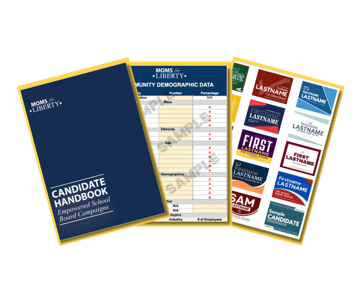
Moms for Liberty has introduced its first ever School Board Candidate Campaign Kit. Calling them “revolutionary,” the organization created the kits as part of its advocacy for freedom-minded parents and citizens to become active in local politics, particularly by running for seats on their district school boards. Executive Director Marie Rogerson says that of all the school board races the organization endorsed in 2022, “more than half of all our first-time candidates won, which is an unprecedented win rate.” She adds that the new campaign kits contain information based on lessons learned from the 2022 races. Each kit contains a Candidate Handbook, which is a “How-To” guide that “covers everything from building a platform and fundraising to voter contact and working with the media.” The Campaign Workbook is “a practical, hands-on resource that assists candidates in creating a campaign plan and executing their campaigns effectively.” Finally, the kits include a collection of “design templates” organized specifically for school board candidates, making the creation of logos, cards, mailers, and other items easier to do. Moms co-founders Tina Descovich and Tiffany Justice say the new toolkits will be “a game changer” for candidates, noting that, as former school board members themselves, they would have welcomed such assistance during their campaigns. The kits are available free of charge to all members of Moms for Liberty. With nearly 300,000 members in 44 states, the kits should be a popular item throughout the next election cycle. Persons interested in running for their local school boards may want to consider joining the organization and availing themselves of these materials.
The California Teachers Association (CTA) is labeling local school board members “extremists” because they support telling parents about their kids’ transgenderism. According to Fox News, the union issued a statement titled “Elections Matter: Defending Schools Against Extremists,” which reads in part: “In Orange and communities including Chino Valley and Temecula, educators are rising together with communities to defend their students, schools, and each other from extremist board members and their politically driven policies that are diverting district resources and putting safety at risk.” The union’s proverbial nose is evidently out of joint because the Temecula Valley Unified School District is the latest district in the state to approve a parental notification policy whereby schools “are required to inform parents if their children identify as a different gender or use different pronouns from their biological sex.” Notification is also required if school personnel become aware that a child is being bullied or experiencing suicidal thoughts. The Murrieta Valley Unified School District adopted a similar rule, which opponents labeled a “forced outing policy,” and the Orange Unified School District is in the process of doing so as well. Orange County Department of Education board member Mari Barke told Fox News: “We are protecting kids, and parents have to be involved in their kids’ education. There is no constitutional right that gives kids privacy from their parents. And, honestly, we are not outing these kids. These kids are out to everybody but the parents, and nobody loves their kids more than parents.” In a related move also reported by Fox, Gov. Gavin Newsom’s administration “fined the Temecula school district $1.5 million for rejecting a state-approved social studies curriculum that included a biography of gay rights activist Harvey Milk. The board voted to ban the curriculum due to concerns about Milk’s alleged romance with a 16-year-old boy and amid complaints that parents “had not been adequately consulted about the curriculum.” Unfortunately, the Temecula school board approved the curriculum under threat of the fine. Rejecting the curriculum would have left the district with a textbook published in 2006, which did not comply with a 2011 state law requiring schools to teach about “the historical contributions of gay, bisexual and transgender Americans.”

Despite onerous laws, edicts, and policies coming out of Sacramento, some California Democrats say they reject the state’s gender policies. Democrat Erin Friday told Fox & Friends that “the party is not listening to us. They want to frame this as right versus left, and this is about child safeguarding. It has nothing to do with party affiliation whatsoever.” She continued: “There’s not one California elected official who’s a Democrat that is standing up for kids, not one.” These parent activists accuse Democrat politicians in California of ignoring their constituents “who are against the mutilation of children, who want to know what’s happening to their children while they’re at school. They don’t want boys in girls’ sports… these are just facts.” Friday’s daughter was secretly transitioned by her public school, but Erin found out in time to rescue her child, which drove the issue home and prompted her to seek out other like-minded parents. “Approximately 80 percent of the members in Friday’s group are Democrats,” Fox reported, “[they are] representative of a silent faction whose voice often goes unheard.” Friday points out that this issue is affecting both Democrat and Republican families. “Parents are losing their rights regardless of what party they’re from.”

A new group called Protect Kids California has filed three citizen-initiated ballot measures to enact laws related to gender in schools, sports, and healthcare. The first initiative would require schools to notify parents or guardians when a student requests to change their gender identity from that listed in the student’s permanent record. Parental notification would be required within three days of the student’s request. Schools must receive written approval from a parent or guardian before they would be authorized to address the student by a different name or pronouns, allow the student to participate in opposite-sex sports or use facilities of the opposite gender, or allow access to “body-modification clothing or appearance-altering materials for the purpose of appearing as a gender different than the one listed on the student’s record.” The second initiative would prohibit biological males, “defined as persons with XY chromosomes, from competing in female, defined as persons with XX chromosomes, sports in public schools and universities.” This law would repeal current language that allows students to participate in sports and use facilities that do not correspond to the gender listed on their birth certificates. Finally, the third initiative “would prohibit healthcare professionals from prescribing hormones or performing procedures that would stop or delay puberty or alter a minor’s appearance for the purpose of changing a person’s gender identity.” Jonathan Zachreson is the founder of Protect Kids California and a Roseville City Schools board member. He believes these “are common sense issues, but that, unfortunately, California is controlled by an out-of-touch legislature that refuses to engage in protecting parents or kids.” To qualify for the 2024 California State ballot, 546,651 valid signatures must be collected for each initiative. Similar gender-related initiatives are in progress in other states, including two that have been cleared for circulation in Missouri.
Parents, Take Action to Protect Your Children
This commentary is published at American Life League-all.org, Culture of Life Studies Guest Commentary, August 30,2023. It first appeared in the August 29,2023 issue of the Arlington Catholic Herald. Reprinted by permission.
News reports about what is taught in schools across the country become more alarming by the day. Depending on where you live, your school system and the teachers within could be attempting to indoctrinate your children into believing ideas like gender is fluid, sex can be with anyone they want as long as it’s safe, and transgenderism is cool. Indeed, a Washington Post article addresses this, saying that some “teachers are embracing the topic as the number of transgender and gender nonbinary children rises.”
Gone are the days when our children go to school to learn history, math, the correct science, and other traditional subjects. Today, kids witness drag shows, learn graphic sex ed lessons, and attend school as the opposite sex while hiding this fact from their parents—actions all backed by some school districts.
It may feel like an uphill battle, one where the parent who speaks out is ostracized, condemned, or even attacked, but it is a battle we must face head on. At the Culture of Life Studies Program, we believe that school should be a safe place to learn academic subjects rather than a place to learn about transgenderism or explicit sexual acts. We believe that schools should never hide anything from parents and that there should be complete transparency when it comes to curriculum. But we are up against powerful forces like Planned Parenthood and SIECUS Sex Ed for Social Change, who as its name implies, want a different kind of learning for children.
Student groups are pushing the university to do just that.
It’s time that we stand up, speak out against the usurpation of our children’s education, and take action. As the Catechism of the Catholic Church teaches, “Parents have the first responsibility for the education of their children.” That means we must monitor what’s going on in the schools and speak out when we see something harmful.
To that end, we have some helpful advice to aid you in taking charge of your children’s education if they are in traditional schools.
First and foremost, establish good communication with your children, as they are the ones in school all day and thus the only ones who can communicate what they see and hear. Ask them what they’re learning. Ask what their teacher talks about. Read the classwork and homework they bring home. Show them that you are interested.
Second, establish good communication with your children’s teachers. You have the right to see materials that will be presented to your children. You have the right to ask questions. An open and considerate dialog between parents and teachers is necessary so that teachers know the parents are being vigilant.
Third, vote in every state and local election—from school board on up to governor. Help put people in place who truly care about the well-being of children and who make policies to protect them.
Fourth, become involved with the school board and in the creation of policy within the district. Take the time to go to meetings, learn about the classes offered, and speak out when you see something disturbing.
Fifth, educate the community through letters to the editor and social media. Post the truth backed by facts. Outline a plan of action for those in the area to take.
Sixth, be confidently present in school. Volunteer, sit in on a sex-ed class, and ask questions. It is your right to do so.
Finally, educate at home. Teach the truths of our faith. Listen to your children’s concerns. Help them work through any difficult feelings. Let them know that you are there to be their advocate. Our children need this from us.
As the book of Proverbs instructs, we must “train the young in the way they should go; even when old, they will not swerve from it.” While there is no guarantee that children will never lose the faith or succumb to the world’s skewed teachings, it is our job as parents to teach the truth, to pray for our kids, to be involved in their lives, and to never ever give up on our advocacy of them. Our children deserve nothing less.
Susan Ciancio is a graduate of the University of Notre Dame and has worked as a writer and editor for nearly 19 years; 13 of those years have been in the pro-life sector. Currently, she is the editor of American Life League’s Celebrate Life Magazine. She is also executive editor of ALL’s Culture of Life Studies Program—a pre-K-12 Catholic pro-life education organization.