Backwards Research Promotes Woke Ideology
It seems that in today’s woke landscape, no one wins, least of all schoolchildren. Liberal ideology has become so entrenched that academic research is no longer based on the time-tested scientific method, which was described in the January 2024 issue of Education Reporter. While the scientific method typically refers to research conducted in the physical world, the same principle should apply when researching concepts such as race, gender, and identity.
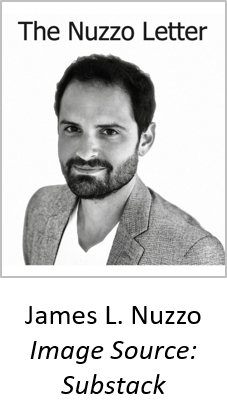
But James L. Nuzzo, Ph.D. of Reality’s Last Stand and author of The Nuzzo Letter on Substack, shows how woke researchers “are rigging research methods to support their ideology.” Nuzzo writes that many academic studies “no longer aim to explore open questions, but instead begin with ideological conclusions and then work backwards.” He adds that this procedure is especially used in research “on race, gender, and identity—where scholars increasingly interpret participants’ responses not on their own terms, but through the lens of critical theory or feminist ideology.”
Nuzzo cites as one example a study published in January of this year by the Society for Research in Child Development, led by Brandon Dull of the University of Chicago’s Department of Comparative Human Development. The study was funded by a National Institutes of Health (NIH) Research Project (R01) grant, which NIH states on its website represents commonly used funds that support “discrete, specified, circumscribed project[s]….”
Titled Learning (Not) to Know: Examining How White Ignorance Manifests and Functions in White Adolescents’ Racial Identity Narratives, the Dull study begins summarizing its findings with this statement: “The authors do not capitalize ‘white’ in this manuscript (unless quoting from other authors or if it appears in headers). The decision to not capitalize white is to mark the distinct and oppressive history of whiteness.”
With a lead-in like that, how could any reasonable person expect an unbiased accounting of the study results? No matter the white high school students’ responses to the study questions, the results were predetermined to show white supremacy and privilege. The fact that the students demonstrated a lack of bigotry served as proof for the “researchers” that they were suffering from “white ignorance.”
Inverted findings
The study asked 69 white teens questions such as:
- “What are some of the good things about being white?”
- “What are some of the things that are hard about being white?”
- “Can you think of a time when you were treated differently because of your race?”
- “Do you ever feel like people expect you to act a certain way or do certain things just because you are white?”
The study report includes a table with the header “Themes of white ignorance” and presents a handful of excerpts that purportedly prove that point but which instead indicate a lack of racism on the part of the respondents, but which are interpreted by the researchers to show that the students were exhibiting “white ignorance.” The researchers’ premises are shown below in bold, followed by a sampling of the actual student responses they received.
Constructing White as Disadvantaged: 24 percent of students said they had been discriminated against because they are white. One student summed it up by saying, “I feel like normally you’re treated better because you’re white; that’s what the stereotype is, but from what I’ve experienced, the pendulum—I think is the expression—[has] swung the other way. I feel like since everyone is trying to be correct that it’s more negative. Another student said, “I think people always think of white people as being more racist. I like a lot of people, so somebody calling me a racist is not correct.”
Framing Racism as Unimportant and Elsewhere: 21 percent of students said they were not aware of racism in their circles, while 33 percent said they do not “see race” in others. One student said, “I don’t see anybody else as different at all. Like I don’t really care what your skin, what your race is; you’re still the same person on the inside even if you look different on the outside….” Another conceded that, “while not [common] around here, there might be people in other places that hate you just for no reason [other than] because of your race or ethnicity….”
Active Refusal to Know or Imagine Racial Oppression: 21 percent of students said they “didn’t care” [about race] or engage in or care about race, while 26 percent couldn’t imagine themselves as “racialized,” nor could they see how they themselves benefit from, and contribute to, the racial system.” When asked about racial oppression, one student said [presumably referring to his or others’ skin color], “that’s just how it is, so I don’t really super know the difference I guess….”
These examples were all interpreted by the researchers to prove “white ignorance,” obviously because their woke narrative simply refused to allow for anything else. As Nuzzo observed, the students’ responses in the study “are striking not for their bigotry, but for their total absence of it. The adolescents rejected racial prejudice and expressed a desire to treat others as individuals. This would ordinarily be seen as a positive result. Yet rather than acknowledging this, the researchers concluded that the students were exhibiting ‘White ignorance.’”
According to the study’s authors:
- White ignorance is an epistemic practice rooted in histories of racial domination and violence, which continually serves to disregard and dehumanize people of color by holding white supremacy in place. In the present study, we name and show how white children’s racial development is intertwined with white ignorance…Moving forward…it is imperative that we reimagine and divorce what it means to be(come) white from the confines of white ignorance and white supremacy, only then might we move resistance from the periphery to the center in white adolescents’ emerging racial identities.
Many observers might discern this language to mean that if the false interpretations of these responses and others like them are incorporated into already woke curricula, it will only serve to increase the suspicion, hostility, and angst among students. Against the backdrop of the relentless propaganda and wedge-driving so common in education today, animosity which might otherwise fade away is likely to grow into a more contentious and unnecessary division among students.
As Nuzzo wrote:
- One might argue that researchers are entitled to interpret participants’ responses through their own theoretical frameworks. But that defense fails when the research is disingenuous from the outset. These interviews were never meant to be a neutral inquiry—they were a setup. The researchers had no intention of discovering anything other than “white ignorance” and “white supremacy.”
Nuzzo’s article cites several other instances of “research” that exploits study participants by reinterpreting their responses “to serve a predetermined narrative,” in areas such as feminism. These studies begin from “the false premise that men are inherently privileged across all dimensions of society.” If, for example, “a respondent disagrees—perhaps because they recognize areas where men face disadvantage—their answers are simply interpreted as a lack of ‘awareness.’ In other words, the only valid responses are those that affirm the researcher’s worldview. Disagreement becomes a diagnostic category rather than a legitimate perspective.”
Socialism opposes choice
Conducting research for the sole purpose of achieving radical goals is part and parcel of the woke/leftist/progressive agenda that has infiltrated our culture for decades. The steady push for increasingly radical curricula most recently manifested itself in the bold admission by the NEA that its teachers don’t have time for reading and writing, but instead must “fight [President] Trump.”

Particularly since the pandemic, increasing numbers of parents have awakened to the dangers posed by the public-school system, and have sought to remove their children. It may be logical to assume, therefore, that the attacks on alternative education options will only increase, as exemplified by the sustained assault on school choice.
Just this month, the Democrat socialist candidate for mayor of New York City, Zohran Mamdani, vowed to declare war on charter schools if he is elected. Charter schools may be a logical opening target for radicals like Mamdani, since they are in effect public schools, albeit with a degree of freedom that traditional public schools lack. Mamdani’s mayoral quest already has the support of New York City’s powerful United Federation of Teachers (UFT).
In Minnesota, several Democratic socialists serve on the Minneapolis City Council, and two serve on the St. Paul City Council. According to the Minneapolis Star Tribune, the Democratic Socialists of America have “over 80,000 members and chapters in all 50 states.” While the organization is not a political party but rather “a political and activist organization,” it appears to be successfully wielding power on behalf of radical Democrats. For example, it supports Minnesota state senator, Omar Fateh, a Democratic socialist who is running for Mayor of Minneapolis and who has been compared to Mamdani.
A religious struggle
Christian Americans in particular have pointed out that the destabilization and ultimate destruction of faith and family—the foundations of our Western culture—are ultimate goals of the radical left. The Christian Research Institute defines what it calls the “dogmas of wokeism” as representing the left’s “path to authoritarianism.”
These dogmas include (1) tribal identity over the dignity of the human person; (2) human will over reason (reality); (3) human power over higher authority, e.g. God. Most observers of today’s culture, both Christian and non-Christian, would recognize these tenets playing out both in the education system and in the wider culture.
Instances of how woke ideology undermines the culture could include the use of race in the flawed research described above. The Christian Research article describes a “stark” departure from “the Civil Rights arguments of old [compared to] today’s woke movement.” The authors write that the desire to be viewed as a human being “bestowed with universal human dignity that comes with a common humanity” has been replaced with the necessity that “each person must be viewed first and foremost in terms of a political identity. Becoming woke is having a consciousness that has made this fundamental transition to centering oppression as the core human experience.”
The University of Chicago researchers’ manipulation of student responses to questions posed in the Learning (Not) to Know survey demonstrates this metamorphosis: White students must be convinced of their racism and it must always be in the forefront of their awareness, regardless of their actual attitudes and beliefs to the contrary. In this way, the false stereotypes of victim and oppressor are perpetuated, negatively impacting students of all races and colors.
The Christian Research Institute notes, as have many others in recent decades, that it’s “a religious struggle,” whereby “specific incidents of injustice are used to reinforce the larger goal of a Leftist ideology … that seeks to train citizens to see all systems, institutions, interactions, and relationships as defined by power. New horizons of grievances must be continually sought, for outrage is both the sustenance and currency of the movement, and the fuel that feeds revolution.”
The article encourages Christians to be “constructive” in dealing with the crisis, “to remember and restore a positive and meaningful vision of family—both human and divine—to which each person is called,” in order to ultimately defeat the cult of evil that currently prevails.
“Rather than a power contest of political identities and individual wills seeking self-expression, every person is invited to the cooperation reflected in a vision of family life that is both ennobling and humbling because it is a vision grounded in reality and reverence.”
Forced Mental Health Checks for Schoolchildren a Growing Threat
Thanks in part to entrenched social and emotional learning standards in public education, mental health interventions for schoolchildren are nothing new, but the threat of government-mandated mental health checks is even more ominous.
Education Reporter and others have for years documented the intrusion of school-district administrators and counselors into the psyches of America’s public-school students, whether or not the children needed their help or parents wanted it. (See the May 2024, August 2023, and September 2023 issues.) It is unclear whether parents are properly informed of these interventions or even notified that they are taking place.
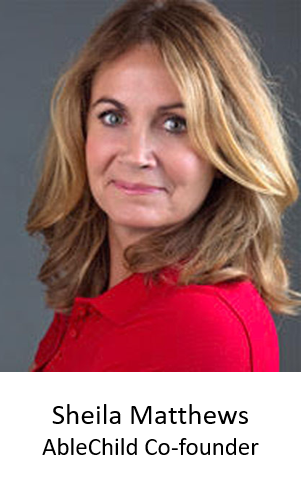
According to an article by AbleChild, a national parents’ rights group incorporated in New York in 2003 as “Parents for Label and Drug Free Education,” there is “no mandate in 49 states (with New Jersey the lone exception and Illinois soon to follow) — yet nearly one-third of U.S. schools force mental health checks on kids.” While schools have long dabbled in the mental health arena, the trend is to “mandate” this type of screening and manipulation, with the end result often the prescription of powerful psychotropic drugs.
AbleChild was founded by two moms with firsthand experience on how mental health diagnoses and the prescription drug therapy that inevitably follows can be harmful to children. Co-founder Sheila Matthews’ biography describes how her son “was labeled as having behavioral issues at school and she was pressured to consider psychiatric medication for him.” This personal experience prompted her commitment to protect children and empower parents facing similar situations.
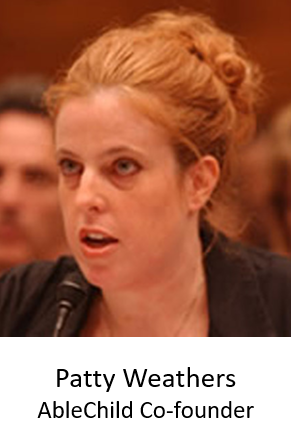
Matthews and co-founder, Patty Weathers, whose son was victimized by a series of powerful drugs which she was pressured by mental health professionals to give him, vowed to do what they could to “protect children from psychiatric labels and drugs” when they started their 501c3 organization. The website states that the group “is dedicated to protecting full informed consent and the right [of parents] to refuse psychiatric services” for their children.
RAND study results
The AbleChild article describes a RAND study published by the JAMA Network on July 18. The study captured the responses of 1,019 school principals on the topic of required student mental health screenings.
 RAND’s results show that “30.5 percent” of the principals who replied said their districts mandate the screening of students “for mental health problems.” Just over 79 percent reported that their schools “typically notify the student’s parents” if the student is determined to be suffering from anxiety or depression. Just over 72 percent of districts offer “in-person,” i.e., in-school treatment, and 53 percent refer students to “community mental health professionals.”
All this begs the questions, are parents notified before the fact that their children are being subjected to mandatory mental health screenings? Are they given an opportunity to opt their children out? What types of questions are children asked during these screenings, and how are their responses evaluated?
AbleChild charges that the “behavioral health industry is doing everything it can to insert itself into your child’s life” and that “mental health experts make no bones about it,” admitting that they believe “schools are the natural place to do it.”
This notion should come as no surprise to many parents and observers who have witnessed the placement of school-based health clinics in public schools over the past several decades. Phyllis Schlafly warned about this development as long ago as June 1997, and Education Reporter has documented the evolution of these clinics over the years, most recently in the articles cited above.
Over time, in-school clinics usurped the traditional “school nurse’s” offices, and were installed under the guise of serving low-income students and others perceived to be at risk for lack of health care. But the overarching reason was to provide “sexual health services,” i.e., birth control and abortion referrals away from the watchful eyes of parents and without their knowledge or consent. More recently, the clinics also offer support for kids who decide they are the opposite gender, i.e. “born in the wrong body.”
Proliferation of mental health screenings
As it now stands, New Jersey is the only state that requires public schools to provide annual depression screenings for all students in grades 7-12. But on July 31, Illinois Governor J.B. Pritzker signed a bill into law that will force public schoolchildren in grades 3-12 to undergo annual mental health screenings starting in the 2027-28 school year. Many more states are reportedly also considering mandatory mental health screenings for kids “but have yet to pass the required legislation.”
 Illinois parents are pushing back on the new law, with some parents calling it “disastrous.” Illinois State Rep. Adam Niemerg (R-102) told Fox News that SB 1560 is “a very dangerous piece of legislation that removes parental rights.” Fox quoted author and Manhattan Institute Fellow, Abigail Shrier, as writing on X: “”I want to be on-the-record and crystal clear. This is a disastrous policy that will do vastly more harm than good…. Watch as tens of thousands of Illinois kids get shoved into the mental health funnel and convinced they are sick, many or most of which will be false positives.”
AbleChild poses the logical question that, if only one state currently mandates mental health screenings for students, where do the other 49 get the authority to do so? Funded by grants through the state’s Mental Health Screening in Schools Grant Program, New Jersey requires screenings for grades 7-12, and Illinois will require them starting in grade 3 in 2027. But AbleChild points out that children as young as kindergarten are already being screened in many of the nation’s public schools.
Of the New Jersey law, Matthews told Education Reporter: “It’s a very weak and failed state that forces its children to be mentally screened with unscientific checklists to cater to the psychiatric behavioral health and pharmaceutical industries that profit from the drugging of American children.” She is referring to the methods New Jersey uses to conduct the screenings electronically — with tools “selected by the state’s commissioners of education and children and families.”
Matthews is also critical of New Jersey’s “opt out” policy. “Let me be very clear,” she said, “when there is an ‘opt out’ policy rather than an ‘opt in’ policy, the state is putting their vendors ahead of the liberty and freedom your children inherited from previous generations.” She added: “The behavioral health, psychiatry, and mental health industry, or whatever they call themselves today, are experts of nothing. Their experimental psychiatric drugging has utterly failed our children. Your family has every right to reject this conglomerate and your state’s relationship with it.”
But perhaps the burning question is how soon the remaining 48 states will put the force of state law behind the screenings that are already taking place in many school districts nationwide. As the AbleChild article points out, data show that “despite yearly increases in mental health services, no one appears to be getting better and, in fact, America’s children are in a mental health ‘crisis.’ Maybe it’s time to learn more about the validity of the mental health services that the behavioral health industry is offering and so badly wants to be incorporated into the nation’s schools.”
Positive law in Tennessee
On July 1st, Tennessee Governor Bill Lee signed SB 1146 into law, which requires the state’s medical examiners and/or “regional forensic centers” to obtain information on a decedent’s “psychotropic drug use,” if the decedent is suspected to have committed a mass shooting that resulted in the deaths of four or more individuals.”
The purpose of the law is to determine whether psychotropic drug use was involved in mass shootings by mandating toxicology testing. The law also mandates consultation with the decedent’s mental health providers, if any, and calls for the University of Tennessee Health Science Center (HSC) to conduct studies “on interactions between psychotropic drugs and other substances in perpetrators’ systems, and public disclosure of psychotropic drug use by shooters upon request, with personal identifiers redacted.”
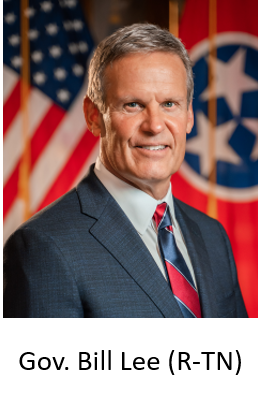 AbleChild writes that Tennessee’s landmark legislation “amends Tennessee codes to prioritize transparency over privacy in cases of mass violence, directly challenging pharmaceutical and behavioral health industries to confront potential links between their products and practices and public safety risks.”
These risks have long been suspected, and Phyllis Schlafly sounded the alarm decades ago. One of her reports described an intrusive plan hatched during the George W. Bush Administration that included recommendations for “routine and comprehensive” testing and mental health screening of every child in America, including preschoolers.” Schlafly revealed that the plan proposed “‘linkage’ of these mental examinations with ‘state-of-the-art treatments’ using ‘specific medications for specific conditions,’” which she said meant “prescribing more expensive patented antidepressants and psychostimulant drugs such as Ritalin.”
Likely thanks to Phyllis Schlafly and others who sounded the alarm at the time, this plan was never implemented, but as demonstrated by research such as the RAND study, most American children today are given mental health screenings anyway.
Parents and concerned citizens should find out if their state is considering legislation to force public schools to probe students’ mental health, and petition their state legislators to oppose these measures. As AbleChild’s article notes, “school mental health professionals do not provide parents with informational pamphlets that explain that neither the Food and Drug Administration (FDA) nor the pharmaceutical companies have any idea how psychiatric drugs ‘work’ as ‘treatment’ for any alleged mental disorder diagnosis.
“Considering that the number of children being diagnosed with a mental disorder and drugged as a form of ‘treatment’ continues to increase every year, perhaps parents may want to opt their children out of the mental health screening….”
Currently, that’s an option almost everywhere if parents are notified of the screenings ahead of time. However, if these screenings become widely mandated by state and/or federal law, the battle for disclosure and opt-out opportunities could become extremely difficult to win.
Outraged Parents Defeat Anti-Homeschooling Bill in Illinois
From the day it passed out of the Illinois state legislature’s Education Policy Committee last March until it died at the end of the legislative session on June 1, H.B. 2827, also known as the Homeschool Act, provoked the ire of parents. The bill would have placed an undue burden of regulation on homeschooling families, including the potential for criminal penalties and imprisonment if they did not fill out burdensome paperwork at the whim of the state.
Ironically, until the advent of the Homeschool Act, Illinois was one of the freest states in the union for homeschoolers. The HSLDA called H.B. 2827 “the most authoritarian bill proposed in the country in the last three decades. In recent memory, no state has even attempted to put automatic criminal penalties on homeschool families who do not file a piece of paperwork, as the original bill stipulated, or automatically refer them to a state attorney for prosecution, as in the amended bill.”

But homeschooling parents and conservative and Christian organizations in Illinois were not about to give up the freedom to educate children as they see fit, despite the bill’s momentum and the state’s Democrat majority that seemed sure of having the votes to push it through. On March 19, hundreds of homeschooling families descended on the state capitol in Springfield to protest the bill.
The Illinois Christian Home Educators led the charge, and hundreds of parents filled out “witness slips” online in opposition, which Illinois citizens are allowed to do in support of or against a bill. Phyllis Schlafly Eagles Executive Director, Kurt Prenzler, reports that 42,393 witness slips were submitted against H.B. 2827, with fewer than 1,100 in favor.
As if to make bad legislation worse, the Democrats amended it, which attracted 51,238 witness slips against, and then introduced a second amendment, which resulted in 43,177 slips in opposition. Just over 400 witness slips were submitted in support of each of the two amendments.
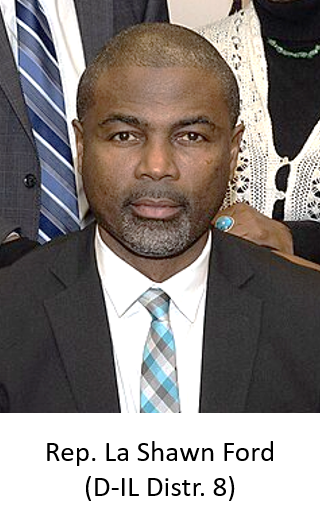
As the bill languished, homeschooling families and supporters continued the fight. On April 3, a crowd of parents, students, and other opponents rallied in downtown Chicago, led by Illinois State Democratic lawmaker, La Shawn Ford, whose district includes parts of Chicago. Parents in Ford’s district reportedly contacted him about the rally, during which he made a comment that struck home with the crowd and became a rallying cry against the bill.
According to Fox News, Ford said in part: “I believe in restorative justice. I believe in making sure that people don’t have a pathway to the criminal justice system.” Then he said: “This bill is a pipeline to the criminal justice system for parents. (Emphasis added.) And I can’t stand for that. How can we criminalize parents for wanting to love their children?”
Ford further observed that, since the pandemic, homeschooling has increased “across all demographics,” and that specifically in the black community.
Fox also quoted the vice president of the nonprofit Urban Center, who charged at the rally that, “This bill would require private schools to hand over the individual contact information, including names, phone numbers, and addresses, to the state of Illinois. That is government overreach.”
Prenzler and others believe Ford’s speech was the catalyst for ultimately killing the bill. “The Democrats failed to consider one thing,” Prenzler pointed out, “which is that, over the years, many black mothers took their children out of the Chicago public schools to homeschool them.” These parents proved a formidable force, and Rep. Ford struck a chord as he articulated against the bill.
While celebration is in order, homeschoolers know better than to relax their vigilance, realizing that the Democrats will try again. Prenzler reports that, after the bill died, Illinois homeschooling mother Cora Weber, through her group called the International Alliance for Freedom in Home Education (IAFHE), persuaded the leaders of 12 county governments to pass “pro-homeschool freedom” resolutions. Prenzler says, “these counties are all known as ‘homeschool sanctuary’ counties.” The hope is that more counties will follow their lead in Illinois and that the idea will spread to other states.
Weber’s organization warns that although homeschooling “is currently the fastest growing form of education in the United States, certain agenda-driven groups with anti-family values have taken the opportunity to intensify their attacks on homeschool freedoms.” Illinois is an obvious example, but other states also face threats.
IAFHE’s website states:
- Groups like the Boston, Massachusetts-based Coalition for Responsible Home Education (CRHE), consider most home educators to be what they call “Parental Rights Extremists,” and seek to undermine fundamental freedoms and parental rights under the false pretense of preventing child abuse. A deep dive into their background shows alignment with radical leftist organizations like Black Lives Matter and LGBTQ+, while a cursory run through their website reveals an agenda bent on promoting legislation that would force parents to waive their guaranteed First, Fourth, and Fifth Amendment protections just for the “privilege” of home educating their own children.
IAFHE further cautions that CRHE is peddling a “model bill” to legislatures nationwide that will force parents to “acquire a permit to train their own children.” The language in this bill “is so egregious it would create measures that could be interpreted to force parents to align their children’s education with woke ideologies and radical leftist policies under threat of their children being forced to attend government schools for three years and/or having their children removed from the home.” (Readers may review this model legislation proposal here.)
Homeschoolers and their supporters, along with everyone who values freedom, must be mindful of these dangers. Kurt Prenzler urges anyone whose right to homeschool is being challenged to contact Weber through her organization, or to contact him by phone at 618.514.2599.
When Information Becomes ‘Persuasion’: School districts use public funds to push bond issues and tax hikes
On March 30, just two days before the April 1, 2025 election in Illinois, Phyllis Schlafly Eagles Executive Director, Kurt Prenzler, received a text message from a friend who lives in the Triad School District in the city of Troy. The message included two photos showing the front and back of a postcard “paid for by the Triad School District” in support of a $99.2 million bond issue that was on the ballot.
The nearly-impossible-to-read fine print asserted that the postcard was “not intended to advocate,” but the information provided was clearly one-sided. After the bond issue passed, a taxpayer filed a lawsuit alleging that the postcard and associated videos were biased, and were indeed advocacy, and therefore electioneering using taxpayer funds in violation of Illinois law. The lawsuit asks the court to enjoin the district from issuing the bonds.
In recent years, public school districts across the country often spend taxpayer money on “outreach” that looks very much like political campaigning: glossy postcards, targeted social-media posts, professionally produced videos, polling, and mailers designed to persuade voters to approve bond measures and tax increases. These districts insist their efforts are neutral and “informational,” meant to educate the public about school district needs and the consequences of failing to meet them. But residents and watchdogs argue that the content is often one-sided and functions as paid advocacy.
Numerous examples exist. Last year, the Houston Independent School District spent at least $1.48 million to promote a $4.4 billion bond issue, which 58 percent of the voters rejected on November 5. The citizens of Houston discovered the promotional advertising in advance of the election, and complained to Texas Attorney General Ken Paxton. Paxton’s office wrote a letter to the district asking questions, also in advance of the election. The publicity likely helped defeat the bond issue.
Citizens often have no idea what is happening until a one-sided postcard from the district shows up in their mailbox a week before an election. The bond issue or tax increase then passes, and no one has the energy or inclination to contest the results. As the old saying goes, “you can’t fight city hall,” and people generally think that is also true with public school districts.
But citizens are beginning to fight back, with the help of sympathetic prosecutors.
One week after the Triad School District bond issue passed, on the other side of the Mississippi River in St. Louis County (pop. 1.1 million), Proposition B appeared before voters on the April 8 election ballot. The county spent taxpayer money to print and mail “informational” postcards explaining why the proposition was bad. It would have given the county council the right to fire county government department heads. The measure failed. A concerned citizen complained to the county prosecutor, but due to a conflict of interest, the case went to the Missouri Attorney General, Andrew Bailey.
As in most states, Missouri law forbids an elected official to spend public funds to campaign for or against a ballot measure. St. Louis County Executive, Sam Page, was charged with two misdemeanor election offenses and two counts of felony theft “by deceit” as a result of his use of county money to defeat Proposition B.
The whistle blower in the St. Louis County case is Tom Sullivan, a long-time local government watchdog. In an interview, Sullivan recalled a prior instance when a tax district in the St. Louis area did not properly identify contributions in the amount of $175,000 that were used to promote a tax increase. He blew the whistle on the misuse of funds. The Missouri Ethics Commission agreed with Sullivan, but fined the taxing district only $100. As Sullivan observed, this was like “giving a parking ticket to bank robbers.”
Sullivan admits the charges brought against Page by Missouri Attorney General Andrew Bailey are stiff, but he says: “At some point courts have to put a stop to government officials campaigning with taxpayer money. In my experience, school districts are the champs at this game.”
As for the Triad School District case in Illinois, a hearing is scheduled for September 5, and Education Reporter will update readers of any new developments.
Mallard
Dedication and Leadership
Want to be notified of new Education Reporter content?
This short book (only 160 pages) is an “oldy but goody” if you please, and is well worth the read.
After 20 years as a leader in the communist party in England, Douglas Hyde resigned in 1948 from his post as news editor for the London Daily Worker and, with his family, converted to Catholicism. Thus, he ended 20 years as an ardent member of the Communist Party.
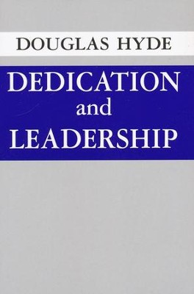 Hyde proceeded to write Dedication and Leadership and led seminars to teach Catholics and other Christians how communists recruited and trained their “disciples.” The thesis of the book is that dedication is at the heart of leadership, and it is the dedication of communists to party goals, their methods of psychological manipulation and willingness to sacrifice, that propelled the system to international power.
The author describes how communists take advantage of the natural idealism of youth by challenging them to “change the world” and to embrace hardship. He gives the example of older communists who prove their dedication by working hard for little pay, and shows how the veterans don’t ask new recruits to do what they are not doing themselves.
Hyde explains the communist methods of education and formation, which are quite different in countries where communism is in control compared to countries where it is not. As readers might expect, it’s a tougher road for communists to navigate in countries where they are not in charge. He describes how communism — using a small minority of committed, trained people — took over much of the world, and how they maintain active campaigns to stay in power.
The author presents a hypothetical character to demonstrate how communists operate. “Jim” is a man without good looks, special education, or talents, yet with dedication and patience, he is molded and becomes a valuable leader. A tried-and-true communist tactic is to take over trade unions — in both government and the private sector, and Hyde describes how this happens: communists are challenged by their leaders to be “the best” in the workplace, and to be respected leaders. This pandering to human pride reaps rewards as most succeed in their efforts to succeed.
Dedication and Leadership was first published in 1966, when communism had taken over much of the world and was continuing to expand. Some of its examples are out of date, e.g., Hyde describes how young recruits were sent out onto street corners to sell Daily Worker newspapers.
But despite the book’s age, Christians will recognize in it the things they should be doing to combat this dangerous economic and political system. Jesus Christ asked His disciples to take up their cross, spread God’s Word, and to make disciples of all people, which is the most effective antidote.
The situation today is much different than when Hyde wrote his book in the mid-1960s. There are communists in high places — we would probably call them Cultural Marxists — often drawing high salaries in local, state, and federal government, in universities and colleges, in public school districts, and in non-profit organizations. They are not short on resources, which are provided by billionaire supporters.
In Hyde’s day, communists were called to life-long perseverance and dedication to their cause, however misguided, and this is what the author encourages Christians to do as disciples of our Lord and Savior, Jesus Christ.
Hyde’s little book provides valuable insights so that readers might learn from communist tactics and dedication, thereby becoming more effective followers of Christ, who hopefully will make the ultimate choice for “total” Christianity over “total” Communism.
To read the entire book, go to Christianbook.com or Thriftbooks to order!
Education Briefs

Californians are rallying in opposition to Assembly Bill AB 495, which would allow “any unrelated adult to claim to be a child’s ‘caregiver’” simply by filling out and signing a form, without notifying the parents or obtaining their consent. By signing the “Caregiver’s Authorization Affidavit,” which opponents say would provide “zero safeguards,” teachers, neighbors, family friends, or virtually any adult claiming to be connected to a child could claim authority over the child and make decisions on the child’s behalf. The bill was introduced by Assembly Member Celeste Rodriguez, ostensibly to protect children of illegal aliens “should the parent(s) be detained by Immigration and Customs Enforcement (ICE), and a child is left unattended during that time.” But opponents say its reach “is far wider” and that there is nothing in AB 495 limiting it to immigrant children. Rather, they say, “its vague language leaves the door wide open for misuse and exploitation.” They also warn that the affidavits do not require notarization and that “verification can be as flimsy as providing a Social Security number or driver’s license number—not even the actual card. No background checks. No proof of identity. Hospitals, doctors, and schools are not required to verify the claim. In short, anyone who fills out the affidavit could take control over a child and authorize irreversible medical procedures without parents ever knowing.” The bill applies to all children and all situations, including those in private schools and homeschools. Opponents further note that the problem of children needing temporary or emergency care “is already solved” because parents provide schools and pre-schools with emergency contacts they themselves have chosen in the event of an emergency situation. “AB 495 doesn’t fill a gap; it creates a dangerous loophole. With just one piece of paper and no verification of relationship, any adult who fills out an affidavit can gain control over a child,” throwing open the door to kidnapping, trafficking, and abuse, while doing nothing to truly protect immigrant children. Finally, opponents say AB 495 is unconstitutional, violating parents’ “fundamental right to direct their children’s upbringing, education, and medical care. It offers no due process—no notice, no opportunity to object.” Education Reporter will follow the progress of this disastrous bill.

When dads are on duty, kids’ lives improve. Back in October 2021, after a series of fights at Southwood High School in Shreveport, LA, a group of concerned fathers banded together to form Dads on Duty, which quickly grew to about 40 volunteers that took turns spending time at the school. CBS News reported that the fights netted 23 juvenile arrests at the 1,500-student school, prompting the dads to step in and make a difference. CBS explained that the dads “greet students in the morning and help maintain a positive environment for learning, rather than fighting.” Dad Michael La’Fitte Jr. came up with the idea, telling CBS: “We decided the best people who can take care of our kids are who? Are us,” he said. The students seemed to agree. One teen told CBS: “I immediately felt a form of safety. We stopped fighting; people started going to class.” Students credit not only the dad “looks,” which they described as “a power” all the dads have, but also the “dad jokes” which helped ease the tension. ABC News later credited Dads on Duty with transforming the school. La’Fitte works with an independent security company that helps vet the dads who volunteer, all of whom are typically juggling full time jobs. Southwood’s principal, Kim H. Pendleton, Ph.D., said the dads “are from the community,” and have helped quell gang violence and other disruptions at the school. Last year, Reader’s Digest published an article about the group, noting that their model has spread to other schools in Louisiana, and that they “have already partnered with fathers in other parts of the country, who have followed their example. Groups in Henderson, Nevada; Little Rock, Arkansas; and Jackson, Mississippi, have formed versions of Dads on Duty.” According to La’Fitte, “the more the merrier. We’d like this to be something that is in every school in every county … Because not everybody has a father figure at home, or a male, period, in their life. So just being there makes a big difference.” With male influence and strength currently facing scorn and derision, many observers say “bravo” to these dads. Kids are proving just how much they need them in their lives.
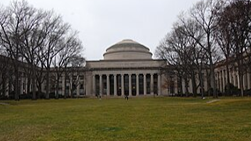
Massachusetts Institute of Technology (MIT) professor says she spends most of her time “fighting Donald Trump’s ‘state terrorism.’” The College Fix reports that Catherine D’Ignazio, an urban studies professor who runs the “Data + Feminism” lab and organizes “reproductive justice hackathons,” accuses the Trump Administration of using a strategy that “conjoins specific instances of threats and violence with widely reported media representations in order to spread fear…. This is what distinguishes the current violence of the state as terrorist. It is not only a judicial project but also a public relations project and a strategic communications project.” As readers struggle to understand what she is talking about, she charges even the liberal New York Times with playing a “role in promoting fear.” The Fix reports that D’Ignazio advises other American universities as to how they too “can fight the terrorism,” presumably along with MIT. The professor says she estimates spending “about a third of my own working hours … consumed with combating the impacts of state terrorism on my university campus: widespread fear, self-censorship, capitulation, and silence.” She concedes that these are hours professors “should be using to advance science and innovation or educate and mentor students,” to which many parents might respond, “if only….” D’Ignazio alludes to the fact that in certain ways, it might be true that “state terrorism is working,” and that surviving it “will not be easy. During this period, we must remember that the current project is an elaborate exercise in political theater designed to spread fear, isolation, and division.” Finally, says this paragon of wasted higher education dollars: “Acts of radical care, everyday courage, and collective action are the most effective antidote to state terrorism.” Doubtless many parents who have spent hundreds of thousands of dollars for their children to attend MIT, are reassured.
‘Whitelash’: Professors say white students get angry, frustrated by ‘anti-racist education’
By Daniel Nuccio, Northern Illinois University
Originally posted on the The College Fix, August 8, 2025. Reprinted by permission.
Social work professors call out ‘whitelash’ in classrooms pushing anti-racism lessons
Two social work scholars argue that their “anti-racist education” efforts in the classroom faced “whitelash” from white students, who became emotionally distraught, pushed back by using “color-blind rhetoric,” or later wrote negative course reviews.
Quinn Hafen from the University of Wyoming and Marie Villescas from Colorado State University (CSU) recently published an article in the Journal of the Society for Social Work and Research detailing their experience creating a “pedagogy of discomfort” to challenge white supremacy in the classroom. The research was conducted at CSU. [Their] method was criticized by two scholars in interviews with The College Fix, who called the experiment somewhat abusive.
“[T]he more I reflect on that paper, the more I find it cruel to shame students based on immutable identities they hold, regardless of identity,” one observer said via email. “For the professors, it appeared that White and male students were their target.”
The College Fix reached out via email to both Hafen and Villescas regarding some of the concerns raised about their teaching methods. Hafen and Villescas did not reply.
‘White backlash’ and ‘white fragility’
Hafen and Villescas wrote in their July paper — which has been taken down from the journal’s website — that as “social work moves in the direction of anti-racist education and practice, social workers of color have urgently called attention to how theme [sic] profession continues to perpetuate white supremacy and harm BIPOC (Black, Indigenous, People of Color).”

The two scholars wrote that when anti-racist educators attempt to bring attention to how their field advances white supremacy in the classroom, white students attempt to “re-establish the white supremacist status quo” through resistance and the espousal of “color-blind rhetoric.”
This “[r]etaliatory white backlash,” they wrote, is best referred to as “whitelash,” which they describe as intimately entwined with the socio-relational process of white emotionality and the maintenance of racial hierarchies.
Thus, in an attempt to “expose” and “disarm” this white resistance to anti-racist education, the scholarly duo documented their own exploration of the pedagogical strategies they utilized while co-teaching two different undergraduate social work courses in 2023.
Specifically, the strategies were “interracial teaching partnerships” and the “pedagogy of discomfort,” both of which the authors highlighted as having the potential to “promote student and instructor self-reflexivity and accountability” while “challenging the reproduction of whiteness in the classroom.”
The former they described as “an anti-racist pedagogical approach in which two or more racially diverse instructors co-teach a course.” The latter they characterized as a teaching method “that seeks to make visible the ways in which emotional comfort maintains structural oppression” and that “requires both instructors and students to embrace vulnerability and discomposure and question what they have been taught to see.”
Through assessments based on classroom surveys and their own self-reflection, they wrote that they found their white students did not always respond favorably to lessons on their “white fragility” and “social work’s role in perpetuating whiteness.”
Some white students, the scholars noted, became emotionally distraught during these and similar lessons while others pushed back or later wrote negative course reviews.
Through the documentation of their experiences and analyses, the scholars wrote, they hope to illustrate “how whitelash against anti-racism education can be transformed from an inevitable setback, into an opportunity to disrupt the social production of whiteness.”
Critics voice concerns
Yet, some social work scholars cited Hafen and Villescas’ teaching methods as grossly inappropriate for the undergraduate classroom.
Arnold Cantú, a practicing social worker who left a Colorado State University’s social work doctoral program over concerns regarding DEI’s intellectual hegemony in his now-former department, told The College Fix in a telephone interview that he was taken aback by how “brazen” Hafen and Villescas were in documenting their interactions with students and the uncomfortable positions in which they placed their students.
“Students voiced discomfort [with some of the lessons and teaching methods] and would push back, but…the authors would essentially reinterpret what the students were probably experiencing and feeling, which I think is incredibly repressive,” said Cantú.
Pointing to a description by Hafen and Villescas of the emotional learning component of their classes as “a form of resocialization,” Cantú stated this struck him as “eerie” and that “resocialization” is just a euphemism for “reeducation.”
The stated embrace of a “pedagogy of discomfort” and disregard for the emotional comfort of white students made their classroom descriptions reminiscent of “struggle sessions,” he added.
Furthermore, Cantú expressed concern that these kinds of lessons were being imposed at the undergraduate level.
“I worry especially about undergraduate students, seventeen, eighteen years old, right out of high school, and they’re confronted with this,” he said.
“I feel really, really bad and concerned for them to have to have this shoved down their throats,” he added. “There [are] obvious power imbalances: freshman students, undergraduate students, sophomore students, versus instructors and professors.
“I wonder if any of them eventually felt like they had to gaslight themselves to come around and be onboard with what was being taught despite the discomfort that was felt throughout,” he wrote.
Similarly, another recent graduate student in social work, who writes pseudonymously as “Jordan the Social Worker” and asked that his real name not be used for professional reasons, told The Fix that “most 18- and 19-year-olds are impressionable and have little job and life experience to understand how complex and messy and nuanced the real world is.”
“Most BSW (Bachelor of Social Work) students won’t have the background and exposure to know that there are counter-arguments and viewpoint differences around ‘White supremacy’ and ‘anti-oppression,’ for example, making them more open to being resocialized,” he said via email.
He said he found the pedagogy cruel to shame students based on immutable identities and it seemed white and male students were their target: “Aren’t social work and the other mental health professions supposed to be about defusing shame?”
The College Fix contributor Daniel Nuccio holds master’s degrees in both psychology and biology. He is currently pursuing his doctorate in biology at Northern Illinois University where he is studying the impact of social isolation on host-microbe interactions and learning new coding techniques to integrate into his research.
Education Related Links
Reader Books Flyer 2025