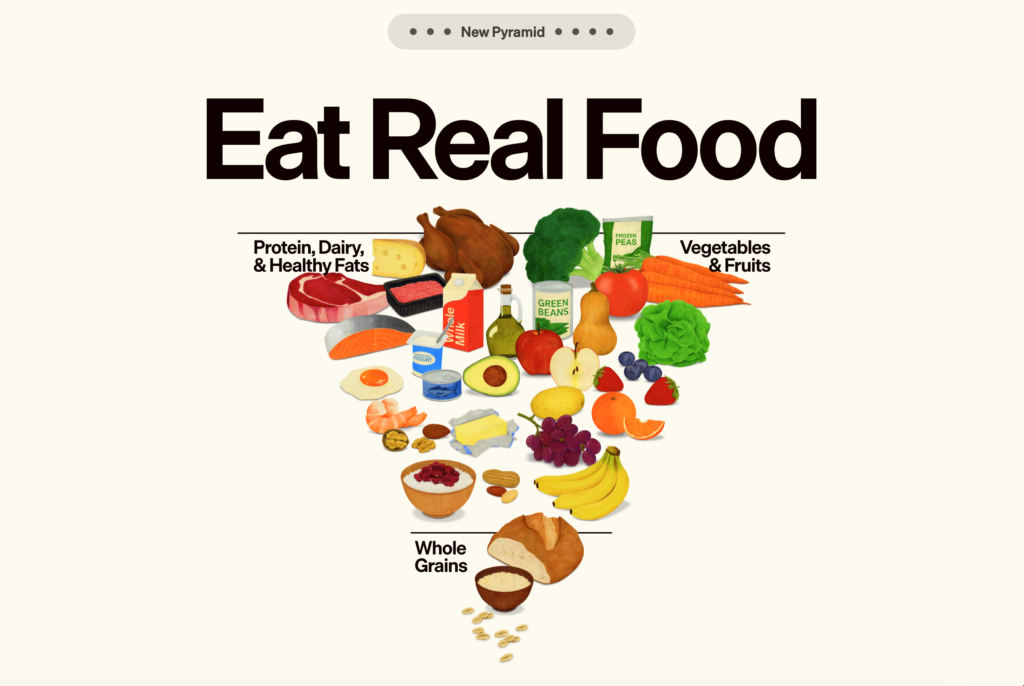
Featured image from USDA’s RealFood.Gov.
Last month, the Trump administration unveiled a major overhaul of the Dietary Guidelines for Americans, aimed at reversing decades of federal nutrition advice that favored corporate interests over real public health. These new guidelines are part of the “Make America Healthy Again” agenda led by Health and Human Services Secretary Robert F. Kennedy Jr. and Agriculture Secretary Brooke Rollins, who described the update as the most significant reset of federal nutrition policy in years.
At a White House briefing, Kennedy criticized previous dietary guidance as lies “to protect corporate profit-taking.” He argued that officials promoted processed foods, refined carbohydrates, and added sugars — benefiting food manufacturers while Americans grew sicker and healthcare costs soared. The new guidelines, he said, put “real food” back at the center of nutrition. Under the revamped recommendations, Americans are urged to prioritize whole, nutrient-dense foods including high-quality proteins, healthy fats, fruits, vegetables, and whole grains. A newly introduced, inverted food pyramid places protein and vegetables at the top — a stark contrast to the traditional model that emphasized grains. Officials believe this shift will reduce obesity, diabetes, and chronic disease.
These federal nutrition standards matter because they shape how school lunches are designed, what meals are served in military dining halls and VA hospitals, and what foods are promoted through government programs like SNAP. Ag Secretary Rollins said her department is working on rules requiring retailers that accept SNAP to offer more “staple foods” — aligning benefit programs with the new emphasis on whole food. Conservatives applaud this approach because it challenges corporate profiteering from unhealthy food products and returns nutritional guidance to common-sense principles backed by observable health outcomes. Instead of pandering to industry marketing or decades of conflicted dietary science, the administration’s focus is on reducing key drivers of America’s chronic-disease epidemic.
Americans deserve honest, science-based nutritional advice that promotes individual responsibility and better health, not guidelines influenced by special-interest priorities. This shift reinforces the idea that government policy should protect public health — not corporate profit — and that a return to “real food” can help make Americans healthier and reduce long-term medical costs.
As we continue to track “MAHA” progress in 2026, we need your feedback! Let us know what you think about flipping the food pyramid upside down and sign up for our timely emails – all at PhyllisSchlafly.com, that’s PhyllisSchlafly.com. Thanks for listening, and join us again for the Phyllis Schlafly Report.