
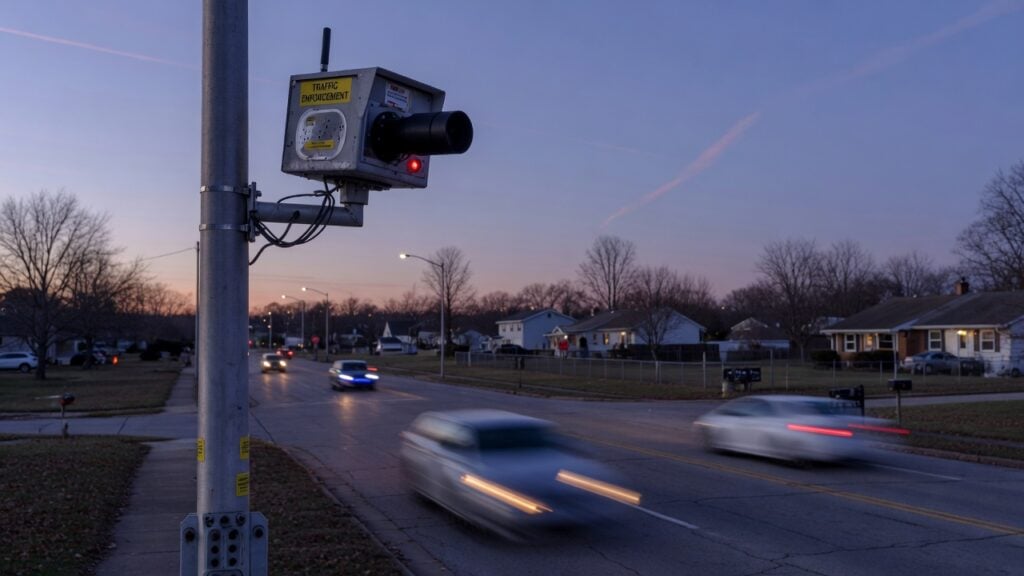
AI-generated with Grok
Last month America marked the 25th Anniversary of the terrorist attacks on September 11, 2001. On this broadcast, we asked whether Americans had learned our lesson about the domestic national security measures taken in response. Today is another important anniversary – October 26, 2001 when just 45 days after the attacks on 9/11, President George W. Bush signed the USA Patriot Act into law. The Patriot Act broadly expanded government monitoring as an emergency measure. The problem is: that emergency infrastructure never went away. It became a template, and AI-powered automated cameras on every street corner is the private sector expansion of that same logic.
It’s worth understanding that Flock cameras have become the new Patriot Act. Flock and similar companies have now deployed more than 140,000 cameras across 6,000 communities in 49 states. An honest look at the data tells us that this rapidly spreading technology may help close cases for cops, but there are consequences. An independent academic study published in August, using FBI crime data across 216 agencies, found that vehicle theft fell about 11% and arrests for motor vehicle theft rose nearly 16% in the year after Flock cameras went live. The technology does close cases, but the tradeoff is not free.
Seventy-five percent of Flock's law enforcement customers have enrolled in the company's national database — meaning a camera in your town can be queried by an agency in another state entirely. ICE used Flock's National Lookup platform to access data in states that had banned cooperation with immigration enforcement. The company conducted pilot programs with Customs and Border Protection and Homeland Security Investigations — and then misled its own state and local customers about those relationships, later admitting to internal miscommunication. In Savannah, Georgia, six police officers were fired for using the system for personal searches.
The ACLU has filed a Fourth Circuit brief arguing the technology upends the privacy expectations the Fourth Amendment was designed to protect. Citizens in multiple states have physically torn down cameras, dozens of cities have canceled their Flock contracts in the past year, and Florida is moving forward with a ban on them entirely on state roads.
The lesson from the Patriot Act of 2001 is that emergency tools for public safety can quickly become permanent surveillance infrastructure. There are big decisions ahead for our justice system when it comes to applying the 4th Amendment!
Stay informed on this with us at PhyllisSchlafly.com, and join us again for the Phyllis Schlafly Report.