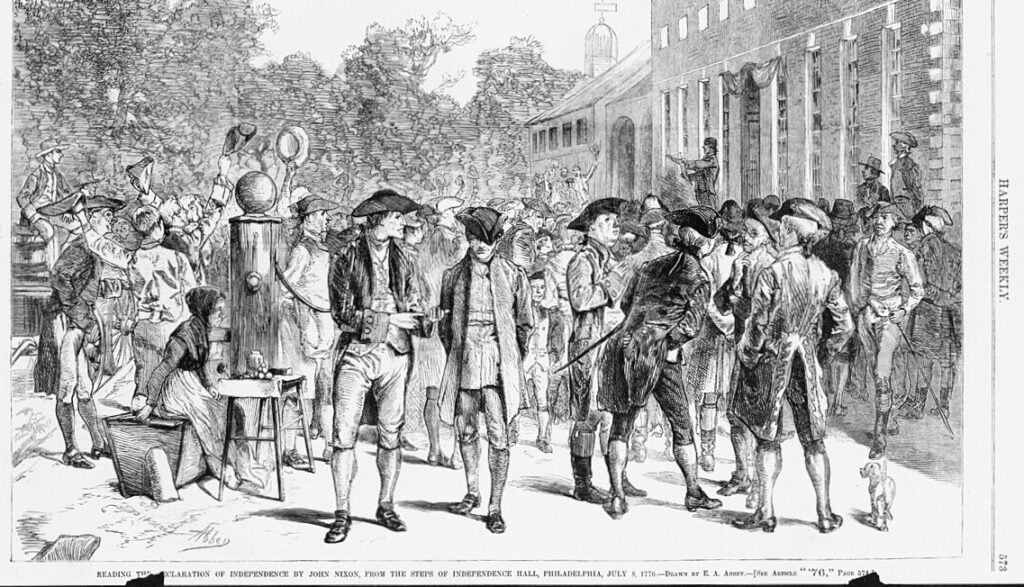
Recently, one of America’s best-known documentary filmmakers suggested we should “rethink the American Revolution.” But instead of deepening our understanding, the latest project by Ken Burns retells the story of our nation’s founding through the lens of Critical Theory, emphasizing its flaws and minimizing its foundational truths. In doing so, it portrays America’s origins not as a story of liberty and courage, but as a series of injustices.
Now, Burns is correct that many Founding Fathers had a complicated relationship with slavery — just streets away from where our framers preached and penned liberty, human beings were treated as property. But focusing solely on those contradictions misses the larger picture: the War for Independence was fundamentally about self-government, moral truth, and human dignity rooted in a Christian worldview.
Another documentary series by historian Dr. Joseph Loconte offers a corrective emphasis by highlighting the life of Dr. Benjamin Rush, one of the 55 signers of the Declaration of Independence. Rush was remarkable not just as a doctor, chemistry professor, and military surgeon, but as a bold opponent of slavery at a time when many of his peers avoided the issue. He understood that any call for God-given rights must apply to everyone — including the enslaved.
Rush rejected the assumption that Africans were inferior. He admonished clergy who used Scripture to justify oppression, insisting that true Christian teaching affirms the equal dignity of all people. What sets Rush apart — and what Americans must remember — is that his commitment to liberty flowed from his Christian faith. He believed every human being is made in the image of God and worthy of respect. That belief shaped his advocacy against slavery.
Stories like Rush’s remind us that the roots of the American experiment are not just political or philosophical, but moral and theological. The American Revolution was built on the principle of moral responsibility, and the idea that government exists to protect rights endowed by our Creator — not to grant them as favors.
We don’t need a reframing the Revolution through critical lenses; we need a framework that honors both the achievements and the moral convictions that made this nation. When we acknowledge figures like Benjamin Rush, we see a fuller and more accurate picture of the moral courage and Christian convictions that helped shape America’s founding.
At the Phyllis Schlafly Report we honor history even as we look to the future. Join us at PhyllisSchlafly.com. That’s PhyllisSchlafly.com.