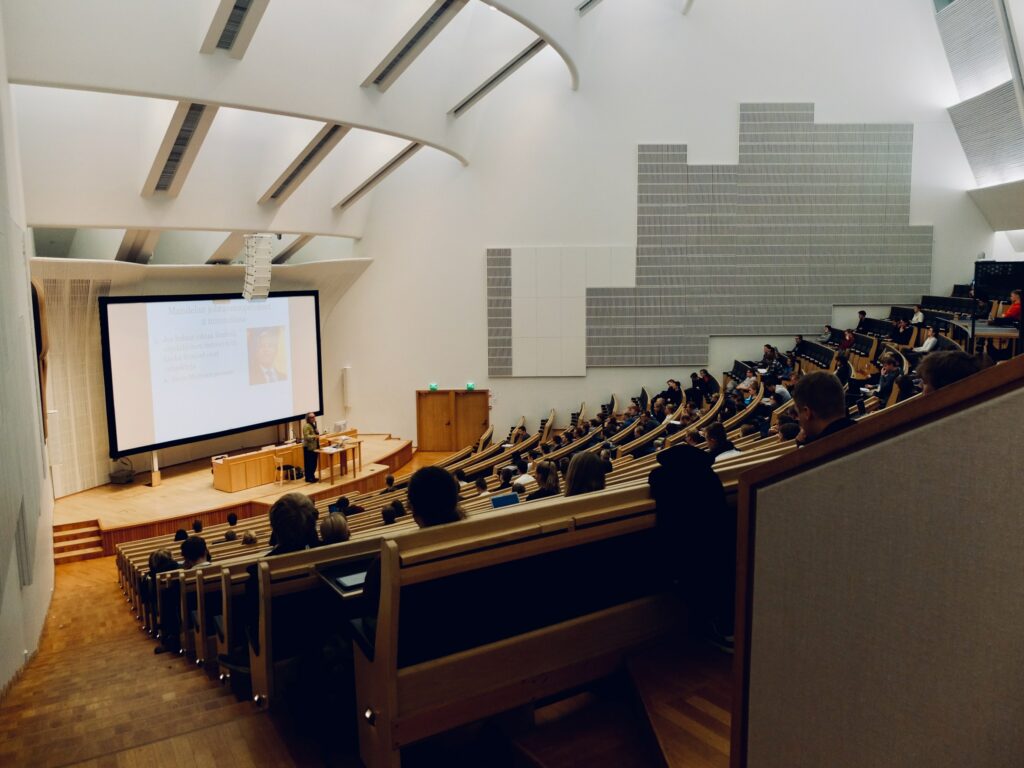
college university lecture hall dom-fou-YRMWVcdyhmI-unsplash
For decades, American universities have run a system that shortchanges American students in order to subsidize foreign ones — and the Trump administration is finally putting a stop to it.
The numbers are staggering: half a million foreign students currently enrolled at American universities are here illegally and more than a million additional students are here on F-1 student visas. And until very recently, many of those illegal alien students were paying in-state tuition rates while American citizens from neighboring states were forced to pay rates that could cost them a hundred thousand dollars more. That’s not an oversight, that’s a policy choice, and it’s wrong.
Texas is a prime example. A Texas appeals court upheld this discriminatory tuition arrangement as recently as 2023. But in July, the same court upheld a settlement in which Texas agreed — as part of a deal with the Trump administration — to stop enrolling illegal aliens at preferential tuition rates. That is a step in the right direction.
Trump's Department of Homeland Security has now overhauled the F-1 visa program in several important ways. For fifty years, foreign students could enter graduate programs and remain in the United States with no fixed deadline — essentially camping out in American academia. The average time to complete a PhD has ballooned to over seven years, keeping foreign students here far longer than necessary. Under the new rule, most F-1 visas will expire after a fixed period — typically four years. The Trump Administration is also cutting the post-graduation grace period from sixty days to thirty. Additional reforms restrict foreign students from transferring between universities or switching academic programs while here. These are common-sense guardrails that should have been in place all along.
Here is what’s at stake: Only 4.2 percent of applicants were admitted to Harvard's most recent freshman class. Every seat given to a foreign student is a seat taken from an American. In STEM graduate programs, fewer than ten percent of PhD graduates can find academic positions — yet those slots are filled with international students on the American taxpayer's dime. Universities are complaining about these new rules. That complaint tells you the rules are working.
Dive deeper into this intersection of education and immigration policy with us at Eagle Council 55 in Dallas on September 19. See the full program lineup and register today at EagleCouncil.com, that’s EagleCouncil.com, and join us again for the Phyllis Schlafly Report.