A recent decision by the U.S. Court of Appeals for the 9th Circuit is one of the most important religious liberty cases in years. In Union Gospel Mission of Yakima v. Brown, the court affirmed that religious organizations do have the constitutional right to hire employees who share their faith, even in positions that are not considered traditional ministry roles. At the center of this case was a critical question: Can the government force a Christian ministry to hire people who openly reject its beliefs and mission? In this case, Washington state argued that it could, using its Law Against Discrimination after the state supreme court narrowed religious exemptions in the law. The Ninth Circuit firmly rejected that claim, ruling instead that religious organizations must be free to maintain their religious identity through their hiring decisions.
The ministry at the center of this case serves the homeless and those struggling with addiction. Like many faith-based organizations, it requires staff members to affirm and live according to its biblical beliefs, including teachings on marriage and sexuality. The court recognized that religious organizations are not just businesses. They are communities built around shared belief and mission. As the court explained, who an organization hires directly shapes its character and ability to carry out its religious work.
This decision has implications far beyond one ministry. It reinforces the principle that religious liberty is not limited to private belief or worship services. The First Amendment protects the free exercise of religion, including the ability to build and operate organizations that live out those convictions. Without that protection, religious ministries could easily be forced to compromise their beliefs or disappear from public life altogether.
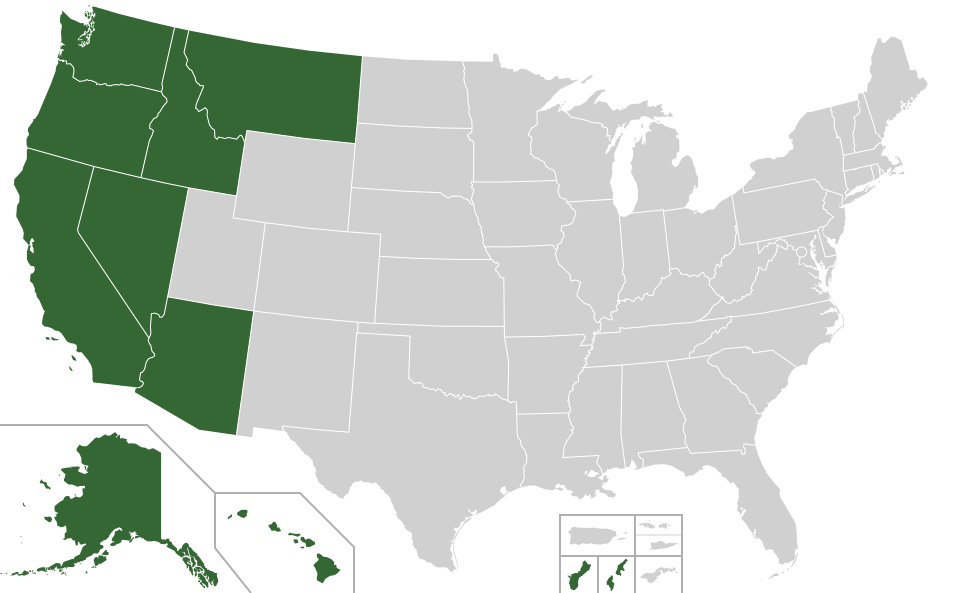
This ruling is also notable because it comes from the Ninth Circuit, which has historically been terribly liberal and outright hostile to religious liberty claims. The court’s ruling shows that constitutional protections for faith-based organizations still carry much weight, even in jurisdictions where cultural pressure and political powers are antagonistic to traditional religious views.
This ruling solidifies that religious liberty is essential to American society. Faith is not meant to be kept only in private spaces.
The right to express our faith is foundational to America. At PhyllisSchlafly.com, we promise to track both victories for and threats against our free exercise, and equip you to fight back. Your defense begins at PhyllisSchlafly.com. Thanks for listening and join us next time for the Phyllis Schlafly Report.