
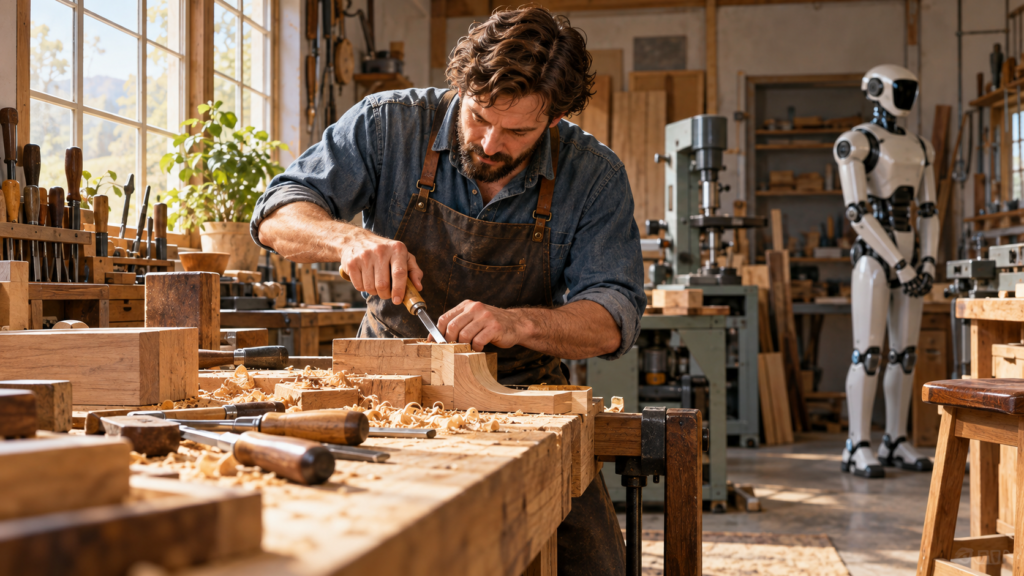
AI-generated with OpenAI.
Some of the most influential people in Silicon Valley have a vision for the future of work, and it should trouble every American who understands what work actually is.
Elon Musk declared earlier this year that his prediction is that work will soon be optional — like playing sports or a video game. Amazon, Nvidia, and other tech giants are pouring billions into advanced robotics and physical automation. Musk has pivoted Tesla to prioritize production of humanoid robots called Optimus, aiming for them to represent eighty percent of Tesla’s value. He has publicly suggested there could be more Optimus robots trained as surgeons than human surgeons within a decade.
There is genuine promise in some of this. Automation over the last century has created enormous wealth, improved worker safety, and freed people from the most punishing and repetitive forms of physical labor. A Heritage Foundation analysis recently noted that technology increases labor productivity, which drives wages, investment, and ultimately more employment. None of that is to be dismissed.
But the vision of a world where work is optional is something else entirely, and we should recognize it for what it is.
From the very first pages of Scripture, the task given to man is to till and keep the garden, to name and classify creation, to engage actively with the world around him. We were not made for self-indulgence and endless entertainment. We were made to work. Philosopher Alasdair MacIntyre put it well — good work is work recognized as our contribution, in which we take responsibility for doing it and doing it well. To learn something that requires practice, skill, and perseverance builds confidence and self-worth. A three-year-old is proud of his drawings because he made them, not because they are masterpieces. That instinct doesn’t leave us at any age.
The companies now investing in humanoid robotics are the same companies that sold us smartphones and social media as tools that would make us happier and more connected. Well, the results are in. Record rates of anxiety, isolation, and addiction — technology presented as liberation has made millions of people miserable.
A world without meaningful work is not utopia. Karl Marx described his communist utopia in almost identical terms to what Musk is promising now. That should give us pause.
Work is not a problem to be solved — it’s part of what it means to be human. Stay plugged into these issues at PhyllisSchlafly.com, and join us again for the Phyllis Schlafly Report.